
Standing in front of your wardrobe, ready to pray, sometimes that quiet moment feels interrupted by a prayer garment that just doesn’t fit right or reflect the peace you’re seeking. I’ve felt that tug between tradition and comfort, wanting something that honors both my faith and my personal style. Prayer garments in Islam are more than just clothing—they’re a symbol of devotion, modesty, and connection to something greater.
In this guide, I’ll share everything about what makes a prayer garment truly special—from its spiritual meaning to the fabrics, styles, and modern twists that make it practical and beautiful today. Whether you’re looking for tips on choosing the perfect piece or curious about the traditions behind it, every question will be answered here. By the end of this post, I’ll walk you through everything you’ve ever wondered about prayer garments in Islam—so let’s dive in and embrace modesty with intention and style.
Prayer Garment Islam: The Complete Guide to Modesty, Meaning, and Modern Style
Have you ever stood in front of your wardrobe, ready for prayer, and felt that tug — the one between tradition and personal comfort? Maybe your prayer garment didn’t feel quite right. Maybe it slipped off your shoulders mid-salah. Or maybe it just didn’t reflect the dignity and stillness of the moment. If you’ve been there, you’re not alone.
Whether you’re a new Muslim navigating your first purchase or someone who’s been wearing a prayer garment for decades, this guide will take you deep — into the fabrics, fits, spiritual significance, and real-life utility of the prayer garment in Islam. This isn’t just a surface-level overview. This is a beautifully structured, high-authority guide that fuses tradition with modern insight — designed to honor your connection to Allah while supporting your identity, comfort, and lifestyle.
In this blog, we’ll walk through 20 detailed sections that answer every question you didn’t even know you had — from what makes a prayer garment valid in Islam, to shopping tips, to cultural variations, and even innovations shaping the future. Whether you’re here for religious understanding, fashion advice, or a better salah experience — this guide delivers.
Let’s begin by understanding why the prayer garment is far more than just a piece of fabric — it’s a legacy woven through centuries of devotion and dignity.

What is a Prayer Garment in Islam and Why It Matters Today
In the realm of Islamic worship, the prayer garment — known as the khimar, jilbab, or abaya depending on the region — is not just a religious accessory. It is a garment of spiritual intimacy, a covering designed to align your physical appearance with the humility and serenity of salah (prayer). The Arabic term for this attire may differ, but the core intention remains the same: to enter prayer with dignity, modesty, and submission to Allah.
The Role of the Prayer Garment in Worship
Islam emphasizes inner sincerity and outer modesty — both of which meet in the act of salah. For women, a prayer garment is a means of fulfilling the Islamic requirement to cover the ‘awrah (parts of the body that must be concealed during prayer). Typically, this means the entire body except for the face and hands. For men, the ‘awrah includes from the navel to the knees, often covered with a clean thobe or jalabiya.
But it goes deeper than rules. Wearing a specific garment for prayer cultivates mental presence. It marks a transition from the noise of the world into the sacred space of communion with the Divine. Over time, this garment becomes more than cloth — it becomes a vessel of routine, focus, and reverence.
Why It Still Matters in 2025 (and Always Will)
In a world that’s increasingly digital, noisy, and fast-paced, the ritual of salah anchors Muslims to something unchanging. And the prayer garment is part of that anchoring. It’s not about perfection — it’s about preparation. Whether you’re performing prayer at home between work calls, in a prayer room at an airport, or attending Taraweeh at your local masjid, your prayer garment becomes a symbol of stillness in motion.
For reverts, or those returning to faith, the garment can feel like a powerful first step toward commitment — a decision to dress with purpose. For lifelong Muslims, it represents continuity — the same fabric worn by mothers and grandmothers before them.

Comparison Table: Everyday Clothing vs. Dedicated Prayer Garment
| Feature | Everyday Clothing | Dedicated Prayer Garment |
|---|---|---|
| Modesty Compliance | May or may not meet full ‘awrah coverage | Designed to fully cover ‘awrah |
| Mental Association | Associated with daily routines or work | Triggers a focused, spiritual mindset |
| Fabric Type | Varies: may be tight, synthetic, or layered | Lightweight, loose, breathable, flowy |
| Functionality | Not optimized for sujood, rukoo’, or modesty | Specifically tailored for comfort in movement |
| Emotional Symbolism | Neutral | Acts as a spiritual uniform for salah |
Why You Should Care
If you’ve ever felt disconnected in prayer, overlooked how you’re dressed, or simply rushed through your salah, consider how your environment — and yes, your garment — plays a role. Your prayer garment is an instrument of mental clarity and emotional grounding. It helps you show up — not just physically, but spiritually.
Here’s what most people miss: You don’t need to wait for Eid or Ramadan to feel spiritually ready. Your connection can begin with something as simple as choosing the right garment. That decision alone can shift the entire atmosphere of your worship.
Common Misconceptions About Prayer Garments in Islam
Let’s be honest — there’s a lot of confusion floating around when it comes to prayer garments in Islam. From social media myths to cultural overlays, it’s easy to get lost in the noise. But the beauty of Islamic practice lies in its clarity and simplicity. So in this section, we’re cutting through the clutter to correct common misunderstandings — gently, but with authority.
Misconception #1: You Must Wear a Black Abaya to Pray
This one is surprisingly widespread. While black is a popular and elegant color — especially in the Gulf region — there’s no Islamic ruling that requires women to wear black specifically for prayer. The core requirement? That the clothing is loose, opaque, and covers the ‘awrah.
Truth: Your prayer garment can be soft grey, dusty rose, navy, or even floral — as long as it’s not see-through or too form-fitting. Islam promotes modesty, not monotony.
Misconception #2: You Can Pray in Regular Clothes — So a Prayer Garment Is Unnecessary
Yes, technically you can pray in your everyday modest clothing if it meets all the requirements of covering. But many women choose a dedicated prayer garment for spiritual and practical reasons. It eliminates uncertainty, enhances focus, and avoids wardrobe malfunctions — especially during sujood or rukoo’.
Think of it this way: Just because you can jog in jeans doesn’t mean it’s comfortable. Same with salah. A proper garment removes friction from your routine — physically and mentally.
Misconception #3: Men Don’t Need to Worry About Prayer Clothing
Not true. While the standards for men differ — covering from navel to knees — the requirement for clean, dignified clothing still applies. Torn shorts or tight athletic wear? Not ideal. Many devout men choose a dedicated thobe or long garment for prayer, especially in the masjid, to show reverence and respect.
Misconception #4: Cultural Attire Equals Islamic Requirements
This one’s tricky. Many people assume that if it’s traditional in their country, it’s automatically compliant for prayer. But cultural clothing doesn’t always meet the Islamic criteria — think sheer saris, short dresses, or decorative tunics. The garment must meet Islamic standards — regardless of cultural norms.
Islam is beautifully universal. And while it embraces local expression, it always centers back to Divine guidelines.
Misconception #5: It Has to Be Expensive to Be Acceptable
Some believe that a prayer garment needs to be high-end, brand-name, or designer. That couldn’t be further from the truth. In Islam, it’s the intention that matters more than the label. As long as the clothing is clean, modest, and appropriate — whether it’s £10 or £100 — it’s valid for prayer.
Quick Truth Table: Myths vs. Facts
| Myth | Reality |
|---|---|
| Only black abayas are allowed | Any color is fine if modest and opaque |
| Everyday clothes are always enough | Dedicated garments reduce error and improve focus |
| Men don’t have garment standards | Men must dress respectfully, too |
| Cultural = Islamic | Only Shari’ah-defined coverage is valid |
| Only expensive pieces are suitable | Affordability has no impact on validity |
Here’s what most people miss: Modesty in Islam isn’t about uniformity — it’s about intention, respect, and preparation. The prayer garment isn’t a fashion restriction; it’s a spiritual tool. And the more we understand that, the more empowered we become in our worship.
How to Choose the Right Prayer Garment for You
Choosing the right prayer garment isn’t just about fabric and fit — it’s about how it makes you feel when you stand in front of your Creator. Your prayer space is sacred, and what you wear should help you honor that space with dignity, ease, and intention. Whether you’re praying at home, traveling, or attending taraweeh at the masjid, your garment should support — not distract — your connection with Allah ﷻ.

Start With the Essentials: What Must It Cover?
Let’s begin with the non-negotiables. For women, the prayer garment should cover everything except the face and hands. This includes:
- Hair and neck (with a secure khimar or attached hood)
- Arms and legs — fully, with no skin showing during movement
- Feet — using socks or a longer hem to avoid exposure in sujood
For men, the garment should cover from the navel to the knees, but it should also be clean, loose, and not see-through — especially in congregation.
Fabric Matters: Comfort Meets Spirituality
When you’re in salah, your garment should feel like a second skin — breathable, non-restrictive, and kind to your body. That’s why material choice is far more important than people think. Here’s a quick guide:
| Fabric Type | Best For | Considerations |
|---|---|---|
| Cotton | Daily use, sensitive skin | Soft, breathable, but can wrinkle easily |
| Jersey / Lycra Blends | Stretch, flexibility | Comfortable for long rakats, but may cling — choose a looser cut |
| Silk or Satin | Special nights, Eid prayers | Luxurious, but can be slippery — check sleeve length |
| Polyester | Durability, travel | Lightweight, crease-resistant, but less breathable |
Design Details That Make a Difference
Beyond basic coverage, some features truly elevate the experience. Look for prayer garments with:
- Integrated hijab or khimar — for speed and convenience
- Elastic wrist cuffs — to prevent sleeves from sliding during sujood
- Built-in pockets — for a tasbih, tissues, or even a folded prayer mat
- Minimal embellishment — to reduce distractions
Match It to Your Lifestyle
Are you a busy mom with kids tugging at your sleeve mid-prayer? Or a student squeezing salah between lectures? Or maybe you’re newly practicing and just want something simple but sacred. Here’s how to choose based on lifestyle:
- For Moms: Choose washable, durable garments with easy snaps or zippers
- For Students: A foldable two-piece set that fits in your bag is a game-changer
- For Converts: Start with a one-piece that’s easy to put on and not overwhelming
- For Travelers: Lightweight wrinkle-resistant materials with storage pouches are ideal
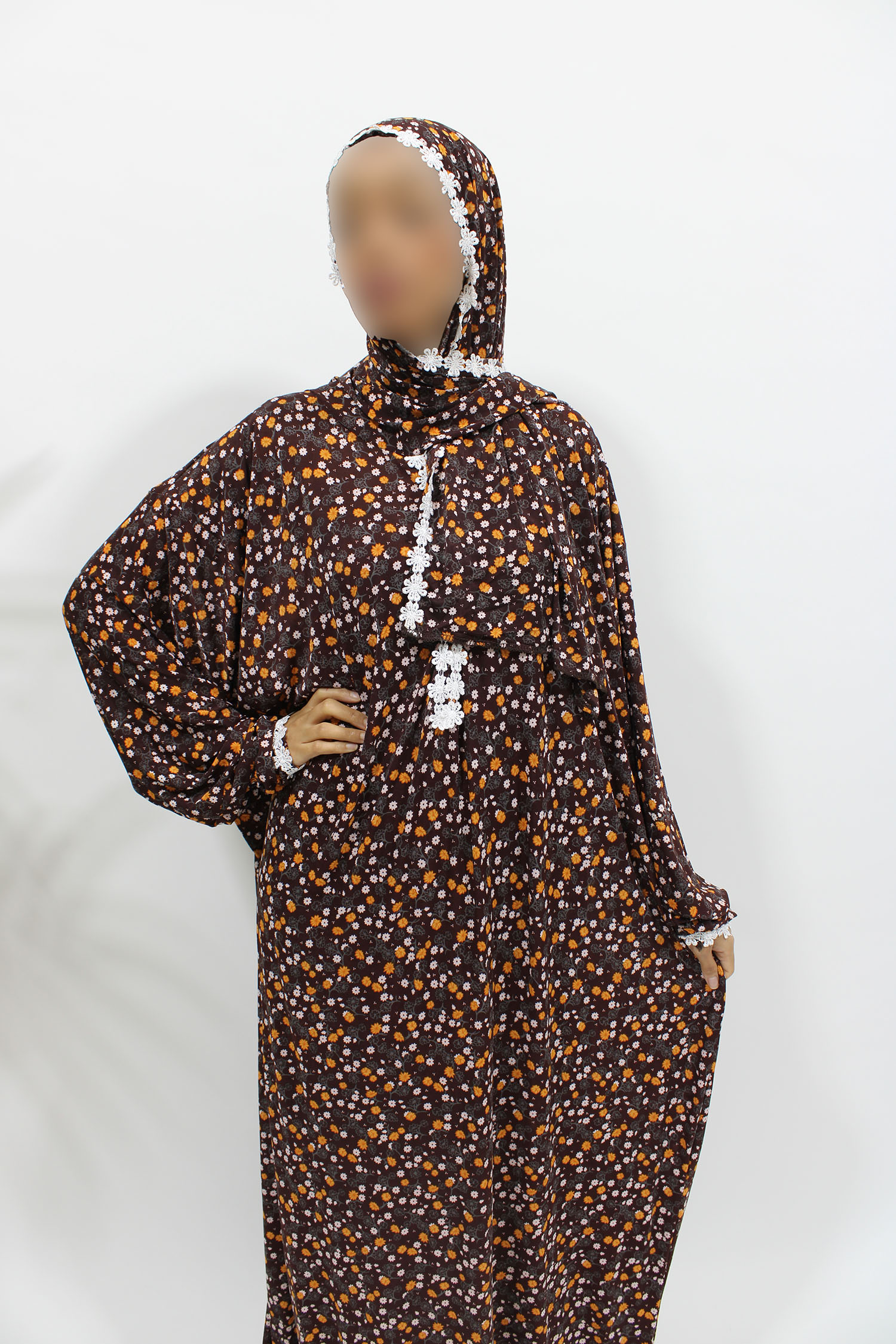
Emotional Fit: Do You Feel Dignified In It?
This might be the most important point of all. Ask yourself: “When I wear this, do I feel calm, clean, and ready to stand before Allah?” That emotional resonance is your best guide. If you feel rushed, uncomfortable, or distracted — your garment might not be serving you.
Pro Tip: Have a ‘Go-To’ and a ‘Special Occasion’ Set
Just like we have everyday clothes and outfits for special events, it’s beautiful to treat our salah with the same intentionality. Having a daily go-to and a special garment for Jumu’ah or Eid creates spiritual variety — a sunnah-inspired sense of celebration and preparation.
Here’s what most people miss: Your prayer garment isn’t just a religious obligation — it’s a source of spiritual alignment. When chosen with care, it becomes a quiet companion in your journey to Allah ﷻ — guiding, shielding, and grounding you in every rakat.
Best Styles and Types of Islamic Prayer Garments
Prayer garments are not one-size-fits-all — and they were never meant to be. Across the Muslim world, women and men have developed beautifully distinct ways of dressing for salah that reflect not only religious modesty, but also culture, comfort, and personal expression. Choosing your ideal prayer outfit can be an act of worship, self-care, and even style. Let’s explore the most beloved types.
1. The One-Piece Jilbab (Overhead Abaya)
This is the queen of convenience. The one-piece jilbab is a long, flowing garment that covers from head to toe in one swift motion. It’s perfect for:
- Quick access for daily prayers
- Women who want minimal layering
- Extra modesty — especially in public spaces
Look for jilbabs with elastic sleeves, chin-cupping headbands, and breathable fabric — especially for summer months. For converts and beginners, this is often the easiest style to get comfortable with.
2. Two-Piece Prayer Sets
These popular sets come with a long skirt or trousers and a coordinating khimar or tunic. They’re easy to pack, modest, and available in dozens of sizes and colors. Great for:
- Women who want more flexibility in fit
- Young girls and teens just starting their prayer journey
- Customizing length for taller or shorter bodies
Some even come with matching prayer mats or zip-up pouches — a wonderful gift idea for new brides, students, or Hajj/Umrah travelers.
3. Khimar + Abaya Combo
This is the elegant duo. A full-length abaya paired with a flowing khimar (head and shoulder covering) offers graceful movement and full-body modesty. Choose this if you:
- Want a separate top and bottom layer for better air flow
- Prefer stylish abayas you can wear outside salah too
- Enjoy lightweight fabrics for long rakats or night prayers
Pro tip: Look for khimars with chin straps or non-slip fabrics so they stay secure without pins.
4. Full-Body Prayer Dresses
These are often made with stretchy jersey, jersey-luxe, or cotton — and are ideal for casual at-home prayers. Easy to slip on and machine washable, they’re designed for:
- Busy mothers and homemakers
- Converts who want simplicity
- Those looking for lightweight, no-fuss garments
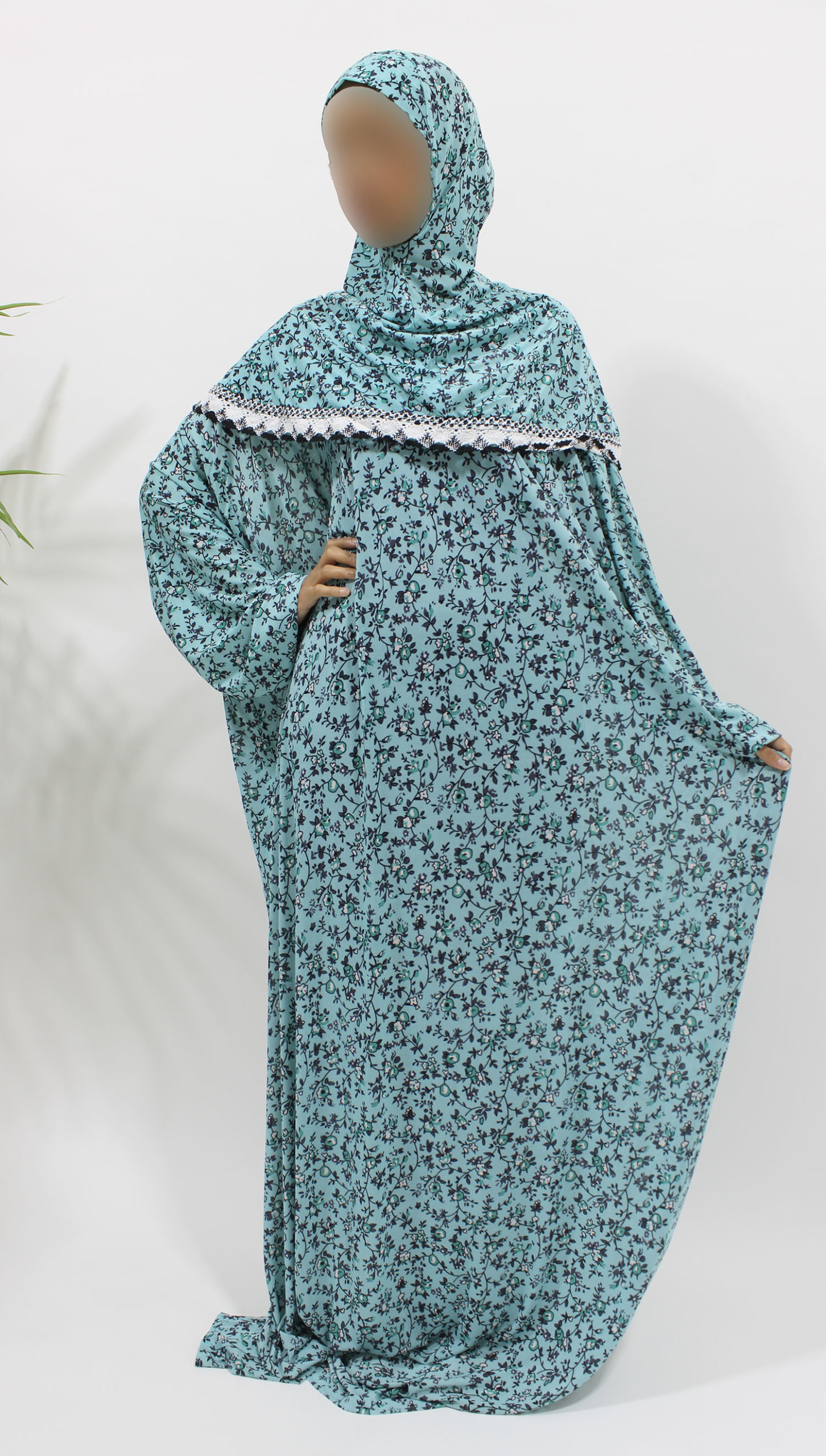
They’re also wonderful for travel and hotel stays — just fold, wear, and pray.
5. Regional Styles (And Why They Matter)
Across the globe, cultural expression brings unique beauty to prayer garments:
| Style | Region | Notable Features |
|---|---|---|
| Chador | Iran | Full cape-like covering, no fasteners |
| Mukena | Indonesia/Malaysia | Two-piece with decorative lace, worn only during salah |
| Jilbab | Arabian Peninsula | Overhead one-piece, often in solid dark colors |
| Thobe or Qamees | North Africa / Gulf | Loose men’s garment, often white or earth-toned |
These regional garments offer us more than fashion. They connect us with a global ummah, reminding us that while we may dress differently, we bow to the same Lord.
Which Style Is Best for You?
The answer lies in your lifestyle, environment, and personal preferences. But one thing is constant: your prayer garment should elevate your worship, not complicate it. So go for something that makes you feel dignified, covered, and quietly beautiful — inside and out.
Here’s what most people overlook: Your prayer garment isn’t just fabric — it’s a spiritual tool. The best style is the one that lets you forget it’s there and focus fully on what matters most: your connection with Allah ﷻ.
What to Avoid When Shopping for a Prayer Garment
It’s easy to get caught up in colors, trends, or low prices — but when it comes to prayer garments, function must always lead fashion. Choosing the wrong piece can turn salah into a distraction instead of a devotion. Let’s talk about the most common mistakes — so you can avoid them with confidence and clarity.
1. Choosing Style Over Substance
We get it — that pearl-studded khimar is so pretty. But will it stay on your head during sujood? If your prayer garment slips, shifts, or sags mid-prayer, it defeats its purpose. Always prioritize:
- Secure fit around the head and chin
- Full coverage of the arms and ankles
- Comfort over glamor — especially for daily salah
Pro tip: Fancy embellishments like beads, sequins, or stiff embroidery can be distracting and uncomfortable — not to mention noisy in quiet prayer spaces.
2. Buying the Wrong Size
Prayer garments aren’t one-size-fits-all — no matter what the label says. A piece that’s too short can expose your ankles in sujood, while something too tight can restrict your movement. Here’s a quick reference guide:
| Body Height | Recommended Garment Length | Notes |
|---|---|---|
| Under 5’2″ | 50–52 inches | Opt for adjustable hems or petite ranges |
| 5’3″–5’7″ | 54–56 inches | Standard fit for most brands |
| 5’8″ and above | 58–60+ inches | Look for tall-fit or custom-made pieces |
When in doubt, measure from your shoulder to your ankles and compare with the brand’s size chart. Don’t guess — especially when ordering online.
3. Ignoring Fabric Quality
The fabric determines how breathable, durable, and comfortable your garment will be — especially in warmer climates or long prayers. Avoid:
- Cheap polyester blends that trap heat and cling to the skin
- Very thin fabrics that become see-through under lighting
- Stiff, scratchy materials that distract you in rukoo and sujood
Instead, choose:
- Cotton jersey (great for softness and breathability)
- Medina silk or crepe (modest flow with durability)
- Linen-blend (ideal for warm climates)
4. Overpaying Without Added Value
Some brands charge designer prices for basic quality. Before spending £80+ on a prayer garment, ask:
- Is it ethically produced?
- Does it include extras (like matching bags, mats, or under-scarves)?
- Are the stitches and seams durable for long-term wear?
If the answer is “no” across the board, you’re better off finding a trusted boutique or local Muslim-owned brand that values both faith and fairness.
5. Forgetting the Purpose of Salah Wear
This is the biggest mistake of all: forgetting that this garment is for worship. It’s meant to center you, not distract you. So if the piece feels fussy, loud, tight, or difficult to move in — it’s not the right fit for your spiritual self.
Here’s what most shoppers miss: the best prayer garment is the one that you forget you’re wearing the moment you raise your hands for takbir.
So, shop wisely. Choose with intention. And remember — what you wear to meet your Lord deserves more than impulse or imitation. It deserves love, care, and reflection.
Online vs Offline: Which Prayer Garment Experience Wins?
The moment you decide to invest in a new prayer garment, you’re faced with a dilemma: should you browse your favorite online Islamic boutique, or head to a physical store where you can feel the fabric and try things on? Both experiences have merit — and drawbacks — but one might suit your needs more than the other. Let’s explore.
🛒 Online Shopping: Convenience Meets Choice
There’s nothing like curling up on the sofa, hot chai in hand, scrolling through an endless selection of prayer garments from around the world. Online platforms — from Etsy to Modanisa — have made global Islamic fashion more accessible than ever.
Pros:
- Global variety: Turkish, Indonesian, Gulf, and African styles at your fingertips.
- User reviews: See what others think before you buy.
- Convenience: No need to travel or rush — shop anytime, anywhere.
Cons:
- Guesswork sizing: What looks flowy on the model might be too tight or too short.
- Fabric surprises: It’s hard to judge thickness, stretch, or texture from photos.
- Delayed gratification: Waiting 5–15 days for delivery (and longer during Ramadan!)
💡 Tip: Only buy from online shops that offer clear size guides, return policies, and multiple fabric photos — preferably on different models or with videos.
🛍️ Offline Shopping: Touch, Try, Trust
There’s a deep, personal joy in walking into a prayer wear store — the rich colors, the whisper of fabric, the quiet smiles exchanged with other women browsing for something beautiful and sacred. It’s more than shopping. It’s an experience.
Pros:
- Fit check: Try before you buy. See how it moves when you bow or raise your arms.
- Fabric feel: Know if it’s breathable, stiff, or silky — instantly.
- Immediate satisfaction: Walk out with what you love, no waiting.
Cons:
- Limited variety: Physical shops usually carry fewer styles and sizes.
- Travel time: Especially tricky for sisters in rural areas or small towns.
- Pressure to buy: Some shops make you feel rushed or watched, which can be uncomfortable.

🧕 Real Talk: A Personal Comparison
Last Eid, I bought two prayer garments. One online — a gorgeous cream khimar with lace trim. The other from a local bazaar — a navy jersey jilbab. Guess which one I still wear every single day?
The lace-trimmed one looked heavenly in pictures but felt rough and kept sliding off. The bazaar jilbab? Breathable, stays in place, and feels like a second skin. It wasn’t about glam — it was about fit, function, and flow.
🏁 So, Which One Wins?
| Feature | Online | Offline |
|---|---|---|
| Selection | ★★★★★ | ★★★☆☆ |
| Fit Accuracy | ★★☆☆☆ | ★★★★★ |
| Convenience | ★★★★★ | ★★☆☆☆ |
| Fabric Feel | ★☆☆☆☆ | ★★★★★ |
| Delivery Time | ★★☆☆☆ | ★★★★★ |
Here’s what most shoppers miss: It’s not about which is objectively “better” — it’s about what matters most to you. If you’re a tactile shopper who needs to feel the garment, offline wins. But if you crave choice and can wait, online offers a richer catalog.
In the end, the best shopping experience is the one that leads you to a prayer garment that you’ll actually want to pray in. That’s the goal — not just to buy, but to believe in what you’re wearing.
Latest Trends and Innovations in Prayer Garments
Prayer garments have come a long way from their traditional roots — and while the spiritual purpose remains unchanged, the style, comfort, and technology woven into them are transforming fast. What once was plain and functional is now stylish, breathable, and surprisingly high-tech. Let’s unpack the most exciting trends that are redefining how Muslim women experience modest prayer wear today.
✨ 1. Smart Fabrics and Performance Textiles
It’s not just sportswear getting an upgrade — prayer garments are now being made with breathable, sweat-wicking fabrics that make long Salah sessions more comfortable. Some brands are even exploring anti-bacterial, UV-protective materials — a blessing for outdoor prayers and hot climates.
- Moisture control: Keeps you cool even during warm Taraweeh nights.
- Stretch fabrics: Offers better mobility for sujood and ruku without pulling.
- Static-resistant blends: No more awkward clingy moments during salah.
Brands like ModestFit and Veil Garments are leading the charge with performance-based prayer wear that blends form and function effortlessly.
🎨 2. Aesthetic Upgrades Without Compromising Modesty
Today’s abayas and khimars are infused with minimalist elegance — soft pleats, delicate embroidery, and tonal stitching that catch the eye without drawing attention. Gone are the days of bulky silhouettes. Now, you’ll find prayer sets that feel tailored but still flow modestly.
Color palettes have expanded beyond basic black or white. Think:
- Earth tones: Olive, sand, caramel — perfect for grounding your mood during prayer.
- Pastel serenity: Lavender, dusty rose, sage green for a touch of personal peace.
- Monochrome luxury: Coordinated sets with matching pouches and prayer mats.
🧵 3. Lightweight & Packable Travel Sets
Modern Muslims are more mobile than ever, and designers have answered the call with foldable, wrinkle-resistant prayer garments that can slip into your handbag, suitcase, or car. These are ideal for students, professionals, or globetrotters who never want to miss a prayer — wherever they are.
Bonus trend: Some even come with matching travel prayer mats and drawstring pouches — sleek, practical, and purposeful.
👩💻 4. Tech-Enabled Customization
AI-powered tailoring is now a thing. Certain online Islamic clothing platforms allow you to input your height, sleeve length, body type, and prayer posture needs — and receive a custom-fitted jilbab or khimar. No more compromising on length or sleeve coverage.
This innovation is especially empowering for:
- Petite or tall women
- Women with disabilities or chronic pain (for whom movement-friendly design is critical)
- Plus-size sisters who need garments that don’t just fit — but flatter
🧕 5. Inclusive Sizing and Representation
Finally — a major shift is happening. Brands are waking up to the need for inclusive sizing and diverse representation in their marketing. We’re seeing models of different skin tones, body types, and abilities wearing prayer garments — and it’s long overdue.
This visibility doesn’t just make the product relatable — it reaffirms that Islam is beautifully diverse, and every woman deserves to feel seen and included in her worshipwear.
📊 At-a-Glance: Top Innovations in 2025 Prayer Garments
| Innovation | Benefit | Best For |
|---|---|---|
| Smart Fabrics | Moisture-wicking, breathable comfort | Warm climates, long prayers |
| Foldable Travel Sets | Portability, space-saving | Commuters, travelers, students |
| AI-Based Custom Sizing | Tailored fit for all body types | Plus-size, petite, adaptive needs |
| Matching Prayer Accessories | Stylish cohesion, convenience | Gift-givers, brides, new reverts |
| Inclusive Branding | Emotional connection, belonging | Everyone — it’s a human need |
Here’s what most people miss: these trends aren’t just fashion statements — they’re faith facilitators. When your garment fits well, feels right, and represents you — you’re more likely to show up for your prayer with focus, dignity, and joy.
Expert Tips for Getting the Most Out of Your Prayer Garment
Your prayer garment isn’t just something you wear — it’s something you live in, connect through, and elevate your ibadah with. If you’ve ever wondered how to make your prayer attire work harder for your comfort, spirituality, and confidence, these expert-backed tips are where form meets faith.
🧽 1. Keep It Clean — Physically & Spiritually
This one’s non-negotiable. A clean garment is a sunnah, but it’s also an act of self-respect and mental clarity. Wash your prayer garment regularly — ideally by hand or on a delicate cycle — and avoid using strong synthetic fragrances that can distract during salah.
- Use unscented or halal-certified detergents.
- Designate a specific hanger or pouch for your prayer set to avoid cross-contamination.
- Make niyyah (intention) before donning it — it turns routine into ritual.
Cleanliness is half of faith — and your garment is the front line of that principle.
🧘♀️ 2. Prioritize Mobility and Fit
The biggest mistake women make with prayer garments? Choosing style over movement. An abaya that looks beautiful but tugs at your knees in sujood is more of a burden than a blessing. You want something that feels like a second skin — not a straitjacket.
Here’s what to check for:
- Shoulder fit: Too tight and it restricts ruku. Too loose and it slides during takbir.
- Sleeve width: Wide enough to cover the wrist but not so loose that they dangle in sajdah.
- Hem length: Must touch the ankles without dragging underfoot — safety + modesty.
💨 3. Rotate Between At Least Two Garments
One for everyday prayers. One for Jumu’ah or guests. It’s not about vanity — it’s about sustainability and ritual honor. When you rotate between garments, each one lasts longer and retains that special feeling of sanctity.
Pro Tip: Have a breathable, cotton-based set for hot days and a fleece-lined one for colder months. Your body will thank you during Fajr in January.
🛍 4. Invest in Quality Over Quantity
It’s easy to collect five low-grade polyester abayas that irritate your skin. But one well-made, ethically sourced, sweat-resistant, properly stitched khimar will serve you for years — and give you a dignified sense of presence in your salah.
Here’s a quick quality checklist:
- Stitching is double-stitched or serged — no frays or loose threads.
- Fabric has enough weight to drape but not so much that it overheats.
- Elastic headbands or chin ties are gentle but secure — no pinching.
📦 5. Create a Prayer Garment Station
Keep your garment, prayer mat, Quran, and a small bottle of attar or water nearby in one dedicated prayer space. It reduces mental friction and sets a ritual tone — especially helpful if you’re trying to build consistency in your salah routine.
Bonus benefit: It signals to your mind and body that this is sacred time — and that enhances khushu (presence of heart).
🔁 At-a-Glance: Maximizing Your Prayer Garment
| Tip | Why It Matters | Impact on Prayer |
|---|---|---|
| Wash regularly with intention | Boosts physical purity and spiritual mindfulness | Improves focus and ritual preparation |
| Choose movement-friendly fits | Allows for full range of motion during prayer | Reduces distraction and discomfort |
| Rotate your garments | Extends life span and enhances spiritual association | Keeps your prayer feeling fresh and honored |
| Invest in quality | Durable, breathable, and respectful to the act of worship | Elevates mood, presence, and physical comfort |
| Create a prayer station | Minimizes resistance and builds consistent habits | Establishes peaceful, repeatable rituals |
Remember: your prayer garment isn’t just an outfit — it’s armor for your soul. When you invest in it with love and intention, it becomes a silent motivator, urging you to pray, to pause, and to connect.
Choosing the Right Prayer Garment for Different Occasions
Not all prayer moments feel the same — and your garment shouldn’t be one-size-fits-all either. Whether you’re preparing for a serene Fajr at home, hosting a gathering, or heading to the masjid for Eid prayers, your attire can elevate the experience. The right garment honors the occasion, supports your focus, and expresses dignity. Let’s match the garment to the moment.
🕊 Daily Home Prayers — Comfort Comes First
For everyday salah at home, especially if you’re juggling housework, children, or remote work, your garment should feel like a gentle hug. Look for:
- Lightweight cotton or jersey: Breathable and soft on skin.
- Elastic sleeves: Keeps them in place during wudu and sujood.
- Slip-on khimar or attached hood: Easy to throw on, no pins required.
Pro Tip: Keep one folded neatly near your prayer mat so you’re always ready — no excuses, no delays.
🕌 Masjid Visits — Modest & Presentable
Heading out to the mosque? It’s time to level up — while still keeping comfort at the core. Go for:
- Full-length abayas with front zippers: Easy to layer over clothes.
- Matching khimar sets: Elegant and cohesive.
- Muted or jewel-tone colors: Reflects respect without standing out.
Bonus points if it has a pocket or inner pouch to store your phone or keys — practicality meets piety.
🌙 Ramadan & Taraweeh — Breathability Is Key
During long night prayers, your garment needs to keep up. Look for:
- Moisture-wicking fabric: Avoid feeling sticky in extended rak’ahs.
- Light and flowy materials: Prevent overheating in crowded prayer spaces.
- Minimal embroidery: Avoid scratchy inner linings — you’ll thank yourself during witr.
Pro Insight: Soft pastel shades or earth tones soothe the senses and add tranquility to your ibadah.
👩👧👦 Teaching or Praying with Children — Flexibility & Function
If you’re a mum or caregiver, your prayer garment needs to move with you — literally. Look for:
- Stretchable side slits or pleats: So you can squat, carry, and transition smoothly.
- Secure head coverings: No loose veils that tiny hands can tug.
- Machine washable: Because kids = chaos.
Mom Hack: Buy a mini prayer garment for your child to match yours — they’re more likely to engage in salah if they feel included.
🎉 Eid & Celebratory Prayers — Elegance Meets Reverence
Eid is a time of joy — and your garment can reflect that without crossing into extravagance. Seek out:
- Silky or satin textures: Adds sophistication with ease of movement.
- Delicate embroidery or lace trims: Keep it refined, not flashy.
- Coordinated accessories: A subtle belt or matching hijab enhances elegance.
Reminder: You’re not dressing to impress others — you’re celebrating the gift of prayer, in style and gratitude.
🧭 Quick Reference Table: Garment Picks by Occasion
| Occasion | Best Fabric | Key Features | Why It Works |
|---|---|---|---|
| Daily Prayers at Home | Cotton or jersey | Slip-on, elastic sleeves, breathable | Ease + comfort + consistency |
| Masjid or Jummah | Crepe or Nida | Zippered abaya, matching khimar | Modest, formal, presentable |
| Ramadan/Taraweeh | Lightweight chiffon | Breathable, minimal stitching | Comfort over long durations |
| With Kids | Poly-blend or Lycra | Flexible, washable, secure fit | Mobility + durability |
| Eid & Celebrations | Satin or silk-touch | Elegant cuts, subtle embellishment | Joyful but still reverent |
When you choose your prayer garment with intention, every fold becomes part of your worship. Dressing for the moment transforms the ordinary into the sacred — and your garments become more than just fabric. They become facilitators of your faith.
What to Avoid When Buying or Wearing a Prayer Garment
Prayer is sacred. It’s the moment you disconnect from the world and reconnect with your Creator. The last thing you want? Distractions, discomfort, or worse — a garment that actually hinders your khushu’ (focus). Many sisters unknowingly choose pieces that look good online but fail in real-life salah. Here’s how to sidestep the most common pitfalls — and make every rak’ah count.
🚫 Poor Quality Fabrics That Distract or Irritate
That dazzling fabric might photograph beautifully — but in practice? It can itch, stick, or make noise every time you move. Avoid:
- Rough synthetics: These can cause skin irritation, especially in warmer climates.
- Overly stiff fabrics: They crinkle uncomfortably in sujood and disrupt movement.
- Transparent materials: Even with inner layers, they can compromise modesty and make you feel exposed.
Bottom line: If it’s not breathable or modest, it doesn’t belong in your salah wardrobe.
🚫 Excessive Embellishments and Bling
We get it — everyone loves a little sparkle. But when your garment starts competing with a disco ball, it’s gone too far. Why to steer clear:
- Sequins and beads: They may fall off, make noise, or poke your skin during sujood.
- Heavy stitching: This adds weight and makes your garment harder to manage.
- Distracting patterns: They can break your focus — and distract those around you.
Rule of thumb: If you wouldn’t wear it in front of the Prophet ﷺ, skip it for salah.
🚫 Poor Fit or Slippery Head Covers
A scarf that slides off mid-salah? A hem that tangles around your feet? That’s not just annoying — it breaks your concentration. Watch out for:
- Loose headpieces: Choose those with elastic, ties, or under-chin buttons.
- Abayas that drag: They become tripping hazards and get dirty easily.
- Tight-fitting arms or bodices: You need full range of motion — not a straitjacket.
Try-on test: Before buying online, check garment measurements and sizing reviews — and always test it out with a mock prayer at home.
🚫 Loud Colors or Bold Logos
Your salah outfit isn’t streetwear. It’s a spiritual uniform — and it should reflect that. Avoid:
- Neon or glittery tones: These scream for attention and can distract others in congregation.
- Brand logos or slogans: They’re unnecessary and take the focus away from worship.
- Inappropriate prints: Abstract art? Sure. Skulls, text, or trendy icons? Definitely not.
Focus tip: Neutral, calming tones like beige, navy, olive, or soft pastels are ideal — they enhance serenity.
🚫 Complicated Designs That Waste Time
If it takes more than 2 minutes to put on your prayer garment, it’s too complicated. Avoid:
- Multiple layers and pins: You’ll lose precious minutes fiddling with them before prayer.
- One-size-fits-none designs: Oversized isn’t always better — it can be heavy or poorly fitted.
- No consideration for ease-of-use: Look for zippers, snaps, or pull-over styles that simplify your routine.
Efficiency Hack: Keep a no-fuss prayer set in your home, car, and bag — so you’re never caught unprepared.
📌 Summary Table: Top Mistakes to Avoid
| Common Mistake | Why It’s a Problem | Better Alternative |
|---|---|---|
| Itchy synthetic fabric | Causes discomfort & ruins focus | Breathable cotton or Nida |
| Excessive beading | Noise, irritation, and distraction | Simple embroidery or plain fabric |
| Loose scarf or hood | Falls during sujood | Elastic khimar or under-chin closure |
| Neon or loud prints | Distracts others and yourself | Soft, neutral tones |
| Complicated layering | Time-consuming & impractical | Single-layer zip-up or pullover sets |
Remember: The prayer garment isn’t about making a fashion statement — it’s about enhancing your connection to Allah ﷻ. The simpler, purer, and more functional your garment, the more it serves its divine purpose. Don’t just buy what’s trending — buy what’s truly transformational.
The Role of Modesty in Islam and Its Influence on Prayer Garments
Modesty — or haya — isn’t just a dress code in Islam. It’s a worldview. A lens through which a believer navigates everything — from interactions to attire. And when it comes to salah, modesty moves from being a personal virtue to a mandatory condition of the prayer itself.
🕊️ Modesty: A Commandment, Not Just a Cultural Practice
Many assume modesty is cultural — shaped by geography or tradition. But in Islam, it’s a divine command.
“O Children of Adam! Wear your beautiful apparel at every time and place of prayer…” (Qur’an 7:31)
Note that it says *every time* and *every place* of prayer. That implies preparation, cleanliness, and dignity — not just routine. Your prayer garment isn’t a backup plan; it’s a *spiritual uniform*.
🧕🏼 How Modesty Shapes the Design of Prayer Garments
Prayer garments reflect the deeper principles of modesty through:
- Coverage: Covering the entire body except for the face and hands is a baseline requirement for women in salah.
- Non-form-fitting cuts: Modesty isn’t just about surface coverage — it’s about not accentuating the body either.
- Opacity: Thin, see-through materials nullify prayer. This is why darker or layered garments are often preferred.
In other words: prayer garments embody haya not just by hiding — but by honoring the body’s sanctity during worship.
⚖️ Modesty Is Not Restriction — It’s Elevation
Here’s where many get it wrong: modesty isn’t about suppression. It’s about spiritual elevation.
When you enter salah dressed with humility, simplicity, and reverence, you embody submission — the very heart of Islam. You’re not impressing a congregation — you’re standing before the Lord of the Worlds.
And it’s *that* internal state — supported by an external garment — that unlocks true khushu’ (devotion) in prayer.
💬 Real Talk: Modesty in a Modern World
In today’s image-saturated, selfie-obsessed world, modesty can feel like swimming upstream. But let’s flip the narrative. What if modesty is the ultimate rebellion against vanity, consumerism, and superficiality?
Your prayer garment becomes a statement. A declaration that you value your soul over trends. That you’re focused on Jannah — not Instagram likes.
Modesty isn’t outdated — it’s timeless. And when reflected in your prayer attire, it becomes a badge of honor.
📌 Table: Core Modesty Guidelines in Salah
| Modesty Requirement | Why It Matters | Prayer Garment Feature |
|---|---|---|
| Full body coverage (except face & hands) | Essential condition for valid salah | Full-length jilbab or abaya with khimar |
| Opaque material | Prevents exposing ‘awrah | Thick cotton, Nida, or layered fabrics |
| Loose-fitting design | Ensures modesty and movement comfort | Flowy cuts with wide sleeves |
| Neutral colors | Reduces distraction in congregational settings | Beige, navy, black, or muted tones |
At its heart, modesty in prayer garments isn’t about looking ‘less.’ It’s about feeling more — more connected, more serene, more aligned with your Creator. When your garment reflects your humility, your heart follows suit. And that is where the true beauty of salah begins.
How to Care for and Maintain Your Prayer Garments
Prayer garments aren’t just fabric — they’re sacred tools in your spiritual life. And just like a Qur’an deserves reverence, your salah attire should be maintained with care, respect, and intentionality.
But let’s be real — between hectic routines, laundry piles, and unpredictable fabrics, keeping your prayer garments fresh, functional, and long-lasting can feel like a full-time job. Don’t worry. We’re about to break it down step-by-step — with practical tips that make maintenance both doable and spiritual.
🌸 Step 1: Wash with Niyyah (Intention Matters)
Yes, even laundry can be an act of worship. Before you even touch the detergent, set a simple intention: “Ya Allah, I’m cleaning this garment to honor my prayer.”
This transforms a mundane chore into a spiritual habit — and trust me, the barakah shows up even in the wash cycle.
🧼 Step 2: Know Your Fabrics — And Treat Them Accordingly
Prayer garments come in various fabrics — each with their own personality. The way you wash Nida is not the way you treat jersey or chiffon.
| Fabric Type | Care Instructions | Pro Tips |
|---|---|---|
| Nida | Cold wash, no tumble dry | Hang immediately to prevent wrinkles |
| Jersey | Gentle cycle, warm water | Avoid high heat, it stretches |
| Chiffon overlays | Hand wash or delicate mode | Use mesh laundry bag |
| Cotton | Warm wash, low tumble | Pre-treat stains before machine wash |
Not sure what fabric you have? Check the label or consult the brand’s website. One wrong spin cycle can shorten your garment’s lifespan significantly.
🌬️ Step 3: Dry the Sunnah Way — Naturally
Where possible, skip the dryer. Hang-drying not only preserves fabric integrity, but also follows a more eco-conscious, barakah-filled approach. Plus, sunlight (indirect) acts as a natural disinfectant.
But beware: direct, harsh sunlight can fade colors over time. So dry in the shade when possible — especially for darker hues.
🧴 Step 4: Use Fragrance Mindfully (Yes, There’s a Sunnah Here)
While men are encouraged to wear perfume in salah, women praying at home may also use light scent — if it lifts their spiritual mood. Just avoid overpowering sprays or synthetic smells that cling to fabric fibers.
Opt for non-alcoholic, natural scents like:
- Rose water mist
- Sandalwood oil (dabbed on inner garment)
- Musk body mists (lightly applied)
Remember: don’t wear perfume in public if you’re stepping out after salah. Keep it private, keep it intentional.
📦 Step 5: Store With Respect
Your prayer garment isn’t a gym tee — don’t shove it in a corner or toss it on a chair. Designate a clean drawer or breathable garment bag just for your salah attire.
You can even fold it around your prayer mat — so that every time you get ready for salah, you’re greeted by both tools of worship together.
🔁 Step 6: Refresh Regularly
Even with great care, prayer garments have a life cycle. Over time, fabric may fade, seams may loosen, or styles may no longer serve your comfort.
Use this as an opportunity: Donate gently used garments to a local mosque or women’s shelter. Then, invest in a new set with the renewed intention to elevate your prayers once more.
✨ Bonus Tip: Build a Mini “Prayer Wardrobe”
If possible, own more than one prayer garment — especially if you pray five times a day at home. This helps rotate fabrics, reduce wear and tear, and ensures you always have a clean one on hand.
Some sisters even create a small “salah corner” with:
- Folded garments
- Prayer mat
- Qur’an and tasbih
- Room spray or diffuser
This turns prayer into a sacred *experience* — not just a to-do item.
🧠 Final Thought
The way you care for your prayer garment mirrors how you care for your prayer. Keep it clean. Keep it intentional. Keep it sacred.
And remember — a garment that’s respected serves better than one that’s rushed. Elevate the small habits, and your entire spiritual routine transforms.
Real-Life Testimonials: Sisters Share Their Prayer Garment Journeys
Nothing speaks louder than the heartfelt experiences of real women who live, pray, and find empowerment through their garments. These aren’t influencer endorsements or paid partnerships — they’re raw, authentic voices from sisters around the world who’ve built a sacred relationship with their prayer clothing.
From reverts navigating new wardrobes to lifelong Muslims rediscovering their spiritual identity through modest fashion, their stories reveal just how powerful a prayer garment can be.
🗣️ Aisha (UK): “My Nida Abaya Became My Safe Space”
“I used to struggle with concentration in salah. There was always some distraction — noise, mess, or even discomfort in my clothes. But when I bought my first Nida abaya specifically for prayer, something shifted. It felt like armor — soft, secure, and sacred. Now when I put it on, I step into my prayer space both physically and mentally.”
🧕 Sarah (Malaysia): “I Took My Shahada — and Then Bought My First Jilbab”
“Converting to Islam felt like walking into the light — and buying my first prayer garment made that light feel tangible. I stood in front of the mirror and cried. It wasn’t just a new outfit. It was the beginning of a whole new chapter, filled with purpose and peace.”
👩🏽 Hafsa (USA): “Pregnancy, Postpartum, and the Power of Comfort”
“During my pregnancy, I needed something loose, breathable, and modest. I found a cotton blend khimar and skirt set that felt like a hug. Postpartum, when my body changed again, the same garment gave me dignity and ease during those emotional early days. Now it’s my go-to for fajr.”
👩🎓 Leila (Egypt): “My Prayer Garment Got Me Through University”
“Juggling lectures, part-time work, and five daily prayers wasn’t easy. But I kept a wrinkle-free jilbab in my locker. That garment became my midday escape from stress — a portable mosque in fabric form. It reminded me of who I was, no matter how chaotic life got.”
🧕 Mariam (Nigeria): “Eid Was the Turning Point”
“I’d always worn western-style clothes, even for salah. But on Eid, my mum gifted me a fully embroidered prayer abaya. It was regal — like it belonged to a queen. When I wore it, I finally saw myself as a woman of dignity, faith, and beauty. From that day, I never looked back.”
💬 Patterns Across Stories: What We Can Learn
- Emotionally Anchored: Prayer garments often serve as a turning point in someone’s spiritual journey.
- Functional Comfort: Comfort and modesty aren’t just practical — they’re spiritual enablers.
- Identity-Building: For many, the garment becomes a symbol of transformation and belonging.
- Routine Reinforcer: Having a designated salah outfit helps build consistent prayer habits.
🌍 Global Unity Through Fabric
Whether in the bustling streets of Jakarta or a quiet corner of a New York dorm, the connection to prayer garments is universal. It crosses cultures, skin tones, languages, and lifestyles — reminding us that we’re all bound together in our worship and modesty.
🙏 Your Story Matters, Too
What has your prayer garment meant to you? If it has helped you feel closer to Allah, more confident in your modesty, or more consistent in your ibadah — that’s a story worth sharing. We honor every journey and encourage you to reflect on your own as you continue growing spiritually.
Where to Buy the Best Islamic Prayer Garments Online and Offline
Finding the perfect Islamic prayer garment isn’t just about style — it’s about trust, quality, and convenience. Whether you prefer the tactile comfort of shopping in-store or the variety of the digital marketplace, knowing where to shop can make or break your experience. Let’s explore the best sources for purchasing prayer garments — both online and offline — and what to consider in each.
🛍️ Shopping Online: Variety, Reviews, and Ease
Online shopping for Islamic prayer garments has exploded in recent years, with global accessibility, broader size options, and an ever-evolving selection of styles. Platforms like Modanisa, Haute Hijab, SHUKR, and East Essence offer curated prayer garments for different needs — from lightweight travel options to premium abayas for long-term use.
Key online advantages:
- User Reviews: Read customer feedback before purchasing.
- Size Charts: Double-check sizing based on your region (EU, US, UK).
- Return Policies: Make sure the brand offers easy returns or exchanges.
- Material Transparency: Look for full descriptions of fabric blends (e.g., cotton jersey, silk, modal).
💡 Insider Tip:
If you’re buying from outside your country, factor in customs fees, shipping time, and potential delays — especially during Ramadan or Eid seasons when demand spikes.
🕌 Shopping Offline: The Emotional & Practical Benefits
There’s something irreplaceable about physically trying on a prayer garment. In-store shopping gives you the chance to feel the fabric, check stitching quality, and test the fit before purchasing. This is especially important for sisters who are particular about coverage, length, or breathability during salah.
Places to check:
- Islamic Boutiques or Stores: Especially those near masajid or community hubs.
- Pop-Up Markets: Islamic conventions and Ramadan bazaars are goldmines for handmade and unique designs.
- International Travel: If you’re traveling to countries like Turkey, UAE, or Malaysia, consider shopping in-person for authentic options.
📊 Comparison Table: Online vs. Offline Shopping
| Feature | Online Shopping | Offline Shopping |
|---|---|---|
| Product Variety | High — access to global brands | Limited — depends on local stock |
| Try Before You Buy | No | Yes |
| Immediate Availability | Delayed by shipping | Instant |
| User Reviews | Available | Not available |
| Personal Advice | Sometimes via chat or email | In-person staff guidance |
🏆 Best of Both Worlds
If you’re torn, try a hybrid approach: visit local stores to understand your size and preferred fabric, then shop online for variety and price comparisons. That way, you reduce risk while maximizing your choices.
Next up: Let’s explore how cultural differences shape the look and feel of prayer garments around the Muslim world.
Cultural Variations: Prayer Garments Around the Muslim World
One of the most beautiful aspects of the Islamic prayer garment is how it reflects the rich cultural diversity of the Muslim ummah. While the purpose — to maintain modesty and focus during prayer — is universal, the style, fabric, and presentation of these garments differ vastly from region to region. Let’s take a journey around the globe to explore how Muslim women express devotion through their unique cultural lenses.
🕌 Middle East: Elegance in Every Thread
In countries like Saudi Arabia, UAE, and Qatar, prayer garments often double as everyday abayas. These are typically jet black, flowing, and minimalistic — with subtle embroidery or lace detailing. Materials like nida, crepe, or silk blends are popular due to their breathable nature and elegant drape.
Regional Insight: Gulf-style khimars and jilbabs are often paired with a niqab for full coverage, especially in public or mosque settings. Designs prioritize ease of movement and dignified coverage.
🧕 Southeast Asia: Soft Colors and Intricate Designs
In Malaysia, Indonesia, and Brunei, prayer garments — known as telekung — are iconic. These two-piece sets feature a long, loose tunic with a built-in hood and a matching skirt. What sets them apart? Soft pastels, floral embroidery, and light cotton fabrics suited for tropical climates.
Why It Works: The telekung is easy to slip on, lightweight, and tailored for quick, comfortable prayer — ideal for women who pray on the go or during work breaks.
🌍 Africa: Bold, Bright, and Beautiful
From Nigeria to Somalia to Kenya, African prayer garments often feature vibrant prints and wrap-style headscarves. Nigerian women may use a large wrapper and blouse, layered with a matching head wrap during prayer. Meanwhile, Somali sisters are known for the baati or dirac, often worn with a shash (scarf) — lightweight and roomy for easy sujood.
Style Meets Utility: African prayer garments are the perfect balance of fashion and function, expressing identity while maintaining spiritual focus.
🧣 South Asia: Dupattas, Kurtas, and Versatility
In Pakistan, India, and Bangladesh, women often pray in their everyday attire: a long kurta or kameez with loose trousers (shalwar) and a large dupatta for head and chest coverage. However, many also keep a dedicated prayer chador at home — often white or off-white with delicate floral patterns — for extra modesty during salah.
Noteworthy Detail: South Asian garments emphasize light layering. Breathable cotton and lawn fabrics are favored for comfort, especially during summer months and Ramadan nights.
🧭 Europe & North America: Blending Tradition with Modernity
Muslim women in Western contexts often embrace hybrid prayer garments — practical, comfortable, and culturally adaptive. Many prefer overhead khimars, jersey maxi dresses, or zippered abayas that can be worn at home or in community spaces. Comfort, speed, and discreet storage (like foldable sets in pouches) are big considerations.
Western Trend: Convertible garments — think prayer abayas with attached hijabs or magnetic fastenings — are popular among university students and working professionals.
💬 What It All Means
While each culture brings its own flair, all these styles are rooted in a shared purpose: preparing the heart, body, and mind for salah. The variety is proof that Islam embraces both uniformity in purpose and diversity in expression.
Coming up next: We’ll go behind the scenes to learn how these garments are made and what craftsmanship looks like in modern prayer wear.
Behind the Seams: How Prayer Garments Are Made
Have you ever paused mid-salah and appreciated the softness of your garment, the way it flows with your sujood, or how effortlessly it covers you without adjustment? That comfort and function are not accidents — they’re the result of thoughtful design, skilled craftsmanship, and careful selection of materials. Let’s go behind the seams and explore what goes into making a high-quality Islamic prayer garment.
🎨 It Starts with Intention and Design
Designers of prayer garments don’t just focus on aesthetics — they start with purpose. What problem are they solving for the worshipper? Is it ease of movement? Breathability in hot weather? Modesty in public prayer spaces? This drives choices in structure, length, and fastening.
- Functionality-first design: Prayer abayas often skip buttons or zips to avoid distraction during salah.
- Universal sizing: Many garments come in free size or flexible fits to suit a wide range of body types.
- Minimal noise: Fabric selection avoids materials that rustle or cling, ensuring complete focus during prayer.
🧵 Material Selection: The Unsung Hero
The type of fabric used can define the experience. Designers must strike a balance between softness, weight, opacity, and temperature control.
| Fabric | Why It’s Used | Ideal For |
|---|---|---|
| Nida | Silky, non-transparent, breathable | Luxury prayer sets, daily wear |
| Cotton | Soft, cool, lightweight | Summer prayer garments, telekungs |
| Jersey | Stretchy, wrinkle-resistant | Travel garments, quick-slip sets |
| Chiffon (lined) | Elegant drape, layered modesty | Special occasions or Eid prayer |
🧶 The Craftsmanship: Hand-Stitched vs. Machine-Made
Many high-end brands still offer hand-stitched embroidery or trims, especially on telekung or wedding prayer garments. While machine production allows for scalability, handmade pieces often carry emotional and spiritual weight — especially those gifted during major milestones like Hajj, nikah, or first prayers.
Tip: Always check seam quality and hem finish — double-stitched hems last longer and maintain modesty better than single-stitched seams that fray over time.
🔄 Fastening and Functionality
Designers are also incorporating magnetic clasps, hidden zippers, elasticated wrists, and built-in hijab loops. These modern features make it easier to dress quickly, stay covered securely, and fold away the garment neatly after use.
🧼 Sustainability and Ethical Production
Many ethical brands are now focusing on sustainable materials and fair labor practices. Organic cotton, low-impact dyes, and women-led sewing cooperatives are becoming common in ethically-produced prayer garments.
When you support these makers, you’re not just buying a garment — you’re uplifting communities.
Next, we’ll explore real-life stories and testimonials from women who’ve found deep meaning, peace, or transformation through their prayer garments.
Choosing Prayer Garments for Travel: What to Pack and Why
Whether you’re off to Umrah, a quick weekend away, or a long-haul vacation, one question always comes up: Which prayer garment should I bring? The answer? One that balances comfort, convenience, and coverage — without taking up too much suitcase real estate. Let’s unpack the best travel-ready prayer garments and what to consider when you’re on the go.
🧳 The Travel Checklist: What Makes a Garment “Travel-Friendly”?
Not all abayas or telekungs are created equal for travel. When you’re limited to 7kg of cabin baggage or rushing between airports, mosques, or mountain retreats, these are the must-have features:
- Lightweight & compact: Jersey or soft cotton fabrics that fold small without creasing.
- Wrinkle-resistant: Avoid chiffon or heavily embroidered materials that need ironing.
- Quick-drying: Especially if you’re hand-washing on the road.
- Built-in hijab: One-piece sets with attached khimar save time and effort.
- Secure coverage: Elastic cuffs and full-length zips or buttons help avoid wardrobe mishaps mid-prayer.
🧕 Top Travel-Friendly Styles
| Style | Why It Works for Travel | Best Use Case |
|---|---|---|
| One-Piece Jilbab with Attached Hijab | No need to pack extras; slips on in seconds | Hotels, airports, public rest stops |
| Two-Piece Prayer Set | Flexible sizing, interchangeable with sleepwear | Overnights, family visits |
| Travel Telekung | Foldable, often comes in matching pouch | Umrah, hajj, or international flights |
| Abaya with Front Zip | Acts as outerwear + prayerwear | Walking between masjids or outdoor salah |
🌍 Pro Tips from Frequent Travelers
- Pack at least two: One to wear, one to dry — especially important in humid climates.
- Use a separate zip pouch: Keep your prayer garment clean and ready even in crowded luggage.
- Check qibla app compatibility: Some modern travel garments have small pockets for phone storage — super useful during salah outdoors.
📌 A Quick Reminder
Don’t compromise your peace for portability. A well-designed travel garment gives you freedom without sacrificing your spiritual focus. The best ones feel like a warm hug — even if you’re miles from home.
Coming up: We’ll explore the small but mighty features that elevate a good prayer garment to a great one — from magnetic clasps to wudu-friendly sleeves.
Underrated Features That Make a Big Difference
When shopping for a prayer garment, we often look for the big things: coverage, comfort, and cut. But it’s the small, thoughtful details that separate a good piece from one you’ll genuinely love and reach for every day. These underrated features are game-changers — for your focus, routine, and even your confidence during salah.
🔒 Magnetic Closures & Hidden Snaps
You’ve got your wudu done, your prayer mat rolled out… and then you’re wrestling with stubborn buttons or noisy Velcro. Enter magnetic closures. They snap shut quietly, with one hand — no fuss, no noise. Bonus points if your garment has:
- Hidden inner snaps to keep everything in place during sujood.
- Magnetic wrist closures that make rolling up sleeves for wudu effortless.
🫧 Wudu-Friendly Sleeves
This might be the most overlooked feature — but once you experience it, there’s no going back. Wudu-friendly sleeves are either:
- Elasticated for quick pulling up without getting wet
- Zippered or buttoned to open and close as needed
These allow you to stay dry, avoid dripping down your arms, and still maintain a sleek silhouette post-ablution.
🧵 Stitching That Doesn’t Quit
Quality stitching is an invisible hero. If your garment is pulling apart at the seams after two wears, it’s not serving you. Look for:
- Double stitching on high-tension areas like underarms and side slits
- Overlocked hems that won’t fray with washing
- Reinforced necklines that don’t sag with use
🎒 Discreet Pockets
Ever tried holding a phone, keys, or earbuds while rushing to prayer? Pockets aren’t just practical — they’re a sanity saver. Some prayer garments come with:
- Hidden inner pockets for valuables during taraweeh
- Zippered side pockets that don’t interfere with the flow of fabric
👀 No-Peek Panels
When bending in ruku or prostrating in sujood, having extra layers or strategically placed flaps prevents any fabric from shifting unexpectedly. Especially in thinner materials, this is essential for modesty and mental ease.
🌡️ Breathable Panels for Summer
Some high-end garments include mesh lining under the arms or breathable fabric panels along the back — making them ideal for warmer climates without compromising modesty.
In short: Details matter. They don’t just make your prayer garment look better — they make it work better. And when your clothing supports your worship instead of distracting from it, you can truly feel the difference.
Next up: Let’s look at the evolution of Islamic prayer garments — and how innovation has reshaped tradition.
The Evolution of Islamic Prayer Garments Over Time
Islamic prayer garments have always been rooted in modesty, reverence, and spiritual focus. But while the core principles remain unchanged, the garments themselves have evolved dramatically — shaped by culture, necessity, and modern innovation. To truly appreciate where we are today, it’s powerful to understand how far we’ve come.
🕋 From Simple Robes to Cultural Signatures
In early Islamic history, both men and women wore loose, flowing garments reflective of the Arabian Peninsula’s climate and customs. These included:
These pieces were multipurpose — worn in daily life, but also for salah. As Islam spread globally, each region adopted its own version of modest prayer attire, from the baju kurung in Southeast Asia to the chador in Iran.
🎨 The Rise of Embellishment & Fabric Diversity
In the centuries that followed, Islamic prayer garments started to reflect more than function. They became a symbol of regional identity, and artistry played a bigger role. We saw:
- Intricate embroidery in Turkish abayas
- Gold thread and beading in Moroccan takchitas
- Lace accents and floral prints emerging in modern Gulf designs
Prayer garments became more than spiritual tools — they were vessels of cultural pride and beauty.
🧵 Industrial Revolution Meets Modesty
With the arrival of mass textile manufacturing, suddenly accessibility skyrocketed. Women from various economic backgrounds could now own dedicated garments just for prayer. Standardized sizing, machine-stitched hems, and factory dyeing meant:
- More affordability
- Wider fabric selection — like jersey, polyester, and cotton blends
- Ready-to-wear garments hitting the mainstream
📱 Digital Age & Global Influence
In the past 15 years, the internet and social media have transformed what it means to shop for — and wear — Islamic prayer garments. Influencers, brands, and modest fashion shows now influence:
- Trend cycles for cuts and colors
- Ethical sourcing conversations around sustainable prayerwear
- Body-positive design that considers diverse shapes and sizes
Suddenly, your prayer garment isn’t just religious attire — it’s a statement of faith, identity, and self-respect.
🔮 The Future: Where Innovation Meets Intent
Looking forward, we’re seeing tech-enhanced fabrics (like moisture-wicking hijabs), adjustable one-piece prayer sets, and even UV-protective garments for outdoor prayer settings. The focus is still on devotion — but now supported by comfort, design, and intentionality.
What hasn’t changed? The purpose. Every iteration of the prayer garment — from a Bedouin’s linen robe to your favorite jersey khimar set — has existed to help you stand in front of Allah with humility and presence.
Next, we’ll dive into expert tips to get the most out of your prayer garment — and avoid common regrets.
Expert Tips to Get the Most Out of Your Prayer Garment
It’s not just about owning a prayer garment — it’s about using it in a way that enhances your connection, comfort, and consistency in worship. Below are practical, time-tested tips from stylists, scholars, and lifelong users of Islamic prayer attire.
✅ Choose Fabric with Intention
Not all prayer garments are created equal. Experts agree that fabric choice dramatically affects your prayer experience. Here’s what to consider:
- Jersey or Lycra blends: Ideal for at-home prayer due to stretch and comfort.
- Lightweight cotton or rayon: Breathable and perfect for warmer climates or long salah sessions.
- Polyester or crepe: Better for travel due to wrinkle resistance and durability.
Pro tip: If you pray in a room with AC or cold floors, consider thicker or fleece-lined options during winter months.
🎒 Keep One in Your Go-Bag
You never know when an opportunity for salah will arise. Keep a compact prayer garment in your:
- Work tote
- Gym bag
- Car glove compartment
Having one on hand means never compromising on salah due to lack of preparation.
🧕 Match It to Your Routine
If you’re a busy mom, a student, or work 9-to-5, your prayer garment should reflect that. Here’s how to pick one that aligns with your lifestyle:
| Lifestyle | Recommended Style | Why It Works |
|---|---|---|
| Busy Moms | One-piece elastic sets | Quick to wear, secure, no fuss with pins or layers |
| Students | Two-piece sets with zipper pouches | Packable, discreet, and quick to store |
| Office Workers | Minimalist abayas in neutral tones | Double as modestwear during commute or break |
✨ Take Care of It Like You Would a Prayer Mat
Experts suggest mentally elevating your prayer garment to the same spiritual level as your prayer mat. That means:
- Storing it clean and folded, away from shoes or laundry piles
- Washing it regularly and with care
- Not using it for chores or non-salah activities
When you treat it with respect, it reinforces the importance of prayer itself.
📿 Refresh Its Spiritual Intent
Sometimes, a new prayer garment can reinvigorate your connection to salah. If you’ve hit a spiritual rut, consider buying a new one to mark a fresh intention — like starting tahajjud, praying more consistently, or just elevating your khushu’ (focus).
🙌 Bonus: Let It Be a Gift
One of the most powerful uses of a prayer garment? Giving it. Whether it’s to a revert, a young girl starting to pray, or someone grieving — it becomes a deeply meaningful, spiritual gift. Experts say it’s one of the most underrated acts of sadaqah you can do.
Next up, we’ll explore how to keep your garments in top condition over time.
Frequently Asked Questions About Prayer Garments in Islam
1. What is a prayer garment in Islam?
A prayer garment in Islam refers to clothing specifically worn during salah (prayer) to ensure proper coverage, modesty, and cleanliness, in accordance with Islamic requirements. For women, this often includes a loose-fitting abaya or jilbab with a khimar or hijab that covers the entire body except the face and hands.
2. Is it mandatory to wear a special garment for prayer?
No, it is not mandatory to wear a special garment per se, but it is obligatory to ensure the body is covered according to Islamic guidelines during prayer. Many people choose designated garments to guarantee compliance and maintain cleanliness, especially for frequent prayers.
3. What is the difference between a prayer garment and a regular abaya?
While both can cover the body appropriately, prayer garments are often looser, longer, and made with minimal embellishments to maintain focus during worship. They are also usually kept clean and reserved solely for salah, unlike daily abayas which may vary in style and fabric.
4. Can I pray in my regular clothes?
Yes, as long as your regular clothes fulfill the conditions of modesty (awrah) and cleanliness, you can pray in them. However, many opt for a dedicated prayer outfit to avoid doubts and distractions.
5. What fabric is best for a prayer garment?
Breathable, non-clingy fabrics such as cotton, jersey, or lightweight crepe are ideal. These materials allow comfort and full coverage while ensuring airflow during extended prayers, especially in warmer climates.
6. Do children need special garments for prayer?
Children are encouraged to wear modest clothing that covers them appropriately during prayer, especially as they approach the age of accountability (around 7 years). While a specific garment isn’t required, teaching modesty early helps instill lifelong habits.
7. Are prayer garments different for men and women?
Yes. For men, a simple clean thobe or any modest attire that covers from the navel to the knees suffices. Women, however, must cover their entire bodies except the face and hands, making their garments more specific in coverage and often distinct in design.
8. Can I use a khimar as a prayer garment?
A khimar can be part of a prayer garment but must be paired with a loose, modest body covering like an abaya or jilbab to meet prayer requirements. A khimar alone typically only covers the head, neck, and upper body.
9. How should a prayer garment fit?
It should be loose, opaque, and non-revealing. The goal is to ensure no body shape is defined and the garment does not rise during sujood (prostration). A good fit enhances focus and avoids the need to adjust during salah.
10. What color should my prayer garment be?
There is no required color in Islam, but many prefer neutral or darker tones to avoid distractions. Some cultures or masjids may favor white or plain colors, especially for formal congregational prayers like Jummah or Eid.
11. Is it okay to wear patterned or embellished garments for prayer?
It is permitted as long as the garment meets the requirements of modesty. However, it’s best to avoid heavily patterned or flashy clothing that might distract you or others during prayer.
12. Can I wear socks during prayer?
Yes, socks are allowed and even beneficial if they help maintain modesty. For women, if the lower leg or feet might be exposed during prayer, socks can help ensure full coverage.
13. Do I need to change garments before every prayer?
Not necessarily. As long as your prayer garment remains clean and meets the requirements, you can wear the same one for multiple prayers. Many people have a designated outfit they keep clean specifically for this purpose.
14. How do I clean my prayer garment?
Follow the care label instructions, usually opting for gentle cycles or handwashing if the fabric is delicate. Since it’s worn often, keeping it fresh and free from odors is key — especially in warmer climates.
15. What should I wear if I’m caught without my prayer garment?
If you’re without your usual prayer outfit, use any clean, modest clothing that fulfills the awrah requirements. Scarves, shawls, or even a large hoodie can be creatively layered in emergencies.
16. Are there prayer garments for Hajj or Umrah?
Yes. Women usually wear simple, loose white garments with minimal adornment. Men wear the ihram — two white unstitched cloths — during these pilgrimages. Both are symbolic of equality and submission.
17. Can men wear shorts for prayer at home?
Only if the shorts cover from the navel to the knees completely and aren’t tight or see-through. Still, it’s preferable to wear a longer, looser garment like a thobe for dignity and focus.
18. What if I accidentally pray in revealing clothing?
If you realize after the prayer that your garment didn’t meet modesty standards, and you were unaware during salah, scholars differ on whether the prayer must be repeated. It’s safest to repeat it, especially if significant awrah was exposed.
19. Can I pray in a two-piece outfit?
Yes, as long as it fully covers the body appropriately and doesn’t shift or expose skin during prayer movements. Many modern two-piece prayer sets are designed with elastic waistbands and long tunics for this reason.
20. Where can I buy quality Islamic prayer garments?
You can find a variety of prayer garments online through modest fashion retailers, Islamic shops, or marketplaces like Etsy and Amazon. Look for trusted sellers that offer size guides, return policies, and fabric details.
Final Thoughts: Elevate Your Worship, Embrace Your Identity
Prayer is not just a ritual — it’s a sacred connection, a daily reunion with your Creator. And what you wear during those moments isn’t about fashion — it’s about intention, respect, and spiritual mindfulness. Choosing the right Islamic prayer garment isn’t merely a matter of covering; it’s a decision that reflects your love for Allah, your commitment to worship, and your sense of modesty and dignity.
Whether you opt for a classic khimar, a full-length jilbab, or a two-piece prayer set that makes wudhu effortless, what matters most is sincerity. Let your garment reflect your humility. Let your outfit invite tranquility. And let every fold of fabric remind you that you’re standing before the Most Merciful — exactly as He prescribed: modest, clean, and focused.
If this guide helped you understand the depth and significance of choosing a proper prayer garment in Islam, take the next step. Explore options that suit your body, your lifestyle, and your devotion. Encourage your loved ones to do the same. Share this resource with sisters, friends, or anyone seeking clarity on this beautiful Sunnah.
Because when your heart is present, your garment should follow.
Ready to Transform Your Prayer Experience?
If you’re searching for affordable, elegant, and Shariah-compliant prayer garments designed with real worshippers in mind, we’ve got you covered — literally. Browse our curated selection, learn more from our upcoming articles, or sign up for insider updates and spiritual reminders.


