
You ever put on a prayer dress and just *feel* a shift? Like the world softens, the noise quiets, and suddenly — it’s just you and your Lord. For so many of us, prayer clothes aren’t just garments; they’re part of the sacred pause we take from life’s chaos. But let’s be real: finding prayer wear that’s modest, comfortable, breathable, and still makes you feel like *you*? That can feel like a mission. I’ve been there — tugging at sleeves mid-ruku, overheating under thick fabric, wondering why something so meaningful has to feel so… meh.
So I wrote this. A full, from-the-heart guide to Muslim prayer clothes in 2025 — what’s changed, what’s trending, and what you *really* need to know. Whether you’re new to salah or just searching for your go-to prayer outfit, I promise we’ll cover it all: fabrics, fits, tips, even how kids and brothers can find comfort too. By the end of this post, I’ll walk you through everything you’ve ever wondered about Muslim prayer wear — so let’s dive in.
Muslim Prayer Clothes: A Comprehensive Guide to Comfort, Modesty, and Style
Updated for 2025 — Whether you’re a lifelong Muslim or new to Islam, finding the right Muslim prayer clothes can be both an emotional and spiritual experience. Prayer is an intimate act, and the clothes we wear during salah should reflect both our reverence and our comfort. But how do you find prayer garments that are modest, beautiful, breathable — and still align with your personal style?
This guide is here to help. We’ve combined expert insight, first-hand experiences, and trusted product recommendations from Amani’s prayer wear collection to give you the ultimate resource on Muslim prayer clothes for women, men, and children. No fluff. No confusion. Just real answers to the questions you’re already asking — and some you didn’t know you had.
Let’s walk through everything you need to know — from religious significance to fabric choices, shopping tips to real-user testimonials — so you can choose prayer clothes that support your spiritual life and express your identity.
1. Understanding the Significance of Prayer Attire in Islam
In Islam, what you wear during prayer isn’t just about modesty — it’s a form of respect to your Creator. The concept of satr (covering) is a core part of prayer, and dressing properly for salah is a requirement, not just a suggestion.
For women, this usually means covering the entire body except the face and hands. For men, the minimum requirement is to cover from the navel to the knees, but the Sunnah encourages clean, modest, full-coverage clothing such as a thobe.
Wearing specific prayer clothes also helps create a clear mental and spiritual boundary between daily life and worship. Just like preparing for a meeting with someone important, adorning clean, intentional garments helps set a tone of humility and devotion.
And it’s not just about rules — prayer attire has deep emotional resonance. Many Muslims describe the peace they feel when they put on their prayer dress, almost like stepping into a safe space designed solely for worship. It’s a shift into sacred focus.
Tip: Set aside dedicated clothes for prayer only. This helps maintain cleanliness (tahara) and builds a habit around your spiritual routine.
Here’s where comfort and quality come in — because the more relaxed and present you feel in your attire, the more focused and sincere your prayer becomes.
Let’s now explore what goes into the actual design and purpose of Muslim prayer clothes.
2. Key Elements of Muslim Prayer Clothing
Not all garments are created equal. Great prayer clothing has three must-have features: modesty, comfort, and cleanliness. Here’s how they work together:
- Modesty: Clothes should meet Islamic standards of coverage. For women, this typically includes full-length dresses or abayas with long sleeves, and for men, loose-fitting tops and pants or thobes.
- Comfort: Lightweight, breathable, and non-restrictive fabrics like cotton jersey, modal, or rayon are ideal. You want to be able to move into sujood and ruku without feeling constricted.
- Cleanliness: Clothes must be free from impurities. Having a set of prayer-only clothes helps ensure they’re always in a state of tahara.
Some designs go above and beyond — like Amani’s one-piece prayer dresses that include attached hijabs and elastic cuffs. These thoughtful features eliminate distractions so you can stay focused on your spiritual connection.

Navy Slip-On Prayer Dress from Amani’s: Modest, stretchy, and designed for quick transitions into prayer.
3. Muslim Prayer Clothes for Women — Styles, Fit & Must-Haves
Women’s prayer clothes have evolved beautifully — offering a wide range of styles that meet modesty guidelines while embracing grace and personality. Whether you prefer simple slip-on prayer gowns or layered abaya sets, you’re never short on choices.
Here are some of the most common types:
- One-Piece Prayer Dresses: Easy to wear, slip-on designs often include an attached hijab and cuffs. Perfect for home or travel. Explore in Grey.
- Two-Piece Sets: Includes a matching dress and khimar or overhead scarf. Great for layering, especially during winter.
- Butterfly Abayas: Flowing silhouettes that are forgiving and graceful — ideal for women of all shapes and sizes.
- Jilbabs: Often used interchangeably with abayas, but typically more conservative in cut, often with a cape-like overhead hijab.
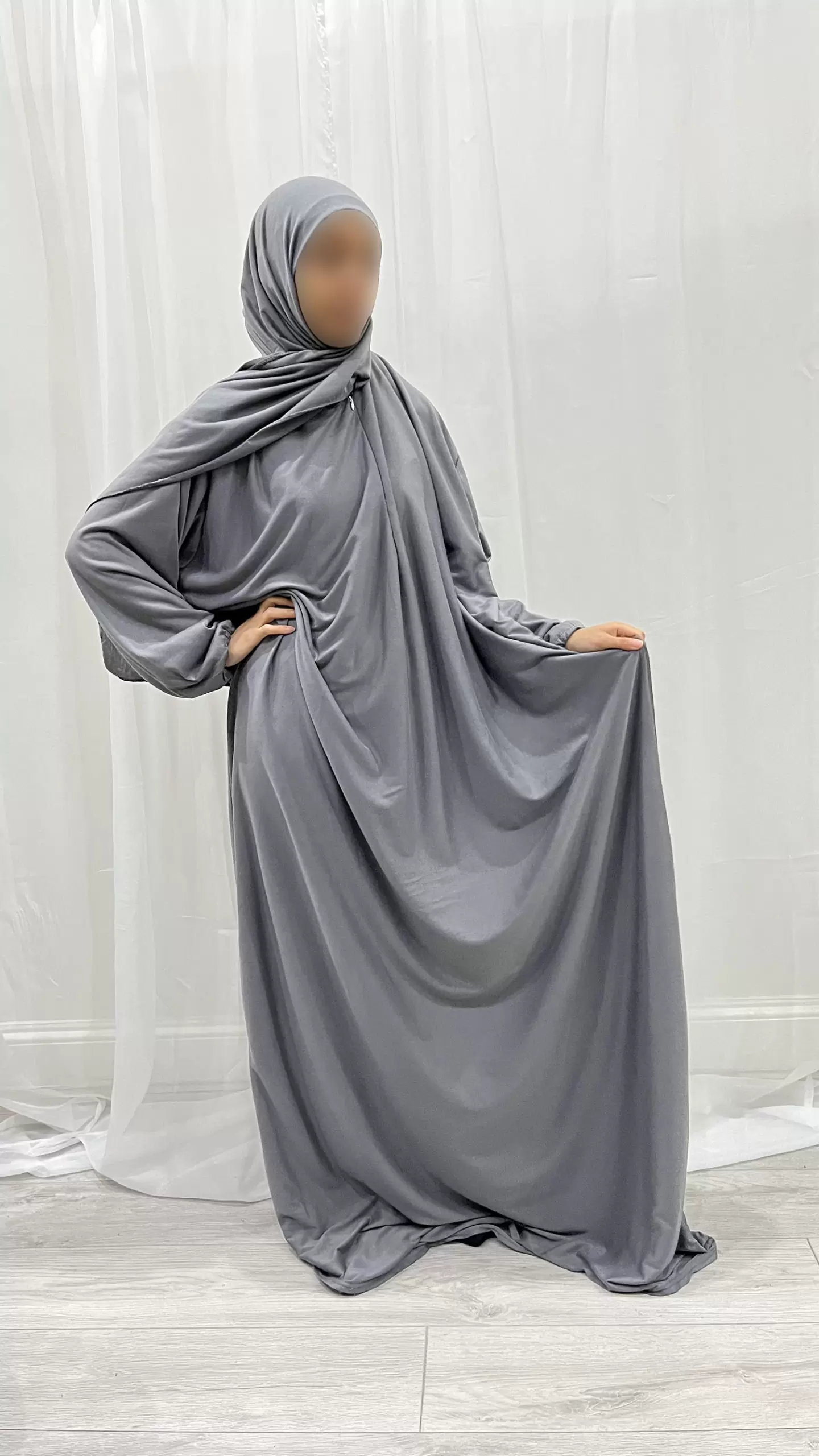
Fit matters too. You want a silhouette that gives you freedom to move in all prayer positions without worrying about clingy fabric or accidental exposure. That’s why soft jersey, bamboo cotton, and wrinkle-resistant knits are so popular among practicing women.

Soft grey one-piece prayer outfit from Amani — loved for its breathable fabric and ease of use.
Personal Tip: If you live in a mixed-gender home, go for a prayer dress with a built-in hijab. It saves time and offers peace of mind when moving between rooms before or after salah.
Coming up next: What about men? Let’s talk about comfortable, Sunnah-aligned prayer wear for brothers.
4. Muslim Prayer Clothes for Men — Tradition, Fit & Functionality
For Muslim men, prayer clothing is more than tradition — it’s about honoring the Sunnah while feeling confident and focused during salah. Whether you’re praying at the masjid, at work, or at home, your outfit should allow freedom of movement, uphold modesty, and reflect spiritual dignity.
The go-to garment for many men is the thobe (also known as a jubba or dishdasha) — a long, robe-like outfit that’s worn throughout the Muslim world. It’s loose-fitting, ankle-length, and typically worn over a lightweight undershirt or pants.
Popular prayer wear options for men include:
- Thobes / Jubbas: Ideal for salah, Eid, and Jummah. Look for breathable cotton or poly-blends with minimal embroidery for daily wear.
- Prayer Kurtas: Shorter than a thobe, usually paired with pants. A great choice for South Asian brothers or summer days.
- Izar / Lungis: Traditional waist-wraps popular in Africa, the Middle East, and parts of Southeast Asia. Best suited for home or private worship.
- Kufi Hats: Worn during prayer as a sign of respect and humility, often paired with a plain thobe.
Fit Tip: Go for slightly loose cuts. Your garments shouldn’t cling to your body, especially in ruku and sujood. Lightweight cotton thobes are perfect for year-round comfort and align beautifully with the Prophet’s (ﷺ) simple lifestyle.

Traditional white thobe from Amani’s men’s collection — crisp, breathable, and Sunnah-inspired.
Style Tip: Choose neutral shades like white, grey, navy, or black for daily prayers. Save bold embroidery or patterned thobes for special occasions like Eid or weddings.
Wearing a specific prayer outfit — even if it’s just a clean thobe and kufi — helps build intention. It sets the stage mentally and spiritually, ensuring that each prayer is treated like the sacred moment it is.
Next, let’s explore how kids can benefit from their own prayer clothes and the joy it brings to their early spiritual development.
4. Muslim Prayer Clothes for Kids — Comfort and Modesty for the Little Ones
Prayer is a beautiful family experience, and it’s important to instill good habits and a sense of spirituality in children from a young age. But finding the right prayer clothes for kids can be a challenge. The key is ensuring comfort while keeping modesty in mind. Children are naturally energetic, so the clothing should allow them to move freely while still meeting the Islamic guidelines for modesty.
When shopping for children’s prayer wear, consider the following:
- Loose-Fitting Garments: Avoid tight clothing that may restrict movement or cause discomfort. Opt for loose, flowy designs like abayas or loose tunics and pants. This allows children to focus on their prayer without distractions.
- Breathable Fabrics: Look for cotton, jersey, or lightweight fabrics that are comfortable and soft on sensitive skin. These fabrics are gentle, allowing for comfort even during long prayer sessions.
- Bright Colors and Fun Styles: Many children enjoy bright, playful colors. Prayer clothes for kids come in a variety of shades, from cheerful pastels to vibrant tones. Choosing colors they enjoy can make prayer time more engaging for them.
- Easy-to-Wear: Choose prayer clothes with simple designs, such as pull-over dresses or adjustable waistbands, so they can easily dress themselves without assistance. This encourages independence in children while fostering responsibility.

Amani’s kids’ prayer collection: Soft, breathable fabrics that make prayer a comfortable experience for your little ones.
Tip: Make prayer time more enjoyable by allowing your children to pick out their prayer outfits. This fosters a sense of pride and ownership over their spiritual journey.
5. Muslim Prayer Clothes for Men — Tradition Meets Comfort
For men, prayer attire often centers around the thobe or dishdasha, a loose-fitting tunic that offers freedom of movement while adhering to modesty guidelines. While there’s no one-size-fits-all approach, there are a few characteristics every man’s prayer outfit should include:
- Modesty: Just like for women, men’s prayer clothes should adhere to the principles of satr. This means covering the body properly, especially the area between the navel and knees.
- Comfort: Soft, breathable fabrics are ideal for comfort during extended prayer times. Look for materials like cotton, linen, or blends that allow airflow and flexibility.
- Simplicity: The key to good men’s prayer wear is simplicity. While some thobes come with intricate patterns or embroidery, most men opt for simple, unadorned pieces for prayer, which helps create focus and clarity during worship.
- Durability: Prayer wear should withstand repeated washing and frequent use. Investing in high-quality fabrics ensures your thobe or other prayer garments remain in excellent condition for years.
Some modern styles, like Amani’s thobes, come with added convenience features like hidden pockets, making them a practical option for everyday use. The combination of comfort, modesty, and style allows men to experience seamless transitions from daily wear to prayer time.

Amani’s thobe for men: Stylish, comfortable, and designed for seamless prayer transitions.
6. The Importance of Fabric in Muslim Prayer Clothes
When selecting the best prayer clothing, the fabric plays a huge role in the overall experience. You’ll want materials that offer breathability, flexibility, and durability while maintaining a modest look. Here’s a breakdown of the most popular fabrics used for Muslim prayer wear:
- Cotton: Lightweight, breathable, and soft, cotton is a popular choice for prayer garments. It’s ideal for all seasons, providing warmth in winter and coolness in summer.
- Jersey: Known for its stretch and comfort, jersey fabric offers flexibility, which is essential for various prayer positions like sujood and ruku. It also helps retain its shape, even after multiple washes.
- Modal: A semi-synthetic fabric made from wood pulp, modal is soft, absorbent, and breathable. It’s also eco-friendly and wrinkle-resistant.
- Bamboo Cotton: This fabric is naturally hypoallergenic, moisture-wicking, and breathable. It’s a fantastic choice for those with sensitive skin, as it provides a silky-soft feel without irritation.
Choosing the right fabric can make a big difference in your comfort during prayer. Keep in mind that the material you select should be suitable for your local climate and prayer habits. For example, breathable fabrics like cotton and modal are ideal for warmer climates, while heavier fabrics like jersey might be better suited for cooler temperatures.
7. Choosing the Right Muslim Prayer Clothes for Every Season
Just like any other wardrobe essential, your prayer clothes should adapt to the changing seasons. Whether it’s the scorching summer heat or chilly winter mornings, the fabric and style of your prayer wear can impact your comfort and focus during prayer. Here’s how to choose the right prayer clothes for different seasons:
Summer Prayer Clothes
During the summer months, breathability is key. You’ll want fabrics that allow air to flow freely to keep you cool during the long prayer sessions. Lightweight fabrics like cotton, linen, and jersey are perfect for the summer heat. Opt for designs that provide full coverage without being too heavy or hot.
- Cotton Abayas and Prayer Dresses: Cotton is naturally breathable and absorbent, making it an excellent choice for hot climates. It will keep you cool and dry, even during the warmest days.
- Lightweight One-Piece Dresses: Consider slip-on prayer dresses that are easy to wear and airy. These dresses often have built-in hijabs for added convenience, so you don’t have to worry about layering.

Breathable cotton prayer dress from Amani’s summer collection — perfect for warm-weather comfort during prayer.
Winter Prayer Clothes
In the winter, you’ll need prayer clothes that offer warmth without sacrificing modesty. Opt for fabrics that retain heat but are still breathable to avoid overheating during prayer. Look for options with added layers or thicker materials like modal, wool blends, or heavy jersey.
- Layered Prayer Sets: Layering is ideal for colder months. Choose abayas or prayer dresses that can be layered with warm undershirts or thermal leggings. Some designs include built-in hoods or headscarves, which can keep you extra cozy.
- Long-Sleeve Dresses: A long-sleeve prayer dress made from thicker fabrics like wool blends or jersey will provide both warmth and modesty.

Winter-ready prayer dress from Amani: Designed for warmth and comfort during the colder months.
Tip: For extra warmth, consider layering with a lightweight, breathable undershirt made from modal or cotton. This will provide additional insulation without compromising comfort.
8. How to Care for Your Muslim Prayer Clothes
Proper care of your prayer clothes ensures they last longer and maintain their softness and cleanliness. Here are some tips to keep your prayer wear in top condition:
- Washing: Always follow the care instructions on the label. Most prayer clothes are made from delicate fabrics, so washing in cold water is usually best. Use a mild detergent to preserve the fabric’s softness and color.
- Avoid Harsh Chemicals: Avoid bleach or fabric softeners, as these can damage the material and irritate your skin.
- Drying: Air drying is recommended for most prayer clothes, especially if they are made from natural fabrics like cotton or linen. Avoid direct sunlight to prevent fading.
- Storage: Store your prayer clothes in a cool, dry place away from direct sunlight to maintain the integrity of the fabric. Consider using garment bags to protect delicate fabrics.
Taking good care of your prayer clothes ensures they will remain clean, comfortable, and ready for use whenever you need them. A little extra attention to maintenance can help preserve the quality and keep you focused during your prayers.
9. Practical Tips for Shopping for Muslim Prayer Clothes
Shopping for the perfect Muslim prayer clothes can be overwhelming if you’re not sure what to look for. But with a few practical tips, you can make your shopping experience easier and more enjoyable. Here are some key factors to consider when purchasing prayer garments:
1. Know Your Size
Just like any other clothing, the fit of your prayer clothes matters. While many prayer garments are designed to be modest and loose-fitting, you still want them to fit comfortably and allow for easy movement during prayer. Make sure you know your size, and remember that some brands may have different sizing charts.
- Tip: If you’re in between sizes, consider sizing up to ensure there’s enough room for flexibility during prayer positions like sujood and ruku.
2. Focus on Fabric
Fabric choice plays a big role in both comfort and breathability. You’ll want to choose materials that are soft, breathable, and durable. Fabrics like cotton, jersey, rayon, and bamboo are popular for their lightweight feel and easy care. If you live in a warmer climate, prioritize fabrics that wick away moisture and keep you cool.
3. Look for Functional Features
In addition to style and comfort, make sure your prayer clothes have practical features that suit your lifestyle. Some prayer dresses have built-in hijabs, elastic cuffs, or pockets for added convenience. If you travel often or pray outside your home, look for prayer wear that is easy to slip on and off without too much fuss.

Functional prayer dress from Amani, designed for ease of use and comfort during travel and daily prayers.
4. Read Reviews and Get Recommendations
Customer reviews can provide valuable insights into the quality and fit of prayer clothes. Don’t be afraid to ask for recommendations from family, friends, or online communities. Real-world experiences can help you make a more informed decision.
5. Stick to Trusted Brands
When it comes to prayer clothes, quality matters. Invest in reputable brands that prioritize comfort, quality, and ethical production. Amani, for instance, is known for its high-quality materials and thoughtful design features, making it a trusted brand among Muslim shoppers.
Pro Tip: Always look for return policies in case the size or fit doesn’t work out. Many online stores, like Amani’s Prayer Wear Collection, offer flexible return options to ensure a hassle-free shopping experience.
10. How to Incorporate Modesty and Style in Your Prayer Clothes
While modesty is the foundation of Muslim prayer attire, it’s also possible to express your personal style through your choice of garments. Here are some ways to balance modesty with fashion in your prayer wear:
1. Embrace Simple, Elegant Designs
Modest doesn’t mean boring. Simple, elegant designs are timeless and easy to style. Opt for prayer dresses or abayas with subtle details like delicate embroidery, soft pleats, or understated patterns. These touches add personality without sacrificing modesty.
2. Experiment with Color
While neutral colors like black, white, and navy are classic choices, don’t shy away from adding color to your prayer clothes. Pastels, rich jewel tones, and even earth tones can bring life to your wardrobe while remaining modest.
- Tip: For a sophisticated touch, try pairing a simple prayer dress with a contrasting scarf or hijab in a complementary color.
3. Play with Fabrics and Textures
Fabrics like velvet, chiffon, and satin can add a luxurious feel to your prayer wear. Textured fabrics create depth and visual interest without being flashy. Look for prayer dresses or abayas with unique fabric combinations that enhance your modest style.
4. Layer and Accessorize
Adding layers to your prayer clothes is not only practical but also fashionable. You can layer a lightweight cardigan or kimono over your prayer dress for extra warmth and style. Some people also like to accessorize with a stylish watch or bracelet, as long as it doesn’t interfere with prayer movements.

Layered prayer outfit from Amani, combining fashion and function for a modest, yet stylish look.
Remember, the goal is to feel comfortable and confident while maintaining your modesty. Prayer clothes are an opportunity to embrace simplicity and elegance, but they can also be a reflection of your personal taste and style.
11. Choosing the Right Muslim Prayer Clothes for Different Seasons
Muslim prayer clothes must be comfortable throughout the year, no matter the season. The materials and styles you choose should adapt to temperature changes while maintaining the modesty and comfort necessary for prayer. Here’s a seasonal guide to help you choose the right attire:
1. Summer Prayer Clothes: Stay Cool and Comfortable
During the hot months, it’s essential to choose prayer clothes made from breathable, lightweight fabrics that allow air circulation and wick away moisture. Materials like cotton, linen, and rayon are perfect for summer as they are breathable and absorb sweat, keeping you cool during long prayers.
- Tip: Opt for prayer dresses or abayas with loose fits, which allow airflow and prevent discomfort when praying in hot weather.
2. Winter Prayer Clothes: Stay Warm Without Sacrificing Modesty
In colder months, you’ll want prayer garments that provide warmth without compromising modesty. Look for thicker materials like jersey, wool blends, or heavy cotton. Layering is key, and many prayer outfits come with long sleeves and full-coverage designs to keep you cozy during your prayers.
- Tip: Consider adding a long, open-front cardigan or a fleece-lined scarf for extra warmth during outdoor prayers.
3. Transitional Seasons: Layering for Comfort and Style
Spring and autumn can be tricky, with fluctuating temperatures. Lightweight, breathable prayer garments like jersey knit dresses, paired with a stylish scarf or shawl, are perfect for these seasons. The flexibility to add or remove layers gives you control over your comfort level throughout the day.
4. Special Occasions: Choose Styles That Reflect the Moment
For special occasions like Eid or family gatherings, prayer clothes can reflect the significance of the event. Opt for prayer outfits with delicate embroidery, subtle embellishments, or luxurious fabrics like silk for a touch of elegance while maintaining the modesty required for prayer.

Elegant prayer dress from Amani, perfect for special occasions like Eid, offering both comfort and modest beauty.
With careful planning, you can have prayer clothes that suit every season and occasion, ensuring that you’re comfortable and able to focus on your worship no matter the weather.
12. How to Care for and Maintain Your Muslim Prayer Clothes
Maintaining the cleanliness and longevity of your prayer clothes is crucial for ensuring that they remain in pristine condition and ready for use whenever you need them. Here are some essential care tips:
1. Wash with Care
Always follow the care instructions on the label of your prayer garments. Many prayer clothes are made from delicate fabrics that require gentle washing to maintain their quality. Use cold water and a gentle detergent to prevent fading or shrinking. Hand washing is a safe option for more delicate pieces.
2. Avoid Harsh Chemicals
Stay away from bleach and other harsh chemicals when washing your prayer clothes. These can damage the fabric and cause colors to fade. Instead, opt for mild, eco-friendly detergents that are gentle on your clothing and the environment.
3. Air Dry When Possible
Whenever possible, air dry your prayer clothes by laying them flat or hanging them on a clothesline. Avoid using high-heat dryers, as this can shrink or warp the fabric. If you must use a dryer, choose a low-heat setting.
4. Store Properly
Store your prayer clothes in a cool, dry place when not in use. Hanging your prayer dresses and abayas in a closet or using garment bags can prevent wrinkles and help maintain their shape. Avoid storing your prayer clothes in damp or humid areas to prevent mold or mildew growth.

Store your prayer clothes properly to ensure they remain in perfect condition for every prayer.
5. Remove Stains Immediately
Accidents happen! If your prayer clothes get stained, try to address the stain as soon as possible. Blot the stain gently with cold water, and use a mild stain remover designed for the fabric. This will help preserve the fabric and prevent permanent damage.
With the right care, your prayer clothes can last for years, staying as comfortable and beautiful as the day you bought them. Proper maintenance ensures that they remain ready to help you focus on your prayers, not your wardrobe.
13. Muslim Prayer Clothes for Kids: Finding the Perfect Fit
When it comes to kids, finding the right Muslim prayer clothes is a bit of a balancing act between modesty, comfort, and practicality. Children are naturally active, so you want to ensure that their prayer clothes allow them to move freely while still upholding the importance of modesty during prayer. Here’s a breakdown of what to consider:
1. Comfort Is Key
Children often have a hard time sitting still, especially during long prayer sessions. Look for prayer clothes made from soft, breathable fabrics like cotton, jersey, or bamboo. These materials are gentle on the skin and allow for easy movement. Choose lightweight, non-restrictive designs to help your child stay comfortable through the entire prayer.
2. Modesty Meets Fun
Prayer clothes for kids should be designed to uphold Islamic standards of modesty while still feeling fun and age-appropriate. For girls, this typically means dresses or tunics that cover the arms and legs. For boys, loose-fitting tops and pants or thobes that cover the body adequately. Don’t forget to involve your child in the selection process — picking out a prayer dress or outfit that they love can make them feel more excited about the experience.
3. Easy to Wear and Maintain
When it comes to young children, you want prayer clothes that are easy to wear and maintain. Look for items that are simple to put on and take off, like slip-on dresses for girls or pull-on thobes for boys. These make it easier for kids to prepare for prayer on their own. Additionally, choose durable fabrics that can handle the wear and tear of active children, and don’t forget to choose machine-washable garments for hassle-free maintenance.
4. Styles Your Kids Will Love
While modesty and comfort are key, the style of the prayer clothes can also play a big role in how your child feels about wearing them. Bright colors, fun patterns, and comfortable fits can make kids excited about wearing their prayer clothes. Consider designs that incorporate fun elements like embroidered motifs, matching hijabs, or adorable details that speak to your child’s personality.

Kids’ prayer dress from Amani, designed for comfort and easy movement during prayers.
5. Making Prayer a Special Time for Children
Creating a routine around prayer is an essential part of raising children in Islam. By providing them with beautiful, comfortable prayer clothes, you’re helping to build a connection to their faith and making prayer feel like a special time. It’s also important to model good behavior and make prayer a family activity so they see the importance of it from a young age.
Choosing the right prayer clothes for your child is not just about modesty; it’s about creating an environment that encourages them to embrace their spiritual journey with joy and ease.
14. Online vs. Offline: The Muslim Prayer Clothes Shopping Experience
When shopping for Muslim prayer clothes, one of the first decisions you’ll need to make is whether to buy in-store or online. Both have their pros and cons, so let’s break down the experience to help you choose the best option for you.
1. The In-Store Experience: Personal Touch and Immediate Access
Shopping in person allows you to touch and feel the fabric, see the exact colors, and try on garments before buying. This can be particularly helpful for those new to shopping for Muslim prayer clothes or when you’re searching for something specific, like the perfect fit or fabric texture.
In-store shopping can also provide a more personalized shopping experience, with the ability to ask questions directly to the store staff. They can offer helpful advice based on your preferences and guide you toward the best choices for your needs.
2. The Online Shopping Advantage: Convenience and Variety
Online shopping, on the other hand, offers the advantage of convenience. You can shop from the comfort of your own home, compare prices, read reviews, and explore a much wider range of styles, colors, and sizes. Online stores, like Amani’s prayer wear collection, allow you to browse through a vast selection, helping you find the perfect prayer clothes without the pressure of in-store crowds or limited stock.
3. Product Reviews and Real-Life Testimonials
One of the key benefits of shopping online is access to product reviews and testimonials. You can learn from other customers’ experiences with fit, fabric, and comfort before making your purchase. This level of transparency can be invaluable when making a decision, especially when purchasing something like prayer clothes that need to be both comfortable and durable.
4. Virtual Try-On and Customization Options
Some online stores offer virtual try-on features or customization options to help you visualize how the clothes will look on you. You can check out how the prayer dress moves and fits, ensuring it meets your needs before purchasing. Many sites also offer free returns or exchanges, so you can make sure your purchase is exactly what you wanted without risk.
5. What’s the Verdict? Online Shopping for the Win
While shopping in-store can be a good option for some, the flexibility, convenience, and variety of online shopping are hard to beat. Plus, the ability to shop anytime, anywhere, without being limited by store hours, makes online shopping the better option for many people.
Next time you need new prayer clothes, explore Amani’s online store for a seamless, user-friendly shopping experience that’s tailored to your needs.

Shop Amani’s prayer collection online for a variety of styles and designs, perfect for all your needs.
15. Expert Tips for Getting the Most Out of Your Muslim Prayer Clothes
Choosing the right prayer clothes is just the beginning. To truly enhance your prayer experience and ensure longevity of your garments, there are a few expert tips to keep in mind. Whether you’re shopping for a new piece or looking to care for the ones you already own, these insights will help you get the most out of your investment.
1. Prioritize Quality Fabrics for Comfort
The first step to ensuring your prayer clothes are comfortable is to choose high-quality fabrics. Natural fabrics like cotton, bamboo, and linen are breathable and soft against the skin, which is essential for extended prayer sessions. These fabrics also help with moisture-wicking, keeping you comfortable even in warmer conditions. Look for garments made from durable materials that maintain their shape and softness after washing.
When buying online, read the product descriptions carefully for fabric details and look for user reviews that speak to the quality and comfort of the materials used. Amani’s collection offers a variety of fabrics designed for maximum comfort during prayers, so you can rest assured you’re getting the best.
2. Consider Versatility and Multi-Use Designs
If you want your prayer clothes to serve multiple purposes, consider pieces that can transition between prayer time and other activities. Some modern designs, such as one-piece prayer dresses from Amani, are designed to be comfortable and stylish enough for other occasions. This adds more value to your purchase as these clothes can be used for daily wear and special occasions alike.
3. Take Care of Your Prayer Clothes with Proper Maintenance
Like any good wardrobe investment, your Muslim prayer clothes require proper care. To maintain their shape and softness, always follow the care instructions on the garment’s label. Wash your clothes with care, using gentle detergents and cold water to preserve the fabric. Avoid high heat when drying, as it can cause the material to shrink or lose its form. Air-drying is the safest option for most prayer garments.
Additionally, keep your prayer clothes stored in a clean, dry place away from direct sunlight to prevent color fading or fabric deterioration. If you have delicate fabrics, consider using garment bags when washing or storing them to extend their lifespan.
4. Stay on Top of Sizing
Ensuring the right fit is essential for both comfort and practicality. Always take measurements before buying to avoid issues with sizing. Look for retailers that offer easy returns and exchanges, so you can ensure a perfect fit. Many stores, including Amani, offer size guides to help you choose the correct measurements for different styles and cuts.
If you’re unsure about sizing, consider reaching out to customer support for more personalized advice. They can help you find the best size based on your height, weight, and preferred fit.
5. Shop for Long-Term Durability
While affordability is important, remember that you are investing in clothing that will support your spiritual life for years to come. High-quality prayer garments are worth the investment because they can withstand regular wear and last longer without losing their shape or color. Choose styles and materials that suit your lifestyle and won’t need replacing every few months.
6. Embrace Customization and Personalization
Some brands offer customization options for prayer clothes, such as adjustable cuffs, hijabs, or even tailored fits. Customization allows you to get a garment that fits your exact preferences, whether it’s the length, fit, or style of the garment. Look for stores that offer such options if you’re looking for a personalized experience.

Customize your prayer dress with Amani for a perfect fit and personal touch.
By following these expert tips, you can maximize both the comfort and longevity of your Muslim prayer clothes, ensuring they continue to serve their purpose and support your worship for years to come.
16. Muslim Prayer Clothes for Kids: Comfort, Modesty, and Durability
When it comes to Muslim prayer clothes for children, comfort, modesty, and durability are key considerations. Kids are naturally energetic and active, so their prayer clothes need to be easy to wear, move in, and care for — all while maintaining the modesty required by Islamic teachings.
1. Choose Soft, Breathable Fabrics
For children, soft fabrics like cotton and bamboo are essential to ensure they’re comfortable during prayer. Since kids often have sensitive skin, choosing fabrics that are gentle and breathable helps prevent irritation. Opting for natural materials ensures they stay cool in warmer months and warm in colder weather.
One of the most popular fabric choices for kids’ prayer clothing is jersey cotton, which is soft, stretchy, and resistant to wrinkles. It’s perfect for kids who might want to get up and move around after prayer.
2. Make It Easy to Wear
Kids’ prayer clothes should be as easy to put on as they are to take off. Look for one-piece dresses or sets with elastic bands, easy-to-attach hijabs, and simple closures. These designs minimize fuss and make it easier for kids to focus on the prayer itself rather than struggle with their clothing.
Amani’s range includes one-piece prayer dresses for children that are easy to wear, stylish, and comfortable for little ones. They provide just the right amount of coverage without being restrictive, giving children the freedom to engage in prayer fully.

Amani’s kids’ prayer dress: designed for comfort, ease, and modesty.
3. Focus on Durability
When shopping for children’s prayer clothes, durability is important. Kids are known to be active, so prayer garments need to stand up to the rigors of daily use, frequent washing, and movement. Look for items made with high-quality stitching and fabrics that resist wear and tear, even after repeated washing.
Amani’s prayer wear for kids is known for its high-quality construction, meaning that even after several wash cycles, the fabric remains in excellent condition. Plus, their pieces maintain their shape and color, ensuring your child’s clothes stay fresh and ready for prayer every time.
4. Embrace Color and Fun Styles
While modesty is always the priority, it’s also important to let kids express themselves through their clothing. Many children enjoy wearing prayer clothes in fun colors, patterns, or designs that make them feel special and engaged in the process of prayer.
Amani offers a variety of kid-friendly colors and designs for their prayer dresses, so your child can choose pieces that feel exciting and comfortable for them. Whether it’s a soft pastel or a bright, lively hue, there are plenty of options to choose from.
5. Foster a Positive Experience with Prayer Clothing
When your child enjoys wearing their prayer clothes, it can have a positive impact on their attitude toward prayer. Consider involving them in the process of choosing their prayer garments — this can make them feel more invested in the experience. Encourage them to feel proud of their modest attire, and help them understand the spiritual significance of dressing well for prayer.
As your child grows, their needs will change, so it’s important to invest in prayer clothes that can evolve with them. Amani’s range of children’s prayer wear offers a variety of sizes and styles, ensuring your child can enjoy the benefits of proper prayer attire for years to come.
17. Choosing the Right Size for Muslim Prayer Clothes
When it comes to Muslim prayer clothes, getting the right size is crucial for both comfort and modesty. Ill-fitting garments can be distracting, uncomfortable, and even inappropriate for prayer. So, how do you ensure that your prayer wear fits perfectly?
1. Measure Before You Buy
Accurate measurements are the key to finding prayer clothes that fit well. Before purchasing, make sure to measure your bust, waist, and hips, as well as the length of your arms and legs, if you’re buying for a woman. For men, focus on chest, waist, and inseam measurements. For children, ensure that you measure their height and waist so you can pick the right size based on their age and body type.
If you’re shopping for someone else, look for size charts provided by the retailer to help guide you. Many online stores like Amani offer detailed sizing charts, which are especially helpful for ensuring your clothes fit well without the hassle of returns.
2. Consider Your Body Shape
Everyone’s body shape is different, so it’s important to consider how the prayer clothes will fit you personally. For example, an abaya or prayer dress should be loose enough to allow for movement but not so oversized that it becomes unmanageable. For men, thobes and prayer garments should offer ample space for comfort without looking too baggy or too tight.
For a flattering fit, choose clothes that follow your natural body shape without clinging or constricting. Amani’s jersey prayer dresses are designed to stretch and contour to your body while still maintaining modesty, providing the perfect balance between freedom and fit.
3. Opt for Adjustable Features
Some prayer clothes, especially for women and children, include adjustable features like elastic cuffs, drawstrings, or Velcro attachments that allow you to tailor the fit to your body. These are especially helpful when growing children need garments that can adjust to their changing sizes.
For example, the Navy One-Piece Slip-On Prayer Dress from Amani comes with attached hijabs and elastic cuffs, offering both comfort and a customizable fit.

Elastic cuffs and an attached hijab provide a comfortable, customizable fit in Amani’s prayer dress.
4. Allow Room for Movement
During prayer, you’ll be performing various physical postures, including standing, bowing, and prostrating. That’s why it’s essential to choose prayer clothes that allow for full freedom of movement. Avoid garments that are too tight or restrictive, especially in the chest, waist, or arms.
Loose-fitting garments such as abayas, thobes, and prayer dresses should have ample space in areas that need movement, without excess fabric that could be cumbersome or difficult to handle. The right fit will ensure you can focus on prayer without worrying about discomfort.
5. When in Doubt, Go for Versatility
If you’re unsure about size or fit, opt for prayer clothes that offer versatility, such as one-piece dresses with stretchy fabric or adjustable designs. These options adapt to various body shapes and provide room for comfort during prayer while maintaining modesty.
Amani’s slip-on prayer dresses are a great example of versatile, size-friendly options. The stretchy material and minimalist design ensure they fit comfortably and flatter any body type.
18. Muslim Prayer Clothes for Children: Comfort and Modesty
When shopping for children’s prayer clothes, comfort and modesty should always be top priorities. Children often have a more active lifestyle, and their prayer clothes need to be both functional and respectful of Islamic guidelines.
1. Look for Soft, Breathable Fabrics
Children’s skin is more sensitive, so it’s important to select prayer clothes made from soft, breathable fabrics like cotton, bamboo, or modal. These materials are gentle on the skin, help regulate body temperature, and keep your child comfortable during prayer times.
Amani offers a variety of prayer clothes for kids made from these materials, ensuring that your child’s clothes are both modest and comfortable. The fabrics are easy to care for, making them ideal for everyday wear.
2. Easy-to-Wear Designs
Children need clothes that are easy to put on and take off, especially for those who are still learning to dress themselves. Look for prayer clothes with simple designs, such as pull-on dresses or tunics with elastic waists or cuffs. These features will make it easier for your child to get ready for prayer without frustration.
The children’s prayer dresses from Amani feature simple designs with easy closures, perfect for little ones who are just starting to pray.
3. Fit and Length Matters
When shopping for children, always make sure that the clothing fits properly. Too tight can be uncomfortable, and too loose can lead to tripping or distraction during prayer. Choose prayer clothes that are slightly oversized to give room for movement, but not so much that they interfere with your child’s focus during prayer.
For younger children, a slightly longer hem can help ensure that their clothing stays in place while they pray, especially during sujood (prostration). Amani’s kids’ prayer garments come in a variety of sizes and lengths to provide the perfect balance of modesty and comfort.

Soft and comfortable children’s prayer dress from Amani, designed for modesty and ease of movement.
4. Consider Practicality for Daily Use
Kids often wear their prayer clothes multiple times a day, so durability is essential. Look for materials that are easy to wash, resistant to wear and tear, and able to withstand the constant movement of your little ones.
Amani’s prayer clothes for children are designed with durability in mind, offering high-quality materials that can handle frequent washing without losing their softness or shape. This makes them an excellent investment for families looking for long-lasting prayer attire for their kids.
5. Keep Their Personal Preferences in Mind
While modesty is the ultimate concern, children may have preferences when it comes to color, design, and style. Choose prayer clothes that are both modest and visually appealing to them, helping create a positive association with prayer time.
Amani offers a range of fun yet modest designs for children that help make prayer time feel special and meaningful. Let your child’s personality shine through their prayer attire while maintaining the essence of Islamic guidelines.
19. Muslim Prayer Clothes for Special Occasions: Elegance Meets Modesty
While everyday prayer clothes are designed for comfort and practicality, there are also times when you may want something more special — whether it’s for Eid, a wedding, or other significant events. When choosing Muslim prayer clothes for special occasions, it’s important to balance elegance with modesty.
1. Elegant Abayas for Women
For women, an abaya is often the go-to option for formal or festive prayer attire. These dresses offer full coverage while allowing for graceful movement, making them perfect for special occasions. Look for abayas with intricate details such as embroidery, lace, or beading to add a touch of elegance without compromising modesty.
Amani’s collection of elegant abayas are designed with intricate stitching, high-quality fabric, and an impeccable fit, ensuring you feel as beautiful as you are modest during your special prayers.
2. Stylish Jilbabs for Formal Prayer
The jilbab is another fantastic option for formal prayer wear. With a more structured silhouette, jilbabs are known for their high level of coverage and versatility. Choose a jilbab with refined details, such as satin fabric or gold accents, for an extra touch of sophistication.
Amani’s modest jilbabs blend both traditional and contemporary styles, making them perfect for special prayers and events.
3. Matching Accessories for Extra Grace
While prayer attire should be simple, adding matching accessories can elevate the overall look. Consider a coordinating prayer mat, scarf, or hijab with elegant details to complement your outfit. Just be sure that your accessories still allow you to maintain focus during prayer, and that they are in line with your overall sense of modesty.
Amani offers a variety of modest accessories such as beautifully designed hijabs and prayer mats, which make the perfect addition to your prayer wardrobe for special occasions.
4. Men’s Prayer Attire for Special Occasions
For men, formal prayer wear options may include a traditional thobe or a tailored suit-style prayer outfit. A thobe is elegant, comfortable, and perfectly aligned with Islamic standards of modesty. During special occasions, you can opt for thobes in luxurious fabrics such as silk or with subtle embellishments to add an extra layer of sophistication.
The thobes from Amani are crafted to meet high standards of quality and comfort, with sleek designs and premium fabrics that provide both elegance and modesty during special prayers.
5. Comfort without Compromise
Even for special occasions, your prayer clothes should never compromise on comfort. Look for designs that allow for free movement during sujood and ruku while still offering the elegant details you desire. Many special occasion prayer clothes now feature stretchy fabrics or built-in features like elastic cuffs for comfort and ease of use.
When shopping for special occasion prayer clothes, always make sure that your attire is breathable, well-fitted, and designed to support your comfort throughout the prayer experience.

Elegant black abaya with embroidered sleeves from Amani, perfect for special prayers or events.
20. How to Care for Your Muslim Prayer Clothes
Taking care of your Muslim prayer clothes is key to maintaining their longevity, cleanliness, and comfort. After all, these garments are not just for fashion — they are essential tools for spiritual practice. Here’s how to ensure your prayer clothes stay in pristine condition, ready for every prayer.
1. Gentle Washing
Prayer clothes, especially those made of delicate fabrics like cotton, chiffon, or modal, require special attention during washing. Always check the care label and wash them in cold water to avoid shrinking, fading, or damaging the fabric. Use a gentle detergent to keep the material soft and preserve its quality.
If you’re washing a prayer dress with an attached hijab, it’s important to separate the hijab to ensure it doesn’t get tangled or stretched out. For extra care, hand wash when possible to prevent any unnecessary wear and tear.
2. Drying with Care
Avoid putting your prayer clothes in the dryer, as high heat can damage the fabric and cause it to lose its softness. Instead, air dry your clothes by laying them flat on a clean surface or hanging them up to dry in a shaded area. Avoid direct sunlight, as it can cause the colors to fade over time.
For prayer clothes with intricate designs or embroidery, take extra care to dry them gently. Never wring out the fabric, as this can distort the shape of the garment.
3. Storing Your Prayer Clothes
When storing your prayer clothes, make sure they are folded neatly and kept in a cool, dry place away from direct sunlight. For abayas, jilbabs, and prayer dresses, you can hang them in a garment bag to keep them wrinkle-free. If you prefer to fold them, be sure to place them in a drawer or wardrobe where they won’t get crushed or damaged.
For garments with delicate fabrics or embellishments, it’s best to store them individually to prevent them from rubbing against other items and causing damage.
4. Avoiding Stains
Keep your prayer clothes in the best shape by avoiding stains. If a stain occurs, address it immediately by gently blotting the area with a damp cloth (not rubbing). For oil-based stains, you may need a gentle stain remover, but always test it on a hidden area first to avoid discoloration.
5. Refreshing Your Clothes
If you wear your prayer clothes regularly, consider refreshing them between washes with a fabric refresher spray. These sprays help to keep your clothes smelling fresh and remove any lingering odors, especially if you wear your garments daily. Ensure the spray is free from harsh chemicals and safe for the fabric.

Step-by-step guide on maintaining the longevity of your prayer clothes — with gentle care and attention to detail.
21. Real-Life Testimonials: How Muslim Prayer Clothes Impact Our Lives
What better way to understand the true value of quality Muslim prayer clothes than through the stories of those who wear them regularly? Here are some real-life experiences shared by Muslim men, women, and children who have found prayer attire that not only meets their spiritual needs but also enhances their daily routine.
1. Sarah’s Journey to Comfort and Modesty
“I used to struggle with finding prayer clothes that were both modest and comfortable. I often found myself adjusting my abaya or worrying about the fit during prayer. But when I discovered the one-piece prayer dress from Amani, it changed everything. The fabric is so soft and stretchy, and the attached hijab makes it easy to slip into prayer without any hassle. I finally feel comfortable and focused when I pray. It’s more than just clothing — it’s about the connection I now have with my salah.” — Sarah, 32
2. Ahmed’s Experience with Practicality and Ease
“As a busy father and professional, I don’t always have time to adjust my prayer clothes between meetings and work. Amani’s slip-on prayer dress has been a game changer. I can wear it all day and transition straight into prayer without needing to change. It’s comfortable enough to wear for long stretches and modest enough for the office. I can’t recommend it enough to other brothers who are looking for convenience and comfort.” — Ahmed, 40
3. Aisha’s Experience with Modesty and Style
“I wanted something that would keep me covered but also be flattering and easy to wear. Amani’s grey prayer dress gives me both. It’s a modest cut but fits me beautifully, and the hijab attachment is perfect for my busy mornings. I wear it not just for prayer, but also for days when I want to be comfortable while looking presentable. It’s a versatile piece that fits my lifestyle.” — Aisha, 28
4. Youssef’s Experience with Family-Friendly Prayer Clothing
“Finding prayer clothes for my children has always been a challenge. But the children’s prayer dresses from Amani were the perfect solution. My kids love how soft the fabric is, and the designs are simple yet beautiful. They no longer struggle with getting dressed for salah, and it’s one less thing I have to worry about when getting them ready. Plus, the materials are durable enough to handle daily wear and tear.” — Youssef, 36

Children’s prayer dress by Amani — designed for comfort and easy wear during salah.
22. Common Mistakes to Avoid When Choosing Muslim Prayer Clothes
Choosing the right Muslim prayer clothes is a personal and meaningful decision, but it’s easy to make mistakes along the way. To help you avoid common pitfalls, here are some of the most frequent mistakes Muslims make when selecting prayer attire, along with tips on how to sidestep them.
1. Ignoring Comfort for Modesty
It’s common to focus on modesty first and overlook comfort. While modesty is essential, it’s important to remember that prayer clothes should allow you to perform all postures with ease. Whether it’s the flexibility of a slip-on prayer dress or the breathable fabric of a loose-fitting thobe, comfort is key. Remember, comfort leads to concentration, and concentration leads to a deeper connection in prayer.
2. Choosing Low-Quality Fabrics
Not all fabrics are created equal, and wearing low-quality materials can impact your experience during salah. Always opt for soft, breathable fabrics that help maintain your tahara (purity). Fabrics like bamboo cotton, modal, and jersey provide great stretch and breathability. If you’re unsure, check reviews from other users to gauge the material’s comfort.
3. Not Considering Weather and Climate
Climate plays a significant role in your choice of prayer clothes. If you live in a hot climate, go for lightweight, moisture-wicking fabrics like cotton jersey that help you stay cool during long prayers. On the other hand, for colder climates, layered abayas or jilbabs made from heavier fabrics like wool blend or fleece are ideal for keeping you warm without sacrificing modesty.
4. Forgetting About Maintenance and Durability
Many people overlook the importance of fabric durability and maintenance when purchasing prayer clothes. After all, you’ll be wearing them frequently. Opt for materials that are easy to maintain, wrinkle-resistant, and durable enough to withstand multiple washes. Amani’s prayer dresses, for example, are designed to be both low-maintenance and high-quality, meaning you’ll spend less time ironing and more time focused on your prayer.
5. Underestimating the Importance of Fit
The fit of your prayer attire directly affects your comfort and performance during prayer. Avoid clothing that is too tight or too loose, as both can hinder your ability to focus. Prayer clothes should allow you to move freely into sujood (prostration) and ruku (bowing) without restrictions. Look for options that offer a flexible fit like Amani’s grey prayer dress that combines modesty and a comfortable fit.
23. How to Care for Your Muslim Prayer Clothes
Proper care for your Muslim prayer clothes not only ensures they remain pristine for every prayer session, but it also helps maintain their spiritual and emotional value. Keeping your clothes clean, comfortable, and in good condition is part of honoring your worship routine. Here’s a complete guide on how to care for your prayer garments.
1. Washing Tips for Different Fabrics
Different fabrics require different washing techniques to ensure they last. If your prayer dress is made of cotton, bamboo, or modal (like the Amani one-piece slip-on prayer dress), it’s important to wash it in cold water on a gentle cycle. Hot water can cause the fabric to shrink or lose its shape over time. Always turn your clothes inside out to minimize fading, and avoid harsh detergents that could irritate the fabric.
2. Drying and Ironing
When it comes to drying your prayer garments, air-drying is the best option to preserve the fabric’s integrity. Hanging your clothes in a shaded area helps prevent sun damage. If you must use a dryer, opt for a low heat setting. For iron care, check the fabric type: most prayer clothes made from jersey or cotton don’t require ironing, but if you do need to smooth out wrinkles, always use a low heat setting.
3. Storing Your Prayer Clothes
Proper storage ensures your prayer clothes maintain their shape and cleanliness. Keep your garments in a dry, clean space away from sunlight to prevent fading. For items like abayas and jilbabs, use a garment bag to protect them from dust. It’s also a good idea to have a separate drawer or section of your closet reserved for your prayer wear to maintain its cleanliness and sanctity.
4. When to Replace Your Prayer Clothes
Over time, even the most durable fabrics will show signs of wear and tear. If your prayer dress starts to lose its elasticity or the fabric becomes thin, it may be time to replace it. While it’s natural for clothes to deteriorate with regular use, keeping an eye on these details ensures you maintain the highest standards of cleanliness and modesty.
Tip: Keep a dedicated set of clothes for prayer only, to avoid the wear and tear that comes from daily use, and ensure that they’re always in the best condition possible for your acts of worship.
24. Real-Life Testimonials: The Impact of Comfortable Prayer Clothes
Sometimes, the best way to understand the importance of well-chosen prayer clothes is by hearing from others who have experienced the difference firsthand. Let’s take a look at some real-life testimonials from people who have found their ideal prayer attire and the positive effects it has had on their spiritual lives.
1. Sarah’s Experience with Amani’s Prayer Dresses
“I used to struggle with finding prayer clothes that were both comfortable and modest. I found that many dresses were either too tight or didn’t allow me to move freely during sujood. But after purchasing Amani’s one-piece prayer dress, everything changed. The stretchy, breathable fabric makes it so easy to focus on my prayers without worrying about my clothes. Plus, the attached hijab means I don’t have to spend extra time adjusting it. I feel so much more present during my prayers now!”
2. Ali’s Experience with Thobes
“For a long time, I didn’t think much about the clothes I wore for prayer. But when I started wearing a properly fitted thobe like the ones from Amani, I noticed a significant difference in my comfort during prayer. The fabric is breathable, and the fit is perfect for sujood and ruku. It’s not just about modesty for me anymore; it’s about being able to focus completely on my connection with Allah. A good thobe makes all the difference.” — Ali, 32, New York.
3. Fatima’s Transformation with Layered Abayas
“As a mother of three, I’m always running around, but I wanted to find prayer clothes that would allow me to stay modest and comfortable while managing my busy life. Amani’s grey prayer dress with the attached hijab has made my prayers feel more peaceful. I no longer have to worry about adjusting my outfit during prayer, and I feel connected to my faith without any distractions. It’s truly been a game-changer!”
Real Insight: It’s not just about the garments; it’s about how the right prayer clothes enhance your spiritual experience. When you feel good in what you’re wearing, you can achieve greater focus and mindfulness during salah.
25. FAQ: Everything You Need to Know About Muslim Prayer Clothes
Still have questions about Muslim prayer clothes? Don’t worry — we’ve got you covered. Here are some frequently asked questions to help you make the best choice for your needs.
1. What is the best fabric for Muslim prayer clothes?
The best fabric for prayer clothes is breathable, comfortable, and modest. Cotton, bamboo, and modal are excellent choices as they’re soft on the skin and allow for movement during prayer. Jersey and rayon are also popular for their stretch and flexibility.
2. Do I need to wear a hijab with my prayer dress?
Yes, women are typically required to cover their hair during prayer. Many prayer dresses, such as Amani’s one-piece slip-on dresses, come with an attached hijab to make it easier and more convenient for you.
3. Can men wear prayer clothes that are not thobes?
While a thobe is the most common choice for men, you can also wear any modest, full-coverage attire that meets Islamic standards, such as loose-fitting pants and a long shirt. The key is ensuring that your clothes allow for ease in movement during the different positions of salah.
4. Can I use regular clothing for prayer?
While you can technically use regular clothing for prayer, it’s highly recommended to wear clothing specifically designed for prayer. Prayer clothes are made to be more comfortable, breathable, and modest, helping you stay focused during worship.
5. How do I know if my prayer clothes are modest enough?
Prayer clothes should cover the entire body except the face and hands for women and from the navel to the knees for men. The clothing should be loose-fitting and made of non-transparent fabrics to ensure modesty. If you’re unsure, it’s best to consult with a trusted source or scholar to confirm your attire is suitable for prayer.
6. What is the difference between an abaya and a jilbab?
An abaya is a loose-fitting robe typically worn by women, often with an open front or buttons. A jilbab is a similar garment but tends to be more conservative, with a cape-like attachment or extra coverage. Both are popular choices for prayer attire, but jilbabs tend to provide more full-body coverage.
7. Is it okay to wear prayer clothes in public?
Yes! Many Muslim women and men wear prayer clothes in public, as long as the clothing meets the standards of modesty in Islam. The beauty of prayer clothes is their versatility; you can easily wear them around the home or in public while maintaining your modesty.
8. How often should I replace my prayer clothes?
Prayer clothes should be replaced when they become too worn or damaged. If the fabric is no longer breathable, or if the garment doesn’t fit properly, it’s time for a replacement. Remember, your prayer attire should be in the best condition for each prayer.
9. What is the best way to store my prayer clothes?
Store your prayer clothes in a clean, dry place away from sunlight to prevent fading. Use garment bags or hangers to maintain their shape. Avoid storing them in a place that could expose them to dirt or moisture.
10. Can I wear prayer clothes for other activities besides prayer?
While prayer clothes are specifically designed for worship, many people choose to wear them during other modest activities around the home or even during travel. Their comfort, modesty, and ease make them great for non-prayer moments too.
11. Are there specific prayer clothes for children?
Yes, many stores, including Amani’s, offer prayer clothes for children. These clothes come in sizes and styles that allow for both comfort and modesty, ensuring your child can pray with ease. Look for soft fabrics and easy-to-wear designs like one-piece dresses and suits.
12. Can prayer clothes be worn for other occasions besides prayer?
Absolutely! Prayer clothes are designed to be modest and comfortable, which makes them suitable for casual wear around the house or even while running errands. Some designs are versatile enough to be worn as everyday clothing.
13. Are prayer clothes unisex?
While prayer clothes are typically designed with gender-specific styles, such as women’s abayas and men’s thobes, there are unisex options as well. Some prayer dresses can be worn by both men and women, depending on the style and design.
14. How do I maintain the quality of my prayer clothes?
To ensure your prayer clothes last a long time, wash them in cold water and avoid using harsh detergents. Hang them to dry or lay them flat to maintain their shape and prevent shrinkage. Avoid ironing delicate fabrics unless specified on the care label.
15. Can I wear prayer clothes if I have a medical condition?
If you have a medical condition, comfort is key. Many prayer clothes are made with soft, stretchable fabrics that are gentle on sensitive skin. It’s essential to choose breathable, non-restrictive options to ensure ease during prayer, especially if you experience pain or discomfort in certain positions.
16. How can I choose the right prayer clothes for different seasons?
In colder weather, look for prayer clothes made from thicker fabrics, such as wool blends or cotton with a little extra warmth. In warmer weather, lightweight, breathable fabrics like cotton and linen are ideal to keep you cool during prayer. You may also want to choose layered options for added warmth.
17. Do prayer clothes come in different colors?
Yes, prayer clothes come in a wide range of colors, from traditional black and white to soft pastels and vibrant hues. When choosing the color of your prayer clothes, consider your personal style and how the color aligns with your modesty preferences.
18. Are prayer clothes available in different sizes?
Yes, prayer clothes are available in various sizes, from small to plus size. When shopping for prayer clothes, it’s important to check sizing guides to ensure a comfortable fit. You want your clothes to be loose enough for movement, but not too baggy that they get in the way.
19. How can I make my prayer clothes more stylish?
There are plenty of ways to add your personal touch to prayer clothes. You can choose accessories like prayer beads or modest jewelry that complement your attire. Layering with scarves or shawls can also elevate your look while maintaining modesty.
20. Where can I find the best Muslim prayer clothes?
The best Muslim prayer clothes are those that combine comfort, modesty, and quality. Check out trusted online stores like Amani’s collection for a variety of high-quality, comfortable, and stylish prayer garments. They offer everything from one-piece prayer dresses to abayas, all designed with your spiritual needs in mind.
26. Conclusion: Finding the Perfect Muslim Prayer Clothes for Your Needs
Choosing the right Muslim prayer clothes is an important decision, as they not only meet the requirements of modesty in Islam but also support your comfort and focus during prayer. Whether you’re looking for a stylish abaya, a breathable thobe, or a practical one-piece prayer dress, it’s essential to consider both the functionality and the emotional connection you have with your attire.
Throughout this guide, we’ve explored the different types of Muslim prayer clothes for men, women, and children, along with tips for selecting the best fabric, size, and style. We’ve also highlighted some of the most popular options from Amani’s prayer wear collection, known for their blend of comfort, quality, and modesty.
Ultimately, the right prayer clothes are those that help you feel comfortable and spiritually connected. With the right choice, your prayer experience can be one of peace, humility, and focus. Remember, the attire you wear for salah isn’t just about covering your body — it’s about setting the tone for a sincere and meaningful connection with your Creator.
Final Tip: When you find the right prayer attire, make sure to set aside a dedicated prayer wardrobe. This simple practice helps you maintain cleanliness, focus, and consistency in your worship, ensuring your heart is aligned with your actions.
We hope this guide has been helpful in answering your questions about Muslim prayer clothes. Feel free to revisit this guide as you continue to search for the perfect attire. And don’t forget to explore Amani’s wide range of prayer clothes to find the perfect match for your needs!
May your prayers be accepted, and may you find comfort and serenity in your worship.
Shop Now for Your Perfect Muslim Prayer Clothes
If you’re ready to find your ideal prayer attire, browse Amani’s collection of Muslim prayer clothes today. Discover high-quality, comfortable, and modest clothing that fits your needs and enhances your worship experience.


