
Ever slipped into a dress and felt like you were stepping into a story — not just a look? That’s the Mukhawar for me. It’s not just about modesty, elegance, or even style (though yes, it nails all three). It’s about memory, meaning, and a kind of ancestral hug stitched into silk. The Emirati Mukhawar isn’t just a dress — it’s a legacy that speaks without shouting. In this post, we’re diving deep into that magic: what makes the Mukhawar so uniquely Emirati, how its design evolved from sacred tradition to modern-day masterpiece, and why it continues to enchant women across generations. Whether you’re new to the world of Mukhawars or you’ve got one tucked in your wardrobe for special nights, there’s so much to discover — from cultural symbolism to styling tips and even the best way to shop for a truly heirloom-worthy piece. By the end of this post, I’ll walk you through everything you’ve ever wondered about the Emirati Mukhawar dress — so let’s dive in.
The Emirati Mukhawar Dress: Where Modesty Meets Art, Heritage, and Heart
There’s something about the first time you slip into a Mukhawar dress. The way the fabric whispers against your skin. The way the embroidery seems to tell a story older than your grandmother’s bedtime tales. You don’t just feel beautiful — you feel seen. Rooted. Respected. It’s not just modest fashion. It’s a memory. A legacy. A quiet kind of royalty.
If you’ve ever stood in front of your wardrobe wondering, “Can I feel elegant, feminine, and true to my culture — all at once?” — you’re not alone. Many of us have. And for countless Emirati women, the Mukhawar is that answer. Timeless, intricate, and fiercely ours.
In this guide, you’re going to uncover more than just hemlines and fabrics. You’ll step inside a world where tradition embraces design. Where threads carry blessings. Where every stitch says, “I belong.”
We’ll explore hidden design meanings, when and how to wear it, how it differs from other Khaleeji dresses, and even how to shop smart (yes, there’s a trick to getting the good silk). So whether you’re a longtime lover of the Mukhawar or discovering it for the first time — welcome. You’re in the right place.

The Mukhawar Is More Than a Dress — It’s a Cultural Love Letter
Let’s be honest — you don’t wear a Mukhawar just to “dress up.” You wear it because it says something. About your roots. About your femininity. About where you come from, and what you refuse to forget.
In the Gulf, especially the UAE, clothing is never just about function. It’s language. And the Mukhawar? It speaks volumes. Traditionally worn at home, during Ramadan, and at family gatherings, this dress carries a sacred kind of softness — the kind that women pass down like heirlooms.
The Soul Behind the Stitches
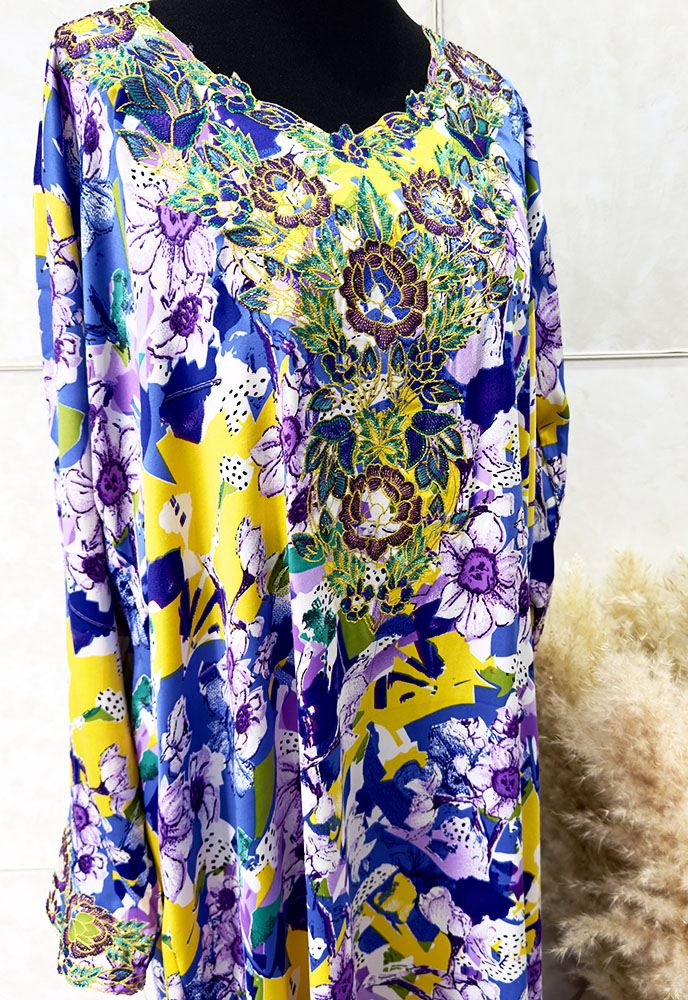
Every Mukhawar is a blend of heritage and heart. The classic silhouette, flowing sleeves, intricate embroidery — these aren’t just aesthetic choices. They’re echoes of generations. The gold thread that dances around the neckline? It’s a nod to prosperity. The soft pastels? A reflection of grace. You start to realize — this isn’t “just” modest fashion. It’s an identity stitched in silk and memory.
I still remember my aunt’s closet — rows of folded Mukhawars, each one slightly perfumed, each one telling a different chapter. Some were handmade. Some imported from Oman or Bahrain. Some with hand-beaded sleeves that felt like tiny miracles. She never needed to explain them. We just knew: these were sacred things.
How It Stands Apart: Not Just Another Khaleeji Dress
Let’s clear something up — not all Gulf dresses are the same. The Emirati Mukhawar holds a unique flavor. It’s softer than the Kuwaiti Dara’a. Less theatrical than the Qatari Thobe. And unlike the Saudi Abaya, it’s made to be worn inside, often among women or close family.
Here’s how it compares:
| Dress Style | Origin | Main Use | Key Features | Typical Fabrics |
|---|---|---|---|---|
| Emirati Mukhawar | UAE | Indoor, family gatherings, Ramadan | Soft tailoring, hand embroidery, pastel tones | Cotton, silk blends, chiffon |
| Kuwaiti Dara’a | Kuwait | Home wear, semi-formal settings | Structured fit, sometimes with belts | Crepe, jersey, georgette |
| Qatari Thobe Nasha’l | Qatar | Ceremonial or festive events | Heavy embellishment, dramatic sleeves | Velvet, brocade |
| Saudi Abaya | Saudi Arabia | Outdoor public wear | Closed front, solid dark colors | Polyester, nidha, silk crepe |
More Than Fabric — It’s Feminine Strength
There’s a quiet power in choosing something traditional in a world that’s always rushing forward. The Mukhawar doesn’t shout. It doesn’t chase trends. And yet, when you wear one, you carry centuries of beauty with you. You carry your mother’s stories, your grandmother’s prayers, your country’s colors — all wrapped in a single thread.
So the next time someone asks what a Mukhawar is, tell them this: It’s a love letter. From the past, to the present, written just for you.
And if you’re wondering how the design evolved into what it is today — well, that journey is richer than you think…
From Heritage to Haute Couture: The Evolution of the Mukhawar Dress
Have you ever wondered how a dress rooted in tradition becomes a statement on the modern runway? The Emirati Mukhawar’s journey is nothing short of fascinating — a story woven through tents, tribal gatherings, and glimmering city nights.
Long before luxury boutiques dotted Dubai’s streets, Mukhawars were crafted by hand, often by women in desert tents, using fabrics that were practical yet elegant. These early versions weren’t about flash; they were about comfort, modesty, and a deep connection to the land and family.
Tradition’s Tapestry: The Early Mukhawar
In the mid-20th century, the typical Mukhawar was made from breathable cotton or soft silk blends, perfect for the Gulf’s climate. Embroidery was painstakingly hand-sewn, often using natural dyes from local plants. Women’s gatherings were as much about stitching stories into cloth as they were about socializing.
My grandmother used to tell me how her mother would sit for hours, threading golden patterns that symbolized protection and blessings. It was a sacred ritual, passed down through the generations.
Modern Twists Without Losing Roots
Fast forward to today — the Mukhawar has gracefully embraced contemporary fashion trends without losing its soul. Designers are experimenting with lighter fabrics like chiffon and georgette, adding subtle sequins or delicate beadwork, making the dress appropriate for everything from Eid celebrations to upscale family dinners.
What’s truly remarkable is how these modern Mukhawars still honor the original essence: modesty, elegance, and cultural pride. The dresses are now featured in fashion weeks, boutique collections, and even influencer wardrobes — a beautiful blend of heritage and haute couture.
| Feature | Traditional Mukhawar | Modern Mukhawar |
|---|---|---|
| Fabric | Cotton, silk blends, handwoven textiles | Chiffon, georgette, silk blends with embellishments |
| Embroidery | Hand-sewn with natural dyes, symbolic patterns | Machine-assisted with sequins, beads, floral designs |
| Cut & Fit | Loose, flowing, designed for comfort | Slightly tailored with accentuated sleeves and necklines |
| Usage | Home, Ramadan, family events | Special occasions, Eid, formal gatherings |
| Colors | Pastels, soft earth tones | Expanded palette including jewel tones and metallics |
Why the Evolution Matters
This evolution isn’t just about fashion. It’s about identity — showing how Emirati women embrace their past while confidently stepping into the future. Wearing a Mukhawar today means you carry that legacy forward, blending timeless modesty with your personal style.
And if you’ve ever hesitated to try the Mukhawar because you think it’s “old-fashioned,” think again. This dress is alive, evolving, and ready to tell your story too.
Next, we’ll dive into the heart of the Mukhawar’s craftsmanship — those delicate details that make every piece a masterpiece.
Why the Mukhawar Dress Still Captivates Across Generations
Let’s be honest — keeping traditions alive in a fast-moving world is no small feat. Yet the Emirati Mukhawar has done just that, weaving its way into the hearts of young and old alike. Why? Because it’s not just about fabric or fashion — it’s about feeling connected to something bigger than yourself.
When my mother first wore her Mukhawar as a bride, it wasn’t just a dress. It was a symbol of family, of heritage, of values passed down through the years. Fast forward to today, and I see young women putting their own spin on the dress, pairing it with modern accessories, or even sharing its beauty on social media, making it relevant in new, exciting ways.
Emotional Threads That Bind
The Mukhawar holds a special place because it carries stories — of celebrations, prayers, laughter, and even quiet moments of reflection. For many, slipping into the dress feels like wrapping themselves in memories and love.
What Each Generation Loves About the Mukhawar
| Generation | What They Cherish | How They Style It | Challenges or Concerns |
|---|---|---|---|
| Grandmothers & Elders | Tradition, modesty, handmade embroidery | Classic cuts, soft pastels, minimal accessories | Preserving authenticity, quality of materials |
| Parents’ Generation | Balance of tradition and practicality | Mix of classic and subtle modern details | Finding dresses suitable for both home and social settings |
| Younger Women & Millennials | Personal expression, cultural pride | Bold colors, statement sleeves, pairing with jewelry | Keeping modesty while embracing contemporary fashion |
| Gen Z & Social Media Influencers | Innovation, trendsetting, cultural storytelling | Mixing traditional Mukhawar with global fashion trends | Balancing authenticity with modern aesthetics |
Why This Matters
The Mukhawar’s appeal across generations isn’t just about style — it’s a shared language of identity and belonging. When a young woman wears her grandmother’s Mukhawar, she’s not just honoring the past — she’s affirming her place in a living tradition.
And that emotional continuity is what keeps the Mukhawar not just relevant, but beloved — across time, across trends, and across hearts.
Next, we’ll explore the secret details that turn every Mukhawar into a masterpiece of craftsmanship and care.
The Emotional Story Woven into Every Stitch
There’s something magical about a Mukhawar dress — it’s not just the way it flows or the colors it wears, but the invisible thread of emotion sewn into every stitch. When I first held my grandmother’s old Mukhawar, I could almost feel her hands crafting it, her hopes and prayers silently stitched alongside every pattern.
These dresses don’t just clothe the body; they wrap the soul. Each embroidered motif tells a story, carries a blessing, or honors a memory. It’s why many Emirati women say wearing their Mukhawar feels like wearing a piece of their heart — passed lovingly from mother to daughter.
Meaning Behind the Embroidery
The motifs you see on a Mukhawar aren’t random decorations. They’re rich with symbolism — protection, prosperity, faith, and family.
| Embroidery Motif | Symbolic Meaning | Emotional Resonance |
|---|---|---|
| Al-Sadu Patterns | Desert heritage, Bedouin roots | Connection to ancestors, strength in hardship |
| Floral Vines | Growth, fertility, new beginnings | Hope and renewal for the family |
| Geometric Stars | Guidance, spirituality | Faith and divine protection |
| Palms & Dates | Life, sustenance, hospitality | Warmth and generosity |
Stories from the Stitching Circle
My aunt once shared how she cried softly as she embroidered a delicate palm leaf pattern into her daughter’s Mukhawar — a prayer for her resilience and kindness in a world that’s ever-changing. These aren’t just dresses; they’re vessels of love and legacy.
And it’s not only about the women who wear them. The makers — often the unsung heroines — pour their hearts into every loop and line. For many, stitching the Mukhawar is a meditative act, a moment of reflection, and a way to stay connected to tradition while creating something beautiful.
But here’s the thing — understanding this emotional depth changes everything about how you see the Mukhawar. It’s not just fabric; it’s a living story.
Coming up next: We’ll delve into the meticulous craftsmanship behind these emotional stories — how each dress is brought to life with skill, patience, and passion.
Understanding the Difference: Mukhawar vs Jalabiya vs Abaya
Let’s clear up a question that often pops up: How exactly does the Emirati Mukhawar dress differ from the Jalabiya or the Abaya? They might all look like elegant traditional garments at first glance, but each carries its own unique story, style, and cultural significance.
You’ve probably seen these names tossed around in conversations or fashion blogs, sometimes interchangeably. But wearing a Mukhawar is a different experience from donning a Jalabiya or an Abaya — and understanding these differences helps deepen your appreciation for Emirati modest fashion.
The Heart of Each Garment
Mukhawar: A traditional Emirati dress known for its intricate embroidery, vibrant colors, and cultural storytelling woven into every piece. It’s often worn during celebrations and special occasions, symbolizing heritage and pride.
Jalabiya: More commonly worn across the broader Gulf and Middle Eastern region, Jalabiyas tend to be looser, lighter, and often simpler, designed for everyday comfort while still offering modesty.
Abaya: The sleek, black cloak most associated with modest fashion in the Gulf today. It’s usually plain or minimally decorated and is a symbol of modesty, grace, and sometimes modern style depending on the embellishments.
Side-by-Side Comparison Table
| Feature | Mukhawar | Jalabiya | Abaya |
|---|---|---|---|
| Origin | Emirati heritage, especially Abu Dhabi and Dubai | Widespread in Gulf and Middle East | Gulf region, mainly Saudi Arabia and UAE |
| Design | Rich embroidery, bright colors, traditional motifs | Simple, loose, often plain or lightly patterned | Usually black, flowing, sometimes with embellishments |
| Occasions | Festive, weddings, cultural celebrations | Everyday wear, casual, and home settings | Everyday wear, formal, and religious settings |
| Fabric | Silk, cotton blends, often heavier due to embroidery | Light cotton or linen for comfort | Lightweight polyester or crepe fabrics |
| Emotional Connection | Strong ties to family, heritage, and tradition | Comfort and practicality for daily life | Modesty, social identity, and sometimes fashion statement |
What This Means for You
Choosing between a Mukhawar, Jalabiya, or Abaya isn’t just about fashion — it’s about what you want to express and how you want to feel. Do you want to honor deep-rooted traditions with every stitch? The Mukhawar is your go-to. Looking for effortless everyday modesty? Jalabiya fits the bill. Or maybe you want something versatile, sleek, and iconic — then the Abaya is your style.
Understanding these differences gives you the power to choose consciously, celebrate your identity, and wear your story with pride.
Up next, we’ll explore how the Mukhawar dress continues to inspire modern designers while staying rooted in tradition.
The Language of Embroidery: Symbols, Motifs & Meanings
Embroidery on the Mukhawar dress isn’t just decorative flair; it’s a secret language — a beautiful, intricate code passed down through generations. Each stitch carries a meaning, each motif whispers a message. When you wear a Mukhawar, you’re not just wearing art, you’re wearing a story, a prayer, a cultural heartbeat.
Let’s unpack this fascinating “language” together, so the next time you see those mesmerizing patterns, you’ll understand exactly what they’re saying.
Decoding the Motifs
Emirati artisans have perfected a set of symbols, each with layered meanings tied to nature, faith, family, and heritage. These motifs aren’t random — they’re carefully chosen to bring blessings, protection, and honor.
| Embroidery Motif | Symbolic Meaning | Emotional & Cultural Significance |
|---|---|---|
| Al-Sadu Geometric Patterns | Bedouin tribal identity and desert survival | Strength, endurance, unity with ancestors |
| Floral Vines & Blossoms | Growth, beauty, fertility | Hope for family prosperity and new beginnings |
| Star Shapes | Guidance, spirituality, divine light | Faith, direction in life’s journey |
| Date Palm Leaves | Life, nourishment, hospitality | Welcoming spirit, sustenance for community |
| Fish & Waves | Connection to the sea, livelihood | Resilience, abundance, prosperity |
Why This Matters
Wearing these motifs means embracing a connection deeper than fashion — it’s an emotional and cultural bridge that links you to your roots and your community. The embroidery becomes a silent conversation, a way to carry blessings and stories wherever you go.
So next time you admire a Mukhawar, remember: you’re not just seeing patterns. You’re witnessing a beautiful heritage, alive and thriving in thread and color.
Coming up: The hands and hearts behind this beautiful craft — we’ll dive into the skilled artisans and the painstaking process of creating each Mukhawar.
How Emirati Women Use Mukhawar to Express Identity
Let’s be honest — clothing is so much more than fabric. For Emirati women, the Mukhawar dress is a living emblem of who they are, where they come from, and how they see themselves in the world. It’s a personal canvas woven with culture, pride, and emotion.
Wearing a Mukhawar is like wearing a piece of your soul, threaded with stories passed down from grandmothers and mothers. It’s an intimate expression of faith, family, and heritage that words alone can’t capture.
Layers of Identity Revealed
Through the Mukhawar, Emirati women communicate complex facets of identity:
- Cultural Pride: Proudly showcasing Emirati traditions in a fast-changing modern world.
- Family Ties: Wearing styles or embroidery patterns unique to one’s tribe or region.
- Faith and Modesty: Honoring religious values with elegance and grace.
- Personal Style: Blending tradition with contemporary tastes and colors.
- Social Status: Certain designs or embellishments can indicate special occasions or social standing.
Expressive Dimensions Table
| Identity Aspect | How Mukhawar Expresses It | Emotional Impact |
|---|---|---|
| Cultural Heritage | Traditional embroidery patterns unique to Emirati tribes | Connection, belonging, pride |
| Religious Values | Modest design, full coverage with elegance | Respect, faith, inner peace |
| Family Legacy | Handed down or custom-made pieces reflecting family history | Love, nostalgia, continuity |
| Personal Identity | Choice of colors, fabrics, and styling | Self-expression, confidence, individuality |
| Social Statement | Occasion-specific designs and adornments | Respect, recognition, celebration |
Real Voices, Real Stories
One Emirati woman shared with me how her grandmother’s Mukhawar dress still inspires her choices today — it’s like wearing history and love simultaneously. It’s a reminder that modest fashion isn’t just about what you wear, but who you carry with you.
In the next section, we’ll explore how the Mukhawar dress is lovingly cared for, preserved, and passed down — because every stitch deserves a legacy.
The Art of Choosing the Right Mukhawar for Every Occasion
Choosing the right Mukhawar dress is more than just picking a pretty garment — it’s a thoughtful ritual, woven deeply into Emirati culture and personal expression. You’ve probably felt that mix of excitement and pressure when staring at a beautiful dress, wondering if it’s “the one” for a wedding, a formal gathering, or even a simple family celebration. The Mukhawar isn’t just worn — it’s carefully selected to honor the occasion, reflect personal style, and maintain cultural respect.
Let’s break down this art together. What should you consider when picking a Mukhawar? How do you balance tradition with modern fashion? And how do you read the subtle social cues that come with different events? Spoiler alert: it’s part emotion, part etiquette, and all heart.
Key Factors Influencing Your Mukhawar Choice
There are several core elements Emirati women keep in mind when choosing their Mukhawar dress for any occasion:
- Fabric & Comfort: Breathability and softness for long wear, especially in the desert heat.
- Color & Symbolism: Certain colors carry deep meanings or are preferred for specific events.
- Embroidery & Detailing: More elaborate stitching is often reserved for weddings and celebrations.
- Occasion Appropriateness: Formality level and cultural customs dictate style choices.
- Personal Expression: Incorporating contemporary touches without losing tradition.
Occasion-Based Mukhawar Selection Table
| Occasion | Typical Fabrics | Common Colors | Embroidery Style | Emotional Vibe |
|---|---|---|---|---|
| Wedding Celebrations | Silk, Satin, Velvet | Rich golds, deep reds, royal blues | Intricate, heavy gold & silver threadwork | Joy, opulence, festivity |
| Religious Festivals (Eid, Ramadan) | Light cotton, chiffon | Soft pastels, white, emerald green | Delicate, modest embellishments | Spirituality, gratitude, modest celebration |
| Casual Family Gatherings | Lightweight cotton, linen blends | Neutral tones, earth colors | Simple, minimal embroidery | Comfort, warmth, intimacy |
| Formal Events & National Day | Silk blends, fine crepe | Black, white, UAE flag colors (red, green, black, white) | Bold geometric patterns, statement motifs | Pride, formality, elegance |
| Everyday Wear | Cotton blends, breathable fabrics | Soft neutrals, muted shades | Minimal to no embroidery | Practicality, simplicity |
Practical Tips from Emirati Women
Listening to Emirati women is key to understanding this delicate balance. Many mention that the right Mukhawar makes them feel empowered — a combination of comfort, confidence, and connection.
- “For weddings, I always choose a dress that tells a story, with embroidery that sparkles but never shouts.”
- “During Ramadan, softer fabrics and pastel colors make me feel peaceful and respectful — it’s a reminder of the season’s grace.”
- “For casual family visits, comfort is king. I want to feel relaxed but still connected to my roots.”
Balancing Tradition with Modernity
The younger generation is infusing modern design elements without losing the essence of the Mukhawar. You might see unexpected fabric blends, playful color combinations, or subtle twists in traditional embroidery patterns. It’s a sign of a living tradition — evolving but never forgetting its origins.
| Traditional Element | Modern Adaptation | Why It Works |
|---|---|---|
| Heavy Gold Thread Embroidery | Subtle metallic highlights mixed with soft pastel fabrics | Maintains elegance but feels fresh and light |
| Classic Silhouettes | Incorporation of fitted tailoring or layered designs | Comfort and style without sacrificing modesty |
| Deep, Rich Colors | Introducing muted tones and gradient dyeing | Broader appeal and more daily wear versatility |
Wrapping Up This Choice
Choosing the right Mukhawar is a beautiful dance between honoring deep traditions and expressing your unique self. It’s never just about fashion — it’s a way to feel seen, respected, and connected.
Next, we’ll explore how Emirati artisans painstakingly bring these dresses to life, infusing every stitch with care and heritage.
Colors That Speak: What Hues Say in Emirati Culture
Colors aren’t just shades or pretty palettes in Emirati culture — they carry stories, emotions, and deep-rooted meanings. When you see a Mukhawar dress shimmering in a certain hue, it’s not random; it’s a conversation, a statement that connects the wearer to history, identity, and sometimes even spirituality. Have you ever wondered why certain colors light up celebrations while others ground quiet reflection? Let’s dive into what each hue truly whispers in the vibrant world of Emirati tradition.
Emirati women don’t just pick colors based on trend — they choose them with intention, respecting customs while expressing personality. And, honestly, there’s something deeply comforting about wearing a color that feels like it’s part of your soul’s language.
The Emotional and Cultural Palette of Emirati Mukhawar
Each color carries unique symbolism — some reflect joy, others humility, and some denote status or special occasions. Here’s a breakdown of the most popular hues and what they mean in Emirati dress culture.
| Color | Symbolism | Common Occasions | Emotional Tone |
|---|---|---|---|
| Red | Love, passion, strength, and festivity | Weddings, major celebrations, national events | Vibrant, bold, confident |
| Gold | Wealth, luxury, divine connection | Weddings, formal events, religious holidays | Elegant, majestic, timeless |
| Green | Fertility, prosperity, Islam, renewal | Religious festivals, Eid, family gatherings | Peaceful, hopeful, spiritual |
| White | Purity, simplicity, peace | Religious occasions, weddings, daily wear | Calm, fresh, modest |
| Black | Elegance, formality, tradition | Formal events, national day, mourning | Serious, dignified, powerful |
| Blue | Protection, calmness, trust | Casual wear, special gatherings | Relaxed, serene, reliable |
Stories Behind the Colors
I remember my grandmother telling me about the time she wore a deep emerald green Mukhawar during Eid. She said it made her feel connected to the earth and her faith at the same time — like she was wrapped in a living prayer. These stories aren’t rare; they’re woven into the fabric of everyday life in the Emirates.
For many, gold isn’t just about looking regal — it’s a thread of hope, a symbol of the bright future that tradition and family can build together. Wearing gold embroidery is like carrying a little piece of heritage with you, no matter where life takes you.
Choosing Colors for Your Mood and Message
Beyond tradition, colors in Mukhawar dresses also help women express their mood, confidence, or message for the day. This isn’t just fashion — it’s emotional intelligence through fabric.
- Feeling empowered? Red or gold can boost confidence and command attention.
- Need calm and clarity? White or soft blues invite peace and balance.
- Want to honor tradition and spirituality? Green or black hold those deep connections.
Color Pairing in Mukhawar Dresses
Emirati designers and artisans are masters of color harmony. The right combination can elevate a dress from stunning to unforgettable.
| Primary Color | Complementary Embroidery Colors | Occasion Fit |
|---|---|---|
| Deep Red | Gold, Black | Weddings, celebrations |
| Emerald Green | Gold, White | Religious festivals, formal events |
| White | Silver, Pastel Colors | Religious occasions, everyday elegance |
| Black | Gold, Red | Formal events, national pride |
| Royal Blue | Silver, White | Casual wear, special gatherings |
When Culture Meets Personal Taste
Of course, personal taste plays a huge role. While tradition guides color meanings, Emirati women are increasingly blending those customs with their own style voices — creating a dynamic conversation between past and present. It’s a beautiful balance, where respect for culture meets the joy of self-expression.
And just like that, every color becomes a brushstroke on the canvas of identity — each choice telling a little story of who you are, where you come from, and where you’re going.
Next, we’ll explore the skilled hands behind these masterpieces — the artisans whose craftsmanship transforms threads into tales.
Silk, Cotton, Linen: What Your Fabric Choice Reveals
Let’s be honest — the fabric of your Mukhawar dress isn’t just about comfort or style. It tells a story. It reveals where you’re coming from, what moment you’re stepping into, and sometimes, even your mood. In Emirati culture, choosing between silk, cotton, or linen is more than a textile decision — it’s a conversation with tradition, climate, and personal identity.
I remember attending a family gathering where a cousin showed up in a flowing silk Mukhawar, and you could almost feel the luxury and occasion in the air. A few days later, the same cousin wore a crisp cotton version for a casual day out, radiating relaxed elegance. Different fabrics, different stories.
Why Fabric Matters in Emirati Clothing
The UAE’s climate ranges from scorching heat to surprisingly cool evenings, and your Mukhawar fabric choice reflects this reality. But beyond temperature, each fabric connects to different emotional, social, and cultural layers:
- Silk: Elegance, celebration, luxury
- Cotton: Practicality, everyday comfort, modesty
- Linen: Natural simplicity, breathability, heritage
Every time you slip on a Mukhawar, you’re choosing how you want to engage with your day — and your community.
Breaking Down the Fabrics: Characteristics & Cultural Significance
| Fabric | Texture & Feel | Typical Use | Symbolism & Emotional Impact | Care & Durability |
|---|---|---|---|---|
| Silk | Smooth, glossy, luxurious | Weddings, formal events, special celebrations | Opulence, refinement, feminine grace | Delicate; requires gentle hand-wash or dry cleaning |
| Cotton | Soft, breathable, comfortable | Daily wear, casual gatherings, religious visits | Modesty, practicality, warmth | Easy to wash and durable for everyday use |
| Linen | Light, slightly coarse, airy | Summer events, traditional ceremonies, heritage wear | Natural elegance, connection to roots, freshness | Requires gentle washing; wrinkles easily but adds charm |
How Fabric Choices Reflect Identity and Occasion
One thing I’ve noticed personally is how fabric choice subtly signals intention. Silk Mukhawar dresses aren’t just worn because they look good — they carry an unspoken message of honoring the moment, whether it’s a wedding or a national celebration. Cotton, on the other hand, feels like a warm hug — simple, honest, and practical, perfect for prayer gatherings or visiting relatives.
Linen holds a special place in many Emirati hearts. There’s something grounding about wearing a fabric that reminds you of desert winds and old traditions. Linen’s natural texture tells a story of connection to the land and history that’s almost poetic.
Fabric and Climate: Dressing Smart in the Emirates
Let’s not overlook the weather. The UAE’s desert heat demands smart fabric choices to stay comfortable without compromising modesty or style. Here’s a quick guide to how fabric choice helps Emirati women stay graceful and cool:
| Season/Climate | Recommended Fabric | Why It Works |
|---|---|---|
| Summer (High Heat) | Cotton, Linen | Breathable, lightweight, moisture-absorbing |
| Winter (Cool Nights) | Silk blends, heavier cotton | Retains warmth, luxurious feel |
| Indoor Events (Air-conditioned) | Silk, Fine Cotton | Elegant yet comfortable indoors |
The Personal Touch: Choosing What Speaks to You
Honestly, fabric choice is as much about how you feel as what looks good. I’ve often found myself reaching for a silk Mukhawar on days I want to feel extra special — like armor made of elegance. Other times, cotton becomes my daily companion, reliable and unpretentious.
And don’t get me started on linen — it’s that perfect balance when you want to feel connected to your roots but still embrace a breezy, modern vibe. The little wrinkles and natural imperfections? They make it feel alive.
Fabric Blends and Innovation: The New Wave
While tradition is cherished, innovation creeps in too. Many designers today experiment with blends like silk-cotton or cotton-linen mixes to combine comfort and luxury — a reflection of a culture evolving while honoring its past.
| Blend | Benefits | Popular Use |
|---|---|---|
| Silk-Cotton | Luxurious feel with breathable comfort | Elegant casual wear, semi-formal events |
| Cotton-Linen | Lightweight with improved durability | Summer daily wear, outdoor occasions |
Choosing your Mukhawar fabric is a subtle way to honor your day’s rhythm, your cultural heartbeat, and your personal style — all in one thoughtful step.
Next up, we’ll unravel the stories and skills of the artisans who breathe life into these fabrics — turning thread into tradition.
Real Women, Real Stories: What Wearing the Mukhawar Means to Me
There’s a magic to the Mukhawar dress that no description can fully capture unless you hear it directly from the women who live it every day. I’ve talked to so many Emirati women—from grandmothers who’ve worn the Mukhawar for decades to young women reinventing it for today—and what shines through every story is a powerful sense of identity, pride, and belonging.
Let’s be honest, wearing the Mukhawar isn’t just about covering up or following tradition. For many, it’s a deeply personal statement, a way to connect with heritage while expressing their own style and spirit. You’ve probably felt this too, right? That pull between honoring the past and carving out your own path. The Mukhawar holds that tension beautifully.
The Emotional Landscape of Wearing Mukhawar
I remember when my aunt first handed me her vintage Mukhawar, saying, “This dress has seen celebrations, prayers, and stories that you’ll carry forward.” It felt like inheriting a piece of our family’s soul. Wearing it, I wasn’t just putting on fabric—I was wrapping myself in memories and meaning.
Here’s a snapshot of what real Emirati women say about their Mukhawar:
| Woman | Age | Experience | Meaning of Wearing Mukhawar |
|---|---|---|---|
| Fatima | 68 | Has worn Mukhawar since youth | “It’s a symbol of patience and resilience. Each stitch reminds me of my mother’s strength.” |
| Layla | 35 | Wears modernized Mukhawar designs | “It’s my way of blending tradition with today’s world—showing respect while embracing who I am.” |
| Noor | 22 | First Mukhawar gifted by grandmother | “Wearing it makes me feel connected, powerful, and grounded in my roots.” |
How Wearing Mukhawar Builds Community and Confidence
There’s something about putting on a Mukhawar that instantly connects you to a network of women who share your history and values. I’ve noticed that when women wear their Mukhawar at cultural events, weddings, or even casual meetups, there’s an unspoken bond—like a shared language of pride and modesty.
One close friend told me how her confidence skyrocketed the day she wore a Mukhawar embroidered with her family’s tribal patterns. “It felt like wearing my story on my sleeves—literally,” she said. That kind of emotional power can’t be replicated by any other outfit.
The Intersection of Tradition and Personal Expression
What I find most beautiful is how the Mukhawar lets each woman tell her own story while staying rooted in collective history. It’s not just a uniform; it’s a canvas. Some women add subtle modern touches—like mixing traditional embroidery with contemporary colors or pairing the dress with trendy accessories.
Here’s a quick breakdown of how different women style their Mukhawar to express identity:
| Style Approach | Typical Fabrics & Colors | Occasions | Emotional Effect |
|---|---|---|---|
| Traditional | Silk, heavy embroidery, classic hues (black, gold) | Weddings, religious events | Honor, reverence, pride |
| Modern Fusion | Light cotton blends, pastel colors, minimal embroidery | Casual outings, cultural festivals | Confidence, individuality, balance |
| Heritage Revival | Linen, natural dyes, tribal motifs | Heritage days, family gatherings | Connection, nostalgia, authenticity |
Personal Stories That Stick
I want to share one more story, because it captures the emotional heartbeat of the Mukhawar so perfectly. My cousin, Mariam, was nervous about wearing the Mukhawar to her graduation. She worried it wouldn’t feel “young” enough or that she’d stand out. But when she stepped on stage, something shifted. Wearing the Mukhawar became her power move—rooted in respect but shining with youthful pride. Her classmates later told her how inspiring it was.
What’s clear is this: the Mukhawar is more than fabric and thread. It’s a legacy. It’s a statement. It’s a feeling. And every woman who wears it adds a new verse to the story.
Next, we’ll explore the skilled hands and creative minds behind every stitch — the artisans and designers who bring the Mukhawar to life.
Beyond Borders: The Global Rise of the Emirati Mukhawar Dress
It’s fascinating how a garment so deeply rooted in Emirati culture has begun to captivate hearts well beyond the UAE’s golden dunes and sparkling skyscrapers. The Emirati Mukhawar dress—once a cherished symbol primarily reserved for local celebrations and traditions—is now making waves on the global fashion stage. But how did this humble yet elegant piece of clothing cross continents and cultures? And why is it resonating with women worldwide?
To understand this phenomenon, we need to look beyond just fabric and design. The Mukhawar’s journey is a story of cultural pride, craftsmanship, and an increasing global appetite for modest fashion that honors tradition without sacrificing style.
The Modest Fashion Movement and Its Role
Modest fashion is no longer niche—it’s a booming global industry. Women everywhere, regardless of religion or background, are seeking clothing that is respectful of their values, comfortable, and stylish. The Mukhawar, with its graceful silhouette and intricate embroidery, fits this bill perfectly.
Brands and designers in the UAE and beyond are recognizing this demand, showcasing the Mukhawar at international fashion weeks, in global campaigns, and on social media platforms. Celebrities, influencers, and everyday women alike are wearing and celebrating the dress, boosting its visibility far beyond its traditional boundaries.
How the Emirati Mukhawar Became a Global Icon
The rise of the Mukhawar outside its homeland can be attributed to several key factors:
- Authentic Craftsmanship: Artisans who maintain traditional embroidery and hand-stitching techniques have gained international respect for their skill and dedication.
- Contemporary Adaptations: Designers blend traditional elements with modern fabrics and cuts, making the dress accessible and appealing to younger generations worldwide.
- Social Media Influence: Platforms like Instagram and TikTok have played a pivotal role, enabling Emirati women and global modest fashion enthusiasts to share their Mukhawar styles and stories.
- Cultural Diplomacy: Cultural exhibitions and collaborations between Emirati designers and international brands introduce the Mukhawar to new audiences.
Table: Factors Driving the Global Popularity of the Emirati Mukhawar Dress
| Factor | Description | Impact on Popularity |
|---|---|---|
| Traditional Artisanship | Hand embroidery, unique motifs passed down generations | Creates authentic and exclusive pieces valued worldwide |
| Modern Design Adaptations | Blending tradition with contemporary fashion trends | Appeals to diverse demographics, including millennials and Gen Z |
| Digital Exposure | Social media platforms amplifying visibility and engagement | Connects global audiences, creates fashion communities |
| Cultural Events & Collaborations | Fashion weeks, cross-brand partnerships, exhibitions | Legitimizes the Mukhawar in global fashion circuits |
The Emotional Connection in a Global Context
What’s truly captivating is how the emotional resonance of the Mukhawar transcends geography. For Emirati women abroad, wearing the dress becomes an anchor to their roots—a way to carry their heritage with them wherever they go. For women from other cultures, it symbolizes respect for modesty and a celebration of craftsmanship and cultural storytelling.
Take Sarah, a modest fashion blogger from London, who told me, “When I wear the Mukhawar, I feel like I’m not just dressing myself but wrapping up stories of resilience, beauty, and tradition. It’s a conversation starter, a bridge between cultures.”
Challenges and Opportunities on the Global Stage
Of course, the Mukhawar’s global rise isn’t without its challenges. There’s the delicate balance of preserving cultural integrity while adapting to global markets. Designers and wearers alike wrestle with questions like: How do we avoid cultural appropriation? How can the traditional handcrafting methods survive in mass production?
But these challenges also create exciting opportunities. They inspire new collaborations, innovations in sustainable fabric sourcing, and educational efforts about Emirati culture worldwide. The Mukhawar is no longer just a dress—it’s a cultural ambassador.
Table: Opportunities and Challenges in the Globalization of the Mukhawar
| Aspect | Opportunity | Challenge |
|---|---|---|
| Market Expansion | Reaching new demographics hungry for modest fashion | Maintaining exclusivity and craftsmanship in larger markets |
| Cultural Exchange | Promoting intercultural understanding through fashion | Risk of misinterpretation or cultural dilution |
| Artisan Empowerment | Creating sustainable livelihoods for local craftsmen | Pressure to automate or outsource production |
The Emirati Mukhawar dress stands as a shining example of how tradition can evolve and inspire without losing its soul. It invites the world to appreciate the beauty of modesty and culture woven into every thread. And as it continues to cross borders, it opens hearts and minds—one stitch at a time.
Next, we’ll dive into the intricate artistry behind the Mukhawar’s embroidery and how every motif tells a story.
Style Guide: How to Accessorize the Mukhawar Without Overpowering It
Let’s be honest—when you slip into a stunning Emirati Mukhawar dress, the last thing you want is to drown its delicate charm under heavy, flashy accessories. The Mukhawar is already a masterpiece of subtle elegance, rich embroidery, and cultural symbolism. So accessorizing it requires a thoughtful touch, a gentle hand that enhances without overshadowing.
You’ve probably felt that tension before: the desire to shine but the fear of tipping the balance into “too much.” Trust me, I’ve been there. But once you master the art of pairing accessories with the Mukhawar, it becomes effortless. Here’s a style guide that honors tradition, celebrates your personal flair, and keeps the spotlight where it belongs—on the dress.
Understanding the Dress’s Intrinsic Beauty
The Mukhawar dress is not just clothing; it’s a canvas of stories woven with intricate patterns and often hand-stitched details. Its beauty is in the subtle harmony of color, texture, and heritage. When accessorizing, your goal is to complement this harmony, not compete with it.
For instance, if your Mukhawar features heavy golden embroidery or sequins, go for understated jewelry. If it’s a simpler design, you have room to play with bolder accessories.
Table: Accessory Choices Based on Mukhawar Embellishment Level
| Mukhawar Style | Recommended Accessories | Accessories to Avoid |
|---|---|---|
| Heavily Embroidered / Sequined | Delicate gold/silver earrings, simple bangles, neutral clutch | Large statement necklaces, oversized rings, flashy belts |
| Moderate Embroidery | Medium-sized earrings, layered bracelets, colorful scarves | Too many layered accessories, large handbags, chunky shoes |
| Minimalist / Plain | Statement necklaces, bold earrings, patterned shawls | Overly ornate shoes or multiple jewelry pieces at once |
Key Accessory Categories and How to Balance Them
- Jewelry: Choose one or two pieces to focus on—either earrings or a necklace, rarely both. Fine craftsmanship like delicate filigree or simple pearls can echo the dress’s elegance.
- Footwear: Comfort meets style here. Neutral tones in leather or suede work best, but if your dress is simple, don’t hesitate to introduce a splash of color with your shoes.
- Headscarves and Shawls: These are accessories that add layers of meaning. Opt for fabrics that complement the dress texture, like soft silks or cotton blends, and avoid clashing patterns.
- Bags and Clutches: Keep bags small and elegant. A traditional clutch with embroidery or beadwork can tie the look together beautifully.
- Belts: Rarely needed but can accentuate your waist if your Mukhawar’s design allows. Choose simple, slim belts in leather or fabric that echo your dress colors.
Real-Life Example: How I Learned to Let the Dress Shine
One of my earliest memories of wearing a Mukhawar was a lesson in restraint. I paired a richly embroidered dress with a heavy statement necklace, thinking more was better. Spoiler: It wasn’t. The necklace clashed, stealing attention and making the outfit feel cluttered.
Since then, I’ve learned the magic of “less is more.” I now choose subtle, elegant accessories that whisper rather than shout. It’s a game-changer. You want your dress’s story to be front and center, with accessories as gentle echoes of that narrative.
Table: Do’s and Don’ts of Accessorizing the Mukhawar Dress
| Do’s | Don’ts |
|---|---|
| Choose accessories that match the dress’s color palette | Avoid mixing too many metal tones (gold + silver + rose gold) |
| Pick one statement piece (earrings or necklace) | Don’t overcrowd with multiple large jewelry pieces |
| Opt for classic, timeless designs over trendy or flashy ones | Steer clear of loud, overly bright or clashing patterns |
| Consider cultural significance in your accessory choices | Don’t forget comfort, especially with shoes and headscarves |
Styling Tips for Different Occasions
The way you accessorize your Mukhawar can shift dramatically depending on the occasion:
- Wedding or Formal Event: Go for elegant clutch bags, fine gold jewelry, and silk scarves. Keep footwear chic but comfortable enough for hours of celebration.
- Everyday Wear: Simpler, lightweight accessories work best. Small stud earrings, a watch, and a modest handbag keep things practical yet polished.
- Festivals and Cultural Gatherings: This is where you can infuse color and tradition—think beaded necklaces, embroidered bags, or traditional jewelry passed down in families.
Remember, your Mukhawar dress is a story. The right accessories don’t just add sparkle—they enrich the tale, honor the heritage, and express who you are.
Next up, we’ll explore the delicate art of care and preservation to keep your Mukhawar dress looking radiant for generations.
Fit, Flow, and Fabric: What to Look for When Shopping Mukhawars
Shopping for a Mukhawar dress is not just about picking a pretty garment off the rack. It’s a journey—a blend of intuition, culture, and practical wisdom that every Emirati woman learns over time. You want a dress that feels like it was made just for you, one that flatters your shape, honors tradition, and moves with you gracefully. But where do you start? How do you know if the fit, the flow, and the fabric are just right?
Let me share what I’ve learned from years of wearing and loving Mukhawars, and from countless conversations with women who cherish this timeless attire. Trust me, once you know what to look for, shopping transforms from a chore into a joyful, almost sacred ritual.
Understanding the Importance of Fit
Fit might sound straightforward, but the Mukhawar’s beauty lies in its balance between modesty and elegance. Unlike tight, body-hugging styles common in Western fashion, the Mukhawar needs room to breathe—both literally and metaphorically.
The ideal Mukhawar fit offers:
- Comfort without being baggy: You want enough space to move easily, yet avoid drowning in fabric.
- A defined silhouette: This can be subtle—often achieved by tailoring at the waist or with gentle pleats.
- Length that respects tradition: Usually floor-length, allowing graceful movement without dragging on the ground.
Try it on and walk around. Does it feel like it’s part of you? Does it allow you to sit, stand, and greet loved ones without fuss? If not, keep searching.
The Flow: Why Movement Matters
Here’s where the Mukhawar’s magic truly shines. The way it flows when you walk or dance isn’t just aesthetic—it’s emotional. The fluid motion connects you to centuries of heritage and feminine grace.
Look for:
- Fabric that drapes softly: Too stiff, and the dress feels rigid; too flimsy, and it loses its regal presence.
- Skirts with gentle fullness: Pleats, gathers, or layers add volume without overwhelming your frame.
- Ease of movement: Especially important during social events where you’ll be mingling and celebrating.
When shopping, ask yourself, “Can I move freely and confidently?” The answer should be a wholehearted yes.
Fabric Choices and Their Impact
The fabric you choose for your Mukhawar is arguably the heart of the experience. It affects everything—from comfort and breathability to the dress’s look and longevity.
Common fabrics include silk, cotton, and linen, but there are subtle differences worth noting:
| Fabric | Feel & Appearance | Best For | Care Tips |
|---|---|---|---|
| Silk | Luxurious, smooth, and lustrous with natural sheen | Special occasions, weddings, formal events | Dry clean only; avoid direct sunlight to preserve color |
| Cotton | Soft, breathable, matte finish | Everyday wear, casual gatherings, warm climates | Machine washable; gentle cycle; air dry preferred |
| Linen | Textured, crisp, lightweight but wrinkles easily | Summer events, outdoor gatherings, casual elegance | Hand wash or machine wash cold; iron while damp |
When choosing, consider not just the look, but how the fabric will feel against your skin during long wear, especially under the UAE’s warm climate.
Table: Key Fabric Qualities to Match Your Lifestyle
| Lifestyle Need | Recommended Fabric | Why It Works |
|---|---|---|
| Daily wear, active lifestyle | Cotton | Breathable, easy to care for, durable |
| Special events, formal occasions | Silk | Elegant, luxurious, visually stunning |
| Summer and outdoor | Linen | Lightweight, airy, natural cooling properties |
Personal Story: Finding My Perfect Mukhawar
I still remember the first time I truly fell in love with a Mukhawar dress. It was a silk piece, shimmering softly under the afternoon sun at a family gathering. But the magic was in how it moved—the gentle sway as I walked, the way the fabric hugged my shoulders without feeling tight.
That day, I realized a dress isn’t just about how it looks on the hanger, but how it feels when you wear it—the confidence it gives you. That feeling? Priceless.
So when you’re shopping, don’t rush. Take your time to feel the fabric, move in the dress, and imagine the moments you’ll create wearing it. Because the right Mukhawar is more than an outfit—it’s a companion through life’s celebrations and quiet moments alike.
Next, we’ll dive into how Emirati women maintain and care for these precious garments to preserve their beauty for generations.
Dubai’s Best Boutiques and Tailors for Authentic Mukhawar Dresses
If you’re anything like me, finding a truly authentic Emirati Mukhawar dress feels a bit like a treasure hunt. Dubai, with its dazzling mix of tradition and modernity, is a goldmine for exquisite Mukhawars, but not every boutique or tailor can capture the soul of this garment. The right place will not only offer impeccable craftsmanship but also a deep understanding of Emirati culture and the emotional significance woven into every stitch.
Let’s talk about some of the best places in Dubai to find or commission your perfect Mukhawar—places where the artisans respect the history, honor the materials, and tailor each dress like a precious heirloom.
The Boutiques That Speak Tradition and Luxury
Dubai is famed for its luxury fashion, but within this glittering city, a few boutiques stand out for their dedication to Emirati heritage and quality. Here’s a rundown of top spots where you can browse stunning Mukhawar collections, often blending traditional designs with modern touches:
| Boutique Name | Specialty | Location | What Makes Them Unique |
|---|---|---|---|
| Al Ayla | Hand-embroidered Mukhawars with intricate motifs | Dubai Mall, Downtown Dubai | Combines classic Emirati embroidery with contemporary cuts |
| Heritage Threads | Authentic vintage-inspired Mukhawars | Souk Al Bahar, Old Dubai | Focus on preserving traditional patterns and fabrics |
| Lulu Al Khor | Customized Mukhawars and limited editions | Jumeirah Beach Road | Known for personalized fittings and exclusive fabric sourcing |
| Emirati Elegance | Luxury Mukhawars with silk and gold thread | City Walk, Dubai | High-end finishes and bespoke designs for special occasions |
Each of these boutiques is more than just a shop—they are cultural hubs where you can connect with the history and artistry behind the Mukhawar.
Master Tailors Crafting Timeless Mukhawars
Sometimes, off-the-rack just doesn’t cut it. If you want a Mukhawar tailored to your exact measurements and personal style, Dubai’s tailors are masters of their craft. Tailoring a Mukhawar requires precision, patience, and respect for tradition, and these tailors have been honed through generations of dedication.
Here are some standout tailors who consistently deliver garments that feel custom-made for your life’s moments:
| Tailor Name | Specialty | Location | Customer Favorites |
|---|---|---|---|
| Al Saeed Tailoring | Hand-stitched Mukhawars with traditional embroidery | Deira, Old Dubai | Perfect fit and authentic Emirati craftsmanship |
| Rashid Al Farsi Atelier | Luxurious silk Mukhawars with modern flair | Al Wasl Road, Jumeirah | Innovative designs with traditional touches |
| Fatemah’s Creations | Custom Mukhawars with intricate beadwork | Al Quoz Industrial Area | Attention to detail and exquisite finishing |
| Al Manar Tailors | Classic Mukhawars and Jalabiyas | Bur Dubai | Known for excellent customer service and affordable pricing |
What to Expect When Visiting Boutiques or Tailors
Walking into a boutique or tailor for a Mukhawar is an experience all on its own. Here’s a little insider’s guide to make the most of your visit:
- Bring inspiration: Photos of styles you love can help the tailor understand your vision.
- Discuss fabric preferences: Be open about comfort, occasions, and climate considerations.
- Ask about embroidery options: Customizing motifs or thread colors adds a personal touch.
- Allow time for fittings: Mukhawars often require multiple adjustments to perfect the fit.
- Budget honestly: Quality craftsmanship comes at a price, but it’s an investment in heritage.
Personal Reflection: Why I Return to My Tailor Every Time
For me, the journey of getting a new Mukhawar is as special as wearing it. My tailor, Fatemah, remembers my preferences, suggests fabrics I might not have considered, and always adds a little surprise detail—a delicate embroidery, a subtle shimmer. It’s more than business; it’s trust. That relationship makes the dress not just beautiful but meaningful.
Whether you buy off the rack or commission your own, choosing the right boutique or tailor in Dubai means embracing a tradition of artistry, community, and pride.
Next up, we’ll explore the vital role accessories play in completing the Mukhawar look without overpowering its delicate beauty.
Online vs In-Person Shopping: Where to Buy the Perfect Emirati Mukhawar Dress
Let’s be honest—shopping for an Emirati Mukhawar dress can feel like a high-stakes adventure. Whether you’re new to this beautiful garment or a longtime admirer, deciding where to buy the perfect Mukhawar is no small feat. Should you stroll through Dubai’s elegant boutiques and bustling souks, feeling the fabric with your own hands? Or is the convenience of online shopping enough to find something equally special? Spoiler: There’s no one-size-fits-all answer.
In this section, I’ll walk you through the ups and downs of online and in-person shopping for the Mukhawar—because when it comes to a garment so deeply woven into culture and personal identity, every detail counts.
Why In-Person Shopping Still Holds a Special Place
There’s something undeniably magical about walking into a boutique or visiting a tailor’s studio. It’s not just about buying a dress—it’s about experiencing the story, the textures, and the heritage firsthand. Touching the silk or cotton, seeing the embroidery sparkle under the light, and chatting with someone who knows the craft can’t be replicated by pixels on a screen.
Here’s why many Emirati women—and modest fashion lovers worldwide—still swear by in-person shopping:
- Feel the fabric: Mukhawars vary from light cotton to heavy silk. Feeling the fabric ensures it matches your comfort and occasion.
- Try before you buy: Fit is everything. You can see how the Mukhawar flows, sits on your body, and adjust on the spot.
- Personalized service: Expert tailors or sales associates offer styling tips, suggest colors or motifs, and customize orders.
- Instant gratification: You walk out with your dress—no waiting, no shipping hassles.
- Support local artisans: Purchasing directly contributes to preserving Emirati craftsmanship.
Of course, not all in-person shopping experiences are equal. You want to seek out boutiques or tailors known for authenticity and quality—like the ones we covered in the last section.
Online Shopping: The New Frontier for Mukhawar Lovers
But let’s not overlook the modern convenience of online shopping. The internet has opened doors for Emirati and modest fashion enthusiasts around the world to access Mukhawars that were once geographically out of reach.
When done thoughtfully, online shopping can offer:
- Wider variety: Online platforms often stock a broader range of styles, sizes, and price points.
- Access to reviews: Real customer feedback helps you gauge quality and service.
- Convenience: Shop anytime, anywhere—even from the comfort of your home.
- Custom orders: Many online boutiques offer made-to-measure services with detailed size guides.
- Competitive pricing: Less overhead can sometimes mean better deals.
What to Watch Out for When Buying a Mukhawar Online
Despite these perks, online shopping has its pitfalls, especially for a garment as nuanced as the Mukhawar. Here are some red flags and tips to avoid disappointment:
| Common Online Shopping Challenges | How to Overcome Them |
|---|---|
| Fabric and color discrepancies between screen and real life | Request swatches if possible; read detailed fabric descriptions and customer photos |
| Incorrect fit due to sizing differences | Follow size charts carefully; measure yourself; check return policies |
| Limited ability to assess embroidery quality | Look for close-up images and video reviews; contact seller for extra pictures |
| Delayed shipping or customs hold-ups | Order well in advance; choose trusted sellers with clear delivery timelines |
| Risk of counterfeit or low-quality copies | Buy from reputable boutiques or verified sellers; check authenticity certifications |
My Personal Experience: When Online Shopping Worked—and When It Didn’t
I’ll admit, I was skeptical the first time I bought a Mukhawar online. The pictures were stunning, but when the dress arrived, the fabric felt lighter than expected, and the embroidery lacked the usual depth. The fit was slightly off too. It was a bit of a letdown.
But with careful research, I found a boutique with stellar reviews and clear policies. The second online purchase? Perfect. The fabric was luxurious, the embroidery vibrant, and the tailor’s notes showed their commitment. It reminded me that patience and due diligence pay off—online or offline.
Quick Comparison: Online vs In-Person Shopping
| Aspect | In-Person | Online |
|---|---|---|
| Fabric Quality Check | Touch and feel instantly | Depends on photos and reviews |
| Fit Assurance | Try on and alter on site | Rely on measurements and guides |
| Shopping Experience | Personal, immersive, cultural | Convenient, wide selection |
| Customization | Direct, immediate feedback | Requires detailed communication |
| Time | Instant take-home | Wait for shipping |
| Price | Sometimes higher due to overheads | Potentially better deals but watch for hidden costs |
Final Thoughts: Which Is Right for You?
At the end of the day, the best choice depends on your priorities. If you crave the connection, the tactile experience, and supporting local artisans in a direct way, in-person shopping is unmatched. But if you value variety, convenience, and can navigate the online landscape with patience, you can absolutely find your dream Mukhawar from afar.
Why not mix and match? Start by visiting a trusted boutique to get a feel for the fabric and styles, then explore online options to expand your collection. Either way, this dress is more than fabric and thread—it’s a living piece of culture that deserves care and respect.
Ready to explore how accessories can elevate your Mukhawar? Next, we’ll dive into the art of accessorizing without overshadowing the dress’s timeless elegance.
Budget vs Luxury: How Price Reflects Quality in Mukhawar Fashion
Let’s talk about something we all think about but don’t always voice openly: price. When it comes to the Emirati Mukhawar dress, price isn’t just a number. It’s a reflection of history, craftsmanship, materials, and, yes, sometimes even emotion. You might have caught yourself wondering—does a higher price always mean better quality? Or can a budget-friendly Mukhawar still hold its own? Let’s unpack this together, with honesty and heart.
I’ve been in the world of modest fashion long enough to know that a Mukhawar isn’t just a dress—it’s a statement. So, when you invest in one, you’re investing in heritage, identity, and the art that’s been passed down for generations. But not everyone’s budget is the same, and that’s perfectly okay. The key is knowing what your money is really buying.
Understanding What Drives the Price of a Mukhawar
Before diving into budget vs luxury, let’s break down what makes a Mukhawar costly in the first place:
| Factor | Impact on Price | Why It Matters |
|---|---|---|
| Fabric quality | High impact | Silk, premium cotton, and linen feel luxurious and last longer |
| Embroidery craftsmanship | Very high impact | Hand-stitched motifs take hours, sometimes days, to complete |
| Tailoring and fit | Moderate to high | Custom fits require expert skills and multiple fittings |
| Designer label | Variable | Well-known designers often charge for brand prestige |
| Materials for embellishments | High | Use of gold thread, beads, or crystals raises costs |
| Production scale | Variable | Limited editions tend to be pricier than mass-produced pieces |
What You Get with a Budget-Friendly Mukhawar
Let’s face it, sometimes your wallet sets the tone. Budget-friendly Mukhawars often attract women who want to celebrate their culture without stretching too far. Here’s what to expect:
- Fabric: Usually lighter cotton or synthetic blends that mimic traditional textiles.
- Embroidery: Machine-stitched or simpler patterns, less intricate details.
- Fit: Off-the-rack sizing with fewer customization options.
- Design: More basic cuts and motifs, less unique or personalized.
- Durability: May not last as long, especially with frequent wear and washing.
That’s not to say a budget Mukhawar isn’t beautiful or meaningful! Many women treasure these pieces, especially if they’re new to the style or want something casual for everyday wear. The key is realistic expectations and good care.
The Luxury Mukhawar: What Justifies the Higher Price Tag
Luxury Mukhawars are in a league of their own—and they tell a story with every stitch. Here’s what sets them apart:
- Exquisite fabrics: Premium silk, handwoven cotton, and breathable linen that feel like a second skin.
- Hand embroidery: Artisans pour hours into creating delicate, symbolic motifs that bring the dress to life.
- Custom tailoring: Personalized fittings ensure the dress flatters your shape perfectly.
- Unique design elements: Limited edition or one-of-a-kind pieces that reflect deep cultural heritage.
- Longevity: These dresses are heirlooms in the making, often passed down through generations.
Table: Comparing Budget vs Luxury Mukhawar Features
| Feature | Budget Mukhawar | Luxury Mukhawar |
|---|---|---|
| Fabric | Light cotton or blends, synthetic options | Pure silk, handwoven cotton, fine linen |
| Embroidery | Machine-made, simple patterns | Hand-stitched, intricate, symbolic motifs |
| Fit | Standard sizes, limited tailoring | Custom fits, multiple fittings |
| Design | Basic cuts, repetitive styles | Unique, culturally rich designs |
| Price Range | Low to moderate ($50 – $200) | High ($500+ to several thousand) |
| Durability | Moderate; prone to wear and tear | High; often heirloom quality |
When to Invest in Luxury—and When to Save
It might sound obvious, but the decision boils down to your lifestyle, values, and how you intend to use your Mukhawar.
If you’re attending weddings, cultural events, or want a piece to carry forward as a family treasure, investing in a luxury Mukhawar makes sense. You’re paying for authenticity, exclusivity, and lasting beauty.
On the other hand, if you’re looking for everyday wear or experimenting with the style, budget-friendly options let you enjoy the look without guilt. Just be mindful of care instructions to extend the dress’s life.
Personal Reflection: Why I Cherish Both
In my modest fashion journey, I’ve owned both budget and luxury Mukhawars. Each has taught me something valuable. The budget dresses offered comfort and ease during casual family gatherings, while the luxury pieces made me feel like I was wrapped in a story that belonged to my ancestors.
Quality isn’t just about price—it’s about how a garment makes you feel and the memories it helps you create. Both have their place, and neither is “less than” the other.
Tips for Smart Shopping Across Budgets
- Always inspect fabric quality before purchase, whether online or in person.
- Ask about the embroidery process—handmade or machine?
- Consider tailoring options to improve fit, especially for budget dresses.
- Think long term: will this dress grow with you, or is it a seasonal trend?
- Support artisans and boutiques that respect the tradition behind the Mukhawar.
By understanding the interplay of price and quality, you can make empowered choices that honor your style, values, and budget. Your Mukhawar isn’t just an outfit—it’s a living canvas of Emirati culture. Choose wisely, wear proudly.
Custom-Tailored vs Ready-Made: Which One’s Right for You?
Let me ask you this: Have you ever tried on a dress that was almost perfect but just not quite *you*? Maybe the sleeves felt too tight, or the length was just a little off, making you feel less confident than you should. When it comes to the Emirati Mukhawar dress, this struggle is very real — and it brings us to a question many women face: Should you go for a custom-tailored Mukhawar or a ready-made one?
Choosing between custom-tailored and ready-made isn’t just about convenience or cost. It’s about how deeply you want your dress to speak your story, fit your body, and reflect your personal style. So, let’s explore both options with honesty and heart, helping you find the choice that feels right for you.
The Charm and Challenge of Ready-Made Mukhawars
Ready-made Mukhawars are the ones you’ll find in boutiques, malls, and online shops. They come in set sizes, ready to wear — no waiting, no fittings.
- Instant gratification: You see it, you like it, you buy it, you wear it. Perfect if you need a dress quickly for an upcoming event.
- Affordable: Generally less expensive than custom options because they’re mass-produced or made in batches.
- Wide variety: You can often find different colors, patterns, and cuts in one place.
- Consistent quality: Factory or shop standards keep the quality steady, but sometimes they sacrifice the finer artisan details.
But, let’s be real — the downside is the fit. Off-the-rack dresses don’t always accommodate the beautiful curves, proportions, or preferences unique to your body. You might have to make compromises on sleeve length, waist fit, or overall comfort. And honestly, for a garment as deeply cultural and personal as the Mukhawar, that can feel like a missed connection.
Why Custom-Tailored Mukhawars Feel Like a Love Letter to Yourself
Custom tailoring is a different experience altogether. It’s a slow, intentional process where the dress is built just for you — your measurements, your style, your story.
- Perfect fit: Every seam and hem matches your body shape, making the dress feel like an extension of you.
- Unique design: You can personalize embroidery, fabric choice, neckline, and sleeve styles.
- Deeper cultural connection: Many tailors collaborate with skilled artisans, ensuring every stitch honors tradition.
- Emotional investment: Watching your dress take shape through fittings creates a bond that makes wearing it extra special.
However, custom tailoring takes time — sometimes weeks or even months — and tends to be pricier. There’s also the process of finding the right tailor who truly understands the cultural nuances and your vision. But if you’re looking for a Mukhawar that fits like a dream and tells your story perfectly, this is often worth the wait and investment.
Table: Comparing Custom-Tailored and Ready-Made Mukhawars
| Aspect | Custom-Tailored Mukhawar | Ready-Made Mukhawar |
|---|---|---|
| Fit | Perfectly tailored to your measurements | Standard sizing; may require alterations |
| Design | Fully customizable, unique details | Pre-designed, limited personalization |
| Time | Weeks to months for creation and fittings | Immediate or same-day purchase |
| Cost | Higher due to labor and materials | Generally more affordable |
| Artisan involvement | Often involves skilled hand embroidery | May have machine embroidery or simpler finishes |
| Emotional connection | Strong; part of a personalized journey | Moderate; ready-to-wear convenience |
How to Decide Which Path Suits You
Here’s a little secret: There’s no “one size fits all” answer here. It really depends on your lifestyle, values, and how you plan to wear your Mukhawar.
Consider custom tailoring if you:
- Want a dress that feels like it was made *just* for you, hugging every curve perfectly.
- Are celebrating a major life event (weddings, cultural ceremonies) where you want to stand out with a unique piece.
- Value traditional craftsmanship and want to support local artisans.
- Have time and budget flexibility for a more involved process.
Consider ready-made if you:
- Need something quickly or for more casual, everyday occasions.
- Are exploring the Mukhawar style and not yet ready to commit to custom pieces.
- Want variety and easy shopping options in your budget.
- Prefer convenience over the long wait and fitting process.
My Personal Take: The Best of Both Worlds
Honestly, I’ve been on both sides of this. My first Mukhawar was ready-made — a sweet introduction to the beauty of the dress without the pressure. But after falling in love with the style and wanting something that felt like *me*, I invested in a custom-tailored dress. The feeling when I slipped into that one? Unforgettable. It fit me like a second skin and carried the stories I wanted to tell.
That said, ready-made dresses still hold a place in my wardrobe. They’re perfect for quick gatherings, last-minute events, or just those days when I want to feel culturally connected without fuss.
Tips for Finding the Right Custom Tailor or Ready-Made Boutique
- Ask for recommendations from friends, family, or trusted social circles who cherish Emirati fashion.
- Check reviews and portfolios of tailors and boutiques online — quality speaks louder than marketing.
- Visit in person if possible; touch the fabrics, see the embroidery up close.
- Communicate your vision clearly — bring photos, talk about your style preferences.
- Be patient with custom orders — the best things take time.
In the end, whether custom or ready-made, your Mukhawar is a reflection of you. It’s more than fabric and thread; it’s culture, pride, and identity stitched into every fold. Whichever path you choose, wear your Mukhawar with confidence, because that’s what truly makes it shine.
Caring for Your Mukhawar: Wash, Store & Preserve Like a Pro
Let’s be honest — the Mukhawar dress isn’t just another piece in your wardrobe. It’s a cherished treasure, woven with history, culture, and emotion. Whether it’s a family heirloom or your first custom-tailored beauty, taking care of it properly isn’t just about maintenance; it’s about honoring its story and keeping its magic alive for years to come.
You’ve probably felt that mix of excitement and slight anxiety the first time you had to wash or store your Mukhawar. How do you avoid fading those vibrant colors? What if the delicate embroidery unravels? Or worse, what if the fabric shrinks or loses its shape? These concerns are real, and they deserve thoughtful answers.
The Delicate Art of Washing Your Mukhawar
First things first: Washing your Mukhawar is an act of love and respect. Most traditional Mukhawar dresses are made from delicate fabrics like silk, fine cotton, or linen, often embroidered by hand. The last thing you want is to damage the craftsmanship.
- Hand wash is king. Whenever possible, wash your Mukhawar by hand in cold or lukewarm water using a gentle detergent specially formulated for delicate fabrics.
- Avoid harsh chemicals. Bleach, strong detergents, or stain removers can eat away at embroidery and cause colors to bleed.
- Spot cleaning is your friend. For minor stains, gently dab the area with a soft cloth and mild detergent instead of washing the entire dress.
- Skip the wringing. After washing, don’t twist or wring the fabric — it distorts the shape and weakens threads. Instead, press the water out gently or roll the dress in a clean towel to absorb moisture.
- Dry flat in shade. Lay your dress flat on a dry towel or drying rack, away from direct sunlight. Sunlight can fade colors and weaken fabric fibers over time.
Machine washing? Let’s be honest — it’s risky. Even on a gentle cycle, the agitation and spin can harm delicate fabrics and embroidery. But if you must, place your Mukhawar in a mesh laundry bag and use cold water with the gentlest cycle available. Still, hand washing remains the gold standard.
Storing Your Mukhawar: Protecting a Priceless Heirloom
When it comes to storage, the goal is simple: prevent wrinkles, protect from pests, and keep the fabric fresh. Here’s how to create a safe haven for your Mukhawar:
- Use padded hangers. Avoid wire hangers that pinch the fabric. Padded or wide wooden hangers help maintain the shape, especially for dresses with structure.
- Cover with breathable garment bags. Plastic can trap moisture and cause mildew. Opt for cotton or linen garment bags that let air circulate while keeping dust away.
- Keep it cool and dry. Store your dress in a closet with good air circulation, away from direct sunlight, humidity, and heat sources.
- Store flat for delicate embroidery. If your Mukhawar has heavy or intricate embroidery, consider folding it gently with acid-free tissue paper between folds to prevent creases and fabric stress.
- Lavender sachets or cedar blocks. Natural moth repellents like lavender or cedar can protect against insects without harsh chemicals.
Preserving the Beauty: When and How to Refresh Your Mukhawar
Even with the best care, fabrics and embroidery can wear down over time. But there are ways to keep your dress looking fresh and vibrant:
- Professional cleaning. Once a year, consider a trusted dry cleaner who specializes in delicate or traditional garments. Make sure they understand the cultural significance and fabric types.
- Regular airing. Sometimes, all your dress needs is to breathe. Take it out of storage occasionally and let it air out in a shaded, dry area.
- Minor repairs. Small loose threads or beads should be fixed promptly. If you’re not confident doing it yourself, a skilled tailor or artisan can restore the embroidery beautifully.
- Fabric refresher sprays. Choose gentle, fragrance-free sprays designed for delicate textiles to keep your Mukhawar smelling fresh without damaging it.
Table: Quick Guide to Caring for Your Mukhawar
| Care Aspect | Recommended Practice | What to Avoid |
|---|---|---|
| Washing | Hand wash with mild detergent, cold/lukewarm water | Machine wash, bleach, harsh detergents |
| Drying | Dry flat in shade, avoid direct sunlight | Wringing, tumble drying, direct sun exposure |
| Storage | Padded hangers, breathable garment bags, cool & dry place | Wire hangers, plastic bags, humid environments |
| Preservation | Professional cleaning yearly, airing, prompt repairs | Ignoring loose embroidery, storing long-term without airing |
| Pest protection | Lavender sachets, cedar blocks | Chemical mothballs that emit strong odors |
Final Thoughts: Caring as an Act of Love
When you care for your Mukhawar properly, you’re doing more than preserving fabric — you’re preserving legacy. You’re honoring the hands that crafted it and the culture it represents. Each gentle wash, careful fold, and mindful storage adds years to its life, allowing you to pass it down, share it, and keep the spirit of Emirati tradition alive.
And hey, if you ever feel overwhelmed by the process, remember this: caring for your Mukhawar is a journey, not a chore. It’s a chance to slow down and connect with the beautiful story your dress carries — stitch by stitch, thread by thread.
Behind the Seams: A Look Into Mukhawar Dressmaking Techniques
Let’s pull back the curtain and step into the world where tradition meets craftsmanship — where every stitch in a Mukhawar dress is a testament to skill, patience, and cultural pride. The making of a Mukhawar dress is more than sewing fabric; it’s an art form that has been passed down through generations of Emirati women and artisans. Trust me, once you understand the painstaking care and detail behind each garment, you’ll never look at your dress the same way again.
Have you ever wondered how those intricate patterns, the perfect fit, and the flowing elegance come together so effortlessly? It’s no accident. The dressmakers combine time-honored hand techniques with modern tailoring finesse to create something that feels both rooted in history and effortlessly wearable today.
Hand Embroidery: The Heartbeat of Mukhawar Craftsmanship
When you run your fingers over the embroidered designs on a Mukhawar, you’re touching the soul of Emirati culture. The embroidery isn’t just decoration — it tells stories, symbolizes protection, and expresses identity. Traditional stitches like “Sadu” weaving-inspired patterns and geometric motifs come alive with every thread.
- Hand embroidery. Most authentic Mukhawar dresses feature hand-stitched embroidery using silk or metallic threads. This delicate work can take weeks or even months, depending on complexity.
- Techniques passed down. The craft is often taught by mothers to daughters, keeping the tradition vibrant. Techniques vary between tribes and regions, adding unique regional signatures.
- Tools of the trade. Embroidery needles, wooden frames to stretch the fabric, and fine threads all play a crucial role in ensuring precision and beauty.
Cutting and Sewing: Precision Meets Flow
The cut of a Mukhawar dress is designed to honor modesty while celebrating the wearer’s grace. Tailors focus on creating a silhouette that flows naturally, allowing freedom of movement without compromising on style or modesty.
- Pattern drafting. Skilled tailors create patterns that consider body shape, desired fit, and fabric type. Unlike mass-produced garments, these patterns are often customized.
- Hand stitching vs machine. While some parts of the dress are sewn by machine for durability, delicate seams and finishing touches often receive hand-stitched care to maintain quality.
- Seam reinforcement. Given the weight of some embroidered sections, tailors reinforce seams subtly to prevent tearing without adding bulk.
Fabric Preparation: The Unsung Hero
Before any thread meets needle, the fabric itself must be carefully prepared. From selecting the right textile to pre-washing and ironing, each step sets the foundation for a flawless dress.
- Fabric selection. Dressmakers work closely with clients to pick the right fabric — be it silk, cotton, or linen — considering occasion, climate, and personal preference.
- Pre-treatment. Fabrics are often soaked and ironed to remove impurities, shrinkage risk, and wrinkles before cutting begins.
- Cutting accuracy. Careful measurement and cutting ensure minimal waste and a perfect fit. Every inch counts.
Table: Key Dressmaking Techniques and Their Purpose
| Technique | Description | Purpose/Benefit |
|---|---|---|
| Hand Embroidery | Intricate stitching of patterns by hand using silk or metallic threads | Preserves tradition, adds uniqueness, and tells cultural stories |
| Pattern Drafting | Customizing dress shape and size according to body and fabric | Ensures modest fit, flow, and wearer comfort |
| Machine Sewing with Hand Finishing | Combining machine speed with hand precision on seams and details | Balancing durability with delicate craftsmanship |
| Fabric Pre-Treatment | Washing, ironing, and prepping fabric before cutting | Prevents shrinkage and wrinkles, ensuring quality final look |
| Seam Reinforcement | Strengthening seams in heavily embroidered or stressed areas | Increases garment durability without adding bulk |
Why This Matters to You
Understanding these techniques helps you appreciate the time, skill, and heart poured into every Mukhawar dress. It’s why authentic dresses feel different — they’re not just worn, they’re lived in. When you buy or wear a Mukhawar, you’re embracing an entire heritage of craftsmanship.
And here’s a little secret — knowing these details also makes you a smarter shopper. You’ll spot the difference between rushed mass-produced garments and those painstakingly crafted with love. You’ll learn to value what makes your Mukhawar not just a dress, but a piece of Emirati soul.
So next time you slide your arm into that flowing sleeve, remember: there’s a whole world of skill behind that simple act, stitching history, culture, and identity right onto your skin.
How Fashion Influencers Are Styling the Mukhawar in 2025
It’s no secret that the world of modest fashion is evolving — fast. And leading that charge? The fearless fashion influencers who are rewriting the rules of style while honoring tradition. The Emirati Mukhawar dress, once seen primarily as a cultural staple, has now stepped into the spotlight as a global fashion statement — thanks in large part to these trendsetters who are breathing fresh life into it in 2025.
Maybe you’ve scrolled through Instagram or TikTok and spotted the Mukhawar being styled in ways you never expected — paired with sneakers, layered with modern outerwear, or even remixed with bold accessories that make it feel utterly contemporary. This isn’t just about looking good; it’s about expressing identity, confidence, and creativity within the modest fashion space.
Breaking the Mold: Modern Takes on a Classic
One of the most exciting things about the Mukhawar today is how influencers are pushing boundaries while staying true to the dress’s soul. Take, for example, Layla Al Mansoori, a Dubai-based influencer whose vibrant Instagram feed has thousands swooning over her daring yet elegant Mukhawar outfits. She mixes traditional embroidery with edgy leather jackets and chunky boots — a combo that once would’ve seemed impossible but now feels completely natural.
Here’s the key: these influencers aren’t erasing the cultural significance of the dress. They’re amplifying it, making the Mukhawar speak to a younger, global audience hungry for authentic yet fresh styles.
Table: Popular Styling Trends for Mukhawar Dresses in 2025
| Trend | Description | Why It Works | Example Influencer |
|---|---|---|---|
| Layering with Outerwear | Pairing Mukhawar dresses with blazers, trench coats, or denim jackets | Adds structure and versatility for both casual and formal looks | Layla Al Mansoori |
| Mixing Textures | Combining silk or embroidered Mukhawar with leather or denim | Creates a striking contrast that modernizes traditional garments | Sarah Al Suwaidi |
| Statement Accessories | Bold belts, oversized earrings, or colorful scarves | Enhances personality without overpowering the dress’s details | Fatima Al Nuaimi |
| Footwear Fusion | Wearing sneakers, loafers, or ankle boots instead of traditional sandals | Increases comfort and adds a casual edge for everyday wear | Aisha Al Hashimi |
| Color Play | Experimenting with unconventional colors while respecting modesty | Keeps tradition alive but invites bold personal expression | Noor Al Mazrouei |
Social Media’s Role in the Mukhawar Renaissance
You’ve probably noticed that social media is more than just a place to share selfies — it’s where culture, commerce, and creativity collide. For the Mukhawar, platforms like Instagram, TikTok, and Pinterest have become global catwalks. Influencers don’t just show outfits; they tell stories about heritage, identity, and empowerment.
And that storytelling matters. When Fatima Al Nuaimi posts a video showing how she styles her Mukhawar for a family gathering, it’s not just a fashion moment — it’s a connection to her roots and a subtle reminder of the dress’s emotional weight. Followers respond, share their own stories, and suddenly a simple garment becomes a vibrant cultural conversation.
How This Shapes Your Own Style
Maybe you’re reading this and wondering: “How do I incorporate these trends without losing the essence of what the Mukhawar means to me?” The answer lies in balance — and confidence. You don’t have to replicate every trend or buy the flashiest accessory. It’s about finding what feels right for you, respecting the dress’s heritage, and letting your personality shine through.
Here are a few tips inspired by these trendsetters:
- Start small. Add a bold belt or a modern handbag to your traditional dress.
- Mix old and new. Pair your Mukhawar with a contemporary jacket or modern shoes.
- Play with colors. Don’t shy away from subtle pops of color in your accessories or makeup.
- Tell your story. Use your social media or daily interactions to share what the Mukhawar means to you personally.
Table: Dos and Don’ts for Styling the Mukhawar in 2025
| Dos | Don’ts |
|---|---|
| Respect the dress’s cultural roots | Avoid over-accessorizing and overwhelming the embroidery |
| Experiment with layers to add dimension | Don’t mix too many clashing textures in one outfit |
| Choose comfortable, stylish footwear | Stay away from footwear that contradicts modesty principles |
| Use statement pieces to highlight your personality | Avoid trends that feel inauthentic to you |
| Engage with your community through storytelling | Don’t ignore the emotional significance of the dress |
At the end of the day, the Mukhawar’s rise on the influencer scene isn’t just about fashion — it’s about reclaiming narrative, celebrating heritage, and inspiring a new generation of women to wear their culture boldly and beautifully. So go ahead, try out a new look, snap that photo, and share your own Mukhawar story — because in 2025, the world is watching, and the Mukhawar is ready to shine like never before.
The Future of the Mukhawar Dress: Timeless or Trendy?
Let’s face it—when you hear the word “fashion,” your mind might immediately jump to fleeting trends, seasonal fads, and clothes that are yesterday’s news before you’ve even unpacked the tags. But the Emirati Mukhawar dress? It’s a different story. It’s a garment that carries the weight of centuries, the soul of a culture, and the spirit of modesty all stitched into its fabric. So the question isn’t just about style—it’s about legacy: Is the Mukhawar destined to be a timeless treasure or just the latest trend riding the modest fashion wave?
Honestly, this is a question that stirs up plenty of passionate debates among fashion insiders, cultural custodians, and everyday wearers alike. But to really understand the future of the Mukhawar, we have to look at the delicate dance between tradition and modernity—and how this dress is navigating that space.
Rooted in Tradition, Yet Adaptable
The Mukhawar isn’t just a dress—it’s a living piece of heritage. Traditionally, it was handcrafted with painstaking detail, using fabrics and embroidery techniques that told stories of family, tribe, and region. For many Emirati women, wearing a Mukhawar is like wrapping yourself in history and identity. That deep emotional connection makes it incredibly resilient against the fickle nature of fashion.
But here’s the catch: staying stuck in the past isn’t an option if you want the Mukhawar to thrive. Luckily, it’s proving to be surprisingly adaptable. Designers and artisans are blending classic craftsmanship with contemporary cuts, fabrics, and colors that appeal to younger generations without erasing its heritage.
Table: Tradition vs Trend — The Mukhawar in Balance
| Aspect | Traditional Mukhawar | Modern Adaptations | Impact on Future |
|---|---|---|---|
| Fabric | Handwoven cotton, silk, linen | Introduction of lightweight blends, sustainable fabrics | More comfort and environmental consciousness attract younger buyers |
| Embroidery | Hand-stitched tribal motifs, gold thread | Machine embroidery, minimalist designs | Preserves art while appealing to modern aesthetics |
| Cut & Fit | Loose, flowing, modest silhouette | Tailored fits, adjustable hems | Enhances versatility and everyday wearability |
| Color Palette | Earthy tones, classic whites and blacks | Vibrant hues, pastel tones, and metallics | Expands appeal beyond traditional events |
| Occasions | Formal gatherings, weddings, cultural ceremonies | Casual outings, workwear, street style | Makes Mukhawar relevant for daily life |
Global Influence and Cultural Exchange
Another factor fueling the Mukhawar’s future is globalization. As Emirati culture gains wider visibility and modest fashion gains global respect, the Mukhawar is no longer confined to its traditional geographical and cultural boundaries. Fashion weeks, international influencers, and global modest wear brands have spotlighted it, creating demand in unexpected markets like Europe, North America, and Southeast Asia.
But here’s where it gets tricky: how do you honor the Mukhawar’s roots while welcoming new cultural interpretations? Some critics worry that too much adaptation might dilute its meaning or turn it into just another exotic “trend” that fades away once the spotlight dims. Yet, the savvy designers and wearers today are fiercely protective of the dress’s symbolism and authenticity. This balance of respect and innovation is likely the key to the Mukhawar’s longevity.
Table: Global Reach of the Mukhawar Dress
| Region | Adoption Rate | Styling Trends | Challenges |
|---|---|---|---|
| Middle East | High | Traditional with modern tweaks | Maintaining authenticity amidst commercialization |
| North America | Moderate | Fusion with Western modest wear | Education on cultural significance |
| Europe | Growing | Streetwear influence, minimalist designs | Risk of cultural appropriation |
| Southeast Asia | Emerging | Mix with local traditional wear | Balancing local customs and Emirati heritage |
Challenges Ahead: Sustainability, Commercialization, and Authenticity
Here’s where the plot thickens. The future of the Mukhawar is also tied to how well the industry addresses sustainability and ethical fashion—issues close to the hearts of many modern consumers. Handcrafted Mukhawars take time, skill, and resources. Fast fashion knockoffs risk cheapening its value and harming the artisans whose work keeps the tradition alive.
There’s also the risk of commercialization that strips away the soul of the Mukhawar in favor of mass appeal. But the good news? Awareness is growing, and consumers are getting savvier about where they spend their money. Supporting local tailors, embracing slow fashion, and valuing craftsmanship can keep the Mukhawar’s future bright and respectful.
Will the Mukhawar Be Forever?
If you ask me, the Mukhawar dress isn’t just a trend or a relic—it’s a living narrative of identity and pride. Its future depends on the hands and hearts of those who wear it and create it. As long as the balance of honoring tradition while embracing thoughtful evolution holds strong, the Mukhawar will remain timeless—an enduring symbol of Emirati culture that adapts but never loses its soul.
So, is it timeless or trendy? Maybe it’s both. And isn’t that the most beautiful place to be?
Summary Table: Timeless vs Trendy — Key Takeaways
| Factor | Why Timeless? | Why Trendy? |
|---|---|---|
| Cultural Significance | Deep-rooted traditions and stories | Modern reinterpretations attracting younger generations |
| Design | Classic embroidery and modest cuts | Innovative fabrics, colors, and styles |
| Market Reach | Strong presence in Middle East events and families | Growing global influence via influencers and media |
| Consumer Awareness | Respect for craftsmanship and heritage | Interest in fast fashion and trend cycles |
Ultimately, your Mukhawar is what you make of it—whether you wear it as a cherished heirloom, a statement piece, or a blend of both. And in that lies its power and promise.
Embrace Your Legacy: Wear the Mukhawar with Pride
After journeying through the rich tapestry of the Emirati Mukhawar dress—from its deep-rooted heritage to its bold, modern reinventions—you’ve seen that this isn’t just clothing. It’s identity. It’s history. It’s a statement that says, “I honor where I come from, and I confidently walk into the future.”
So, what’s next for you? Maybe it’s time to find your own Mukhawar—whether that means a custom-tailored masterpiece or a carefully chosen ready-made gem that speaks to your soul. Let it be more than fabric and thread; let it be your story, your pride, your art.
Because when you wear the Mukhawar, you’re not just dressing up—you’re joining a lineage of strength, grace, and timeless beauty that echoes through generations. You’re part of a tradition that refuses to fade.
Ready to Make Your Mark?
Don’t just follow trends—own your style, your culture, your story.
Explore Authentic Mukhawar Dresses Now
Step into the future with confidence, wrapped in the elegance of your heritage. The Mukhawar is waiting—are you ready to wear your legacy?
Frequently Asked Questions About the Emirati Mukhawar Dress
- 1. What makes the Emirati Mukhawar dress unique compared to other traditional dresses?
- The Mukhawar dress is deeply tied to Emirati culture, combining intricate hand embroidery with traditional motifs that tell stories of heritage and identity.
- Its fabric choices, colors, and flowing silhouette differ from other modest dresses like the abaya or jalabiya, emphasizing both elegance and cultural symbolism.
- The dress is often personalized through embroidery patterns that reflect family lineage or tribal affiliation, making each piece a unique cultural narrative.
- It balances modesty with grace, allowing women to express their identity authentically without compromising comfort.
- Unlike more generic modest wear, the Mukhawar holds a place as both everyday wear and ceremonial attire, bridging generations and occasions.
- 2. How do I choose the right Mukhawar dress for a formal event versus casual wear?
- For formal occasions, opt for Mukhawars made of silk or satin with detailed embroidery and richer colors like deep blues, golds, or burgundies.
- Casual Mukhawars tend to use lighter fabrics such as cotton or linen and feature simpler embroidery with softer pastel tones.
- Consider the fit—formal dresses are usually tailored for a more structured silhouette, while casual ones are relaxed for comfort.
- Accessorize formally with elegant jewelry and heels, whereas casual wear can be paired with minimal accessories and flats.
- Always keep in mind the event’s cultural expectations, as modesty levels and traditional requirements may vary.
- 3. What are the key embroidery motifs used in the Mukhawar dress and what do they mean?
- Geometric patterns symbolize harmony and balance, often reflecting Emirati love for symmetry.
- Floral motifs represent beauty, femininity, and connection to the desert flora native to the UAE.
- Palm and date tree symbols emphasize hospitality and the life-sustaining nature of the land.
- Tribal motifs indicate the wearer’s family or tribal heritage, adding a layer of personal and social identity.
- Wave-like designs connect to the UAE’s maritime history and pearl-diving culture.
- Each motif serves as a form of storytelling, linking generations through symbolism woven into fabric.
- 4. Can I wear a Mukhawar dress outside of the UAE? How is it perceived globally?
- Yes, the Mukhawar dress is gaining recognition worldwide as a symbol of modest fashion and rich cultural heritage.
- Global modest fashion communities appreciate its craftsmanship and the story it carries.
- Wearing it internationally promotes Emirati culture and serves as a proud expression of identity.
- It may invite curiosity, making it a great conversation starter about tradition and fashion fusion.
- While unfamiliar in some regions, its elegant design and modest appeal transcend cultural boundaries.
- 5. What are the best fabrics for the Mukhawar dress considering the UAE climate?
- Cotton is ideal for everyday wear due to its breathability and lightness.
- Linen is another natural fabric that keeps the wearer cool while offering a slightly textured, elegant look.
- Silk blends are favored for special occasions, providing a luxurious feel but require careful handling in heat.
- Chiffon and georgette are often used as overlays or for decorative elements, adding softness without weight.
- Polyester blends can add durability but are less breathable, so better for indoor or cooler weather wear.
- 6. How do Emirati women personalize their Mukhawar dresses?
- Many women add custom embroidery reflecting personal or family symbols, making the dress uniquely theirs.
- Colors are selected to match personality or occasion, balancing tradition and personal taste.
- Tailoring ensures the dress fits perfectly, enhancing comfort and confidence.
- Accessories such as scarves, belts, and jewelry add personal flair without overpowering the dress.
- Some incorporate subtle modern details like lace trims or beadwork to keep the style fresh.
- 7. What are the care instructions to keep a Mukhawar dress looking pristine?
- Hand wash or use a gentle machine cycle to protect delicate embroidery and fabric.
- Use mild, fabric-safe detergents to avoid damage.
- Air dry flat or hang in the shade to prevent fading and shrinkage.
- Store in breathable garment bags to protect from dust and moisture.
- Iron on low heat from the reverse side or use a protective cloth over embroidery.
- Professional dry cleaning is recommended for silk or heavily embroidered dresses.
- 8. How has the Mukhawar dress evolved in style over the last century?
- Originally designed for modesty and comfort, the dress was made with natural fabrics and traditional embroidery.
- Modern influences brought more tailored cuts and luxurious fabrics like silk blends.
- Designers introduced contemporary color palettes and patterns while preserving cultural symbolism.
- The Mukhawar has transformed from purely functional to a fashion statement that blends heritage with modernity.
- Today, it appeals to younger generations as a versatile garment for formal and casual wear.
- 9. What role does the Mukhawar dress play in Emirati weddings and celebrations?
- The Mukhawar is often a key element in bridal attire or worn by close family, symbolizing heritage and pride.
- Wedding dresses are typically richly embroidered with gold or silver thread to signify opulence.
- Traditional colors like deep red, gold, and green are common for festive occasions.
- The dress often carries sentimental value, passed down as heirlooms.
- It embodies cultural identity, family bonds, and the celebration of life’s important milestones.
- 10. How do modern Emirati designers keep the Mukhawar relevant in 2025?
- By fusing traditional embroidery with contemporary silhouettes and fabrics.
- Collaborating with international artists to infuse fresh ideas while respecting cultural roots.
- Introducing sustainable fabrics and ethical production methods.
- Utilizing social media to reach global modest fashion communities.
- Creating versatile designs suitable for both formal and casual occasions.
- Supporting local artisans to keep craftsmanship alive and thriving.
- 11. Can the Mukhawar dress be customized for different body types?
- Yes, tailoring is essential to ensure comfort and a flattering fit.
- Sleeve length, bust measurements, and hemline can all be adjusted.
- Fabric choices vary to accommodate personal comfort and style preferences.
- Embroidery placement can enhance body shape or add visual balance.
- The dress is designed to empower every wearer, respecting modesty and individuality.
- 12. How do you style a Mukhawar dress for different seasons?
- In summer, choose breathable fabrics and lighter colors.
- Layer with shawls or scarves in cooler months, opting for heavier fabrics like velvet or silk blends.
- Accessorize seasonally: sandals and light jewelry in warm months; boots and statement pieces in cold.
- Consider sleeve length and layering to maintain modesty without discomfort.
- Mix and match with transitional pieces like embroidered jackets or neutral shawls for versatility.
- 13. What is the significance of the Mukhawar in Emirati women’s identity?
- The dress is a living symbol of Emirati heritage, representing history, family, and cultural pride.
- It connects generations through shared craftsmanship and storytelling woven into every stitch.
- Wearing it is an act of embracing tradition while asserting personal dignity and modesty.
- The Mukhawar empowers women to express themselves within cultural and religious frameworks.
- It embodies resilience, beauty, and the deep-rooted values of Emirati society.
- 14. How can I tell if a Mukhawar dress is authentic?
- Authentic Mukhawars use high-quality natural fabrics like silk, cotton, or linen.
- Hand embroidery, with detailed, precise stitching, is a key indicator.
- Traditional motifs aligned with Emirati cultural symbols are present, not generic patterns.
- Purchasing from reputable boutiques or tailors in the UAE ensures authenticity.
- Check for craftsmanship: machine-made or poorly finished dresses lack the authentic feel.
- 15. Are there specific occasions when wearing a Mukhawar is preferred or required?
- Commonly worn during religious celebrations like Eid and Ramadan as a sign of respect and tradition.
- Often chosen for weddings, family gatherings, and cultural festivals.
- Some families wear Mukhawars during important national events to showcase Emirati pride.
- Casual versions exist for everyday modest wear but formal occasions call for more elaborate designs.
- 1. What makes the Emirati Mukhawar dress unique compared to other traditional dresses?
16. Is the Mukhawar dress part of the school or workplace dress code in the UAE?
- In schools, modest uniforms are more common, but some cultural events may allow traditional dress.
- At workplaces, especially in government or formal sectors, modest attire is encouraged—some choose Mukhawars with formal touches.
- The dress is not a requirement but often seen as a respectful option.


