
You know that quiet, magical moment when your little girl slips into her very first abaya and suddenly the whole world feels a little bigger for her? I’ve been there — watching her eyes light up as she discovers that modest fashion isn’t just about what she wears, but how she carries herself. This isn’t just fabric or style; it’s her first step into confidence, faith, and a sense of identity that’s uniquely hers. If you’ve ever wondered how to choose the perfect children’s abaya that blends comfort, age-appropriateness, and modesty — or how to gently guide her into this beautiful tradition without pressure — you’re in the right place. Together, we’ll explore everything from fabrics and cuts to those tender moments that make this journey so special. By the end of this post, I’ll walk you through everything you’ve ever wondered about children’s abayas and how they become more than modest wear — they become her armor and her joy. So, let’s dive in!
Children’s Abaya: More Than Modest Wear — It’s Her First Step into Confidence
I still remember the way my daughter twirled in her first abaya. It was navy blue, with tiny golden embroidery at the cuffs — nothing flashy, just enough to make her eyes sparkle when she saw herself in the mirror. She was only six, but in that moment, she stood taller. Straighter. Almost like she knew this wasn’t just another dress — it was something more. It meant something.
If you’re a mother, aunt, or older sister searching for the perfect children’s abaya, you’re not just looking for a piece of fabric. You’re choosing identity. Modesty. Comfort. A garment that speaks to both tradition and play, faith and freedom. And maybe, like me, you’re wondering: How do I find something that’s beautiful, breathable, and age-appropriate — without losing that sacred sense of modesty?
That’s what this guide is about. Together, we’ll explore everything from choosing the right cut and fabric, to navigating social pressures and spiritual meaning. Whether you’re preparing for Eid, looking for everyday wear, or buying her first abaya ever — you’re in the right place.
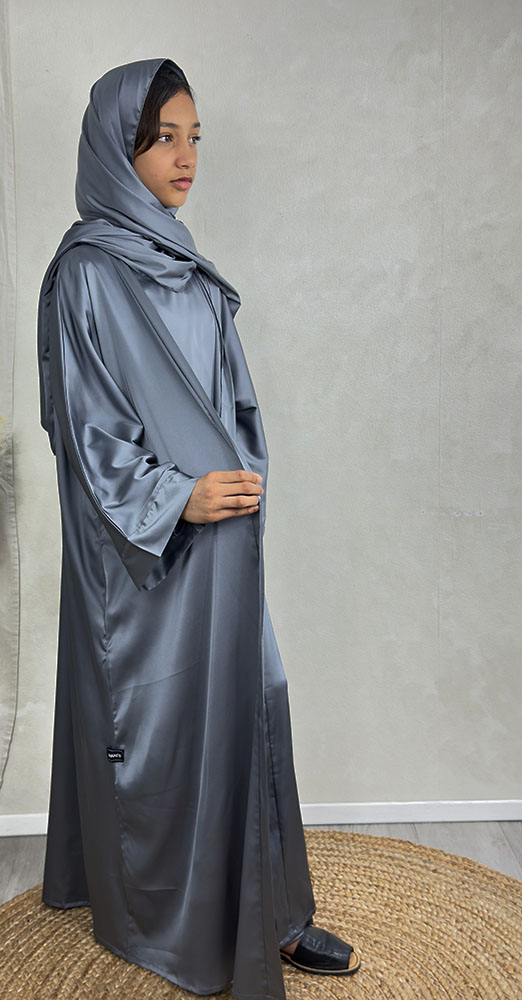
When Should a Girl Start Wearing a Children’s Abaya?
This is one of the most common — and most tender — questions I hear from other moms. And the truth is, there’s no one-size-fits-all answer. But there is wisdom, balance, and intention behind every choice we make as parents.
It’s Less About Age, More About Awareness
Some girls show interest in abayas as young as 4 or 5, especially if they see older women around them wearing one. Others may feel ready closer to 9 or 10, around the time they start understanding modesty from a more spiritual place. And honestly? That timing should be led by love, not pressure.
Signs She Might Be Ready
- She asks for one after seeing you or her older sister wear it
- She begins participating more actively in prayer or Islamic events
- She expresses interest in dressing “like a big girl” or “more modest”
What Scholars and Moms Say
Islamically, modesty becomes obligatory around the age of puberty. But introducing modest wear early, in a joyful and age-appropriate way, helps normalize it. It becomes less of a sudden shift and more of a natural evolution — like outgrowing old shoes and stepping into something that fits who she’s becoming.
| Age Range | Common Style | Modesty Focus | Suggested Fabric |
|---|---|---|---|
| 3–5 years | Play-friendly, bright colors, soft cotton | Comfort, basic coverage | Cotton blends, jersey |
| 6–8 years | Mini-abaya, matching hijab optional | Modest but fun | Crepe, linen, lightweight polyester |
| 9–12 years | Classic abaya silhouette, prayer-wear styles | Spiritual identity, full coverage | Nidha, satin blends, breathable knits |
Let’s be real — you don’t need to “force” anything. When you invite your daughter into this journey gently, she’ll often surprise you by wanting to wear it before you even suggest it. And when she does? That moment is magic.
In the next section, we’ll dive into what really makes an abaya “child-appropriate” — because not every design in the shop understands what a little girl truly needs. But before that, take a moment to reflect: Is she ready for her own abaya? Or are you planting the seed for when the time comes?

Why Choosing the Right Abaya for Your Daughter is About More Than Modesty
Let’s be honest — when we first go shopping for a children’s abaya, modesty is the obvious priority. And yes, it’s important. But after buying and trying more than I can count over the years, I’ve realized something deeper: the right abaya isn’t just about covering her body — it’s about honoring her spirit.
There’s a look your daughter gives you when she feels beautiful and seen — like the fabric you chose didn’t just drape over her, it understood her. That look is why this choice matters more than we think. It’s not about turning little girls into mini adults. It’s about celebrating where they are right now — playful, growing, curious — while gently inviting them into the meaning of modesty.
She’s Not Just Wearing It — She’s Internalizing It
I’ll never forget the time my youngest, barely seven, wore her soft mauve abaya to the masjid for the first time. We had picked it together. She chose it because of the floral stitching; I chose it because of the coverage. But what stuck with me was what she whispered after I helped her button the cuffs: “Do I look like you now?”
My heart stopped. Not because of how she looked — but because she saw the abaya as a connection. To me. To womanhood. To faith. That’s the quiet power of a well-chosen garment. It becomes more than fabric. It becomes belonging.
What Else the “Right” Abaya Should Do
- Support her confidence — Let her feel proud, not pressured.
- Move with her body — She should be able to jump, play, sit, and run without constantly adjusting or tugging.
- Respect her age — It shouldn’t look too mature, but also not overly childish.
- Feel like her choice — Give her agency in the color, the details, or even matching a hijab if she wants.
Design Details That Make a Big Difference
Over time, I’ve learned to look for certain features that aren’t just “nice to have” — they’re crucial if you want your daughter to love wearing her abaya, not dread it.
| Feature | Why It Matters | What to Look For |
|---|---|---|
| Soft, breathable fabric | Prevents overheating and itchiness | Jersey cotton, nidha, linen blends |
| Easy fastenings | She can dress herself independently | Hidden zippers, magnetic snaps, wide buttons |
| Adjustable sleeves | Fits better and grows with her | Elastic cuffs, roll-tab sleeves, stretchy material |
| Play-friendly cuts | Allows active movement | A-line styles, flare hems, side slits (modest length) |
But Modesty Still Leads the Way
Of course, none of this means we compromise on the principle of modesty. That’s the foundation. But modesty doesn’t have to mean discomfort. It doesn’t mean making her feel invisible. A beautiful children’s abaya can be both faithful and fun. That’s the sweet spot we’re aiming for.
And when she finds that balance — something that makes her feel modest, but also proud, free, and completely herself — you’ll see it. She’ll wear it not because she has to, but because she wants to.
In the next section, I’ll show you exactly what to avoid — the common mistakes even well-meaning parents make when shopping for a children’s abaya. Because sometimes, the wrong fit can do more harm than good.
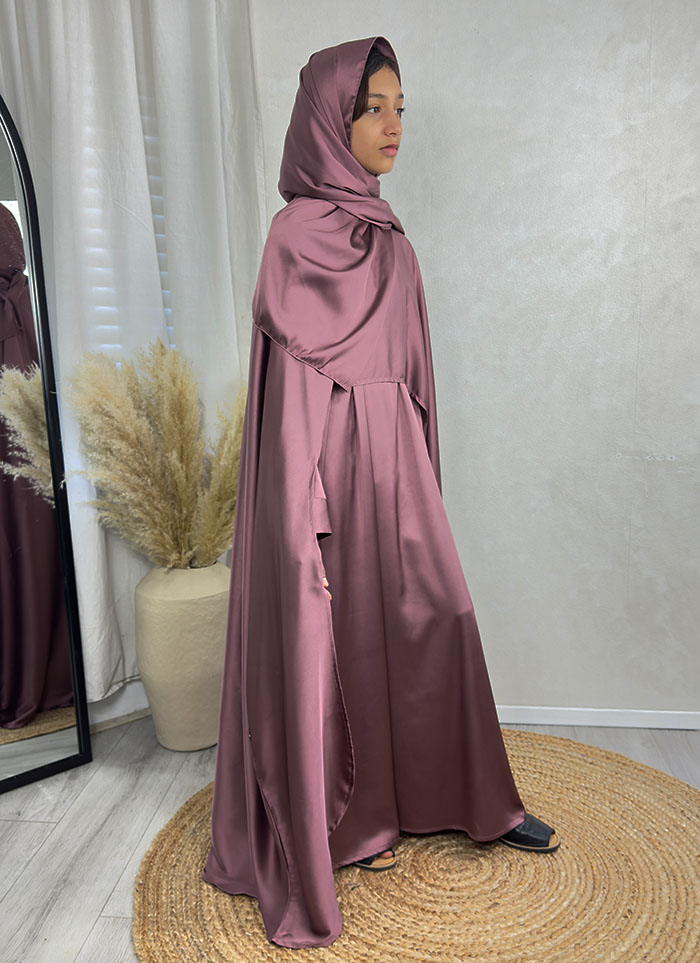
The Day She First Wears It: How a Children’s Abaya Shapes Identity
I still remember it like it was yesterday. My daughter stood in front of the mirror, half-excited, half-nervous, wearing her very first abaya. It was a soft lavender shade — her favorite color — with delicate embroidery near the cuffs. She kept smoothing the front with her tiny hands, asking, “Is this how I’m supposed to look?”
That moment stayed with me. Because what she was really asking wasn’t about how she looked. It was about who she was becoming.
The Abaya Isn’t Just Clothing — It’s a Mirror
When a girl puts on her first abaya, especially at a young age, something subtle but powerful begins to shift. She’s not just wearing a new outfit — she’s starting to form her relationship with modesty, femininity, and faith.
And let’s be real — that first impression matters. If the experience feels forced, scratchy, or uncomfortable, it can create a wall between her and what the abaya represents. But if she feels confident, understood, and even a little proud? That can plant seeds that grow for life.
Identity Through Ritual
We don’t always realize it, but clothing carries ritual. Think about Eid morning — the smell of bakhoor, the way we dress up, the hugs at the masjid. For our daughters, their first abaya can become one of those sacred memories — a gentle initiation into the rhythm of womanhood in Islam.
That’s why how you introduce it matters. It’s not just about the fit or color. It’s about the conversation that comes with it. The moment you kneel beside her and say, “This is more than just pretty fabric. It’s part of who we are. Part of who you are.”
Emotions to Expect on the First Day
| Emotion | What It Might Look Like | How to Support Her |
|---|---|---|
| Excitement | Spinning around, checking herself out, giggles | Celebrate it! Let her show off. Take photos. |
| Nervousness | Fidgeting, tugging, asking questions | Reassure her gently. Remind her she looks beautiful. |
| Uncertainty | “Do I look okay?” or “Is this how Mama wears hers?” | Make it a bonding moment. Share your own first time. |
| Pride | Standing taller, smiling, mimicking you | Reflect that joy back to her. Let her feel seen. |
Building a Bridge Between Fashion and Faith
Look, kids are smart. They pick up on vibes quicker than we think. If we treat the abaya like some heavy religious obligation, they’ll feel that weight. But if we approach it with joy, love, and authenticity — it becomes a garment of connection, not constraint.
What helped my daughter most? Letting her choose the details. One time she asked for sparkly buttons, another time she wanted a butterfly motif. And I said yes — not because I don’t value simplicity, but because I value her sense of self. She’s learning to walk her own path within our values.
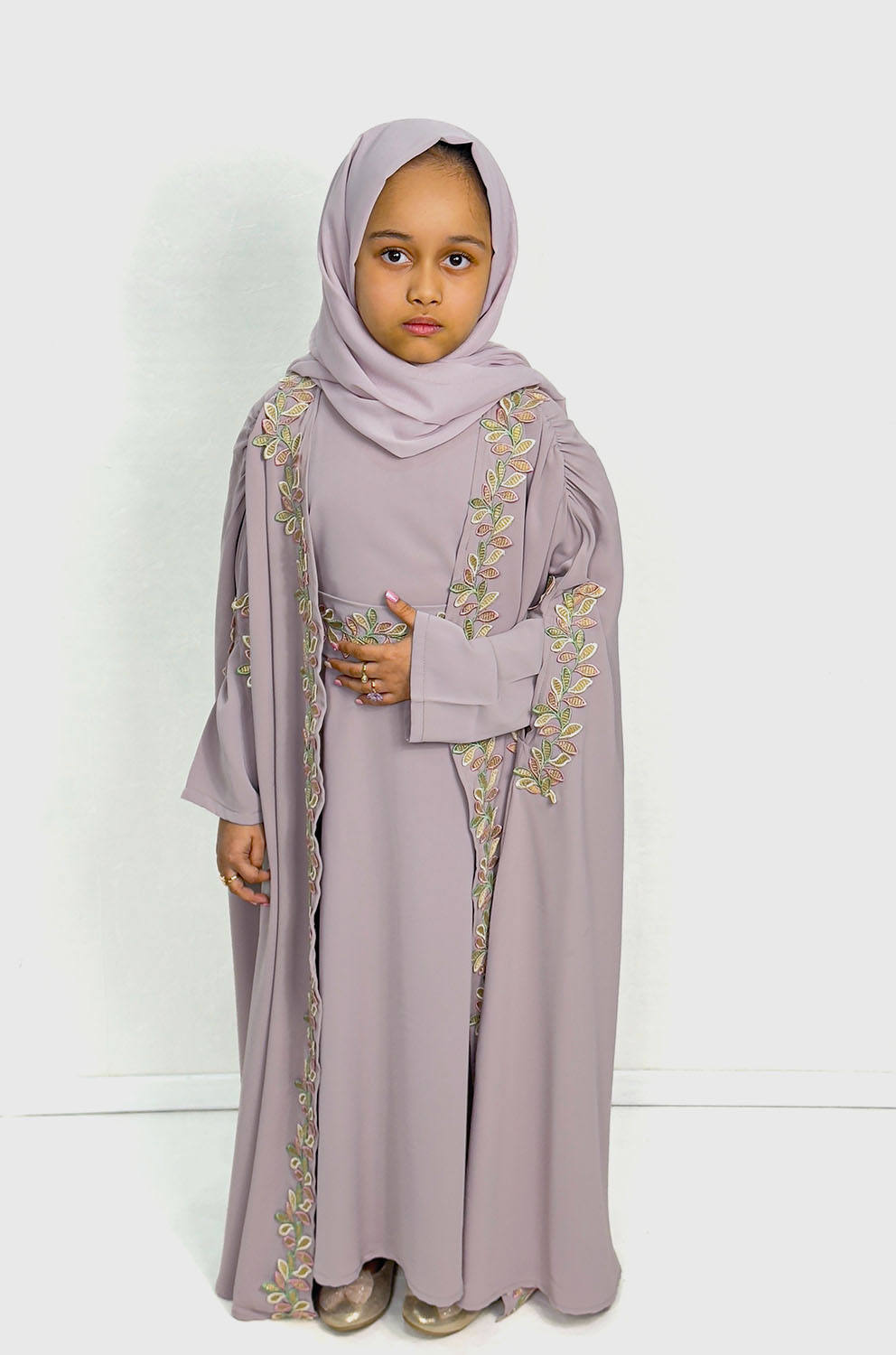
Don’t Skip This First Conversation
The first time she wears an abaya is your opportunity to talk about who we are — not just rules, but roots. Where modesty comes from. Why we love it. How it doesn’t erase us, but rather protects and elevates us.
Even if she’s little, she’ll remember how you made her feel. And that memory? It will outlast the fabric.
So take a deep breath. Smile with her. Kneel down and adjust the hem if needed. Then whisper something affirming into her ear. That’s not just parenting. That’s identity-shaping.
Coming up next, we’ll walk through exactly what makes an abaya truly child-friendly — and just as important, what to avoid at all costs. Because the right fabric, cut, and spirit can make or break the experience for her.
From Eid to Everyday: Matching Abayas to Real Life Occasions
Let me tell you — one of the first things I learned when dressing my daughter in abayas is this: not all abayas are created equal. And they definitely don’t all work for the same moments. What looks stunning under the masjid lights on Eid morning might be totally impractical when she’s running through the garden chasing butterflies (ask me how I know…)
So if you’re feeling a little lost about how to build a modest wardrobe for your little girl that actually works for her life, I promise — I’ve been there. Let me walk you through it.
One Abaya Doesn’t Fit Every Occasion
It took me a while to stop trying to make one “nice” abaya work for everything. I used to dress her in something formal even on a casual day, just because it was “modest.” But I could see it in her eyes — she wanted to run, climb, explore. And the stiff fabric and intricate embroidery just got in the way.
That’s when I started paying more attention to matching the abaya to the moment, not just the dress code. And that mindset shift changed everything. It gave her freedom, comfort, and still preserved our values.
Table: Abaya Types by Occasion
| Occasion | Recommended Abaya Type | Why It Works |
|---|---|---|
| Eid / Weddings | Embroidered, Satin, or Layered Abayas | Elegant, celebratory, and photogenic — perfect for special memories |
| Jummah or Family Gatherings | Printed or Pleated Cotton Abayas | Neat but breathable; offers a balance of modesty and comfort |
| School / Playdates | Jersey or Crepe 2-Piece Sets | Stretchy, durable, and easy to move in — great for active days |
| Home Wear | Lightweight Slip-on Abayas | Simple, minimal designs she can wear comfortably around mahram |
Let Her Dress Like Herself (Within the Values)
I used to worry that letting her choose meant I was giving up some control. But the truth is — I wasn’t raising a robot. I was raising a thinking, feeling, curious Muslim girl. So now, before a big day like Eid or a wedding, I’ll lay out a few options and say, “Which one makes you feel most like you?”
Some days she’ll pick a soft pink with embroidery. Other days she’s drawn to classic black. Either way, she’s learning that modesty isn’t about restriction — it’s about expression through values.
Practical Tip: Think Washable, Breathable, and Play-Friendly
I can’t count the number of times I’ve had to scrub Eid sweets or henna from her sleeves. If you’re shopping for more casual abayas, especially everyday ones, always ask yourself:
- Is this machine washable?
- Will this wrinkle easily?
- Is the fabric breathable for warm days?
- Does it allow for full movement and comfort?
Because trust me — if she’s tugging at the sleeves or sweating five minutes in, she’s not going to want to wear it again.
Occasions Are Teaching Moments
Every event — from Eid salah to your cousin’s nikah — is an opportunity to build her identity. To show her how we show up in the world with dignity, beauty, and barakah.
So let her dress up. Let her glow. Let her take pride in being visibly Muslim. Just make sure her abaya lets her do that without sacrificing comfort or confidence.
And don’t forget: this isn’t just about her. It’s about you too. You’re her mirror. When she sees you adjusting your own abaya with grace and care, she learns how to wear hers — not just on the outside, but in her heart.
Coming next: we’ll explore exactly what details make an abaya truly child-friendly — because fit and fabric aren’t just nice-to-haves, they’re the foundation of lasting comfort and joy.
Soft Enough to Play In: Best Fabrics for Children’s Abayas
I still remember the first time I bought an abaya for my daughter that she actually wanted to wear all day long. It wasn’t fancy embroidery or a perfect cut that made the difference — it was the fabric. Softness. Breathability. The freedom to move without feeling like she was trapped inside something stiff and scratchy.
Let’s be honest, kids don’t want to wear clothes that feel like a costume. They want to run, jump, spin, and explore without fuss. So, when you’re shopping for a children’s abaya, the fabric isn’t just a detail — it’s everything.
Why Fabric Matters More Than You Think
I used to overlook fabric choices and just focus on style or color. But after seeing my daughter fuss and scratch at itchy sleeves, I quickly learned that the wrong fabric can turn even the prettiest abaya into a “no-go” piece in her wardrobe. It affects her mood, her comfort, and honestly, her confidence.
Think of fabric like the skin of the abaya — it has to breathe, stretch a little, and feel gentle. And since children’s skin is sensitive, especially younger ones, harsh or synthetic fabrics can cause irritation or even rashes.
Table: Top Fabrics for Children’s Abayas
| Fabric | Pros | Cons | Best Uses |
|---|---|---|---|
| Cotton | Breathable, natural, soft, easy to wash | Can wrinkle easily, less flowy | Everyday wear, school, playdates |
| Jersey | Stretchy, soft, wrinkle-resistant, comfortable | May be less formal, can pill over time | Casual wear, active days, layering |
| Crepe | Lightweight, drapes beautifully, modest sheen | Requires gentle washing, can snag | Jummah, family events, semi-formal occasions |
| Chiffon (lined) | Elegant, flowy, breathable when lined | Delicate, easy to tear, not warm | Special occasions, Eid, weddings |
| Linen Blend | Natural, breathable, cool in hot climates | Wrinkles quickly, rougher texture | Summer wear, casual outings |
How I Choose Fabric for My Daughter
Every season, I test out different fabrics because her needs change with the weather and activity level. For hot summer days, cotton and linen blends are lifesavers — they keep her cool and fresh. In cooler months, jersey and crepe work wonders for layering, keeping her comfortable without bulk.
But here’s the kicker: softness doesn’t just come from the material; it also depends on how it’s made and treated. I always check if the fabric has been pre-washed or treated to be softer. And when shopping online, reviews about texture and comfort become my best friend.
Fabric Care Tips to Keep Abayas Soft and Durable
I’ve found that the way you care for your daughter’s abayas can extend their life and keep them feeling soft longer. Here’s a quick guide that’s saved me plenty of frustration (and tears from a little one who hates stiff clothes):
- Wash cold and gentle: Hot water can shrink and roughen fabrics, so stick to cold or lukewarm with a gentle cycle.
- Avoid harsh detergents: Look for mild, fragrance-free soaps that won’t irritate sensitive skin.
- Skip the dryer when possible: Air-drying keeps fabric fibers happy and prevents shrinkage.
- Iron on low heat: If needed, iron inside out to protect delicate fibers.
Why Fabric Choice Builds Confidence
When my daughter feels good in what she’s wearing, it shows. Her smile is bigger, her steps are lighter, and even her shy little voice sounds more confident. It’s amazing how much a soft, breathable abaya can do for her sense of self.
So, don’t underestimate the fabric. It’s not just a material — it’s part of how your child experiences modesty. It’s the texture of comfort that lets her embrace her identity without distractions.
Next up, we’ll dive into how small design details in children’s abayas — like buttons, zippers, and hems — can make or break their day. Because trust me, it’s the little things that matter most when you’re dressing a kid.
Color Psychology in Kids’ Modest Wear: What Every Parent Should Know
Let me share a little secret I learned the hard way: choosing the color of your daughter’s abaya isn’t just about what looks cute or matches her hijab. It’s way deeper than that. Colors can actually affect how your child feels, behaves, and even interacts with the world around her.
I still remember picking a bright pink abaya for my niece’s birthday, thinking, “She’ll love this!” But halfway through the party, she looked restless and kept tugging at it. Turns out, some colors can overstimulate or even overwhelm kids. Since then, I’ve become way more mindful about color choices — especially when it comes to modest wear.
Why Colors Matter More Than We Realize
Colors speak louder than words, and for children, who are still learning to navigate emotions, this silent language is crucial. Bright, bold colors might seem fun, but they can sometimes be too much for little souls trying to focus or feel calm. On the other hand, softer shades can soothe and encourage confidence without shouting.
Modest fashion for kids isn’t just about covering up; it’s about creating a safe, nurturing environment — and color plays a huge role in that.
Table: Emotional Effects of Common Colors in Children’s Abayas
| Color | Emotional Effect | Best For | Things to Watch Out For |
|---|---|---|---|
| Soft Blue | Calming, peaceful, promotes focus | School days, learning, quiet occasions | Can sometimes feel too cool or distant |
| Pastel Pink | Warm, comforting, nurturing | Casual wear, family gatherings, playdates | May feel overly sweet or traditional to some |
| Deep Purple | Creative, regal, inspiring | Special events, Eid, religious occasions | Can be overpowering in large amounts |
| Neutral Beige & Cream | Grounding, versatile, timeless | Everyday wear, mix & match | Prone to showing dirt easily |
| Bright Red | Energetic, confident, attention-grabbing | Festivals, celebrations, photo days | Can cause restlessness or irritation in sensitive kids |
How I Use Color to Support My Daughter’s Mood
In our home, we’ve noticed that some colors help my daughter settle down after a busy day, while others spark her creativity during homework or art time. For example, she loves wearing soft blue abayas on school mornings because they somehow help her “get in the zone” — which I totally don’t mind.
When it’s Eid or a big family gathering, we pick richer colors like deep purples or jewel tones that make her feel special, like a little princess. But for everyday adventures, neutral and pastel shades keep things light and fuss-free.
And trust me, it’s not just about looks — the right colors have become part of her emotional toolkit.
Balancing Color with Modesty and Practicality
Of course, we can’t ignore the practical side. Kids are kids, and bright colors can get stained or faded fast. So, I always balance color psychology with durability. That means picking colors and fabrics that can handle whatever a playful day throws at them — mud, snacks, or spontaneous jumps in the park.
Here’s a quick rundown of what I keep in mind:
- Choose deeper or patterned colors for special occasions to hide small stains.
- Use lighter, pastel tones for calm environments like religious classes or quiet family time.
- Match colors with washable fabrics for easy maintenance and longer-lasting vibrancy.
Why Color Choices Build a Child’s Identity
Let’s face it — kids want to express themselves, even within modest fashion’s guidelines. Color becomes their silent way to shout “This is me!” or whisper “I feel calm today.” I love seeing how my daughter’s face lights up when she picks a color that suits her mood. It’s a small but powerful act of self-expression that builds her confidence and pride in wearing her abaya.
So, the next time you’re picking out that perfect children’s abaya, think beyond the fabric and design. Think about what colors might nurture your daughter’s soul, boost her confidence, and help her navigate the many moods of childhood.
Up next, I’ll share some tried-and-true tips on caring for children’s abayas so they stay vibrant and comfortable, wash after wash. Stay tuned!
From Medina to Manchester: Regional Styles of Children’s Abayas
One of the things I find absolutely fascinating about children’s abayas is how beautifully they reflect culture — not just religion, but the unique flavor of the place where a family lives or comes from. It’s like a tiny passport your daughter wears, carrying stories from Medina’s ancient streets to Manchester’s bustling neighborhoods.
When I first started shopping for my daughter’s abayas, I didn’t realize how many regional styles existed. I assumed it was one universal garment, but every region has its own flair, and understanding those can help you pick something that’s not only modest but meaningful and special.
What Makes Regional Styles So Unique?
Think of it this way: the climate, local culture, and even the history of a place shape the fabric choices, embroidery styles, cuts, and even colors used in children’s abayas. For example, the lightweight, airy fabrics favored in Medina reflect the hot desert climate, while Manchester’s cooler weather calls for heavier, layered designs.
But it’s not just about practicality. Regional styles carry symbolism and identity, which is why you’ll find traditional motifs or tailoring that speak directly to heritage — whether that’s a subtle stitch pattern or a certain sleeve shape.
Table: Key Regional Children’s Abaya Styles at a Glance
| Region | Fabric & Climate | Design Elements | Typical Colors | Special Occasions |
|---|---|---|---|---|
| Medina, Saudi Arabia | Lightweight cotton, breathable for hot climate | Simple cuts, minimal embroidery, often open-front | White, cream, soft pastels | Daily wear, religious events |
| Dubai, UAE | Silky fabrics with slight sheen, suited for warm climate | Delicate embroidery, subtle sequins, flowing style | Black with gold/silver accents, jewel tones | Eid, weddings, formal occasions |
| Manchester, UK | Thicker cotton blends, layering common due to cold weather | Tailored cuts, detachable hoods or scarves, muted colors | Neutral shades, navy, maroon | School, casual outings, community events |
| Kuwait | Silk and satin blends for luxury, moderate warmth | Heavy embellishments, embroidery, bold sleeve designs | Black, deep purples, royal blues | Special religious celebrations, family gatherings |
| Indonesia | Light batik fabrics, breathable and colorful | Bright patterns, floral prints, modest but playful | Bright pastels, multi-colored prints | Festivals, cultural celebrations, Eid |
My Journey Learning About These Styles
I remember visiting a family friend from Dubai once, and the way her little girl’s abaya shimmered under the sun — it wasn’t just beautiful, it felt celebratory. That experience made me realize how abayas aren’t just functional or modest clothing, they’re also deeply tied to joy and pride in cultural identity.
Then there was a chilly winter Eid in Manchester, where I watched kids in tailored, wool-blend abayas, complete with cozy scarves. It made me appreciate how abayas adapt to fit the daily realities of Muslim kids worldwide, blending tradition with practicality.
How to Choose a Regional Style for Your Child
If you’re wondering how to pick the best style for your daughter, here are some questions I ask myself:
- What climate will she wear it in most?
- Does your family have roots in a specific region or culture?
- Are you looking for something for everyday use or special occasions?
- How much do you want traditional details vs. modern, practical cuts?
Knowing the answers can help you find an abaya that’s not just modest but meaningful — a garment that tells your daughter’s unique story.
Mixing and Matching Regional Influences
One of the things I love about modest fashion today is how open it is to creativity. It’s not about strict rules; it’s about personal expression and comfort within modesty. So, you can easily blend styles — pairing a Kuwaiti embroidered abaya with Manchester’s layering for warmth, or adding Indonesian batik-inspired accessories to a simple Medina-style abaya.
This kind of fusion honors heritage while embracing your child’s modern world — it’s a beautiful way to keep tradition alive while letting her feel free and confident.
Ready to dive deeper? Next up, I’ll share some insider tips on caring for children’s abayas to keep them looking fresh, comfy, and ready for every adventure. Stick around!
What Age Should a Girl Start Wearing an Abaya? Insights from Real Parents
Okay, let’s be honest — deciding when your little girl should start wearing an abaya isn’t a one-size-fits-all answer. It’s something I’ve grappled with myself, and honestly, it feels deeply personal and sometimes even a little overwhelming. You want to honor faith and tradition, but you also want your child to feel comfortable and confident. So when does the abaya journey really begin?
From chatting with other Muslim moms and dads, I’ve learned that the “right” age varies a lot. Some families start introducing abayas as early as 3 or 4 years old, mainly during special occasions like Eid or family gatherings. Others wait until the child is closer to 7 or 8, when she starts to understand modesty a bit more and can take pride in wearing it.
The Balance Between Tradition and Readiness
One thing I keep coming back to is this: it’s about your daughter’s emotional readiness as much as it is about age. I remember my niece who was 5 and insisted on wearing an abaya every day because she loved how it made her feel like a grown-up. Then there’s my friend’s daughter who wasn’t quite ready at 7 and preferred more casual modest wear.
It’s a balancing act between respecting religious guidance and listening to your child’s feelings — and that’s totally okay.
Table: Typical Ages and How Families Approach Abaya-Wearing
| Age Range | Common Family Approach | Typical Occasions | Child’s Role | Parent’s Role |
|---|---|---|---|---|
| 3-4 years | Introduce abayas mainly for special events | Eid, weddings, religious holidays | Curious, excited, learning about modesty | Encourage gently, keep it fun |
| 5-7 years | More frequent wearing, mix with playful designs | School events, family outings, community | Growing awareness, developing preferences | Support choices, teach significance |
| 8-10 years | Encourage regular wear, foster personal identity | Daily wear, religious education classes | Beginning to take ownership, expressing style | Guide respectfully, share stories and values |
| 11+ years | Consistent daily wear encouraged, peer influence rises | School, social events, prayers | Personal choice strengthens, confidence grows | Open dialogue, empower decisions |
What I’ve Seen in Real Life
I’ll share a little story: when my daughter first wore her abaya at 4 years old during Eid, she was glowing with pride. She asked me, “Mom, am I like the grown-ups now?” It was a sweet moment, but it also reminded me that this isn’t just about fabric — it’s about identity, respect, and belonging.
Yet, when she was 6, she sometimes wanted to skip it on casual days. That was fine too. We talked about how modesty is a journey, not a strict rulebook. I encouraged her to choose when she felt ready and proud.
Tips for Introducing the Abaya to Your Child
- Start with special occasions: This makes the abaya feel like something special, not a chore.
- Let her be part of the choice: Picking colors and styles empowers her and builds excitement.
- Explain gently: Share stories about modesty and faith in ways she can understand.
- Be patient: There will be days she loves it and days she doesn’t — both are okay.
- Normalize diversity: Show her that modesty can look different for every family and culture.
Why Age Isn’t Everything
The truth is, the right time is as unique as your child. Some kids are naturally drawn to modest dress early on, others find their way over time. What matters most is nurturing her confidence and understanding — so she wears her abaya because she wants to, not because she has to.
Are you wondering how to keep your child excited about her abaya over the years? Don’t miss the next section where I’ll dive into creative styling ideas that make modest wear fun and expressive for kids!
Balancing Modesty and Joy: The Role of Playful Design in Girls’ Abayas
Let’s get real for a moment — dressing a little girl in an abaya isn’t just about tradition or modesty. It’s also about joy. It’s about seeing that sparkle in her eyes when she twirls in a dress that feels just right, something that reflects her playful spirit without compromising her values. I’ve watched my own daughter and so many little girls navigate this balance, and it’s truly an art.
You’ve probably felt this too: the challenge of finding children’s abayas that respect modesty but don’t look dull or make her feel like she’s missing out on the fun. Here’s the secret — playful design is the perfect bridge between those two worlds.
What Makes a Design Playful Yet Modest?
When I talk about playful design, I mean abayas that incorporate subtle, age-appropriate elements like soft embroidery, gentle ruffles, colorful trims, or delicate patterns. It’s not about flashy or loud; it’s about details that catch the light, spark curiosity, and invite smiles.
For example, I once bought a children’s abaya with tiny star-shaped sequins sewn near the sleeves. My daughter absolutely loved it. She told me, “Mom, it feels like magic when I wear this!” That moment made me realize how much little touches can mean.
Table: Key Elements of Playful Yet Modest Abaya Designs
| Design Element | Why It Works | How It Maintains Modesty | Example Use |
|---|---|---|---|
| Soft Embroidery | Adds texture and charm without overwhelming | Placed subtly on sleeves, hems, or collars | Floral patterns on cuff edges |
| Gentle Ruffles | Creates movement and fun without excess | Used sparingly on sleeves or near the hemline | Small ruffle around sleeve cuffs |
| Colorful Trims | Brightens design with minimal fuss | Thin trims in complementary colors along seams | Pastel trim on dark abaya |
| Delicate Patterns | Visual interest without being distracting | Small-scale prints, avoiding flashy motifs | Tiny star or leaf patterns |
Why This Matters to Moms Like Me
Finding that sweet spot where modesty meets delight can make all the difference in a girl’s experience with her abaya. It’s not just clothing — it’s confidence, identity, and happiness wrapped up in fabric. When my daughter feels good in what she’s wearing, she carries herself differently. She’s proud, playful, and eager to share her culture with her friends.
On the flip side, I’ve seen girls resist wearing an abaya that feels stiff or plain — and who can blame them? Kids want to express themselves, even within boundaries. Playful design acknowledges that and celebrates it.
How to Choose Playful Yet Modest Abayas
- Look for subtle details: Avoid anything too flashy or over-the-top. The magic is in the little things.
- Choose soft, comfortable fabrics: Your child’s comfort fuels her joy.
- Involve your daughter: Let her pick designs or colors she loves within modest guidelines.
- Prioritize ease of movement: Playtime is non-negotiable — ruffles and embroidery should never restrict.
Mix and Match for Maximum Fun
One trick I’ve found helpful is mixing plain abayas with playful accessories like cute hijab pins, lightweight scarves in fun prints, or even matching shoes. This way, you keep the core modest but allow bursts of personality to shine through.
So, what’s next on this journey? I’ll be sharing some styling tips and trusted brands that really get how to blend modesty with kid-friendly designs. Stay tuned!
Behind the Seams: Stitching Quality and Ethical Production for Children’s Wear
Honestly, when it comes to choosing a children’s abaya, I’ve learned the story behind the seams matters just as much as the look. It’s easy to get swept up in colors and styles, but the truth is, quality and ethics in production make all the difference — not only for our daughters’ comfort but for our peace of mind as parents.
Have you ever held a piece of clothing and just felt it was made with care? That’s the kind of feeling I chase whenever I shop for my daughter. Because let’s be real: kids are tough on clothes. They run, jump, and play, and their abayas need to keep up without falling apart or irritating their skin.
Why Quality Stitching Matters for Children’s Abayas
First off, the durability factor is huge. Poor stitching means hems unravel, seams pop, and before you know it, your little girl’s beautiful abaya looks worn out — sometimes after just a few wears. And that’s frustrating for both of you.
But quality isn’t just about toughness. It also affects comfort. I’ve noticed that tight, uneven stitches can irritate a child’s sensitive skin. On the flip side, well-finished seams with soft thread and thoughtful design feel almost invisible to the wearer.
Table: What to Look for in Stitching Quality
| Quality Factor | Why It’s Important | How to Spot It | Impact on Child |
|---|---|---|---|
| Even, Tight Stitches | Prevents fabric from fraying or tearing | Look closely along seams; stitches should be consistent | Abaya lasts longer; no uncomfortable gaps |
| Reinforced Stress Points | Strengthens areas like shoulders and cuffs | Extra stitching or bartacks at corners | Withstands active play without damage |
| Soft Thread & Seam Finishing | Prevents skin irritation | Inside seams are smooth with no loose ends | Child stays comfortable all day |
Ethical Production: Why It’s More Than Just a Trend
Beyond the seams, I’m deeply passionate about the ethics behind the clothes we buy. It’s important to me — and probably to you too — that the abayas come from places where workers are treated fairly, paid a living wage, and work in safe environments. After all, modesty isn’t just about what we wear; it’s about respect and dignity for all involved in creating it.
It’s heartwarming when I find brands that share this commitment. It makes me feel connected — like I’m part of something bigger than just a shopping trip.
How to Identify Ethically Produced Children’s Abayas
- Look for Certifications: Labels like Fair Trade, GOTS (Global Organic Textile Standard), or B Corp are great signals.
- Research Brand Values: Check brand websites for transparency on their manufacturing processes.
- Ask Questions: Don’t hesitate to contact sellers or brands about where and how their abayas are made.
- Support Local or Small Artisans: When possible, buying from smaller ethical producers helps communities directly.
Real-Life Example: My Search for the Perfect Ethical Abaya
I remember last Ramadan, hunting for an abaya that was both beautiful and ethically made. It wasn’t easy. Many affordable options didn’t share production details, and some high-end ones felt out of reach. Eventually, I found a small brand that handcrafts abayas using organic cotton with fair labor practices. My daughter loved the soft feel, and I loved the story behind it.
That abaya has become a symbol for us — not just modesty, but mindfulness and care.
So next time you’re shopping for your little girl’s abaya, take a moment to peek behind the seams. It’s worth it, I promise.
Up next, I’ll dive into how to care for children’s abayas to keep them looking their best longer — because quality deserves care.
The 2025 Parent’s Guide to Buying a Children’s Abaya Online
Let me be real with you: buying a children’s abaya online can feel like walking through a maze blindfolded. I’ve been there — endless scrolling, confusing sizing charts, wondering if the fabric will be soft enough, or if it’ll look as good in person as on screen. And let’s not even start on wondering if the abaya arrives on time or fits right.
But here’s the thing — online shopping for your daughter’s abaya doesn’t have to be a headache. In fact, it can be a joyful experience if you know exactly what to look for and how to trust your instincts. Over the years, I’ve gathered some hard-earned tips and tricks to make sure you end up with an abaya your little one will cherish — without the stress.
Why Buy Children’s Abayas Online?
Honestly, shopping online opens up so many possibilities. You get access to a wider range of styles, fabrics, and brands from all over the world — things you might never find in local stores. Plus, you can read reviews from other parents, compare prices easily, and have your purchase delivered right to your door.
But all this choice means we have to be extra careful. A beautiful photo doesn’t always tell the full story, so let’s break down how to navigate online shopping smartly.
Table: Key Factors for Buying Children’s Abayas Online
| Factor | Why It Matters | How to Verify Online | Tip From My Experience |
|---|---|---|---|
| Sizing Accuracy | Keeps the abaya comfortable and wearable | Check detailed size charts and measure your child | Always size up if your daughter is between sizes—kids grow fast! |
| Fabric Details | Determines comfort and breathability | Look for detailed fabric descriptions and customer reviews | Favor natural fibers like cotton or bamboo blends for softness |
| Return & Exchange Policies | Gives peace of mind if fit or quality isn’t right | Read policy pages carefully and look for hassle-free returns | Pick stores with free returns whenever possible |
| Customer Reviews | Offers real-world insights into quality and fit | Scan reviews for comments on durability and comfort | Don’t just rely on star ratings—read the detailed reviews |
How I Approach Online Shopping for My Daughter’s Abaya
I usually start by measuring her height, chest, and arm length — yes, even arm length matters when it comes to sleeves. Then, I find the size chart for the brand and compare it carefully. If I’m ever unsure, I reach out to the seller with a quick question about fit or fabric. It might seem extra, but it saves so much hassle later.
One time, I ordered a gorgeous navy blue abaya that looked perfect online — but it came with itchy polyester lining that my daughter couldn’t stand. From then on, I make it a point to double-check fabric types, always prioritizing soft, breathable materials.
Spotting Red Flags When Buying Online
- Vague Product Descriptions: If the fabric or sizing info is skimpy, be wary.
- No Photos of Real Kids: Stock photos are fine, but look for customer photos or videos for a realistic view.
- Few or No Reviews: Especially on new or unknown sites — it’s okay to be cautious.
- Overly Complicated Return Policies: If returning feels like a chore, it’s best to skip.
What to Expect When Your Abaya Arrives
When that package finally lands at your doorstep, it’s a mix of excitement and nerves, right? I always unwrap the abaya carefully, checking stitching, fabric feel, and making sure it matches the online description. If it fits and feels right, we have a mini celebration at home — because that means one less shopping headache and one happy daughter.
If it doesn’t meet expectations, I rely on the return policy — no shame in sending it back. Shopping online is a learning curve, but with these steps, it gets easier.
My Final Words for Fellow Parents
Buying a children’s abaya online in 2025 isn’t just about convenience — it’s about empowerment. You get to pick pieces that align with your values, your daughter’s personality, and your family’s lifestyle. But it requires a bit of savvy and patience. Trust yourself, take your time, and don’t settle for less than what your child deserves.
Next, I’ll walk you through practical care tips to keep that precious abaya looking fresh and new for every occasion — because the journey doesn’t end when you hit “buy.”
What She’ll Love vs What You Think She Needs: Bridging the Fashion Gap
Let’s be honest — dressing our daughters in abayas isn’t always as simple as picking the “right” one. You’ve probably felt it too: that little tug-of-war between what you, as a parent, think is best, and what your daughter actually loves to wear. Believe me, I’ve been there more times than I can count. And it’s not just about fashion — it’s about identity, comfort, and sometimes, just pure joy.
When I first started choosing abayas for my little one, I thought the most important thing was modesty and tradition — and of course, quality. But I quickly realized that if she didn’t love the style or feel restricted, it was a losing battle. That moment really made me pause: how do I balance what *I* want with what *she* actually feels comfortable in? How do I bridge that gap without compromising our values?
Understanding Her Perspective: More Than Just Fabric and Fit
Kids aren’t just small adults — they have their own tastes, preferences, and little quirks. Maybe she loves bright colors or playful patterns, or maybe she prefers simplicity but with a fun detail like embroidered flowers or a delicate trim. And sometimes, she just wants to feel like a “big girl” wearing something stylish and cool, not just “modest.”
It’s crucial to listen — really listen — to those small preferences. When I began involving my daughter in the decision-making, everything changed. Suddenly, she was excited to wear her abayas because she had a say in the choice.
Table: Parent’s Needs vs Child’s Desires — Finding the Sweet Spot
| Parent’s Priorities | Child’s Preferences | How to Balance Both |
|---|---|---|
| Modesty and coverage | Comfort and freedom to move | Choose soft fabrics with roomy cuts that allow play |
| Durability for everyday wear | Colors and designs she finds fun | Look for durable abayas in vibrant but modest colors |
| Appropriate styles for cultural or religious events | Modern and trendy cuts she admires | Find abayas with subtle modern details—like delicate embroidery or stylish buttons |
| Easy care and washing | Lightweight and breathable fabrics | Opt for machine-washable fabrics that feel light on the skin |
Storytime: When Compromise Became a Game-Changer
I remember one Eid when my daughter was adamant about wearing a lavender abaya with silver embellishments — which wasn’t exactly what I had in mind. I was worried it wouldn’t fit the traditional feel of our family’s celebration. But instead of dismissing her, I sat down with her and talked about why modesty mattered to me. She shared why she loved that color and the sparkly details — it made her feel special and confident.
In the end, we found a middle ground: a lavender abaya with a simple cut, modest coverage, but with just enough silver to make her eyes light up. That Eid, she wasn’t just wearing an abaya; she was expressing herself in a way that felt right for her *and* respected our values. That memory sticks with me — it’s proof that bridging this gap is worth the effort.
Tips for Parents: How to Respect Both Perspectives
- Start with a conversation: Ask your daughter what she likes and why. You might be surprised at how articulate kids can be when they feel heard.
- Mix and match: Combine traditional pieces with trendy accessories or playful scarves that let her express personality.
- Set boundaries kindly: Explain the reasons behind modesty gently, then invite her to pick styles within those boundaries.
- Shop together: Making the process a shared experience builds trust and excitement.
- Celebrate individuality: Every child is unique, and their abaya choices can be a beautiful reflection of who they are becoming.
Final Thought: The Heart of Modest Fashion is Connection
At the end of the day, abayas are more than garments — they’re a way to connect faith, culture, and personal identity. The sweet spot between what you think your daughter needs and what she loves is where real magic happens. When you nurture that balance, you’re not just dressing her body; you’re supporting her spirit. And that? That’s what modest fashion is truly all about.
How to Handle Peer Pressure and Modesty in Non-Muslim Schools
Okay, let’s talk about something a lot of Muslim parents quietly worry about but don’t always say out loud — navigating modesty when your child goes to a non-Muslim school. If you’ve sent your little girl to a place where her abaya might stand out, you know it’s not just about the fabric or the cut. It’s about how she feels, how she’s seen, and how to gently protect her confidence when peer pressure is real and sometimes relentless.
I still remember the first time my daughter put on her abaya for school. I thought, “She’ll feel proud, connected, strong.” But as she came home that day, she was quieter than usual. Turns out, some kids asked questions or even teased her about wearing “different clothes.” And that little sparkle of pride dimmed a bit. I’m telling you, that moment crushed me — but it also sparked a conversation I needed to have with her.
Why Peer Pressure Around Modesty Hits Harder
At that age, fitting in is everything. Kids want to belong — to be “normal.” When your daughter’s modest dress looks different, it can make her feel like she’s an outsider. She might hear comments that make her question why she’s wearing what she’s wearing, and even wonder if it’s worth standing out. And you know what? That’s perfectly human. No one wants to feel isolated, especially children.
Table: Common Peer Challenges and Practical Responses
| Challenge | How It Feels | How to Respond |
|---|---|---|
| Teasing or name-calling | Embarrassment, confusion | Practice calm replies like “This is part of who I am” or use humor to deflect |
| Questions about why she wears an abaya | Pressure to explain or justify | Prepare simple, confident answers: “It’s how I express my faith and feel comfortable” |
| Feeling left out from group activities | Loneliness, sadness | Encourage participation in diverse clubs or groups that share values or interests |
| Pressure to dress “like everyone else” | Self-doubt, confusion | Reinforce identity at home and celebrate her choices with positive role models |
Sharing My Experience: Building Her Confidence Step by Step
I won’t sugarcoat it — this was a journey, not a quick fix. We talked often about why she wears the abaya and how proud she should feel. But more than words, I wanted her to have tools to face questions and teasing with grace. We practiced simple responses together — nothing rehearsed or robotic, just honest and calm. It made a difference when she could say, “I wear this because it’s who I am,” rather than feeling put on the spot.
And here’s a tip that helped: I connected her with Muslim friends and local youth groups where she could see other girls loving their modest wear, making it feel like a shared, normal experience — not a lonely one. That sense of community is everything.
How Schools Can Help: What to Look For
- Inclusivity policies: Does the school respect religious dress and teach tolerance?
- Open dialogue: Are teachers and staff approachable for discussing concerns?
- Anti-bullying programs: Does the school actively combat teasing and exclusion?
- Diverse curriculum: Is cultural diversity celebrated to build understanding among students?
- Peer support: Are there clubs or groups promoting inclusivity and friendship?
Table: Practical Tips for Parents and Kids
| For Parents | For Children |
|---|---|
| Maintain open, honest conversations about feelings and challenges | Practice confident, simple answers about modest dress |
| Connect with community and support groups | Find friends who respect and share similar values |
| Encourage pride in identity through stories and role models | Wear the abaya with confidence and comfort |
| Work with schools to ensure respectful environments | Seek help from trusted adults when needed |
Final Reflections: Modesty as a Strength, Not a Burden
Honestly, the world outside the home can feel overwhelming, but modesty doesn’t have to be a barrier. It’s a beautiful strength — a quiet but powerful statement of faith and identity. When our daughters know they have our support, a community behind them, and the tools to navigate tough moments, they start to see their abaya not as “different” but as something special, something they own.
So yes, peer pressure is real. But with love, preparation, and patience, our girls can walk through those school hallways head held high — proud, modest, and unstoppable.
Seasonal Guide: Choosing the Right Abaya for Summer, Winter, and Ramadan
Let me be honest — finding the perfect children’s abaya for every season isn’t just about fashion; it’s about comfort, faith, and creating moments that matter. When the seasons change, so do our needs, especially for our little ones who wear their abayas through school days, family gatherings, and Ramadan nights. If you’ve ever stood in front of the closet wondering, “Is this fabric too heavy for summer?” or “Will she be warm enough in winter?” you’re not alone. I’ve been there too, juggling modesty with practicality, and I’m here to share what I’ve learned, from the breathability of summer fabrics to the cozy layers for winter and the special touch Ramadan deserves.
Understanding Fabric and Climate: The First Step to Seasonal Comfort
There’s no one-size-fits-all when it comes to abayas, especially for kids. The climate of where you live and your child’s daily activities play a big role in what abaya you should pick. For example, if you live somewhere hot and humid, a thick, heavy abaya might turn into a misery rather than a blessing. Conversely, in colder climates, a light fabric won’t cut it during winter. So let’s break this down:
| Season | Recommended Fabrics | Key Features | Why It Matters |
|---|---|---|---|
| Summer | Cotton, Linen, Lightweight Crepe | Breathable, moisture-wicking, light | Keeps child cool and comfortable under the sun |
| Winter | Wool blends, Thick Jersey, Velvet-lined | Insulating, soft, warm | Protects from cold while maintaining modesty |
| Ramadan | Silk blends, Satin, Soft Chiffon | Elegant, lightweight, breathable | Comfort during fasting and special prayers, festive feel |
Personal Story: Finding the Perfect Ramadan Abaya
Ramadan has always been special in our house — the nights filled with prayers, dates, and family warmth. One year, I wanted my daughter’s abaya to feel as special as the season. I picked a delicate silk blend with soft chiffon details. It was light enough so she didn’t feel hot during Taraweeh prayers but elegant enough to make her eyes sparkle with excitement. Watching her twirl in that abaya, feeling both modest and festive, reminded me that the right abaya is not just clothing — it’s part of the spiritual experience.
Tips for Choosing Seasonal Abayas for Kids
- Look for natural fibers: Cotton and linen breathe better in summer; wool blends trap warmth in winter.
- Layer smartly: Use thermal leggings or undershirts beneath lighter abayas in winter without compromising modesty.
- Check care instructions: Kids get messy — choose fabrics that are easy to wash but durable enough to last seasons.
- Allow room for movement: Especially in winter, thicker layers should still let your child play comfortably.
- Consider color: Light colors reflect heat in summer, darker ones keep warmth in winter.
Table: Seasonal Color Choices & Their Benefits
| Season | Recommended Colors | Reason |
|---|---|---|
| Summer | Pastels, Whites, Light Neutrals | Reflect sunlight, keep cool |
| Winter | Deep Blues, Burgundies, Black | Absorb warmth, feel cozy |
| Ramadan | Rich jewel tones, Gold accents | Celebrate the festive, spiritual season |
How to Shop Smart: Seasonal Checklist for Parents
- Assess your local climate: What’s the average temperature range?
- Plan for activities: Will she be outdoors often? At mosque prayers? At family gatherings?
- Invest in versatile pieces: Abayas that can layer or adjust with weather changes offer the best value.
- Remember your child’s preferences: Sometimes a child’s comfort trumps all, so involve her in the choices.
- Don’t forget accessories: Lightweight hijabs for summer, cozy scarves for winter, and delicate ones for Ramadan complete the look.
Final Thoughts: More Than Just Fabric
Choosing the right abaya for each season is a balancing act of faith, function, and feeling. When we dress our children thoughtfully, considering the seasons and their unique needs, we’re doing more than keeping them covered — we’re nurturing their confidence, spirituality, and joy. And honestly, isn’t that the best gift we can give?
Matching Mother-Daughter Abayas: Cute Trend or Timeless Tradition?
Okay, I have to confess—there’s something truly magical about wearing matching abayas with my daughter. It’s more than just a fashion statement; it’s like a little ritual, a silent bond woven into every thread. But here’s the thing: some people brush off matching abayas as just a cute trend, something fleeting and Instagram-worthy. I see it differently. For me, it’s a timeless tradition that connects generations, celebrates identity, and brings a smile to both our faces on the hardest days.
Why Matching Abayas Feel So Special
You’ve probably noticed that when my daughter and I step out in coordinated abayas, heads turn—not because we’re flashy, but because something about that connection is unmistakable. It says, “We belong together,” and “We cherish our faith.” Honestly, it’s a gentle way to teach her that modest fashion isn’t about rules; it’s about pride, love, and legacy.
Let me share a small story. Last Eid, my daughter insisted on wearing the same abaya pattern I picked out for myself. Watching her beam as we walked hand-in-hand reminded me of my own childhood, when my mother’s gentle guidance shaped my sense of modesty and style. It’s a beautiful cycle, one I want to keep alive.
Is It Just a Trend? The Cultural Roots of Coordinated Clothing
Matching outfits aren’t new. Across many cultures, mothers and daughters have dressed alike to mark celebrations, rites of passage, or simply to show their bond. In Muslim communities, coordinated abayas and hijabs have long been a way to express unity and shared values, especially during special occasions like Eid, weddings, or religious festivals.
What’s shifted is the accessibility. Today’s modest fashion industry makes it easier than ever to find matching sets—sometimes even custom-made—that are stylish, comfortable, and age-appropriate. But underneath all that modern flair is a deep-rooted tradition of passing down faith and family through clothing.
Table: Pros and Cons of Matching Mother-Daughter Abayas
| Pros | Cons |
|---|---|
| Builds emotional connection and shared identity | Can feel restrictive if child’s personal style isn’t considered |
| Creates beautiful photo memories and family traditions | Sometimes expensive if buying high-end matching sets |
| Encourages modest fashion pride in young girls | May lead to comparisons or peer pressure in some settings |
| Strengthens cultural and spiritual bonds | Needs balance to respect individual expression |
How to Make Matching Abayas Work for You and Your Daughter
Here’s the secret: matching doesn’t mean identical. Sometimes, it’s about harmony—complementary colors, similar fabrics, or shared design accents that say “we belong” without feeling forced. My daughter loves bright colors, so I might choose a classic black abaya with a pastel hijab that matches her vibrant outfit. It’s a small touch but makes her feel heard and respected.
- Involve your daughter in the choice: Her input matters, even if she’s young.
- Choose versatile pieces: Consider separates that mix and match easily.
- Focus on comfort: Kids grow fast, and abayas should let them move freely.
- Celebrate the occasion: Eid, family gatherings, or even casual Fridays can be moments to match.
Style Table: Matching Ideas for Different Occasions
| Occasion | Matching Style Idea | Fabric & Color |
|---|---|---|
| Eid | Full matching abayas with embroidery | Silk or satin, jewel tones (emerald, ruby) |
| Everyday | Coordinated hijabs with complementary abayas | Cotton or crepe, neutrals and pastels |
| Special Events | Matching accents like belts, buttons, or trims | Velvet or chiffon, soft hues with metallic touches |
Why This Tradition Matters More Than Ever
In a world that often pushes us to blend in or stand out in the wrong ways, matching mother-daughter abayas offer a beautiful middle ground. They allow us to express identity, faith, and love without words. And for my daughter, seeing herself reflected in my style isn’t just about clothes — it’s about belonging, confidence, and knowing she’s part of something bigger than herself.
So yes, while some might see matching abayas as a fleeting trend, for me, it’s a timeless tradition that carries heartbeats, prayers, and hopes across generations. And honestly, isn’t that worth dressing up for?
Size, Fit, and Growing Fast: How to Get More Wear Out of Each Abaya
Let’s be real—dressing kids, especially when it comes to something as special as a children’s abaya, is a balancing act. You want the perfect fit that looks elegant and modest, but at the same time, your little one is growing like a weed. One minute the abaya fits just right, and the next it’s already too short or tight. It can feel like a losing battle, right? I’ve been there, and I want to share everything I’ve learned about sizing, fitting, and stretching the wear out of every precious abaya in your daughter’s wardrobe.
Why Fit Matters More Than You Think
It’s tempting to buy an abaya that’s a bit too big “for growth,” but here’s the catch: if it’s too loose or ill-fitting, it can lose that graceful silhouette that modest fashion celebrates. My daughter once wore an abaya that was oversized by a whole size, and she kept fussing with it, feeling awkward and uncomfortable. She deserves to feel proud, poised, and comfortable in what she wears—especially when it represents her faith and identity.
But on the flip side, too tight means discomfort, restriction, and less wear. I’ve had to learn the hard way that size charts are helpful but never the full story—each brand can run differently, and kids’ body shapes vary so much.
Tips for Choosing the Right Size and Fit
- Measure, measure, measure: Don’t guess. Keep a tape handy and measure chest, waist, hips, and length regularly.
- Know the brand’s fit: Some abayas are designed to be roomy, others more tailored—read reviews or ask for advice.
- Look for adjustable features: Elastic waistbands, adjustable cuffs, or tie belts help extend the life of the abaya.
- Choose styles with flexibility: A-line cuts or abayas with side slits give more room to grow and move.
Table: Size Guide Essentials for Children’s Abayas
| Age | Height (cm) | Chest (cm) | Waist (cm) | Recommended Style |
|---|---|---|---|---|
| 2-3 years | 85-95 | 52-54 | 50-52 | A-line with adjustable cuffs |
| 4-5 years | 96-105 | 55-57 | 53-55 | Elastic waist with soft fabric |
| 6-7 years | 106-115 | 58-60 | 56-58 | Loose fit with side slits |
| 8-9 years | 116-125 | 61-63 | 59-61 | Flowy cut with adjustable belt |
Making Every Abaya Last Longer: Practical Tricks
I want to be honest here: buying a children’s abaya is an investment—not just financially, but emotionally. So squeezing out more wear from each piece is both smart and satisfying. Here are some strategies I swear by:
- Layer creatively: Pair your daughter’s abaya with leggings or thermal wear underneath in colder months. This lets you buy one size up without the bulk.
- Use accessories: A pretty belt or sash can cinch a slightly loose abaya, making it look tailored and fresh.
- Alterations are your friend: If you spot loose hems or sleeves, a quick stitch or taper can save the abaya from retirement.
- Rotate outfits: Kids are energetic, and frequent washing can wear down fabrics. Having a few abayas to cycle through extends their lifespan.
Table: Tips to Extend Abaya Wear Over Seasons
| Tip | How It Helps | When to Use |
|---|---|---|
| Buy one size bigger | Gives room for growth and layering | At the start of each season |
| Use lightweight undershirts | Keeps warm without bulk | Winter & Ramadan nights |
| Adjustable waist belts | Makes fit flexible | Everyday and special occasions |
| Rotate and rest clothes | Preserves fabric and color | Year-round |
The Emotional Side of Sizing and Growing
Beyond the practical, I’ve realized sizing and fit touch on something deeper. As parents, we want our daughters to feel beautiful and respected in their modest wear. It’s about teaching them self-care and confidence early on—showing that taking care of what they wear is part of honoring themselves and their faith.
And when an abaya fits just right, it’s like it becomes a second skin, allowing her personality and spirit to shine through modestly. I hope these tips help you find that perfect balance, so your daughter not only looks good but feels amazing too.
Styling a Children’s Abaya: Scarves, Shoes, and Confidence
Let me tell you, styling a children’s abaya is a whole journey—and it’s not just about the clothes. It’s about helping your little one step into her confidence, her identity, and her faith with joy. You’ve probably noticed how a simple scarf or a pair of shoes can change the entire vibe of an outfit, right? Well, when it comes to modest wear for kids, those little details matter so much more than just “looking nice.” They build self-esteem and make wearing an abaya something your daughter looks forward to every day.
The Heart of Styling: Why It’s More Than Just Fashion
I remember when my daughter first started showing interest in picking her own scarves and shoes. At first, I was worried — would she choose something too flashy? Too bold? But I quickly realized that letting her make those choices was actually teaching her ownership over her modesty. It’s empowering. It’s like saying, “This is my style, and I’m proud of it.”
Scarves and shoes aren’t just accessories—they’re expressions of personality within the framework of modesty. And if you get them right, your daughter walks out with her head held a little higher, ready to take on the world with that quiet but unshakeable confidence.
Choosing the Perfect Scarves for Kids: Comfort Meets Style
Kids need scarves that are soft, breathable, and easy to manage. Trust me, a scratchy scarf can turn a day into a struggle real fast. Cotton and bamboo fabrics are my top picks because they feel gentle on sensitive skin and don’t cause itching. Plus, they’re easy to wash and maintain.
Colors and patterns? Oh, that’s where the fun begins. Let your daughter explore pastels, subtle florals, or even fun geometric prints that complement her abaya without overpowering it. You don’t want the scarf stealing the show, but it should add a little sparkle to her smile.
Table: Best Scarf Fabrics and Styles for Children’s Abayas
| Fabric | Pros | Cons | Best For |
|---|---|---|---|
| Cotton | Soft, breathable, easy to wash | Can wrinkle easily | Everyday wear, school |
| Bamboo | Hypoallergenic, super soft | More expensive | Sensitive skin, special occasions |
| Jersey | Stretchy, stays in place well | Less breathable in hot weather | Active days, casual outings |
| Silk (lightweight) | Elegant, smooth finish | Delicate, needs careful washing | Festivals, Eid |
Finding Shoes That Blend Modesty and Movement
Shoes might be the last thing you think about when it comes to modest fashion, but trust me, they’re a game-changer. Kids need shoes that allow them to run, jump, and play freely, all while matching the grace of their abaya. I always look for soft soles and breathable materials, because kids’ feet grow fast and need comfort above all.
Slip-ons, ballerina flats, or even modest sandals with closed toes have worked wonders for my daughter. The key is simplicity with a dash of fun—like a subtle bow or a little shimmer—that makes her feel special without clashing with modesty.
Table: Kid-Friendly Shoe Types for Abayas
| Shoe Type | Best Features | When to Wear | Modesty Factor |
|---|---|---|---|
| Slip-on flats | Easy to wear, soft soles | Everyday, school | High |
| Ballerina flats | Lightweight, elegant | Special occasions, Eid | Very High |
| Modest sandals | Breathable, covered toes | Summer outings, casual | High |
| Soft sneakers | Supportive, flexible | Active play, school | Moderate |
Building Confidence Through Styling Choices
Here’s the real magic: when your daughter chooses her scarves and shoes, she’s learning to express herself in a way that aligns with her values. It’s not just about looking modest; it’s about feeling modest with pride. Watching my daughter mix and match her abayas with scarves she picked and shoes she loves has been a heartwarming reminder that modest fashion for kids isn’t restrictive—it’s a beautiful playground of identity and faith.
So next time you’re helping her get dressed, take a moment to celebrate those little choices. They’re building blocks for a confident, graceful young woman who owns her modesty, one scarf and pair of shoes at a time.
How to Talk to Your Child About Modesty Without Shame
Let’s be honest — talking about modesty with your child isn’t always easy. It’s such a delicate topic, right? You want to guide her lovingly without making her feel like she’s suddenly carrying a heavy burden. I’ve been there, wondering how to balance teaching important values while keeping her spirit light and joyful. Because honestly, modesty shouldn’t come wrapped in shame or fear; it should be a celebration of who she is and the beautiful faith she belongs to.
Modesty as a Gift, Not a Restriction
When I first tried explaining modesty to my daughter, I realized something crucial: the way we frame it matters more than the words themselves. Instead of starting with “You must cover up” or “You shouldn’t,” I began by talking about modesty as a form of respect — respect for herself, for others, and for Allah. That simple shift changed everything.
I’d say, “Modesty is like a little shield of kindness you wear. It’s not about hiding; it’s about showing the best of you, in a way that makes you feel proud and comfortable.” And guess what? She started to see it as a positive, powerful choice rather than a strict rule. Have you felt that too? How often we unintentionally frame modesty as a chore rather than a joy?
Honest Conversations: Using Stories and Real-Life Examples
Kids learn best through stories — I’ve found this to be so true. So I share little anecdotes from my own childhood or from women we admire in our community. Like the time my mother told me about the modesty of Aisha (RA), how it was a form of dignity and strength. Or how even the Prophet’s (PBUH) wives dressed modestly not just to obey rules but to honor their identity.
Bringing these stories into everyday chat makes modesty relatable and inspiring. It’s not a lecture; it’s a connection to a deeper, beautiful tradition. And it gives your child roots to hold on to when peer pressure or confusing messages come their way.
Table: Positive Phrases to Teach Modesty Without Shame
| Phrase | Why It Works | How to Use It |
|---|---|---|
| “Modesty is your special way to shine.” | Empowers, frames modesty as positive | Use when discussing clothing choices |
| “Your body is a gift to protect.” | Builds respect, not fear | During conversations about privacy |
| “Wearing modestly means you’re kind to yourself.” | Focuses on self-care and love | When child feels unsure about modest clothing |
| “Modesty is about what you feel comfortable with.” | Encourages personal choice, reduces pressure | To empower decision-making |
Listening and Validating Her Feelings
One thing that took me a while to learn: it’s okay if your daughter feels confused or even frustrated about modesty at times. Instead of brushing off those feelings, I learned to really listen. I’d say, “I get that this can feel tricky sometimes. Tell me what’s on your mind.” That openness makes a huge difference.
Kids want to be heard, especially about things that affect their identity and daily life. When she shares her worries or questions, it’s a chance to reassure her that modesty isn’t about perfection — it’s about being true to herself in a way that makes her feel good.
Practical Tips: Making Modesty Fun and Age-Appropriate
To keep things light and fun, we’ve turned modest dressing into a game sometimes. Like mixing and matching scarves, or picking colors that brighten her mood. It’s about normalizing modesty, so it doesn’t feel like a heavy rule but rather a natural part of her style.
Also, tailoring your approach to her age is key. Younger kids might respond best to simple, joyful explanations. As they grow, deeper conversations about faith and identity can gently unfold. Patience is the secret ingredient here — no rush, just steady, loving guidance.
Table: Age-Appropriate Modesty Conversation Starters
| Age Group | Conversation Focus | Example Question |
|---|---|---|
| 3-6 years | Basic respect and comfort | “How do you like your scarf today? Does it feel comfy?” |
| 7-10 years | Understanding kindness and self-care | “What do you think modesty means to you?” |
| 11-13 years | Identity and faith connection | “How do you feel when you wear your abaya or hijab?” |
| 14+ years | Deeper discussions on choice and culture | “What does modesty mean to you personally?” |
Wrapping Up with Compassion and Confidence
At the end of the day, the goal isn’t to make modesty a burden but a blessing. Talking to your child about modesty without shame takes heart, patience, and a willingness to walk alongside her, not ahead of her. When done right, these talks plant seeds of self-respect and faith that will bloom beautifully in her own time.
So next time you feel that hesitation — remember, you’re not just teaching clothing rules. You’re nurturing a confident, kind, and empowered young girl who will carry her modesty with pride and joy. And isn’t that the kind of legacy every parent dreams of leaving?
Where to Shop the Best Children’s Abayas in the UK (And How to Avoid the Duds)
Shopping for children’s abayas here in the UK can sometimes feel like navigating a maze, right? You want quality, style, comfort — and of course, modesty — but where do you even begin? I’ve walked that path more times than I can count, and trust me, not all abayas are created equal. Some look great online but fall apart after a wash. Others are stiff or scratchy and leave your little one fidgeting all day. So, how do we separate the gems from the duds? Let me share what I’ve learned from years of trial, error, and pure love for modest fashion.
Know Your Trusted UK Boutiques and Brands
First things first: stick with brands that truly understand the unique needs of children’s modest wear. It’s not just about selling an abaya; it’s about creating something that respects faith, comfort, and active childhoods. Here are some tried-and-tested names I’ve come to trust:
| Brand | Why They Stand Out | Price Range | Website/Store |
|---|---|---|---|
| Layla’s Modest Wear | Soft fabrics, playful designs, and excellent sizing | £25-£45 | laylasmodestwear.co.uk |
| Hijabie Kids | Classic styles with a modern twist, durable stitching | £30-£50 | hijabiekids.uk |
| Nur Couture | Ethically made, luxury feel, perfect for special occasions | £50-£90 | nurcouture.com |
| Little Noor | Affordable everyday wear, machine washable, colorful options | £20-£35 | littlenoor.co.uk |
Shopping locally also has its perks — you get to feel the fabric, check the stitching, and ask questions face to face. Some Muslim community centers and bazaars host seasonal pop-ups that can be a treasure trove for children’s abayas. I remember finding a beautiful hand-embroidered piece at a Ramadan fair one year — totally worth the visit!
Spotting the Duds: What to Avoid When Buying Children’s Abayas
Not every abaya you stumble upon is a keeper. Here are some red flags I learned the hard way — and I want to save you that headache:
- Scratchy or stiff fabric: If it feels uncomfortable to touch, your child won’t want to wear it, no matter how pretty.
- Cheap stitching: Loose threads, uneven hems, or gaps in seams usually mean the abaya won’t last more than a few wears.
- Poor sizing options: Kids grow fast, but if the sizing runs wildly inconsistent, it’s a no-go.
- Opaque problems: The abaya should provide proper coverage without being see-through — test with a flashlight if you can!
- Limited washability: Children’s clothing needs to be easy-care. If the label says “dry clean only,” prepare for frequent hassle.
Table: Quick Checklist to Avoid Abaya Shopping Mistakes
| What to Check | Why It Matters | How to Test It |
|---|---|---|
| Fabric softness | Comfort ensures your child will wear it happily | Touch and rub the fabric against your skin |
| Stitching quality | Durability through play and washing | Look for loose threads, stretch seams gently |
| Sizing accuracy | Proper fit means less fuss and longer use | Check size charts and reviews, try on if possible |
| Opacity | Ensures modesty with confidence | Hold fabric up to light or use flashlight test |
| Care instructions | Easy maintenance saves time and frustration | Look for machine washable or easy hand wash |
Shopping Online: Tips to Buy Smart
I won’t lie — online shopping is a blessing and a curse. It’s so convenient, but sometimes the product pictures don’t tell the full story. Here’s how I shop smart online:
- Read reviews carefully: Look for feedback about fit, fabric feel, and durability.
- Check return policies: Make sure you can return or exchange if the abaya doesn’t fit or meet expectations.
- Ask questions: Reach out to customer service or the seller about fabric details or sizing — most brands love to help.
- Look for size guides: Measure your child and compare to the brand’s charts, don’t just pick your usual size.
Honestly, taking a little extra time upfront saves a lot of disappointment and wasted money later. You want an abaya your daughter will love, not a forgotten hanger in the closet.
Final Thoughts: Quality Over Quantity, Always
I used to think buying multiple cheap abayas was the way to go — but over time, I realized investing in a few good-quality pieces makes all the difference. When an abaya feels good, fits right, and respects your child’s needs, she wears it with pride and joy. And that’s what we’re really after.
So whether you shop local bazaars, trusted UK brands, or carefully browse online, remember: it’s about thoughtful choices that honor faith, comfort, and style. Because at the end of the day, the best children’s abaya isn’t just a piece of clothing — it’s a symbol of identity, love, and modesty that your little girl will cherish.
Abaya vs Jilbab vs Prayer Dress: What’s the Difference for Children?
Let’s be honest — if you’re new to modest children’s clothing, the terms abaya, jilbab, and prayer dress might feel like they’re all swirling together in one big confusing cloud. I’ve been there myself, wondering: “Are they just different names for the same thing? Or is there a deeper difference that matters for my daughter?” Over time, I realized understanding these subtle differences is crucial — not just for shopping smart, but for respecting the purpose behind each garment and nurturing my child’s modesty in a way that feels right for her.
What Is a Children’s Abaya?
The abaya is probably the most familiar to many of us. It’s that long, flowing outer garment — usually black, sometimes with beautiful embroidery or detailing — that drapes loosely over the body. When it comes to kids, children’s abayas are designed with the same principle: modesty, ease, and comfort.
But here’s the thing: kids are kids. So, abayas for children often include playful designs or softer fabrics to keep little ones comfortable and happy. The abaya works perfectly for everyday wear, school, family outings, and even special occasions. It’s versatile and blends modesty with style.
Jilbab for Kids: What Sets It Apart?
Now, the jilbab can sometimes be confused with an abaya because it’s also a loose, modest garment. However, the jilbab traditionally refers to a cloak-like outerwear that sometimes covers the head as well — though usually, it’s worn with a separate headscarf.
For children, the jilbab is often chosen for religious events, Quran classes, or occasions where extra coverage feels important. It tends to be a bit more formal or structured than the abaya, often made with heavier fabrics or lined interiors, especially in cooler climates.
One thing I’ve noticed in my community: jilbabs often come with simpler cuts, fewer embellishments, and focus purely on modesty over style. This can be perfect for parents prioritizing tradition and practicality over fashion.
Prayer Dress: The Special Occasion Wear
Ah, the prayer dress — a beloved staple in many Muslim households. This is the garment reserved specifically for salah (prayer). Usually, it’s a two-piece outfit or a one-piece that’s easy to wear and designed for full modest coverage during prayer time.
For children, prayer dresses often come with hoods or built-in headscarves, soft elastic around the wrists, and lighter fabrics that breathe well. The focus is on ease of movement and comfort — because prayer requires stillness and focus, not fussiness.
Unlike abayas or jilbabs, the prayer dress isn’t typically worn outside the house or at social events. It’s a sacred garment for a sacred moment, which makes it extra special for both the child and the parent.
Table: Quick Comparison of Children’s Abaya, Jilbab, and Prayer Dress
| Garment | Primary Purpose | Typical Use | Fabric & Design | Coverage |
|---|---|---|---|---|
| Abaya | Everyday modest wear | School, outings, special occasions | Light to medium fabrics, decorative options | Loose, full body coverage |
| Jilbab | Traditional outer garment | Religious events, cooler weather | Heavier fabrics, simple design | Full body, sometimes head coverage |
| Prayer Dress | Worn specifically for prayer | At home, mosque, Quran class | Soft, breathable fabrics, easy wear | Full coverage, including head |
Why Knowing the Difference Matters
Here’s a little personal story: when my eldest daughter first started Quran classes, I bought her an abaya thinking it would do the job for everything. But she struggled to focus during prayer because the fabric wasn’t breathable enough, and the fit wasn’t designed for the movements. Switching to a prayer dress made a world of difference — she felt comfortable and respectful in a way that deepened her connection to the practice.
Choosing the right garment for the right occasion helps children understand the importance of modesty in different contexts, rather than just seeing it as “another piece of clothing.” It also teaches them practical lessons — that modesty is about intention, comfort, and respect, not just appearance.
Tips for Parents: Picking the Right Garment
- Consider the occasion: Everyday school and family life? Go for abayas. Religious or formal events? Jilbab might be best. Prayer time? Prayer dress is ideal.
- Prioritize comfort: Kids need freedom to move and breathe, so fabrics like cotton blends and lightweight polyester work great.
- Think about layering: In colder months, layering a jilbab over a lighter abaya can keep your child warm while staying modest.
- Let your child help choose: Including your daughter in the decision helps build her confidence and ownership of her modest wear.
In the end, these garments are more than fabric and thread — they are part of a child’s journey toward understanding faith, identity, and self-respect. Knowing their unique purposes helps us as parents guide our children lovingly through that journey.
The Future of Children’s Modest Fashion: Trends, Tech, and Identity
Honestly, it feels like modest fashion for kids has been quietly evolving right under our noses, doesn’t it? When I think back to my own childhood, the choices were simple — black, loose, and basic. But today, the future of children’s modest fashion is dazzlingly different, filled with innovation, creativity, and a deep respect for identity. It’s a beautiful blend of tradition and progress, and as a parent who’s walked this journey, I can’t help but feel hopeful and excited.
Let me take you through what I’m seeing—and why it matters—not just for fashion’s sake, but for the hearts and minds of our little girls growing up in this world.
Trendspotting: More Than Just Pretty Designs
Have you noticed how children’s abayas are no longer just black cloaks? Today, there’s a blossoming trend towards vibrant colors, playful patterns, and even modest cuts inspired by global fashion movements. But here’s the kicker: these trends aren’t about compromising modesty. They’re about embracing joy and personal expression within faith’s beautiful boundaries.
I remember buying my daughter a pastel pink abaya with delicate floral embroidery — she was over the moon. It wasn’t just about looking nice; it was about feeling seen, celebrated, and comfortable. That’s the future—where modest wear becomes a language of love and identity, not just a dress code.
Tech-Driven Fabric and Sustainability
We’re also witnessing a fascinating intersection of technology and modest fashion. New fabrics that are breathable, wrinkle-resistant, and eco-friendly are changing the game for children’s abayas. As a parent, you want your child comfortable without constantly worrying about wear and tear or skin irritation.
Brands are investing in sustainable materials like organic cotton blends, bamboo fibers, and even recycled textiles. This means softer garments that care for your child’s skin and the planet — a win-win, right?
Plus, tech advancements in production have made clothes more durable and adaptable, addressing the very real challenge of kids growing fast and outgrowing their clothes quickly.
Table: Emerging Fabric Technologies in Children’s Modest Wear
| Fabric Type | Benefits | Suitability for Kids | Environmental Impact |
|---|---|---|---|
| Organic Cotton | Soft, breathable, hypoallergenic | Excellent for sensitive skin, daily wear | Low pesticide use, biodegradable |
| Bamboo Fiber | Moisture-wicking, antibacterial, lightweight | Great for summer abayas and prayer dresses | Rapidly renewable, low water footprint |
| Recycled Polyester | Durable, wrinkle-resistant, easy care | Perfect for active children, outerwear | Reduces plastic waste, energy efficient production |
| Smart Fabrics (Moisture Control) | Regulates temperature, odor resistant | Ideal for school uniforms and sports modest wear | Emerging tech, ongoing environmental assessments |
Identity and Inclusion: A New Chapter
One thing that deeply touches me is how children’s modest fashion today is more inclusive and identity-affirming than ever before. It’s no longer just about fitting a mold but about celebrating diverse Muslim cultures, ethnicities, and personal stories. From modest abayas featuring African-inspired prints to sleek urban styles that appeal to British Muslim youth — the spectrum is widening.
And that’s important because our children don’t just want to blend in; they want to belong and shine in their unique way. When I see young girls confidently wearing abayas that resonate with their identity and lifestyle, it reminds me how fashion can empower faith and self-love simultaneously.
How Parents Can Embrace This Future
- Stay informed: Follow modest fashion blogs, Instagram accounts, and community forums to catch new trends and technologies.
- Prioritize comfort and ethics: Seek out brands that use sustainable fabrics and ethical manufacturing processes.
- Encourage your child’s voice: Let her express her style preferences within modest guidelines — it fosters confidence and ownership.
- Mix tradition with innovation: Blend classic abayas with trendy accessories or tech-savvy fabrics to keep things fresh yet respectful.
All this isn’t just about clothes; it’s about raising a generation that feels proud, comfortable, and connected — not only to their faith but to a broader, kinder world. I’m excited for what’s next, and I hope you are too.
So, what do you think? Are you ready to step into the future of children’s modest fashion with open arms and a heart full of hope?
Wrapping It Up: A Loving Legacy Through Children’s Abayas
At the end of the day, choosing the right children’s abaya is about so much more than fabric or fashion trends. It’s about nurturing a deep sense of identity, confidence, and belonging in our little ones — guiding them gently through their journey of faith and self-expression. I’ve shared this because I know firsthand the joy and sometimes the challenges that come with finding that perfect balance of modesty, comfort, and style.
Remember, every stitch tells a story, every choice shapes a memory, and every abaya can be a source of pride for your daughter as she grows into her own beautiful self.
If you’re ready to explore thoughtfully designed, high-quality children’s abayas that honor tradition while embracing today’s needs, you’re in the right place.
Discover the Perfect Abaya for Your Little One Today
Explore Amani’s Children’s Abaya Collection — where timeless modesty meets playful, comfortable designs made just for your daughter. Because she deserves to wear more than just clothing; she deserves to wear confidence.
Click, browse, and find the abaya that will become part of your family’s loving story.
Frequently Asked Questions About Children’s Abayas
1. What is a children’s abaya, and how is it different from adult abayas?
- Definition: A children’s abaya is a modest outer garment designed specifically for young girls, often simpler in design but retaining modesty principles.
- Size & Fit: Tailored for smaller frames with adjustments to comfort and mobility to suit active children.
- Fabric choice: Softer, lighter, and more breathable fabrics are often used to accommodate children’s sensitive skin and playfulness.
- Design elements: Usually includes playful touches like subtle colors, gentle embellishments, and easy-to-wear fastenings.
- Purpose: Balances modesty with the practical needs of kids who move a lot and want to feel comfortable.
- Adult abayas: Typically more formal, heavier fabrics, and often with more intricate detailing suited for mature tastes and occasions.
- Emotional aspect: Children’s abayas help nurture identity and modesty from an early age in a way that feels natural and joyful.
2. At what age should a girl start wearing an abaya?
- No fixed rule: Many parents start introducing abayas around ages 4 to 7, but this varies widely depending on cultural and family values.
- Readiness and comfort: The child’s understanding of modesty and willingness to wear it are key factors.
- Gradual introduction: Starting with lighter, comfortable garments or partial modest clothing helps children adjust without pressure.
- Community and environment: Some families wait until the child joins formal Islamic schooling or community events.
- Parental guidance: Conversations about modesty and identity should accompany the clothing introduction to build meaning.
- Flexibility: Every child is different — some may love wearing an abaya early, others might prefer to wait.
- Emotional impact: Wearing an abaya can boost a child’s confidence if approached with love and understanding.
3. How do I choose the right fabric for my child’s abaya?
- Comfort first: Look for soft, breathable fabrics like cotton blends, chiffon, and lightweight polyester.
- Climate considerations: For summer, lightweight and moisture-wicking fabrics are best; for winter, opt for thicker, warmer materials.
- Durability: Children are active, so fabrics that hold up well to washing and play are essential.
- Skin sensitivity: Avoid scratchy or synthetic fabrics that might irritate delicate skin.
- Ease of care: Choose materials that are machine washable and resistant to shrinking or wrinkling.
- Aesthetics: Some fabrics drape better and give a neater appearance, while others offer more stretch and movement.
- Environmental impact: Consider sustainable fabrics if you want to support ethical fashion choices.
4. How can I balance modesty with my daughter’s comfort and play needs?
- Flexible fabrics: Choose materials that allow free movement without clinging or heaviness.
- Design choices: Look for abayas with slightly looser cuts or side slits to encourage mobility.
- Layering: Use lightweight layers underneath so your child can adapt to temperature and activity levels.
- Soft seams and hems: Avoid rigid stitching that can irritate or restrict movement.
- Practical accessories: Pair abayas with comfortable shoes and soft scarves that stay put without fuss.
- Encourage input: Let your daughter have a say in what she finds comfortable and stylish to ensure she feels happy wearing it.
- Balance is key: Modesty is important, but it doesn’t mean sacrificing joy or the natural energy of childhood.
5. What are the differences between an abaya, jilbab, and prayer dress for children?
- Abaya: A loose-fitting outer garment worn over everyday clothes for modesty, usually open-front or closed, designed for public wear.
- Jilbab: Similar to an abaya but often refers to a garment that covers the entire body including the head, sometimes more formal or traditional.
- Prayer dress (Qamees or Jilbab prayer outfit): Specifically designed for prayer time, usually a two-piece set with a long dress and head covering, focusing on ease and coverage during Salah.
- Usage context: Prayer dresses are usually worn at home or mosque, while abayas and jilbabs are worn outside or in social settings.
- Fabric and design: Prayer dresses prioritize comfort and simplicity, abayas and jilbabs vary from simple to elaborately decorated.
- Age appropriateness: All can be tailored for children with consideration for mobility and modesty.
- Emotional connection: Each garment helps instill a sense of identity and belonging in different contexts.
6. How do regional styles affect children’s abayas?
- Middle Eastern influence: Often features flowing fabrics, intricate embroidery, and darker colors like black or deep jewel tones.
- South Asian styles: Bright colors, embellished trims, and sometimes paired with shalwar or churidar pants for comfort.
- North African: May include kaftan-style elements, bold patterns, and lighter fabrics suited for hot climates.
- Western adaptation: Simpler cuts with a focus on practicality and kid-friendly details for busy urban lifestyles.
- Mix and match: Many families blend styles to honor heritage while embracing contemporary fashion.
- Regional identity: Wearing styles from their homeland can help children feel connected to their roots.
- Availability: Regional styles might affect fabric availability and price points.
7. What are the best places to buy children’s abayas online in the UK?
- Specialist modest fashion stores: Look for brands with a strong reputation for quality, sizing, and authenticity.
- Community recommendations: Ask local Islamic centers or parenting groups for trusted online shops.
- Customer reviews: Always check for feedback on fabric quality, fit, and delivery times.
- Return policies: Ensure the store offers easy returns or exchanges for sizing mistakes.
- Variety and style: The best stores provide a range of colors, fabrics, and styles suitable for children’s activities.
- Price range: Compare prices but be wary of extremely cheap options that sacrifice quality.
- Ethical production: Support brands that emphasize fair labor and sustainable practices.
8. How do I maintain and care for my child’s abaya to ensure longevity?
- Read care labels: Follow washing instructions carefully, usually gentle cycle with cold water is best.
- Hand wash delicate fabrics: Fabrics like chiffon or silk blends require extra care to avoid damage.
- Air dry: Avoid tumble drying to maintain shape and prevent shrinkage.
- Ironing tips: Use a low heat setting and place a cloth between iron and fabric to avoid burns.
- Storage: Hang abayas on padded hangers to keep them wrinkle-free and prevent stretching.
- Spot cleaning: Address stains quickly with mild detergent to avoid permanent marks.
- Rotate use: Have a few abayas to rotate for less wear and tear on any single piece.
9. Can children’s abayas be stylish and modest at the same time?
- Absolutely: Modesty doesn’t mean dull or boring. Modern children’s abayas blend comfort with style effortlessly.
- Playful colors and accents: Pastels, embroidery, and subtle prints add personality while respecting modesty.
- Mix-and-match: Pair abayas with trendy scarves, shoes, and accessories for a chic look.
- Seasonal trends: Lightweight fabrics in summer and cozy layers in winter keep it fresh.
- Age-appropriate: Designs can be fun and age-suitable, encouraging children to embrace modest fashion joyfully.
- Confidence boost: When kids feel good in what they wear, modesty becomes a natural expression of identity.
- Community influence: Seeing peers dressed modestly and stylishly helps normalize and celebrate this choice.
10. How do I help my child feel proud wearing an abaya at school or with friends?
- Positive reinforcement: Celebrate their choice and compliment their style regularly.
- Educate gently: Explain the meaning and values behind modesty in simple, loving ways.
- Peer support: Connect with other families who share similar values for social activities and friendships.
- Encourage questions: Allow your child to express feelings and concerns openly.
- Highlight role models: Share stories of inspiring women and girls who wear abayas confidently.
- Fun styling: Let them personalize their abayas with scarves, pins, or accessories they love.
- Address bullying: Teach resilience and work with schools to ensure respect for cultural and religious attire.
11. Are there specific sizing tips when buying children’s abayas online?
- Measure accurately: Use a soft tape measure around chest, waist, shoulders, and length from shoulder to ankle.
- Check size charts: Every brand varies—compare your measurements carefully with their sizing guides.
- Allow growth room: Children grow fast; consider sizing up slightly for longevity.
- Look for adjustable features: Elastic waistbands or adjustable sleeves offer flexibility.
- Read reviews: Customer feedback often highlights if sizing runs small or large.
- Contact seller: Don’t hesitate to ask questions about fit before buying.
- Returns and exchanges: Confirm the store’s policy to avoid hassle if the fit isn’t perfect.
12. How do children’s abayas reflect Islamic cultural values?
- Modesty: Abayas embody the principle of hijab, promoting humility and dignity in appearance.
- Identity: Wearing an abaya helps children connect with their faith and community.
- Respect: The garment teaches respect for oneself and others through modest presentation.
- Tradition: Passing down abayas honors heritage and reinforces family and cultural bonds.
- Faith practice: It supports the observance of Islamic teachings related to dress codes.
- Empowerment: When children choose modest clothing happily, it nurtures inner strength and self-esteem.
- Community belonging: Wearing abayas fosters a sense of unity in Muslim social settings and celebrations.
13. What are common challenges parents face with children wearing abayas?
- Comfort concerns: Finding abayas that allow freedom of movement for active kids.
- Peer pressure: Children might feel different or teased among non-Muslim peers.
- Sizing and fit: Rapid growth can make frequent replacements necessary.
- Maintenance: Keeping the garment clean and intact through daily wear and play.
- Style preferences: Balancing modesty with a child’s desire for trendy or colorful clothes.
- School policies: Some schools have uniform rules that conflict with traditional dress.
- Educating others: Sometimes explaining the reasons behind modest dress can be tiring for parents and kids.
14. How can I introduce modest fashion positively to my daughter?
- Lead by example: Children learn best when they see parents embracing modest fashion confidently.
- Storytelling: Share inspiring stories from Islamic history or contemporary role models.
- Encourage expression: Let her pick colors or styles within modest guidelines.
- Celebrate milestones: Mark occasions when she chooses modest clothing with praise and joy.
- Involve community: Attend events or gatherings where modest fashion is celebrated.
- Positive language: Frame modesty as strength, respect, and beauty, never restriction.
- Patience: Allow time for adjustment without pressure or judgment.
15. What are practical tips for dressing children modestly during hot summer months?
- Choose breathable fabrics: Cotton, linen, and light blends help keep kids cool.
- Loose cuts: Garments that don’t cling allow air circulation.
- Light colors: Whites and pastels reflect sunlight better than dark shades.
- Sun protection: Use wide-brimmed hats or scarves with UV protection.
- Hydration reminders: Encourage frequent water breaks to avoid heat exhaustion.
- Shorter sleeves or layered options: Thin long sleeves or layering can balance modesty and comfort.
- Avoid heavy embellishments: They trap heat and make the garment heavier.
16. Are there eco-friendly children’s abaya options available?
- Sustainable fabrics: Organic cotton, bamboo, and recycled polyester reduce environmental impact.
- Ethical production: Brands focusing on fair wages and safe working conditions support sustainability.
- Durability: Longer-lasting abayas minimize waste and need for frequent replacements.
- Natural dyes: Avoid harsh chemicals that pollute water sources.
- Local production: Buying from UK-based makers lowers carbon footprint from shipping.
- Recycling programs: Some brands offer take-back or recycling options for worn-out garments.
- Awareness: Educating children about caring for clothes supports mindful consumption.
17. How do cultural holidays influence children’s abaya designs?
- Eid celebrations: Abayas often feature intricate embroidery, sequins, and luxurious fabrics.
- Ramadan: Simpler, elegant styles that emphasize reflection and spirituality.
- Weddings and special events: More colorful, ornate abayas are chosen to mark joyful occasions.
- Regional holidays: Designs may incorporate traditional motifs or patterns specific to cultural heritage.
- Gift-giving: Abayas are often given as meaningful gifts during religious holidays.
- Family bonding: Matching abayas for mother and daughter can be popular during celebrations.
- Inspiration: Designers create limited editions to honor cultural and religious significance.
18. Can boys wear abayas, or are they only for girls?
- Traditionally: Abayas are designed primarily for females as a form of modest dress.
- For boys: Modesty is expressed differently—often through loose shirts, thawbs, or kurta-style outfits.
- Occasions: Boys wear specific garments suited to their modesty and cultural norms.
- Gender distinctions: Islamic dress codes generally differentiate boys’ and girls’ modest wear.
- Comfort and identity: Boys’ clothing is tailored to their needs while respecting modesty principles.
- Inclusivity: Some modern families choose gender-neutral modest wear, but traditional abayas remain female-oriented.
- Community norms: Always consider local customs and family preferences.
19. How important is the role of mothers in passing down modest fashion traditions?
- Primary influencers: Mothers model modesty daily, teaching by example.
- Emotional connection: Sharing stories and experiences builds a positive association with modest dress.
- Practical guidance: Mothers select and care for abayas, ensuring comfort and appropriateness.
- Cultural transmission: They preserve family heritage through clothing traditions.
- Empowerment: Mothers encourage pride and confidence in modest fashion choices.
- Community leadership: Mothers often lead in creating social circles that support modest dressing.
- Legacy: Their influence can shape lifelong attitudes toward identity and faith.
20. What should I consider when buying a children’s abaya as a gift?
- Size and fit: Know the child’s measurements or choose slightly larger sizes for growth.
- Style preferences: Find out favorite colors, patterns, or styles to ensure the gift will be loved.
- Quality: Prioritize well-made, durable fabrics for comfort and longevity.
- Occasion: Match the design to the event—simple everyday wear or festive special occasion styles.
- Brand reputation: Buy from trusted sellers known for children’s modest wear.
- Return policy: Check if returns or exchanges are possible in case of sizing or preference issues.
- Presentation: Beautiful packaging adds a special touch that honors the gift’s meaning.


