How Can You Style the Bottle Green Textured Satin Abaya Elegantly?
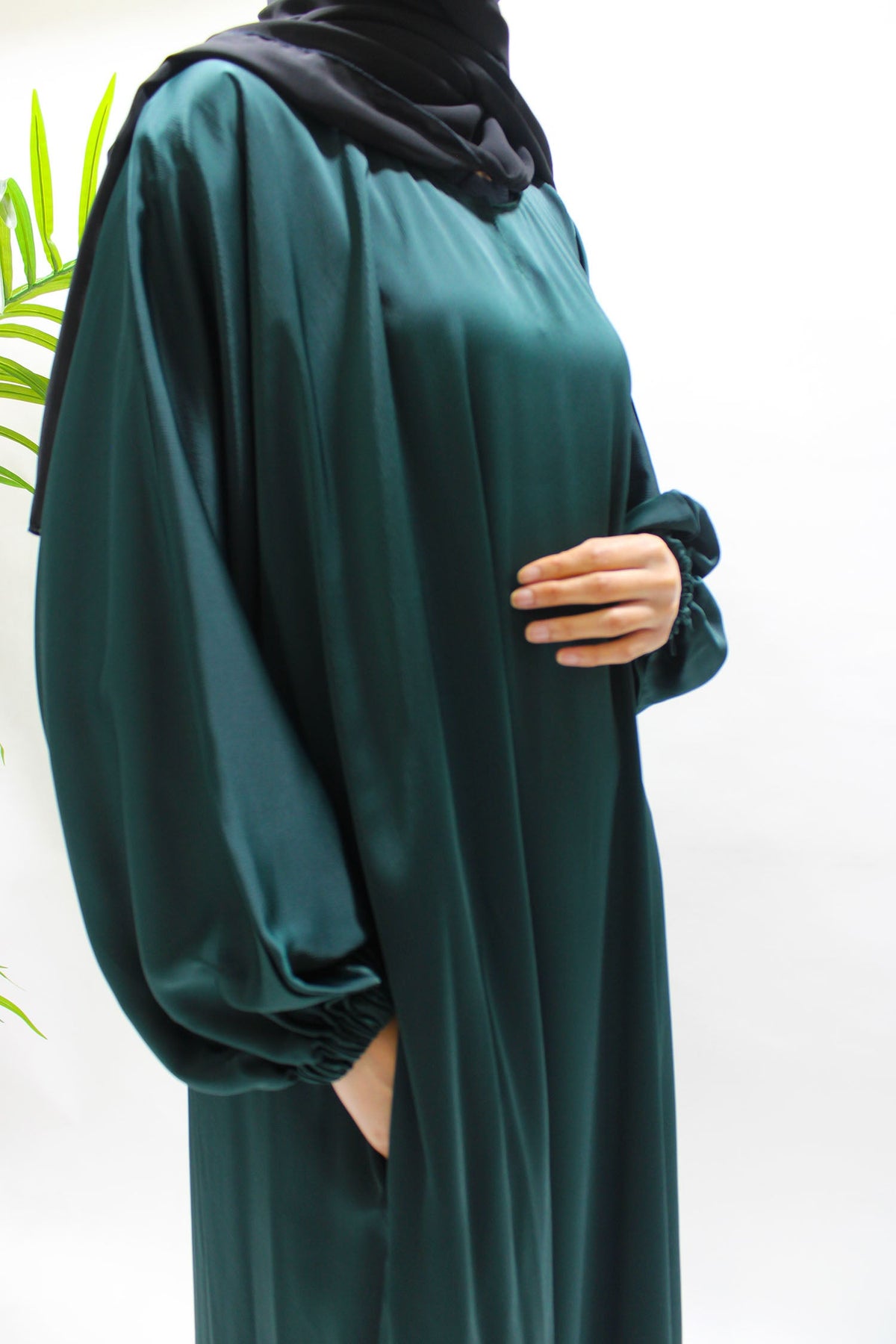
The Bottle Green Textured Satin Abaya has enough colour and surface detail to form the centre of an outfit. Begin with its matching hijab, add comfortable shoes and a bag suited to the day, and let the deep green remain the largest area of colour. For a different mood, change the scarf or one accessory: cream creates a lighter contrast, black gives definition, and a restrained metallic detail can make the same abaya feel more dressed.
The practical details matter just as much. This particular design has elasticated cuffs and side pockets, so the finished outfit needs to work around your hands, the things you carry and the way you move. An elegant result comes from those pieces working together as comfortably as they look together.
This guide explores Amani's Bottle Green Textured Satin Abaya With Pockets through complete daytime and occasion combinations. It also looks at the matching hijab, the textured surface, the first fitting and the small decisions that make the abaya easier to wear again.
What gives this particular abaya its character?
Three details lead the styling: the bottle green colour, the textured satin finish and the relatively uncomplicated outline. The product also includes a matching hijab, elasticated cuffs and discreet side pockets. That combination gives you a coordinated starting outfit with room to change the accessories around it.
The deep green occupies most of the visible look, so even a small contrast can be noticeable. A cream scarf changes the area around the face; a black bag creates a defined shape beside the body; a pale shoe appears as you walk. You can choose one of those changes without needing to repeat it everywhere.
The satin surface adds another dimension. Look at the garment in ordinary light and notice the difference between the folds and flatter areas. Its texture is part of the design, so begin by letting that detail show. A plain scarf or smooth bag can give the eye a quieter surface beside it.
The pockets and cuffs make the outfit more than a colour exercise. Try the cuffs with your usual sleeves and jewellery, and assess the pockets with the small items you actually want to carry. Once those practical relationships are settled, the styling choices become much easier.
Begin with the matching hijab
The supplied hijab is the clearest way to see the abaya as a coordinated outfit. Try it before introducing a contrasting scarf, even if you later choose another option. It gives you a useful reference for how much colour and texture you want around the face.
Arrange it in a familiar way, with the coverage you prefer. Allow the front drape to fall naturally and look at its relationship with the body of the abaya. A longer front panel creates more overlapping green; a more contained arrangement leaves a broader uninterrupted area of the garment visible.
Check the scarf's actual dimensions against the style you want to wear. A matching colour is helpful, but length, width and feel still matter. If you use an undercap or fastening, include it during the trial so the scarf is judged as you would really wear it.
Look at the outfit in daylight and indoor light. The hijab and abaya may reflect light differently depending on their folds and position. Judge the complete arrangement rather than trying to make every small section appear identical. A coordinated outfit can still have variation through its surfaces.
Keep the rest of this first look straightforward: familiar shoes, a practical bag and minimal additional decoration. That lets you decide whether the all-green upper outfit already gives you the level of detail you enjoy.
Choose one direction for the colour palette
Bottle green offers several useful colour relationships. Cream and soft beige create a light contrast. Black and charcoal make a darker, more defined combination. Gold-toned or silver-toned details provide smaller highlights, while another muted green can produce a more continuous palette.
Try the actual pieces beside the abaya. A warm cream and a cool white can give quite different results, and two scarves described as green may be far apart in depth or undertone. Lay out the scarf, bag and shoes together before putting them on so you can see which element is leading the look.
If the outfit feels disconnected, remove one optional accessory and reassess. Sometimes the problem is simply that the scarf, shoes and bag introduce three different directions at once. Keeping two of those pieces quiet can give the third a clearer place.
For a first contrasting outfit, choose either a lighter scarf or a lighter bag. You can add another pale element later if you enjoy the effect. Starting with one change makes it easier to understand the balance you prefer.
Keep the amount of contrast personal. You might enjoy the definition of black beside the green, or prefer a softer taupe. The useful outcome is a palette you want to wear, with the abaya's colour still easy to appreciate.
Outfit one: matching green with black accessories
Wear the abaya with its matching hijab, plain black shoes and a black bag. This is a strong first outfit because it uses a continuous green base with a small amount of definition at the accessories. The texture remains visible without needing another pattern or a bright colour.
Choose the bag for the outing. A medium bag may work for a day with several stops; a smaller one may be enough for a short visit. Look at its surface beside the satin. A plain matte finish creates a quieter contrast, while a glossy finish adds another reflective area.
Try the bag in its usual carrying position with the contents inside. A shoulder strap can change the way the garment falls, and a cross-body strap creates a line across the green. Decide whether you enjoy that line and whether the fabric stays comfortable beneath it.
With the pockets empty, walk and sit in the outfit. Then add the particular small item you want to keep in a pocket and compare the hang. If the object pulls at one side, put it in the bag. The bag and pockets can have different roles without making the outfit more complicated.
Black flats, loafers or another familiar shoe can keep this version useful for ordinary wear. Check the lower edge with the actual pair. A simple palette looks most composed when the hem is manageable and you can move at your normal pace.
For a later dinner, you could keep the abaya, hijab and shoes and change only the bag. Choose a version with a little metallic hardware if you want a more dressed finish. The basic outfit stays familiar, so you can enjoy the change without repeating the entire fitting.
Outfit two: cream near the face for a daytime visit
A plain cream hijab gives the bottle green a lighter frame. Try it with black or warm neutral shoes and a simple bag, keeping the scarf as the main contrast. This can be an appealing version for a family lunch, a relaxed celebration or another daytime visit.
Compare the cream scarf with the matching green one while keeping everything else unchanged. Notice which arrangement you prefer around the face and chest. The cream may make the green appear more defined; the matching scarf may feel more continuous. You can keep both versions for different days.
The scarf's surface matters alongside its colour. A matte cream scarf gives the satin a different companion from a scarf with its own sheen. Start with the one you find easiest to arrange comfortably, then judge the visual balance. Colour coordination becomes less useful if the scarf needs constant attention.
If you choose a cream bag as well, look at the two pale shades together. They can be related without being identical, but an intentional difference is easier to assess than an almost-match you keep trying to correct. A black or taupe bag is another simple option if you prefer the cream concentrated near the face.
For a seated meal, check where the scarf ends and cuffs fall when you bring your hands towards the table. Arrange them in a way that leaves your hands free while preserving your preferred coverage. A restrained ring or other small detail may be enough if you want jewellery.
Finish the outfit with shoes that suit the journey as well as the visit. If shoes will be removed indoors, see how the hem behaves without them. That practical check allows the lighter colour combination to remain easy throughout the occasion.
Outfit three: taupe and brown for a softer everyday combination
Try a muted taupe scarf, brown shoes and a brown or neutral bag beside the bottle green. This creates a warmer group of colours while keeping the overall effect relatively quiet. Use the pieces you already own as the starting point, then compare their actual shades together.
The scarf does not need to match the bag. A lighter taupe near the face and a deeper brown bag can create a clear relationship through colour depth. If both are almost the same shade, look at them in daylight before deciding whether you enjoy that close match.
Keep the scarf arrangement uncomplicated so the textured satin remains visible. A long drape can work well when it sits comfortably, but several thick wraps around the neck may add more volume than you want. Adjust the distribution of the scarf while keeping the coverage you prefer.
This version can suit an ordinary outing when the garment and your planned activities work together. Choose a practical bag and familiar shoes, and leave optional jewellery minimal. The colour of the abaya supplies enough interest without turning the whole day into an occasion outfit.
Include any coat you need in the fitting. A camel or warm neutral coat may continue the palette, while a dark coat creates more separation. Check the sleeve room and scarf at the collar, then remove the coat and let the abaya settle again.
For a useful second version, keep the taupe scarf and brown bag but try black shoes. That small change may connect more easily with another coat or a bag strap. Keeping a few successful combinations is more practical than searching for one accessory colour that has to work with everything.
Outfit four: a restrained metallic detail for dinner
For an evening meal or celebration, start with the matching hijab and add one metallic detail through a bag, shoes or jewellery. The bottle green and textured surface already create a distinct look. A small highlight can finish it without making every accessory reflective.
Compare gold-toned and silver-toned finishes beside the actual garment if you have both. Keep the scarf and shoes unchanged during the comparison. Choose the effect you enjoy, then decide whether you want to repeat that finish elsewhere or leave it as a single accent.
A simple bag with a metallic clasp can be enough. It gives you a dressed detail without requiring a fully metallic bag. If you prefer a more decorative evening bag, try it with quieter jewellery and let it become the main accessory.
Check the surfaces that will touch the satin. The back of a clasp, the edge of a bracelet and a bag chain can each meet the garment during normal movement. Choose accessories that sit comfortably and do not catch as you sit, reach or lift the bag.
Keep the elasticated cuffs in the jewellery decision. A bracelet that fits comfortably on its own may meet the gathered sleeve differently once both are worn. Try the complete arrangement before deciding whether the bracelet adds something useful or simply asks for more adjustment.
Heels are optional. Use footwear you can wear comfortably for the time spent standing and walking, then assess the hem with it. For a long gathering, an elegant flat or another familiar shoe may give you the finish you want with less to think about.
Outfit five: a patterned scarf with a clear link to the green
A patterned scarf can work with the textured abaya when its colours have a clear relationship to the bottle green. Start with a print that includes one relevant shade, perhaps green alongside cream, black or a warm neutral. Keep the bag and shoes plain for the first comparison.
Look at the scarf both open and folded into the arrangement you normally wear. A print that appears mostly cream when laid flat may show a large dark section near the face once folded. Choose the visible section you enjoy without twisting the scarf into an uncomfortable arrangement just to display a particular motif.
Pattern scale changes the result. A small repeated motif creates a different surface from a few large shapes. The satin already has texture, so compare the two patterns in context rather than deciding that all printed scarves will either work or clash.
Try the printed scarf with the same black accessories used in the first outfit. That leaves the scarf as the only major change. If the combination feels busy, return to a plain scarf once and compare; you may discover that you prefer the abaya's surface to remain the main detail.
If you enjoy the print, use one of its quieter colours for the bag rather than introducing a new accent. A cream-and-green scarf, for example, might sit well with a simple cream or black bag. Choose from the actual colours present in your scarf.
This is a useful way to give the abaya another role without changing the garment itself. Keep the successful scarf fold and accessories in an outfit note so the next wear begins with a combination you already understand.
Outfit six: another green for a tonal look
If you enjoy the matching outfit but want a little more variation, try a plain scarf in another green. A noticeably lighter, muted green creates a different relationship from the supplied hijab, while a darker green can keep the outfit closer in depth. Lay the scarves beside the abaya and compare one at a time.
Choose a difference you can recognise. Two pieces that are almost the same shade may leave you continually wondering why they do not quite match. A clear change in lightness, depth or texture can make the relationship easier to understand. That does not require a large contrast: the distinction only needs to feel intentional to you.
Keep the accessories quiet during this experiment. Black shoes and a simple dark bag let you judge the two greens without adding a third coloured area. Once the scarf works, you might introduce a warm neutral bag, but there is no need to change the entire outfit at once.
Try the scarf around the face, with its ends in the position you prefer. A lighter green may be visible over a broad area of the chest in one arrangement and form a narrower frame in another. Choose the drape for comfort and coverage, then decide how you feel about the resulting colour balance.
Compare this version with the matching hijab in the same light. One may feel calmer, while the other gives you the contrast you wanted for a particular occasion. Keep both if they are useful. A tonal wardrobe can contain several related combinations without requiring every green item to match every other one.
This is also a way to use a scarf already in your collection. Start with the garment you own rather than buying an entire second set in the hope that the greens will agree. The completed fitting tells you which existing piece earns a place beside the bottle green satin.
Use texture to change the mood without adding more colour
You can restyle the bottle green abaya while keeping almost the same palette. Compare a matte scarf with a scarf that has a gentle sheen, or a smooth bag with a softly textured one. The change in surface may give you enough difference for a second outfit.
Begin with one surface contrast. If the scarf is the experiment, keep the bag and shoes familiar. If the bag is the change, use the matching hijab. This gives you a clear view of what the new texture contributes to the satin.
Look at the outfit from a little distance as well as close up. A subtle texture may be obvious in your hands but barely visible across a room, while a highly reflective accessory may dominate more than you expected. Choose the amount of detail you enjoy at the scale of the whole outfit.
Try moving naturally while looking at the combination. The abaya's folds will change, and a scarf or bag can catch the light differently as it turns. You are choosing an outfit for movement, so allow that changing appearance to be part of the effect.
For broader ideas about working with a satin surface, our guide to styling satin from day to evening offers further comparisons. With this particular abaya, the matching hijab, cuffs and pockets remain useful anchors for each new combination.
Make the pockets and bag work as a pair
The side pockets are a useful feature to assess during the first wear. Start with them empty so you can see how the garment naturally hangs. Then choose one suitable small item you genuinely want within easy reach and place it in a pocket gently.
Look at the opening and surrounding fabric before adding anything else. If the item changes the outline, decide whether that matters to you for this outfit. A pocket can hold something physically while still making the garment less comfortable or changing the drape more than you enjoy.
Sit down and stand again. A rigid object may feel different once the fabric folds around it. If it presses, catches or draws the garment to one side, move it to a suitable bag compartment. You can keep the pocket available for a lighter or softer item instead.
Keep keys and other rough objects appropriately contained, particularly beside a textured surface. A small secure pouch within a bag may be the easier place for them. Avoid treating two pockets as a reason to distribute every possession across the abaya.
For an occasion outfit, you might use the pockets very little and choose a small bag that comfortably holds the essentials. For an ordinary outing, a larger familiar bag may be more practical. In both cases, the pockets are options rather than obligations.
Once you find a good arrangement, keep it consistent enough to remember. Knowing that a card has one place and a phone another can make the outfit easier to use, especially when you change bags between daytime and evening versions.
Choose underlayers that let the abaya settle comfortably
Try the abaya over the clothes you realistically intend to wear beneath it. A fine long-sleeved top, a dress and a thicker winter layer can each change the feel through the shoulders and body. Begin with a familiar option so you can recognise whether any discomfort comes from the base or the abaya.
Look at the surface from the front and side. If a seam, waistband or inner pocket creates a ridge you dislike, compare a simpler base garment before changing the outer styling. Keep the amount of room and coverage you want; a less bulky seam can be helpful without requiring closer-fitting underclothes.
Sit and stand with the layers together. Notice whether the satin settles again or stays caught around a particular area. If it catches at the same place repeatedly, identify what is beneath that point. An inner hem, raised pocket or gathered sleeve may explain the behaviour more clearly than the general feeling that the outfit is not falling well.
Check the complete combination in stronger daylight as well as indoor light. Assess the areas where the fabric comes closer during movement, including the shoulders and knees. Choose the underlayers that give you the appearance and coverage you want in that real arrangement.
Repeat the relevant check when you change the base for another season. A combination that works over a thin top may feel different over a substantial knit. Keep successful summer and cooler-day versions in your outfit notes so you do not have to solve the same layering question each time.
Before adding the hijab and bag, let the abaya settle once more with your arms relaxed. That gives you a clear starting point for judging the accessories. When the base feels comfortable, the textured surface can fall naturally and remain the part of the outfit you enjoy looking at.
Fit the cuffs and sleeves with the whole outfit on
Elasticated cuffs help define the wrist area of this design. Try them with the underlayers you plan to wear, then bring your hands forward and let your arms rest again. Notice whether the sleeves settle comfortably without needing to be pulled down repeatedly.
If an inner sleeve gathers beneath the cuff, smooth it before judging the abaya. A bulky jumper cuff can occupy more room than a plain long-sleeved top. Choosing a different base may improve the combination while leaving the outer garment unchanged.
For a watch or bracelet, put it on during the trial. Decide whether you prefer it beneath or clear of the sleeve according to the actual fit and your usual way of wearing it. Keep any rough fastening from repeatedly meeting the fabric.
When you need to move the cuffs for washing before prayer, check that you can do so comfortably and return them to place afterwards. Use the arrangement that works for you; stretching the elastic excessively is not a substitute for a suitable fit.
Assess the upper sleeve as well as the cuff. Reach towards a table, lift your bag and put on your coat. Enough room at the wrist does not answer a separate question about the shoulder or upper arm, so make those checks as part of the same fitting.
Judge the length with the shoes you will actually wear
Choose your shoes before settling the length of the outfit. The abaya should be manageable while walking, turning and sitting in that pair. Look at the lowest part of the hem, including any section that hangs differently once the garment settles on your shoulders.
If you plan to change shoes during an event, try both pairs with the abaya. A higher shoe used for a short photograph and a lower pair worn for the rest of the day can require different attention at the hem. Build the outfit around the footwear you will genuinely use.
When choosing a size online, compare the current measurements with a garment that already works for you. Use the same measuring route and units. Check body room separately from length so a need for more space through the shoulders does not become an unwanted increase at the hem.
Try the intended underclothes as part of this assessment. A bulkier layer can change how the garment sits higher up, which may affect the lower line too. Let the clothes settle naturally before making a decision about alteration.
For a professional alteration, explain the specific problem and take the intended shoes. Show the cuffs, pockets and overall texture so the person assessing the work can consider the whole garment. The aim is a comfortable finished proportion that preserves the details you enjoy.
Layer it for the journey and the room
The outfit you wear outside may need a different amount of warmth from the room you will spend time in. Choose the base clothes and any coat for those conditions, then try them together with the abaya and scarf. The satin description alone does not tell you how warm the complete combination will feel.
A plain coat can give the bottle green a clear place in the outfit. Black continues a darker accessory palette; camel or taupe can connect with warmer accessories; charcoal provides another restrained option. Compare the actual coat with the scarf and shoes rather than choosing it only from the colour name.
Check the coat's sleeves over the abaya's sleeves. Bend your elbows and reach forward. Make sure the two cuffs remain comfortable together and that the coat lining does not keep pulling the outer fabric into a twist.
At the neckline, assess the scarf with the coat fastened in the way you will wear it. A substantial collar and several scarf folds may occupy more room than expected. Adjust the scarf distribution or choose another coat if that makes the combination easier.
Remove the coat during the trial and let the abaya settle again. Notice whether the scarf needs a quick reset or the sleeves remain caught. A useful journey layer should be straightforward to put on and remove while keeping the outfit beneath comfortable.
Prepare a daytime-to-evening change that is worth carrying
If your day includes two different settings, choose the smallest change that gives you the effect you want. You might keep the matching hijab and abaya, then exchange an everyday bag for a smaller one. Or you might keep the bag and change a plain scarf for a scarf with a different surface.
Lay out both versions before leaving home. Check what you will remove, where it will go and whether you have a suitable place to make the change. A small accessory swap is useful when it fits into the day without leaving you carrying several loose items.
Keep any necessary belongings in mind when changing bags. Transfer the things you actually need into the chosen compartments before the event, rather than assuming an evening bag will hold everything from a larger daytime one. The abaya's pockets can remain available for their usual limited role.
If changing the scarf, practise the second arrangement once with the outfit. Another fabric may need a different undercap or fastening, and the time to discover that is before you leave. Keep the alternative simple enough to feel familiar.
A successful change can be subtle. The green and textured satin remain constant, while one accessory shifts the emphasis. You can enjoy the same garment in both settings without needing to transform every part of the outfit.
Read the fabric and care information carefully
Textured satin describes the product's surface, but the full fibre composition and permitted care method come from the garment information. Check the labels on the abaya and matching hijab individually. A shared colour does not automatically establish a shared cleaning routine.
GINETEX's care-symbol guide explains how to read the symbols for washing, drying, ironing and professional care. Choose the method permitted for the finished item, including its elastic and other construction details. Obtain product-specific guidance if the information you need is missing.
Before cleaning, empty the side pockets and check their corners. Look at the cuffs, hem and scarf edges for marks or loose threads. Note a problem clearly so you can seek appropriate advice rather than trying several treatments in succession.
Distinguish the intended textured finish from a new fold or crease. Use only a permitted finishing method and avoid trying to flatten the surface simply because it is not perfectly smooth. Allow time before an occasion to resolve a care question calmly.
Store the garment fully dry with support suitable for its shape and weight. Keep rough accessories away from the satin and give the matching hijab an identifiable place. A ready outfit is easier to repeat when the scarf is found and any care task has already been addressed.
Build a small group of reliable combinations
Choose two complete outfits to begin with: one for ordinary wear and one for a gathering. For example, matching green with black accessories might be your familiar daytime version, while cream near the face and one metallic detail gives you another option. Use the pieces that are already available to you.
Record the actual scarf, shoes and bag for each version. Include the coat if it made a meaningful difference to the sleeves or neckline. A short note about pocket use or hem clearance can be more useful than a photograph that only shows the front.
When a new accessory appeals, compare it with one of those known outfits. That keeps the decision concrete. You can see whether the item adds a useful third combination or repeats something you already have.
The Bottle Green Textured Satin Abaya looks most considered when its colour, surface and practical details all have room to work. Begin with the matching hijab, choose a clear relationship for the accessories, and make the fit comfortable for the day ahead. The result can feel elegant at a gathering and equally personal in a quieter everyday outfit.