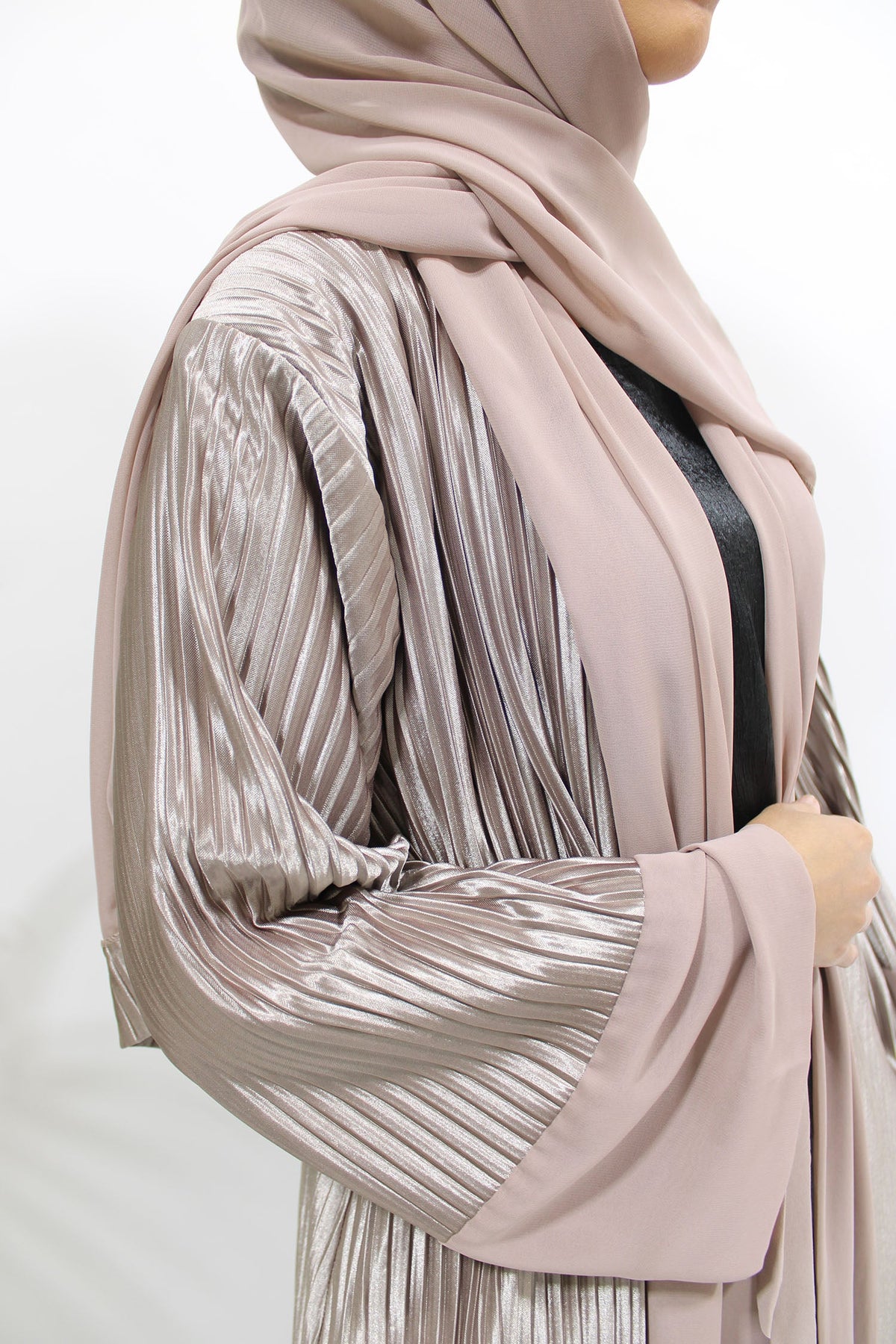
Taking a satin abaya from day to evening
A satin open abaya can change noticeably as you move. Folds catch the light, colours appear deeper in shadow and the outer layer becomes a visible part of the outfit even when its cut is simple. That surface is often the attraction. It is also a reason to be selective about the other pieces you wear with it.
Start by understanding the actual garment. Satin does not guarantee silk, a particular weight, complete opacity or a comfortable fit. Once those details are clear, you can decide whether the abaya belongs in your everyday wardrobe, your occasion wardrobe or both.
Satin describes a weave, not one fibre
Satin is a weave associated with a smooth, lustrous face. It can be made from different fibres, so “satin abaya” is not a complete material description. Read the composition label rather than assuming that a glossy garment is silk or that every satin piece needs identical care.
The cloth may be light and fluid or more substantial. A lining can alter its weight and movement again. Compare what the garment actually does when worn instead of relying on the word satin to supply all the missing information.
Ask for fabric and lining details when buying online. Close-up photographs can show the surface, but they cannot tell you exactly how the garment will feel against your skin or over your preferred underlayer. Clear measurements and an understandable return process are useful alongside the images.
Let the fit settle before judging the shine
Put on the abaya over the inner outfit you expect to wear. Check the shoulders, upper arms and back first. A fluid fabric can still pull when the cut is too narrow, and a glossy surface may make those tension lines especially noticeable.
Walk and sit without arranging the fronts for the mirror. See whether the garment hangs comfortably or continually slides into a position you need to correct. Check the sleeve length with your arms forward, not only at your sides.
For an Amani’s numbered abaya length, compare its length in inches with your shoulder-to-feet measurement. Body width still needs a separate comparison. Choosing a longer size to solve tightness in the upper body can leave you with a trailing hem and the original fit problem.
Make the inner outfit complete
The open fronts are likely to separate as you move, so the inner dress or separates should provide the coverage you want without depending on the outer layer staying in one position. Check the neckline and waist when seated, and the hem when walking.
Consider the relationship between surfaces. Two smooth, slippery layers may shift against each other; a textured inner layer may catch the outer fabric. Neither can be judged from colour alone. Wear the combination for a sensible try-on and notice whether it needs repeated adjustment.
A tonal inner outfit creates one kind of continuity, while a contrasting colour makes the open shape more obvious. Both can work. Avoid using a belt to conceal a poorly fitting inner garment; begin with layers that cooperate before deciding whether to change their silhouette.
Choose the amount of contrast you want
A plain satin abaya can provide enough visual interest through its surface. A matte scarf is a useful counterpoint when you want the shine to remain concentrated in one place. A scarf with a gentle sheen can create a more dressed-up effect, but it need not match the abaya exactly.
Try the colours in ordinary light. Deep shades such as burgundy or green can look different across lit folds and shadows, while a pale satin may reveal the colour of the layer beneath. Inspect the outfit from more than one angle rather than relying on a single flattering view.
The hijab fabric guide can help you think about grip, weight and drape alongside colour. A scarf that looks right but will not stay comfortable is unlikely to make a good long-day partner.
A daytime outfit that does not feel overdone
For a daytime meal or visit, try a simple inner dress, a plain scarf and comfortable shoes. Keep the bag functional and relatively understated. This lets the satin surface remain visible without adding a second focal point at every edge.
Choose the shoes in relation to the hem. Flats or trainers may suit your plans, but they can leave a garment dragging if it was selected with a different shoe height in mind. Check both inner and outer layers before deciding that the combination is ready.
Not every satin abaya will feel casual. Heavy decoration, a very formal shape or an intense sheen may keep it firmly in the occasion category. You do not need to force a garment into daily use to justify enjoying it for the events it suits.
Make one or two changes for evening
A transition from day to evening need not involve replacing everything. You might change the bag, add one visible piece of jewellery or use a scarf with a different texture. Keep the parts that are already comfortable and well fitted.
For example, a plain daytime scarf and practical bag could give way to a softly textured scarf and a smaller evening bag. The inner outfit and abaya can remain unchanged. That is a realistic transition when you have somewhere suitable to make the adjustment and somewhere to keep the items you remove.
A high heel or bold makeup is optional, not the definition of an evening outfit. Consider the venue, the amount of standing and your own preferences. The aim is a considered change in emphasis, not a compulsory transformation into someone else’s style.
Keep jewellery clear of vulnerable surfaces
Before wearing a bracelet, necklace or bag chain with satin, inspect it for rough edges that might catch. Put accessories on carefully and check the points where they touch the cloth. The most attractive piece is not necessarily the easiest one to wear beside a delicate surface.
Think about visibility as well. A necklace may be hidden beneath the scarf, while a decorative cuff may already provide the detail you want near your hands. A smaller accessory can make more sense than an elaborate one that remains covered or causes discomfort.
If the garment has beadwork or metallic trim, start with that rather than adding a new set of competing finishes. You can mix details deliberately, but it helps to know which feature you want people to notice first.
Use a belt only when it improves the result
A belt gathers fabric and changes the way both layers fall. It may be an effect you enjoy, but it can also create folds across a smooth surface or hold the inner layer in an awkward position. Try the outfit belted and unbelted before deciding.
Check the belt while seated. Make sure its edges and fastening do not rub the fabric, and avoid pulling it tight simply to prevent the fronts moving. An open abaya is designed to have an opening; your inner outfit should already account for that.
Where the garment includes a matching tie, inspect how it is intended to be used. Do not assume it needs a second belt over the top. A simpler arrangement may allow the satin to fall more naturally.
Plan for a jacket or coat
An outer layer needs enough room for the abaya’s sleeves and body. Try it over the complete outfit, including the scarf. A jacket that fits comfortably over a thin top may feel restrictive over a wider abaya sleeve.
Check for friction from fastenings, rough linings and bag straps. Notice whether removing the jacket pulls the scarf or twists the abaya. These details matter when moving between an outdoor journey and a warm venue.
A cardigan can provide a different look from a structured jacket, but assess its texture against the satin. Do not choose a layer solely because it appears on an outfit checklist. It should be comfortable to wear and straightforward to remove when no longer needed.
For work, consider the setting before using a blazer to dress the abaya down. Satin's sheen may suit one workplace and feel too formal in another. Clothing requirements for particular tasks still come first. A quiet scarf and restrained accessories can simplify the look, but they cannot change a garment's suitability for equipment, movement or an established uniform.
Assess a matching set piece by piece
A satin set can simplify colour coordination, but it does not remove the need for separate fit checks. The inner dress may fit differently from the outer abaya, and a supplied scarf may not have the size or grip you prefer.
Confirm exactly what is included. Check whether images show accessories or additional layers that are not part of the purchase. Look for measurements for each garment rather than assuming one size description tells you everything about the set.
You do not have to wear every supplied piece together. A matte scarf from your wardrobe may suit the set better for one occasion, while the matching scarf works for another. Useful coordination leaves room for your own comfort.
Care according to the complete garment
Read the label before washing, drying or pressing. The fibre, lining, decoration and finish can all affect the permitted method. “Satin” alone is not enough information to prescribe handwashing, a machine cycle or an ironing temperature.
Handle marks with care rather than rubbing at a small area until the surface changes. Avoid trying several products in succession. For an unfamiliar or valuable garment, an appropriate professional cleaner may be the better source of advice.
Keep sharp accessories away during storage and allow the garment enough space. Use a suitable hanger or folding method for its weight and construction rather than cramming it among rough or heavily decorated pieces. The fabric care guide for abayas and hijabs sets out the wider questions to consider.
Choose an inner garment by how it behaves beneath satin
Two underdresses can have similar colours and lengths yet give a satin open abaya quite different results. One may sit smoothly, while the other creates a visible ridge at a seam or pulls the outer fabric towards it as you move. Compare the actual combinations rather than assuming a garment sold as a slip will always be the right partner.
Begin with the abaya hanging freely over the inner dress. Check the shoulder area, waist and side seams from the front and side. Then sit down and stand without rearranging everything. Notice whether the satin returns to its intended position or remains caught around another layer.
If a problem appears, change the inner garment before changing the outer styling. Removing a bulky waistband or choosing a less textured surface may be enough. Do not compensate immediately with a tighter belt, which could hide the original issue while creating a different silhouette.
Assess visible edges as carefully as concealed areas. An inner neckline that looks accidental beside the open front can make an otherwise elegant pairing feel unfinished. A deliberate contrast is perfectly workable when the fit and coverage are right.
The successful combination should remain comfortable after the first few minutes. Satin’s surface is already a noticeable feature; the layers underneath can do their practical work without competing for attention or demanding repeated adjustment.
Make a final check in motion
Before an important outing, wear the actual combination of scarf, inner layer, abaya, shoes and bag. Walk a few steps, turn, sit and reach for the bag. Look for areas where the layers shift, the hem catches or the neckline needs attention.
Give yourself permission to remove an accessory or change a layer. A satin outfit often improves when its strongest feature has more room to show. The goal is not to guarantee admiring looks or to make every day feel formal. It is to enjoy the material in an outfit that remains comfortable after the first photograph.