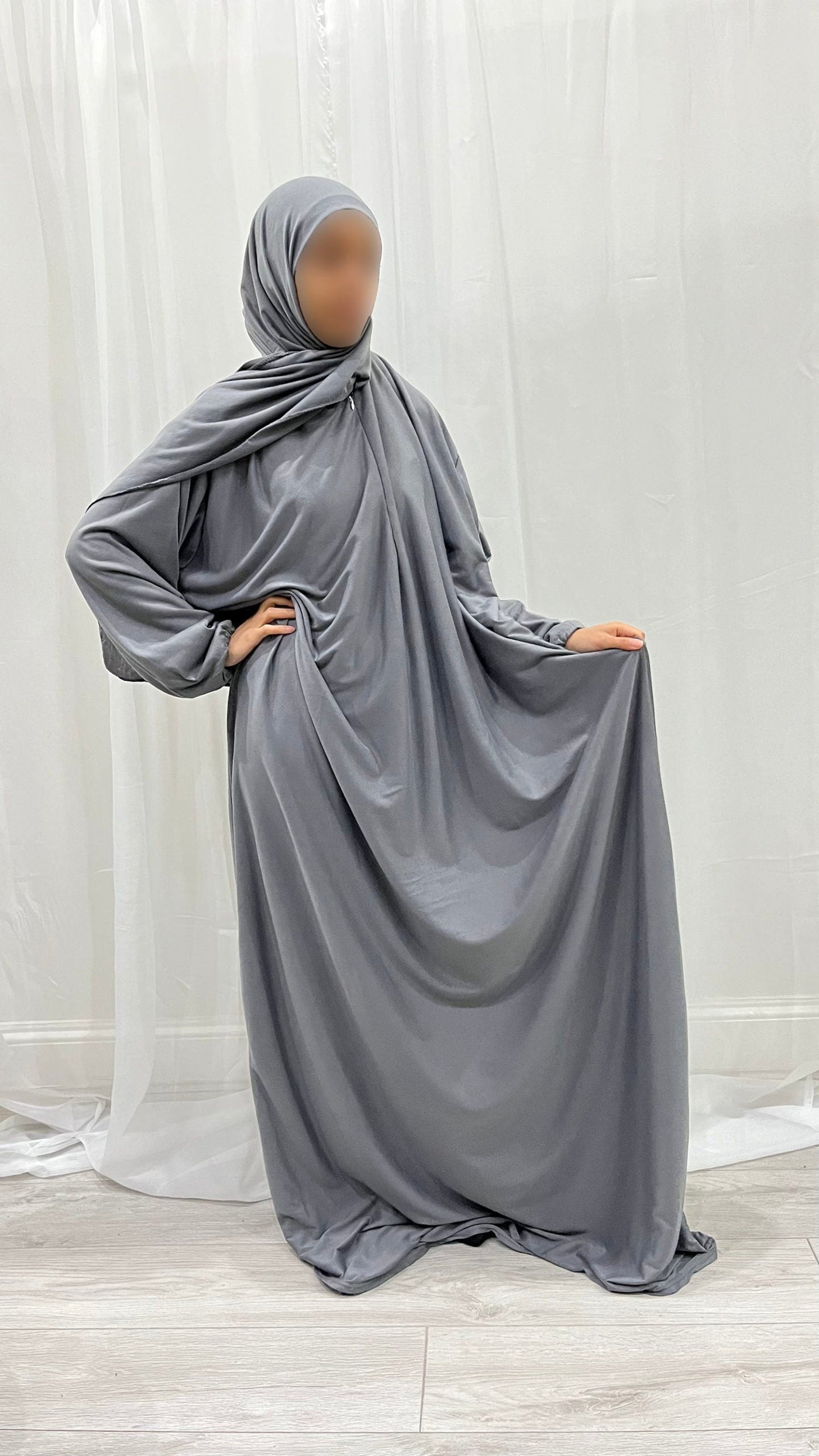
Complete Prayer Wear Guide for Muslim Women
Bismillah. I have learned that prayer wear succeeds when it quietly removes friction between a woman and salah. The best garment is not necessarily the one with the most decoration, the newest label or the heaviest fabric. It is the one you can reach for, put on quickly, move through prayer in confidently, wash without drama and trust again tomorrow.
I also want to keep the boundary clear from the beginning: a prayer dress is clothing for prayer at home or another suitable private prayer setting. It is not an outdoor fashion outfit. It does not need styling accessories, belts, jewellery or complicated layers. The purpose is practical coverage for salah, and the garment should help you settle rather than create another performance.
This guide focuses on garment choice, fit, fabric, movement, storage and care. Religious questions about the exact requirements of prayer clothing, purity, exceptions or individual circumstances belong with a qualified scholar or trusted teacher. My role here is to make the clothing side understandable and honest.
What prayer wear is meant to solve
Prayer wear solves a simple practical problem: when the clothing you are already wearing does not provide the coverage you need for salah, a dedicated garment gives you a quick, dependable layer. It can be one piece with an attached head covering or a two-piece combination such as a skirt and khimar-style top.
That simplicity matters most at ordinary times. You hear the prayer time, you are at home, and you do not want to search through separate clothes or rebuild an outfit. A prayer garment kept clean and nearby reduces the number of decisions between intention and standing.
I judge prayer wear by what happens in movement. Standing can make almost any long garment look sufficient. Bowing, prostration and sitting reveal whether the head opening shifts, the sleeves move, the skirt catches under the feet or the fabric pulls across the body.
One-piece prayer dresses
A one-piece prayer dress combines head and body coverage in one garment. For many women, this is the lowest-decision option because there are no separate pieces to match or misplace. The head section may be attached fully or integrated through a face opening and long body.
I look for a face opening that stays secure without pressing. The garment needs enough width through the shoulders and body for bowing and prostration. Sleeves should remain useful around the wrists without becoming so wide that they slide completely up the arm.
Length is critical. Too short can affect coverage. Excessive length can create a trip point when standing from sujood. I test the garment on the same type of flooring where it will normally be used and with bare feet or socks as appropriate.
Two-piece prayer sets
A two-piece set often gives more flexibility in sizing because the skirt and upper covering can be assessed separately. A taller woman may need extra skirt length without requiring a larger upper piece. A woman with a fuller bust may need more upper ease without changing the waistband.
I check that the upper piece overlaps the skirt securely in every prayer position. The waistband should stay in place without painful tension. A drawstring or soft elastic can work when it remains comfortable and does not twist.
Two pieces require slightly more storage discipline. I keep them together so the set remains useful. A prayer outfit is less practical when the skirt is in one drawer and the khimar is somewhere else.
How to choose the right prayer dress length
I measure from the relevant point specified by the retailer because length measurements vary. Some garments are measured from shoulder to hem, some from head to floor, and some provide total front and back lengths. I compare those figures with a prayer garment that already fits or with a careful body measurement.
When trying the garment, I stand normally and check the hem. Then I bow, prostrate, sit and stand again. I make sure the hem does not become trapped beneath the knees or feet. A dress that is perfectly floor length while standing may become awkward during movement.
Petite and tall women should not accept a one-length label without checking. A tailor may be able to shorten a simple hem, but an attached border, lace edge or shaped train can make alteration more difficult.
Face openings need comfort as well as security
The face opening carries a large part of the practical fit. If it is too loose, the head covering may shift backward or reveal hair. If it is too tight, it can create pressure around the cheeks, ears or jaw.
I test it without pins first. I look down, turn my head, bow and place my forehead for sujood. The opening should move with me rather than cutting into the skin or slipping.
Tie-back styles allow adjustment, while stretch openings remove ties but depend on elastic recovery. Neither is automatically better. Sensory needs, glasses, hairstyle and head shape all affect comfort.
Sleeves and wrist coverage
Prayer dress sleeves should stay practical through hand washing and prayer movement. Elasticated cuffs can help keep sleeves in place, but the elastic must not be tight enough to cause discomfort or leave deep marks.
Wide sleeves may feel airy, yet they can slide during takbir or expose more of the arm than expected. An inner cuff or gently gathered sleeve can provide better control.
I also check whether the sleeve can be raised easily for wudu. A beautiful fitted cuff that cannot move may make the daily routine unnecessarily difficult.
Fabric should support stillness, not demand attention
I prefer fabrics that are opaque, soft enough for movement and stable enough that I do not spend prayer thinking about them. Very slippery cloth can shift. Very clingy jersey can follow the body more closely than intended. Very heavy fabric can feel tiring and hot.
There is no single perfect fibre. Cotton blends can feel familiar and breathable. Jersey can stretch and move. Polyester crepe can drape and dry quickly. Each fabric needs to be judged in the actual weight and construction used.
Opacity must be tested in strong light and in movement. A fabric can look opaque while hanging and become more revealing where it stretches across the body.
Jersey prayer dresses
Jersey offers stretch and comfort, which can be excellent for prayer movement. The risk is that a thin or highly elastic jersey may cling to the body. I look for enough weight and width to let the fabric fall rather than trace.
Stretch also affects the face opening and cuffs. Elastic recovery should remain strong after washing. High heat can damage elastane and change fit, so care matters.
A jersey prayer dress may feel warm if the fabric is dense. I consider the room temperature and whether the garment is being worn over substantial clothing.
Cotton and cotton-blend prayer wear
Cotton can feel breathable and comfortable against the skin, but woven cotton may crease, shrink or become heavy when wet. A cotton blend can reduce some of those issues while changing breathability and drape.
I check whether the fabric is lined, printed or pale. White and light cotton can become semi-sheer in strong light. A dense weave is more important than the fibre name alone.
After washing, I reshape the garment and follow the labelled drying method. High heat is not automatically safe simply because the fabric contains cotton.
Polyester and crepe prayer dresses
Polyester prayer wear can be lightweight, quick drying and easy to care for. Crepe textures may reduce shine and help fabric fall away from the body. The exact weight and weave determine whether the garment feels breathable or warm.
I avoid high heat and rough washing because synthetic fibres can develop shine, static and permanent creases. A gentle labelled cycle and air drying often work well.
If static makes the skirt cling, I first check over-drying and the base layer rather than immediately adding fabric conditioner.
Satin prayer wear
Satin can look beautiful and feel smooth, but it is not always the most practical everyday prayer fabric. It can be slippery, show water marks and reflect light strongly. Polyester satin is different from silk satin, so the composition matters.
If a sister enjoys satin prayer wear, I would make sure the cut is generous enough that the smooth surface does not cling and the face opening remains secure. I would also keep the care routine simple enough for regular use.
A prayer garment should not become too precious to wash or use. If the fabric makes the wearer anxious about every mark, it may suit occasional use better than daily reliance.
Silk and delicate prayer garments
Silk is luxurious but needs careful handling. It can react to enzymes, sunlight, perspiration and heat. Some silk garments require professional cleaning. I follow the exact label rather than assuming hand washing is safe.
From a practical prayer perspective, I ask whether the fabric stays secure around the face, whether it is opaque and whether the care burden fits the wearer’s routine.
Beauty has a place, but the garment should still make prayer simpler. A fabric that causes constant worry may not be the best everyday choice.
Opacity testing before relying on the garment
I test prayer wear in daylight with a contrasting layer underneath. I stand, bend and stretch the fabric gently where it will move. I check sleeves, upper body and lower skirt.
Pale prints can hide transparency visually without actually being opaque. Dark fabrics can also be sheer when thin. I rely on the test, not the colour name.
If the garment needs an underdress or extra layer for opacity, I include that in the regular prayer setup rather than discovering the issue at prayer time.
Movement testing through every position of salah
I put the full prayer outfit on and perform the movements slowly. I raise my hands, bow, return upright, prostrate, sit and stand. I notice where fabric shifts.
I check whether the face opening moves, whether the skirt pulls at the back, whether the sleeves rise and whether I step on the hem. I also check that the garment does not restrict breathing or shoulder movement.
This test is more valuable than standing in front of a mirror. Prayer clothing must succeed in prayer.
Prayer wear for glasses wearers
Glasses can interact with a tight face opening or tie-back head section. I put glasses on before final adjustment and make sure the arms are not pressed painfully into the temples.
I test looking down and prostrating. Frames should remain stable without the garment pulling them sideways. A slightly different face opening or lower tie position can solve the issue.
Clear vision and comfort are practical priorities. The garment should adapt to the glasses, not force the wearer into pain.
Sensory-friendly prayer clothing
For sensory sensitivity, I focus on seam placement, fabric texture, elastic pressure, sound and heat. A scratchy lace edge can become very distracting in prayer.
I wash new garments when the label allows to remove finishing residue, and I choose fragrance-free laundry products when scent is a problem. I remove irritating tags carefully without cutting structural seams.
A sensory-safe prayer garment can be simple and repeated often. Familiarity may be more valuable than variety.
Prayer wear for limited mobility
A woman with limited shoulder movement may find an overhead one-piece garment difficult. A two-piece set, front-opening garment or adapted design may be easier.
Wheelchair users need to check excess fabric around wheels and footplates. Very long skirts can become unsafe. Seated fit should be assessed before standing fit.
Religious questions about disability and prayer belong with qualified guidance. The clothing should support safe movement and access.
Pregnancy and changing body shape
Pregnancy changes length, balance and heat tolerance. A prayer dress that once reached the floor may lift at the front over the bump. I reassess length and looseness rather than assuming the old garment still works.
Stretchy or generous cuts can adapt through several stages. Waistbands in two-piece sets should not press. Postpartum changes may require another fit review.
The body deserves clothing that meets it where it is, not where it used to be.
Prayer wear after wudu
Wudu can leave cuffs, face openings and lower hems slightly damp. I allow the garment to air after prayer rather than folding it immediately into a closed drawer.
Repeated dampness can create odour and discomfort. A breathable hanging space near the prayer area helps.
If the garment becomes significantly wet, I dry it fully before storing and rotate to a clean backup if needed.
Keeping prayer wear near the prayer space
Accessibility is part of the design. I keep the garment close enough that preparing for salah does not involve searching through the whole wardrobe.
A clean hook, basket or breathable bag can work. The garment should not touch shoes or a dusty floor.
If several family members use prayer garments, I separate them clearly by size and owner to avoid confusion.
How often to wash prayer wear
There is no universal fixed number of uses. I consider skin contact, perspiration, underclothes, floor conditions, visible soil and odour.
A garment used over clean clothing in a clean home may not need washing after every prayer. I still inspect the face opening, cuffs, knees and hem.
When the garment needs washing, I do it early enough for complete drying. A damp prayer dress should not be worn because there was no backup plan.
Washing a one-piece prayer dress
I read the label first. I remove pins, loosen ties and inspect stains. I protect delicate lace or printed areas and use the labelled hand or machine method.
A wet one-piece garment can be heavy. I support the body rather than lifting from the attached head section.
I reshape the face opening, sleeves and hem before drying. I do not hang a heavy jersey dress from a narrow hanger that will stretch the shoulders.
Washing a two-piece set
I treat the skirt and top as separate garments even when they match. One piece may be more soiled or heavier.
I protect elastic waistbands from high heat and avoid twisting drawstrings. The upper face opening receives gentle treatment because repeated washing can change its shape.
I store the pieces together only after both are completely dry.
Drying prayer garments safely
Light woven garments may dry well on a wide hanger. Heavy jersey may need flat or supported drying. I follow the label and consider wet weight.
I give air access to folds, cuffs and attached head sections. I avoid radiators and harsh direct heat unless specifically permitted.
Complete drying prevents musty odour and protects elastic. I check thick seams before folding.
Ironing and steaming prayer wear
I only iron when the label permits it and the garment needs it. Many prayer dresses can be reshaped and air dried without pressing.
For synthetic fabric, I use low heat and a pressing cloth where useful. I avoid direct heat on elastic, lace, print or decorative trim.
Steaming can relax creases but still uses heat and moisture. I test first and prevent water droplets from marking the cloth.
Storing prayer wear between uses
I store prayer garments clean, dry and accessible. A breathable bag, shelf or hook works better than a sealed plastic bag.
I do not fold a damp face opening or cuff into the garment. I also keep fragrances and cleaning chemicals away from prayer clothing.
Simple storage protects readiness. The garment should be easy to find when it is needed.
Prayer wear for travel
I pack one dependable prayer garment in hand luggage rather than checked baggage when possible. A lightweight one-piece dress or compact two-piece set can work well.
I keep it in a clean breathable pouch and separate it from shoes and used clothes. If it becomes damp, I air it before repacking.
Travel-related prayer rulings belong with qualified guidance. Clothing preparation remains a simple practical step.
Prayer wear at work or university
A compact prayer set can reduce stress when a suitable prayer space is available. I choose a design that can be put on without a large changing area.
I keep the garment in a clean bag and know where wudu will be made. Sleeves that raise easily and a secure face opening are especially useful.
Workplace or university access questions should be handled through current local policies and appropriate guidance.
Shared mosque prayer garments
Shared garments can be helpful for visitors, but they need clear hygiene routines. I prefer individually washed or regularly cleaned pieces stored away from shoes and floor dust.
A shared face opening has direct contact with skin and hair. Organisations should decide a practical cleaning schedule based on use.
If I am sensitive to fragrance or skin products, I bring my own prayer garment where possible.
Children's prayer dresses
Children need safe length and easy movement. A garment should not trip them, press around the face or rely on sharp pins.
I choose washable fabric and simple construction. Growth means length should be reviewed regularly.
Care can be taught gently. A child can learn to fold or hang the garment and tell an adult when it needs washing.
Prayer wear and heat
In warm weather, I reduce unnecessary layers and choose breathable, opaque fabrics. A dense synthetic garment may become uncomfortable even in a cool room after several minutes.
I keep the prayer space ventilated safely and wash garments more frequently when perspiration increases.
If heat causes dizziness or illness, health comes first and medical advice may be needed.
Prayer wear in winter
A cold home may make a light prayer dress uncomfortable. I use suitable clean underlayers rather than choosing a prayer garment so thick that it becomes hard to move.
Warm socks and a clean base layer can help according to the clothing and guidance followed. I avoid trailing blankets or unsafe heaters near prayer.
Seasonal comfort should be solved without turning the garment into unnecessary bulk.
Choosing colours and prints
Prayer wear can be plain or patterned. From a garment perspective, I prefer designs that do not distract the wearer and fabrics that remain opaque.
Very pale colours need strong-light testing. Dark prints may release dye in early washes.
Religious questions about decoration and prayer clothing should be taken to a qualified teacher.
Why I do not treat prayer wear as fashion content
Prayer garments can be beautiful, but their purpose is different from occasion wear. I do not want a woman to feel that salah requires a coordinated aesthetic.
A clean, suitable garment that allows prayer comfortably is doing its job. The value lies in usefulness, not in how it photographs.
This is why I avoid styling accessories in prayer-wear guidance. Simplicity protects the purpose.
What to check before buying prayer wear online
I read the exact length, width, fabric, opacity, included pieces, face opening, sleeve design and care instructions. I do not assume the scarf or underdress shown is included.
I compare measurements with a garment that already works. Reviews are useful when they mention height, movement and fabric weight.
I also check current delivery and return terms. A prayer garment should be tried safely while return eligibility remains intact.
A practical first prayer-wear purchase
For a first dedicated garment, I choose simplicity. One-piece is excellent when overhead dressing is comfortable. Two-piece is useful when sizing flexibility matters.
I prioritise opacity, secure face coverage, movement and washable fabric. Decorative details come after those needs.
One dependable garment is enough to learn what you prefer before buying several.
When a garment does not work
I identify the problem precisely. Is it too short, too tight around the face, too warm, too clingy or too difficult to wash?
Some issues can be altered. Elastic can be replaced, hems shortened and sleeves adjusted. Others mean the garment simply does not suit the wearer.
I do not keep forcing a failed design because it was sold as prayer wear.
What years of modest-fashion work have taught me about prayer clothing
I have learned that women remember the garment that made prayer easier. They remember the head opening that stayed put, the skirt that did not catch, and the fabric that washed and dried in time.
I have also learned that excessive complication creates hesitation. Too many pieces, pins, belts and delicate instructions turn a simple task into another project.
My strongest preference is therefore for honest, functional design that disappears from the mind during salah.
The prayer-wear checklist
- Purpose: Dedicated to prayer rather than outdoor styling.
- Coverage: Learn the religious requirements from qualified guidance.
- Opacity: Test the full garment in strong light and movement.
- Face opening: Secure without pressure or slipping.
- Sleeves: Stay practical in prayer and can be raised for wudu.
- Length: Covers appropriately without creating a trip hazard.
- Width: Allows bowing, prostration and sitting without restriction.
- Fabric: Comfortable, stable and suitable for the room temperature.
- Care: Realistic to wash, dry and store regularly.
- Storage: Clean, dry and easy to reach.
- Backup: Enough rotation to avoid relying on damp or dirty clothing.
- Movement test: Complete every prayer position before relying on the garment.
Frequently asked questions about prayer wear
What is a prayer dress?
A prayer dress is a garment designed to provide practical coverage for salah. It may be one piece with an attached head covering or a two-piece set such as a skirt and khimar-style top. The exact religious coverage requirements should be learned from qualified guidance. From a clothing perspective, the garment should remain opaque, secure and comfortable through standing, bowing, prostration and sitting.
Is a prayer dress an outdoor abaya?
No. A prayer dress is intended for prayer at home or another suitable private prayer setting. It is not automatically an outdoor fashion outfit. Some garments may resemble abayas, but their design purpose can be different. I assess prayer wear for salah movement, ease of preparation and indoor use rather than styling it with belts, jewellery or outside accessories.
Is one-piece or two-piece prayer wear better?
Neither is universally better. One-piece garments reduce decisions and keep the head and body together. Two-piece sets offer more flexibility in skirt and upper sizing. The better option depends on mobility, height, body proportions, storage and personal comfort. I test both through every prayer position before deciding.
How long should a prayer dress be?
The garment should provide the coverage required by the guidance you follow without becoming a trip hazard. I compare the retailer’s exact length measurement with the wearer and test the hem during standing, prostration and rising. A dress that drags heavily under the feet is not made safer by being longer. Petite and tall women should check measurements carefully.
Can prayer wear be too long?
Yes. Excess length can become trapped under knees or feet, especially when standing from sujood. It can also collect floor dust and create a fall risk. I test the garment on the usual prayer surface and alter simple hems when appropriate. More fabric is not automatically more practical coverage.
What fabric is best for prayer wear?
I look for opacity, comfort, stable drape and a care routine that fits regular use. Jersey, cotton blends and polyester crepe can all work when the weight and cut are suitable. A very thin jersey may cling, pale cotton may be sheer and heavy synthetic fabric may feel hot. The actual construction matters more than one fibre name.
Is jersey good for prayer dresses?
Jersey can be excellent because it stretches and moves easily, but the fabric needs enough weight and garment width to avoid clinging. I test opacity and recovery after washing. High heat can affect stretch fibres, so care matters. A generous medium-weight jersey often feels more dependable than very thin fashion jersey.
Are satin prayer dresses practical?
Satin can be smooth and beautiful, but it may be slippery, reflective and prone to water marks. Polyester satin and silk satin need different care. I would choose satin prayer wear only when the cut remains secure, the fabric is opaque and the wearer is comfortable maintaining it. An everyday prayer garment should not feel too precious to use.
Can I wear silk prayer clothing?
From a fabric-care perspective, silk needs careful washing or professional cleaning according to the label and can react to heat, enzymes and perspiration. Religious questions about silk or specific garments belong with qualified guidance. Practically, I would make sure the fabric is opaque, secure around the face and realistic for the wearer’s routine.
How do I stop a prayer dress slipping around the face?
I check whether the face opening is the correct size, whether elastic has stretched and whether the tie position suits the wearer’s head shape. I avoid solving looseness by tying painfully tight. Reshaping after washing, replacing tired elastic or choosing another construction can help. The opening should stay secure when looking down and prostrating.
Can I wear glasses with prayer wear?
Yes. I place glasses before final adjustment and make sure ties or elastic do not press the frame arms into the temples. I test looking down and prostration. If the glasses shift, I change the face opening or tie position rather than tightening the garment around the whole head.
What sleeves are best for prayer wear?
I prefer sleeves that remain secure around the wrist and can also be raised for wudu. Gentle elastic, inner cuffs or controlled gathering can work. Very wide sleeves may slide, while fitted cuffs can be difficult to move. I test raising the arms and washing before deciding whether the sleeve is practical.
How do I know if a prayer dress is opaque?
I test it in bright daylight with a contrasting layer underneath and move through prayer positions. I check the body, sleeves and areas that stretch. Colour is not enough evidence. Pale fabric can be dense, and dark fabric can be sheer. If another layer is needed, I include it in the normal prayer setup.
Can I pray in everyday clothes instead of a prayer dress?
Everyday clothing may be suitable when it meets the relevant religious requirements, but that is a religious question to confirm with qualified guidance. The practical reason for dedicated prayer wear is convenience: it provides a known layer when the clothes already being worn are not suitable or when preparation needs to be quicker.
How often should prayer clothes be washed?
I wash according to skin contact, perspiration, underclothes, floor conditions, visible soil and odour rather than a fixed number of prayers. I inspect the face opening, cuffs, knees and hem. A dedicated home garment may not need washing after every use, but it should always be honestly clean and fully dry before storage.
How should I store a prayer dress?
I store it clean, dry and close to the prayer area on a suitable hook, shelf or in a breathable bag. I keep it away from shoes and floor dust and avoid folding damp cuffs or face openings into the garment. Storage should make the next prayer easier rather than hiding the garment at the back of a wardrobe.
Can prayer wear go in a washing machine?
Yes when the sewn care label permits it. I remove pins, loosen ties, protect delicate trims and use the labelled cycle. Long garments need enough room in the drum. I support wet weight when removing them and reshape the face opening before drying. A machine is appropriate when the garment was designed and labelled for it.
Can I tumble dry prayer clothes?
Only when the care symbol permits tumble drying. Heat can shrink cotton, damage elastane, increase static and distort face openings. Many prayer garments air dry well. I follow the indicated heat and remove items promptly when a dryer is allowed. I do not use a dryer as a quick fix for a do-not-tumble-dry garment.
How do I dry a heavy prayer dress?
I support the wet weight and use flat or well-supported drying when the fabric could stretch. I spread folds so air reaches thick seams and the attached head section. I avoid narrow hangers and direct radiator heat. The garment must be completely dry before storage, especially around the face opening and cuffs.
Should I iron prayer wear?
Only when needed and when the label permits it. Many fabrics can be reshaped and air dried without ironing. For synthetic cloth I use low heat, and I protect elastic, lace and print. A prayer garment does not need a perfectly pressed fashion finish; comfort and clean functional condition matter more.
Can I travel with a prayer dress?
Yes. I pack one dependable lightweight prayer garment in hand luggage when possible, keep it in a clean breathable pouch and separate it from shoes and worn clothes. If it becomes damp, I air it before repacking. Travel-related prayer rulings should be learned from qualified guidance.
What prayer wear is easiest for a beginner?
I usually look for simple construction, reliable opacity, secure face fit, manageable length and easy washing. A one-piece dress reduces decisions, while a two-piece set may fit more flexibly. The easiest garment is the one the wearer can put on correctly and leave alone throughout salah without constant adjustment.
Can children use adult prayer dresses?
Only if the length and construction are safe and suitable. Excess fabric can create a trip hazard. Children’s prayer clothing should be proportioned to their body, easy to wash and free from unsafe pins or loose decoration. Growth means fit needs regular review.
What prayer wear works for wheelchair users?
I prioritise safe seated length, controlled fabric around wheels and easy dressing. A two-piece or front-opening design may be easier than an overhead garment for some women. The garment should be assessed while seated, not only standing. Religious questions about disability and prayer should be discussed with a qualified scholar.
What should I do if prayer wear causes headaches?
I remove the garment and identify pressure from the face opening, tie, elastic, undercap or hairstyle. I choose a looser construction and avoid pulling fabric tight. Persistent headaches need medical advice. Prayer clothing should not require pain to stay secure.
Can I use perfume on prayer wear?
Perfume can mark fabric, especially satin and silk, and religious questions about fragrance in particular settings belong with qualified guidance. From a care perspective, I apply fragrance away from the garment and allow it to dry before dressing. Clean clothing does not need perfume to prove cleanliness.
How many prayer dresses do I need?
One dependable garment may be enough, but a clean backup is practical while the first is washing or drying. I would rather have one or two trusted pieces than many garments that are awkward, sheer or difficult to care for. The number should support the household routine without encouraging unnecessary buying.
Can prayer wear be colourful or patterned?
From a clothing perspective, colours and prints can be used when the fabric remains opaque and the garment functions well. Religious questions about decoration, distraction or appropriate prayer clothing should be taken to qualified guidance. I prioritise secure coverage and calm use over fashion styling.
How do I choose prayer wear online?
I check length, width, fabric, opacity, face opening, sleeve design, included pieces and care instructions. I compare measurements with a garment that already fits and read reviews for height and fabric weight. I also check current delivery and return terms so the garment can be tested properly before commitment.
What if the prayer dress is too long?
If the garment is otherwise suitable and the hem is simple, a tailor may shorten it. I test the intended new length through every prayer position before alteration. I avoid temporary methods that create bulky folds under the feet. Safety and secure coverage should remain balanced.
What if the prayer dress is too short?
I do not rely on stretching or pulling the garment lower. I reassess the size or choose a longer design. A separate suitable skirt or underlayer may solve some setups, but the religious adequacy of the full outfit should be confirmed with qualified guidance. Fit should be built into the garment, not forced.
Why does my prayer dress cling?
Cling can come from thin stretch fabric, static, insufficient width or friction against the clothes underneath. I change the base layer, reduce over-drying and assess whether the cut has enough ease. A heavier or more textured fabric may fall better. I do not use conditioner automatically because it can affect stretch and finish.
Can I use an abaya as prayer wear?
An abaya may form part of suitable prayer clothing depending on the complete outfit and religious requirements, but that should be confirmed with qualified guidance. A dedicated prayer dress is designed for quick indoor coverage and may include an attached head covering, which is a different practical function from an outdoor abaya.
Why does my prayer dress smell damp?
Common causes include folding it after wudu, slow drying, trapped moisture in seams, too much detergent or damp storage. I air the garment after use, wash and rinse correctly and check that every layer is dry before putting it away. Persistent musty odour may indicate mildew or a damp household environment.
Can I share prayer wear?
Shared prayer garments can be practical when they are kept clean and washed appropriately. Face openings have direct skin contact, so hygiene matters. In communal settings I prefer a clear cleaning routine. Women with fragrance or skin sensitivities may be more comfortable bringing their own garment.
What is the difference between prayer wear and a khimar?
A khimar is a head covering extending over the shoulders, chest and back and is usually worn with another body garment. Prayer wear describes a full setup for salah, which may include a khimar-style top plus skirt or one integrated dress. The complete khimar guide explains khimar construction in more depth.
What is the difference between prayer wear and a jilbab?
A jilbab is a loose outer covering used for modest dressing, with one-piece and two-piece modern styles. Prayer wear is specifically organised for salah. Some designs resemble each other, but purpose, construction and included pieces may differ. The complete jilbab guide covers those garment types separately.
Where can I compare prayer wear options?
The live Prayer Wear collection shows current available garments. I read each product page for exact fabric, size, colour and care information because collection membership does not guarantee identical construction or availability.
Focused prayer-wear guides for the question in front of you
When one part of this guide becomes the question you need to solve today, these focused guides take that single issue further. Use the path that matches the garment, fabric, fit or occasion in front of you rather than treating every prayer-wear decision as the same problem.
Colour and everyday choices
- For black topi namaz, the focused guide looks at a Black Topi for Namaz Needs Three Things: Secure Fit, Comfort and Simplicity.
- For white namaz cap, the focused guide looks at choosing a White Namaz Cap That Sits Neatly and Stays Comfortable Through Salah.
Fit and movement
- For muslim prayer outfits, the focused guide looks at when Prayer Wear Fits on Paper but Feels Wrong in Salah.
Garment types and construction
- For 2 piece prayer set, the focused guide looks at Two Piece Prayer Sets Work Best When Both Pieces Make Salah Easier.
- For one piece prayer dress jilbab hijab, the focused guide looks at a One Piece Prayer Dress With Jilbab-Style Coverage Can Have You Ready for Salah in Seconds.
- For khimar for namaz, the focused guide looks at a Khimar for Namaz Works Best When It Covers Securely and Moves Easily Through Salah.
- For abaya prayer set, the focused guide looks at Why an Abaya Prayer Set Should Be Designed for Salah, Not Just Look Like an Abaya.
- For two piece prayer clothes, the focused guide looks at Two Piece Prayer Clothes Should Come Together Quickly When It’s Time to Pray.
Styling and practical use
- For aman prayer wear, the focused guide looks at Prayer Wear Should Make Salah Feel Simpler From Takbir to Taslim.
Fabric and comfort
- For cotton hijab for namaz, the focused guide looks at a Cotton Hijab for Namaz Should Stay Comfortable Through Every Position of Salah.
- For prayer dress silk, the focused guide looks at Silk Prayer Dresses Need Careful Fabric Choice So Beauty Doesn’t Fight Practicality.
- For jersey prayer set, the focused guide looks at a Jersey Prayer Set Needs Stretch for Salah and Recovery After Every Movement.
- For satin prayer dress, the focused guide looks at Satin Prayer Dresses Look Beautiful, but Salah Demands Practical Movement.
Names and definitions
- For muslim prayer dress name, the focused guide looks at What Do We Mean by a Muslim Prayer Dress? Names, Shapes and What Actually Works.
Occasions and worship routines
- For eid prayer outfit, the focused guide looks at an Eid Prayer Outfit Has to Feel Special and Still Make Every Movement of Salah Easy.