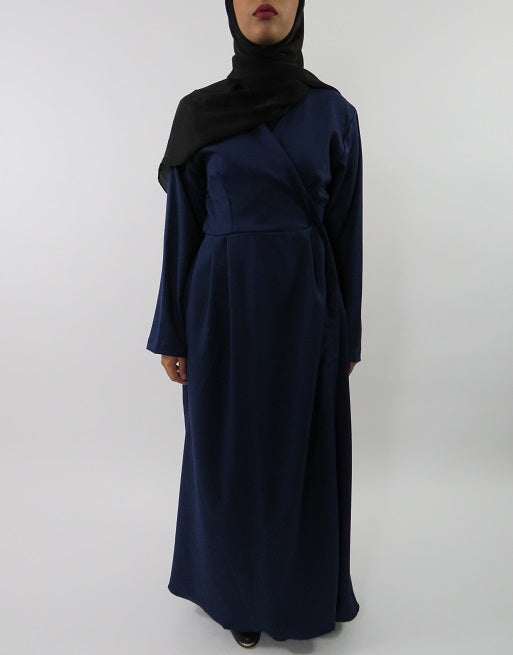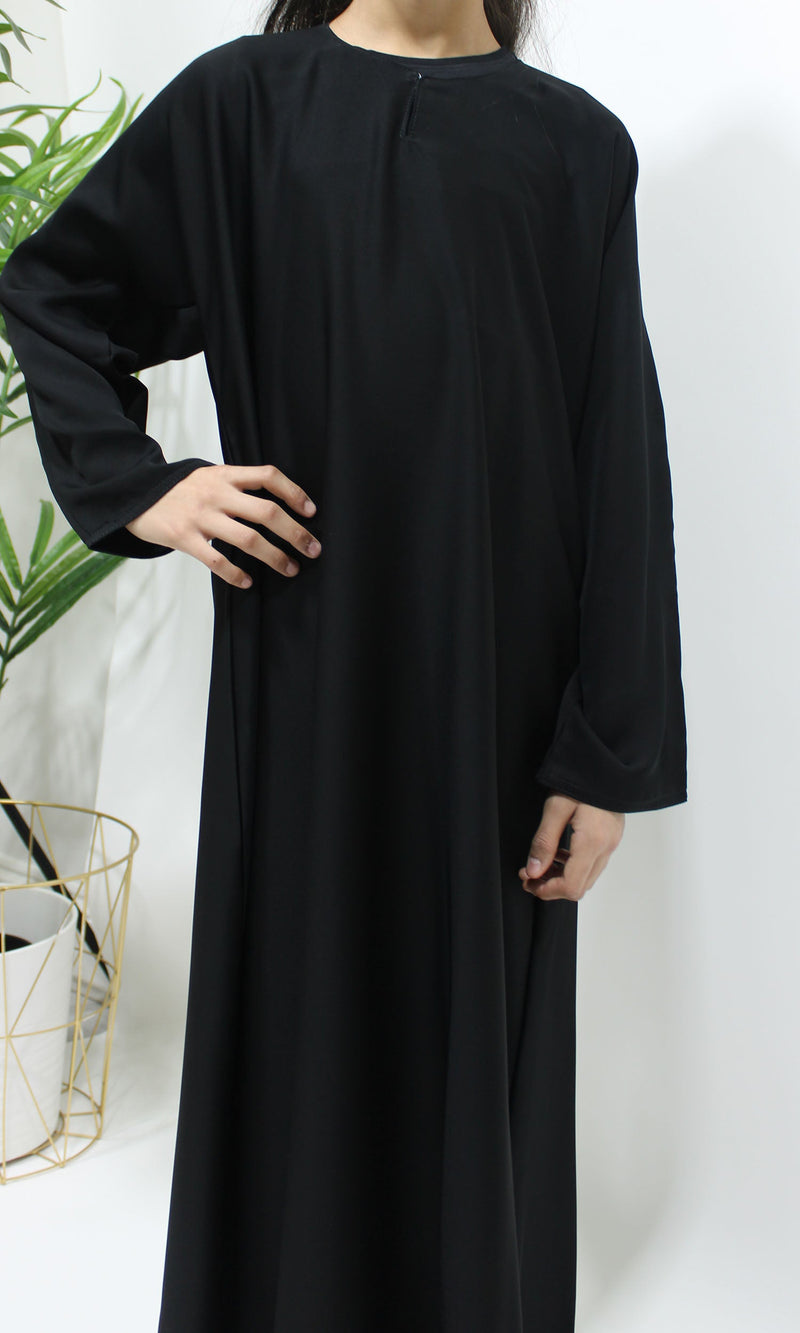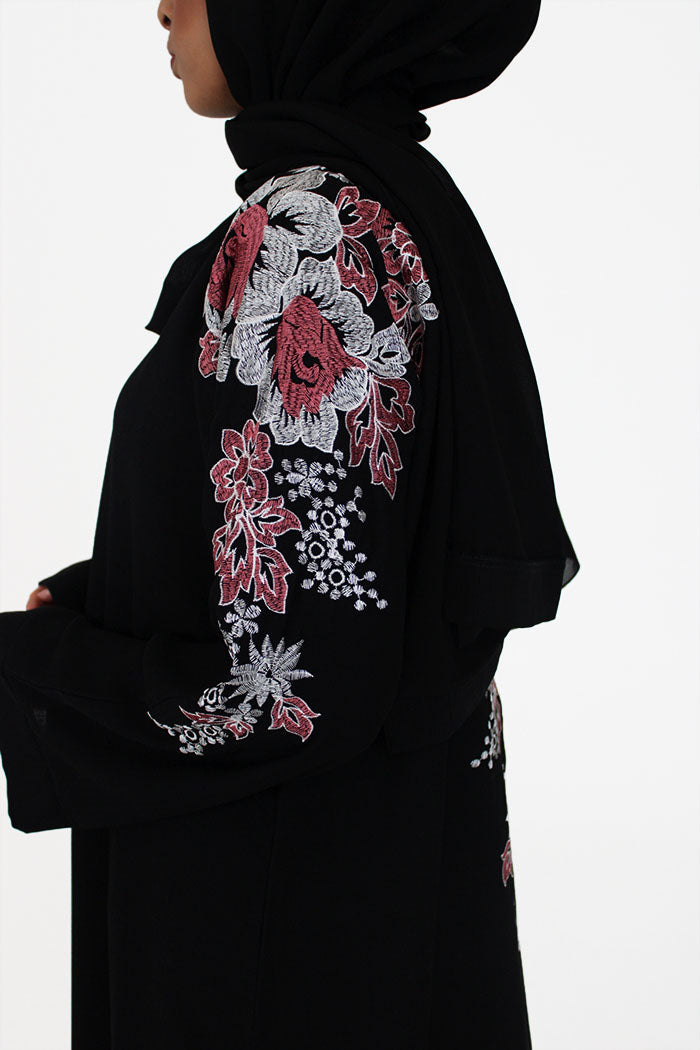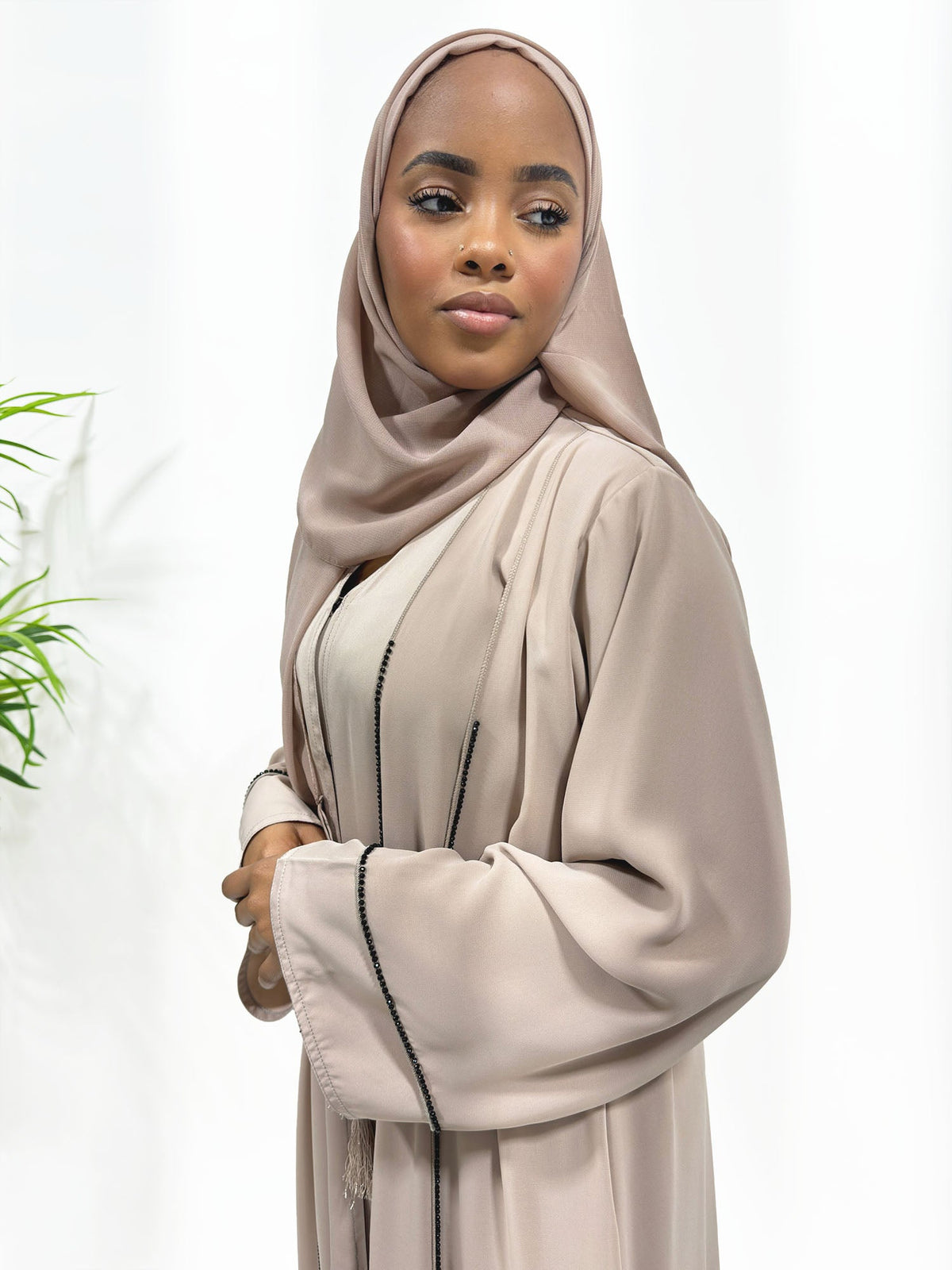
Is a layered abaya right for your wardrobe?
A layered abaya can create interest through movement rather than through a bright colour or heavy embellishment. One panel lifts away from another, a cape falls over the shoulders, or a tier changes the line of the lower skirt. The effect can be subtle or dramatic, depending on how the layers are built.
Before choosing one, look beyond the finished outline. Are you buying a single garment with attached layers, an open abaya with a separate inner dress, or several pieces photographed together? Which layer provides opacity? Can you move your arms without pulling the neckline or lifting the hem?
Those questions determine whether the design will be enjoyable to wear. The most successful layered outfit is not necessarily the one with the most fabric. It is the one in which each layer has a clear role and the whole arrangement works with your scarf, shoes, bag and daily movements.
Identify the construction before comparing styles
The phrase layered abaya can describe several different garments. A built-in overlay may be attached at the shoulder or neckline. A cape section may sit over a conventional sleeve or replace part of the upper structure. A tiered skirt may have gathered sections joined one below another. An open outer abaya may be sold with, or separately from, an inner dress.
Ask what is included. A product photograph may show an inner dress, belt and hijab that are not all part of the purchase. List the components rather than assuming the image represents one complete set.
Look for photographs of the inside and back. These can reveal where the layers join, how the openings work and whether a decorative panel is present on both sides. A front-only photograph can make an asymmetrical design appear more conventional than it is.
Check whether the layers can be moved independently or are fixed. A loose-looking panel may be stitched at several points to control its position. Do not assume that it can be removed, wrapped differently or tucked under a belt without changing the intended fit.
For a broader comparison of silhouettes, our guide to abaya styles, cuts and fabrics can help you name the shape. Clear terminology makes it easier to ask useful questions about the actual design.
Compare the main ways layers create shape
Soft overlays
An overlay can add movement over a simpler base. Look at how far it extends and where it opens. A short upper overlay creates a different effect from a long panel that follows the skirt towards the hem.
Check the base beneath it as a garment in its own right. If the overlay moves aside, does the layer underneath provide the coverage you want? A floating panel should not be the only thing preventing an unwanted gap unless you are comfortable managing that arrangement.
Try walking and turning. The overlay may fall back neatly, or it may catch on a seam, bag or belt. Notice whether it settles by itself or requires repeated smoothing.
Cape layers
A cape-like upper section can give the shoulders a broad, flowing line. The practical question is how it relates to the arms. Does it sit over full sleeves, open at the sides, or connect to the body in a way that lifts when you reach?
Raise both arms, then reach one arm forward as though you are using a door or carrying a bag. Watch the neckline, sides and hem. A cape that looks spacious while still can shift the entire garment during movement.
Try the bag and outerwear you intend to use. A shoulder strap can pin one side of the cape down, while a close coat may compress the layers awkwardly. A design can be beautiful and still need a particular kind of outfit around it.
Ruffles and tiers
Ruffles add a different kind of detail from a smooth overlay. Look at their scale, placement and finish. A small ruffle at the sleeve has a different practical effect from several gathered tiers near the knees.
Check how the tiers behave when you sit. They may spread, fold under you or catch between the body and the chair. You do not need to reject volume, but you should know how much you enjoy managing.
At the hem, look for the longest and shortest points. A tiered or asymmetrical design may have more than one relevant length. Ask for those measurements rather than relying on a single centre-front number.
More structured layers
A structured panel may hold its outline more firmly than a soft one. That can create a distinct shape, but it also needs room around the body and beneath any coat. Check whether the panel presses or folds awkwardly when seated.
Look at the edges and seams. A design with clear lines depends on those details sitting where intended. If the shoulder or waist position is wrong for you, the layered outline may not behave as it does in the product photograph.
Choose structure because you like the actual effect, not because a body-shape rule says you need it. The same design can be experienced differently by people with different proportions, movements and preferences.
Separate visual depth from reliable coverage
Several layers do not automatically mean complete opacity. Two sheer panels can move apart, a lining may stop above the outer hem, or sleeves may be constructed differently from the body. Inspect each area in the worn arrangement.
Check the front opening, side openings, sleeve sections and back. Turn, reach and sit while observing which layers move. If the base is a separate dress, try it without the outer abaya first so you understand what it contributes.
For an open layered abaya, make the base outfit complete enough for the moments when the front separates. A long inner dress or suitable separates may work, but their own neckline, sleeves and fit still need attention.
Do not use a belt to conceal an overlap problem without checking the result in movement. A belt can hold the front in one position while standing and allow it to shift elsewhere when seated. The garment should work in the way you actually intend to wear it.
Similarly, do not rely on the hijab to repair an unstable neckline. Choose a scarf arrangement that provides your preferred coverage, but make sure it is not carrying the responsibility for a dress opening that continually pulls apart.
Fit the layers at the places where they join
Start with the shoulder and neckline. If several panels are attached there, a small fit issue can affect the whole garment. Check whether the opening sits comfortably and whether the layers pull backwards or forwards as you move.
Next, assess the upper arms and underarms. Generous outer fabric can hide a narrower sleeve beneath. Reach forward, bend the elbows and put your hands on a table. You should not have to hold your arms in a particular position to keep the design looking right.
At the waist or hip, inspect any seam that joins a tier or overlay. Does it sit where you expected? Does the material gather against an underlayer? A decorative seam can influence fit even when the garment appears loose overall.
Look at the base and outer layers together from the side. One may be catching on the other or pulling it out of position. Try the outfit with the intended underlayers before deciding that the size alone is the problem.
For length, wear the actual shoes. Check every lower point, including side panels and trailing sections. A single short area does not make the whole hem manageable if another part reaches the floor during walking.
Our abaya sizing and length guide can help with the measurement process. Record the different relevant lengths where a design is asymmetrical, and confirm the seller’s measuring method.
Choose volume according to your preference, not your body category
There is no fixed number of layers that a smaller, taller, fuller or narrower frame is allowed to wear. The useful question is where the volume sits and whether you like its relationship to the rest of the outfit.
Try viewing the garment from several distances. Close up, a ruffle may seem like a small detail; from across a room, it may become the main feature. A photograph can help you assess the overall outline, but do not use it to search for a supposedly correct body shape.
If the outfit feels visually crowded, identify the area rather than rejecting all layered designs. Perhaps the scarf folds, cape and decorative neckline all occupy the same space. Simplifying the scarf may be enough. In another design, the lower tiers may be the detail you want to keep while the upper half stays quiet.
You do not have to pair every flowing abaya with fitted trousers. Choose the base for coverage, comfort and the way it moves beneath the outer garment. A straight or wide lower piece may work well when its fabric and length are compatible.
Likewise, a defined waist is optional. Try the garment as designed before adding a belt to make it conform to a familiar silhouette. Some layered shapes are intended to fall freely, and that can be the effect you enjoy.
Let the hijab support the part of the abaya you want to show
Look at the upper design before choosing the scarf. If the abaya has a cape, a raised collar or several shoulder panels, a simpler scarf arrangement may give those details room. If the upper body is plain and the layers begin lower down, you may prefer more freedom in the hijab.
Check where the scarf ends fall. An end placed over a shoulder can conceal a cape join or catch beneath an overlay. A broad front drape may cover a decorative panel completely. Neither is wrong, but make the choice deliberately.
Compare textures in the actual outfit. A heavily textured scarf over several ruffled layers may feel more detailed than you want, while a smooth scarf can create a quieter area. Alternatively, a textured scarf may provide the contrast you like against a very simple layered design.
Do not add repeated wraps to make the scarf feel secure if the real problem is the neckline beneath it. Check the foundation and fastening, then choose a drape that works with the abaya’s construction. More fabric is not always the most comfortable solution.
For help comparing scarf behaviour, see our hijab fabric and draping guide. The right combination is the one that remains comfortable when you turn your head and move your arms, not merely the one that looks tidy while still.
Sewn-in layers or separate pieces: choose the kind of flexibility you need
A single garment with attached layers can make dressing more straightforward because the designer has already established their relationship. You do not have to find a matching inner piece each time. The trade-off is that you may have less freedom to change the base colour, remove a decorative layer or clean one component separately.
A separate inner dress and outer abaya offer a different kind of flexibility. You may be able to use the inner dress with another outer layer, or wear the abaya over suitable separates. Check those combinations rather than assuming they will work simply because the pieces detach. The inner dress may have been cut specifically to sit beneath that outer garment, and its neckline or sleeves may not provide the coverage you want on their own.
Consider dressing and undressing as well. With an attached design, identify the opening and make sure the layers do not twist as you put it on. With separate pieces, check whether the inner sleeves catch when you add the outer garment. A combination that requires repeated pulling and realigning may be less convenient than it first appears.
For a long day, think about whether you expect to remove the outer layer. If so, the inner outfit should remain appropriate for the setting and your preferences. Do not treat a lining-like slip as a complete dress without checking its actual construction. If you will keep every layer on, assess their combined comfort rather than valuing removability you are unlikely to use.
Care requirements can influence the choice too. Separate pieces may have different labels, so keep their instructions distinct. An attached garment needs a suitable method for the finished construction as a whole. Neither approach is automatically easier; the useful option is the one whose routine you can realistically maintain.
Before buying, describe the use you want in one sentence. “I want an outfit that goes on as one piece for occasional events” points towards different features from “I want an outer abaya I can wear with three existing dresses”. That small distinction can prevent you from paying for flexibility that the design does not actually provide.
Compare two listings by the pieces you can actually use
Suppose two photographs show a flowing outer panel over a plain dress. The first listing describes one abaya with the overlay sewn into the shoulder. The second lists a separate inner dress and an open outer layer. Before comparing their price, write down what each purchase would let you do. The photographs may look similar, but the outfits have different practical limits.
For the attached design, ask where the overlay is joined and which sections can move independently. You are choosing the complete shape as supplied. Do not count the overlay as a spare jacket or assume that an inner section can be worn on its own. For the separate design, check the inner dress’s neckline, sleeves and lining before counting it as a second usable outfit.
Now name the clothes you already own that could work with the separate outer piece. A navy dress or a suitable trouser outfit is a real possibility only when its measurements, surfaces and hems cooperate with the abaya. Try those combinations when the garment arrives. “Mix and match” is not useful evidence until you can identify a complete outfit you would wear.
Finally, compare care and replacement needs. One-piece construction keeps the components together but also means assessing the finished garment as a whole. Separate pieces can be cared for individually according to their labels, although losing or damaging an essential inner dress may leave the outer layer without a suitable partner. Choose the arrangement that serves your routine rather than assigning extra value simply because the listing mentions more layers.
For a component-by-component purchase check, see what to look at before buying an open abaya set. It complements the construction questions here without requiring every layered design to be treated as a set.
Use colour to make the layers clear or keep them subtle
A single-colour layered abaya can show its detail through the way the panels catch light and move. This can be a useful choice when you want an interesting shape without coordinating several strong colours.
Contrasting layers create a different effect. Check which colour appears when the garment opens and whether that is the part you want to emphasise. A narrow contrast panel can become much more visible during walking than it is in a front photograph.
If the set contains separate pieces, compare their shades in ordinary light. Two near-matching tones can look deliberate, but they can also look like an unintended mismatch. Decide which relationship you prefer before adding a third colour in the scarf.
For a patterned layer, inspect where the pattern is placed and how it is interrupted by seams or folds. A large motif may disappear beneath an overlay or be divided by an opening. Ask for a clear view of the full garment rather than judging the pattern from a close-up alone.
You can keep the scarf and accessories quiet while the layers provide the interest. There is no obligation to repeat every colour in the garment elsewhere in the outfit. One considered connection may be enough.
Everyday styling: choose the manageable version of the idea
For regular errands, work or study, look for layers that settle easily and stay clear of the tasks you perform. A restrained overlay or a simple two-piece arrangement may be more practical for you than several long loose panels.
Try the garment with your usual bag. Check whether the strap traps one layer while another continues to move. If you need to free the fabric every time you put the bag on, consider a different strap position or a different design.
At a desk, observe the sleeves and front drape. You should be able to use the surface without repeatedly collecting fabric in your hands. A simpler cuff or a more contained upper layer may suit that routine better.
Choose shoes for the journey and confirm the hem with them on. Trainers, flats or boots can all be options depending on the garment and conditions, but the category alone does not establish a good match. The actual length and movement matter.
Keep the base outfit straightforward. A layered outer garment already provides visual activity, so you may not need several additional visible pieces beneath it. Make sure the base is complete, then decide whether any extra detail serves a purpose.
Occasion styling: test the design beyond the entrance
A layered abaya can suit an occasion when the fabric, finish and overall design fit the event. Read the invitation and clarify expectations where needed. A dramatic silhouette is not automatically appropriate for every formal gathering.
Think about the whole event, not only arriving. Will you sit at a table, move between rooms, use stairs or wear an outer layer for part of the day? Test the garment through those actions before deciding that it is comfortable for several hours.
For a meal, check the sleeve layers and front panels while seated. For a long event, consider how easily you can manage the garment when taking off a coat or using a bag. These are ordinary practical questions, not reasons to avoid an expressive design.
Let one area carry the detail. If the abaya has a prominent cape or cascading layers, a simple scarf and restrained jewellery may be enough. If the layered structure is subtle, a more decorative accessory can be a deliberate choice.
Try photographs in normal standing and seated positions rather than only arranging the panels by hand for a particular pose. You want to know how the outfit looks when you are wearing it, not only how it can be displayed.
Three worked outfit decisions
A soft overlay for a long indoor day
Imagine a plain base dress beneath a light-looking open overlay. Begin by checking the base on its own: neckline, sleeves, opacity and seated fit. Then add the outer garment and observe whether the two fabrics catch on each other.
Choose a scarf that does not add unnecessary volume at the same shoulder where the overlay joins. Add the bag and outerwear for the journey. If the coat compresses the overlay awkwardly, compare another coat or another abaya rather than assuming the layered outfit must work with every outer garment you own.
A tiered design for a family celebration
Start with the lower shape. Sit in a chair similar to the kind you expect to use and check where the tiers settle. Walk and turn, then look at the longest hem point. Choose shoes that work with that point, not only with the shorter front section.
Keep the upper styling simple enough to let the tiers remain the main feature. A plain scarf can be a useful starting point. Add jewellery only after checking the neckline and any decoration already present on the abaya.
A cape design with a practical bag
Try the cape with your normal shoulder or cross-body bag. Notice whether the strap pins the cape and prevents the arm from moving freely. If it does, compare a different bag position or a hand-held option that suits your day.
Do not buy a new bag automatically to rescue the design. First decide whether the cape offers enough use in your wardrobe to justify a specific supporting outfit. A garment can remain an occasional favourite without becoming your everyday choice.
Seasonal layering needs a full-outfit assessment
In warmer conditions, count the actual layers rather than judging the outfit by the sheerness of the outer panel. A sheer overlay over a lined dress and a substantial foundation can still be a multi-layered arrangement. Choose according to the complete outfit and your comfort in the conditions.
Do not remove a necessary base layer simply because the outer garment appears generous. Check opacity and openings again if you change what is worn underneath. A lighter arrangement should still provide the coverage you want.
For colder conditions, check the space available for underlayers and a coat. Several decorative panels may make a close-fitting coat difficult to wear, even if the base dress itself has enough room. Try the whole combination rather than assuming that additional fabric automatically means useful warmth.
In wind or rain, consider how loose panels behave and use suitable outerwear for the conditions. A flowing layered abaya should not be treated as weather protection merely because it covers a large area. Keep hems manageable and avoid relying on holding the garment in place throughout the journey.
A design may be most useful in a particular season or setting. That is a reasonable wardrobe role. Versatility should mean several realistic uses, not a claim that one garment suits every climate and occasion.
Care for the whole garment, including different materials
Read the care instructions for the finished abaya. Different layers, trims or linings may have been combined, and their presence can affect handling. Do not select a cleaning method based only on the outermost fabric or assume that dry cleaning is always the safest answer.
Before cleaning, inspect the points where layers join. Check for loose stitching, caught edges and detachable accessories. Follow any instructions for removing a belt or fastening, and keep those components together so they are not lost between wears.
Dry and reshape the garment as directed. Make sure one layer is not twisted inside another before it settles into its stored position. Avoid using heat to force a panel flat when you do not know whether the fabric, trim or construction is suitable for that treatment.
For storage, support the garment and give the layers enough space not to be crushed against hardware or other clothing. A broad ruffle or structured panel may need a different arrangement from a plain dress. Use the specific garment instructions and your observation of its shape.
After wear, check the lower edges and areas beneath the bag strap. These are useful places to look for a caught thread or a small issue before the next outing. Address repairs with a method appropriate to the construction rather than cutting away anything that looks loose.
Alteration and customisation: preserve the relationship between layers
Changing the length of one layer can change the appearance of the whole garment. Before shortening an abaya, identify the intended relationship between the base, overlay and decorative edges. Ask the person doing the alteration to assess them together while the garment is worn.
A shorter base may reveal more through an outer opening. A shorter overlay may expose a seam or pocket that was previously concealed. A change at the shoulder may affect the fall of several panels at once. These are reasons to plan carefully, not reasons that alterations are impossible.
For sleeves, check whether the decorative layer and inner sleeve need different adjustments. Preserving a cuff or border may require a different method from simply removing length at the end. Agree on the finished result before any cutting begins.
Custom decoration should be equally specific. State where you want embroidery or trim, how large it should be and whether it appears on the back as well as the front. Ask how the added detail affects weight and care. Do not assume that every retailer offers a custom service.
Keep return or fault discussions separate from alterations. Review the seller’s stated process before changing a newly purchased garment. If the item differs from the description, discuss that through the appropriate channel rather than immediately modifying it to make it usable.
Questions to ask before buying
Is the inner dress included?
Confirm every component shown in the photographs. Ask whether the scarf, belt and inner garment are included and whether they have their own size or measurement information. A coordinated photograph is not a reliable inventory of the purchase.
Will the layers be too much for my frame?
Try the actual proportions and movement rather than relying on a body-type rule. Look at where the volume sits and whether the scarf or accessories add detail in the same area. You may prefer a different distribution of layers, not necessarily fewer of them.
Can a layered abaya work for everyday wear?
Yes, when the particular construction suits your routine. Check the sleeves, hem, bag interaction and seated movement. A restrained design may be easier for regular tasks, while a more elaborate one can remain useful for occasions.
Do I need fitted clothing underneath?
No. Choose the base for its own coverage and comfort, then check how it moves beneath the abaya. A wider trouser or dress can work where the fabrics and proportions are compatible. The outer silhouette does not impose a single required lower fit.
Should I attach loose layers together with extra pins?
First check whether the garment is correctly arranged and fits as intended. Improvised pinning can distort the fall or place strain on delicate fabric. If a panel continually shifts in a way you dislike, ask about the construction or consider another design rather than relying on repeated temporary fixes.
Does a layered design have one particular cultural meaning?
Do not assign a universal meaning to the number of panels, a colour or a decorative shape. People may choose the garment for faith, culture, personal style or several reasons together. For an event with particular expectations, ask the host or organiser rather than making assumptions from the garment’s appearance.
Layered abayas offer many ways to enjoy shape and movement, but the useful details are concrete: what is included, where the layers join, how the base covers, and what happens when you walk, sit and reach. Choose those details with care. The visual depth will then feel like part of an outfit you can wear, rather than a design you have to keep arranging.