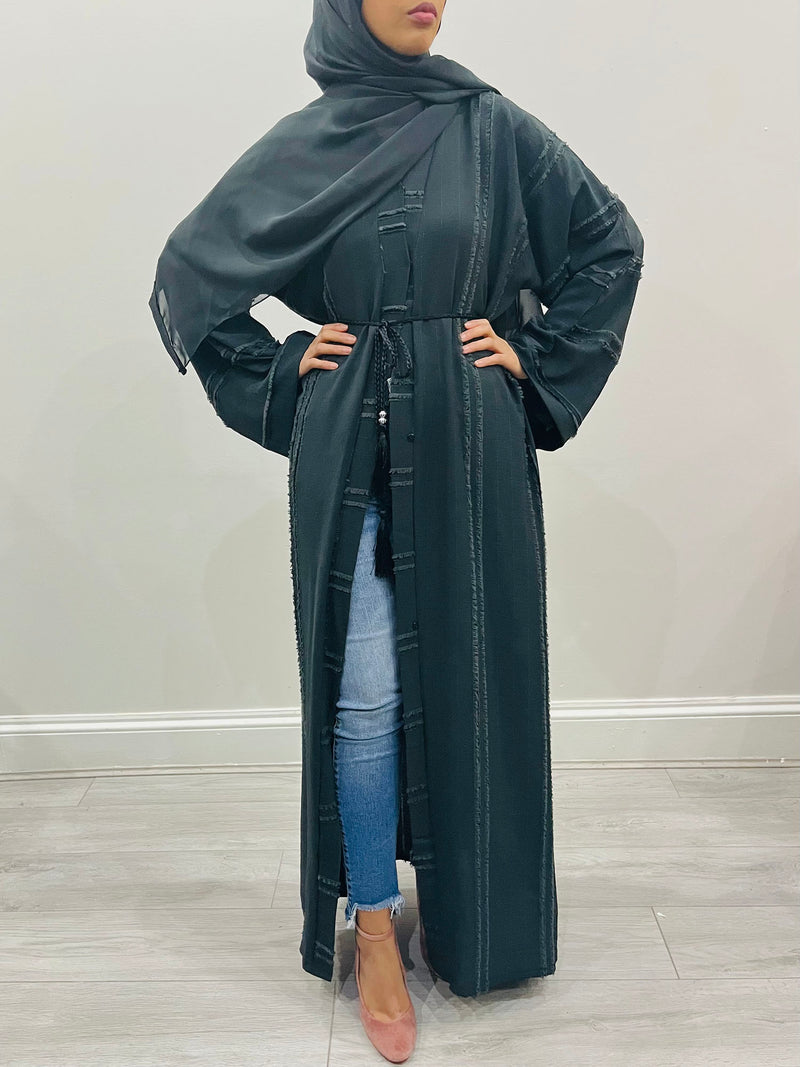
Hijab Holiday Outfits Are Easier When Every Piece You Pack Can Earn Its Space in the Suitcase
The suitcase is open on the bed, and somehow the outfit that looked so easy in your head has become six hijabs, three “just in case” layers and a dress you already know you won’t want to iron in a hotel room. Holidays do that. At home, you can build an outfit around the weather you can see, the mirror you know and a wardrobe only a few steps away. Away from home, every piece has to work harder.
A hijab holiday outfit has a different job from an ordinary outfit. It needs to survive the journey before the holiday has properly begun. It may have to move between an air-conditioned airport and hot pavement, between sightseeing and salah, between a windy harbour and a warm restaurant, between a day when you want to dress simply and an evening when you still want to feel a little special. And it has to do all of that without turning your suitcase into a second wardrobe.
The most frustrating holiday clothes are often not the ugliest ones. They are the pieces that only work in one very specific combination. The scarf that matches one dress and nothing else. The open layer that looks lovely but needs a particular inner you forgot to pack. The shoes that make the hem length work but hurt after twenty minutes. The chiffon that photographs beautifully and then spends the whole day sliding backwards under a sun hat.
I would rather pack fewer things that understand one another. A small group of scarves that work with several outfits. Base garments that are already opaque and loose enough to wear without rescue layers. One light outer layer that earns its suitcase space on the plane, in cool interiors and after sunset. Shoes you can actually walk in. A prayer plan that does not require rebuilding the entire outfit in a public bathroom.
That is the difference between packing modest clothes and packing a modest holiday wardrobe. The second one is a system. It gives you room to be practical without feeling stripped of personality, and room to enjoy getting dressed without making clothing the main event of the trip.
For the broader foundations of scarf fabrics, undercaps, opacity and everyday styling, Amani’s complete hijab guide is the useful reference. Here, I want to stay with the suitcase: how to choose, combine, layer, rewear and live in hijab holiday outfits once you are actually away.
Start with the holiday you are actually taking
A city break, a resort holiday, a family visit and a long road trip may all fit under the word “holiday”, but they ask completely different things from clothing. Before I choose a single scarf colour, I write down the parts of the trip that will make clothes work hardest.
How much will I walk? Will I be carrying a backpack or cross-body bag for hours? Are there stairs, cobbled streets, ferries or long train platforms? Will I be moving between very hot outdoors and aggressively cooled interiors? Are there dinners that need a slightly more polished outfit? Will I have access to laundry? Is there somewhere sensible to hang clothes? Am I changing hotels? Will I need to dress quickly for Fajr, an early excursion or a family breakfast?
Those questions are more useful than starting with a mood board. A beautiful floor-length dress can be perfect for a quiet family stay and exhausting on a day with fifteen thousand steps. A long open abaya can be elegant in the evening and irritating when a shoulder bag keeps dragging it backwards. A very light scarf may be ideal in humidity but require more securing than you want while moving through airports and stations.
I also separate the trip into clothing moments. There is the travel day. There are ordinary daytime hours. There may be one or two evenings that feel more special. There may be a beach or pool day, but that is its own clothing problem rather than something every holiday outfit needs to solve. There may be masjid visits or other places where you want an especially simple, secure setup.
Once the actual moments are clear, the suitcase becomes much easier. You are not trying to pack for every version of yourself. You are packing for a known sequence of days.
The best suitcase begins with outfit roles, not outfit numbers
“Seven days means seven outfits” sounds logical until you realise that it often produces seven separate combinations with no relationship to one another. I prefer to pack by role. One garment can then appear in several outfits without feeling like accidental repetition.
For a typical week away, I might want two dependable daytime bases, one slightly more polished base, one adaptable outer layer, perhaps one relaxed set, and a handful of scarves chosen to cross over between them. The exact number changes with the trip, but the principle stays the same: each piece should have a reason to be there.
A long loose dress may work for sightseeing with trainers, then feel completely different with a cleaner scarf, smarter shoe and light outer layer for dinner. Wide trousers and a long tunic can carry a travel day, then reappear separately with another top or dress layer. A plain abaya can be the calmest answer on a busy morning and the easiest thing to wear for an evening walk.
The scarf collection should work the same way. Instead of packing six colours because each one “matches” something, I ask for functions. Which hijab is my most secure one? Which is easiest in heat? Which looks polished enough for an evening? Which colour can sit beside most of the clothes? If three scarves cover those roles, a fourth needs to add something genuinely useful.
This kind of packing does not make a holiday wardrobe boring. It creates room for the interesting part—the colour, print or texture that really feels like you—because the practical foundation is already settled.
A scarf earns its suitcase space by working with more than one outfit
Hijabs are small compared with dresses, so it is easy to throw in “just a few more”. Then the scarf pouch becomes a dense pile of near-duplicates, while the one neutral you actually need is still at home.
I use a simple test: every ordinary holiday hijab should work with at least two or three of the main outfits. It does not have to match them exactly. In fact, a scarf that is slightly darker, softer or more contrasting is often easier to repeat than one bought as a perfect match for a single dress.
Neutrals do a lot of work here, but neutral does not have to mean beige. Black, navy, chocolate, stone, olive, charcoal, muted plum and soft taupe can all behave like anchors depending on your wardrobe. If your clothes are mostly black and cream, perhaps the personal scarf is deep green. If your dresses are earthy, dusty rose or denim blue may give enough change without breaking the palette.
Fabric should earn its place too. A medium or lightweight jersey can be invaluable for travel days because it is secure and low-maintenance. A textured modal or crinkle scarf may pack small and forgive creases. Chiffon can make an evening outfit feel lighter and more refined, but if it needs an undercap, several magnets and careful steaming every time, it needs to be worth that extra system.
There is no prize for taking the most scarves. The better holiday pouch is the one where you can reach in half-awake and still pull out something that works.
Pack the layer that rescues several situations, not one outfit
A single outer layer can be one of the hardest-working pieces in the suitcase. It can soften air conditioning on a plane, cover a lighter base during sightseeing, add polish at dinner and provide warmth after sunset. But only if it coordinates broadly and behaves well when carried.
I like a layer that folds without becoming enormous, does not depend on a belt to stay sensible, and does not have sleeves so dramatic that it becomes the whole outfit every time. A light open abaya, long overshirt, loose cardigan or simple coat-style layer can all work depending on the climate and your preferred coverage.
The underneath matters. If the outer layer flies open in wind or shifts under a bag, the inner outfit should still feel complete. This is especially important on holiday because you are more likely to be walking outside, getting in and out of vehicles, carrying luggage and moving through unfamiliar spaces.
Colour is where one layer can either simplify or complicate everything. A black, stone, cocoa, navy or muted olive layer may bridge several outfits. A very specific print or embellished piece can be beautiful, but it may become an evening-only garment. That is fine if evenings are a real part of the trip; it is wasteful if it travels hundreds of miles for one photograph and stays on the hanger.
The strongest layer is not the one that looks most impressive by itself. It is the one you keep reaching for because it quietly solves problems.
Travel day deserves its own outfit
The airport outfit is often treated as the least exciting part of the holiday, yet it may be the outfit you wear longest. A flight can begin with a cold taxi, continue through queues, security, warm terminals, a cool aircraft, a long seated stretch and then an arrival climate that feels completely different. Trains and road journeys have their own version of the same problem.
For long travel, I prioritise a soft loose base, a scarf that can survive headrests and headphones, and a removable layer. A low hairstyle makes sitting more comfortable. A scarf with too much fabric gathered at the back of the head can become irritating after an hour against a seat. Heavy pins or stacked magnets near the ears are equally noticeable once you are tired.
I also think about what security or changing facilities might require. Clothing that can be adjusted simply is kinder than a complex wrap held by several hidden points. If I need to make wudu, freshen up or remove an outer layer, I want to be able to do it without unpacking half the hand luggage.
The bag is part of the outfit. Backpack straps pull scarves backwards and can press loose clothing against the body. Cross-body straps can split a soft front drape. Test the real bag at home. Put it on, walk, sit, take it off and look at what happened to the hijab and outer layer.
The best travel-day outfit may not be the one you want in the first holiday photograph. That is perfectly fine. It has already done important work by getting you there in one piece without making your clothing another source of exhaustion.
Pack for the temperature changes between places, not just the forecast
Holiday weather is often described as one number. Your body experiences a much messier sequence. Hot pavement, shaded streets, a chilled museum, a breezy boat, a crowded restaurant, a cold hotel breakfast room and a warm evening walk can all happen on the same day.
This is why layering easily matters more than wearing the lightest possible outfit. A base that is already modest and comfortable in the warmest part of the day gives you freedom. A light outer layer can then handle cool interiors or wind without forcing a thick scarf around the neck from breakfast until bedtime.
For hot destinations, I reduce unnecessary head layers first. If the scarf is opaque enough for the style I use, I do not automatically add a full heavy undercap. If an undercap is helpful for grip, I choose the lightest comfortable version that does the job. I also avoid wrapping the same long scarf repeatedly around the neck simply because that is how I wear it in Britain in winter.
For cooler holidays, I still avoid using the hijab as the only source of warmth. A practical coat, cardigan or light knit gives better temperature control. That way, a warm café or train does not require unwrapping the scarf in public just to cool down.
The useful holiday outfit is adjustable without being fragile. One layer comes off, another goes on, and the basic coverage remains stable.
Hot-weather dressing is about reducing rescue layers
Many modest outfits become hot because the main garment is not doing enough. A sheer maxi dress needs a slip. Short sleeves need a long-sleeve top. A low neckline needs another layer. Then an open outer garment is added because the total still does not feel secure. The original “light” dress has quietly become four garments.
For a warm holiday, I would rather begin with one base that already provides most of the coverage I want: long sleeves, a secure neckline, generous ease and enough opacity in daylight. If a light slip is needed only for the skirt, that is different from building a complete second outfit underneath.
Fabric still matters, but cut matters alongside it. A loose woven garment can allow more movement of air than a thin stretch fabric that clings closely. A very wide garment can also become cumbersome if there is simply too much material, so I look for purposeful ease rather than maximum fabric.
The same applies to the hijab. A wide scarf can give chest coverage without multiple turns. A slightly textured surface can create grip so that the wrap does not need to be tightened. A lighter colour may feel pleasant in bright sun, but only if opacity is already understood.
Hot-weather modesty should not be a contest in endurance. If the clothing system is causing avoidable heat and discomfort, the useful response is to improve the system.
Wind changes an outfit faster than heat does
A breezy coastal street can make a perfectly comfortable outfit feel chaotic within seconds. Loose scarf ends lift. Open abayas separate. Wide skirts move around the legs. A bag strap catches one side while the other side flies backwards. The problem is not that flowing clothes are unsuitable; it is that flowing clothes need anchoring in the places that matter.
For the hijab, I secure the face frame and the shoulder drape separately. One under-chin fastening does not always stop a long end lifting. A small magnet, pin or thoughtful tuck at the shoulder can keep softness without requiring a tight wrap.
For an open layer, I check whether there is a discreet fastening and whether I actually want to use it. If the garment only looks right when I hold the front closed with one hand, it is not earning its place on a windy trip. A secure inner dress means the outer can move without creating panic.
Hem length deserves attention too. Wind can push a long skirt against the legs or lift a very wide one. On stairs and uneven streets, an almost-floor-length hem may suddenly require both hands. I prefer enough length for coverage with enough clearance for the day’s terrain.
A holiday should let you notice the breeze, not spend the afternoon wrestling it.
The walking test matters more on holiday than the mirror test
At home, an outfit may need to survive a commute and a normal working day. On holiday, walking can become the day. You may climb steps, cross old streets, queue for attractions, sit on low walls, get onto buses, bend over maps and carry bottles of water. Clothing that looked effortless at breakfast can reveal every weak point by lunch.
I test holiday clothes by moving more than I normally would in front of the mirror. I walk quickly. I take a large step as if boarding a bus. I sit on a low chair. I lift the hem slightly as if climbing stairs. I put the day bag on and off. I reach into it. I turn my head while wearing sunglasses.
Those movements tell me whether the tunic rises too much, the trousers pull, the scarf shifts, the side slit opens, or the bag changes the silhouette. None of those problems is about the body being wrong. They are garment information.
Shoes belong in the same test. If the shoes change your stride, the dress length changes too. A hem that clears the ground in trainers may drag in flat sandals. A dress chosen around heels may become a problem the moment you switch to comfortable shoes.
The outfit does not need to look identical after six hours. It needs to remain wearable, secure and recognisably itself.
Build a colour palette that shrinks the suitcase without draining your personality
A capsule wardrobe can become so focused on “versatility” that every holiday suitcase ends up black, beige and apologetic. If that is genuinely your style, lovely. If it is not, there is no reason practicality should flatten the colours you enjoy.
I start with two grounding colours and one or two personality colours. The grounding shades carry shoes, bags, outer layers and at least some of the hijabs. The personality colours appear in a dress, printed scarf, tunic or evening piece. Because the base is coherent, those colours do not need exact matching.
For example, navy and stone can carry a soft green dress and a rust scarf. Black and cocoa can support burgundy, olive or dusty rose. Cream and deep brown can make room for denim blue or muted teal. The point is not to prescribe combinations; it is to keep enough shared colour that pieces can move between outfits.
Prints can be especially useful because one patterned garment or scarf can contain several colours from the capsule. A printed scarf may connect a plain dress and neutral outer layer. A printed dress may need only one quiet hijab from its least dominant shade.
Photograph the combinations before packing. A simple phone album prevents the classic hotel-room problem of staring at a small rail of clothes and suddenly feeling as though nothing goes together.
Keep the scarf toolkit smaller than the scarf collection
A holiday does not need a travelling dressing table. I pack the tools that support the exact scarves I am taking: perhaps two comfortable undercaps, a few trusted magnets or pins, and one backup fastening stored safely. If a scarf needs a specialised collection of accessories to behave, I question whether it belongs in the suitcase at all.
Undercaps should be chosen for the climate and the scarf. A full cap may support a sheer chiffon beautifully but feel too warm under jersey on a humid day. A simple tube cap may give enough front grip without adding a complete head layer. Tie-back designs can be useful, but the knot should not become a pressure point against a headrest.
Magnets are excellent for fabrics you do not want to pierce, but they should be stored responsibly and kept away from small children. If a person has a medical device for which magnets may be relevant, appropriate professional guidance matters more than styling convenience.
I also pack one very simple scarf option that needs almost nothing. It is the scarf for a rushed morning, a travel delay, a headache day or the moment when I simply do not want to think about my clothes.
That scarf often becomes the most worn one on the trip.
Prayer is easier when the outfit was designed to cooperate
Holidays change routines, and that can make practical prayer preparation more important rather than less. Clothing can be planned carefully without pretending that garments themselves answer religious questions. I ask simple practical questions: can I make wudu without fighting the sleeves? Can the scarf be adjusted and restored? Does the outfit move comfortably? Do I need to carry a dedicated prayer garment?
An everyday holiday outfit is not automatically a complete prayer outfit. A long dress may still have sleeves, neckline or movement that make a separate prayer layer the calmer choice according to the practice you follow. If you use a compact prayer dress or khimar, give it a defined place in the day bag rather than hoping there will be something suitable when the time comes.
Wudu often reveals awkward clothing quickly. Tight cuffs that cannot lift, stacked bracelets, heavily pinned scarves and complicated layered sleeves can become frustrating. Testing the outfit once at home is enough to see whether the system needs simplifying.
For sightseeing days, I also consider what happens after wudu. A scarf that takes ten minutes, a full mirror and several pins to recreate may not be the right one for that day. A familiar wrap or pull-on option can leave more attention for the prayer itself and the rest of the day.
Religious requirements and personal circumstances deserve qualified guidance. The practical clothing goal is simply to remove avoidable obstacles.
Beach days need a lane of their own
It is easy to pack as though a summer holiday is mainly a beach holiday because so much travel imagery points towards sand and sea. I would keep the beach as one specific day rather than letting it dictate the entire suitcase.
If the plan is walking by the water, eating at a seaside café or sitting with family, an ordinary modest outfit may work with extra attention to wind, bright light, sand and hems. If swimming or entering the water is genuinely part of the plan, dedicated water-appropriate modest clothing is a different requirement. A normal abaya or long everyday dress should not be treated as swimwear simply because it provides coverage while dry.
For the suitcase, this means being honest about the activity. Do not pack several “beachy” outfits when you have one afternoon near the sea. Do not force a delicate holiday dress to do a water job it was never designed to do. And do not let a beach-specific wardrobe crowd out the clothes you will actually wear for the remaining days.
A secure scarf, practical shoes, an easily washable layer and a bag that can tolerate sand may be all the beach day needs if you are staying dry. The rest of the holiday wardrobe can keep doing its own work.
Dinner should not require an entirely separate wardrobe
Evenings are where holiday suitcases often double in size. Day dresses, then evening dresses. Day scarves, then evening scarves. Day shoes, then shoes that only work between a taxi and a table. Sometimes a formal event really does need a distinct outfit, but many holiday dinners do not.
I like one base garment that can move from day to evening with a change of scarf, shoe, bag or outer layer. A plain dark maxi can feel casual with trainers and jersey, then more polished with a soft chiffon, clean flat shoe and simple jewellery. A flowing abaya can do the same. A relaxed two-piece set may become evening-ready with a longer outer layer and better bag.
This works best when the base has already been chosen for good fabric, movement and fit. No accessory can make an uncomfortable dress become pleasant after a full day.
I also protect the evening from over-styling. After hours of walking, heat or travel, the last thing many women want is a completely new technical hijab style. A familiar face frame in a slightly dressier fabric often gives enough change.
Holiday dressing should let the day evolve without making every new setting demand a costume change.
Hotel rooms reveal whether your clothes are genuinely low-maintenance
Home wardrobes hide a lot of support: full-size hangers, an iron you understand, a steamer, laundry products, good lighting, a familiar mirror and somewhere to spread clothes out. Hotel rooms may give you four hangers, a small bathroom and an iron that looks as though it has survived three decades.
Before packing, I ask what each garment needs after being compressed in a suitcase. Can it recover on a hanger overnight? Does it need careful steaming? Will a little creasing simply look like part of the fabric? Is the scarf going to hold a hard fold down the middle unless I iron it?
Crinkle textures, jersey and some fluid woven fabrics are forgiving. Linen may crease dramatically but can still look intentional if that is the character you enjoy. Satin-like fabrics can show every packing line, which is manageable for one special piece but annoying across half the suitcase.
Rolling scarves loosely can reduce sharp folds, while a breathable pouch keeps them together. I do not pack magnets loose against delicate fabric. Embellished garments are separated so stones, zips or rough embroidery cannot snag the hijabs beside them.
The easier a garment is to restore, the more likely it is to be worn.
Laundry changes the number of clothes you actually need
A seven-night holiday with no laundry access is a different packing problem from a two-week stay with a washing machine. Even a sink wash changes what is realistic. I decide this before finalising quantities.
Scarves and undercaps often need rotation sooner than outer garments because they sit close to skin, hair products and makeup. If I can wash them gently and let them dry properly, I can pack fewer. If the climate is humid and drying is slow, I need enough rotation to avoid putting damp fabric back on.
Quick-drying is useful, but it is not the only measure. Some fabrics dry fast and hold odour or static in ways you dislike. Some natural-fibre blends take longer but feel better across a full day. Again, the question is not which material wins in theory; it is which one works for the trip.
For dresses and abayas, airing can sometimes be enough after a clean wear. Hanging a garment away from direct heat and allowing it to dry fully after perspiration can extend the time before washing. Obvious marks, heavy perspiration or food spills need proper cleaning according to the label.
A small amount of planned washing is easier than packing a new outfit for every morning.
Rewear is easier when you change the visual centre of the outfit
Repeating a dress on holiday can feel more noticeable in photographs than it does in real life, especially if you are used to social media encouraging a new look for every day. The easiest answer is not to hide repetition but to use styling intelligently.
The same navy dress with a stone hijab and trainers reads differently from the same dress with an olive scarf, long open layer and cleaner shoe. A printed scarf can shift the mood again. A bag worn cross-body for sightseeing can be swapped for a small shoulder bag at dinner.
Photographs also capture context. A dress beside a museum, on a family walk and at a restaurant is not telling the same story just because the base garment is repeated. Most people who actually live with you understand that clothes are worn more than once.
I would rather repeat a garment I trust than spend a holiday in new clothes that pinch, cling, slide or make me self-conscious. Rewear is especially valuable when you are away because familiarity removes small decisions from already full days.
A good holiday wardrobe should become easier by day three, not more complicated.
Personal style survives a capsule when you choose the right details
“Pack light” advice can accidentally sound like “dress like nobody in particular”. The solution is to decide which details make an outfit feel like yours and give those details space.
Perhaps it is colour. You may be the woman who feels like herself in deep jewel tones rather than beige. Perhaps it is print. One patterned scarf can make several plain bases feel personal. Perhaps it is a soft, draped silhouette rather than tailoring. Perhaps it is a structured bag, a favourite pair of sunglasses or a particular way you frame the hijab around your face.
I would protect those signatures and simplify elsewhere. If a bold scarf is your thing, keep the dresses calmer. If your clothes already carry print or embroidery, take dependable neutral hijabs. If you love open layers, choose one that can appear across several outfits rather than three separate versions.
Holiday photographs often make us more self-conscious about clothing because we know they may become memories. The answer is not to dress for the camera alone. It is to wear something that lets your expression look like you too. A technically perfect outfit that feels borrowed will show in the way you carry yourself.
Pack enough personality to recognise yourself when you look back.
Sun hats, sunglasses, headphones and other real-life additions need testing
Holiday outfits collect objects. Sunglasses go on and off. Headphones appear on travel days. A sun hat may be useful in some settings. Lanyards, camera straps and day bags cross the body. These things can change a hijab style more than the scarf itself.
Glasses need comfortable space at the sides. If the scarf and undercap are already tight around the ears, sunglasses can turn a manageable wrap into pressure within minutes. I place the glasses during the styling test rather than treating them as an afterthought.
Headphones can flatten a scarf, push pins into uncomfortable positions or disturb a high bun. A lower hairstyle and simpler wrap make travel easier. If over-ear headphones are essential, build around them from the start.
A sun hat over hijab can work for some women and some activities, but it needs to sit securely without creating dangerous obstruction or uncomfortable pressure. The scarf underneath should remain stable when the hat is removed. Practical sun protection also includes shade, appropriate skincare and sensible exposure habits rather than relying on one accessory.
Camera straps and cross-body bags should be tested for how they pull clothing. Place the strap where you will genuinely wear it and move for a few minutes. If it splits the scarf drape or pulls the outer garment against the body, adjust the layering order before the trip.
A small emergency pouch should solve likely problems, not imagined disasters
I like preparedness, but I do not want every holiday outing to feel as though I am expecting my clothes to fail. A tiny pouch is enough for most situations.
Mine would contain one or two spare hijab fastenings, perhaps a simple undercap if the day is long, tissues and any practical prayer items I already know I use. A small stain cloth can be helpful. If I am wearing a very delicate scarf, I might carry a tiny breathable bag in case I need to remove and store it.
What I do not need is a full duplicate styling kit, five scarves in the day bag or an array of pins for problems that have never happened. The more reliable the clothing system, the smaller the rescue kit becomes.
This is also why testing at home matters. If a scarf is going to slip under the bag strap, find out before the flight. If the dress needs fashion tape to keep the neckline where you want it, decide whether that is acceptable before you are in an unfamiliar hotel. If the magnet is too heavy for the chiffon, change the setup before the day begins.
Preparedness should reduce worry, not feed it.
Three nights, one week and two weeks need different packing logic
Short trips reward decisiveness. For three nights, I would rather take two strong daytime bases, one adaptable evening option, two or three scarves and one outer layer than fill the case with alternatives. There is little time for “maybe”. Every piece should have an obvious first use.
A week allows more rotation, but the capsule principle still works. Three or four base outfits can produce plenty of combinations when scarves, layers and shoes cross over. A washing plan may reduce the number further. One dressy piece is usually enough unless the itinerary contains several formal events.
Two weeks require more attention to laundry and repetition. Simply doubling the one-week suitcase creates weight without solving anything. I would increase undercaps, underwear and perhaps one or two base garments, but keep the palette and outer layers tightly connected. If washing is available, scarves and simple dresses can cycle repeatedly.
Longer trips also make comfort more important. The glamorous dress you tolerate once may not deserve suitcase space if it cannot be reconfigured. The plain loose set that washes well and works with three hijabs may become one of the most valuable things you own.
Trip length changes quantity. It does not change the principle that every item should belong to the same conversation.
If the destination changes your sense of visibility, keep one familiar outfit
Travel can make modest dress feel different even when the clothes have not changed. In one place, your hijab may barely be noticed. In another, you may feel unusually visible. A family visit may bring comments about how you dress. A new Muslim may be taking her first holiday since changing her wardrobe and suddenly feel far away from the routines that made hijab feel manageable at home.
I would keep one outfit that feels completely familiar. The scarf you already trust. The dress or abaya you know how to move in. Shoes that do not change your posture. That outfit is not a lack of adventure. It is an anchor.
Research local customs and practical expectations where appropriate, but avoid treating any country, culture or Muslim community as though every person dresses one way. Public spaces, religious sites and private family settings may each have different norms. If a place has specific entry requirements or safety rules, verify them from current authoritative information before the trip.
You are still allowed to have a personal style while travelling. Respect and personality are not enemies. The calmer your basic outfit system is, the easier it becomes to respond to context without feeling as though your identity has been packed away.
The outfit should still work on the tired day
Most holiday wardrobes are planned for the energetic version of us. The woman who wakes early, styles the chiffon beautifully, walks all day, changes for dinner and returns to the hotel still smiling. Real trips usually contain at least one tired day.
Perhaps the flight was delayed. Perhaps the heat has taken more out of you than expected. Perhaps a child slept badly. Perhaps you have a headache, sensory overload or simply no interest in coordinating anything.
This is why I pack one “no thinking” outfit. A comfortable, loose base and a scarf I can put on without a full mirror. Nothing tight at the waist. Nothing delicate at the hem. Nothing that needs the exact shoe or handbag to make sense.
That outfit may also be useful for an early breakfast, laundry morning, long drive or quiet family day. It often becomes the outfit that makes the whole suitcase feel generous rather than demanding.
A holiday wardrobe should not only support your best days. It should be kind on the ordinary ones too.
Hand luggage should protect the first day, not carry a second suitcase
Checked luggage delays are rare enough that most of us do not want to plan the whole trip around them, but common enough that one sensible backup can be useful. I do not pack a miniature duplicate wardrobe into hand luggage. I protect the first twenty-four hours.
That usually means one clean undercap, one easy hijab, essential underwear and, if space allows, a simple lightweight base garment or top that works with whatever I am travelling in. The backup scarf should be the least demanding one in the collection. If the checked case is elsewhere, I do not want the only spare hijab to be pale satin that needs steaming and three fastenings.
If the travel outfit can comfortably be worn again the next morning, the backup requirement becomes smaller. A loose set or abaya that still feels fresh after the journey may only need a clean scarf and underlayers to become usable again. This is another reason I avoid treating the airport outfit as disposable clothing that makes sense only while travelling.
Keep scarf tools accessible but secure. Pins should not float around a handbag, and magnets should be kept together in a small closed container. If you carry a dedicated prayer layer, decide whether it belongs in hand luggage based on when you expect to need it. The answer depends on the journey, not on a universal packing list.
Medicines, travel documents and essential personal items have their own travel rules and priorities, so clothing should never crowd out what genuinely needs to stay with you. The modest wardrobe is there to support the journey, not compete with it.
A good carry-on plan gives you one calm next step if the day goes wrong. It does not make you drag an emergency wardrobe through the terminal.
Family holidays ask more from sleeves, bags and hems
A holiday with children, older relatives or anyone who may need practical help changes the outfit test. You may be holding hands, lifting a buggy, carrying snacks, reaching into bags, helping someone on steps or bending down far more often than you would on a quiet adults-only trip.
Wide sleeves deserve a real trial. They can look lovely and still end up in food, water or the contents of a day bag. A gentle cuff, inner sleeve or more controlled shape may make family days easier. That does not mean every sleeve must be narrow; it means you should know what happens when your hands are busy.
Pockets become valuable too. A phone, room key or tissue is easier to reach when you do not have to open the main bag every few minutes. But test pocket placement with the garment loaded. A heavy phone can pull one side of a fluid dress, and very shallow pockets may create more worry than convenience.
If you carry a child or frequently use a shoulder strap, notice what that pressure does to the scarf. A long chest drape may be dragged sideways. A delicate embellishment may catch. A simpler hijab for active family days can preserve both coverage and patience, while the more flowing scarf waits for a calmer evening.
The hem needs the same honesty. A dress that requires one hand to lift it on every staircase is hard to manage when the other hand already belongs to a child, a suitcase or a relative. A slightly shorter full-length garment or a controlled trouser-and-tunic formula can give you more freedom without changing the modesty standard you are trying to maintain.
Family holidays are full of small interruptions. Clothing that recovers easily after them lets you say yes more often—to the extra walk, the ice cream stop, the photograph, the child who suddenly needs carrying—without feeling as though the outfit has become a fragile object.
Accessibility and sensory comfort belong in the packing plan
Travel can magnify small clothing discomforts because you wear pieces longer and have fewer alternatives. A seam that is mildly irritating at home may become unbearable after a full travel day. A tie-back undercap that normally works may press against a headrest. A long scarf may catch on a wheelchair, mobility aid or bag in a way it never does during a short outing.
Pack for the body you actually have and the way you actually move. If you need easy dressing, pull-on scarves, front fastenings, stretch where it helps and simple layers may be worth far more than a complicated “holiday look”. If hand movement is limited or painful, choose closures you can manage independently or with the help you know will be available.
Wheelchair users and anyone using mobility equipment may need controlled hems and scarf lengths that stay clear of wheels, controls and supports. This does not mean giving up drape; it means placing drape where it cannot become a hazard. The same applies to long belts, loose ties and very wide outer layers.
Sensory needs are equally real. Some women are bothered by scratchy chiffon edges, undercap seams, labels, jewellery near the scarf or the feeling of several layers at the neck. A holiday is not the ideal time to test whether you can “put up with” a fabric you already dislike. Take the texture that has proved kind to you.
Glasses, hearing devices and other equipment should be part of the home test. The hijab needs to leave comfortable access and should not interfere with equipment function. Where medical-device guidance is needed, follow the relevant professional advice rather than a styling shortcut.
Modest clothing works best when it adapts to a woman rather than asking her body to adapt to a photograph. Holiday packing makes that principle especially clear because there is nowhere useful for an uncomfortable garment to hide.
The return journey deserves one clean, forgiving outfit
We plan the outward journey because excitement makes it visible. The journey home often gets whatever is left. That is how you end up travelling in the dress that creases most, the scarf you have already decided you dislike and shoes that made sense only for dinner.
I keep one reliable combination in mind for the return. It does not have to remain untouched all week, but I make sure the necessary pieces are clean and available before the last night. A soft base, dependable scarf and removable layer are enough. If there is an early checkout, the outfit should be easy to put on in imperfect lighting without searching through the suitcase.
This is also when packing choices show their quality. If every scarf is complicated, the last morning feels complicated. If every outfit depends on an outer layer that is already buried at the bottom of the case, getting dressed becomes a puzzle. A coherent capsule lets you pull together a comfortable return outfit even after the neat packing system has dissolved into worn clothes and souvenirs.
Keep the return scarf away from damp swimwear, leaked toiletries and anything that could transfer colour or fragrance. If you have washed it during the trip, make sure it is fully dry before packing or wearing. Give delicate pieces a separate space so the hurried final pack does not undo the care you gave them all week.
There is something reassuring about going home in clothes that still feel like you. The holiday may have stretched the routine, changed the weather and filled the camera roll, but the last outfit can be simple. It only needs to carry you back comfortably.
A packing table for the pieces that do the most work
| Piece | Useful holiday job | What earns its suitcase space | What to test before packing |
|---|---|---|---|
| Secure everyday hijab | Travel, sightseeing and tired mornings | Grip, opacity and simple restyling | Headrest, sunglasses, bag straps and wind |
| Light polished hijab | Dinners and dressier moments | Works with more than one base outfit | Opacity, slipping and hotel-room crease recovery |
| Loose daytime base | Walking, museums, family days and errands | Already modest without several rescue layers | Sunlight, sitting, stairs and long walking |
| Adaptable outer layer | Air conditioning, evenings and added coverage | Coordinates across the capsule | Bag straps, wind and how it looks open |
| Comfortable walking shoe | Most daytime activities | Works with several hem lengths | Stairs, uneven ground and a full hour of walking |
| Small scarf/prayer pouch | Keeps essentials together | Contains only the tools you genuinely use | Safe storage of pins or magnets |
Before closing the suitcase, make every piece prove itself
I like one final rehearsal before packing. Lay out the base garments and scarves, then build complete outfits rather than assuming the colours work because they look good folded beside one another.
For every main base, I want at least two scarf options. For every shoe, I want to know which hems clear the ground. For every outer layer, I want to know whether it works over more than one outfit. If a garment needs a specific underdress, belt or top, that supporting piece gets placed beside it immediately so it cannot be forgotten.
Then I remove the “maybe” items. The scarf that does not really coordinate. The dress that needs ironing I know I will not do. The shoe that is beautiful but untested. The layer that duplicates another one without adding warmth, coverage or polish.
This is not minimalism for its own sake. It is editing. The suitcase becomes lighter because the choices are stronger.
When the foundations are clear and you need a scarf to fill a genuine gap, you can shop related styles with the trip in mind rather than shopping from colour alone. Current product pages should remain the source for live colours, dimensions, fabrics and availability because those details change.
Questions that come up when you are packing hijab holiday outfits
How many hijabs should I pack for a one-week holiday?
There is no fixed number, but three or four well-chosen scarves are often more useful than seven single-outfit colours. Pack by role: one very secure everyday hijab, one light warm-weather option if the climate needs it, one slightly more polished scarf, and perhaps one extra neutral for rotation. Make sure most of them work with several base outfits. Laundry access, humidity, makeup use and how often you change scarves should influence the final number.
What hijab fabrics pack best for travel?
Jersey, crinkle textures and some modal or textured woven scarves are often convenient because they fold small, need little equipment and can recover from packing creases fairly easily. Chiffon can travel well too if you already know how to secure and steam it. The best fabric is the one that meets your needs for opacity, grip, climate and care. A “travel” label matters less than whether you can realistically restyle the scarf away from home.
How do I build modest holiday outfits without overpacking?
Choose a small colour palette, then make every base garment work with more than one hijab and at least one shared outer layer. Pack by clothing role rather than by day. A daytime dress may become an evening outfit with a different scarf and shoe. Wide trousers and a long tunic can be worn together or remixed. Photograph combinations before the trip so repetition feels intentional rather than accidental.
What should I wear with hijab on a long flight?
Choose a loose, soft outfit that remains comfortable while seated for hours, plus a scarf that works with a low hairstyle and headrest. Avoid bulky fabric at the back of the head and painful fastenings around the ears. A removable outer layer helps with temperature changes. Test the outfit with your travel bag, headphones and glasses before leaving so those practical items do not pull the scarf out of place.
How can I dress modestly in a hot holiday destination without wearing too many layers?
Begin with a base garment that already has long sleeves, a secure neckline, generous ease and enough opacity for bright daylight. That reduces the need for a slip, inner top and extra outer layer. Use a wider lightweight scarf for coverage rather than repeated wrapping, and choose only the undercap support you genuinely need. Fabric weight, weave and cut matter together; “thin” does not always mean cooler once several rescue layers are added.
How do I stop my hijab moving in wind while sightseeing?
Use a fabric with enough grip, keep the hairstyle low, and secure the face frame and shoulder drape as separate points. A small magnet, pin or tuck at the shoulder can stop a long end flying backwards without making the whole wrap tight. Test the scarf with your day bag because shoulder and cross-body straps are common causes of movement. Avoid leaving both ends loose on a very windy day if you know you will keep reaching for them.
Should I pack a separate prayer outfit on holiday?
That depends on the everyday clothes you wear and the prayer coverage you follow. A holiday dress or abaya should not automatically be treated as a complete prayer garment simply because it is long. If a compact prayer dress, khimar or other dedicated layer makes salah easier for you, give it a defined place in the luggage or day bag. Test sleeves, scarf adjustment and movement before the trip, and seek qualified guidance for religious requirements.
How can I make one holiday outfit work from sightseeing to dinner?
Start with a base that is comfortable enough for walking but polished enough to remain visible at dinner. Keep the daytime accessories practical, then change the visual centre rather than the whole outfit: a cleaner scarf, smaller bag, smarter flat shoe or light outer layer can be enough. Choose the base carefully because no evening accessory will make an uncomfortable day dress pleasant after hours of wear.
What is the easiest way to keep holiday hijabs organised in a suitcase?
Store them together in a clean breathable pouch or packing cube, loosely folded or rolled according to the fabric. Keep magnets, pins and jewellery in separate closed containers so they cannot snag delicate scarves. Group undercaps with the scarves rather than somewhere else in the case. If a particular scarf needs a specific cap, store them as a pair. The aim is to make choosing simple without compressing delicate fabric unnecessarily.
How do I keep my holiday wardrobe feeling like me when I am packing light?
Choose the details that make your style recognisable and simplify around them. If colour matters to you, pack a few strong shades within one connected palette. If prints are your signature, take one or two that work with plain bases. If you prefer soft draping, choose silhouettes that keep that feeling even when repeated. Packing light should remove duplication, not personality. The best capsule still looks like the woman who packed it.
When the clothes work, the holiday gets bigger
A good holiday wardrobe does something very unglamorous and very valuable: it stops asking for attention. The scarf stays where you put it. The dress lets you walk. The outer layer is in the bag when the restaurant is cold. The prayer garment is where you expected it to be. You repeat an outfit and realise nobody meaningful cares. You take a photograph because you are enjoying the place, not because you have spent forty minutes making the clothes cooperate.
That is what I would want from hijab holiday outfits. Not a suitcase full of perfect looks, but enough thoughtful pieces to let the trip change around you. A hot day, a breezy evening, an early start, a tired afternoon, a dinner you did not plan, a long walk you did not expect. The wardrobe bends without asking you to become someone else.
You can stop worrying about packing a separate answer for every possible moment. Choose strong foundations, repeat scarves, let one good layer work hard, and make room for the colours or details that genuinely belong to you.
The best sign that you packed well is not an empty suitcase or a perfectly coordinated rail. It is reaching the end of the trip and knowing the clothes helped you participate in it.