A hijab style for the whole evening
The scarf that looks right with your dress at home can feel quite different once you add a coat, sit down to dinner or start greeting people. Planning an occasion hijab is less about learning the most elaborate wrap and more about making a few choices that work together for the whole event.
You might want a soft drape for a wedding, a neat arrangement beside a jacket for a work dinner, or a familiar style in a favourite colour for a family gathering. None needs to become a construction you cannot comfortably move in. Start with the outfit and the occasion, then choose how much detail you would like around your face and shoulders.
These ideas are for building and testing your own arrangement. They do not prescribe a face shape, a particular beauty routine or a single standard of modesty. Keep the coverage you follow as a starting point, and use the styling choices around it.
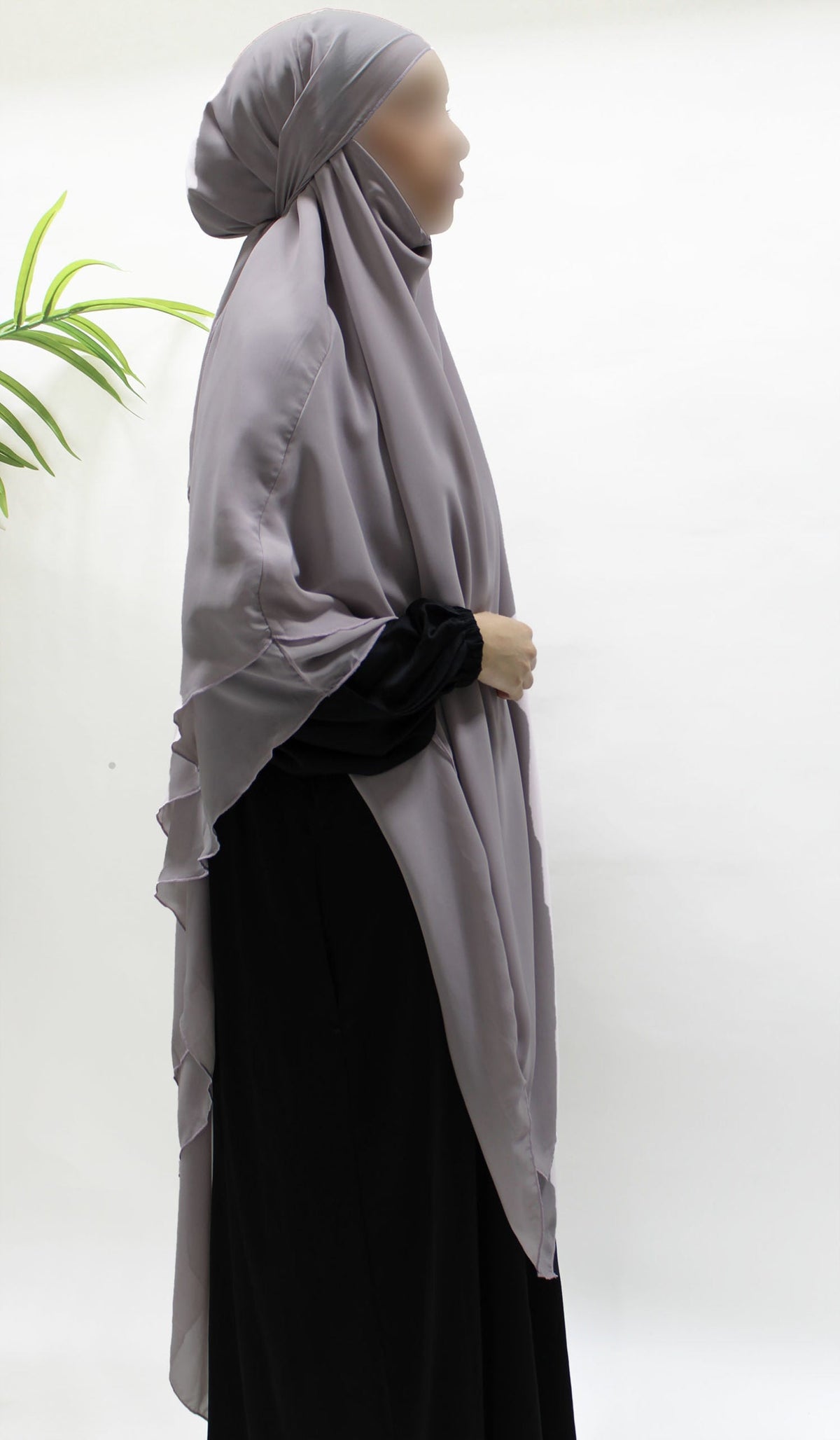
A softly draped chiffon khimar is one option to compare with the neckline and detail of an occasion outfit.
Read the invitation before planning the scarf
Find out what kind of event is being held, where it takes place and whether the host has provided dress guidance. A seated family meal, an outdoor reception and a professional awards evening can all be called functions, but they ask different things of an outfit.
Where a colour request or level of formality is unclear, ask the host rather than guessing from another event’s photographs. There is no universal rule that one shade or fabric is appropriate at every wedding. Your role in the occasion matters too.
Think through the journey and the time before the main event. Will you wear the scarf under a coat for a long period? Will you remove an outer layer on arrival? Will you be carrying flowers, helping with food or spending much of the time seated?
Write down the two or three practical points that could affect your choice. This is not an invitation to overplan every movement. It simply keeps an appealing scarf photograph from obscuring a requirement you already know.
Let the neckline help choose the arrangement
Put the dress or top on fully fastened, with the inner layers you will use. Look at the space around the neck and shoulders. A high collar leaves a different area for folds from a wide opening; a beaded shoulder gives a scarf somewhere different to catch.
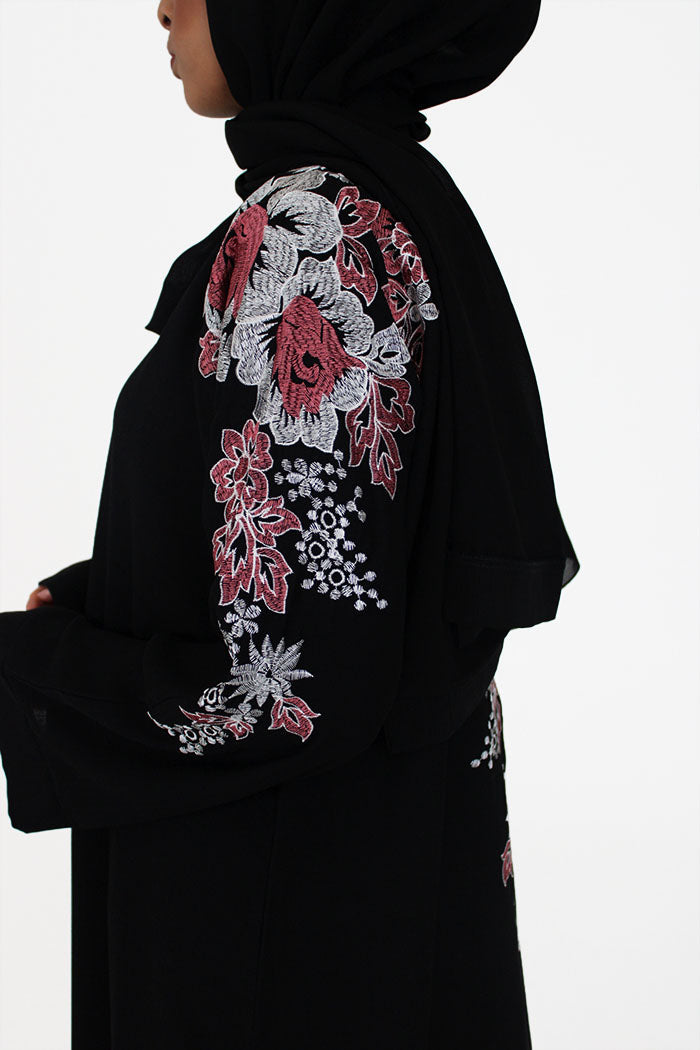
Decide which details you would like to remain visible without changing the coverage you want. If a long front drape covers the neckline embroidery completely, you can either enjoy that quieter result or choose a garment with decoration elsewhere. You do not need to move the scarf into an uncomfortable position to justify the dress.
A plain upper section gives you more freedom to make the scarf the main feature. A richly worked bodice may look clearer with a quieter scarf. Neither requires every accessory to match; you are deciding where to place the strongest detail.
Check the sides and back of the neckline. A drape that looks complete from the front may move away when you turn your head. Add the appropriate base layer or choose another arrangement where necessary, rather than expecting a loose end to stay in one position all evening.
Choose the actual scarf, not a formal-sounding fabric name
Take out two or three scarves and arrange them beside the outfit. Compare their surfaces, opacity, dimensions and edge finishes. A scarf you wear regularly may provide a better starting point than an unfamiliar material bought solely because it is described as occasion wear.
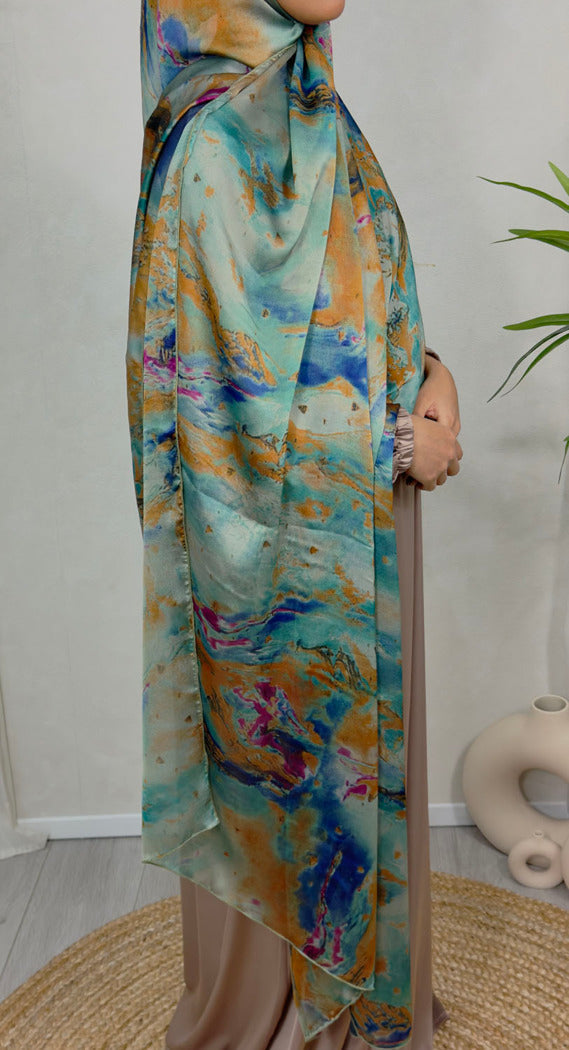
Silk describes a fibre, while satin refers to a weave and chiffon to a lightweight fabric construction. Read the fibre information for the individual scarf rather than treating those words as interchangeable measures of quality. Our hijab fabric guide explains the distinctions in more detail.
For this outfit, the useful questions are practical. Does the scarf form the fold you want? Does its hem become bulky when turned in? Does it need an underlayer for coverage? Can you arrange it without pulling it tighter than feels comfortable?
Try the complete scarf arrangement before deciding that a fabric is too shiny or too plain. A small reflective edge can look quite different from a large expanse of the same material. The amount on show is part of the styling decision.
Check care information early too. A scarf that needs particular attention should not become a last-minute experiment with an unfamiliar iron or cleaning product. Give yourself time to prepare the item by a method its label allows.
Keep colour decisions small enough to compare
Begin with the dress and scarf only. Then add the bag and shoes. Comparing every piece simultaneously can make it difficult to identify why an outfit feels unsettled.
A scarf close to the dress colour creates one kind of relationship; a clear contrast creates another. Neither is automatically more elegant. Where two shades are almost the same, decide whether you like that difference rather than trying to force them into an exact match.
For a printed dress, compare a scarf taken from a small colour in the design. You do not need to repeat its largest or brightest motif. A quieter colour can connect the pieces while leaving the print readable.
For pale outfits, look at white, cream and ivory together in the same light. Their names do not establish identical shades. A physical comparison is more useful than matching two photographs taken in different conditions.
Metallic accessories can be introduced afterwards. A bag clasp or dress fastening may already provide a small reflective detail. You can repeat it, mix finishes deliberately or leave additional jewellery out. There is no obligation to complete a set.
Three scarf arrangements worth trying
A straightforward wrap with a clean front
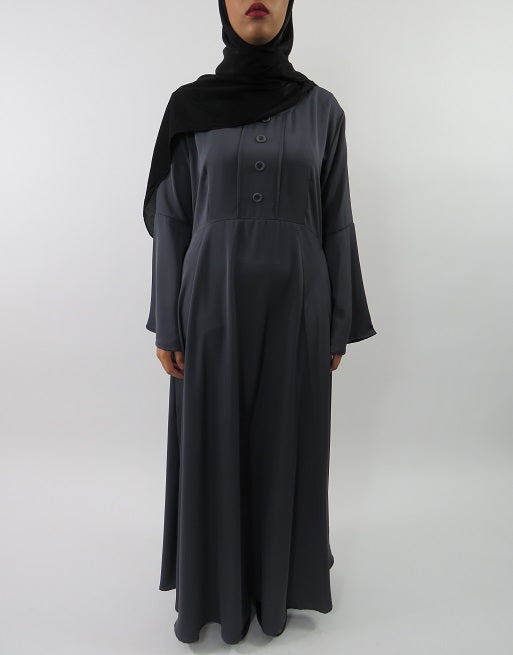
This is a good starting point when the dress, jacket or jewellery already has detail. Use a scarf and foundation you know, establish a comfortable face opening and arrange the required neck and chest coverage before concentrating on symmetry.
Keep the area beside the cheeks relatively uncomplicated. Direct spare fabric towards the shoulder or front in a way that suits the neckline, using the scarf’s dimensions rather than repeated tight wrapping to hold it in place.
Check both sides while speaking and turning. If one fold keeps rising towards your eye or catches the frame of your glasses, adjust that fold rather than pulling the entire arrangement tighter. Use a fastening appropriate to the fabric where needed.
The result can be simple without looking unfinished. A clear colour relationship and a well-settled drape often provide enough interest, especially when the dress has embroidery or a strong shape.
A soft drape across one shoulder
Begin with a secure base arrangement that provides your chosen coverage. Leave sufficient fabric on the side you intend to drape, then bring it across the front and towards the opposite shoulder without pulling at the face opening.
Assess the width of that drape, not only its length. A narrow strip may create a line you like but fail to do the coverage job you expected. A broader arrangement may be more useful, provided it remains comfortable at the neck.
Choose a place for the loose end where it will not repeatedly enter your plate, catch beneath a bag strap or drag against decoration. You may prefer a shorter visible end rather than an extra-long tail that needs constant management.
Put the coat on and take it off. A shoulder drape can shift at that transition even if it stayed settled in the mirror. Practise the ordinary movement once or twice and keep the version you can restore easily.
A broad chest drape with a quiet face opening
This can work when you want more fabric across the upper body without adding many folds near the face. Choose a scarf with enough usable width and length for both parts of the arrangement. A generous label alone does not establish those dimensions.
Set the upper section first, then distribute the available cloth across the chest and shoulders. Let it fall rather than gathering everything beneath the chin. The neckline underneath still needs to work with that arrangement when you lean forward.
Check the back view. A front-heavy drape may leave less material behind than you expected, or a long rear section may become caught under the coat. Decide how you want the fabric distributed and adjust the scarf from the start rather than continually pulling an edge.
If the scarf does not have enough material to do both jobs comfortably, choose another size or construction. Adding a second full scarf is an option only if you genuinely want and can comfortably wear the extra layers.
Be clear about what a style name leaves uncovered
Terms such as turban-style, cap-style and wrapped hijab are used for different arrangements. Do not assume that a named style automatically provides the neck, chest or hair coverage you follow. Look at the actual result from every relevant angle.
An arrangement that leaves the neck exposed may need a suitable additional garment for your preferences. Plan that layer before styling, rather than trying to fill the gap with loose fabric after the scarf is finished.
Likewise, an instant or pre-shaped covering can simplify some steps without resolving every fit question. Its opening, seams and drape need to work on you. A garment should not be treated as universally comfortable because it involves fewer folds.
Borrow a useful idea from an inspiration image without treating the entire look as a specification. You might like the colour, the amount of fabric at the shoulder or the way the scarf sits beside a jacket. Keep only the element that works with your own outfit and coverage.
For a wedding reception, plan beyond the photographs
Start with the host’s guidance and the dress you will wear. Try the scarf with the bodice, sleeves and any outer layer before choosing jewellery. An embroidered dress may need less detail near the face than a plain one.
Rehearse the seated part of the evening. Sit at a table, turn to either side and reach as you would during a meal. Notice where the scarf ends fall and whether a decorative edge meets your sleeve or bracelet.
If a brooch or headpiece is part of the outfit, inspect its attachment and weight. Keep it clear of places where it presses against glasses or pulls a delicate scarf edge. A small accessory can still be uncomfortable if all its weight rests at one point.
Make room for the journey. A coat collar may crowd a layered neck arrangement, while a seat belt can affect a long drape. Do not plan to compromise a properly used safety restraint for the sake of the outfit; choose an arrangement that works around it.
For bridal styling, the dress and veil introduce additional questions. The guide to choosing a hijab with a wedding dress covers that separate planning process. A guest outfit need not reproduce the structure of a bridal arrangement.
For a family gathering, let the day decide the details
A family event may involve helping in the kitchen, carrying belongings or sitting on different kinds of chairs. Choose a scarf arrangement that supports what you expect to do rather than one that only works while standing still.
A familiar wrap in a favourite colour can feel occasion-ready without a complicated new technique. Keep one point of interest, such as a print, a gentle sheen or a small accessory, and let the other pieces remain useful.
If children will be nearby, consider small detachable accessories and long dangling pieces. Keep pins and other small parts safely contained when they are not being worn, and avoid an arrangement that a child can easily grab while you are holding them.
There is no requirement to make a more elaborate effort than somebody else. A comfortable outfit lets you participate in the gathering. The clothing does not have to become the main subject of the day.
For a professional function, try the jacket and scarf together
Put on the jacket or blazer with the top you will actually wear. Arrange the scarf around its collar and lapels, then fasten the jacket where appropriate. A wrap that works over a plain dress may feel crowded beside a structured collar.
Look at the side view and the shoulder area. A scarf end trapped beneath one lapel can make the jacket sit unevenly. Place the ends deliberately or choose a different drape rather than pulling the scarf tight to reduce its volume.
Check a lanyard, name badge or other item you may need at the event. It should be readable and accessible without repeatedly disturbing the scarf. Do not pin through several independent layers merely to make them stay aligned.
For a video-linked event, test the complete outfit with the camera at its usual position. Check your appearance in the actual framing and light, but choose a full outfit that remains comfortable when you stand. A camera view does not replace ordinary coverage and movement checks.
Follow any relevant workplace or venue requirements. Professional does not mean that every scarf must be neutral, but your clothing still needs to suit the setting and any equipment involved.
Give yourself one full trial, not endless new versions
Choose the most promising arrangement and wear it with the complete outfit for a short, realistic trial. Speak, sit, walk, put on the coat and carry the bag. Take the glasses off and put them back on if that is something you commonly do.
Notice the first adjustment you feel compelled to make. Is a fold pressing at the ear? Is the scarf sliding over the neckline? Is the bag pulling the shoulder drape? Identify one issue and change one part before trying again.
Do not keep restarting with a more elaborate wrap because the first one seems too simple. Simplicity can be the result of a successful decision. The useful comparison is whether the arrangement supports the whole outfit and stays comfortable.
When it works, take reference photographs from the front, sides and back. Note the exact scarf and underlayer. A similar colour in a different fabric may behave differently, so the names of the actual pieces are useful.
Keep the reference for yourself or the person helping you dress. Share photographs only in a way you are comfortable with; you do not need to post a private fitting publicly to get the benefit of a record.
Discuss coverage before working with a stylist
Explain what you want covered and which arrangements you do not want to use before the appointment. Bring the dress, relevant underlayers, scarf and any proposed accessory where practical. A shared understanding of the foundation is more useful than asking for something vaguely glamorous.
Tell the stylist about glasses, the event schedule and whether you will remove a veil or accessory later. Ask how the arrangement will be maintained and what can be adjusted without dismantling it. You should understand how to take it off comfortably as well as how it goes on.
Request a trial with the actual items where possible. A practice session using another scarf can demonstrate an idea, but it cannot establish that your chosen material has the same grip, dimensions or edge finish.
Do not accept pulling, pressure or an exposed fastening as the price of a polished result. Explain the problem promptly and ask for a change. A style should be built around your comfort and preferences, not around completing a particular photograph.
Keep accessories out of each other’s way
Choose jewellery according to what remains visible. A necklace hidden beneath a broad drape may add an uncomfortable lump without contributing much to the outfit. A bracelet may be more noticeable, provided it does not catch the sleeve.
For a brooch, check the reverse surface and fastening before bringing it near the scarf. The cloth must be suitable for the piece’s weight and attachment. A decorative pin should not be asked to hold a large, unstable arrangement together by itself.
Inspect bag chains and textured straps at the shoulder. Their relationship with the scarf may matter more than an exact colour match. A smooth, practical bag can be a better companion to a decorated outfit than another embellished surface.
Make-up is optional. Where you use it, consider transfer onto the scarf during dressing and removal. Follow the products’ instructions, allow the time you normally need and avoid experimenting with an unfamiliar routine just because photographs are planned.
Prepare for a change in temperature
Check the conditions relevant to the date and venue rather than choosing fabric from the season alone. An outdoor wait, a warm reception room and a cool journey home can each change the experience of the same scarf arrangement.
Consider how many layers occupy the neck and head area. A light scarf can still feel substantial when combined with an undercap, several wraps and a high collar. Removing unnecessary folds may be more helpful than buying another fabric with a cooling-sounding description.
For a windy setting, keep loose ends manageable without tightening the face opening. Try a shorter visible tail or a more contained drape where that suits your coverage. Do not rely on a heavy accessory to anchor fabric that keeps pulling.
For colder conditions, test the scarf with the coat you will use. A warm garment that presses the folds against your throat may need another arrangement. Choose the full combination for the conditions rather than expecting one named scarf material to solve every temperature change.
Make prayer and changing arrangements practical
If prayer is part of the event day, think through the clothing arrangement you will use. You may keep the same outfit, add an appropriate covering or change into a separate garment. Check the practical fit in advance according to the coverage requirements you follow.
Do not assume a decorative occasion wrap will remain suitable through every movement simply because it feels secure while seated. Try the relevant movements in a private, suitable space and assess the full outfit, not only the scarf.
Check the venue’s arrangements directly where you need information about facilities or privacy. Keep a separate covering accessible if that is your plan, rather than packing it beneath everything else in a large bag.
For religious questions, seek trusted qualified guidance. Styling advice can help you examine clothing and organise the day, but it should not claim that a particular material or arrangement guarantees the validity of worship.
Pack only the adjustments you know how to use
A useful small kit might contain the spare fastening appropriate to your arrangement, a clean backup scarf where practical and personal essentials you normally carry. Keep sharp pieces securely enclosed rather than loose among tissues or cosmetics.
The backup scarf should be one you have tried. A random pale scarf may not have the size or opacity needed to replace the original. Keep a note of a simple alternative wrap that works without every decorative accessory.
Do not make untested adhesives, sprays or stain treatments part of the emergency plan. Follow the garment and product instructions. An uncertain cosmetic fix can create more difficulty than removing an accessory or changing into a familiar scarf.
Choose someone who can help with the known arrangement if you expect to need assistance. Show them the relevant fastening during the trial. A clear explanation is better than asking them to reproduce the entire look from a distant portrait.
Common problems and the smallest useful change
The scarf looks too bulky with the dress: compare a simpler fold at the neckline while keeping the coverage you need. Check the underlayer and collar before replacing the entire scarf.
The colours seem close but not quite right: try a more deliberate contrast from your wardrobe. An almost-matching pair is not necessarily better than two clearly different, compatible shades.
The style slips when you turn: check whether the face opening, underlayer or a long heavy drape is moving. Adjust the actual cause rather than adding more tension to every section.
The accessory hides beneath the scarf: move it to another suitable garment area or leave it out. Do not reduce your preferred coverage just to display a piece of jewellery.
You feel unfamiliar in the final look: return to one part of your ordinary style, such as a known wrap or favourite scarf colour. An occasion outfit can feel special without making you unrecognisable to yourself.
Turn the outfit plan into a short note
A few precise details can prevent the trial from becoming a memory you cannot reproduce. Record the scarf, underlayer, dress, shoes and bag, then write how the scarf ends were arranged. “Longer end over the left shoulder, clear of the bag strap” is more useful than “soft elegant drape”.
Note any item you deliberately left out. Perhaps the necklace made a ridge beneath the scarf, or the second brooch added weight without being visible. This helps you resist reintroducing the same problem while getting dressed for the event.
For a hypothetical dinner after work, the plan might be to keep a familiar wrap and change only the bag and outer jacket. Check those two versions during the same fitting. You may find that the evening jacket’s collar needs a slightly different placement of the scarf end, but no new wrapping method.
For a family celebration with an outdoor arrival and an indoor meal, the note might identify where the scarf sits beneath the coat and how it falls once the coat is removed. That small transition is more useful to practise than repeatedly photographing the finished indoor outfit.
Keep the plan flexible. If a scarf becomes marked or a decorative accessory feels uncomfortable on the day, use the simple backup you have tested. An outfit is not ruined because one optional detail changes. The important parts are the fit, coverage and comfort you established beforehand.
After the event, add one observation about actual wear. Did the shoulder drape remain manageable at the table? Was the bag awkward beside the scarf? Those answers make the next occasion easier to prepare for without needing to buy a completely new combination.
Leave room for personal style without a performance
You may enjoy a family textile, a colour with personal meaning or a style inspired by somebody whose work you admire. Bring that detail into an outfit that fits your own needs rather than trying to reproduce somebody else’s appearance exactly.
You do not have to explain or defend every clothing choice at a function. Nor does your scarf need to represent an entire community. Other women may use different styles, coverage arrangements or accessories; there is no need to rank them by how dressed-up they appear.
Borrow the idea that genuinely appeals to you, settle the practical details and keep the arrangement you can comfortably wear. The evening should not become a series of checks to see whether your scarf still looks like the first photograph.
Before putting it away afterwards, inspect the scarf and remove detachable accessories. Follow its care instructions and save the outfit notes that worked. The next invitation becomes easier when you already know which combinations feel good beyond the mirror.