How Can You Style Black Unlined Crew Neck Abayas for a Classic, Elegant Look?
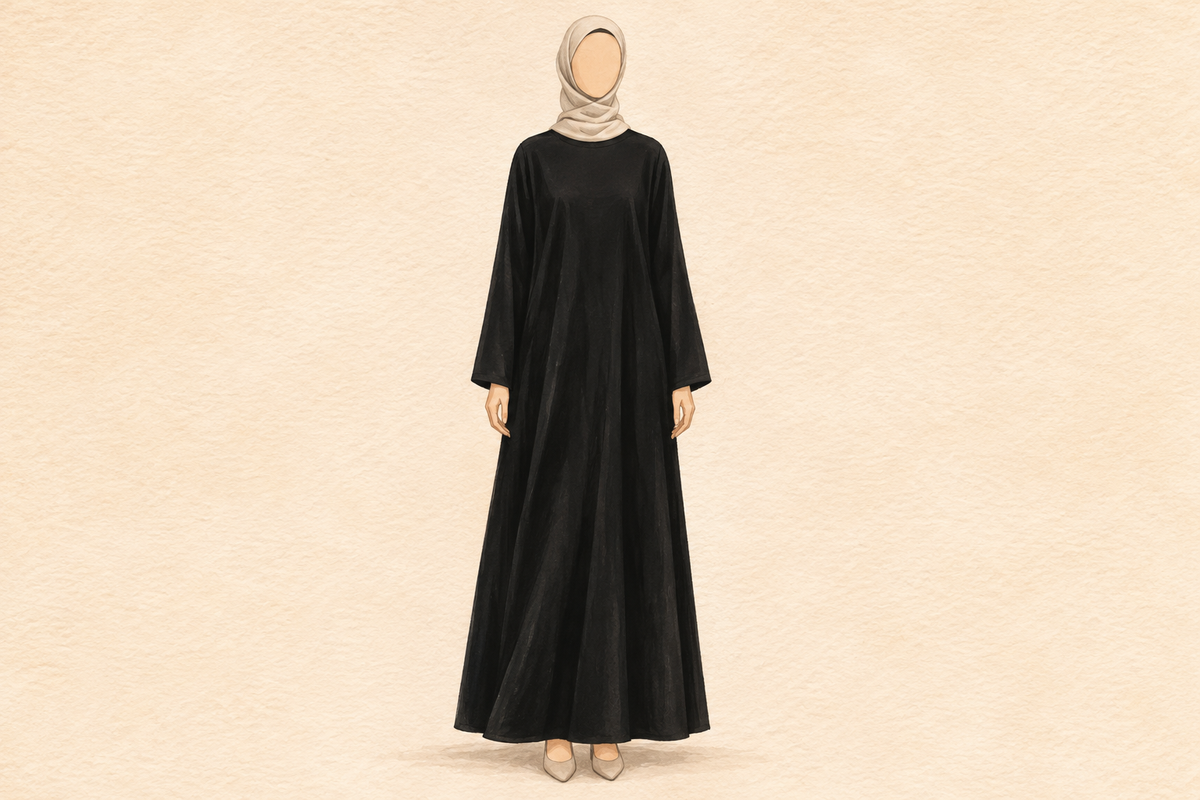
A black unlined crew neck abaya gives you three useful starting points for an outfit: a dark base, a simple rounded neckline and the freedom to choose your own underlayers. The elegant result comes from making those details work together. A scarf should sit comfortably beside the neck, the fabric should fall over the clothes beneath it, and the shoes should suit the length you will actually wear.
For an everyday version, try a familiar neutral hijab, plain flat shoes and a practical bag. For dinner, keep the same abaya and change the texture or colour of one accessory. In cooler weather, add warmth through a base layer and outerwear that fit comfortably around the crew neck and sleeves. The garment can support several outfits, provided you check the complete combination each time the layers change.
This guide explores black unlined crew neck abayas as a specific wardrobe choice. It covers the neckline, the inside finish, suitable base layers, detailed outfit ideas and the difference between a simple garment and an outfit that still needs work. Start with the abaya you own or are considering, then use the relevant sections to build a version you can wear comfortably.
What do black, unlined and crew neck tell you?
Black describes the colour. It does not establish the fabric's thickness, opacity, finish or feel. Two black abayas can look quite different beside the same scarf because one has a visible sheen and the other has a quieter surface. Look at the garment in ordinary light, paying attention to the actual cloth rather than expecting the colour name to make every styling decision easy.
Unlined means the garment does not have a separate full lining beneath the main fabric. There may still be construction details around the neckline, fastenings or pockets. Inspect those areas so you understand what will touch your underclothes or skin. An unlined description does not tell you whether the fabric will provide the coverage you want by itself.
A crew neck gives you a rounded neckline close to the base of the neck. The precise width and depth vary between garments. Some designs have an opening or fastening to help with dressing; others depend on the construction and fabric of the neck opening. Check the particular abaya rather than assuming that every rounded neckline goes on in the same way.
Together, these features suggest a relatively uncomplicated starting shape, but the rest of the cut still matters. Look at the sleeves, the width through the body, the hem and any fastening. A crew neck can belong to a straight, flared or more generous abaya, and each creates a different relationship with outerwear and accessories.
The broader guide to choosing a plain black abaya is useful when comparing general fabric and finish. With an unlined crew neck design, give particular attention to the inside of the garment and the space where the abaya, underlayer and hijab meet.
Why is the inside worth inspecting?
Turn the garment enough to see its internal finish without stretching it. Look at the neckline, shoulder seams, sleeve seams and the area around any opening. You are checking whether these parts look complete and feel comfortable in the way you intend to wear the abaya. A pleasing outer silhouette is only part of the experience.
Because there is no full lining between the main cloth and your base outfit, try that contact directly. Put the abaya over a top and lower garment you actually use. Notice whether it settles freely or repeatedly catches at a particular seam, pocket or textured area. If a smooth base gives you a better result, that is useful information for assembling the outfit.
Check any exposed edge around the crew neck. It should sit comfortably when you turn your head and look down. If a neck facing turns outwards or a rough area bothers you, identify that specific issue rather than trying to cover it immediately with a scarf. A scarf can complete your preferred coverage, but it should not have to disguise an uncomfortable finish.
Look inside the sleeves too. An inner top with a thick cuff may catch differently from one with a plain narrow finish. Try taking the abaya off as well as putting it on. An outfit that is easy to wear but awkward to remove over the clothes beneath it may need a different base or a different opening.
If you are buying online, ask for a clear inside photograph where an unresolved detail matters. A picture of the neck fastening or seam finish is more informative than another front view in a new pose. Keep the question specific to the garment you are considering.
Would a lined version suit the same wardrobe need?
Compare the complete wearing arrangement. With an unlined abaya, you choose the layers beneath the main fabric. A lined version has an additional attached layer as part of its construction. Either may suit your needs, but the presence of lining changes what you are buying and what you should inspect.
Find out how much of a lined garment is covered by that lining. The body and sleeves may have different construction, so the single word does not answer every coverage question. Look at the neckline too: check how the lining meets the opening and whether that finish feels comfortable when the garment is worn.
If you like an unlined abaya because you can vary the base, try two bases before treating that flexibility as useful. A light top and trousers for one day and a warmer layer for another may both work well. If the garment only sits comfortably over one particular inner dress, decide whether that combination is still convenient enough for your routine.
A lined option may appeal if you prefer some layers to remain connected when you dress. Check that the layers move together comfortably, especially through the sleeves and when you sit. You should still assess the finished garment in light and movement rather than assuming the additional fabric answers every fit question.
Compare the neck openings on both options. The unlined crew neck might sit comfortably over your existing high-neck base, while a different lined garment might have another neckline width or fastening. Keep those differences separate in your decision. A preference for one particular neck finish does not establish that all lined or all unlined abayas will behave the same way.
Care is another practical distinction. A lined abaya needs a treatment suitable for its combined construction. With an unlined abaya and separate inner dress, you can follow each garment's own instructions independently. Think about the actual labels and your routine, including where you will dry and store the pieces.
When both options meet your needs, choose the one whose complete outfit you prefer. You may enjoy the drape of the unlined version, the feel of another construction or the convenience of a base layer you already own. Choose the construction that works best with your preferred base layers, dressing routine and finished outfit.
Fit the crew neck before arranging the hijab
Begin with the abaya on and the neckline visible so you can see how it sits. Let the shoulders settle, then look straight ahead, turn gently and look down. The neck should feel comfortable through these ordinary movements. If it presses or pulls, check whether the garment is caught at the back before deciding that the opening itself is the issue.
Use any intended fastening when putting the garment on or taking it off. Do not stretch a small opening to avoid undoing a zip, button or other closure. If the dressing method is unclear, ask for an explanation. That is especially useful when a photograph shows a neat crew neck but leaves the back of the garment unseen.
Try the underlayer neckline you expect to use. A plain crew neck top may sit discreetly beneath the abaya; a higher neck introduces another edge and more fabric. Decide whether you want that inner edge visible, covered by the scarf or absent from the final outfit. There is no need to buy a new base if the combination you already have is comfortable and gives the coverage you want.
Now add the hijab in a familiar arrangement. Notice whether tucking fabric inside the neckline creates pressure or an uneven ridge. If it does, try letting that part of the scarf sit over the abaya instead. Keep the coverage you prefer while changing the route of the fabric. A comfortable fold is more useful than a perfectly hidden edge that needs constant adjustment.
If you wear a necklace, decide its position after the scarf is arranged. A short necklace may sit close to the crew neck and be partly concealed; a longer one may lie over a moving fold. Try it with the complete outfit and remove it if it repeatedly catches or disappears in a way you dislike. A simple neckline does not oblige you to fill the space with jewellery.
Finally, try your coat or jacket collar. A high inner neck, tucked scarf and substantial outer collar can crowd the same area. Change one layer at a time until you can identify the comfortable combination. Keep the scarf comfortably arranged while giving the neckline and outer collar enough room. Our guide to choosing a hijab scarf helps you compare fabric, dimensions and grip when the neckline needs a different arrangement.
Choose underlayers from the coverage you need
Put on the abaya over the clothes you intend to wear and check it in daylight as well as indoor light. Look at the shoulders, upper arms and lap, particularly when the fabric sits closer during movement. A black garment may still show a contrasting inner colour or the outline of a raised seam. Make the decision from the actual combination.
If the abaya gives you the coverage and comfort you want over your usual clothes, keep that arrangement simple. An unlined garment does not automatically require an additional full-length slip. Equally, if you prefer a separate inner layer for coverage or comfort, include it from the beginning rather than treating it as a later correction.
A smooth top and trousers
A plain top with comfortable trousers can be a useful everyday base. Choose a waistband and pockets that sit well beneath the abaya, then check the result while seated. A large side pocket or thick belt may create a shape that you notice through the outer fabric. If it bothers you, compare a simpler lower garment before changing the abaya.
Pay attention to the top's hem too. A bulky fold at the waist can interrupt the fall even when the outer garment has enough room. Smooth the base into its intended position and move normally. The outfit should not depend on you maintaining an unusual posture to keep the layers flat.
A separate inner dress
An inner dress provides a continuous layer underneath, which you may prefer when the outer fabric is finer or when separates catch at the waist. Check the inner dress's own neckline, sleeves and length. A sleeveless slip answers a different coverage question from a long-sleeved dress, and its name alone does not tell you which one you need.
Try sitting and standing with both dresses on. See whether the inner hem stays where you want it and whether the outer one settles afterwards. If one layer repeatedly rides up or gathers around the knees, compare the cut or fabric combination. Adding length to both garments will not necessarily solve that interaction.
A warmer base for a cooler day
For cooler conditions, try the additional layer you would normally wear, then reassess the shoulders and sleeves. A thicker top may be comfortable through the body but crowded beneath the crew neck. A plainer neck finish or a less bulky sleeve may give you a better result without changing the whole outfit.
When the weather changes, repeat the fitting with the new base. The remembered fit from a thin summer top does not explain how the same abaya will sit over a jumper. Keep the version that allows the movement you need, including the coat you intend to add.
How do you assess the fabric without relying on its name?
Crepe, chiffon and jersey appear in many abaya descriptions, but a name is only the start of the comparison. Look for the actual fibre composition, lining information and care instructions where these matter to your choice. Check the garment's weight and feel in person when possible, and use photographs to understand the cut rather than to promise yourself a particular level of comfort.
If you are considering a fine or visibly sheer fabric, decide what the complete outfit requires underneath. A flowing appearance can be beautiful over an appropriate base, but it does not establish enough coverage as a single layer. Include the cost, fit and feel of the required base in your decision.
With a stretchy fabric, judge the garment at rest rather than stretching it to make a close fit work. You may want flexibility for dressing and movement while still preferring room around the body. Check the crew neck especially: an opening that expands during dressing should settle comfortably afterwards.
With a more structured fabric, look at the areas that fold when you sit. If the garment creates a ridge across your lap or upper arms that you find uncomfortable, another cut or fabric may suit you better. The useful observation is specific to that abaya; there is no need to dismiss an entire fabric category.
For a dressier finish, compare surfaces alongside the hijab and bag you intend to wear. A visible sheen in the abaya may already provide the detail you want. A quieter black fabric may let a textured scarf or small metallic accessory stand out more clearly. Choose the relationship you enjoy rather than assuming shine always means a more expensive-looking outfit.
Three ways to arrange a hijab beside the rounded neckline
A familiar front drape
Begin with your usual comfortable hijab style and let the front section fall over the crew neck. This can be an easy option when you want the neckline covered and prefer not to tuck much fabric inside the abaya. Arrange the length for your chosen chest coverage, then turn your head and sit to check that it remains comfortable.
A plain taupe, grey or cream scarf creates a clear relationship with black. If the scarf's front edge forms a strong horizontal line that you dislike, try a softer diagonal fall or another distribution of its ends. Keep your preferred coverage while adjusting the visual arrangement.
A more even arrangement over the shoulders
If you like a balanced appearance, distribute the scarf so the fabric sits more evenly at the front and shoulders. Look at how its lower edge meets the body of the abaya. With a plain black garment, even small changes in scarf placement are visible, so start with a shape you can comfortably repeat.
Check the side view as well as the front. A thick fold behind the neck may become uncomfortable beneath a coat even when the front looks neat. Rearrange the fabric before adding another fastening. The scarf should sit with the crew neck rather than push it down or pull it backwards.
A printed scarf as the main detail
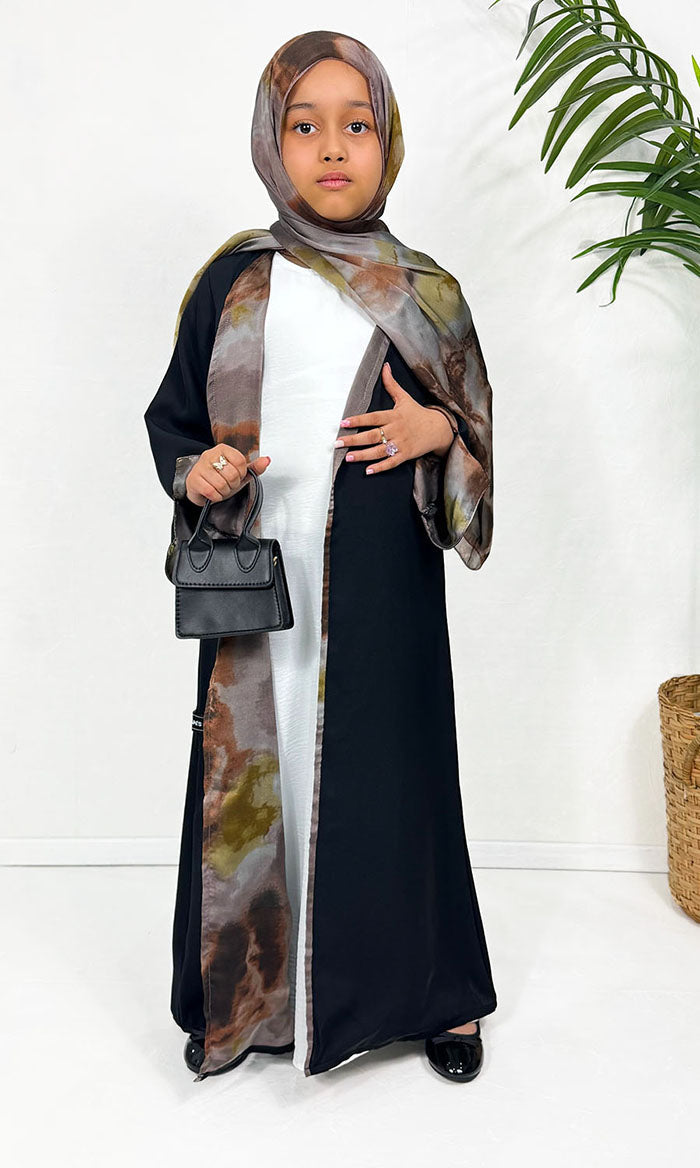
A printed hijab can give a plain black abaya a distinct character. Choose a print containing a colour you already enjoy in your accessories, then keep the bag and shoes relatively quiet for the first trial. A small repeat of one colour is enough to connect the pieces; you do not need to reproduce the whole pattern elsewhere.
Arrange the print in your usual style and look at the area closest to the face. Large motifs may appear in fragments within the folds, while smaller patterns may create a more continuous surface. Decide which effect you prefer on the actual outfit. The rounded neckline supplies a simple background for either approach.
Everyday outfit: black, taupe and familiar flats
For errands or a relaxed visit, try the abaya with a taupe hijab, black flat shoes and a medium-sized everyday bag. Use the base clothes that passed your coverage and movement checks. The scarf becomes the main lighter area, while the black shoes keep the lower half uncomplicated.
Compare the taupe with the bag before deciding whether they need to match. A chocolate bag can create a deeper warm accent; a black bag can keep the palette simpler. Two nearly identical taupes may be more difficult to judge than colours that are clearly different. Lay them beside the abaya and keep the combination that looks deliberate to you.
Carry the bag with your ordinary belongings inside. Its strap may press the unlined fabric against a waistband or pocket beneath it. If the resulting shape bothers you, change the carrying position or choose a different base. You can keep a useful bag while adjusting the part of the outfit that actually causes the problem.
Walk in the chosen flats before finishing the outfit. The abaya should clear your steps in the way you prefer, without repeated lifting at the front. If a longer garment was previously fitted with heels, check whether these shoes still work. A practical everyday shoe should not become an afterthought beneath an attractive hem.
For an outing that includes removing outerwear, check the scarf and crew neck after taking the coat off. A collar can pull a tucked section out of position. A small adjustment may be perfectly manageable; if the same combination needs extensive rearranging each time, a simpler scarf route can make this daily version easier.
Work outfit: a defined palette and a comfortable neckline
For a workplace where an abaya suits the dress expectations, consider a charcoal or soft grey hijab with the black garment, plain closed shoes and a structured bag. This gives you a restrained palette while keeping a visible difference between the scarf and body. Choose the degree of formality around the work you actually do.
Sit at a desk during the fitting. Type, write and reach for something nearby. The crew neck should remain comfortable as you lean forward, and the sleeves should allow your hands to work without continual rearranging. If the scarf is tucked in, check whether that tuck stays comfortable for longer than a standing mirror moment.
A blazer can be considered if it has room for the abaya underneath. Try it over the complete outfit rather than assuming that its usual size will accommodate a different sleeve or shoulder shape. Look at the neckline once the lapels are in place. A crowded mixture of lapels, high inner collar and thick scarf may need one simpler component.
If a blazer interrupts the drape in a way you dislike, compare another outer layer you already own. A longer jacket or coat may give a different relationship with the abaya's hem and width. Keep the bag beside the outfit while judging the result; a large work bag contributes its own structure.
Use a work bag with enough capacity for what you need. A laptop or folder can change how a shoulder strap rests on the garment. Try the loaded version and check whether it pulls the neck or gathers the cloth at one side. The outfit is ready for work when it remains comfortable through the ordinary tasks of the day.
Dinner outfit: let texture do one clear job
For dinner, keep the black abaya and choose one textured detail. That might be a scarf with a subtle surface, an embellished bag or a shoe with an interesting finish. Start with one, then add another only if you enjoy the combined effect. The plain body and rounded neckline give each addition a clear place.
A burgundy scarf with a smooth black bag is one option. It introduces a richer colour near the face while leaving the rest of the outfit restrained. A grey or cream scarf with a small metallic clasp on the bag is another. Try both with the same shoes so you can judge the effect of the scarf itself.
If you like a lace or embellished shawl, check how it sits over the crew neck and your chosen head covering. Make sure its edges do not catch at the neckline or drag against the abaya as you move. A shawl can provide decorative interest without needing to be tightly pinned through the outer garment.
Practise sitting at a table in the full outfit. Notice the scarf ends, sleeve openings and any jewellery near the wrists. Keep the arrangement comfortable for eating and talking. An accessory that repeatedly meets the table or catches a sleeve may be easier to replace than to supervise throughout the meal.
Choose the shoes around the entire evening, including the journey. If you prefer heels, check the hem with that pair. If you expect to change to flats, try those too. The same abaya can support different levels of dressiness without requiring footwear you find awkward to wear.
Occasion outfit: make one decorative piece the focus
For a family celebration or formal invitation, choose the detail you want to enjoy most. An embellished scarf, a decorative shawl or a striking bag can each become the focus against a plain black abaya. The crew neck gives you a simple upper outline, so assess the arrangement around the face and shoulders before adding smaller accessories.
If you choose an embellished hijab, begin with a plain bag and shoes. Arrange the decorated area where it is comfortable and where you would like it visible. Check whether a heavily worked edge lies against the neck or catches the abaya when you turn. Adjust the scarf's route if necessary, preserving the coverage you want.
If a beaded clutch is the main detail, keep the hijab relatively uncomplicated. Carry the clutch as you expect to during the event and notice where it meets the unlined fabric. Rough edges or an exposed clasp may require more care around the garment. Choose a bag you can use comfortably, with room for the belongings you actually need.
A brooch can be considered as an ornament, but identify a suitable place and fastening rather than piercing the crew neck simply because it is visible. A decorative pin should not carry the weight of a scarf or compensate for a neckline that sits badly. Try the arrangement gently and remove it if it pulls the cloth.
For a more restrained version, keep the abaya and hijab black and introduce interest through a small metallic detail on the bag or shoes. Compare the surfaces together in the event lighting where practical. Different textures can make an all-black outfit feel considered without adding a new colour.
Bring the invitation's setting into the decision. An outdoor celebration, a seated meal and an indoor reception create different needs for outerwear, shoes and carrying. Prepare the complete outfit for those circumstances, including what happens when you remove a coat or change shoes. That preparation lets the decorative choice remain enjoyable.
How can an all-black outfit still feel considered?
An all-black version puts more attention on the different surfaces and shapes. Try the unlined crew neck abaya with a black hijab, then look at the fabrics together in daylight. Decide whether you prefer a close visual match or a visible texture difference. Both can give the outfit a clear direction.
Start with the scarf because it sits nearest the neckline. A softly textured black scarf creates a different impression from a smoother one. Arrange each in the same familiar style and compare the result. Keeping the drape unchanged makes it easier to see whether the surface is adding what you want.
Check the shades of black without expecting every item to be identical. A visibly faded accessory may look different from a deep black garment, while a smooth surface can reflect light differently from a matte one. Bring the pieces into the same light and consider the overall effect before replacing anything.
The bag gives you another way to change the outfit. A structured bag introduces a defined outline beside a flowing abaya; a softer bag continues a more relaxed appearance. Choose a size that works for your belongings, then look at how the handle or strap sits beside the scarf and shoulders.
Shoes complete the lower line. Plain black flats can keep the outfit quiet, while a restrained buckle or different surface adds a small point of interest. You can make that choice without adding a contrasting colour. Check the hem in movement so the chosen detail is part of a wearable outfit.
If the result still feels too uniform, try one small change before introducing several accessories. A metal clasp, a ring you already wear or a different scarf fold may be enough. If you want more contrast, return to a coloured scarf or bag rather than treating an all-black outfit as something you must make work at any cost.
For an occasion, decide which black surface will lead. A textured shawl can be the detail over a quieter abaya, or a smooth scarf can leave the garment's drape more visible. Keeping that choice clear helps the outfit feel intentional while retaining the simplicity that drew you to the crew neck design.
Travel outfit: build a small set of combinations before packing
If you want to take a black unlined crew neck abaya on a trip, try it over the clothes you will travel in before deciding it belongs in the bag. A soft home outfit may sit differently beneath it from trousers with substantial pockets or a structured shirt. Check the crew neck over any collar you expect to wear.
For a daytime travel outfit, consider a familiar grey or taupe hijab, comfortable walking shoes and a bag suited to the route. Choose the base layers around your own coverage and comfort needs. Sit for a while in the full combination, then stand and assess where the inner and outer garments have gathered. That is a more useful trial than checking only the packed size.
A second scarf can give the same abaya a different role at dinner. For example, keep the black bag and change a plain grey hijab to burgundy, or use a lightly textured cream scarf with a smaller bag you already planned to pack. You do not need several full accessory sets to create a different impression.
Prepare for the actual weather and activities at your destination. An unlined construction does not establish that the garment will feel cool, pack without creasing or dry quickly. Follow the relevant fabric and care information, and leave room for any base layer or coat that makes the outfit work for you.
Pack the abaya away from shoes, exposed fastenings and anything that might leak. If a particular scarf arrangement works with the crew neck, keep a quick note or photograph of it. This can make dressing away from home easier without asking you to recreate an unfamiliar style in a hurry.
On arrival, let the garment settle before deciding what finishing it needs. Use heat or steam only if its care instructions permit the method. A travel wardrobe works best when the clothing and its care fit the trip, rather than depending on equipment or services you have not checked.
How can you adapt it for warmer conditions?
Begin with the complete outfit you need for the setting. An unlined abaya removes one built-in layer, but your own underclothes, scarf, fabric choice and surroundings still affect how the combination feels. Try the lightest arrangement that gives you the coverage and comfort you want, then assess it in the conditions you expect.
If you replace a long-sleeved base with a sleeveless one, check the outer sleeves and arm openings through ordinary movement. If you remove an inner dress, repeat the opacity check over the new base. Changes beneath the abaya can affect both feel and appearance, even when nothing has changed on the outside.
At the neckline, compare a scarf that sits comfortably over the crew neck with a heavily tucked arrangement. You may find a simpler distribution easier to wear. Keep the coverage you prefer and adjust the amount of unnecessary folding, rather than assuming a particular fabric or scarf style will solve every comfort question.
Footwear and bags also contribute to the usefulness of a warmer-weather outfit. Choose shoes suited to the walking you will do and a bag you can carry without repeatedly holding the abaya away from your legs. A pale accessory can change the look if you want a lighter palette, while the garment remains black.
If the outfit feels uncomfortable during a trial, identify what you can reasonably change. The issue may be a thick base, a crowded neck arrangement or a fabric that does not suit that setting. Another garment may be a better choice for the particular day. Keep the black crew neck abaya for the situations in which you enjoy wearing it.
How do you add winter layers without crowding the crew neck?
Start from the innermost layer and add pieces in order. Put on the warmer base, then the abaya, then the hijab and outerwear. Check the fit after each addition. This makes it easier to identify which layer changes the neckline or restricts the sleeves. For guidance on choosing the outer layer, see our jacket guide to shoulder and sleeve room.
A high-neck base can be useful if you want that extra coverage, but compare its thickness with the crew neck opening. A bulky collar may create an uneven edge beneath the abaya. A thinner high neck or a simpler neckline may give you a more comfortable arrangement with the same outer coat.
Try the coat fastened as you will wear it outside. Check the shoulders, upper arms and the place where its collar meets the scarf. A coat that feels roomy when open can behave differently once closed over the complete outfit. Reach forward and sit before deciding the combination works.
Look at the hems together. A shorter coat creates a visible division across the abaya, while a longer coat can cover more of its shape. Either can be attractive. Decide whether you like the proportions and whether the two garments move comfortably when you walk.
If you prefer a cardigan, check the front edges beside the abaya's crew neck. A plain open cardigan can add another surface without introducing a second collar. Try it with the bag and scarf you intend to use, as several loose edges may need a clearer arrangement around the shoulders.
Remove the outer layer at the end of the trial. Make sure the abaya and scarf settle again comfortably. Your winter outfit includes the version you wear indoors as well as the one you leave home in.
What do belts and jewellery add to this simple shape?
A belt changes how the body fabric falls. Before adding one, wear the abaya in its intended unbelted shape and decide whether you like that outline. If you prefer a belt, choose a position and tension that feel comfortable and give the definition you want. Check the result while seated as well as standing.
With an unlined garment, a belt can also change the way the outer fabric meets the clothes underneath. Look at the folds below it and the fabric across your lap. If it gathers a thick base into an uncomfortable bundle, compare a different base or leave the belt out. There is no need to make an optional accessory solve the fit of the whole garment.
The rounded neckline can support a simple jewellery arrangement, but its relationship with the hijab comes first. Put on the scarf, then see which areas remain visible. A long necklace may lie over the front drape; a shorter one may be partly concealed. Choose the placement you enjoy rather than expecting the necklace to sit as it would on a bare neckline.
Gold-toned and silver-toned pieces can both be considered beside black. Compare the actual finish with the bag hardware and any decoration on the scarf. A repeated metal detail can connect the outfit, while a single piece can stand on its own. The garment does not require a particular metal.
At the wrists, check jewellery beside the sleeves. A raised ring or bracelet can meet the fabric when you arrange the hijab or carry a bag. If it catches, change the accessory or its position. The easiest finishing detail is the one you can wear without continually managing its contact with the garment.
Assess the cut without using rigid body-shape rules
Start with the movement you need and the outline you prefer. A straight cut, a wider body and a gently flared shape may each work for different wearers and routines. The relevant question is how the actual abaya fits you over your chosen base, including through the shoulders and upper arms.
Bring your hands forward as if reaching across a table. Notice whether the crew neck is pulled backwards or the front rises sharply. If that happens, check the sleeve and upper-back room rather than treating the neckline as an isolated problem. Connected parts of a garment can affect one another.
Sit down and look at the fabric over your lap. Choose enough room for the coverage and comfort you want, then stand and see how the cloth settles. A garment that looks generous while standing can still be awkward when seated. Conversely, a restrained-looking cut can offer the movement you need.
Check the hem with the shoes you intend to wear most often. Use the seller's measuring route when comparing lengths, and keep body measurements separate from finished garment measurements. If a size number refers to a length, it does not also tell you the width of the neck opening or upper arms.
If you need an alteration, describe the specific problem to a suitable professional. A sleeve that falls over your hand, a hem that catches and a neckline that presses are different tasks. Show the underlayers and shoes involved so the proposed change can be assessed as part of the complete outfit.
Compare two unlined crew neck abayas by the outfit they require
Imagine two black abayas with rounded necklines. One is made from finer fabric and needs the inner dress you prefer for coverage. The other works comfortably over your usual top and trousers. Those descriptions do not establish which garment is better; they explain two different outfit requirements.
Try the complete base for each before comparing the final appearance. The finer garment may create the drape you enjoy for an occasion, while the second may be easier for an ordinary morning. If you already own a suitable inner dress, the first option may be straightforward. If you would need to buy one, include that in the decision.
Now compare the neck openings. One may use a discreet fastening; the other may have a different dressing method. Think about putting the garment on over your normal clothes and taking it off again. A neat front photograph does not show that part of the routine.
Compare the sleeves with your usual scarf arrangement. If one design requires you to move the scarf every time you reach forward, try a different route before deciding. If the other has sleeves that are convenient for work but less decorative than you imagined for an occasion, decide which role matters more.
Finally, compare the care the finished garments require. Choose a routine you can realistically follow, including the needs of any added base layer. The useful result is a clear understanding of what you will wear and maintain, rather than a verdict based only on the shared words black, unlined and crew neck.
What should you confirm before buying online?
Read the selected product option carefully. Confirm its colour, length, stated construction and included pieces. A photograph may show a scarf, belt or inner dress that is separate from the abaya. Establish what arrives before building the outfit around an assumed extra.
For this garment type, useful photographs include the neckline from the front and back, the inside finish, the sleeves at rest and the full hem. A side view can help explain the body shape. If one essential feature is unclear, request that particular view rather than relying on repeated photographs of the same pose.
Use current measurements with stated start and end points. Compare them with a similar garment you find comfortable, measured in the same way. If the neck opening or sleeve width is important and absent from the information, ask for it. A general promise of a loose fit will not answer that question.
Read available reviews as individual experiences. A comment about the writer's height or preferred fit may provide context, but it cannot establish the result on your body. Give greater weight to details that can be checked against the current garment information, such as the supplied components or measuring method.
Check the seller's current delivery and return arrangements before placing an order, especially if you have an event date in mind. Leave time in your own plan to inspect and try the outfit. On arrival, compare the item with the ordered option and raise any discrepancy before making alterations or choosing a cleaning method.
How do you care for the black fabric and neckline?
Use the care label for the finished garment. Unlined construction does not establish a washing temperature, drying method or safe ironing setting. The fabric, trim, fastening and neckline finish all belong to the same care decision. Check any separate inner garment or scarf according to its own instructions.
GINETEX's care-symbol guide explains how to read the washing, drying, ironing and professional-care symbols. Choose the permitted treatment from the label rather than the colour or a familiar fabric name. If the instructions are missing or unclear, obtain guidance before using heat, steam or a washing process.
After wearing, inspect the crew neck where it has met your scarf and any accessories. Check the cuffs and hem too. Set aside a garment that needs cleaning or repair while you can still identify the area, rather than putting it away and discovering the problem before the next outing.
If a seam or fastening has become loose, avoid pulling it to test how much remains attached. Photograph the issue and seek suitable repair advice. A neck opening that needs a repair should not be stretched during dressing to get through one more wear.
When storing the abaya, support its shape without forcing the crew neck over an unsuitable hanger. Keep rough bag hardware and jewellery away from the fabric, and put the garment away fully dry. If you fold it, choose an arrangement that makes the neckline and sleeves easy to identify when you take it out again.
What can you change when an outfit almost works?
Keep the successful parts in place while adjusting one detail. If you change the scarf, inner dress, bag and shoes together, it becomes difficult to identify what helped. A small comparison gives you a clearer result.
| What you notice | What to check first | A useful comparison |
|---|---|---|
| The crew neck feels crowded. | The inner collar, tucked scarf and outer collar together. | Keep the abaya and try a simpler scarf route or thinner base neckline. |
| The fabric catches around the waist. | The top hem, waistband, belt and pockets underneath. | Try a smoother base with the same scarf and shoes. |
| The outfit feels too plain. | Whether any accessory supplies the detail you enjoy. | Change one scarf, bag or surface texture while keeping the rest familiar. |
| The outfit feels too busy. | The combined print, jewellery and bag hardware. | Remove one competing detail and look at the whole outfit again. |
| The hem works only with one shoe. | The actual length and the shoes you use most. | Fit both intended pairs before considering a length adjustment. |
| The abaya shifts after the coat comes off. | The scarf tuck and sleeve fabric caught beneath the coat. | Try the removal sequence with a different collar or sleeve arrangement. |
If the same discomfort remains across several reasonable combinations, reconsider the garment's fit. Accessories can refine an outfit, but an unsuitable neck opening or insufficient movement room deserves a direct solution.
Build a repeatable wardrobe around the combinations you enjoy
Once an outfit works, record the actual items. “Black abaya, taupe scarf, black flats, chocolate bag” gives you a usable starting point for another morning. Add a note about the base layer and neckline arrangement, since those useful details may not appear in a photograph.
Choose a second version by changing one element with a clear purpose. You might use a grey scarf and structured bag for work, then a burgundy scarf and smaller bag for dinner. Keep the successful base and shoes where they remain suitable. Repetition can make the garment easier to use.
Give seasonal versions their own short note. A warmer base and coat may require a different scarf arrangement from the one you use indoors. Recording that difference avoids assuming that every version should be styled identically just because the same abaya is at its centre.
Before buying another black abaya, identify what the current one does and what it does not do. Perhaps it works well for daily outfits but needs a base layer you dislike during a warmer month. Perhaps you want a different sleeve for occasions or a neckline with another dressing method. That specific need gives the next purchase a clearer purpose.
The classic appeal of a black unlined crew neck abaya comes from a shape you can return to and a set of choices you understand. Settle the neckline and underlayers first, choose the colour or texture you want beside the black, and check the complete outfit in movement. Then keep the combinations that feel comfortable, look considered and suit the life you will wear them in.