When an oversized hijab outfit needs a little less
The roomy shirt was supposed to make getting dressed easier. Instead, its cuffs disappear inside your coat, the back catches on your bag and the trousers seem to have lost their shape beneath it. The answer is not necessarily a tighter outfit. Often, two generous pieces simply need a clearer relationship.
Oversized dressing with hijab can be relaxed, smart, colourful or pared back. You can leave the waist undefined, wear loose clothes above and below, and still put together an outfit that looks deliberate. The useful distinction is between room you enjoy wearing and excess fabric that keeps interrupting your day.
Start with one piece you already own. This guide works through an oversized shirt, a loose knit, a roomy jacket and a flowing abaya, showing how to make each one the starting point of a complete outfit. You will find combinations to try, ways to diagnose awkward proportions and a practical method for deciding whether a new purchase actually adds something.
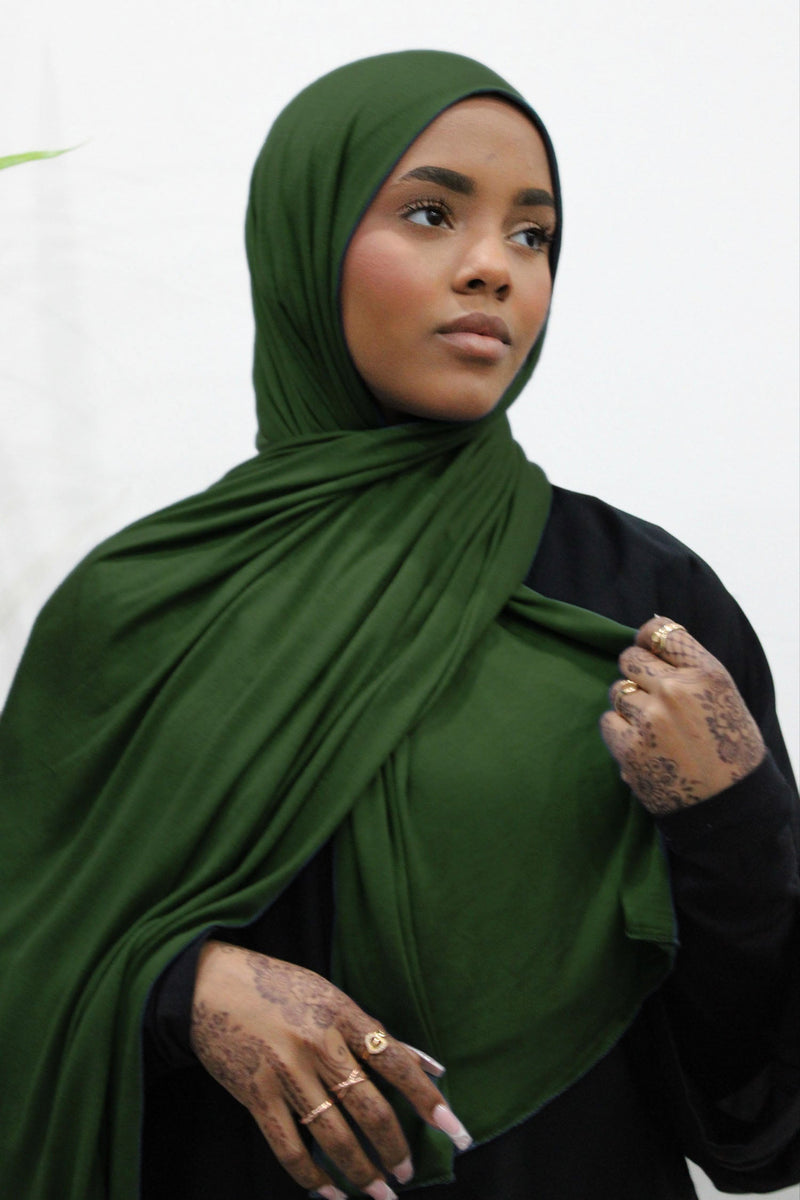
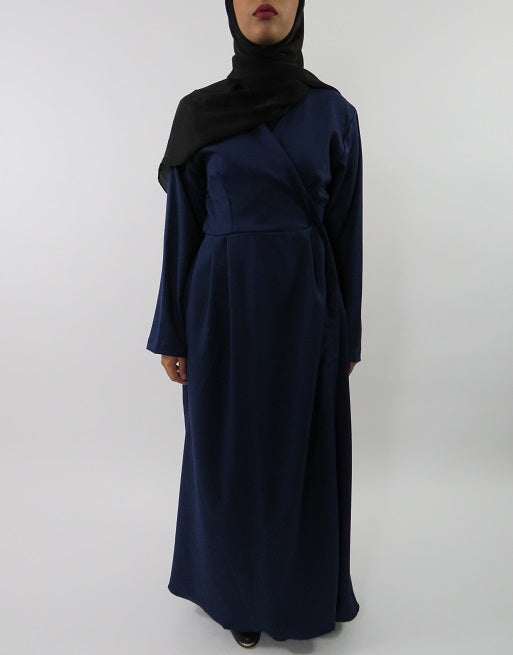
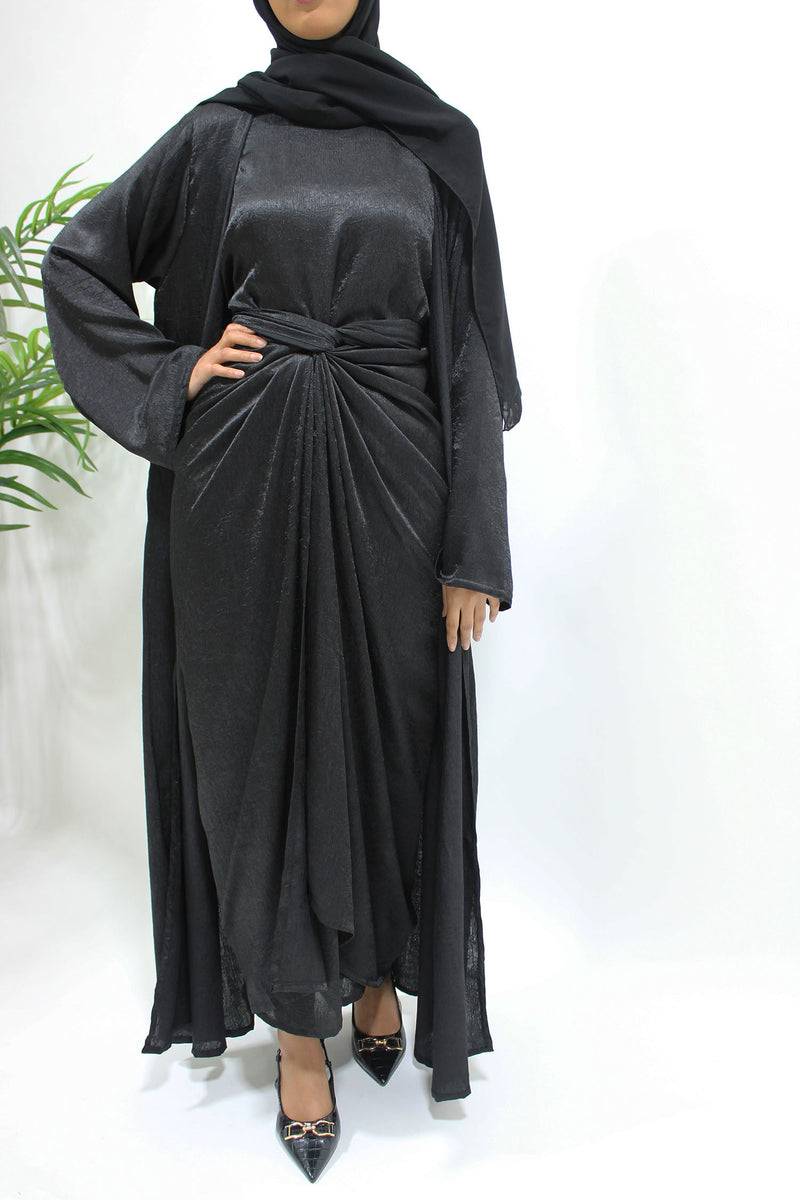
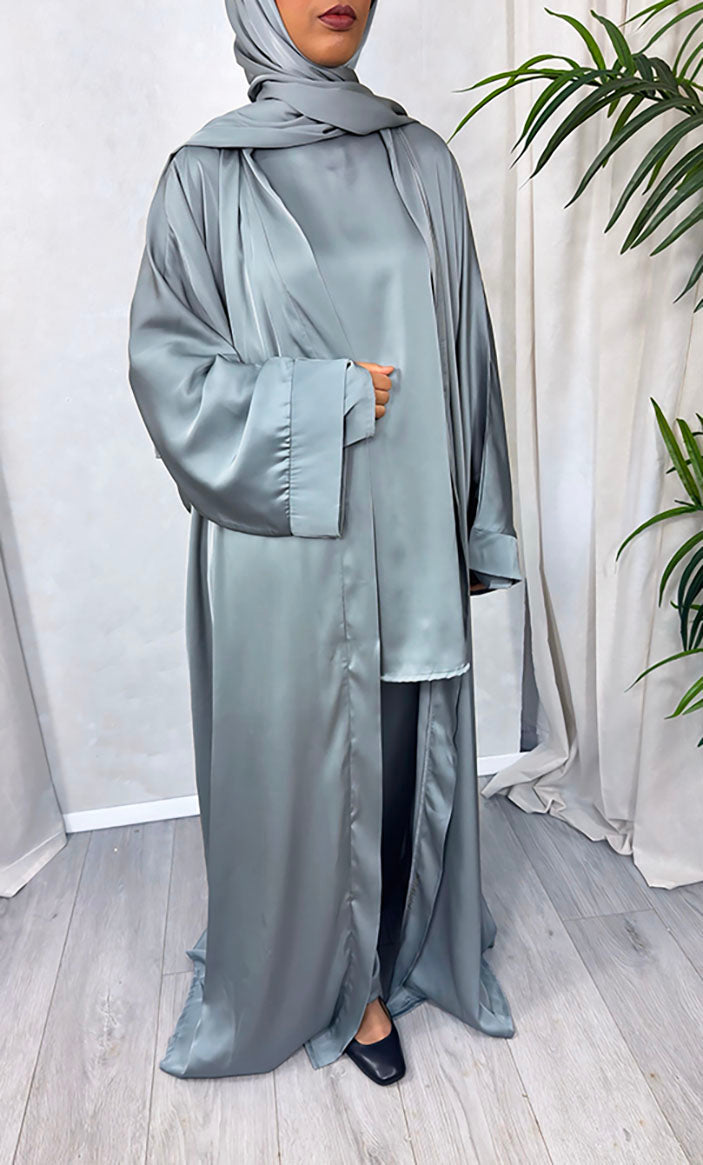
Pictured: a coordinated dark sage outfit with loose layers. The examples below also explore shirts, knits and jackets already in your wardrobe.
Roomy clothes still need the right fit
Decide where you want the extra space. You might enjoy a shirt that falls away from the torso while keeping a fairly neat wrist opening. You might prefer a jacket with broad shoulders but a simple, straight lower edge. Or you might want a garment that feels expansive all the way down. These are different choices, even though every listing could use the word oversized.
A larger size of an ordinary garment is not necessarily the same shape as a design intended to be roomy. Compare the shoulder position, armhole, collar and sleeve length rather than choosing several sizes up automatically. Extra width that you welcome through the body may arrive with cuffs you cannot use comfortably.
Put the item on without a belt or a bag and let it hang. Reach forwards, fold your arms and sit. The movement should tell you whether the extra fabric is useful. A broad sleeve can still pull at the upper arm, and a wide body can still have a neckline that shifts awkwardly.
For shopping online, compare finished garment measurements with a piece you wear happily. Keep flat widths separate from measurements around the body. Ask how a dimension was taken when the description is unclear. A photograph gives you an idea of the shape; it cannot tell you exactly how the collar will sit on your shoulders.
Loose on top does not mean fitted below
You may have heard that an oversized top has to be balanced by a close-fitting lower half. Treat that as one possible silhouette, not an obligation. Loose trousers and a generous shirt can work together without either garment becoming tight. Their fabrics, lengths and outlines give you other ways to organise the outfit.
Try a roomy shirt over straight, relaxed trousers first. The lower leg gives a relatively quiet line beneath the shirt. Next, try the same shirt over wide-leg trousers. Leave the scarf and shoes unchanged so you can see what that one substitution does. You might prefer the second version, particularly when the two garments fall without gathering at the same place.
If both pieces stand away from the body and the result feels cumbersome, change the structure of one piece rather than reducing coverage. A softer trouser can sit differently beneath a crisp shirt; a simpler top can work beside a fuller skirt. The question is how much space the clothes occupy together, not how much of your shape you should reveal.
A useful comparison is between two loose garments, not between a loose outfit and a version made acceptable only by cinching everything. Keep your preferred coverage and ease constant. Then make the smaller changes that help the clothes cooperate.
Find the line where your shirt meets your trousers
The shirt hem is often the most important detail in the outfit. Look at it with your arms relaxed, then from the side. A straight hem, a curved shirt tail and a high side slit can each expose a different amount of the garment beneath.
Try the shirt completely untucked. Let the front and back sit naturally rather than arranging one side for a photograph. Check whether the hem catches on a pocket, bunches over the waistband or creates a break you enjoy. A shirt that seems too bulky may be resting on a detail underneath rather than being the wrong size.
A longer top is not automatically more useful. When it reaches the widest part of a full skirt, the two layers may push out together. When it ends above a trouser flare, it may leave that shape easier to see. These are reasons to compare actual lengths in a mirror, not instructions to dress according to a body-shape category.
You can experiment with a tuck when it suits your preferences, but inspect it seated and with your arms raised. A decorative front tuck does not provide reliable coverage at the sides by itself. Choose a different hem or an appropriate underlayer when the movement check reveals an opening you do not want.
For more on coordinating a longer upper garment, the tunic outfit guide looks closely at side slits and the relationship between a top and its lower layer.
Give the hijab a place in the outline
Put on your usual scarf before deciding that the top needs another layer. A chest drape changes how much of the shirt is visible, while fabric around a collar changes the upper outline. The scarf is part of the outfit, not something to add after the proportions have supposedly been settled.
With a substantial shirt collar, try directing surplus scarf length towards the chest or shoulder rather than wrapping it repeatedly at the neck. Maintain the coverage you want and keep the face opening comfortable. The aim is to move unnecessary bulk, not to tighten the scarf until it occupies less space.
A broad drape can still work with generous clothing. Compare it beside a quieter neckline before rejecting it as too much. You may like the amount of fabric but prefer fewer competing edges. Conversely, a simple scarf arrangement can leave an interesting shoulder or collar in view.
Try turning your head, putting on glasses if you use them and reaching for a bag. Notice whether the shirt pulls the scarf backwards or a long end catches at a button. Solve that small interaction rather than rebuilding the entire outfit around it.
Use the hijab fabric guide when the colour is right but the scarf refuses to sit as you intended. Size, surface and the way you arrange it matter alongside the shade.
Outfit one: the roomy shirt you can wear all week
Start with a long, loose shirt, opaque relaxed trousers and shoes comfortable enough for your usual walk. Add a plain scarf in a colour you already enjoy with the shirt. At this stage, leave out a belt and statement jewellery. You are establishing a dependable outfit, not trying to make every part interesting.
A blue shirt with dark navy trousers is one possible starting point. Try a light grey scarf for a quieter upper half, then a warm neutral scarf for a different colour relationship. Keep the bag and shoes fixed during the comparison. These are suggested combinations, not claims that one shade is universally better beside a particular complexion.
Look at the shirt buttons when seated. Closing every button is not a solution if the front pulls; leaving a gap is not a solution unless the garment underneath is intended to show there. A roomier upper section or a different shirt shape may answer the problem more directly.
For a workday, check the sleeves at a table. A cuff that slips across your hand every time you reach may need an appropriate adjustment or another design. For an informal visit, the same shirt might be enjoyable with a full skirt instead. Change the lower garment and assess that combination rather than assuming all long pieces behave alike.
Once one version works, keep a private photograph of the complete outfit. Record the shoes and scarf as well as the shirt. That small record turns an experiment into something you can repeat on a busy morning.
Outfit two: a loose knit without a crowded neckline
Choose a knit whose neck and sleeves feel comfortable before adding anything else. Then decide what belongs beneath it. An underlayer may provide coverage at a loose neckline or warmth for the day, but it should have a specific job. Several collars piled together can become the most noticeable part of an otherwise simple outfit.
Try a plain, smooth lower garment first. A straight maxi skirt can give the knit a calm base; fluid wide-leg trousers can create a different kind of movement. Neither choice requires the upper garment to be tucked into a waistband. Compare the knit hanging freely with a shorter alternative before forcing extra fabric into the skirt.
For example, a charcoal knit and a navy skirt can form a dark outfit without an exact colour match. A cream scarf offers a clear contrast. A deeper scarf keeps the upper area quieter. Notice which version you prefer with the real fabrics rather than treating black as the only possible partner for darker clothing.
Add your coat and close it. Check the underarm space, shoulder movement and collar. A knit that is comfortable on its own may simply be too bulky for a particular coat. The useful answer could be another outer layer or a lighter knit, not a larger size in every garment.
Follow the knit's own care instructions. Do not hang a heavy item from an unsuitable narrow support just to keep the outfit together. Keeping a note of the combination is easier than storing every component in the same way.
Outfit three: relaxed tailoring for a meeting or dinner
A roomy jacket can give an outfit a clear outer shape without a fitted waist. Try it over a simple top and loose trousers, choosing a jacket long enough for the coverage you intend. Check it open and fastened; the version you prefer in a photograph may not be the one you need during the day.
Keep the shirt or inner top neckline straightforward while testing the jacket. A broad lapel, high collar and full scarf arrangement can compete for the same small space. Let one of those features lead. You might choose a lower-profile top under the jacket while maintaining coverage through a suitable neckline and scarf combination.
A warm brown jacket over a darker base is one example. The difference in colour makes the outer layer easy to see, while the inner outfit stays relatively quiet. Alternatively, use related shades and distinguish them through texture. Exact matching is not necessary when the differences look deliberate to you.
Sit in the complete outfit and reach across a table. Look at whether the jacket collar shifts, the scarf gets trapped or the front button pulls. A belt should not have to hold an unsuitable jacket closed. Enough room for normal movement matters even when the occasion is more formal.
Finish with shoes that meet the setting's requirements and work with the trouser hem. A dressier bag can change the emphasis, but the jacket's fabric and finish still matter. Accessories do not make every casual garment appropriate for every invitation.
Outfit four: an abaya with plenty of movement
With a broad-cut abaya, assess the sleeve and body as a connected shape. Raise your hands and see whether the lower fabric rises with them. Put your arms down again and notice where the folds settle. The amount of material shown with the sides held out does not tell you how the garment feels during ordinary wear.
A simple scarf can leave the abaya's drape as the main feature. You could also use a longer front drape, provided it stays comfortable beside the neckline. Try both without adding a belt automatically. A loose outline can be the finished look rather than a stage before defining the waist.
For an open abaya, remove the outer garment during the fitting and check the inner outfit on its own. The fronts will not remain in the same position throughout the day. An opaque dress or suitable separates should do the coverage work wherever the opening moves.
Test the bag carefully. A cross-body strap may gather one panel while leaving the other free. A shoulder bag can pull at a wide sleeve. Choose the carrying arrangement you can actually use, not the one that preserves a still photograph most neatly.
When comparing abayas more broadly, refer to the abaya guide to cuts and measurements. A very roomy silhouette still needs an appropriate neckline, sleeve reach and hem.
Use colour to connect the pieces without buying a matching set
Set out the outfit before deciding that it needs a new scarf. Pick one existing colour relationship to repeat. The scarf could relate to the trousers, a quiet shade in a print or the jacket. It does not have to match the largest garment exactly.
For a printed oversized shirt, fold your candidate scarves as you wear them and compare the visible area. A plain scarf is an easy first choice because it leaves the print readable. Pattern mixing remains an option, but you do not need a second print to demonstrate that you have styled the outfit.
When everything is dark, compare surfaces. A softly textured knit, smooth trousers and matte scarf can look distinct without another colour. When several pieces are pale, a deeper bag or shoe may provide the separation you want. These are experiments with your clothes, not universal colour rules.
Take a step back from the mirror. A tiny difference in two supposedly matching shades may matter less than an awkward cuff or an unintended break between hems. Solve the feature you notice in the complete outfit rather than concentrating only on a close-up.
Let the bag and shoes help, rather than add more volume
A large bag can be useful. The question is where it rests against the outfit when it contains your ordinary belongings. A tote under the arm can compress an oversized sleeve; a bag at the hip can push out the side of a loose shirt. Try the loaded bag before concluding that the garment has an odd shape.
A smaller bag is not automatically more balanced if you then need another bag for everything it cannot hold. Choose practical capacity and test a different strap length or carrying position. Some outfits simply suit a different bag from the one you use with a close-fitting coat.
For footwear, begin with the route and the hem. A substantial shoe can work beside a generous trouser leg, but there is no requirement to add heavy footwear to every roomy outfit. A simple flat can be equally useful when the length clears it comfortably.
Do a quick stair or step check in a suitable space. Avoid an arrangement that depends on holding fabric away from your feet continuously. Clothing can be flowing without making an ordinary journey a task in itself.
When the outfit feels wrong, change one thing
The upper half feels crowded: remove an unnecessary collar layer or redirect the scarf length away from it. Keep the top's body width unchanged first. You may enjoy the roomy shirt once the neck area is less busy.
The lower half seems lost: compare a straighter lower garment with the same shirt, or try a different top length. Do not assume your only choice is tight trousers. A clearer hem relationship can make the lower shape visible without changing your coverage preferences.
The clothes keep catching: look at the surfaces where they meet. A bulky waistband, rough seam or pocket may be holding another layer in place. Change that contact point before adding more clothing to disguise it.
The sleeves work until the coat goes on: compare the actual arm shapes. More room through the coat's body will not necessarily provide room where the sleeves need it. A different coat construction may be the useful change.
The outfit looks good but you keep adjusting it: identify the repeated gesture. Are you pulling the shirt down, moving the scarf away from a collar or lifting the trouser hem? That tells you which fit issue to address. A complete makeover is rarely the most informative first step.
Buy for the gap, not for the word oversized
Write down the job of the next piece before browsing: a shirt with a manageable cuff, a jacket that accommodates a knit, or trousers that sit comfortably beneath a longer top. These descriptions help you compare garments more accurately than a general search for a trend.
Ask for measurements and a back view where important details are missing. Establish whether a high-low hem or a dropped shoulder is intentional. Do not assume that every garment labelled one size will provide the same room or proportions.
Read the composition and care information before ordering. GINETEX's care-symbol reference explains the permitted treatments shown on a label. Use the instructions for the finished garment, rather than assigning a wash or iron setting from its loose shape or soft appearance.
Check the seller's current purchase terms and keep the relevant product information. Try the garment with your actual layers before making alterations or beginning a wash routine. An outfit that requires several unconfirmed changes may not fill the simple gap you identified.
Two shirts can have the same width and fit differently
Imagine comparing two shirts that both list a flat chest width of 70 centimetres. These are hypothetical garments, not Amani's product specifications. The first has a fairly conventional shoulder and a long sleeve; the second has a markedly dropped shoulder with a shorter sleeve measured from that lower seam. The shared chest figure does not tell you which cuff will finish in the right place on your arm.
Ask how the sleeve measurement is taken before choosing between them. Compare the shoulder construction with a shirt you own, and request a measurement that makes sense for the particular design. Do not add the numbers together using a route the seller has not confirmed. A size chart is most useful when its measuring points are clear.
Now consider the hems. One shirt may be the listed length at the front but longer behind. Another may have the same front length with substantial side openings. Both can be enjoyable to wear, but they ask different things of the trousers or skirt beneath. Read the back and side views before deciding they offer equivalent coverage.
The comparison gives you a better question than asking which shirt is more flattering. You can ask which has a cuff you can use, a collar that suits your scarf and a hem that works over your chosen base. Those details describe a wearable garment, not a promise attached to one measurement.
Build a small outfit rotation around one generous piece
Take a loose shirt you already like and give it three realistic appointments in your week. For a desk day, pair it with relaxed trousers, a plain scarf and suitable shoes. For a family visit, compare it over a long skirt. For a cool outdoor errand, put the original trouser outfit beneath the coat you actually use. Keep the shirt unchanged while testing its partners.
Write down what each version needs. Perhaps the skirt combination works immediately, while the coat presses on the cuffs. That does not mean you need another skirt, another scarf and a larger shirt. It identifies one layer relationship that needs attention.
Next, ask which of the remaining pieces can cross between outfits. A scarf that works with both trousers and skirt is useful even when it is not an exact colour match. Shoes that suit two combinations reduce the need to adjust a hem for every outing. The aim is not a fixed number of garments; it is a few relationships you have genuinely tested.
Leave a combination out when it requires too many exceptions. A shirt can be excellent for a family visit and unsuitable beneath your narrowest coat. Giving it a clear role is more practical than buying several accessories to make it appear universally versatile.
Keep the results somewhere simple: a photograph with the scarf and shoes noted is enough. When you wear the outfit for a full day, add one useful observation, such as a pocket catching the shirt tail. This gives the next adjustment a purpose rather than sending you back to browse for an entirely new look.
Keep room for your preferences, not someone else's rules
You can wear a generous silhouette without trying to appear smaller, taller or a different shape. You can also prefer a quieter cut on some days. Clothing choices do not need to become statements about how confident you ought to feel.
A familiar family garment or a traditional piece can sit beside an oversized jacket or shirt when the actual shapes cooperate. Decide what you would like to keep visible and check the weight of the combined layers. There is no single formula for every culture, event or wearer.
You do not need to buy a full wardrobe at once, follow a new release calendar or choose an influencer's proportions over your own comfort. Keep the combinations that work in your day. Add another item only when it offers a useful difference.
The wider modest-fashion guide can help you connect these outfits with the rest of your wardrobe. Here, the starting point is simpler: keep the room you enjoy, remove the friction you do not, and let the clothes become easier to live in.
Three questions worth asking before you leave
Can I wear the outfit without the outer layer? When you plan to remove a jacket or coat, check that the base still provides the intended coverage and feels complete. An open overshirt is not a dependable substitute for that check.
Will I be comfortable sitting as well as standing? Look at the waistband, neckline and sleeves after a few ordinary movements. The loose appearance of an outfit should correspond to usable space, not conceal pressure elsewhere.
Do I like the clothes once I stop arranging them? Let the shirt fall, put the bag on and turn away from the mirror. The version that remains comfortable without constant correction is the one most likely to become a regular outfit.
Oversized dressing does not need a compulsory belt, a fitted counterbalance or a new collection of accessories. Start with a piece that gives you useful room, put its partners beside it and refine one relationship at a time. The finished outfit should look like your choice—and leave you free to get on with the day.