How Can You Choose and Style a Lycra Abaya for Comfort and Elegance?
A Lycra abaya can be an appealing choice when you want some stretch in an outfit that still feels considered. Begin with the shape you enjoy wearing, then choose a fabric and size that allow that shape to hang comfortably. A plain closed abaya, an open-front layer, a generous kimono-inspired cut and a belted design can all produce different outfits, even when stretch is part of their fabric.
The most useful styling decision is which of those shapes belongs in your week. A relaxed daytime outfit might need little more than a familiar scarf and trainers. An evening version might use a softly defined waist, a richer colour and one carefully chosen accessory. The fabric is one part of the result; the cut, underlayers and finishing details give the outfit its character.
Start with what the material description means, then build a complete combination around the particular abaya in front of you.
What does Lycra mean in an abaya description?
LYCRA® is a brand of elastic fibre in the category known as elastane or spandex. It is used with other fibres to make fabrics. The manufacturer's explanation also makes clear that a fabric's ability to stretch does not establish that it contains LYCRA® brand fibre. Look for the brand information on the label or hangtag, or ask the maker.
For an abaya, read the complete composition as well as the headline description. “Lycra abaya” gives you a starting search term, but you still need to know the other fibres, the construction, the lining and the garment's measurements. Keep that information with your usual buying questions.
Choose the finished garment for the way it feels and looks when worn. A stretch component does not tell you how substantial the cloth is, how warm the complete outfit feels, or whether the silhouette falls loosely enough for your preference. Those are useful details to establish during a fitting.
Choose the silhouette before choosing the accessories
Lay out the abaya without a scarf, belt or bag and notice its main lines. Is the body straight or gently widening? Do the front edges open freely? Are the sleeves narrow, full or continuous with the body? Is there a matching tie, and where is it intended to sit?
Those observations help you decide where the outfit needs definition and where you want to keep a continuous drape. A plain closed design gives the scarf a prominent role. An open-front design brings the inner clothes into view. A wider sleeve changes the relationship with a coat and bag. A belt moves the emphasis towards the middle of the outfit.
| Abaya shape | A useful starting outfit | The detail to settle first |
|---|---|---|
| Plain closed shape | A textured neutral scarf, familiar flats or trainers, and a practical bag | The uninterrupted fall from the shoulders through the body |
| Open-front shape | A complete inner dress or long top and trousers, with a plain scarf | The visible centre of the outfit when the fronts separate |
| Kimono-inspired shape with generous sleeves | A simple base outfit and a scarf arranged clear of the sleeve volume | The meeting point between the sleeve, bag and outerwear |
| Belted shape | A calm scarf, comfortable occasion shoes and one finishing accessory | How the gathered fabric sits while standing and seated |
Use the descriptions to compare shapes, then inspect the actual construction. Two garments with the same style name may place their fullness differently.
Let the fabric hang before asking it to stretch
Put the abaya on over the underclothes you expect to wear and allow it to settle. Begin with your arms relaxed. Look at the shoulders, upper arms, back and hips, and decide whether there is enough room for the outline you want. The fabric should have a comfortable starting position before you move.
Then reach forward, sit and stand. Notice whether the movement is easy and whether the garment returns to a position you enjoy without repeated smoothing. If a particular area remains pulled, compare another size or cut. A fabric that can extend still needs a garment shape that suits you.
Look at the seams and any lining at the same time. The outer material may move more readily than an internal seam, decorative panel or lining. If one area restricts the whole garment, identify that point before assuming more stretch in the main fabric will solve it.
Check the complete arrangement in daylight, including where the cloth comes closer to the body during movement. Choose the layers and room that give you the coverage you prefer. Once that foundation is comfortable, you can concentrate on the outfit's colour and styling.
Outfit one: a plain Lycra abaya for an ordinary day
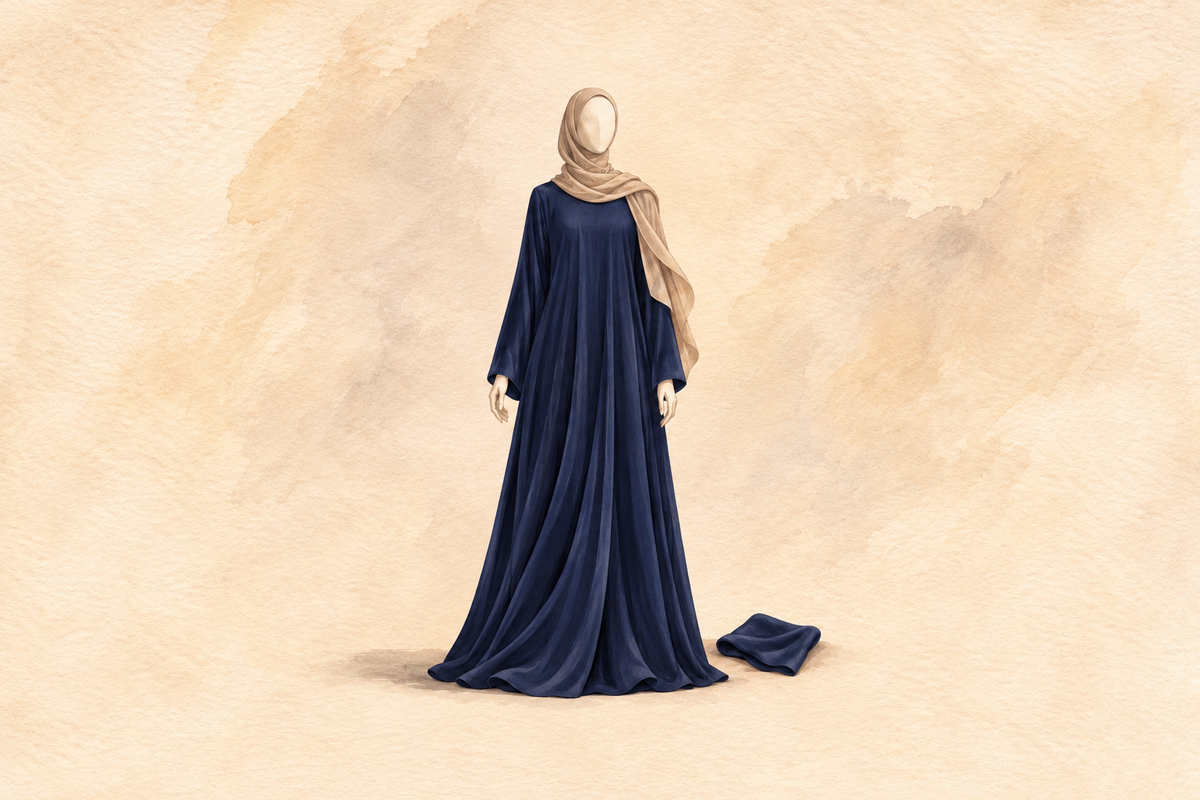
Start with a plain closed abaya in black, navy, charcoal or another colour you already wear often. Add a scarf with a different surface, comfortable shoes and a bag suited to the outing. The simple main garment gives you room to enjoy a soft scarf texture or a useful colour contrast without requiring several decorative details.
For a dark abaya, try a stone scarf with black trainers and a plain dark bag. The lighter scarf creates a defined upper area, while the shoes and bag keep the rest of the look familiar. If you prefer less contrast, replace the stone with a deeper grey and leave everything else unchanged.
Choose the scarf arrangement around the neckline. A broad front drape can continue the easy shape; a more contained arrangement can leave the front of the abaya clear. Keep the coverage you want in both versions and compare how much visible scarf feels right beside the plain garment.
Use the bag with its usual contents during the trial. A cross-body strap creates a visible diagonal and may hold part of the fabric closer to you. A handheld or shoulder bag produces a different outline. Pick the arrangement that is comfortable for your plans and gives the abaya the fall you prefer.
For a second everyday version, keep the abaya and shoes but use a patterned scarf containing one of the outfit's existing colours. A grey-and-cream print, for example, can connect with a dark neutral base without needing a new bag. This gives you another finished outfit from a small change.
Let the shoes set a realistic hem length. Walk, turn and sit in the actual pair, including any time you expect to remove them. An ordinary-day combination earns its place when the details make sense through the whole outing.
Outfit two: an open-front Lycra abaya with tailored separates
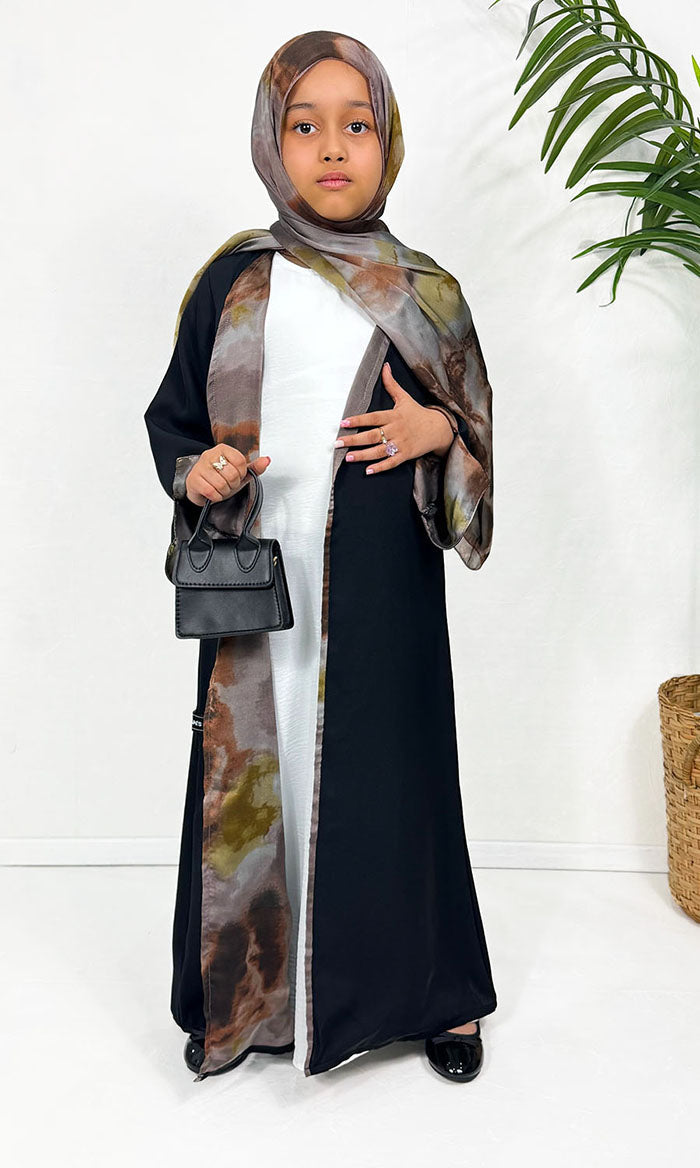
An open-front abaya lets the inner outfit become a deliberate part of the design. Try a long, simply cut top with trousers in the same colour family, then place the abaya over them. A navy outer layer over a softer blue centre, or a charcoal outer layer over grey, can create a composed look with a clear relationship between the pieces.
Arrange the inner clothes as a complete outfit first. Check the neckline, the top's length and the waistband while seated. When the abaya moves open, the centre should still give you the coverage and appearance you intended. This makes the open shape easier to wear naturally.
Look at how the trouser legs sit beneath the abaya. Straight or gently wide legs can create different lower lines. Try the actual combination rather than choosing by a silhouette label alone. A substantial trouser fabric may hold the outer layer differently from a softer one.
Keep the scarf relatively simple for the first version. A plain scarf close to the outer colour connects the upper outfit, while a lighter scarf introduces another contrast. With two visible clothing colours already in place, compare one scarf at a time before adding jewellery or a patterned bag.
For a work setting where this combination suits the clothing requirements, choose shoes and a bag that support the activities ahead. Put the bag on, sit at a desk and reach towards the working surface. Notice whether the open fronts or sleeves need a different arrangement.
A blazer is another option only when the pieces fit comfortably together. Try it over the full outfit, fastening it as intended. If the abaya's sleeves collect inside the blazer or the front edges bunch at the waist, a roomier coat or a simpler layer may make the combination easier.
For dinner afterwards, keep the comfortable inner clothes and change one accessory. A smaller bag, a scarf with a little surface interest or a single piece of jewellery can shift the emphasis while preserving the outfit you already know works.
Outfit three: a kimono-inspired cut for a relaxed visit
A generous sleeve and a looser body can give a stretch-fabric abaya a different character from a narrow, straight style. For a daytime visit, try a warm neutral abaya over a complete cream or tonal inner outfit, with a plain scarf and familiar flats. The sleeve shape supplies much of the interest.
Begin by seeing where the sleeve joins the body. Raise your arms to a comfortable reaching position and let them drop again. Notice how much of the garment moves with the sleeve and where the fabric settles afterwards. This helps you choose the base layers and carrying style around the actual cut.
A simple inner dress can give an open version a continuous centre. Separates can work as well; choose a top whose neckline and hem make sense when the abaya opens. Keep raised pockets or bulky decoration away from areas where they catch the outer material.
Arrange the scarf so its loose end and the sleeve have separate space. A long tail resting over the same forearm as a full sleeve can require more handling when you sit at a table. Move the tail to another comfortable supported position or choose a shorter drape within your coverage preference.
Consider the bag's shape as well as its colour. A large shoulder bag may press against the upper sleeve, while a small handheld bag leaves that area clearer. For a hands-free option, try the strap in place and decide whether its effect on the fuller cut is one you enjoy.
To make the same outfit more dressed, add a richer scarf colour while keeping the base and shoes. Deep blue beside a warm neutral, or plum beside grey, can give the look a stronger focal point. Compare the actual shades in the light where you will wear them.
Keep the wider shape comfortable beneath any travel coat. Put the coat on and remove it once during the fitting, freeing any caught sleeve fabric. The outfit should work for the journey as well as the room.
Outfit four: a belted Lycra abaya for an occasion
A belt changes where the eye rests and where the fabric gathers. If you enjoy that effect, begin with the garment's intended tie or a suitable belt worn comfortably. Let the fabric settle before adjusting the waist so you can see how the original shape changes.
For a simple occasion combination, try a deep-coloured abaya, a plain tonal scarf, comfortable shoes and a small bag with one metallic detail. The defined waist and colour provide structure; the accessory adds a restrained highlight. Gold-toned and silver-toned finishes are both worth comparing beside the actual garment.
Look above and below the belt separately. You may like a little softness above it, or prefer the fabric to remain smoother. Below it, check that the folds fall in a direction you enjoy and that the hem remains manageable. A belt can change apparent length by gathering material higher up.
Sit down with the belt in place. Check the fastening and the gathered cloth, then stand without immediately rearranging everything. If the belt makes the outfit less comfortable or requires constant resetting, compare the same accessories with an unbelted version before choosing.
Keep jewellery clear of the scarf and sleeves. A smooth ring or a simple bracelet may provide the finish you want. If you prefer a necklace, try it with the completed scarf arrangement so you can judge both visibility and comfort. There is little advantage in choosing a piece that remains hidden and creates a raised area beneath the fabric.
For an open belted design, check the inner outfit while the fronts move. The belt's role is to create a shape you enjoy; the base garments should supply their own intended coverage. This leaves you free to loosen or remove the belt if that feels better later.
Complete the outfit with the shoes you will actually wear through the occasion. A lower shoe can look just as deliberate when its shape and colour relate to the rest of the outfit. Familiar footwear also makes the final length assessment more useful.
Use a monochrome palette to bring the shapes together
A monochrome outfit can make the relationship between cut and texture easier to see. Try a black abaya with a black scarf that has a quieter or more textured surface, then choose a bag and shoes whose shapes you like beside it. Small differences in finish keep the outfit visually interesting.
For a softer version, use a related group of neutrals rather than trying to find identical shades. A taupe abaya, a lighter stone scarf and deeper brown accessories can feel connected through their colour family. The difference between them gives each part a clear place.
Compare close colours in daylight. Two pieces that seemed identical online may have different undertones once placed together. A more obvious tonal difference is often easier to choose deliberately than an almost-match you keep trying to correct.
With an open abaya, remember that the inner outfit occupies a visible strip through the centre. Decide whether you want that area close to the outer colour or clearly contrasting. Keep the scarf unchanged while comparing the two options so you can see what the centre colour contributes.
Introduce pattern where it has room to show
A patterned scarf can give a plain Lycra abaya another use without adding a different garment. Start with a print containing one colour already present in the outfit. Fold and arrange it as you would wear it, then look at which parts of the pattern actually remain visible.
A large motif may occupy most of the front drape, while a small repeated print can read as a gentler texture from a distance. Neither needs a matching bag. Plain accessories can leave the pattern clear and keep the main garment's shape easy to appreciate.
If the abaya itself is patterned, try a plain scarf first. Take a quieter colour from the print and compare it near the face. You can add another pattern if that is your preference, but begin with the simpler version as a reference.
Assess the design when the garment is relaxed and while you sit or reach. Notice whether the visible pattern changes in a way you enjoy. This is another reason to choose enough room in the cut before concentrating on decorative styling.
Try a patterned centre beneath an open abaya
For another use of an open style, place it over a patterned inner dress or a printed long top with plain trousers. The visible central area becomes the main detail while the outer abaya gives it a clear border. This can be especially useful when you like a print but prefer to show a smaller amount of it.
Begin with one colour shared by the print and the abaya. A navy outer layer, for example, can sit beside a cream-and-navy pattern with a plain cream scarf. Keep the shoes and bag familiar so you can judge the relationship between the two garments before adding another contrast.
Look at the print with the abaya in its natural open position. A large motif may be divided by the front edges, and a border may disappear beneath one side. Move normally and decide whether you enjoy that changing view. If you keep holding the fronts apart to reveal a particular detail, another inner garment may make a more satisfying partner.
Check the two surfaces together as well. A textured print on a substantial fabric may behave differently beneath the outer layer from a smooth printed dress. Sit and stand with the combination, then let it settle. Keep the pairing that gives both garments space to do their jobs comfortably.
Plan a daytime-to-evening change around one cut
Choose the abaya shape you want to keep on before planning what to carry. With a closed style, a scarf and bag change may be enough. With an open style, decide whether the original inner outfit already suits the evening or whether changing it would make the transition more involved than you want.
Try the two versions at home. A plain dark abaya with a printed scarf and practical bag can become a quieter evening outfit with a tonal scarf and a small bag carrying one decorative detail. Keep the comfortable shoes if they work with both versions; the hem will already have been assessed with them.
For a belted look, practise adding the belt over the complete outfit and sitting in it. Decide where the removed daytime accessories will go and whether the replacement bag holds what you need. This gives the change a clear purpose and keeps the amount you carry manageable.
Pack the alternative scarf with any suitable foundation or fastening it needs. A familiar arrangement is easier to repeat away from home than a new drape chosen only because its colour matches. Keep the small set of pieces that changes the mood while preserving the comfort of the original outfit.
Choose layers by the job they need to do
Your underlayers may provide coverage, warmth or the visible centre of an open outfit. Identify that purpose before adding more pieces. A closed abaya over a simple base has different needs from an open abaya worn over a detailed blouse and trousers.
Try the intended combination and watch where the surfaces meet. An inner waistband, gathered sleeve or prominent seam can create a shape you notice through the outer garment. Compare a simpler base at that point while keeping the room and coverage you prefer.
For cooler conditions, test the extra layer through the shoulders and upper arms. A thicker jumper may change a previously comfortable fit. Put the coat on as well, including the scarf, and check the complete arrangement before relying on the fabric's stretch.
For warmer conditions, judge the whole outfit in the setting you expect to wear it. The material name alone does not answer how comfortable several layers will feel together. Choose a manageable combination and keep a familiar alternative available when trying something new for a long event.
If your chosen abaya is specifically described as jersey, our jersey-abaya guide provides further help with that knitted construction. Use the actual fabric information to decide which advice applies to your garment.
Make the scarf and neckline work as one arrangement
A round neckline, collar, V-shaped opening and open front each leave a different area for the scarf. Put the abaya and its base layers on first, then arrange the scarf. That order lets you place the drape where the finished outfit needs it.
For a simple closed neckline, a broad front drape can provide a soft upper shape. For an open abaya over a contrasting centre, a narrower visible scarf panel can leave more of that colour relationship in view. Choose the drape for your preferred coverage before deciding which detail you want to display.
Check the arrangement when looking down and turning. A loose scarf end should not be doing the work of a missing base layer while requiring you to keep still. Settle any coverage question through the clothes and scarf together, then let the decorative folds fall naturally.
Add glasses, jewellery and outerwear during this stage if you use them. A comfortable neckline becomes more valuable when it remains comfortable with the rest of the outfit in place.
Ask useful questions before buying online
Start with the complete fibre information, garment measurements and clear views of the cut. Ask how measurements are taken and whether they describe the garment relaxed. Compare like with like using an abaya or another long garment that already fits you well.
Read the details of the neckline, fastening, sleeves and lining. For an open style, find out whether an inner dress is included or simply shown in the photographs. For a belted design, check what comes with the garment and how the tie is intended to be used.
Imagine two possible purchases. One has a colour you love but gives only a length and a vague stretch description. The other provides body and sleeve measurements, composition and clear photographs of the front. Request the missing information from the first seller before deciding; the comparison should include fit and construction alongside colour.
Use your intended outfit to narrow the questions. If you will wear a long-sleeved base, sleeve room matters. If the abaya is for a seated evening, the body cut and belt arrangement deserve attention. If you want an open layer, the inner outfit and front opening are part of the buying decision.
Read the current return conditions before ordering and keep the garment in the required condition while assessing it. A considered try-on is easier when you understand how much you can check before making the final decision.
Personalise the garment without losing the shape you liked
Begin with reversible styling changes: another scarf, a different bag or a suitable removable belt. These let you explore a new look while learning how the abaya behaves. Keep a photograph of the version you liked most before making a permanent change.
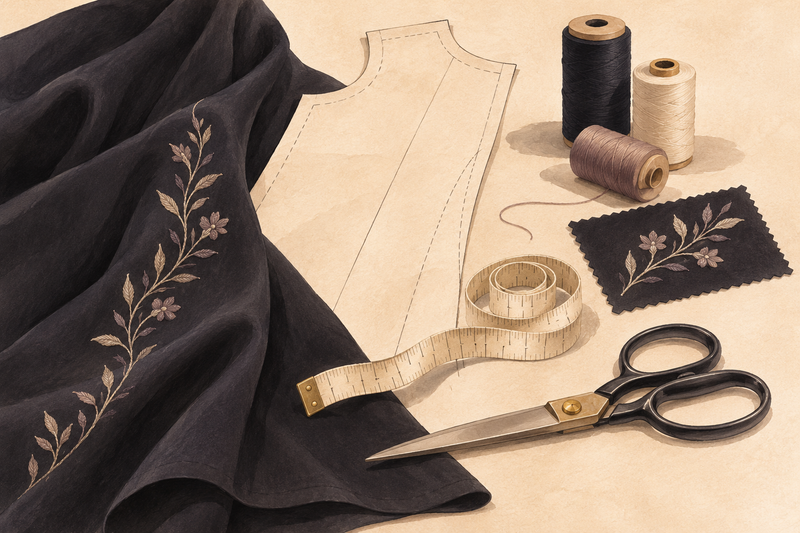
For added embroidery, trim or an alteration, discuss the actual stretch fabric with someone experienced in working with it. Show where the garment moves and where you want the detail to sit. A decorative panel should be considered alongside the surrounding fabric and seams.
If the main issue is length, settle the upper-body fit first and take the intended shoes to an alterations appointment. Explain whether the garment will be worn open, closed or belted. Those choices can affect the final appearance you want to preserve.
For a purely visual change, consider whether the scarf could provide it more simply. A patterned scarf or a different texture may give you the individuality you wanted without needing the garment itself to be altered.
Care for the complete garment between wears
Keep the care instructions with the fibre information. A stretch component, a lining and decorative details all belong to the same finished garment, so follow its label when choosing cleaning, drying and finishing methods.
After wearing, empty any pockets and check the cuffs, hem and fastening areas. Notice a loose thread, mark or change in shape before the next outing. Seek suitable care or repair advice for the particular issue instead of pulling or rubbing at it.
Use the permitted drying and storage arrangement for the garment's weight and construction. Give it appropriate support and put it away fully dry. Keep rough jewellery and exposed bag hardware separate from the fabric.
Allow care time before an important occasion. A garment ready to wear, with its chosen scarf and accessories nearby, makes an elegant outfit much easier to repeat. Keep the useful care details with your outfit note so they do not have to be rediscovered.
Choose two complete outfits to begin with
Select one ordinary-day combination and one more dressed version. You might keep the same plain abaya and shoes, using a printed scarf for daytime and a tonal scarf with a smaller bag for dinner. Or you may prefer an open style with two complete inner outfits that create different moods.
Record the specific pieces that worked, including the base layers and any coat. Note the one detail that mattered most, such as where the scarf end sits beside a full sleeve or whether the belt feels best left off during a seated meal.
A comfortable, stylish Lycra abaya outfit begins with a garment whose composition and cut you understand. Choose the shape that suits your plans, give it room to fall, and use colour and accessories to make it your own. Once those decisions are settled, the same abaya can become a familiar starting point for several outfits you enjoy wearing.