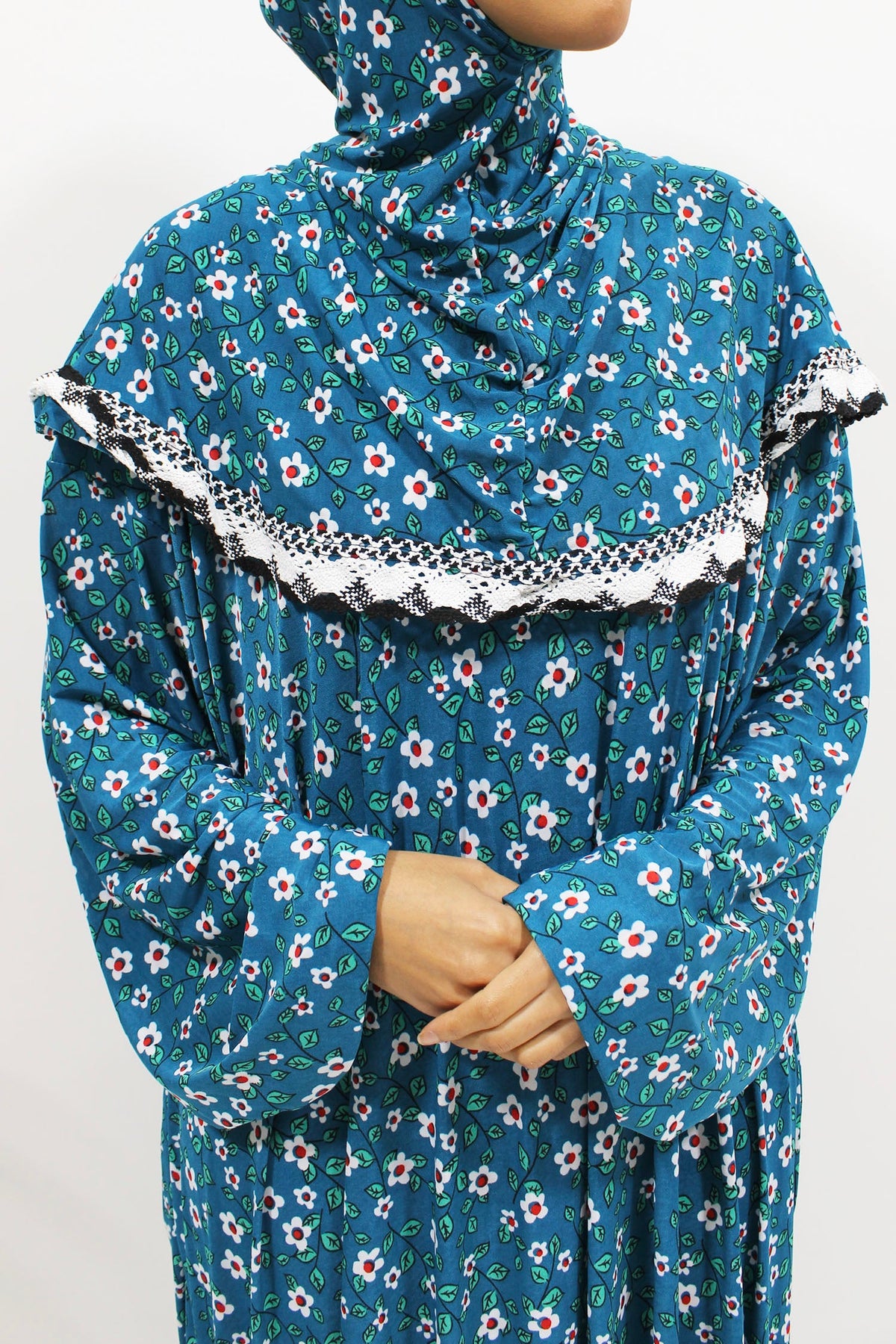
Is a jersey abaya right for your routine?
A jersey abaya may feel easy to put on and move in, yet the useful details become clearer after you sit, reach and walk. Does the cloth fall freely or cling where you would prefer more room? Does the neckline stay in place? Does the hem remain manageable after the garment has been worn for a while?
These questions matter more than calling jersey universally comfortable or crease-proof. The best choice is a particular garment that works with your body, your coverage preferences and the activities you intend to do in it, including prayer where appropriate.
What jersey tells you—and what it does not
Jersey describes a knitted fabric, not a single fibre. A jersey abaya may have a different composition, weight and amount of stretch from another garment with the same description. Read the fibre information and inspect the actual fabric rather than treating the name as a complete specification.
Stretch can make movement easier, but it does not replace a well-proportioned cut. A garment stretched closely across the body may reveal more outline or become more transparent than it appears when relaxed. Choose enough room for the way you want the abaya to hang.
Softness is also individual. Feel the inside surface, neckline finish and seams where possible. A pleasant outer fabric does not guarantee that every seam or trim will be comfortable against your skin.
Choose ease, not a size held together by stretch
Try the abaya without pulling it into a flattering position. Let it settle on your shoulders, then look at the upper arms, back and seat. Notice whether the fabric hangs smoothly or forms tension lines as it stretches over an area.
Move your arms forward as though reaching for a bag or holding something in front of you. Sit in a normal chair and stand again. The garment should not need to borrow all its movement from stretching across your body.
Where the fit is close, consider another size or cut rather than assuming the material will become comfortable through wear. Extra length is not the same as extra width. For Amani’s numbered abaya lengths, the number refers to shoulder-to-feet length in inches, so check other measurements separately.
Inspect opacity in the places that matter
Look at the complete outfit in ordinary daylight as well as indoor light. Inspect the shoulders, elbows, seat and any area under tension. A fabric can look opaque in loose folds while becoming more revealing when stretched.
Use the underwear and underlayers you expect to wear, rather than testing the abaya over an unusually bulky outfit. Check the back and sides too. If the garment needs an additional layer, assess that combination for comfort rather than treating the extra layer as a cost-free solution.
A lining is not automatically present in jersey clothing, and it may not cover every area. Read the description carefully. When buying online, ask about the construction and measurements rather than relying on the model’s pose to demonstrate coverage.
Check length after the garment settles
Put on the abaya and allow it to hang naturally before judging the hem. The weight of the cloth and the garment’s construction can affect how it sits. Do not pull down the hem repeatedly in an attempt to create a particular length.
Try the shoes you plan to wear. Check that you can walk and turn without stepping on the fabric. A garment intended mainly for home or prayer may be worn in a different footwear situation from an everyday outdoor abaya; assess each use separately.
If alteration is needed, ask someone experienced with knit garments about a suitable finish. Cutting the hem shorter without considering the fabric and stitching can produce an unsatisfactory edge. Establish that the upper-body fit is right before deciding whether a hem alteration makes the purchase worthwhile.
Assess it as prayer clothing, not only as an outfit
A jersey abaya used for prayer should support the coverage requirements you follow through the full sequence of movements. Check the neckline, sleeves, back and lower hem while standing, bowing, kneeling and moving into prostration. Do this carefully in a private space where you can assess the garment without distraction.
Watch for sleeves sliding back, a neckline moving forward or the fabric becoming taut across the back. A garment that is comfortable for sitting at a table may behave differently during prayer. A looser cut or different sleeve arrangement may be more useful than relying on stretch alone.
Plan any separate head covering as part of the combination. An abaya does not necessarily include a hijab or attached head coverage. Check that the scarf arrangement stays comfortable and provides the coverage you intend as you move, without needing repeated adjustment.
For questions about religious requirements, follow appropriate trusted guidance rather than treating a product’s “prayer” label as a ruling. Clothing descriptions can explain construction and fit; they should not promise the validity of a person’s worship.
Check the process of putting the garment on and taking it off as well. A narrow neck opening can make a soft abaya unexpectedly awkward, especially over a scarf or hairstyle. The opening should work without forceful stretching. Where a fastening is provided, use it as intended rather than repeatedly pulling the knit over a closed neckline.
Make everyday styling easy to repeat
A plain jersey abaya can form the base of a straightforward daily outfit. Try a scarf with a different texture, comfortable shoes and a practical bag. One detail that you enjoy is enough; the outfit does not need a belt and statement jewellery every time.
Consider how the bag interacts with the fabric. A heavy shoulder bag can pull one side of the garment, while rough hardware may catch. Wear it during the fit check and notice whether it changes the neckline or creates folds you keep smoothing.
A belt is optional. It gathers the knit and changes the outline, which may or may not suit your preferences. Test it while seated and remove it if the garment feels better without it. Styling should not turn an easy piece into something you have to monitor throughout the day.
Prepare for travel without expecting indestructibility
Jersey can be a convenient option for a journey when the particular garment fits well and suits the conditions. It is not automatically immune to creasing, snagging or changes in shape. Pack and wear it with the same attention you would give another valued garment.
For a long journey, check comfort at the waist, neckline and sleeves while seated. Keep the hem clear when getting in and out of a seat, and consider whether the scarf and outer layer are easy to adjust when the temperature changes.
If you pack the abaya, use a method appropriate to its construction and leave room for it rather than forcing it into a crowded bag. Inspect it on arrival before deciding whether any permitted pressing or other care is needed. Do not apply heat automatically because you expect a knit to tolerate it.
Read the care label before choosing a wash routine
There is no single wash programme for all jersey abayas. The fibre blend, colour, trim and construction can change the permitted method. Check the label before deciding on handwashing, machine washing, water temperature or cleaning products.
Where washing is permitted, prepare the garment according to those instructions. Empty pockets, inspect fastenings and keep rough or sharp items from contacting the fabric. Use products suitable for the garment rather than assuming that a fabric softener is necessary to preserve softness.
Do not use bleach simply because you are treating a stubborn mark. Nor should you assume that cold water solves every care question. The fabric care guide explains how to approach the complete garment instead of relying on a universal recipe.
Dry and store with the weight of the knit in mind
Follow the drying instructions rather than choosing a method from the word jersey alone. Where flat drying is specified, support the garment on a suitable surface and arrange it without stretching. Where another method is permitted, follow its limits.
Be careful about hanging a wet, heavy garment from narrow points. Observe the way its weight is supported and avoid pulling it back into shape by force. If the label is unclear, seek care advice before experimenting with a valued piece.
For storage, a neat fold may suit some jersey abayas better than a hanger that leaves shoulder marks. Others may be suitable for hanging with appropriate support. Choose based on the garment’s weight and construction, and store it only when it is fully dry.
Respond to marks and wear calmly
Identify the mark and the fabric’s permitted treatment before applying a product. Avoid vigorous rubbing or repeated attempts with different household mixtures. A treatment that removes a mark but changes the surrounding texture or colour has not solved the problem cleanly.
Inspect areas that receive regular friction, such as under bag straps and around cuffs. If you notice loose stitching or a small snag, do not tug at it to see whether it comes free. An appropriate repair can be preferable to making the damage larger.
When a garment begins to show wear, distinguish a repairable detail from a fit problem. Replacing a tired fastening or repairing a seam may restore usefulness. Persistent pulling or stretched transparency may instead mean the garment is no longer meeting the needs you have for it.
Notice whether the garment settles or needs constant resetting
During a try-on, it is easy to smooth a jersey abaya unconsciously each time you look in the mirror. Try leaving it alone for a few ordinary movements. Sit, stand, walk across the room and reach for something at a comfortable height. Then look at the garment before adjusting it. This gives a more useful picture of everyday wear than a carefully arranged standing pose.
Notice any twisting at the side seams, gathering near a bag strap or movement at the neckline. These observations do not identify a manufacturing fault by themselves. They help you decide whether the particular cut, size and layers work together. Compare the abaya over another suitable inner garment if one surface seems to be catching.
Do not use the fabric’s stretch to dismiss persistent tension. A seam that remains pulled during a routine movement is worth investigating even if the material technically allows the movement. More ease, a different sleeve or another cut may feel better without needing constant correction.
After removing the garment, follow its care and storage guidance rather than trying to pull it back into shape. If you are concerned about a change, photograph the area and seek advice with the fibre information available.
A jersey abaya can be a very straightforward part of a wardrobe. The useful choice is the one that behaves well in your own combination of layers and activities, rather than the one that appears most fitted when first arranged for a photograph.
Choose the garment that works without constant adjustment
Before keeping a new jersey abaya, try the full combination you intend to use: scarf, underlayer, footwear and any outer garment. The complete abaya guide can help you compare its proportions with other cuts if something feels unresolved.
Judge it through ordinary movement and, where relevant, a careful prayer-clothing check. Softness is welcome, but it should come alongside coverage, useful length and a manageable care routine. A jersey abaya earns its place by making dressing easier—not by promising that fabric alone can do everything.