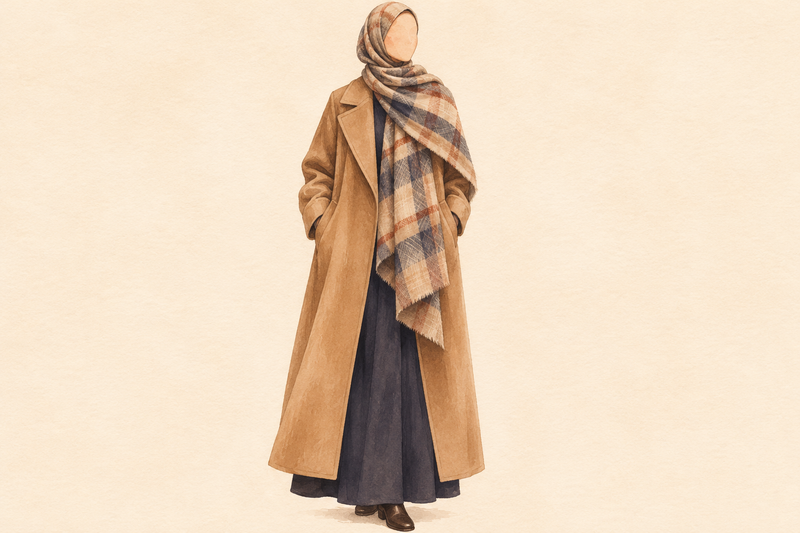
What Do Pakistani Abayas Look Like Across Different Makers and Styles, and Which Fabric, Cut and Embellishment Differences Matter Before Choosing One?
Choosing an abaya well is less about finding the most impressive photograph and more about understanding what will work once the garment is actually on your body, in your climate and in your routine. That is especially true when you are comparing pakistani abayas, because the label can cover everything from quiet everyday pieces to flowing Gulf-inspired cuts, open layers, embroidered occasion styles and designs shaped around South Asian colour and detail preferences. A beautiful listing can still be the wrong purchase if the fabric is too sheer, the sleeves interrupt daily tasks, the length is awkward with your usual shoes or the embellishment turns a supposedly practical piece into something you avoid wearing.
A better way to choose is to separate the decision into a few clear questions: Where will you wear it? How much coverage do you want from the abaya itself? Which fabric suits the weather and level of formality? What cut gives you enough ease without feeling overwhelming? Are the measurements detailed enough to buy confidently? And will the care requirements suit your real life? If you want the wider foundation before comparing individual styles, our complete abaya guide explains the main style, fabric and sizing choices in one place. This guide focuses more narrowly on how to judge Pakistani abaya options calmly, especially when shopping online.
The aim is not to tell you there is one perfect abaya. There is not. A woman who wants a light layer for school runs, errands and travel may need something completely different from someone choosing a refined piece for Eid, a wedding meal or a family gathering. The most useful purchase is the one whose coverage, comfort, construction and level of detail match its intended job.
Start with the job the abaya needs to do
Before looking at colours or embroidery, give the abaya a job. “I want something nice” is too broad to protect you from an impulse purchase. “I need an everyday closed abaya that works with flat shoes, can be washed easily and feels comfortable for several hours” is much more useful. So is “I need an occasion abaya that looks special in photographs but still lets me sit, walk and move comfortably.” Once the job is clear, many tempting options can be ruled out immediately.
For everyday wear, pay attention to movement, sleeve practicality, fabric resilience and care. A design that catches on bag straps, requires constant adjustment or marks very easily may become frustrating even if it looked elegant on the product page. Think about what you normally carry, whether you drive, how often you use stairs, whether you walk outdoors and whether you need to layer a coat over the abaya. These ordinary details matter more than they seem.
For work, study or appointments, a cleaner silhouette often gives more flexibility. You may still enjoy texture, piping, pleats or discreet embroidery, but a garment that sits neatly beneath outerwear and does not demand special styling can earn far more wear. If your day involves children, cooking, commuting or frequent washing, sleeves and hem length deserve particular attention.
For occasions, the priorities can shift. Draping, decorative cuffs, embroidery, beadwork or richer fabric may be exactly what makes the piece feel special. Even then, ask whether the detail is secure, whether the inside is comfortable against the skin, whether the garment can be cleaned realistically and whether you will still feel like yourself in it. Formal does not have to mean fragile, heavy or difficult.
One useful habit is to write a three-line brief before shopping: where you will wear it, the three features you must have, and the two features you refuse to compromise on. That little brief keeps you focused when a product photograph is doing all the persuading.
Decide how much coverage should come from the abaya itself
Coverage is not only about whether a garment is long. The shape of the neckline, sleeve width, front opening, side slits, fabric opacity and amount of ease all affect how the garment behaves. Two abayas can have the same length on paper and feel completely different once you walk, bend, sit or lift your arms.
A closed abaya is usually the simplest choice when you want the outer garment itself to provide the main layer. Check whether the front is genuinely closed, whether there are any deep side openings and whether the neckline works with the hijab or scarf style you normally wear. Buttoned or zipped fronts can be convenient, but photographs should show whether there are gaps when the garment moves.
An open abaya offers more styling freedom and can work beautifully as a long outer layer, but it normally depends more on what you wear underneath. If your preference is to leave it open, make sure the underdress or outfit gives the coverage you want. If you plan to fasten it, check how many closures there are and where they sit. One small press stud at the chest does not make an open abaya behave like a fully closed one.
Sleeves are another practical test. Very wide bell or fluted sleeves can look graceful but may need more attention while eating, washing, working at a desk or handling children. Elasticated, gently tapered or cuffed sleeves are often easier for busy days. Decorative cuffs can be a lovely compromise if the width stays controlled.
Then look at the fabric in motion. A fabric can appear opaque when hanging still and become more revealing under bright light or when stretched across an underlayer. Product photographs taken only against a dark studio background can hide that. If opacity matters to you, look for daylight photographs, close-ups, lining information and customer comments that specifically mention sheerness. When the listing is unclear, treat the uncertainty as part of the purchase decision rather than assuming the best.
Choose fabric by behaviour, not by an impressive fabric name
Fabric names are useful, but they are not a complete quality guarantee. The same general fabric family can feel different depending on weight, weave, finish and fibre content, and retailers do not always use terms in exactly the same way. Instead of asking only “Is this nida?” or “Is this crepe?”, ask how the material behaves: Is it matte or shiny? Fluid or structured? Light or substantial? Breathable enough for the season? Prone to static? Easy to wash? Likely to need steaming?
Nida is commonly chosen for abayas because it is associated with a soft, fluid drape and a refined matte appearance. That can make it a strong option for an everyday-to-smart wardrobe, particularly when you want the garment to fall rather than stand away from the body. But weight still matters. A very light version may need more attention to opacity, while a heavier version can feel warmer.
Crepe usually gives a little more texture and can range from fluid to fairly structured. It can be useful when you want a clean silhouette that does not look overly shiny. Again, the word “crepe” alone does not tell you whether it is light enough for summer or substantial enough for cooler weather, so look for fabric weight descriptions and close-up images.
Chiffon and georgette can create beautiful movement, particularly for occasion pieces, capes and layered sleeves. They are also often semi-sheer or sheer, which means the garment may rely on an opaque underlayer or lining. If a design combines a chiffon outer layer with a separate slip, check whether both pieces are included and whether the slip length and sleeves suit you.
Cotton, viscose, linen and blends can be attractive in warmer weather because they may feel less closed-in than heavier synthetics, but they come with different trade-offs. Some crease more easily, some shrink if washed incorrectly, and some have a more casual texture. Satin-like finishes can feel luxurious for events but may show water marks, pulls or creases more readily. None of these fabrics is universally “best”. The best fabric is the one whose drape, opacity, care and temperature suit the job you gave the abaya.
If the listing gives a fibre composition, read it. If it gives only a marketing name, look for clues in the photographs and care instructions. A trustworthy description should help you imagine the fabric after several hours of wear, not merely tell you that it is “premium”.
Match the cut to movement, layering and your preferred silhouette
Cut changes how an abaya feels more dramatically than a small decorative detail. A straight cut, A-line shape, flared skirt, butterfly cut, kaftan shape and open kimono-style layer can all look elegant, but they solve different problems.
A straight or gently A-line abaya is often the easiest starting point for everyday wear. It gives a clean outline, usually layers under coats more easily than very wide shapes and tends to be straightforward to walk in. The key is enough ease through the bust, hips and stride. A straight cut should not mean a tight cut.
A fuller A-line or flared design gives more movement through the lower body. It can feel particularly comfortable if you prefer a generous stride or want extra room without adding width at the shoulders. Check where the flare begins: a gradual flare tends to feel different from a heavily gathered skirt.
Butterfly and batwing styles create substantial width through the body and sleeves. They can give a beautifully flowing look and are forgiving across conventional dress sizes, but they are not automatically simpler to fit. Sleeve opening, shoulder-to-cuff reach and overall length still matter, and the extra fabric may feel warm or bulky under a coat. If you are petite, a very wide one-size cut can sometimes overwhelm your frame unless the proportions are thoughtful.
Kaftan-inspired cuts often create a relaxed, draped silhouette and can work well for occasions or warm-weather wear depending on the fabric. Some are genuinely loose through the body; others use internal ties, belts or shaping. If a belt is shown, check whether the abaya still gives the silhouette you want without relying on the belt.
An open kimono-style abaya is useful when you enjoy outfit layering and want one piece to work over several dresses or separates. It is also the style most dependent on the underlayer. When comparing Pakistani abaya designs with decorative borders, front embroidery or contrasting trims, check how those details sit both open and fastened, because the visual balance can change dramatically.
Use measurements, not the size label, to judge fit
Size labels are a starting point, not a promise. One retailer’s medium can differ from another’s, and some abayas are sold mainly by length while others use conventional dress sizes. One-size designs can also vary widely in actual width. The safest approach is to compare garment measurements with an abaya or loose dress you already own and like.
Begin with length. Measure from the same point the retailer uses if that information is given, usually high shoulder to hem. Wear the shoes you expect to use most often and decide whether you prefer the hem to sit above the floor, skim the top of the foot or fall longer. Remember that a model’s height is only useful if you also know which length she is wearing and where the garment finishes on her.
Next check bust or chest width, hip width and, for more fitted shoulder constructions, shoulder width. You are not looking for body-hugging numbers; you are checking that there is enough garment ease for the loose fit you want. If the product gives a flat-lay chest width, confirm whether the number needs to be doubled to compare with a full circumference. Never assume.
Sleeve length matters especially on cuffed or tailored styles. Measure from the shoulder seam if the garment has a defined shoulder, or compare the retailer’s method for raglan, batwing or dropped-shoulder cuts. A sleeve that looks perfect in a styled photograph may feel short once you reach forward.
If you are between sizes, do not automatically size up without checking the cut. On a straight abaya, the extra room may be useful. On a very wide butterfly style, going larger could add unnecessary length or sleeve width without solving the real fit issue. Look at which measurement is actually close to your limit and choose around that.
For online shopping, a detailed size chart is one of the strongest signs that the seller expects customers to make an informed decision. If an expensive abaya gives only “S/M/L” with no garment dimensions, that is a reason to pause and ask questions before ordering.
Check the product page as carefully as you check the garment
A good product page should reduce uncertainty. It should not force you to guess what is included, how the garment closes, whether it is lined, what the fabric feels like or how the sizing works. When you cannot touch the fabric, the listing has to do more of the work.
Look for front, back and side photographs, close-ups of embroidery or trims, and at least one image that shows the garment in motion. Zoom in on seams, cuffs, neckline and closures. If there is a separate slip, belt, hijab or inner dress in the photographs, confirm whether it is included or simply styling. The word “set” should be explained clearly.
Read the fabric description alongside the care label information. “Luxury fabric” tells you almost nothing on its own. “Mid-weight matte crepe, unlined, machine wash on a gentle cycle” is far more useful because it gives you something to judge. If care information is missing, consider whether you are comfortable taking the risk, particularly with embellished pieces.
Check the model information, but use it properly. Height and worn size can help with proportion, yet they do not replace garment measurements. A loose abaya can look similar on two women with quite different body measurements because the garment has generous ease. The size chart still matters.
Read the delivery and returns terms before you are emotionally committed to the piece. Pay particular attention to made-to-order, customised, sale and embellished items, which may have different return conditions. If you are ordering internationally, think about return postage, duties and the practical cost of sending an item back. A lower purchase price can stop looking like a bargain if an unsuitable size is difficult to return.
Finally, read reviews for specifics rather than stars alone. “Lovely” is pleasant but not very diagnostic. Comments about opacity, weight, sleeve length, colour accuracy, shrinkage, stitching and whether the size chart matched reality can materially change a decision.
Treat embroidery and embellishment as construction, not decoration alone
Embroidery is one of the details that can make Pakistani abayas feel distinctive, particularly when a design draws on South Asian preferences for richer borders, cuffs, florals or occasion finishing. The important question is not only whether the embroidery is beautiful. It is whether it is positioned, weighted and finished in a way that suits how you intend to wear the garment.
Heavy embroidery around the cuffs can make sleeves feel weightier and may catch on jewellery or bag hardware. Dense work around the hem can change the drape and make a long garment feel heavier while walking. Beading and stones can add sparkle but may require gentler cleaning and more careful storage. Sequins can be effective for evening wear but are rarely as carefree as plain stitching.
Look at the reverse side when photographs allow. Neat backing and well-finished threads usually feel better against the garment and are less likely to snag. On sheer overlay fabrics, the quality of the underside can also affect how polished the design looks.
Placement matters for modest styling too. A heavily decorated bodice creates a very different visual focus from embroidery placed at the cuffs, hem or front border. There is no single correct level of detail for every woman; the useful question is whether the visual emphasis aligns with your own preference and the setting.
If you want an abaya to work across several types of occasion, moderate detail is often easier to restyle. A tonal embroidered cuff, textured panel or restrained border can feel special with a polished hijab and accessories, then quieter when styled simply. Very elaborate pieces can be wonderful when you genuinely have the events to wear them to, but they should not be judged by the same practicality standard as an everyday abaya.
Buy for the season you will actually wear it in
Climate changes the meaning of “comfortable”. In a warm room or summer commute, a beautifully draped heavy fabric can become tiring. In cold weather, an ultra-light abaya may leave you dependent on so many underlayers that the original fit no longer works.
For warmer months, look for lighter fabrics, controlled sleeve volume and enough room for air to circulate. Breathability is affected by fibre content, weave and garment volume, so do not rely on one marketing adjective. Pale and mid-tone colours can feel seasonally lighter, but opacity needs extra attention in bright sunlight.
In cooler weather, a slightly more substantial crepe or layered construction can feel reassuring, though the abaya is still only one part of the outfit. If you wear thermal layers, knitwear or a long coat, allow for that extra bulk when assessing size. Very wide sleeves can bunch awkwardly inside narrow coat sleeves, while structured cuffs are often easier to layer.
If you travel between the UK and Pakistan or another warmer climate, a single “all-season” abaya may not be realistic for every setting. It can make more sense to own a small number of garments with distinct jobs: a light travel or summer option, a dependable everyday mid-weight option, and a dressier piece. You will usually get more use from three clearly differentiated garments than from three similar pieces bought because each looked attractive on its own.
Think about modesty and personal comfort before trend
Modest dress is personal in practice, and women may follow different scholarly guidance, family customs and individual comfort standards. Shopping becomes easier when you decide your own non-negotiables before comparing trends. That might include a preferred looseness, sleeve style, neckline height, opacity, length or whether you want an open design to be worn only over a full underdress.
This matters because trend-led product photography can prioritise styling over the way you will actually wear the garment. A belt may be shown tied firmly at the waist even if you would leave it loose or remove it. An open abaya may be photographed over trousers even if you plan to wear it over a maxi dress. A scarf may cover a neckline detail that is lower than you expected. Treat the styling as inspiration, not as proof that the garment meets your own standard.
It is also worth checking how the garment behaves during ordinary movements. Lift your arms, sit down, take a long stride and reach forward when trying it at home. A neckline can shift, a side slit can open further than expected and a sleeve can pull back. This is not about becoming anxious over every movement; it is simply a practical fit test, just as you would test whether a coat allows you to drive comfortably.
Choosing well often means ignoring a feature that looks fashionable but creates constant self-consciousness for you. Clothing that makes you repeatedly tug, pin, cover or rearrange is unlikely to feel peaceful. The strongest purchase is usually the one you can put on, make a few simple styling choices and then get on with your day.
Know the warning signs before you order
Some warning signs are obvious; others become visible only when you compare the listing with the price. A premium price should come with premium clarity. If the page uses luxurious language but withholds basic information, do not let the wording substitute for evidence.
- No meaningful measurements: a size label without garment dimensions makes fit unnecessarily uncertain.
- No fabric detail: “soft premium material” is not enough if you need to know weight, opacity and care.
- Only highly edited photographs: strong filters, dramatic poses and no back or side view can hide construction details.
- Unclear inclusions: if a slip, belt, scarf or inner dress appears in every photograph but the description never says what comes in the order, ask before buying.
- Contradictory wording: for example, calling an abaya both fully lined and lightweight unlined in different parts of the page.
- Returns are difficult to find: especially concerning when sizing information is limited.
- Every review sounds generic: useful reviews usually contain concrete observations about fit, fabric or service.
None of these points automatically proves a garment is poor. They simply increase uncertainty, and uncertainty has a cost. When two abayas are similar in style and price, the one with clear measurements, honest photographs, fabric information and straightforward returns is often the safer choice even if the other has more dramatic marketing.
Use a five-minute scorecard when two abayas both look right
When two options are both attractive, stop comparing them emotionally and score them against the job you set at the beginning. Give each garment a mark out of five for the areas below. You do not need mathematical perfection; the exercise simply forces you to notice where one design is winning.
| Question | What a strong score looks like |
|---|---|
| Coverage | The cut, opacity, neckline, sleeves and openings match your personal requirements without complicated fixes. |
| Comfort | The fabric weight, drape and ease suit the number of hours and setting you expect to wear it in. |
| Fit confidence | You have enough measurements to choose length and width confidently. |
| Practicality | Sleeves, hem, closures and care instructions work with your real routine. |
| Versatility | You can style it with items you already own and can name several realistic occasions for it. |
| Construction clarity | Photographs and descriptions show enough detail to judge seams, lining, embroidery and finish. |
| Return safety | The returns process is clear enough that a sizing mistake would be manageable. |
If one abaya wins on appearance but loses badly on fit confidence, practicality and returns, that is useful information. If the more understated option scores consistently well, it may become the piece you reach for for years. On the other hand, if you are deliberately buying an event piece, versatility may matter less and finish, drape and occasion impact may deserve more weight. The scoring should reflect the garment’s job, not somebody else’s idea of a sensible wardrobe.
The final test: can you explain why this is the right one?
Before checking out, try to explain the purchase in one paragraph without mentioning that the abaya is “pretty”. You should be able to say something like: “I want this for everyday autumn wear because the fabric is mid-weight and matte, the sleeves are cuffed, the closed A-line cut gives me the coverage I prefer, the 56-inch length works with my height, the garment measurements match an abaya I already own, and the care and returns terms are clear.” That is a well-supported decision.
If instead the explanation is mostly “the model looks amazing and it might sell out”, there is probably still information missing. Go back to the fabric, measurements, construction and intended use. Urgency can be real with limited stock, but it does not make an unsuitable garment more suitable.
Choosing well is ultimately about reducing the gap between the product page and your real life. The best Pakistani abayas are not simply the ones with the most embroidery, the newest colour or the grandest description. They are the ones that make sense when you consider coverage, comfort, movement, climate, fit, care and how often you will actually reach for them. Once those fundamentals are right, personal style can do the enjoyable part.
Frequently asked questions
What should I check first when choosing a Pakistani abaya?
Start with the purpose. Decide whether the abaya is for everyday wear, work, travel or an occasion, then list the coverage, fabric and practical features you need. Once the job is clear, compare measurements and fabric behaviour before colour or decoration. This prevents a beautiful photograph from leading you towards a garment that does not suit your routine.
Is nida always the best fabric for an abaya?
No single fabric is always best. Nida is popular because many versions have a soft, fluid drape and a refined matte appearance, but weight and finish can vary. A lighter crepe, cotton blend or viscose-rich fabric may suit warm weather better, while a more substantial material may work better in cooler months. Judge opacity, drape, care and climate together.
How loose should an abaya fit?
It should have enough ease for the loose silhouette and movement you want without relying on a tight stretch across the bust, hips or stride. Because personal preferences differ, use garment measurements rather than a generic rule. Compare the chest, hip, sleeve and length measurements with an abaya you already find comfortable, and remember that different cuts create different amounts of volume.
Is an open abaya or a closed abaya easier to wear?
A closed abaya is often simpler when you want the garment itself to provide the main outer layer. An open abaya gives more styling flexibility but depends more on the clothing underneath and on how secure the closures are. The easier option is the one that matches your normal layering habits rather than the one that looks most versatile in photographs.
How can I avoid buying an abaya that turns out to be too sheer?
Look for clear fabric composition or weight information, lining details, daylight photographs and reviews that mention opacity. Light colours and lightweight fabrics deserve extra attention. If the listing shows a sheer overlay, confirm whether an opaque slip or inner dress is included. When opacity is important and the page is vague, ask the seller rather than assuming studio photographs tell the whole story.
What makes an occasion abaya feel special without becoming impractical?
Look for controlled detail: tonal embroidery, a well-placed border, refined cuffs, textured fabric or a flowing overlay can create occasion impact without making the garment excessively heavy. Check how embellishment affects washing, storage, sleeve use and hem weight. A piece that feels special and still lets you sit, walk and move comfortably is more likely to be worn again.
Which measurements matter most when buying an abaya online?
Length, chest or bust width, hip width, sleeve length and shoulder width are the most useful starting points, although the exact list depends on the cut. Confirm how the retailer measures each dimension and whether flat-lay widths need to be doubled. Compare those measurements with a loose garment you already own rather than relying only on S, M or L labels.
Should I automatically size up if I am between abaya sizes?
Not automatically. First identify which measurement is close to your limit and look at the cut. Sizing up can give useful ease in a straight style, but on a very wide butterfly or batwing design it may add unnecessary length or sleeve volume. Use the garment measurements, your preferred looseness and the retailer's returns policy to decide rather than following a blanket size-up rule.
Choose the abaya that works after the photograph
A confident choice does not require you to know every fabric name or predict every trend. It requires enough reliable information to understand what the garment will ask of you. Check the job, coverage, cut, fabric, measurements, care and returns. Then let colour and detail express your taste. When those decisions are made in that order, shopping becomes far less confusing and the abayas you buy are much more likely to become the ones you genuinely wear.
If you are still comparing cuts, fabrics or length conventions, return to the complete abaya guide for the broader foundations. The right purchase is not the one that looks most impressive for ten seconds on a screen. It is the one that continues to feel considered when you put it on, move through your day and reach for it again.