How to wear a kaftan dress with hijab
A kaftan dress can make an outfit feel wonderfully uncomplicated: one generous shape, a scarf you enjoy wearing and very little need for extra styling. The details still matter. The width that creates a graceful drape can also move away from the arms, and an impressive neckline may sit partly beneath the hijab.
Rather than asking whether a kaftan is automatically modest or formal, look at the particular garment. Its openings, length, lining and fabric determine how you will wear it. “Kaftan with hijab” describes an outfit, not a guarantee that every version offers the same coverage.
Look beyond the outline on the hanger
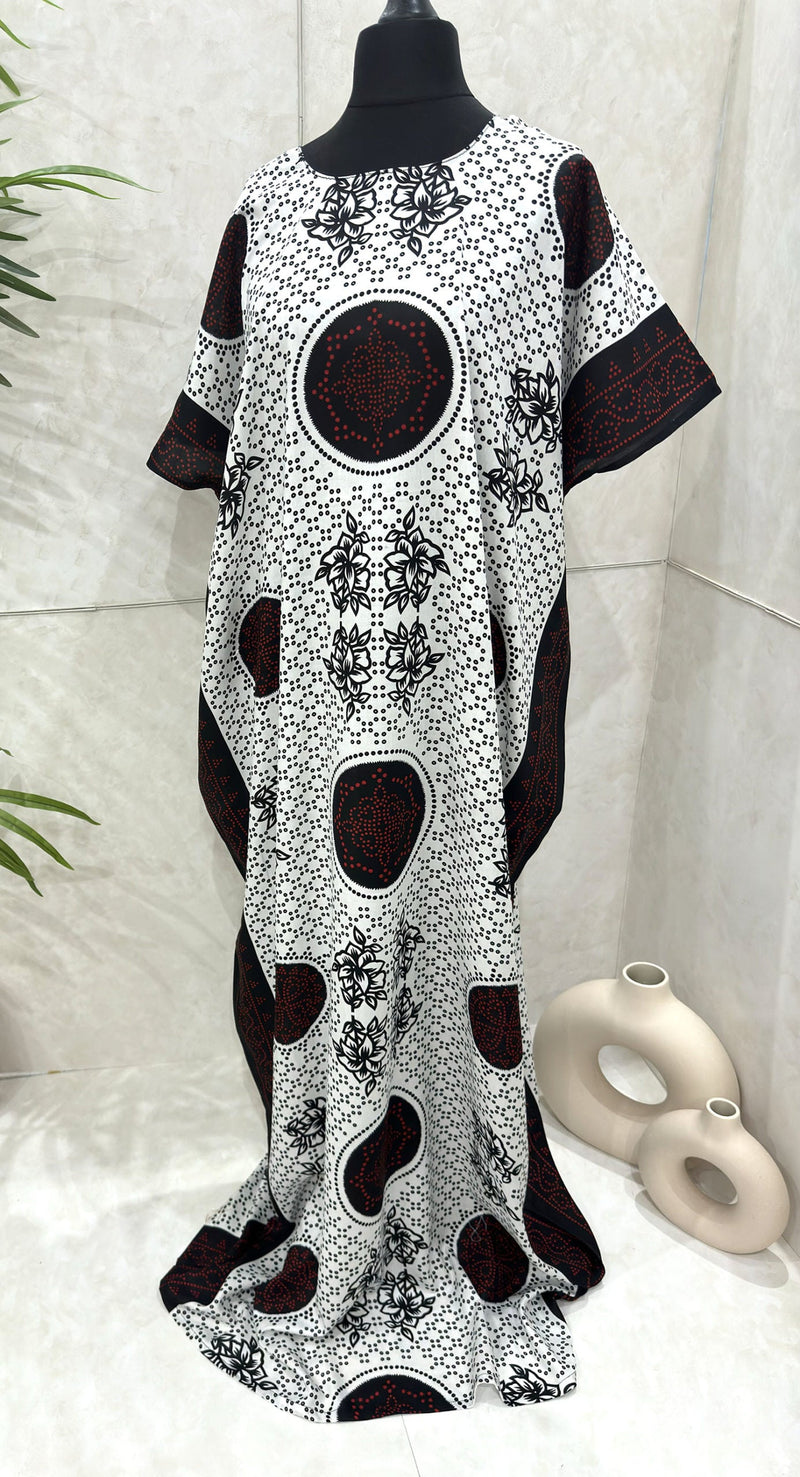
Try the dress on before deciding that its generous width provides all the space you need. Some styles have an internal seam or a narrower body beneath the visible outer shape. Others hang from a broad shoulder line, with the fabric forming the sleeve as it falls.
Raise your arms and see where the sides move. An opening that appears small with your arms lowered may reveal more when you reach forward. Check this with the layers you actually intend to wear, and decide whether the design suits your preferred coverage.
Look at the dress from the back. Decoration, ties or gathers at the front can make the rear view easy to overlook. The back should feel as considered and comfortable as the part you see most readily in a mirror.
For a comparison with other long garments, the abaya style guide explains how different silhouettes create their shape. Use the descriptions to understand construction, rather than expecting one label to predict the whole fit.
Give the sleeves a practical test
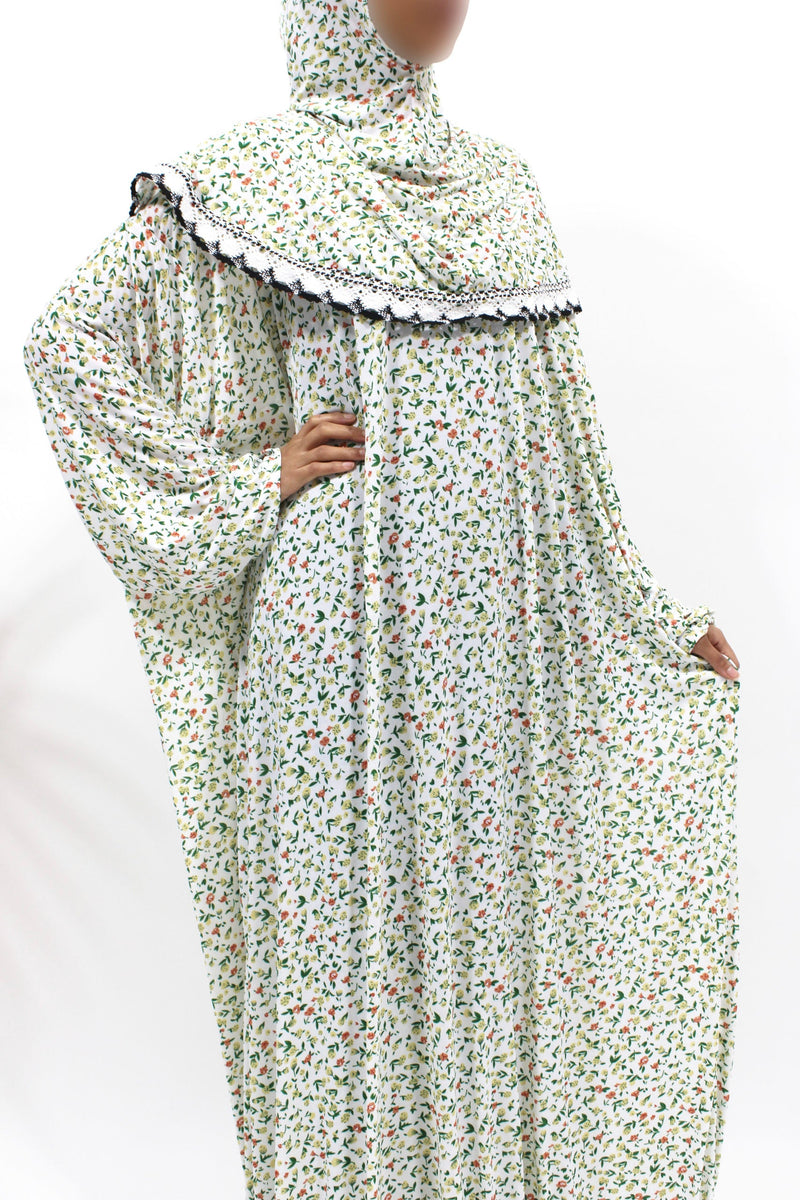
The sleeves are often the strongest feature of a kaftan. A wide, loose sleeve can be beautiful while standing, but think about eating, reaching across a table or carrying a bag. You should not need to hold every loose edge out of the way throughout the occasion.
Check the distance between the wrist and the sleeve opening when your arms move. A closer inner sleeve can be useful in a particular design, but do not assume it is included unless the product information says so. The outer and inner layers may also need different care.
Where the kaftan has deep side openings rather than conventional sleeves, decide whether a separate long-sleeved layer is needed. Try that layer at the fitting, since it can change the feel around the shoulders and underarms.
A cuff alteration can sometimes make an otherwise suitable garment more manageable, but it is not a decision to improvise. Ask an experienced alterations professional whether the change will preserve the intended drape and leave enough room for movement.
Choose a neckline that works with the scarf
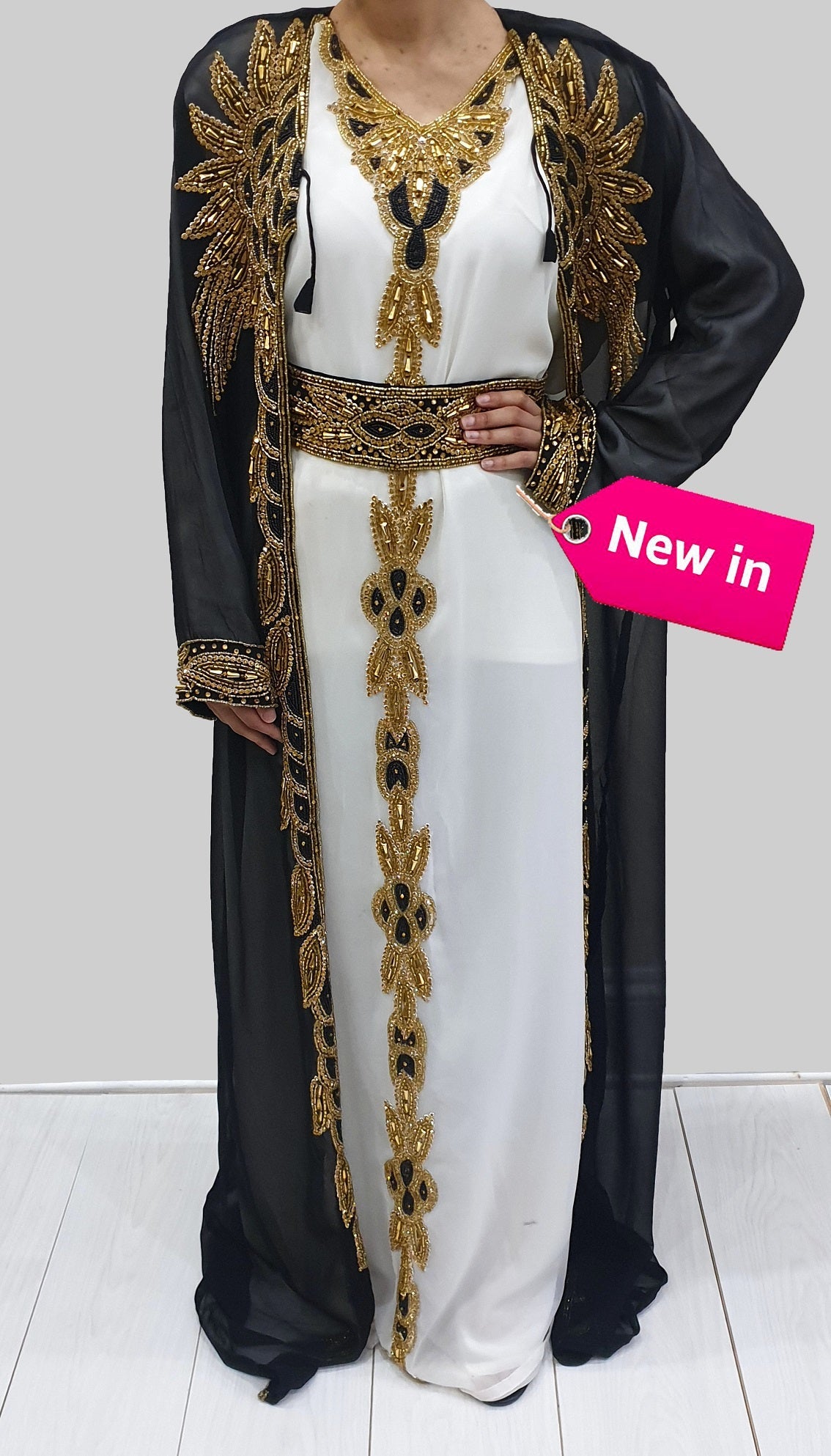
A heavily decorated neckline may become partly hidden once the hijab is arranged for the coverage you want. That is not a failure of styling; it is simply a reason to judge the complete outfit rather than the dress alone.
Place the scarf first, then look at what remains visible. You may prefer a kaftan with detail at the cuffs or lower panels, where it does not depend on exposing a neckline. Alternatively, a simple neck opening can provide a comfortable foundation for a more expressive scarf.
Avoid creating tension by pulling the hijab away from the area you want covered just to display embroidery. Choose a relationship between garment and scarf that feels natural. Decoration is there to serve the outfit, not dictate an uncomfortable arrangement.
Distinguish generous fabric from heavy fabric
A wide cut uses a considerable amount of cloth, so the fabric’s weight becomes noticeable in the finished dress. A material that feels light as a small swatch may feel substantial when used across a full-length garment and lining.
Ask about the fibre composition and the layers included. A glossy surface does not prove that a fabric is silk, and a soft-looking photograph does not tell you how warm it will feel indoors. Read the material information rather than judging by an evocative description.
For a sheer or openwork kaftan, plan an opaque base where you need it. Check the sleeves and side openings, not only the central body panel. A lining can stop at a different point from the outer dress.
For a daytime outfit, you might prefer an uncomplicated fabric and restrained trim. An evening piece can have more decoration, but consider whether its weight and cleaning requirements suit the number of times you expect to wear it.
Let the dress lead the accessories
If the kaftan has large embroidery, a strong print or a bright border, begin with a plain scarf. Choose a colour already present in a small part of the design, or use a neutral that leaves the garment’s detail clear.
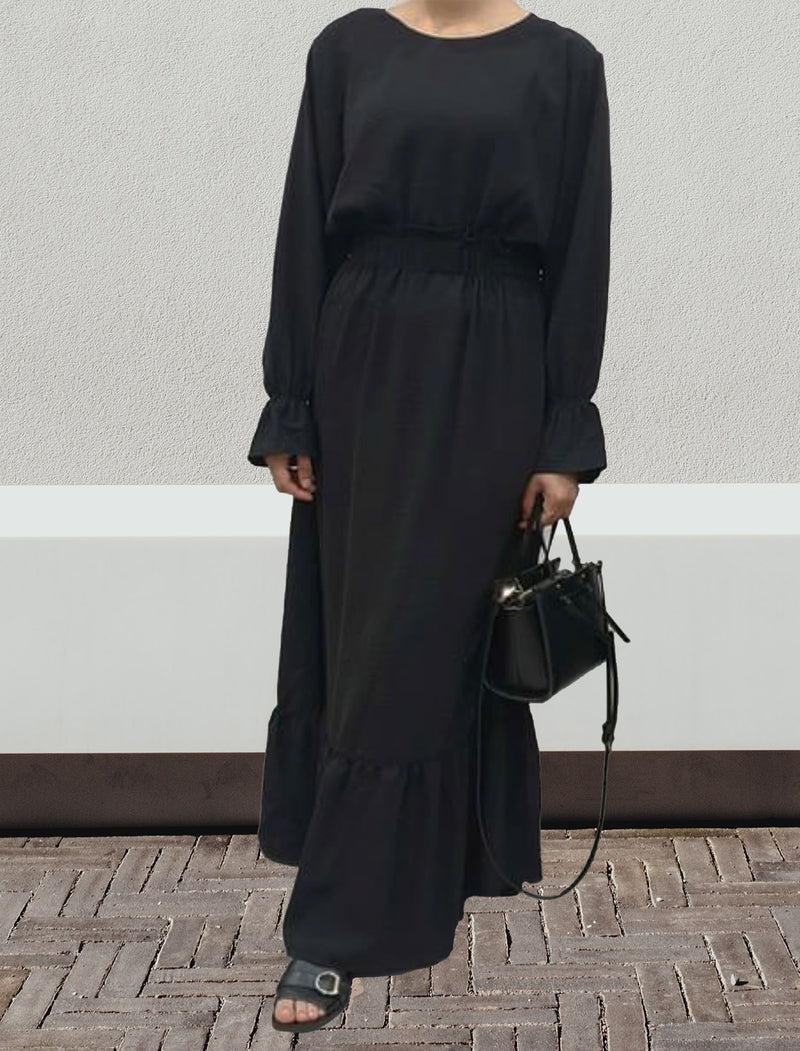
For a plain dress, texture can provide interest without adding a complicated pattern. A softly textured hijab, a simple bag and one piece of jewellery may be enough. Our guide to choosing a hijab fabric can help you find a drape that sits comfortably beside a more expansive garment.
Check jewellery against the fabric before wearing it. A rough clasp or projecting ring can catch a loose weave or raised decoration. The same applies to the bag: inspect straps and hardware where they rest against the dress.
A belt changes the kaftan’s shape substantially. Use one only when you like that result and the garment is designed or suited to it. If you prefer the original flowing outline, leaving the waist unbelted is a complete styling choice.
Adapt the outfit to the occasion
For a relaxed gathering, a plain kaftan with manageable sleeves can work with comfortable flats and an unfussy scarf arrangement. Check that the hem clears the floor in those shoes. A small amount of contrast at the scarf or bag can be all the outfit needs.
For a family celebration, choose the detail you want to enjoy: a rich colour, embroidered edge or particular sleeve shape. Keep the remaining pieces connected rather than adding several competing decorations. Sit at a table during the fitting to see how the sleeves behave.
For a formal event, read the invitation and consider the venue. A substantial embellished kaftan may feel appropriate in one setting and excessive in another. The event’s level of formality, not the garment’s name, should guide the final choice.
For work, judge the garment against your actual role and workplace expectations. A simpler cut with controlled sleeve openings may be more manageable than a dramatic occasion style. Do not assume that every kaftan can move between a desk and a formal dinner without adjustment.
Inspect craftsmanship without relying on a luxury label
Look at how decoration meets seams and edges. Check for secure attachments, consistent stitching and a lining that does not pull the outer cloth. Turn the garment inside out where possible and inspect the areas that touch your skin.
Handmade and machine-made are descriptions of methods, not automatic rankings of comfort or quality. Ask about the work where it matters to your purchase, but assess the finish you can actually observe.
When a design draws on a named cultural tradition, learn the specific context rather than attaching a broad story to every long, loose dress. Avoid assuming that a photographed outfit represents all wearers from a country or community. You can appreciate a design without inventing a history for it.
Check where you will put your hands and belongings
A broad kaftan sleeve can change the way you use a bag. Try reaching into it while wearing the full outfit, then put it back on your shoulder. Notice whether the sleeve fabric gathers beneath the strap or gets pulled across the body.
If the dress has pockets, test their position with a light, realistic item. A pocket hidden within a generous cut may still sit too low or alter the drape when filled. Keep heavier belongings in a suitable bag rather than loading the dress because the pocket appears spacious.
For a meal, bring your hands forward as though using the table. This reveals whether the sleeve opening needs a different arrangement or whether another garment would be easier for the occasion. These small checks are more helpful than judging a kaftan only with the arms held away from the body.
Consider what happens after the first wear
Check the cleaning instructions before buying an ornate garment. Embroidery, beads and linings may make its care more involved than the main fabric suggests. Store it so heavy trim is supported and delicate areas are not pressed under other clothes.
For travel, plan how the dress will be packed and prepared at the destination. Do not assume that a hotel iron or steamer is suitable for every fabric. Keep the care information with you and arrange any specialist treatment in advance where needed.
Claims such as “ethical” or “sustainable” need specific support. Ask what the claim refers to and whether the maker provides meaningful information. Independently of those claims, choosing a dress you can wear, maintain and enjoy repeatedly is a practical way to make the purchase useful.
A kaftan outfit works best when you can enjoy its generous shape without having to supervise it constantly. Once the sleeves, neckline and length are settled, the scarf and accessories can become the enjoyable finishing decisions rather than tools for correcting the garment.