Simple dress outfits to wear with hijab
A simple dress can make getting dressed easier, but only when the important details have been considered. A plain front does not compensate for sleeves that pull, a neckline that needs constant adjustment or a skirt that becomes difficult to manage as soon as you sit down.
For an understated outfit with hijab, begin with the dress you can wear comfortably and then decide what the scarf, shoes and outer layer need to do. The result does not have to be beige, expensive or completely free of pattern. Simplicity can mean that each part has a clear purpose and that you are not solving several fit problems with extra accessories.
This guide looks at the shapes, checks and outfit decisions that make a modest dress useful in everyday life, with ways to change the look without rebuilding your wardrobe.
Define what simple dressing means to you
One person may want a dress with almost no visible decoration. Another may be happy with a small print but prefer a straightforward scarf and shoes. A third may like a strong colour and an uncomplicated silhouette. None of these approaches requires a rigid minimalist uniform.
Think about what makes an outfit feel difficult in your own routine. It might be coordinating several colours, managing a belt, finding an underlayer or arranging a scarf around an awkward collar. A simpler dress should reduce those difficulties rather than merely look plain in a photograph.
Write down the features you want to rely on: perhaps long sleeves, a comfortable opening, an appropriate hem and enough room to sit. Then separate those requirements from decorative preferences. You can be flexible about a button shape without compromising the fit or coverage that matters to you.
It is also useful to name the settings in which you will wear the dress. A working day, a family visit and a more formal celebration may overlap, but they are not identical. A dress does not need to serve every possible event to become a valuable part of your wardrobe.
Our complete modest fashion guide can help you think about the whole outfit. Treat simplicity as a practical way of choosing, not as a judgement about people who enjoy more colour, detail or decoration.
Understand the shape you are choosing
A-line dresses
An A-line outline usually gives the lower half more room than the upper section, but the exact fit still varies. Check the shoulders, chest and sleeves rather than assuming that a wider skirt makes the entire dress loose.
Look at where the fullness begins. A dress that opens gradually from the upper body will feel different from one with a defined waist seam and a fuller skirt below it. Choose according to the movement and outline you prefer, not a rule about which body shape should wear each design.
Try the dress with the outer layer you normally use. A fitted jacket may compress the top of a fuller skirt, while a longer coat may allow it to fall differently. The dress and outerwear should work together without repeated rearranging.
Shift or straighter dresses
A straighter shape can look wonderfully uncomplicated, but it needs enough room through the hips and knees for sitting and walking. Check the side view and any lower openings. A neat front view does not tell you whether the garment restricts your stride.
Pay attention to the fabric’s behaviour. A straighter dress in a soft cloth may follow the body differently from a more structured version. Neither is automatically better. Try the actual garment with the layers you intend to wear.
If the dress has a high side slit, decide whether the outfit beneath provides the coverage you want. Do not assume that the word modest in a description means every opening will suit your preferences without further styling.
Wrap and wrap-look dresses
Find out whether the dress has a functioning wrap, a fixed wrap appearance or a separate tie used mainly for decoration. Those constructions behave differently. A fixed front may give you less adjustment but fewer moving layers; a true wrap may need a careful check of overlap and fastening.
Sit, reach forward and walk before deciding that the front is secure. Look at the neckline as well as the skirt. A scarf may cover part of the neckline, but it should not be the only thing preventing an opening you would otherwise find uncomfortable.
Check the tie position. It should not need to be pulled tightly to compensate for an unsuitable fit. If you like the wrap appearance but dislike managing the fastening, a fixed design may be worth comparing.
Maxi dresses
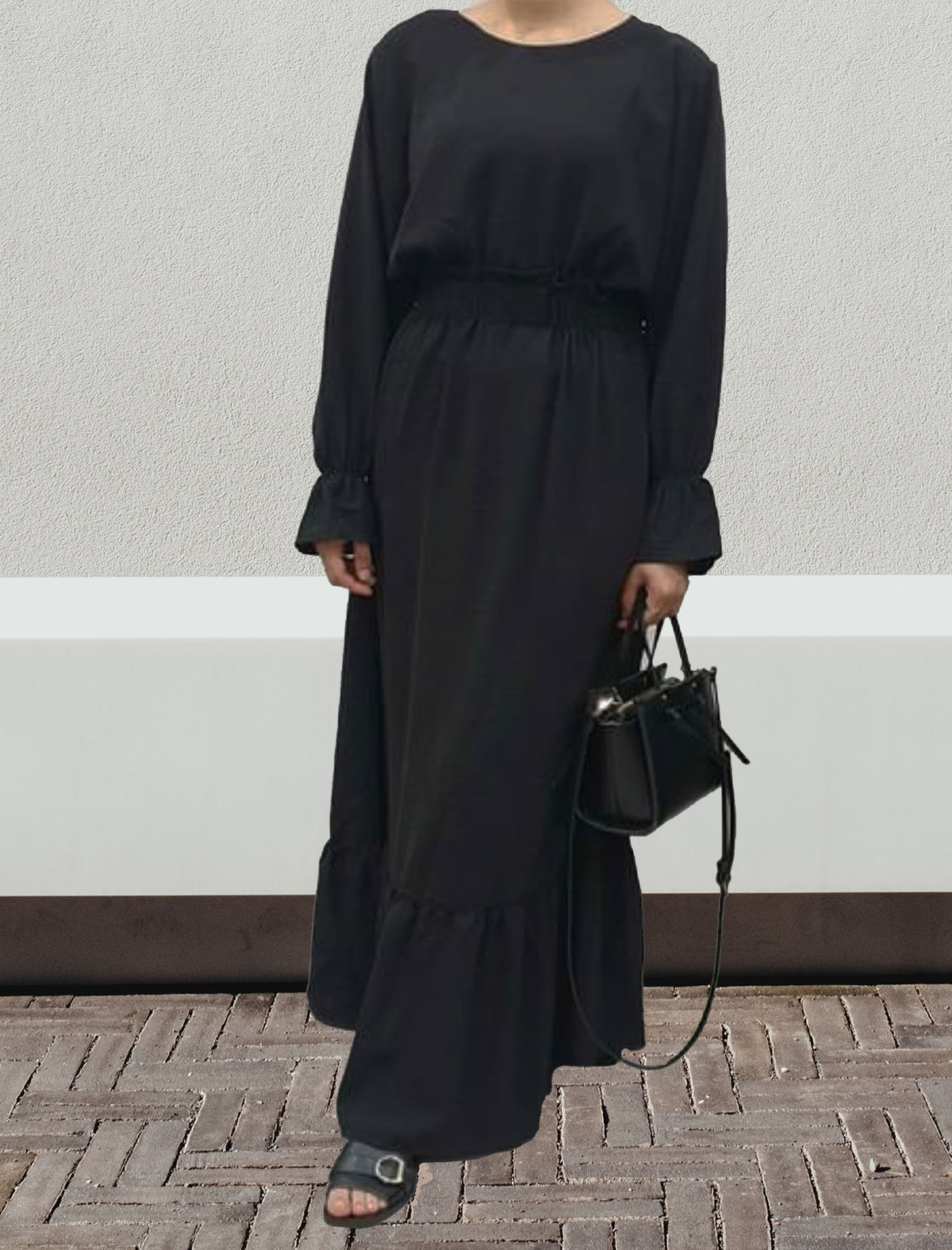
Maxi describes length rather than one particular shape. A maxi dress can be straight, flared, wrapped or otherwise constructed. Assess both the length and the cut instead of treating the long hem as a complete fit description.
Try the hem with the shoes you intend to wear, including the pair you use for the journey. Walk and turn, then sit down and stand again. A manageable length is more useful than an impressive photograph of fabric trailing behind you.
For more detailed combinations, see our guide to styling a maxi dress with hijab. The same principle applies: the scarf, sleeves, hem and footwear need to work as one outfit.
Check the dress before adding the scarf
Try the dress with the basic underlayers you expect to wear. Look at the neckline, sleeve openings, body fit and hem. This gives you a clear view of the garment itself before the scarf or coat covers part of it.
Raise your arms and reach forward. Notice whether the sleeve pulls across the upper arm or lifts the whole dress. Check the back shoulder area and the position of any waist seam. A garment can be roomy in one place and restrictive in another.
Sit down for a few minutes. Observe the skirt across the lap, the buttons or zip, and any side slits. Stand up again and see whether the dress returns to position or needs several adjustments. The latter may tell you that the fabric, cut or underlayers are not working well together.
Check opacity in ordinary light and in the areas that become more stretched during movement. A lining may cover the body but not the sleeves, or it may finish above the outer hem. Inspect the actual extent rather than assuming that lined means the same thing throughout the garment.
Try the pockets with the small items you would normally carry. A plain dress can show pocket weight quite clearly. If the pocket pulls or distorts the side, decide whether you are happy to use a bag instead or whether another design would be more practical.
Include getting dressed and undressed in the trial. Can you comfortably reach the zip or buttons? Does a pullover opening pass over the head without pulling at the shoulders? Can you remove the dress without catching a fastening in the scarf or any jewellery? These details are easy to overlook when the garment is already on in a photograph. A design that requires help every time may be suitable for an occasional outfit, but it may not provide the independence you want from an everyday dress. Choose the opening and fastening with that routine in mind.
Let the neckline guide the hijab arrangement
A simple dress can still have a demanding neckline. A raised collar, a row of buttons, a decorative tie or a deep opening changes where the scarf can sit. Put the dress on before deciding how much fabric you want around the neck.
With a plain rounded neckline, a soft front drape may be enough. Check that it remains where you want it when you turn your head. With a higher collar, a lighter or less folded scarf arrangement may feel more comfortable than several wraps gathered in the same area.
If the dress has a more open neckline, use a suitable base or arrangement that provides the coverage you want reliably. Avoid depending on a single loose scarf fold that moves away every time you reach forward.
Look at the shoulders as well. A scarf end placed over a shoulder may cover a seam, button or small decorative detail. Decide whether that is intentional. You do not need to show every feature of a dress simply because it is there.
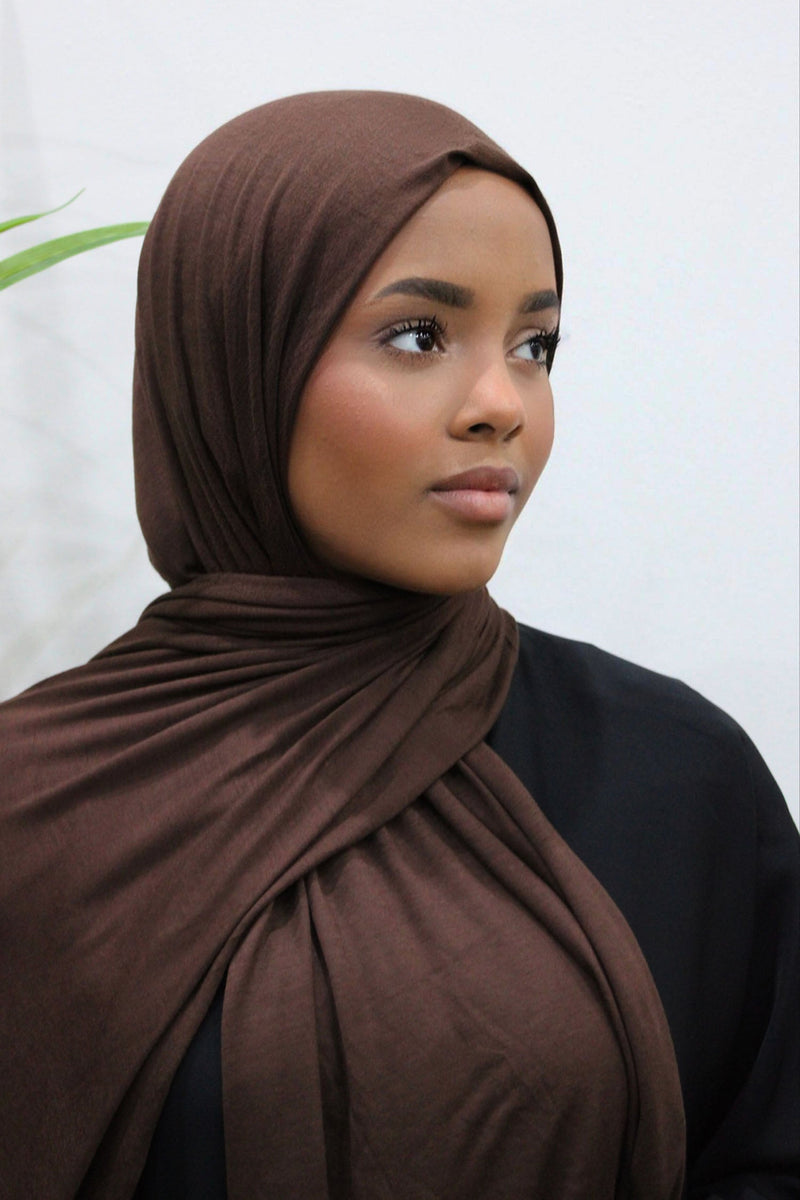
A useful way to reduce fuss is to choose one scarf arrangement that works with several dresses. Keep the foundation and fold familiar, then change the colour or fabric where it genuinely suits the outfit. This is different from expecting one exact scarf to behave identically with every neckline.
Choose colour without restricting yourself to neutrals
Black, navy, cream, brown and grey can be useful, but they are not the only colours that support an understated wardrobe. A plain green, blue or rose dress can be just as straightforward to style when you have compatible scarves and shoes.
Start with combinations you already enjoy. If you regularly wear navy and soft grey, a dress that works with those pieces may be more useful than a supposedly essential beige dress that requires several new purchases.
For a tonal outfit, compare the actual shades. A scarf and dress from the same colour family do not have to match exactly, but the difference should look deliberate to you. Try the combination in ordinary light rather than relying on colour names alone.
For contrast, keep the relationship clear. A darker dress and lighter scarf can provide a distinct frame near the face. Alternatively, a colourful dress can sit beside a quieter scarf. There is no need to assign these choices to particular complexions or personalities.
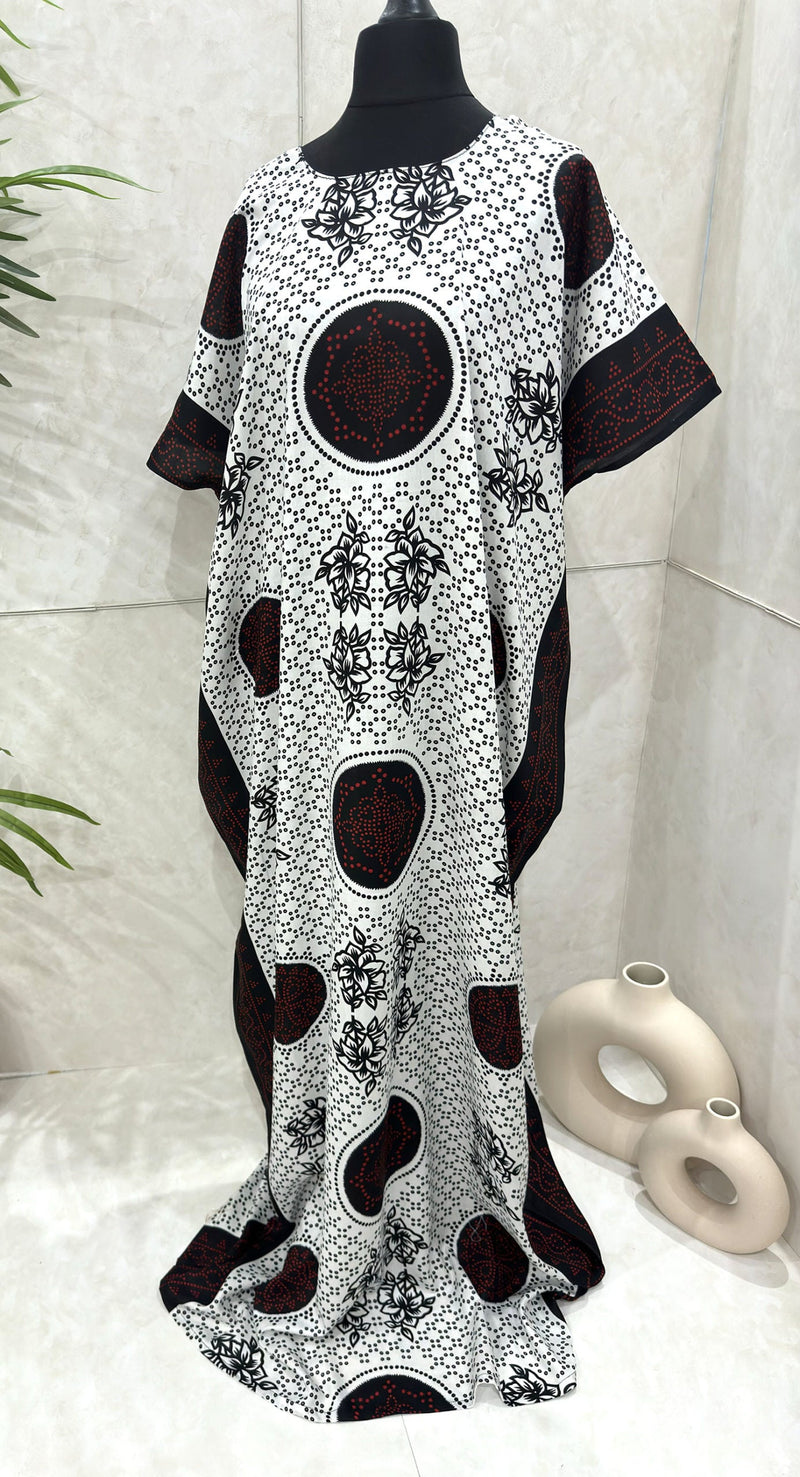
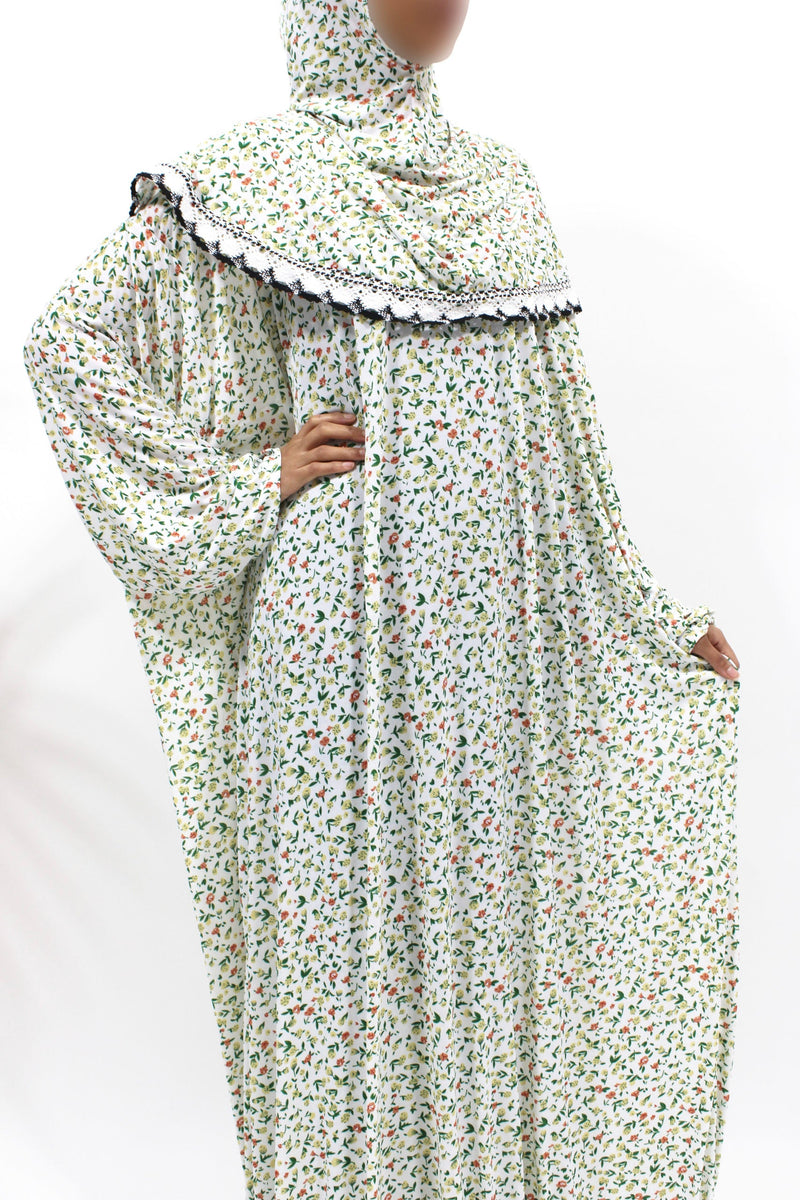
Small prints can also work. Look at their scale once the dress is worn and partly covered by the scarf or outer layer. A print concentrated at the neckline may feel busier than the same motif placed lower on the skirt. Choose the effect you enjoy rather than assuming that minimalist dressing excludes patterns.
Use texture as a detail in its own right
A plain dress may have enough interest through its weave, pleats, stitching or gentle surface texture. Look at it before adding a necklace, belt or decorative scarf. You may prefer to let that one detail remain visible.
Try the scarf against the dress rather than choosing each texture separately. A heavily textured scarf over a raised neckline may feel crowded, while a smoother scarf could sit more comfortably. In another outfit, a textured scarf may be the detail that makes a plain dress feel complete.
Shine is another choice to compare. A glossy surface can draw attention to folds and seams differently from a matte one. Check the actual garment in movement and lighting, particularly if the dress will be worn for an event with photographs.
Do not confuse a quiet appearance with high quality. Inspect the seams, lining, fastening and finish. Equally, a low price does not tell you everything about a garment’s usefulness. Specific construction and fit information is more valuable than a broad label such as elegant or premium.
Five complete outfit approaches
A dress for errands and an ordinary day out
Choose a dress with a manageable hem and sleeves that stay comfortable through reaching and carrying. Add a familiar scarf arrangement, shoes suited to the route and a bag that does not pull the neckline or catch on the fabric.
Trainers can be an option, but try the actual pair rather than assuming they work with every dress. Check the hem while walking and consider whether the shoe shape changes the way the lower fabric falls. The outfit should be convenient to wear, not merely labelled casual.
A simple work or study outfit
Start with a dress whose neckline, sleeves and seated fit work for the setting. Add a blazer or cardigan only where it serves a purpose. Try the outer layer fastened and open, then remove it to make sure the base outfit feels complete.
Keep the scarf clear of equipment and surfaces you use regularly. A long decorative end may be less useful at a desk than a more contained drape. Choose accessories according to the work itself rather than treating jewellery or heels as compulsory signs of professionalism.
A family visit or lunch
A plain dress with a slightly more distinctive scarf can be enough. You might introduce a colour you enjoy or a small pattern that repeats a tone from the dress. Choose one accessory if you would like a focal point, then see whether the outfit needs anything else.
Try sitting at a table and using the bag. Check that sleeves and scarf ends remain manageable. These small details help an outfit feel relaxed without making it look unfinished.
An occasion with a more polished dress code
Choose a dress whose fabric, construction and overall appearance suit the actual event. A simple design can be appropriate, but accessories cannot automatically transform every casual dress into formalwear. Read the invitation and clarify expectations where necessary.
A carefully chosen scarf, bag and shoes can complete the look without competing with one another. Try everything together before the day, including outerwear for the journey. Our guide to formal dresses with comfortable modest coverage explores those longer-wear considerations.
A day that moves from casual to more dressed-up
Begin with a dress that suits both parts of the day. Plan a small, realistic change such as a different outer layer or a more decorative scarf. Keep the shoes and hem relationship in mind if you intend to change footwear.
Do not build the plan around a complete transformation that requires a private fitting room, several accessories and a new scarf arrangement unless you will actually have the space and time for it. Simpler dressing is most useful when the change is easy to carry out.
Decide which accessories have a job
A bag carries what you need; shoes support the journey; a belt changes the outline; jewellery provides a detail you may enjoy. Thinking in these terms helps you choose deliberately rather than adding every accessory associated with a polished outfit.
Try the dress without a belt first. If you add one, check how the fabric gathers above and below it and whether the neckline or hem shifts. A belt should not be used to hide a fit problem that would be better addressed by another size or cut.
With jewellery, consider the scarf arrangement. A necklace may be covered, a brooch may distort a delicate fold, or an earring may catch during dressing. You can choose a different piece, change its position or leave it out. An outfit does not need visible jewellery to be complete.
Look at hardware together. Prominent buttons, a large belt buckle, a decorative bag clasp and a brooch may create more detail than you intended. Simplify one area and compare before deciding that the whole dress is wrong for you.
Keep personal preference central. “Less is more” can be a useful reminder to pause, but it is not a rule that every person must obey. The aim is a combination you enjoy wearing, with details that work together rather than a prescribed number of accessories.
Build a small rotation around real outfit combinations
Take one dress you already find comfortable and lay out two or three complete outfits with it. Include the scarf, shoes, bag and outer layer. If each combination requires a missing piece, identify whether the dress is genuinely versatile for your wardrobe or only attractive in theory.
Repeat the exercise with another dress in a different shape or fabric. You may discover that the same scarf and shoes work with both, while the outer layer needs to change. That information is more useful than a generic list of items every modest wardrobe supposedly needs.
Keep a simple record of the successful combinations. A photograph or short note can save time when you are dressing for a familiar setting. Record the practical details too, such as which shoes suit the hem and which coat fits over the sleeves.
When shopping, look for a gap in that rotation rather than another near-identical item. Perhaps you have several occasion dresses but no everyday dress with useful pockets. Perhaps your work dresses all need an outer layer you cannot comfortably wear indoors. A targeted purchase is more likely to earn regular use.
Leave room for repetition. Wearing a combination you like again is a sensible use of clothing, not a failure of creativity. Small changes in scarf colour or outerwear can provide variety when you want it, without making every morning a new styling project.
When a plain dress still feels difficult to wear
You keep adding layers to cover the neckline
Check whether a different base or scarf arrangement solves the problem comfortably. If the dress needs several layers that gather at the neck, another neckline may be more practical. A plain appearance is not enough reason to keep an unsuitable construction.
The dress looks unfinished without a belt
Compare the fit and proportions before assuming a belt is necessary. The waist seam may sit in the wrong place, the hem may be an awkward length for the shoes, or the scarf may create more volume at the top than you intended. Change one element at a time.
The outfit feels too plain
Add one detail you genuinely enjoy: a textured scarf, a colour contrast, a small print or a favourite piece of jewellery. You do not have to abandon a simple dress because the first combination lacks interest. Equally, you do not have to force yourself into minimalism if you prefer richer decoration.
The fabric shows the outline of every underlayer
Assess the fit, opacity and lining. A smoother base may help with some outlines, but it cannot change the fundamental cut or thickness of the dress. Consider a different garment rather than relying on an uncomfortable arrangement of extra layers.
The dress works standing up but not seated
Check the lap, hips, fastening and side openings. A different size may help, but another cut may be the better answer. Do not judge the garment only by the pose in which it looks most flattering; you need it to work in the positions your day actually involves.
Ask specific questions when shopping online
Request finished measurements, fibre composition, lining details and photographs of the back, sleeves and fastenings. Ask about any openings or slits that are difficult to see. A carefully styled front photograph cannot answer all of those questions.
Compare measurements with a dress you already own using the same method. Keep the desired finished fit separate from your body measurements. If a description uses a loose size label, look for the actual dimensions rather than assuming that the label will mean the same thing across different products.
Read the current delivery, return and fault-reporting information directly from the seller. Do not choose only by a polished description or an attractive photograph. Retain the product information so you can compare the delivered item with the details you relied on.
For an alteration, identify the exact problem and ask how the proposed change affects other features. Shortening a dress can alter the relationship between the hem and a slit or decorative border. A sleeve change may affect a cuff. Agree on the result rather than requesting a vague improvement in elegance.
Keep the dress ready for the next wear
Follow the care instructions for the finished garment, including its lining, fastenings and decoration. Do not assume that a simple dress must be easy to wash or that every delicate-looking fabric needs the same treatment.
Check for marks, loose buttons and caught threads before putting the dress away. Address issues using a method appropriate to the material and construction. Avoid improvised heat or washing treatments intended to change the fit.
Store the dress in a way that supports its shape and keeps it clear of accessories that could snag it. Keep the scarf and other outfit pieces easy to find without forcing them into a storage arrangement that creases or damages the dress.
A small amount of preparation makes repetition easier. Knowing that a favourite dress is clean, intact and ready with a suitable scarf is one of the practical benefits of a considered wardrobe. It is more useful than owning several similar dresses that all need attention before they can be worn.
Choose ease without giving up individuality
A simple, elegant outfit is not a formula based on neutral colours, a particular body shape or expensive accessories. It is the result of choosing a dress that fits your movement and then arranging the other pieces with intention.
Start with dependable coverage and comfortable construction. Choose a scarf that has space around the neckline, shoes that work with the hem and an outer layer that can be removed without disrupting the outfit. Add colour, texture or decoration where you enjoy it.
When those decisions are working, the dress becomes something you can reach for rather than something you need to solve. That is the kind of simplicity worth building into an everyday wardrobe.