How to style a larger hijab
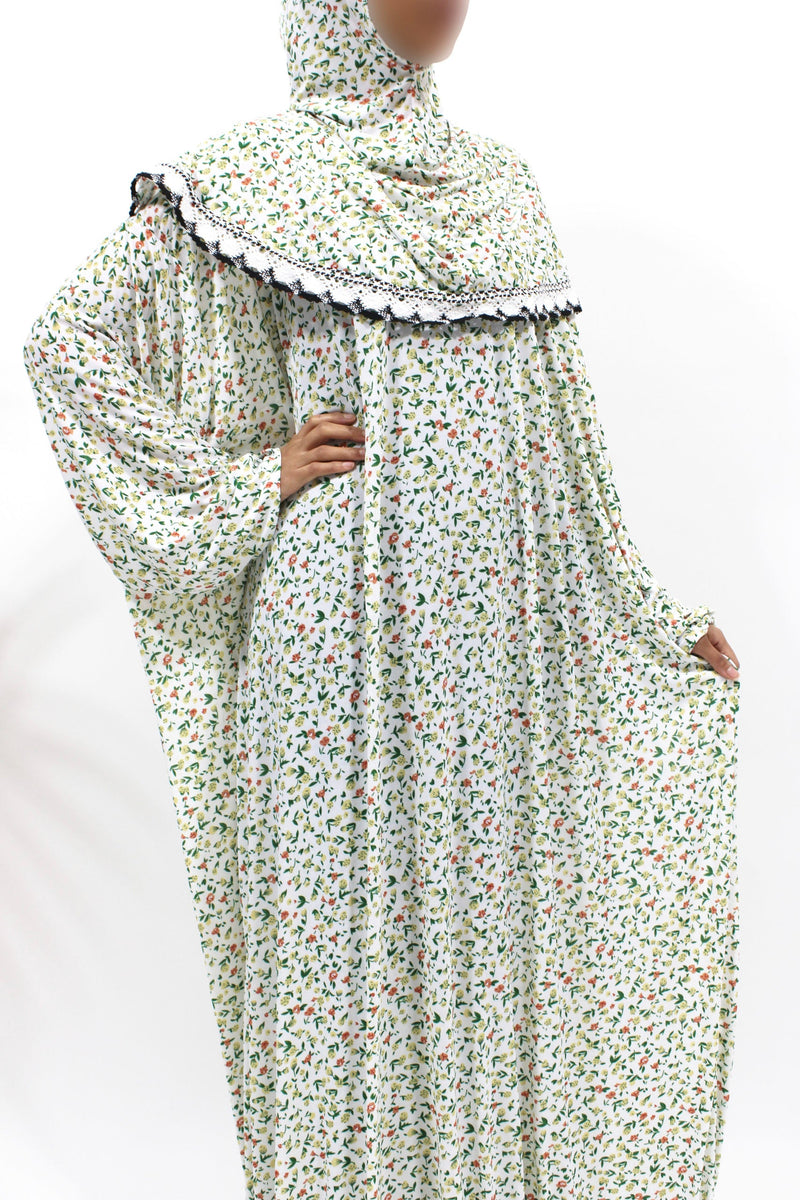
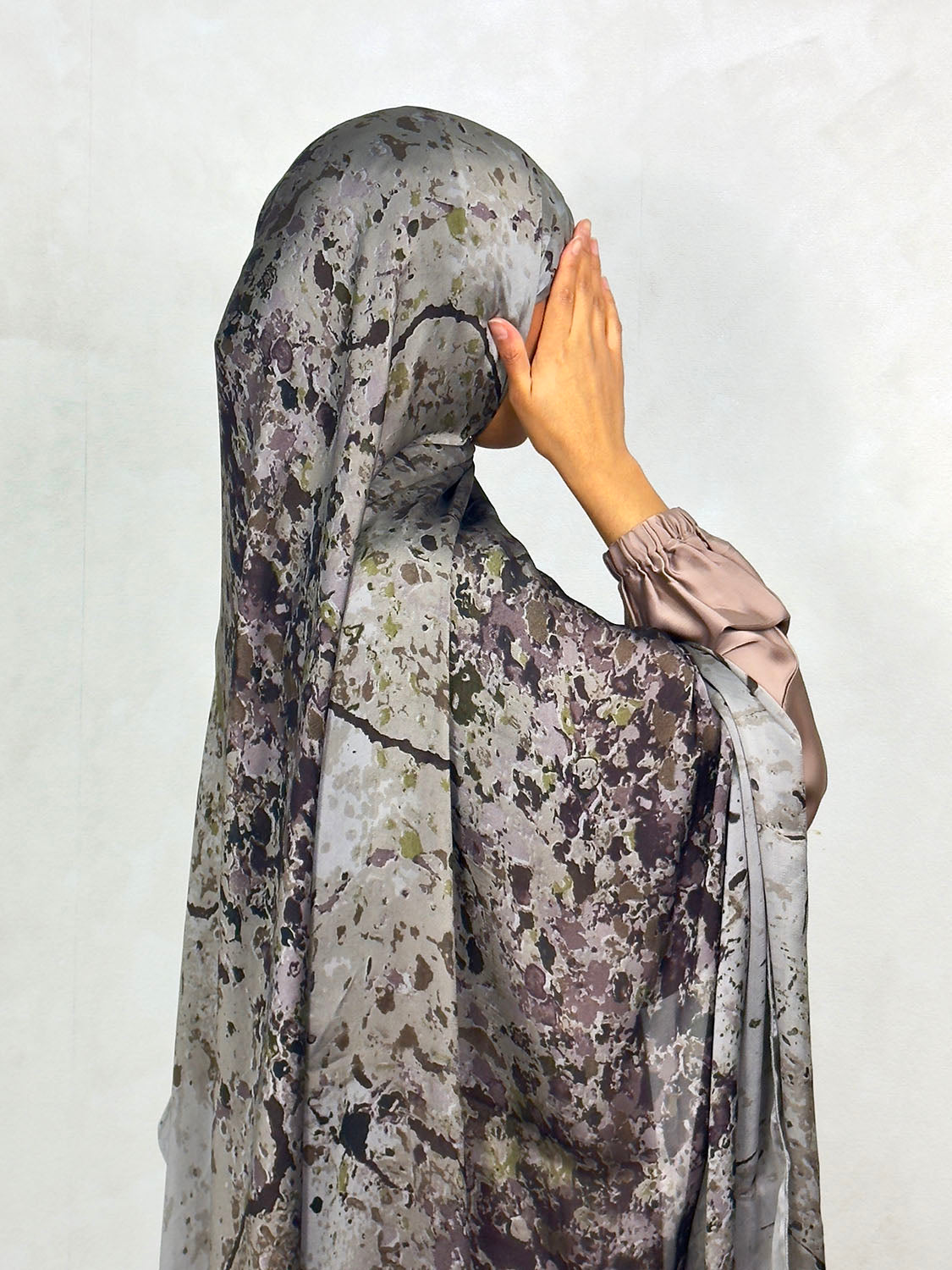
Spread a large hijab out before deciding what to do with it. The extra fabric can become a broad chest drape, a longer back panel, soft folds at the shoulders or a more decorative arrangement. It does not all have to be wrapped around the neck, and it does not have to be used to create height above the head.
“Big hijab” can describe several different things: an oversized scarf, generous coverage or a deliberately voluminous style. Knowing which of those you want makes the choice much easier. A large scarf worn in a simple drape can look quite restrained, while a smaller scarf with several gathered folds can appear much fuller.
The starting point is the coverage and shape you enjoy. From there, choose dimensions, fabric and an arrangement that you can comfortably manage. Confidence does not have to mean wearing the largest or most elaborate version. It can mean knowing how your scarf works and not having to keep correcting it throughout the day.
Decide where you want the extra fabric
Try your current scarf and notice what you would change. Perhaps you want more coverage across the chest, a longer fall at the back or enough length to bring one end over the shoulder without pulling the other side. Those are different needs, and they may call for different dimensions.
A longer rectangle gives you more end length, but it may not add the depth you want across the front. A wider scarf can provide a broader drape, although folding it deeply may use some of that width at the face. Compare both measurements rather than shopping only for something described as large.
Look at the garment beneath. A simple dress may provide a clear surface for a generous scarf drape. A large collar, hood or heavily decorated shoulder can create more to arrange around. You can still combine them, but it helps to understand where the fabrics will meet.
Keep decorative volume separate from coverage. You can have plenty of coverage without building a bulky shape around the head. Equally, an elaborate head arrangement may not provide the neck or chest coverage you want. Assess the finished outfit rather than assuming one follows from the other.
Choose the material for the shape you want
A soft scarf may fall into long, fluid folds. A firmer one may hold a more pronounced outline. Neither is automatically better for an oversized style. Choose according to whether you want the fabric to drape, stand away slightly or keep a defined edge.
Handle the scarf in several layers. A material that feels light when spread flat can become substantial when folded repeatedly. If the style requires many turns around the neck, consider whether a different route or scarf shape would provide the same coverage more comfortably.
Check the edge finish, too. A thick border can add weight to a shoulder drape, while a decorative trim may determine where you want the end to fall. Do not hide a heavy edge inside a tight bundle simply because the scarf has extra length.
Look at opacity in the intended arrangement. A broad scarf is not automatically opaque, and a sheer-looking fabric may need a specific number of layers for your preferences. Include any undercap or separate coverage layer when deciding how the whole outfit feels.
The hijab fabric guide explains the questions to ask about drape and handling. Use the individual scarf's behaviour as the final test rather than assuming that every chiffon, jersey or woven scarf will give the same result.
Give the scarf a comfortable foundation
Arrange the hair and any undercap before adding the larger scarf. Choose a foundation that is comfortable in its own right. Extra fabric above it will not reliably solve a cap that presses or slips.
You do not need a volumising accessory to wear a big hijab. If you enjoy a fuller outline, experiment with the scarf's own folds first and decide whether that already gives you the shape you want. There is no requirement to create a particular height or back profile.
Check the front edge without pulling it tightly towards the face. A larger scarf can give you more room to distribute fabric, so use that room rather than gathering everything beneath the chin. Leave enough ease for speaking and ordinary head movement.
Our guide to underlayers for hijab can help you separate support, coverage and comfort. Add only the layers that serve your own arrangement.
A broad everyday drape
This is a useful first style because it lets the scarf's size provide coverage without asking the fabric to form a complicated structure. Start with the scarf over your head and distribute the length so both the front and back have enough material.
Set the face opening in a familiar way. Then spread the front fabric across the chest to the width you prefer. Instead of pulling an end tightly to make it reach, adjust the starting position until the drape rests naturally.
Let the ends fall in a way that suits the garment. One may sit beneath the front drape while the other falls over a shoulder, or both may remain visible. Check that the ends do not hang where they interfere with your hands, bag or the day's activities.
Secure the arrangement only where support is needed, using suitable accessories that close or operate correctly. More fabric does not automatically require more pins. If the scarf is slipping, first look at the foundation and the direction of any pull.
Test the broad drape while sitting and reaching. Make sure the fabric stays where you want without having to hold it in place. A successful everyday arrangement should allow you to use your hands normally.
A classic wrap with a fuller finish
Begin with unequal ends so one has enough length for the route around or over the head. Keep the face frame simple while you guide the longer end into place. Allow ease in the fabric rather than turning it into a tight band around the neck.
Once the end is positioned, spread the remaining material into a fuller shoulder or chest drape. The extra size can provide soft folds without needing to be packed into one small area. Look at the front and sides to see whether the distribution feels balanced to you.
If the neck area becomes crowded, undo the travelling end and try a shorter route. You may be able to finish at the shoulder rather than making another full turn. Another option is a different starting fold that leaves less thickness at the front edge.
Check the outfit's collar and outer layer before finalising the wrap. A full scarf arrangement and a substantial coat collar can compete for space. Choose a version that remains comfortable with both pieces present.
Keep the style familiar enough to repeat. A fuller finish can be made from a basic wrap you already know; it does not have to be a completely new technique.
A long side drape for a simpler outfit
A side drape lets a generous scarf show its length. It can work well when the garment beneath has a relatively clear shoulder and front. Set the face opening first, then arrange the longer end so it rests across the chosen shoulder.
Check the opposite side after moving the end. The attractive fall on one shoulder should not pull fabric away from an area you wanted covered elsewhere. Redistribute the scarf at the beginning if necessary rather than stretching the drape into position.
Look at where the end finishes when you sit. A long section may fall onto a chair, desk or table differently from how it hangs while standing. Adjust the length to the activity rather than keeping it long solely for appearance.
Try the bag strap over the finished style. If it repeatedly displaces the drape, use the other shoulder, alter the strap position where practical or choose another arrangement for that outfit. The scarf needs to work with the things you carry.
A decorative brooch is optional. If you use one, check its weight against the fabric and make sure its fastening is suitable. The extra length of the scarf does not mean a fine section can support a heavy ornament.
Decorative bows and braid-like folds
A bow or a twisted, braid-like detail can be used as a decorative addition, but establish the covering arrangement first. The ornament should not be the only thing keeping the scarf in place or providing the coverage you want.
Try the idea with a manageable amount of fabric. A very large bow can become heavy or interfere with the face opening. Compare a smaller version before assuming that more volume will improve the style. Keep any loop or end clear of your vision and ordinary movement.
For a braid-like fold, work with the scarf rather than twisting it tightly around the head. Check the pressure and the direction of the pull before fastening. If the detail requires an uncomfortable arrangement to stay in place, use it elsewhere in the outfit or leave it out.
Do not build the style around a rule that a particular face shape needs extra height or width. You can choose a decorative outline because you like it. Your features are not a problem the scarf must correct.
These arrangements are worth practising with the actual outfit before an occasion. A large detail may meet a collar, headpiece or accessory in an unexpected way. Keep the rest of the outfit simpler during the trial so you can assess that interaction clearly.
Head-only wraps are a different coverage decision
Some turban-style arrangements use the scarf's volume around the head while leaving the neck and chest exposed. They are not interchangeable with a broad draped hijab for someone who wants those areas covered.
Decide on the complete outfit before choosing that technique. If you use separate coverage layers, check how they meet at the sides and back during movement. Do not rely on a front photograph or the style's name to answer those questions.
You can take inspiration from a fold, colour or texture without copying the entire head-wrap arrangement. A decorative idea may be adapted within a different wrap that better fits your preferences.
Balance the scarf with the clothes, not a body-shape rule
Look at the complete silhouette from a normal distance. A large scarf with a simple straight dress produces a different effect from the same scarf with a full skirt and wide sleeves. Decide which relationship you enjoy rather than automatically reducing every other part of the outfit.
You do not need a tight top to “balance” a generous scarf. A clearer shoulder line, a simpler neckline or a different fabric weight may provide the organisation you want while keeping the looseness you prefer.
With a patterned garment, compare a plain scarf first. This lets you judge the amount of fabric without also solving a second print. Then try a pattern if you want one, paying attention to the visible scale once the scarf is wrapped.
With a plain outfit, a larger printed scarf can become the main visual feature. Keep the colours connected to something you like in the clothes or accessories, but do not feel obliged to match every detail exactly.
The complete modest outfit guide can help with those broader relationships. A big hijab is part of an outfit, not a separate display that has to carry every decorative idea at once.
Choose colour and pattern at the scale you will wear
A large scarf shows more of its colour and print than a narrow folded strip. Try it around the shoulders before deciding that a shade is too strong or too quiet. The amount visible matters to the overall result.
For a bold print, identify which section sits near the face and which falls across the chest. Rotating the scarf or changing the fold can place the design differently. You may prefer a quieter section at the front and a larger motif in the drape.
A close colour match can make a large scarf blend with the garment, while a contrast makes the scarf more distinct. Neither is inherently more flattering. Compare the actual fabrics in the light available to you and choose according to the effect you want.
Texture can provide interest when you prefer plain colours. A softly crinkled surface, a visible weave or a smooth finish each creates a different impression. Check how that texture affects folding and care as well as appearance.
You do not need to leave neutral colours behind to prove confidence, and you do not need to avoid bright ones because the scarf is large. Style choices can be quiet or expressive without becoming a test of personality.
Make the arrangement practical for the day
Consider the activities that bring fabric close to your hands. A broad drape may need adjusting for eating, writing or carrying a bag. Choose an arrangement that stays manageable without reducing the coverage you want.
For a long journey, try the scarf with the seat, outerwear and bag you expect to use. A large knot or thick fold at the back may be inconvenient against a seat. A flatter distribution of fabric can be a more practical option than a structured decorative style.
In breezy conditions, do not assume that extra pins make every long drape suitable. Keep loose ends controlled in a way that remains comfortable and choose the outfit for the conditions. More fabric can require a different arrangement rather than more hardware.
At work or study, include glasses, headphones or a headset in the trial. Check that the scarf does not press equipment into an uncomfortable position. A generous chest drape and a clearer area around the ears can coexist when the fabric is distributed thoughtfully.
For an evening event, keep at least one element familiar. You might use your usual face frame with a more decorative scarf or alter only the shoulder finish. A new occasion does not require a new technique, new fabric and new accessories all at once.
Common problems with larger scarves
There is too much fabric beneath the chin
Open the arrangement and check the fold depth. You may have brought too much width into the front edge. Try a shallower fold or distribute more fabric into the back and chest drapes. Do not solve the crowding by pressing the bundle closer to the neck.
The ends trail or get in the way
Change where the length is used. A broader drape, a different starting distribution or a shorter shoulder finish may be more practical. If the scarf is much larger than you need, another size can be a better choice than repeatedly tucking away thick bundles.
The scarf looks full but feels heavy
Look at the material, border and number of layers. A large size in a substantial fabric may not suit the arrangement you intended. Try a simpler route or another scarf with a different weight. There is no requirement to keep using an item in a style that does not feel comfortable.
The back shape is difficult to control
Check the foundation and the amount of fabric being pulled backwards. You may prefer a flatter hair arrangement or a different fold, but choose for comfort rather than a prescribed silhouette. Remove unnecessary bunching before adding support accessories.
The style changes when you move
Some movement is normal for draped fabric. Decide whether the change affects coverage or comfort, rather than trying to preserve every fold exactly. Where a specific section shifts too far, identify the source of the pull and adjust that part.
A decorative detail dominates the outfit
Try a smaller version or remove another competing feature. A bow, large print and heavy brooch do not all need to appear together. You can keep the idea you enjoy while reducing the number of things asking for attention.
Work out whether you need more length, more width or a different fold
Before buying a larger scarf, measure one you already own according to a clear method. Lay it flat without stretching it and note its length and width. Then wear it in your usual arrangement and identify exactly where it falls short. This connects the numbers to an actual need rather than making “bigger” the only specification.
For an illustration, a rectangle measuring 200 by 70 centimetres is longer but narrower than one measuring 180 by 100 centimetres. Those are example dimensions, not recommended sizes. The longer rectangle may give you more end length, while the wider one may give you more depth to arrange. Neither is automatically the better scarf for every style.
You want a broader chest drape
Look at how much width is being used in the front fold and how much remains to spread across the chest. A very deep fold at the forehead can consume material that you wanted lower down. Try a shallower fold, provided the face frame and opacity still work for you, before concluding that the scarf is too small.
If the drape is still narrower or shorter than you prefer, look for dimensions that answer that specific need. More length alone may simply produce longer ends. Compare the width and the route of the fabric, and include the underlayer you normally use in the trial.
You want an end to reach over the opposite shoulder
Check the starting distribution. You may have left more length than needed on the shorter side. Move a little of that length to the travelling end and try again without pulling the fabric tight. Keep the back and opposite side coverage in view as you do this.
If the end still cannot reach comfortably, a longer scarf or a shorter route may be appropriate. Do not make the neck opening restrictive to gain a few extra centimetres at the shoulder. The style should accommodate you rather than depend on stretching the arrangement.
You want less bulk but do not want less coverage
Look for repeated layers in the same place. The scarf may be travelling around the neck more times than necessary, or a thick border may be tucked into an already crowded section. Try distributing the material across a wider area rather than packing it into a narrow fold.
A different fabric weight or edge finish may also help while keeping generous dimensions. Do not assume that a smaller scarf is the only answer. The useful comparison is the complete arrangement: how much fabric covers the areas you want and how much is simply gathered where you do not need it.
You want a decorative style for one event
Practise with the scarf you intend to wear and take a note of the amount of material the decoration uses. A bow or twisted detail may leave less length for the rest of the drape than expected. Establish the covering layers first, then judge whether enough fabric remains for the decoration.
Consider whether the decorative idea would be easier with another accessory or garment detail. You can keep a simple, comfortable hijab and place the visual interest in a dress sleeve, bag or suitable brooch elsewhere. The event does not require every special feature to sit on the head.
These comparisons turn scarf size into a useful choice rather than a competition for the largest dimensions. Keep the measurements that work for your own arrangements and use them as a reference when shopping, while still checking each scarf's material and finish.
Use personal or cultural details on your own terms
A colour, motif or way of draping may have personal or family significance for you. You can include that detail without treating it as a rule for everyone with a similar background. Choose a scarf whose pattern you value, then arrange it so the part you want visible falls comfortably. Where you take inspiration from a named tradition, learn about the specific design rather than applying a broad cultural label to any large wrap. Meaning and practical wear can sit together without requiring the scarf to explain your identity to other people.
Practise without making confidence another requirement
Try a new arrangement when you have time to change it, not moments before an important departure. Keep the clothes familiar and work with one scarf. That makes the experiment easier to understand.
Choose one change per attempt. You might widen the chest drape, move the longer end to another shoulder or use a softer front fold. Notice what improves comfort and what simply looks different. Both observations can be useful.
You do not have to feel bold to wear a larger scarf. You can prefer generous coverage for practical or personal reasons without making a public statement. Equally, you can enjoy a decorative style without explaining it to everyone else.
Inspiration from other wearers can offer ideas, but do not assume that a finished photograph shows every fastening or adjustment. Adapt the useful element to your scarf and routine. A style that differs from the example can still be successful.
Keep the scarves you actually use in good condition
Follow each scarf's care instructions and remove accessories before cleaning. A decorative edge may need different handling from a plain fabric, and a large size can make storage more awkward if the scarf is simply pushed into a drawer.
Store the scarf in a way suited to its material so the edges and any trim are not caught or crushed unnecessarily. Keep small fastenings separately secured. Check the fabric before putting it on, especially when a delicate section has been pinned previously.
Remember the combinations that work. A brief note about the fold, underlayer and end position is often enough. The aim is to make a generous scarf easy to wear again, not to repeat a long styling experiment every morning.
A large hijab can provide a broad, calm drape or a more expressive shape. Choose where the fabric belongs, make sure the arrangement works in movement and allow yourself to keep it simple. The most convincing result is not the biggest one; it is the one that fits your own way of dressing.