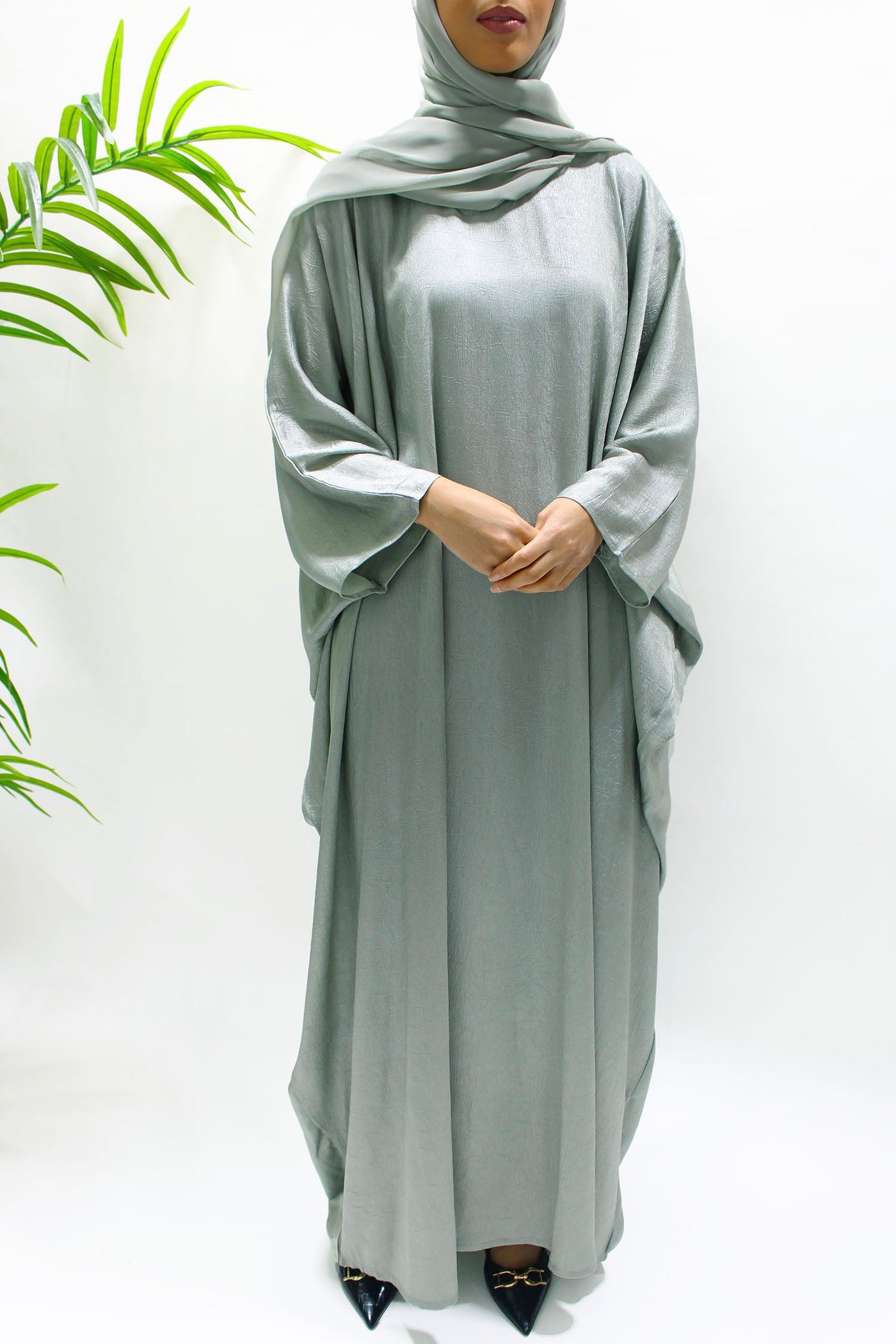
What Should a Hijab Wedding Guest Dress Let You Do Comfortably After the Photos, From Sitting Through Dinner to Praying?
A wedding invitation can make a sister smile first and worry second. The joy is real, but so is the quiet wardrobe question that follows: what can I wear that feels respectful, modest, beautiful, comfortable and still like me? A dress may look lovely on the hanger, yet the real test arrives when she notices the neckline, the sleeve lining, the way the skirt opens while walking, or the scarf that will need to stay secure for hours.
That is why hijab wedding guest dresses should be judged as complete outfits, not as long dresses with scarves added at the end. The garment, hijab, underlayers, shoes, coat and accessories all have to work together. If one part keeps demanding attention, the whole day begins to feel less peaceful. A good outfit lets the wearer greet people, sit, eat, pray if she needs to, travel between venues and appear in photographs without constantly adjusting fabric.
For wider foundations such as scarf dimensions, undercaps, everyday drape, opacity and fabric comfort, the complete hijab guide is a helpful place to begin. This article stays with the wedding guest decision: how to interpret the invitation, choose a modest dress or occasion outfit, coordinate the wedding guest hijab, and keep the whole look respectful without turning it into bridal styling.
This is practical clothing guidance, not a religious ruling. Different sisters follow trusted standards of modest dress, adornment and coverage. The goal here is to make the garment honest. Does it cover the way she wants? Does it stay comfortable in movement? Does the hijab complete the dress rather than cover a problem the dress should never have created?
Start with the invitation before falling in love with the dress
The invitation is not a small detail. It tells you the level of formality, the setting, the time of day and sometimes the colour mood the couple wants in the room. A hotel ballroom at night will usually accept a richer fabric and more polished scarf than a small daytime family nikah. A countryside or garden celebration asks practical questions about grass, wind and hems. A mosque ceremony asks for ease, coverage and footwear that can be removed without a struggle.
Beginning with the invitation protects the outfit from feeling beautiful but misplaced. A dress may be fully covered and still too casual for black tie. Another may be elegant but too pale for a wedding where guests are expected to avoid bridal tones. The same scarf may feel graceful in a warm hall and uncomfortable in a long outdoor reception. Let the day describe the need before the wardrobe answers.
For formal evenings, look for a dress or abaya-style occasion piece with enough weight and finish to hold the room. For semi-formal settings, a refined maxi, tailored set or polished modest dress can work when the fabric feels intentional. For daytime events, lightness can be beautiful, but light fabric still needs lining, opacity and movement checks. The invitation gives the outfit a boundary, not a cage.
- Read the named dress code carefully instead of assuming one global meaning.
- Check the venue, travel route, weather and whether shoes may need removing.
- Ask a close family member when a cultural colour or garment expectation is unclear.
- Decide how long you will be dressed before choosing a complicated scarf.
A guest outfit should honour the couple without becoming bridal
A wedding guest can look special without dressing as though the day belongs to her. This matters even more with modest occasionwear, because a long dress, high neckline and covered hair can sometimes share visual features with bridal clothing. The difference often comes through colour, fabric, accessories, scarf shape and the amount of visual ceremony around the head.
White, ivory and champagne are not forbidden in every culture or every wedding, but they do require context. Some couples request white for guests. Some traditions use different bridal colours. In many Western settings, very pale tones can read as bridal unless the invitation says otherwise. The careful answer is not panic; it is awareness. Look at the whole outfit under daylight and warm indoor light, not just the colour name on a product page.
Bridal signals can gather quietly. A pale dress, pearl-heavy border, high scarf crown, symmetrical drape and sparkling headpiece may feel too close to bride styling when combined. Removing one signal may be enough. A deeper hijab, softer accessory, simpler wrap or less ceremonial head detail can return the outfit to guest territory while still allowing beauty.
Modest coverage has to survive real movement
Coverage is not proven by standing still in front of a mirror. A wedding guest spends hours moving through small practical moments: stepping from a car, greeting family, sitting through speeches, eating, walking across a hall, climbing stairs, collecting a coat and perhaps praying. The dress has to remain covered through those moments, not only in one front-facing photograph.
Long sleeves are useful, but they do not automatically solve everything. Decorative sleeves can be sheer. Tight sleeves can pull above the wrist. A fitted upper arm can make the whole bodice shift when the wearer reaches. A maxi length is also only a starting point. A long dress may still have a high slit, transparent skirt, open back, low neckline or fabric that clings when seated.
The hijab should never carry all responsibility for a weak dress. If the neckline is lower than the wearer wants, a scarf may cover it while still leaving anxiety each time the drape moves. A more reliable approach is to choose a base garment that already suits her coverage, then use the scarf for framing, colour and calm completion.
- Raise both arms and check wrists, underarms, waist and back.
- Sit on a low chair and then a dining chair to check pulling and gaping.
- Stand near bright light to see whether sleeves or skirt become transparent.
- Walk a normal stride and check whether a slit rises higher than expected.
Choose the silhouette by the day you will live inside it
The most useful hijab wedding outfits are not always the most dramatic ones. They are the outfits that understand the body has to move. An A-line dress gives ease through the hip and leg, which makes it one of the safest choices for many wedding guests. A straight column dress can look refined, but only if it has enough width for sitting and walking. A gathered or tiered dress can feel romantic in a daytime setting, yet too much skirt volume can overwhelm a heavy scarf.
Abaya-style occasion outfits can work beautifully for a wedding guest when the construction suits the setting. A closed occasion abaya gives simplicity and coverage. An open abaya over a secure inner dress creates depth, but the inner garment must still meet the wearer’s standard if the front shifts. A kaftan can feel graceful and celebratory when the sleeve and side seams behave well. A long tunic and wide-leg trouser set may suit a modern semi-formal event if the tunic remains long and calm when seated.
A hijab wedding guest dress is not one fixed garment category. It may be a modest formal dress, an abaya-style piece, a kaftan, a layered maxi or a tailored set. What matters is suitability: dress code, coverage, fabric behaviour, movement, comfort and whether the scarf belongs naturally to the outfit.
Let the dress decide what the hijab needs to do
Hijab coordination should begin with the dress, not with a rule that every colour must match exactly. Look at the fabric finish, neckline, embroidery, print, sleeve shape and visual weight. A heavily embellished bodice may need a quieter scarf so the detail remains readable. A plain dress may welcome texture, a soft border or a richer colour near the face. A patterned dress may need a solid hijab drawn from one of its quieter tones.
A wedding hijab can soften, ground, brighten or calm the dress. Cream can warm a cool colour. Taupe can mature a pastel. Navy can give structure. Rose can soften deep green or plum. Silver grey can polish a blue or lilac dress. Gold can add warmth, but a golden hijab for wedding wear is strongest when the shine is restrained and the fabric still feels comfortable around the face.
Matching exactly can work, but it is not required. A tonal scarf one shade deeper may frame the face better than an almost identical scarf that looks accidental. A nearby neutral often feels more expensive than a forced match. The test is simple: does the hijab make the dress easier to understand, or does it add a second argument near the face?
Scarf fabric matters as much as scarf colour
A hijab scarf for wedding wear has to hold its shape for a long day. Chiffon brings softness and a clean formal edge, but it usually needs an undercap and careful fastening. Georgette offers slightly more grip and control, which can help through travel and greetings. Satin catches evening light beautifully, yet it can slip and show tension if forced into a shape it does not want. A fine woven scarf or pashmina-style wrap can add warmth and texture, especially in colder weather.
Fabric should be chosen for the dress and the day. A satin scarf beside a satin dress can become too reflective. A thick woven scarf around a high, embellished neckline can crowd the face. A thin chiffon scarf may look delicate but feel insecure in wind. The best wedding hijab scarf is not the fanciest one; it is the one whose colour, width, texture and grip support the whole outfit.
Do not assume a fabric name proves quality. “Silky” may describe touch rather than fibre. “Pashmina” may describe shape rather than composition. “Lightweight” does not prove opacity. The safest approach is to test the scarf with the dress, undercap and lighting before the wedding day.
Formal does not have to mean heavy decoration
Formal dressing is often misunderstood as adding more sparkle, more jewellery and more dramatic fabric until the outfit announces itself loudly. A hijab-friendly wedding guest outfit can be formal through restraint: a clean long shape, polished fabric appearance, careful hem, secure scarf, elegant shoes and one considered accessory. The result can feel prepared without competing with the bride or overwhelming the wearer.
If the dress already has beadwork, embroidery, metallic thread or a decorated neckline, the hijab needs to respond to that visual weight. A quieter scarf can allow the dress detail to breathe. A scarf with a subtle sheen may still work, but only if the combined effect remains calm. Formality should come from intention, not from piling on every special piece at once.
A plain dress can also be formal when the fit, drape and finish are strong. A smooth scarf, refined shoes and a small bag can be enough. Simple does not mean underdressed when the fabric, setting and styling are thoughtful.
Semi-formal dressing needs enough polish without costume energy
Semi-formal can be the most confusing wedding instruction. It asks for care without the full ceremony of black tie. For a hijabi guest, that might mean a modest maxi dress with good drape, an abaya-style set, a refined kaftan, a long tunic with wide trousers, or a dress with a structured outer layer. The garment should feel intentional beside the room, not casual beside the invitation.
The danger is trying to rescue a casual dress with a fancy scarf. If the dress fabric looks thin, the seams pull or the shape feels too everyday, a shiny hijab will not solve it. It may only make the outfit feel mismatched. Choose a base that already belongs to the event, then let the hijab finish the mood gently.
For semi-formal weddings, controlled texture often works better than heavy shine. A soft pleat, subtle drape, neat sleeve, small embroidery detail or polished neutral scarf can make the outfit feel ready without becoming theatrical.
Black tie needs polish, not pressure
Black tie can sound intimidating, but it does not mean every guest must wear sequins, heels or designer labels. For modest dressing, it usually asks for a more elevated finish: a full-length or appropriately formal garment, clean fabric presentation, thoughtful scarf shape, polished footwear and accessories that make sense in the venue. The outfit should look deliberate from head to hem.
A hijab wedding guest outfit for black tie may work through a long formal dress, a dressy abaya, an elegant kaftan or a refined set. What matters is the standard of the room. If the wedding is in a grand hotel, a plain cotton-feeling dress may look underprepared even if covered. If the garment has strong formality, a simpler hijab can be very beautiful.
Comfort still matters. A black-tie event can involve long standing, formal seating and late travel home. If the scarf needs constant pins or the shoes hurt before the reception begins, the outfit has not truly served the wearer.
Daytime weddings need lightness with structure
Daytime weddings often suit softer colours, breathable layers and calmer accessories, but they still need a complete outfit. A pale dress can look graceful in daylight, yet sunlight can reveal lining problems. A floral dress can feel fresh, yet the print may compete with a busy hijab. A cream scarf can soften the look, but it may also make a very pale dress read too bridal in some settings.
For a daytime wedding, test the outfit outside or near a window. Look at opacity, colour contrast and how the scarf frames the face in brighter light. Heavy evening styling can feel out of place at a garden lunch, while too little structure can make the outfit feel ordinary. Aim for ease, not carelessness.
A daytime hijab style should stay secure without looking severe. Soft folds, a controlled chest drape and breathable fabric can work well. The scarf should let the dress feel fresh while still giving coverage through the full day.
Evening weddings can use depth without becoming loud
An evening wedding often allows deeper colours, richer fabric appearance and more polished accessories. Burgundy, navy, emerald, plum, charcoal, mocha and muted metallics can all feel suitable depending on the invitation and culture. The hijab can echo that depth through a tonal shade, a warm neutral or a scarf with subtle shine.
Evening styling does not require sparkle. A matte dress in a deep colour with a well-chosen hijab may feel more composed than a heavily embellished outfit that distracts the wearer. If there is shine, choose where it belongs. It may sit in the dress, the scarf, the bag or the jewellery. It rarely needs to sit everywhere.
Indoor lighting matters at night. A colour that looks soft in daylight may turn dull under warm lights. A scarf that looks elegant at home may appear too dark in a hall. Test the outfit under similar light if possible, especially for photographs.
Garden and countryside weddings need practical hems and shoes
A garden wedding can look gentle in photographs and still be awkward for a long modest dress. Grass, gravel, damp ground, uneven paths and wind all affect what works. A floor-brushing hem may feel beautiful indoors but drag outside. A light scarf may lift in the wind. Narrow heels may sink into grass. A sleeve that feels delicate may catch on outdoor seating.
For this kind of wedding, practicality is not less elegant. Block heels, flats, sandals or stable shoes may serve the outfit better than thin heels. A scarf with a little grip can help. A dress that clears the ground or can be held without exposing the leg may be easier. Outerwear should be planned, not grabbed at the door.
If the ceremony is outdoors and the reception indoors, the outfit has to survive both moods. Think about a scarf and layer that can move between fresh air and warm rooms without making the wearer feel overheated or underdressed.
Mosque ceremonies call for respectful ease
Some weddings include a mosque ceremony or a transition between mosque and reception. In that setting, coverage and practicality become especially important. Shoes may need removing. Seating may be different from the reception venue. The outfit may need to handle standing, sitting and moving quietly without complicated adjustments.
This does not mean a wedding guest must wear one particular garment. It means she should think carefully about the whole outfit. A secure neckline, comfortable sleeves, reliable skirt coverage and a hijab that stays in place can make the ceremony easier. Footwear should be simple enough to remove and put back on without stress.
If prayer during the day is likely, keep prayer clothing separate from wedding guest fashion. A prayer garment has its own purpose and should not be treated as an occasion outfit with jewellery, belts or formal accessories. The guest outfit can be suitable for the day while still respecting that difference.
Cultural weddings need listening before styling
Muslim weddings are not one culture. A South Asian wedding, Arab wedding, Somali wedding, Turkish wedding, Moroccan wedding, Gulf wedding, West African wedding and British Muslim wedding may all hold different expectations around colour, formality, family modesty, guest clothing and how ornate the room feels. Even within one community, families can differ.
That is why listening matters. The invitation, hosts and close relatives can tell you more than a general fashion rule. Some weddings welcome bright colour and heavy decoration. Some prefer quiet tailoring. Some families see black as elegant; others may find it sombre. Some couples request a colour theme. Some cultural settings place strong meaning on red, white or gold, while others do not.
Respect does not mean losing your own style. It means entering the room with awareness. A modest wedding guest dress with hijab should feel like it understands where it is going.
Colour etiquette should be careful, not bossy
Wedding colour advice becomes harmful when it pretends every family follows the same rule. White is not universally banned. Black is not universally wrong. Red is not universally forbidden. Colour only makes sense when the invitation, culture, venue and couple are considered together. A confident article should not invent fear where context is needed.
If the couple has given a palette, honour it as far as your wardrobe and comfort allow. If the invitation is silent and you are unsure, choose a colour that is clearly guest-appropriate in your setting or ask someone close to the family. When in doubt, avoid outfits that look obviously bridal in that specific context, but do not turn that into a global law.
For hijab coordination, colour etiquette also includes the scarf. A very pale dress with a pale scarf may become more bridal than the dress alone. A deep scarf can shift the outfit back into guest styling. A coloured bag or warmer outer layer may also help.
White and ivory require the full outfit test
A white or ivory scarf can look soft with many wedding guest dresses, but it needs the full outfit test. If the dress is pale, embroidered, pearl-toned or champagne, an ivory scarf may make the overall look feel bridal in a Western setting. If the couple has requested white or the cultural setting uses a different bridal colour, the same scarf may be completely appropriate.
Look beyond the colour name. Ask what the whole outfit suggests. Is the dress cut ceremonial? Are the accessories pearl-heavy? Does the hijab wrap create a veil-like shape? Does the head styling feel more bride than guest? If several answers point in the same direction, adjust one element.
A warmer beige, taupe, blush, grey or deeper colour may keep the outfit soft while making the guest role clearer. The change can be small, but the message becomes more respectful.
Black can be elegant when the setting supports it
Black is not automatically inappropriate for a wedding. In many formal, evening or city settings, black can look refined and respectful. With hijab, black can also give clean coverage and allow fabric, cut and accessories to speak quietly. The question is not whether black is allowed everywhere; it is whether black suits this wedding.
Consider the couple, culture, venue and season. A black dress for an evening hotel reception may feel polished. A black outfit for a bright daytime garden wedding may need softer styling so it does not feel heavy. Texture can help: pleats, soft drape, satin trim, embroidery, a warmer scarf or a lighter accessory can all change the mood.
A black hijab with a coloured dress can also work when the outfit needs grounding, but it can sharpen the face area. If it feels too strong, try charcoal, taupe, deep brown or navy instead.
Red should be handled through culture and context
Red is another colour that attracts too many universal statements. In some communities it may feel strongly bridal, ceremonial or attention-heavy. In others it may be a normal guest colour, especially when the cut and styling are modest. The right answer depends on the wedding, not on a blanket rule.
If red belongs to the couple’s culture as a bridal or ceremonial colour, a guest may choose burgundy, rust, berry, rose or another softer direction instead. If red is welcome, keep the styling respectful. A red dress with hijab may need a quieter scarf, simpler accessories and a shape that feels composed rather than dramatic.
The goal is not to dim the wearer. It is to make sure the outfit honours the occasion. A guest can enjoy colour without turning the room into a competition.
Patterned dresses need a calm conversation with the hijab
A patterned wedding guest dress can work beautifully with hijab when the scarf gives the print somewhere to rest. The safest route is often a solid hijab pulled from the background colour or a quieter secondary tone in the pattern. This keeps the face area calm while allowing the dress to remain interesting.
Pattern mixing is not forbidden, but it requires confidence and control. If the dress print is already large or high contrast, a busy scarf may make the outfit feel restless. If the print is tiny and soft, a subtly textured scarf may be enough. The mirror should show one outfit, not two separate fabrics asking for attention.
Also check how the pattern behaves in photographs. Some dense prints can look busier from a distance than they do close up. A quieter hijab can prevent that movement from becoming overwhelming.
Embellished dresses need space near the face
Beading, crystals, sequins, metallic thread and ornate necklines can make a dress feel wedding-ready, but they also affect hijab choice. If the detail sits near the bodice or sleeves, a heavily decorated scarf can crowd the face. A smoother hijab may let the dress detail remain readable.
A plain hijab is not mandatory. Texture, subtle shine or a soft border can work when the dress is simple enough to allow it. The important question is visual weight. Where does the eye land first? Does the scarf help the dress or compete with it? Does the outfit still feel respectful to the wedding?
Comfort matters here too. Embellishment can catch on delicate scarves. Test the shoulder area, sleeves and any neckline detail before the day. A scarf that snags every time the wearer turns her head will not feel graceful.
Neckline coverage should not depend on tension
A hijab can cover the neckline, but it should not have to be pulled tightly or pinned in discomfort to make the dress usable. If the neckline is wide, low or shaped, consider whether an inner top is needed. Then ask whether that layer looks intentional with formal fabric. Sometimes layering works beautifully. Sometimes it changes the whole dress and makes it look improvised.
Back necklines are easy to forget. A dress may look covered from the front while dipping at the back. When the hijab is moved, lifted by a coat or adjusted during the day, that back detail can become visible. Check it before choosing the outfit.
Chest coverage also depends on scarf shape. Some sisters prefer a longer front drape. Others wear a shorter style with a high-neck dress. The article’s role is to help with the checks, not to impose one drape on everyone.
Sleeves deserve more than a quick glance
Formal dresses often use decorative sleeves, and decorative does not always mean opaque. Lace, mesh, chiffon, sheer panels and tight stretch can change how covered a dress feels. A sleeve may be long but transparent. It may be opaque but too fitted for the wearer’s comfort. It may cover the arm while leaving the shoulder exposed through a cut-out or lowered seam.
Test sleeves in real light and movement. Raise the arms, bend the elbows, carry a bag and put on the coat you plan to wear. If the sleeve pulls the bodice or reveals more wrist than intended, it may need a different underlayer or a different garment.
Do not reduce modesty to sleeve length. The sleeve is one part of the outfit. Fabric, fit, transparency and movement complete the answer.
Slits and hems need a sitting test
A long dress can hide a slit while standing and reveal it while walking, climbing stairs or sitting. Side slits, front slits and wrap-style openings all need testing. A slit may be fine for someone’s coverage preference when controlled, but it should not surprise her in the wedding hall.
Hems also matter. A very long hem can catch under shoes, drag outdoors or make stairs difficult. A shorter hem can be practical, but it should still suit the dress code and the wearer’s modesty preference. The best hem is not the longest one; it is the one that supports elegance, movement and comfort together.
Try the dress with actual shoes. A hem that works barefoot may behave differently with flats, block heels or sandals. If the shoe changes, check again.
Layering should look chosen, not like damage control
Layering can help a wedding guest outfit, but it should not be used to save every unsuitable dress. A long-sleeve top under a delicate gown may bunch. A cardigan over a formal dress may lower the polish. A blazer can work beautifully with a clean dress, but it may fight a flowing skirt. A slip can protect opacity, but only if it sits smoothly and does not change the line of the garment.
When layering works, it looks like part of the plan. The colour, fabric weight and length feel connected. The wearer can move without tugging. The extra piece supports coverage, warmth or structure. When layering looks like an apology, the base dress may not be the right choice.
For cold-weather weddings, a long coat or elegant outer layer may be more successful than trying to hide warmth under a fragile formal dress. Plan the layer from the beginning.
Footwear should respect the venue and the body
Heels are not a requirement for wedding elegance. The right shoes depend on venue, flooring, travel, hem length and the wearer’s comfort. Block heels may suit a hotel or garden better than stilettos. Flats can look refined when chosen with the dress. Sandals may work for a summer setting. Boots may be practical for cold travel if they do not undermine the formality of the outfit.
Footwear also changes posture and hem behaviour. A dress that clears the floor with heels may drag with flats. A narrow shoe may catch in a long skirt. A slippery sole may make polished floors difficult. Try the full outfit while walking a real distance, not only while standing in the bedroom.
Comfort is not a lesser concern. A guest who can walk, stand and greet people calmly often looks more graceful than one who chose painful shoes for the photograph.
Jewellery should follow the hijab, not fight it
Jewellery is optional. A wedding guest outfit does not need earrings, necklaces or bracelets to be complete. With hijab, some jewellery may not even be visible depending on the scarf style. Necklace advice only matters if the neckline and scarf allow it without reducing the wearer’s coverage. Earrings only matter if the ears are intentionally visible.
If the dress is heavily embellished, very little jewellery may be needed. If the dress is simple, a small polished detail can help. A bracelet, ring, brooch, hair-safe pin, bag hardware or shoe detail may give enough finish without crowding the face.
The best accessory decision is the one that supports the outfit the wearer actually wants to wear. It should not pressure her into displaying more than she planned.
Handbags should be useful as well as pretty
A bag or clutch should relate to the outfit, but it also needs to carry what the guest needs for the day. Phone, keys, card, lip balm, tissues, safety pin, small mirror, medication, prayer items or travel tickets may all matter. A tiny bag can look delicate and still fail the day.
Colour can connect the bag to the hijab, shoes or dress detail. It does not have to match everything. Cream, gold, silver, taupe, black, navy or a soft colour drawn from the dress can all work depending on the outfit. Choose one relationship and let it be enough.
A bag is also handled, placed on chairs, carried through greetings and photographed beside the outfit. If it snags the fabric or pulls the scarf, it is not serving the look well.
Weather changes modest outfit planning
Wedding outfits often begin with the dress but succeed because of the coat. In the UK especially, a warm morning can turn into wind or rain before the reception ends. A modest wedding guest outfit with hijab should account for travel, coat storage, damp pavements, indoor heating and whether the scarf fabric will stay calm outside.
Summer needs breathability, but not careless transparency. Spring can bring wind and rain. Autumn may need a layer that still looks formal indoors. Winter can make scarf volume, coat length and footwear more important than any single dress detail. Do not let season become a colour rule. Pastels are not required in spring. Dark colours are not required in winter.
Plan the outer layer as part of the outfit. A coat that crushes the scarf, shortens the silhouette awkwardly or leaves the dress exposed to rain can undo a careful look.
Photographs matter, but they are not the whole wedding
It is reasonable to think about photographs. Flash can reveal opacity issues. Pale colours can look different beside bright backgrounds. A scarf may cast shadows around the face. Shiny fabric may reflect more than expected. These are practical checks, not reasons to become anxious.
The outfit must work in real life as well as photographs. The wearer needs to sit, talk, eat, pray if needed, move between rooms and stay comfortable for hours. Do not choose a scarf shape that only works from one angle. Do not choose a dress that looks beautiful standing still but becomes restrictive during the day.
A calm photograph often comes from a calm outfit. If the wearer is not constantly adjusting her sleeve, hijab or hem, she can appear present rather than distracted.
A long wedding day needs a rehearsed outfit
Some weddings last far longer than expected. There may be travel before the ceremony, waiting between events, a meal, family photos, speeches and late-night farewells. The hijab that felt fine for one hour may become heavy by hour six. The shoes that felt manageable indoors may hurt after car parks, stairs and standing.
Rehearse the outfit before the day. Try the scarf with the undercap. Wear the shoes long enough to notice pressure. Sit in the dress. Put on the coat. Carry the bag. Check whether the fabric creases in a way that bothers you. These small trials can save the day from constant adjustments.
Comfort is not the opposite of elegance. For many sisters, comfort is what lets elegance remain visible.
Shopping online needs evidence, not hope
When buying a wedding guest dress online, the product page has to answer practical questions. Look for measurements, sleeve length, neckline view, back view, lining information, care guidance, fabric description, close-up images, return timing and delivery timing. If a detail is missing, do not fill it in with hope. A long dress label does not prove coverage. A formal photograph does not prove movement.
Compare the measurements with a dress you already own and trust. Check whether the model height is listed. Look at how the dress sits under the arm, around the waist and at the hem. If the product description does not show a back view or movement, be cautious about assuming it will work for a long wedding day.
When you are ready to browse outfit options after checking the invitation and coverage needs, you can look through shop related outfits with those practical questions in mind rather than choosing by colour alone.
Modesty must never become body shaming
Helpful modest fashion advice should speak about garments, not shame bodies. It should use words like ease, drape, coverage, movement, comfort and silhouette. It should not tell women to hide problem areas, look thinner, disguise curves or follow size-based rules. A wedding guest deserves advice that respects her body and her choices.
Plus-size guests do not have to avoid embellishment. Petite guests are not banned from long dresses. Tall guests do not need a certain print. Age does not decide colour. The garment’s behaviour matters: how it fits, moves, covers and feels through the day.
A dress can be altered, layered, exchanged or styled differently. The woman wearing it does not need to be corrected. Good guidance protects dignity.
Simple outfits can still feel wedding-ready
There is a quiet pressure around weddings to add more: more shine, more fabric, more jewellery, more drama. But a simple modest dress can be completely appropriate when it suits the dress code and is finished well. Clean lines, a good scarf, polished shoes and a small accessory can feel graceful without shouting.
Simple dressing is especially strong when the wedding setting is intimate, the ceremony is daytime, or the wearer prefers a calm style. The outfit can still honour the couple. It can still feel joyful. It does not need to prove itself through decoration.
The difference between simple and underdressed often comes from fabric appearance, fit, grooming of the scarf, shoes and the condition of the garment. A clean, pressed, well-planned outfit will usually feel more respectful than a complicated outfit that looks unsettled.
Ornate outfits can be modest when they are balanced
Ornate dressing is not automatically immodest. Some weddings are highly celebratory, and a plain outfit may feel out of place. Embroidery, beadwork, metallic thread, richer colour and dramatic drape can all be appropriate when the dress code, culture and wearer’s comfort support them.
The question is balance. Does the outfit still provide the coverage she wants? Can she move and sit easily? Does the hijab sit securely near embellishment? Does the result feel like respectful guest attire rather than bridal display? If yes, ornate details can be part of a modest wedding guest look.
A helpful rule is to let one area carry the strongest detail. If the dress is ornate, keep the scarf calmer. If the scarf has texture or shine, let the dress breathe. If the jewellery is strong, keep everything else edited.
The hijab style should stay secure without becoming severe
A wedding guest hijab has to stay in place through greetings, photographs, coats, possibly prayer and a long reception. Low-volume styles often work well because they keep the face clear and reduce weight. A controlled shoulder drape can give coverage while still looking soft. A longer chest drape may suit dresses with simpler bodices.
Turban styles can work for women who wear them, but neck and chest coverage must be planned according to personal standards. That might mean a high-neck dress, an additional scarf, a jacket or another layer. A turban should not be used to solve one style problem while creating a coverage gap the wearer did not intend.
Practise the wrap with the dress, not separately. The neckline, sleeve detail, earrings, glasses, hearing devices and undercap all affect whether the scarf remains comfortable.
A pashmina or shawl can add warmth without taking over
A pashmina-style hijab or shawl can be useful for autumn and winter weddings, mosque transitions, cooler venues and modest coverage across the chest. It can add softness and warmth while still feeling formal, especially when the colour relates to the dress or outerwear. But it should not create too much bulk around the neckline.
If the dress has a high collar, heavy embroidery or structured shoulders, a thick scarf may crowd the outfit. A thinner woven scarf, soft wrap or separate shawl may work better. If the dress is plain, a textured wrap can add depth and make the outfit feel more prepared.
The wearer should be able to remove a coat, sit and greet people without the shawl slipping constantly. Beauty that requires constant rescue will not feel peaceful.
Guest outfits should leave room for prayer if needed
Some guests may need to pray during a wedding day, depending on timing. That possibility should be considered practically, not turned into pressure or fashion display. The dress should allow movement, bowing and sitting according to the wearer’s needs. The hijab should stay secure. Shoes should be manageable if they need removing.
This is different from styling a prayer garment as a wedding outfit. Prayer clothing has its own purpose. It should not be treated as a formal guest dress with accessories added. If a guest carries a prayer layer or chooses a more practical outfit for ease, that is a thoughtful decision.
Planning for prayer can be as simple as choosing a secure scarf, checking the skirt width, avoiding impossible shoes and knowing whether the venue has a suitable space.
Wedding guest dressing should not become a comparison contest
A wedding can bring a painful kind of outfit pressure. There may be relatives, photographs, old friends, people who notice everything and people who comment too freely. A modest guest outfit should not be built from that anxiety. It should help the wearer arrive with dignity, not with a feeling that she has to compete with other women in the room.
Respectful beauty is enough. A dress can be special without demanding attention. A hijab can be polished without becoming a performance. The guest can enjoy colour, fabric and detail while remembering that the day belongs to the couple.
That mindset changes the styling. It removes the need for every detail to be louder. It makes room for softness, comfort and self-respect. The outfit still matters, but it no longer has to carry fear.
Use this quick decision table before buying or wearing the outfit
| Wedding detail | What to check | Why it matters |
|---|---|---|
| Invitation and dress code | Formality, timing, colour request and venue | The outfit should respect the room before it follows personal taste. |
| Dress construction | Neckline, sleeves, back, lining, slit and movement | Length alone does not prove modest coverage. |
| Hijab coordination | Colour role, fabric grip, drape and undercap comfort | The scarf should complete the outfit, not constantly need fixing. |
| Long-day practicality | Shoes, coat, bag, weather, seating and prayer needs | A wedding outfit has to work beyond the first photograph. |
Common mistakes are usually small but stressful
Many wedding outfit problems begin with a small assumption. The dress is long, so it must be modest. The sleeves are long, so they must be covered. The scarf matches, so the outfit must work. The shoes look formal, so they must be right. The product photo looks elegant, so the fabric must behave the same way in real life.
Slow down those assumptions. Check the dress in movement. Compare the scarf in real light. Put on the coat. Try the shoes with the hem. Sit down. Hold the bag. Look at the back. Ask whether the outfit still feels like guest attire and still feels like you.
Most fixes are easier before the wedding morning. A different scarf, underlayer, shoe, bag, coat or alteration can make the outfit feel settled. Waiting until the day itself turns simple adjustments into stress.
The final outfit should feel peaceful to wear
There is a certain calm that comes when the outfit is right. Not because every colour is mathematically matched, and not because every detail is expensive. It feels right because the dress code has been respected, the body is not being shamed, the coverage has been checked, the scarf is secure and the wearer can move through the day as herself.
If every choice is made from fear, the outfit can become heavy even when the fabric is light. If every choice is made for attention, the outfit can lose the quiet respect a wedding deserves. The strongest balance sits between those two pressures. The dress feels appropriate, the hijab feels secure, the details feel chosen and the wearer does not feel disguised.
That is the heart of good guest dressing with hijab. It is not about copying a formula. It is about understanding the day, respecting the couple, protecting coverage, caring for comfort and allowing beauty to remain gentle.
Frequently asked questions about hijab wedding guest dresses
These answers focus on modest wedding guest dressing, hijab coordination, long-event comfort and respectful styling without turning guest attire into bridal advice.
What should a hijabi wear as a wedding guest?
A hijabi wedding guest can wear a modest formal dress, abaya-style outfit, kaftan, tailored set or layered maxi when it suits the invitation and gives her the coverage she wants. Check neckline, sleeves, lining, opacity, movement, scarf security, shoes and venue practicalities before deciding.
Do hijab wedding guest dresses have to be floor length?
No. Floor length can look formal, but length alone does not make an outfit modest or suitable. A long dress may still have sheer sections, a high slit, open back or tight fit. A slightly shorter modest length can work when the dress code and coverage are appropriate.
Can I wear an abaya to a wedding as a guest?
Yes, an occasion abaya can work well when the fabric, cut and styling suit the event. A closed abaya may feel calm and elegant, while an open abaya needs a secure inner dress. Keep the result clearly guest-focused rather than bridal.
What hijab colour works with a wedding guest dress?
Choose the hijab colour from the dress, not from a fixed rule. Tonal shades, soft neutrals, deeper contrast or a colour drawn from embroidery can work. The scarf should support the dress, frame the face and respect the formality of the wedding.
Does my hijab need to match my dress exactly?
No. Exact matching is optional. A related tone, nearby neutral or thoughtful contrast often looks more natural than a nearly matching scarf that is slightly off. Aim for harmony through undertone, fabric weight and the role the scarf plays near the face.
Can a wedding guest wear black with hijab?
Black can be appropriate at many weddings, especially formal or evening events, but context matters. Consider the invitation, culture, venue and family expectations. Texture, scarf colour and small polished details can make black feel celebratory rather than severe.
Can a wedding guest wear white or ivory?
Sometimes yes, especially if the couple requests it, but in many Western settings white or ivory can read as bridal. Avoid universal rules and look at the invitation. If unsure, ask the hosts or choose a colour that cannot be mistaken for bridal styling.
Which wedding guest hijab styles are safest for long events?
Low-volume styles with a secure face frame, balanced fabric and controlled shoulder or chest drape are usually safest. Practise with the full outfit, including coat and bag, so the style remains comfortable through travel, greetings, prayer and photographs.
Can I wear a turban style hijab for wedding events?
A turban can work if neck and chest coverage are planned separately according to your standard. Pair it with a high-neck garment, suitable outer layer or coordinating scarf where needed. It should not leave coverage gaps that only become visible later.
What should I check before buying a modest wedding guest dress online?
Check measurements, sleeve length, neckline, back view, slit placement, lining, fabric information, care, return window and delivery timing. Product descriptions alone do not prove opacity, looseness or comfort, so compare measurements with a dress you already trust.
How do I keep a wedding hijab comfortable all day?
Use an undercap that does not press, balance the scarf ends, avoid heavy accessories and rehearse the wrap for movement. If you wear glasses, hearing devices or need migraine-friendly styling, include those needs during the trial rather than adapting on the day.
How can I avoid looking bridal as a wedding guest?
Watch the full combination: pale dress, pearl-heavy details, high scarf crown, symmetrical drape and ceremonial accessories can look bridal together. Deepen the colour, simplify the wrap or reduce head details so the outfit remains special but clearly guest-focused.