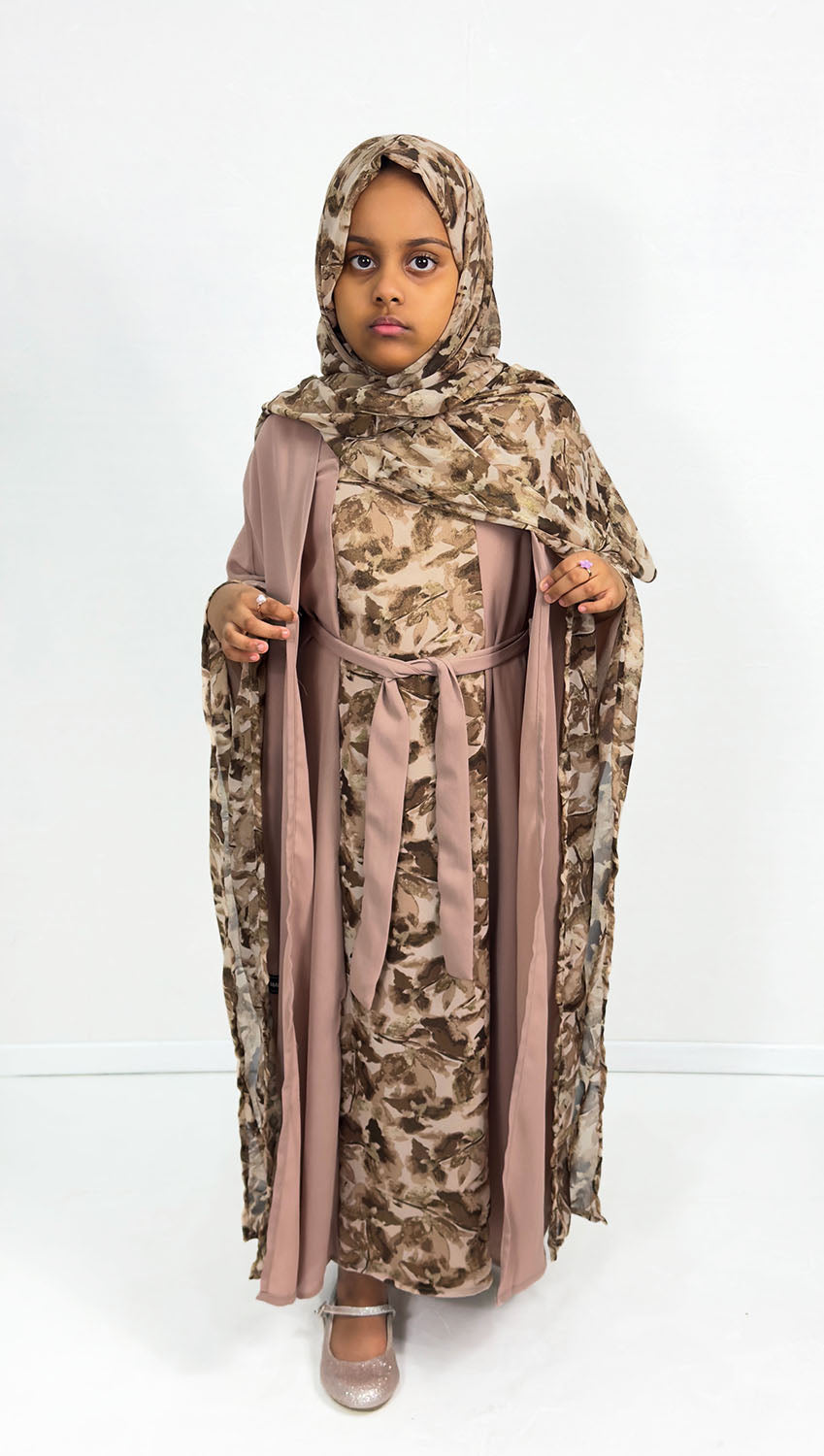
How Can You Style the Farasha Style Four-Piece Abaya Set in Dusty Pink?
The Farasha Style Four-Piece Abaya Set in Dusty Pink brings together a flowing open overcoat, a sleeveless abaya with shimmer floral chiffon inserts, a matching belt and a chiffon scarf. The current design is presented for girls, making it an option to consider for a family wedding, an Eid celebration or another occasion where she would enjoy a coordinated outfit.
Its appeal is the relationship between the pieces: the open outer reveals the floral detail beneath, while the pink scarf and belt give you different ways to finish the look. Start with the inner abaya and outer together, then let the wearer help decide how she likes the scarf, belt and accessories arranged. A special outfit feels more personal when she can move comfortably and recognise her own preferences in it.
Use the Dusty Pink Farasha Style Four-Piece Abaya Set product page for the current option and its supplied pieces. The most useful preparation is to understand the set, try it with the intended shoes and choose a simple combination that will work for the actual day.
How do the four pieces work together?
The sleeveless abaya forms the base. Its shimmer floral chiffon inserts are part of the outfit's decorative interest, particularly where the open overcoat reveals them. Check where those inserts sit on the actual garment and how the base looks in ordinary light before choosing further layers.
The flowing farasha overcoat provides the outer shape. Look at it with the wearer's arms relaxed as well as raised: the spread-out view shows its width, while the relaxed view shows how it will look for much of the occasion. The inner abaya should remain comfortable when the overcoat moves.
The belt offers a way to arrange the waist and the fall of the fabric. Begin with the intended method shown or explained for the product. Let the wearer compare the appearance and feel before deciding how she wants it tied. A gentle arrangement can keep the set coordinated without needing the fabric drawn tightly around her.
The chiffon scarf completes the matching combination. Its suitability depends on the dimensions and arrangement she wants. Try the scarf as part of the full outfit, including any undercap or other layer she normally chooses. That is the moment to decide whether she prefers the supplied scarf or another one she already enjoys wearing.
| Piece | Styling opportunity | Useful first check |
|---|---|---|
| Sleeveless abaya with floral inserts | Provides the central decorative detail | Comfort through the neckline, armholes and body |
| Open farasha overcoat | Frames the base with a flowing outer layer | How the sleeves and front settle during normal movement |
| Matching belt | Changes the arrangement of the fabric at the waist | The intended tying method and comfort when seated |
| Chiffon scarf | Creates a continuous dusty pink palette | Dimensions, preferred drape and ease of wearing |
Start the fitting with the inner abaya
Choose a quiet moment for the try-on, with the clothes she expects to wear beneath the set. Put the sleeveless abaya on first and allow it to settle. Ask about the feel around the neckline and underarms, then check the body while she sits and stands. Her description of how it feels is as useful as what you can see.
A simple question such as “Can you reach comfortably?” gives a clearer answer than asking whether the dress is perfect. Let her reach towards a table, take a few steps and sit in an ordinary chair. If she keeps lifting a shoulder or pulling the dress down, ask what she is adjusting and look at that area together.
Check the floral chiffon inserts in daylight with the intended underlayers. Look at their position, any lining and the areas visible through the open outer. Where additional coverage is wanted, choose a suitable base and repeat the fitting with it. Adding a layer changes the outfit, so it deserves its own comfortable try-on.
Because the inner is sleeveless, decide how you want arm coverage to work when the overcoat moves. A long-sleeved base may suit the intended look, provided its neckline and sleeves sit comfortably beneath the set. Try the actual garment you would use rather than estimating from another top of a similar colour.
Keep the base uncluttered. A bulky hood, raised collar or large bow beneath the abaya can affect the upper fit. A simpler layer may leave more room for the set to fall naturally and make it easier to see the floral details clearly.
Let the farasha overcoat move before styling it
Once the inner is comfortable, add the overcoat and let the wearer lower her arms. Check how its front edges frame the inner abaya. You may prefer a generous view of the floral inserts or a softer glimpse through the opening; begin with the way the garment naturally hangs.
Ask her to walk across the room, turn and sit. Notice whether the sleeves remain manageable around the hands and whether the outer returns to a comfortable position afterwards. A set for a celebration will be worn between photographs, while eating, greeting relatives and moving around the room.
Try a few movements related to the occasion. For a seated lunch, bring the hands towards the place where a plate would sit. For a gathering with stairs, check a manageable step with the intended shoes. Keep the process brief and practical so the fitting remains useful rather than becoming an exhausting rehearsal.
If one side hangs differently, first check for trapped fabric. The outer may be caught beneath the belt, or an inner sleeve may have gathered at one shoulder. Free that area and let the garment settle again before drawing conclusions about the size.
For a broader explanation of the shape, the farasha garment guide discusses open and closed constructions, sleeve width and component lists. With this particular set, keep the relationship between the floral inner and the flowing overcoat at the centre of the styling.
How should you use the matching belt?
Look for the belt's intended route and any attachment points, then use the arrangement supplied for the garment. If the method is unclear, ask for an explanation before experimenting. Knowing where the belt belongs makes the rest of the outfit easier to assess.
Try the tied arrangement while standing, then ask the wearer to sit. Check whether the knot presses against her or whether it draws the outer into an uncomfortable bunch. Make any permitted adjustment while keeping the inner and overcoat smooth beneath it.
Let her compare the resulting outline. She may enjoy a visible tied detail, or prefer the fabric arranged more loosely. Where the design can be worn without the belt, compare that version too. The question is how she wants the outfit to feel and fall during the occasion.
Keep the scarf ends clear of the belt unless a particular arrangement is intended. If the scarf becomes caught when she turns her head or reaches, release it and choose a simpler drape. One adjustable part should remain easy to move without pulling on another.
Before leaving, check that any loose belt ends are arranged appropriately for the wearer's height and activities. Use the garment's intended tying method rather than adding an unnecessarily elaborate bow. A straightforward knot or tie can make the look easier to repeat when the set is worn again.
Choose the scarf with the wearer
Begin with the matching chiffon scarf because it lets you see the complete dusty pink combination. Arrange it in a familiar way and ask whether it feels comfortable. The supplied colour is convenient, but the wearer may have a preferred scarf texture or shape she wants to use instead.
Check the scarf beside the floral inserts and the outer in the same light. Matching pieces may reflect light differently where one is more transparent or textured. Judge them together as an outfit, with the actual underlayers in place, rather than comparing isolated folds on a screen.
If she prefers another scarf, try a plain pale neutral or a softly contrasting shade that she likes. Place it beside the set before deciding. Ivory, light grey or a deeper pink are possible starting points if suitable pieces are already available; choose according to the actual colours in front of you.
Keep the arrangement manageable around the shoulders. A long end can add another layer over the floral detail, while a shorter arrangement can leave more of the inner visible. Use the coverage and drape she prefers as the starting point, then make small styling adjustments around that.
For a child who is unfamiliar with the scarf, allow an unhurried try-on before the day. Give her room to explain what feels awkward and choose a suitable alternative where needed. A coordinated outfit should make getting ready easier for both of you.
A soft, coordinated look for an Eid celebration
Wear the inner, outer and matching scarf together, with the belt arranged comfortably if she wants it. Let the shimmer floral inserts provide the main decorative detail. Choose familiar shoes in a light neutral, soft metallic or another shade that works beside the actual dusty pink.
A small, simple bag can be enough to finish the look if she wants to carry one. Consider what it needs to hold and whether she will comfortably manage it. A smooth bag is easier to assess beside the chiffon than a heavily embellished one with several competing textures.
For a family meal, try the sleeves at the table before settling on bracelets or other wrist accessories. The outfit already has movement through the overcoat and detail through the inner. Keeping the wrists simple can help those elements remain clear.
Plan the day as it will actually happen: the journey, time indoors, eating and any change of activity. If another outfit is useful later, have it ready. Enjoying a special set for the part of the celebration it suits is a perfectly practical way to wear it.
For family photographs, choose a comfortable place to stand and allow the overcoat to fall naturally. A relaxed pose often shows the relationship between the outer and floral inner more clearly than repeatedly spreading the sleeves. Let her choose a photograph she likes rather than making the outfit the centre of the whole day.
A polished outfit for a family wedding
Begin with any clothing guidance from the hosts and the practical details of the venue. Decide whether the supplied dusty pink combination suits the occasion, then choose accessories that feel special without making the outfit complicated.
One approach is the full set with plain silver-toned or neutral shoes and a small bag in a related shade. Another is to keep the shoes understated and use a slightly deeper pink accessory. Lay out both options if you already have them, then let the wearer choose the one she enjoys.
The floral inserts and flowing outer already provide a considered look. A necklace, brooch and decorated bag are not all necessary. Choose a single extra detail if it improves the outfit, and check how it sits against the chiffon and neckline during movement.
Give footwear particular attention for a long occasion. Use a pair she can walk and sit in comfortably, and assess all visible hems with those shoes. If you plan a different pair for later, try those too. The longer pieces should remain manageable after the footwear changes.
Bring the coat or layer needed for the journey into the fitting. Check that it has room for the farasha sleeves and that the scarf sits comfortably at its collar. Once the coat is removed, the set should be arranged in a way she can enjoy without starting the dressing process again.
A simpler version for a family visit or birthday gathering
For a smaller gathering, use the same inner and outer with familiar shoes and a straightforward scarf arrangement. A plain bag, or no bag if she does not need one, allows the floral detail to remain the focus. You can make the outfit feel simpler by reducing accessories.
Choose the belt arrangement according to how the day will be spent. For a long seated visit, comfort at the waist may matter more than recreating the exact styling from a photograph. Try the preferred version while seated, then leave it alone once it works.
If she wants a slightly different look, change one thing at a time. Try another scarf, keep the rest of the outfit, and compare. If you change the scarf, shoes, bag and belt arrangement together, it becomes harder to identify which part she likes.
A repeat outfit can be enjoyable precisely because the decisions are familiar. Keep a note or photograph of the combination that worked, including the shoes. Next time, you can begin from that comfortable arrangement and make one small change if she wants it.
Coordinate family outfits through one shared detail
The dusty pink set can sit alongside a grown-up outfit without needing both garments to be identical. Choose one shared element: a similar pink in a scarf, a related neutral in the shoes or a quiet floral reference elsewhere. Leave the rest of each outfit suited to its wearer.
For example, the child's dusty pink set could sit beside a plain grey adult outfit with a pink scarf. The relationship is visible through the scarf colour, while the two silhouettes remain different. Alternatively, a neutral adult outfit can share the child's accessory colour and allow the pink set to stand out on its own.
Compare the actual clothes together before buying an additional matching item. Different pinks can work beautifully when their relationship is clear. A pale pink beside a deeper shade may feel more deliberate than two almost-identical colours that do not quite agree in daylight.
Invite the wearer to help choose the shared detail. She might prefer matching bags, a similar scarf colour or completely separate accessories. Family coordination can be a small pleasure, with room for each person to enjoy their own outfit.
What if she prefers one piece to the complete matching look?
Ask which part she enjoys most. It might be the floral inner, the flowing overcoat or simply the pink scarf. That preference gives you a practical starting point for another outfit and can make the set more useful after its first occasion.
If the floral inner is her favourite, try it with another suitable outer layer she already owns. A simple cardigan or jacket can frame the floral detail differently, provided the combination gives the coverage and comfortable movement you both want. Check the sleeve and neckline relationship, and see how the shorter layer sits when she is seated.
If she loves the farasha overcoat, place it over a plain dress that already works for her. A pale neutral base can keep the overall look soft; a noticeably deeper base makes the open front more defined. Let her compare the two in the mirror before adding a scarf or bag. The different base needs its own fitting because its seams and sleeves may sit differently beneath the outer.
The matching chiffon scarf can also become a small link to another outfit. Try it beside a plain navy dress, a grey outfit or a floral piece that repeats a similar pink. Choose the combination she actually likes wearing. The scarf's dimensions and familiar arrangement remain more useful than an exact colour match on paper.
Keep the belt with the set even if it is left out of a particular outfit where the design permits. It may be useful for another arrangement, and storing it beside the other pieces prevents a later search. Avoid using it to force an unrelated garment into a new shape; try it only where its intended length and construction make sense.
Each separate look should be judged as an outfit in its own right. The floral inner may need a different layer for the arms, the overcoat may reveal more of a contrasting base, and another scarf may change the neckline. Take those differences one at a time and retain the version that feels easy.
As the wearer grows, revisit the fit of the actual pieces before the next event. A scarf she still enjoys may remain useful even when another component needs a different role. For an alteration, show the full set to the person assessing it and explain which relationship between the hems and floral detail you want to keep.
Check sizing across the whole set
Use the current measurements for the option you are considering. A girls' product title does not specify how the set will fit an individual child. Compare relevant garment measurements with a comfortable dress, using the same measuring route wherever possible. Our guide to children’s abayas and jilbabs explains how sizing differs between garment constructions.
The inner and outer deserve separate attention. A wide overcoat can look spacious while the dress beneath it has a closer fit. Ask for the inner's dimensions if they would decide the purchase, and consider the intended underlayers when comparing them.
Check the lengths with the shoes she will wear. Look at the centre and sides of the overcoat as well as the inner's hem. The point that sits lowest may be different when the belt is tied or the arms move, so assess the assembled outfit.
Allow comfortable room according to the product's sizing information and the intended fit. Choosing a longer garment purely for future use can create an awkward hem now. If you are between options, ask about the dimensions that matter rather than relying on an age label alone.
When the parcel arrives, lay out all four pieces and compare them with the order. Check the visible seams, scarf edges and supplied belt before putting the full set on. Keep the purchase information available while deciding whether the fit works, and resolve any query before alteration or cleaning.
Make the first try-on useful without making it long
A short sequence keeps the fitting focused. First try the inner, then the outer, followed by the belt and scarf. Finish with shoes and any necessary coat. Ask about comfort at each stage so you can identify which addition changes the feel.
- Check the inner dress at the neckline, arms and body while standing and sitting.
- Add the overcoat and watch its front and sleeves during a short walk.
- Arrange the belt as intended and check the seated fit again.
- Try the scarf in a familiar arrangement and ask whether it stays comfortable.
- Add the shoes and coat needed for the occasion, then check the hems and sleeves together.
If something needs attention, name that one issue. “The scarf end is catching in the belt” is easier to solve than “The set looks wrong”. Release the scarf and try another drape. “The inner pulls when seated” directs you towards the inner's fit, rather than adding more adjustments to the outer.
Once the comfortable combination is established, stop adjusting every fold. The wearer should be able to recognise the outfit as something she can wear, with room for normal movement. Keep any successful arrangement simple enough to reproduce when getting ready becomes busier.
Look after the floral inserts, scarf and overcoat
Read the care information on the actual pieces. The word chiffon and the matching colour do not identify one universal cleaning method. Keep the supplied instructions together so you can check them before treating the inner, outer or scarf.
Inspect the floral inserts and scarf edges after wearing, particularly where they met accessories or a bag. If you notice a loose thread or an area needing attention, handle it gently and seek appropriate advice before pulling or trimming it. A small issue is easier to describe while you remember where it appeared.
Use only the cleaning and finishing methods permitted for each item. Allow time before an event to deal with a crease or mark properly. A last-minute experiment with heat or an unfamiliar stain treatment can make preparing the outfit more difficult.
Store the pieces clean, fully dry and easy to identify as a set. Keep the belt and scarf with the main garments in a way that suits their care instructions. The next wear becomes much easier when the four pieces are together and the preferred arrangement is already familiar.
For travel, pack the set apart from rough shoe fastenings and exposed bag hardware. Keep the scarf and belt accessible so they do not become lost among several outfits. On arrival, unpack with enough time to assess the garments and use any permitted finishing method before dressing.
Choose the version she will enjoy wearing again
The Dusty Pink Farasha Style Four-Piece Abaya Set is most useful when its coordinated pieces become an outfit the wearer understands. A comfortable inner, a flowing outer, a belt arranged to her liking and a scarf she enjoys can make the styling feel settled before the occasion begins.
Start with one complete look using accessories already available. Decide how it works for the planned gathering, then keep a second simple version in mind for another day. A change of scarf or bag may be all that is needed to give the set a different mood.
Give the floral chiffon detail enough space to be seen and the wearer enough space to move. The resulting outfit can feel polished and special while remaining personal: a set she has helped choose, tried comfortably and can look forward to wearing.