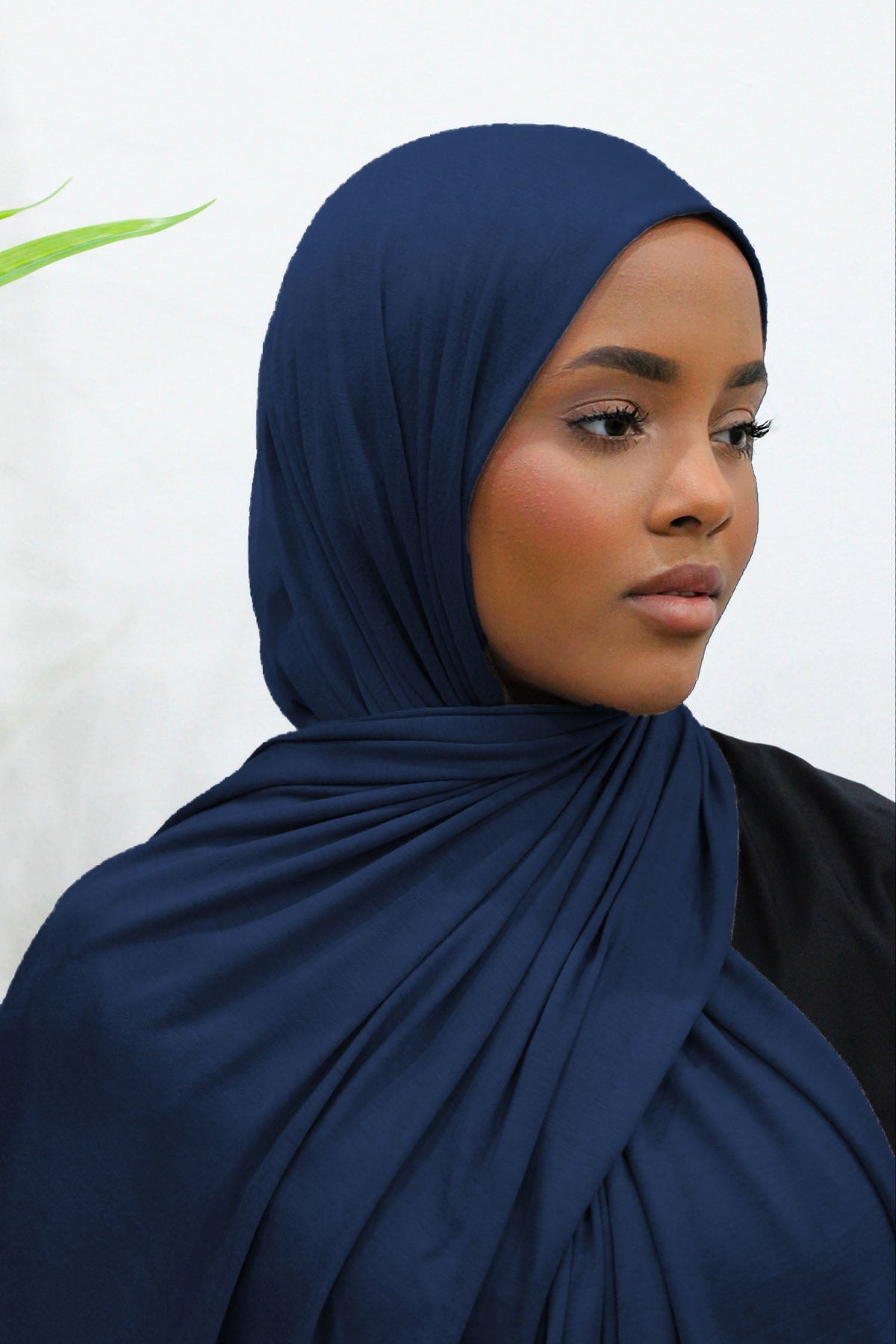
What to pack when you travel with hijab
The most useful travel hijab is usually one you already know how to wear. A new scarf might look ideal in a packing photograph, but the journey is a poor moment to discover that it slips against your coat, feels uncomfortable beside your glasses or needs a mirror every time you adjust it.
Travel changes the way an outfit is used. You may spend longer sitting, carry unfamiliar bags, move between different temperatures and have less privacy for rearranging clothing. Good preparation is therefore less about finding a special travel look and more about choosing reliable pieces, keeping a few essentials accessible and checking the rules that apply to your actual route.
The ideas below are intended to make those decisions easier. They do not replace destination-specific travel, security or health advice, and they do not assume that every woman wears hijab in the same way.
Plan for the journey as well as the destination
Write down the main parts of the travel day: getting to the station or airport, waiting, sitting during the journey, transferring and reaching your accommodation. Consider what you will carry and which layers you may want to remove along the way.
A scarf that is lovely for sightseeing may not be the one you prefer against a seat or beneath a coat collar for several hours. You can wear one familiar arrangement for the journey and pack another for the activities after arrival. There is no need for a single scarf to perform every role.
Think about access to your luggage. Items stored in a checked suitcase or an overhead compartment may not be easy to reach when you need a small adjustment. Keep your immediate clothing essentials together in the bag you expect to have accessible, within the carrier’s current baggage rules.
Check the actual conditions and itinerary rather than packing from a general idea of the destination. An outdoor walking day, an indoor conference and a family event call for different clothing decisions even in the same place. Build around those activities, then add a realistic allowance for changes of plan.
For the outfit itself, our modest dressing guide can help you assess coverage, fit and layering before you begin choosing individual travel scarves.
Use a familiar scarf arrangement for the longest travel day
Choose a wrap you can reproduce without elaborate folding. Test it with the foundation, glasses and outerwear you intend to use. If you normally use a fastening, make sure it suits the scarf and is in good condition.
Sit against a chair back and turn your head in both directions. Notice whether a knot, gathered section or accessory presses against the seat or pushes the scarf forwards. The arrangement may need a small change in position rather than a tighter wrap.
Put on your bag and lift it as you would during the journey. A shoulder strap can pull a scarf end or catch beneath a fold. Practise removing the bag without disturbing the whole arrangement, especially if you will also be carrying a coat or another item.
Keep loose ends manageable. This does not mean every scarf must be short or tightly contained, but long fabric should not become something you need to hold while handling tickets, luggage and doors. Choose the amount of drape you can comfortably manage.
Do not make the wrap tighter merely because you expect a long day. Check the foundation and placement instead. If the arrangement needs repeated tightening to stay where you want it, another scarf or method may be more useful for this particular journey.
Choose fabrics by testing the actual scarf
Read the fibre information and care label, then assess the scarf you own rather than relying on a broad fabric reputation. Weight, surface, dimensions and the number of folds all influence how it feels in the finished arrangement.
Try it for part of an ordinary day before packing. Notice whether it stays comfortable with the layers you expect to wear and whether it creases or catches in a way that bothers you. A scarf that works well at home is a more dependable reference than a claim that one fabric is best for all travel.
For warmer conditions, consider the complete outfit, including the foundation and any repeated scarf layers. For cooler conditions, think about the coat collar, hood and other clothing around the neck. A scarf’s colour or fabric name alone does not establish weather protection or comfortable wear in every climate.
Check opacity in the arrangement you intend to use. A scarf folded densely for a photograph may behave differently when spread into a wider travel drape. Assess the sides and back as well as the front.
Our hijab fabric guide can help you compare structures and styling options. Use it to ask better questions about the scarf, not as a reason to buy a new set of materials for every trip.
Pack a small scarf rotation with clear roles
Begin with the outfits you are taking. Lay each one out with a scarf and identify where the same scarf can be used again. A simple colour plan can reduce unnecessary packing without requiring every item to match.
You might choose one reliable everyday scarf, one alternative that works with the same clothes and a particular scarf for an event. The right number depends on the trip, laundry arrangements and your own preferences; there is no universal scarf count for a week away.
Check whether the alternatives are genuinely interchangeable. A very sheer scarf may require a foundation you have not packed. A large scarf may need a fastening that your everyday one does not. Include those dependencies in the plan rather than counting only the visible scarves.
Keep delicate or embellished pieces away from shoes, rough zips and loose jewellery. Fold or store them in a way that suits their construction. A small separate pouch can make them easier to find, but avoid compressing a decorated edge simply to achieve a neat packing shape.
Pack the scarf you may need soon after arrival where you can reach it. If you have an event before you can unpack fully, keep its complete outfit components together rather than scattering them through several bags.
Make an accessible adjustment kit, not a second wardrobe
Choose a few items that solve problems you actually encounter. A spare scarf or foundation, a small mirror and the fastenings you normally use may be enough. Keep them together so a minor adjustment does not require emptying the whole bag.
Store sharp fastenings securely and check current security rules for the route before packing them. Do not assume that advice from a previous airport or an old travel video applies to every journey. Keep small accessories contained rather than loose in a pocket or bag lining.
If you use a particular accessory, take a suitable spare where losing it would make the outfit difficult to wear. At the same time, avoid packing several unfamiliar alternatives that you have never tried. A spare is useful when you know how it works with the scarf.
Include a way to separate a worn or marked scarf from clean clothing. Choose storage appropriate to its condition and care needs; do not leave a damp item sealed for a long period simply because it fits neatly in the pouch.
Keep the kit distinct from travel documents and other items you need to present quickly. This reduces the chance of scattering fastenings while looking for a passport or ticket. The arrangement should be easy to use in a small space, not merely attractive when laid out at home.
Check airport guidance rather than relying on reassuring stories
Security procedures vary by location and can change. Read the current guidance from the airport and relevant authorities for every part of the route, including transfers and the return journey. A smooth experience reported by another traveller is not a guarantee of the same process for you.
For UK airports, GOV.UK’s airport guidance says that passengers wearing religious or cultural headgear can request a hand-held scanner check. It also describes the option of a private search instead of a body scan, noting that a hand search can involve loosening or removing some clothing. Read the current guidance before travelling and discuss privacy needs with security staff; do not treat these UK arrangements as a promise about every airport abroad.
You can prepare a clear request in advance, such as explaining that the head covering is worn for religious reasons and asking what private arrangements are available if further screening is needed. Ask staff to explain the next step where you are uncertain.
Choose an outfit that you can rearrange comfortably after routine screening or outerwear removal. This is about reducing practical fuss, not about changing your beliefs or accepting responsibility for other people’s assumptions. Keep the accessories you need to restore the arrangement accessible.
Where you have a specific concern, contact the airport through its official channel before travel. Retain the relevant information, while recognising that staff may still need to assess the situation on the day. Allow your travel plan enough room for ordinary procedures rather than relying on a scarf style to guarantee a faster passage.
Research local expectations without reducing a place to a stereotype
Check official travel advice for the country and the particular places you plan to visit. The UK Foreign, Commonwealth & Development Office’s travel checklist directs travellers to current destination advice for entry requirements, safety, health risks and legal differences. Use that destination-specific information rather than assuming that a general clothing article establishes the rules.
For a place of worship, cultural venue or organised event, read the venue’s own visitor information or ask the organiser. Requirements can differ between settings within the same country. A photograph of another visitor is not a reliable substitute for current instructions.
Keep legal requirements, venue expectations and personal style preferences separate. Something may be customary without being a formal rule, or required at a particular site without applying everywhere. Ask a precise question where the distinction matters.
Do not assume that women who wear similar clothing share the same reasons, traditions or preferences. You can appreciate local styles without assigning a universal meaning to every colour, fold or garment. Your own travel outfit does not need to imitate a stereotype of the destination.
If you are attending a family or community event, a direct conversation with the host may be the most useful source of practical information. Ask about the setting, activities and dress expectations rather than trying to infer everything from the event’s name.
Make prayer clothing easy to reach and use
Consider what you need for your own prayer practice and how you will access it during the journey. You may prefer a dedicated garment, a suitable scarf arrangement or an outfit that already provides the coverage you require. Check the actual clothing in movement before relying on it away from home.
Pack any dedicated prayer wear where it can be reached without unpacking the whole suitcase. Keep it clean and separate from shoes or other items that could mark it. Choose a garment you have tried rather than a new compact option whose fit you have not assessed.
Check the current availability and location of prayer facilities through the airport, station, accommodation or venue. Do not assume that a room mentioned in an old review is still accessible or that every terminal has the same arrangements.
For questions about prayer times, travel concessions or religious requirements, use guidance appropriate to your own practice. A clothing guide should not turn practical packing suggestions into a universal religious ruling.
Our prayer-wear guide can help you think through garment fit, coverage and ease of movement. The practical aim is to make the clothing ready when you need it, rather than adding another complicated task to the travel day.
Plan complete outfits for the activities you will actually do
A long journey with several transfers
Choose a familiar base outfit with a manageable hem, sleeves that remain comfortable when carrying bags and an outer layer you can remove easily. Use the scarf arrangement you have tested against a seat and with your luggage.
Keep the first change of clothing accessible where practical. If a bag is delayed or you cannot reach the accommodation immediately, a spare scarf and a workable clothing change can make the situation easier. This is a contingency, not a reason to duplicate the entire suitcase in hand luggage.
A day of walking and visiting indoor places
Choose the outfit around the walking and the current conditions. Test the shoes with the hem, and make sure the scarf works with the outer layer you may remove indoors. A bag should carry what you need without repeatedly pulling the scarf or shoulder fabric.
Check individual venue information before the day. If a site has specific clothing expectations, plan for them rather than assuming your general sightseeing outfit will meet every requirement. Avoid making the day depend on buying a missing item at the entrance.
A work trip or conference
Pack a complete outfit that you have worn or tried together, including the scarf, shoes and any jacket. Check the neckline with a lanyard or headset where those are likely to be used. Keep the outfit’s essential components together.
For a video call or presentation during travel, test the scarf arrangement and clothing while seated. You do not need a completely new look; you need a familiar combination that remains comfortable while you focus on the work.
A family celebration
Separate the event outfit from the travel outfit where that would make the journey easier. Pack delicate scarf details securely and allow a realistic opportunity to change. Do not wear an elaborate arrangement for an entire journey solely to avoid carrying a spare scarf.
Check the outfit with the shoes and outerwear you will use at the event. A scarf that matches the dress but catches on its decoration may need a different drape. Practise the final arrangement at home rather than relying on a new tutorial immediately before leaving the accommodation.
A worked packing plan for a short mixed-purpose trip
Imagine a trip with one travel day, a day of meetings and a family visit before the return journey. This is an illustration rather than a fixed packing formula. The useful exercise is to assign each piece a role and see which combinations overlap.
Start with the journey outfit you already know is comfortable. Perhaps it uses a long tunic, trousers and a familiar scarf. Check whether those same trousers can be worn with the meeting top or jacket. If they can, you have reduced the number of lower pieces without reducing the number of complete outfits. If they cannot, identify why: the colour, the fit beneath the jacket or the formality of the setting may make a separate pair worthwhile.
Choose a meeting scarf that works with the neckline and any equipment you expect to use. It might be the same reliable scarf as the journey, with a spare available for cleaning or an unexpected mark. Do not count on reusing a single piece immediately after washing unless you know the facilities and have allowed for it to dry.
For the family visit, decide whether the dress or outer layer genuinely needs to be different. A separate outfit may be appropriate, but it does not automatically require new shoes, a new bag and a third scarf. Lay out the pieces and compare them. Keep the components that add a real option; remove those included only because they looked attractive beside the suitcase.
Now check the return journey. Is there a clean, comfortable combination ready, or have you assigned every suitable item to earlier days? A practical packing plan includes the last day rather than treating it as an afterthought. Keep a suitable spare foundation and scarf available if those are essential to your usual arrangement.
Finally, identify the single points of dependence. If every outfit needs one particular fastening, pack an appropriate spare within the applicable rules. If the event dress only works with one underlayer, keep those pieces together. If your only coat does not fit over the meeting jacket, resolve that at home rather than discovering it on the way to the venue.
The finished plan may contain more or fewer pieces than someone else’s. That is not the measure of success. What matters is that each day has a complete, workable outfit, the important items are accessible and you have not packed several scarves that require clothing or accessories left behind.
Arrange privacy and changing space through practical questions
Before booking or arriving, ask the accommodation about the specific arrangements that matter to you. A vague description such as private room may not answer questions about shared facilities, access by other people or the layout of changing areas.
Ask clear questions about what you need to know, while keeping personal information limited to what is relevant. You do not have to give a lengthy explanation of your clothing practice to request information about a room or facility.
When travelling with companions, discuss practical expectations in advance. You may want time or space to change, dry scarves or organise clothing without interruptions. A straightforward conversation can prevent misunderstandings without assuming that others will know your preferences automatically.
Keep a suitable easy-to-put-on layer available where that helps your routine in shared accommodation. Choose something you find comfortable and have already tried. The aim is to reduce repeated dressing and undressing, not to impose a particular garment on everyone who travels with hijab.
Care for scarves when your usual routine is unavailable
Read care labels before deciding which pieces to take. A scarf that needs a particular cleaning or drying arrangement may be suitable for an event but less useful as the only everyday option on a trip with limited facilities.
Check what laundry arrangements are actually available rather than assuming that every accommodation offers them. If you plan to wash an item yourself, use a method appropriate to the garment and the facilities. Do not improvise strong treatments or unsuitable heat because you need the scarf ready quickly.
Allow for drying time in your packing choices without assuming every light scarf will dry at the same rate. A spare gives you flexibility if an item is not ready. Keep clean, worn and damp pieces separate in ways suited to their condition.
Inspect fastenings and seams after a long day of wear. A small snag or loose component is easier to address before the next journey. Store the scarf clear of bag zips and jewellery rather than pushing it into any available space.
For garment-specific reminders, see our care guide for abayas, hijabs and modest wear. Travel does not make every scarf suitable for the same cleaning shortcut.
Keep personal boundaries alongside practical preparation
You do not have to turn every question about hijab into an educational conversation. You may enjoy discussing your clothing, or you may prefer a brief answer and a change of subject. Both are legitimate personal choices.
Prepare a simple phrase where that helps you feel comfortable: “It is part of how I choose to dress,” or “I would prefer not to discuss that right now.” There is no obligation to represent every Muslim woman or explain a whole tradition during an ordinary journey.
If an interaction feels unsafe, prioritise your safety and seek help through the appropriate staff or local services. Clothing choices do not make you responsible for another person’s harassment. Keep the official support and emergency information relevant to your destination accessible as part of normal travel preparation.
Confidence does not have to mean feeling relaxed about every unfamiliar situation. It can mean knowing which information you have checked, what you need to ask and where your essential items are. Practical preparation leaves more room to enjoy the journey without demanding a particular emotional response.
A final rehearsal before you zip the bag
Put on the travel outfit with the actual scarf, foundation, shoes, coat and bags. Sit, walk, lift the bag and remove the outer layer. Check the scarf after those actions rather than smoothing it for a photograph first.
Open the bag and find the adjustment kit, spare scarf and any prayer clothing you expect to need. Make sure they are accessible without disturbing documents or scattering small accessories. Check the carrier and security rules for the items you have packed.
Then review the planned outfits against the itinerary. Remove duplicates that do not add a useful option, and identify any missing component that several outfits depend on. Keep one workable alternative for the problems you can reasonably anticipate.
Travelling with hijab does not require a flawless capsule wardrobe or a special performance of style. A few dependable arrangements, clear information and clothing that works in movement can do more than an overfilled suitcase. Pack for the person who will actually take the journey, with room for comfort, privacy and your own way of dressing.