Your tan abaya can go beyond beige
The tan abaya is easy to buy and surprisingly easy to leave unworn. You put it beside a beige scarf, add a brown bag and find that the outfit looks flatter than you expected. Nothing obviously clashes, yet nothing feels quite settled either. Before buying another almost-matching neutral, try a clearer difference.
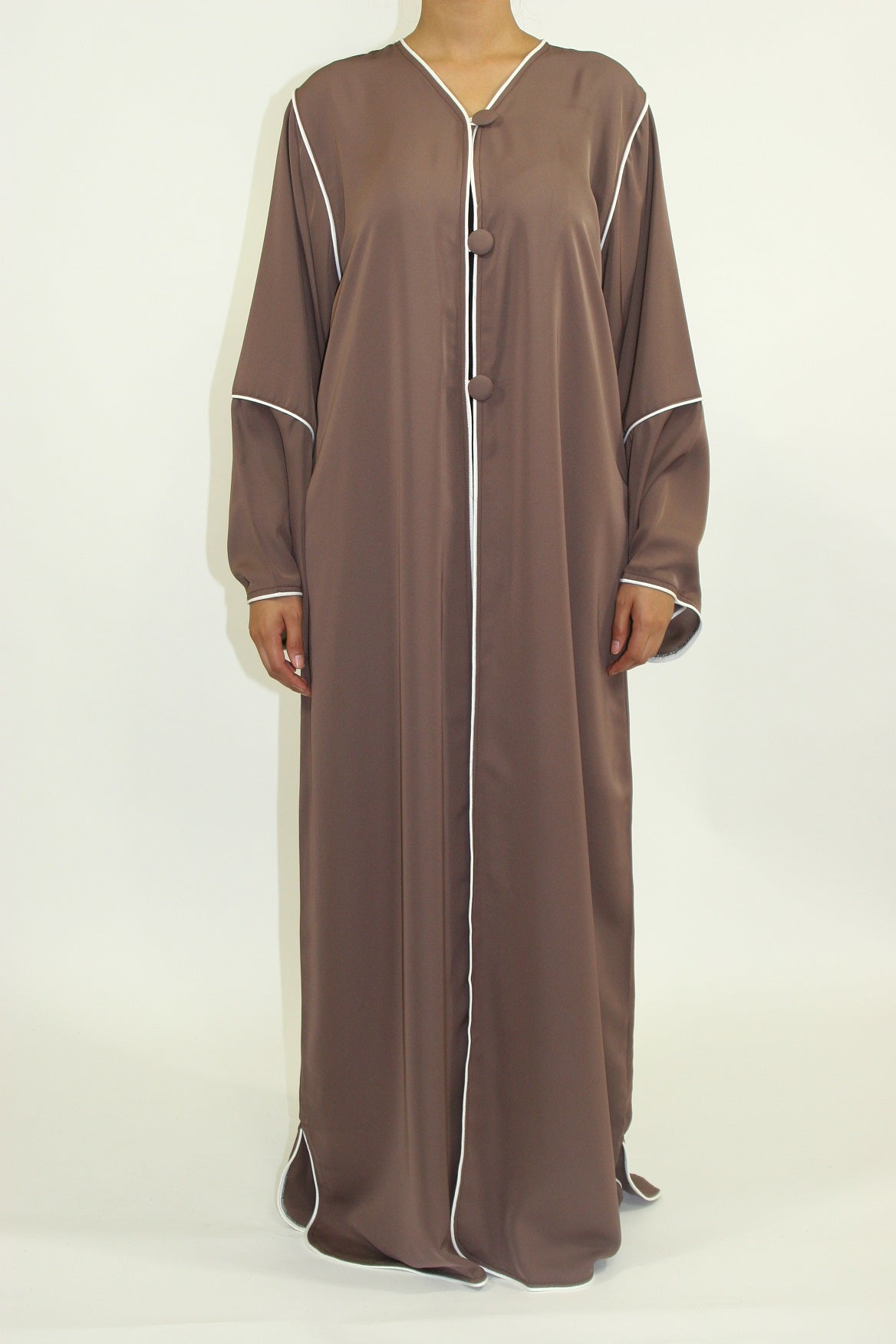
Tan can be the quiet part of an outfit rather than a colour that must be repeated from head to toe. Navy, black, cream, a muted green or a printed scarf may give it a more useful place among your existing clothes. You can also keep the palette close and change the surfaces or shapes instead. The aim is not to discover a universal partner for tan, but to find combinations you will actually reach for.
Begin with the garment you own or are considering. Its shade, fabric and construction matter more than the name on the listing. The examples here are suggestions to try with your wardrobe, not descriptions of products currently for sale.
Take the abaya out of the beige pile
Place it beside a white item, a grey scarf and a brown accessory in daylight. These familiar pieces help you see whether this tan looks warmer, deeper or more muted than you remembered. You do not need to assign it a technical colour label. You need a clear enough impression to choose the first outfit.
Now put the abaya on. A large area of tan can feel different from a folded corner held in your hand. Add your most familiar scarf and look at the complete outline, including any visible inner garment. That gives you a baseline before changing several pieces at once.
Be particularly careful with near matches. A scarf and dress both called tan may have visibly different undertones. You can enjoy that difference, but you are not obliged to keep searching for another close shade when a deliberate contrast would be simpler.
A warm tan beside cream gives one effect; the same dress beside charcoal gives another. Test the fabrics under your ordinary indoor lighting too. The preferred pairing should be one you enjoy in the places you wear it, not only beneath a bright fitting-room light.
First outfit: tan and navy, with the pieces you already use
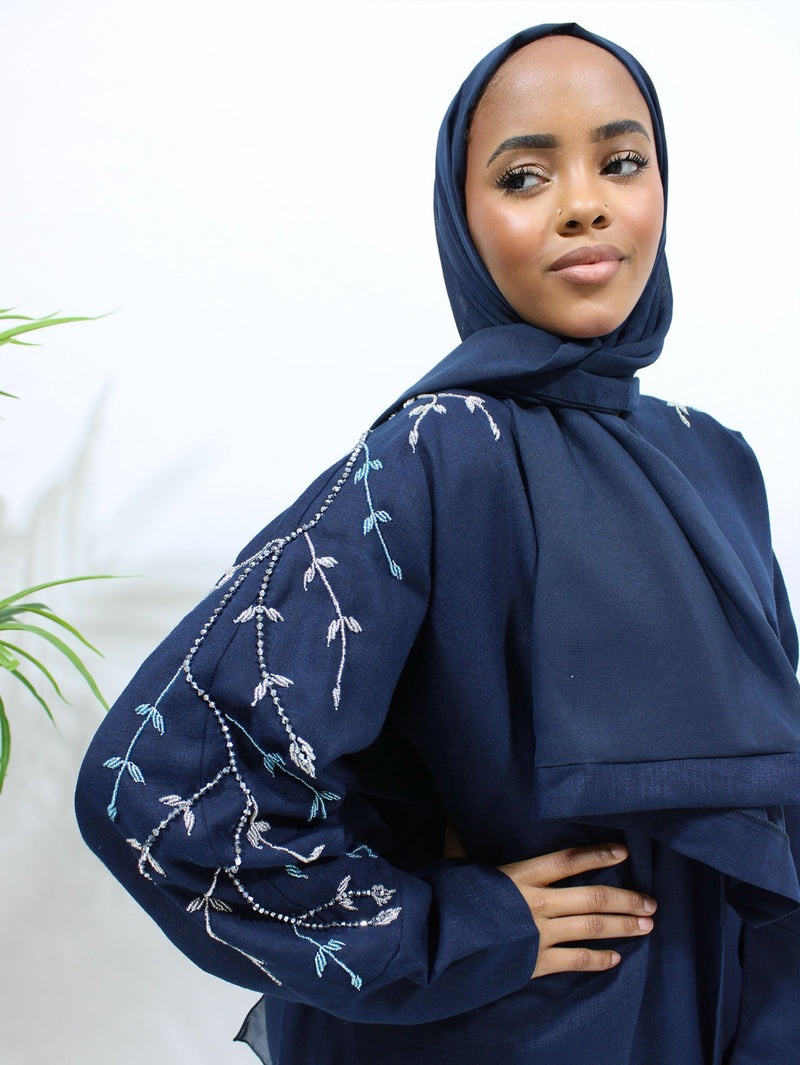
Try a plain navy scarf with the abaya and familiar dark shoes. Leave the bag unchanged at first. The scarf creates a deeper area near the face, allowing you to compare the effect with the beige or cream option without rebuilding the whole outfit.
For an open abaya, consider a navy inner dress or suitable dark separates. Inspect that base without the outer layer first. Its neckline, sleeves and lower length should provide the coverage you want wherever the fronts move apart.
The scarf need not match the inner garment exactly. A difference in texture or depth can be intentional. Compare the actual pieces rather than ordering both from separate photographs and expecting their colour names to deliver a matching set.
Put your everyday bag on with its usual contents. A brown bag may create a warm link to the tan, while a darker bag can keep the overall outfit quieter. Notice its shape and where the strap sits as well as its colour. A useful bag can belong in an outfit without becoming another focal point.
This combination can suit a work or study day where the garments meet the setting's requirements. Test the sleeves at a table and the scarf beneath the coat collar. A restrained palette does not make a restrictive outfit more practical, so solve those interactions before deciding it is a dependable weekday option.
Second outfit: a pale scarf without an accidental matching set
Try a cream or light neutral scarf when you want less contrast at the upper part of the outfit. Keep the shade clearly related or clearly different; do not assume that the closest match is automatically the best one.
Look at the scarf arranged as you wear it. A broad chest drape displays more of its colour than a small folded edge. You may enjoy the shade in a compact arrangement but feel that a very large area takes attention away from the dress.
Introduce a deeper element through the bag or shoes where that helps the combination feel clearer. A brown bag beside tan and cream is one option. Black footwear can also remain in the comparison; there is no need to replace comfortable shoes because a palette is described as warm.
With several pale layers, assess opacity independently of colour coordination. Check the outer garment, lining and clothing beneath it. A cream slip that looks right at the neckline may behave differently through the body of a light fabric.
For a relaxed family visit, the scarf, dress and practical bag may be enough. Leave a belt out initially and let the garment fall in its intended shape. A quiet palette does not need a defined waist or a decorative pin to prove that you have styled it.
Third outfit: black gives tan a clearer edge
A black scarf or inner outfit can make the tan stand apart more distinctly. Start with one dark area and see what it does. You may prefer the scarf as the contrast while keeping the lower accessories softer, or choose a black inner dress beneath an open tan layer.
Inspect the edges of the garments rather than only the colours. A broad black neckline beneath a fine tan fabric can create a strong line. Decide whether that line is the effect you want or a detail you would rather simplify with a different inner garment.
Use black accessories you already own before buying something new. A plain bag with quiet fittings may be the better partner when the abaya has embroidery. A more structured bag can introduce a different shape beside a simple flowing garment.
For a dinner, try changing the bag or scarf surface while keeping the shoes that work with the hem. The occasion's actual dress guidance still matters. Adding black or a metallic clasp does not turn every everyday abaya into formalwear.
Compare the outfit with its coat on and off. A black coat may leave only a narrow section of tan visible during the journey, while the indoor outfit shows the whole dress. Both versions should be comfortable and complete in their own right.
Fourth outfit: give a printed scarf some space
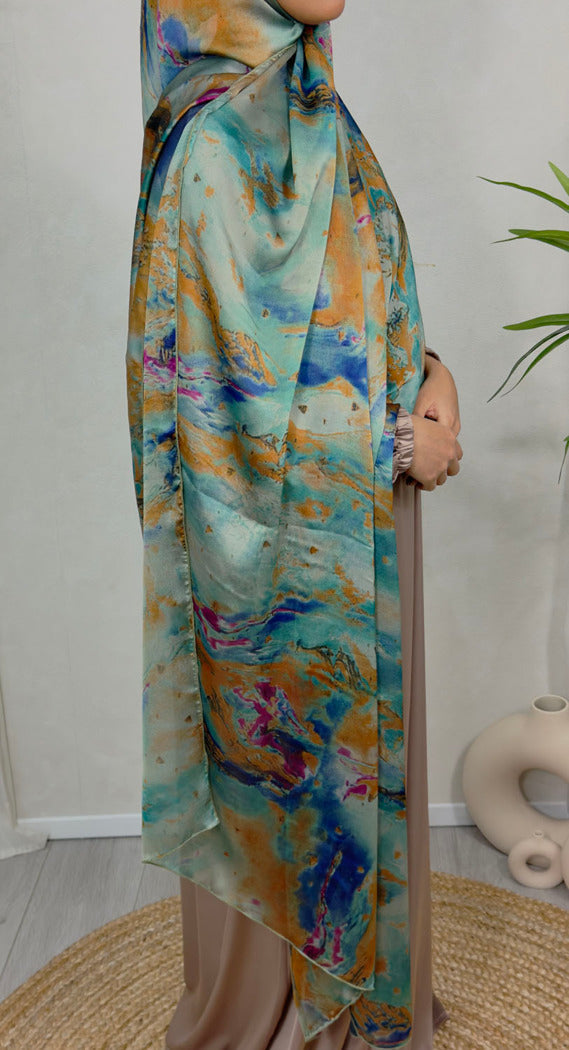
A print can connect tan with colours already in your wardrobe. Choose a scarf whose pattern you enjoy, then identify a small relationship: perhaps a warm background, a brown outline or a muted blue that works with your bag.
Fold the scarf before judging it. The part visible around the face may show a large contrasting border even when the unfolded design appears mainly neutral. Try another orientation where it remains comfortable, rather than forcing an awkward wrap to display one particular motif.
A plain tan abaya can leave the scarf as the main detail. Keep the bag and footwear relatively quiet for the first comparison. That does not mean every accessory must be plain forever; it makes the effect of the print easier to see.
For a patterned tan garment, reverse the starting point and try a plain scarf. Choose a colour from the actual dress rather than a photograph. Check the back and sleeves as well, because a large motif may be distributed differently from the front view that first caught your attention.
Our printed-abaya guide explores those design questions more closely. Here, a small number of clear colour connections is usually a useful place to begin, whether you later prefer a restrained or richer combination.
Fifth outfit: try a colour you do not normally put with beige
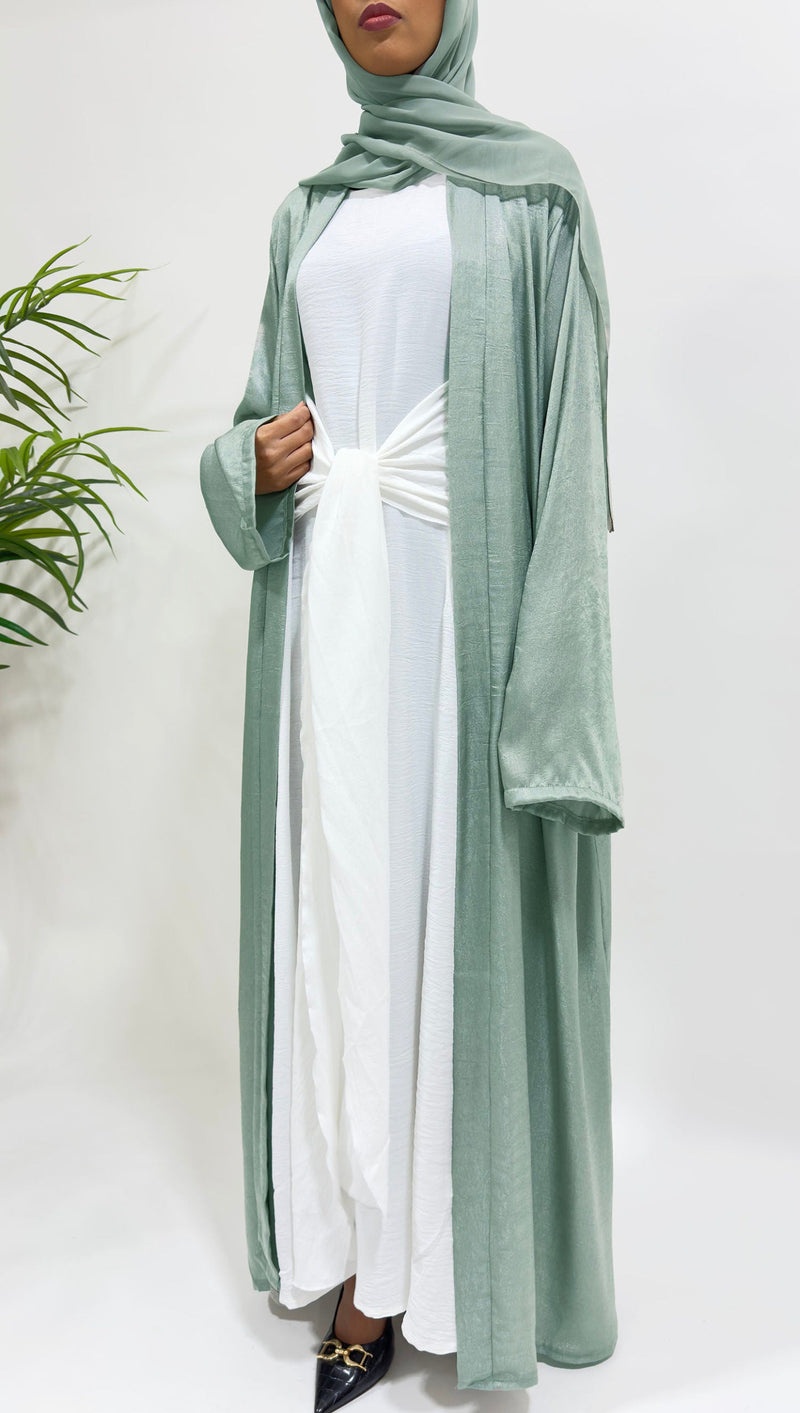
A muted green, burgundy or dusty rose scarf can change the character of the dress without changing its practical role. Treat these as separate experiments, not a list of colours to wear together.
Keep the shoes and bag the same while trying each scarf. A colour you reject beside one accessory may work once that accessory is changed, but changing everything at once makes the comparison harder to understand.
Notice the amount of contrast rather than searching for a shade that supposedly suits every complexion. A deeper green can frame the upper outfit more clearly; a pale rose may create a softer transition. The result is a matter of your preference and these particular fabrics.
If a full coloured scarf feels stronger than you want, look for a print that carries a smaller amount of that shade. Conversely, a plain scarf can make a colour relationship clearer than a pattern containing several competing tones.
Keep a photograph of the successful version with the scarf identified. This is especially useful where two similar-looking scarves produce different results. The record turns a colour experiment into a real outfit you can repeat rather than another vague possibility.
A denim jacket changes the shape, not only the mood
A denim jacket may be a useful casual layer over a tan abaya, but first check that its shoulders and sleeves accommodate the dress. Put it on over the complete outfit instead of over a thin top that gives an unrealistic impression of room.
Raise your hands, reach forwards and fasten the jacket where you would use it that way. Notice whether the abaya sleeve gathers inside it or the lower garment is pulled upwards at the back. More room through the jacket's body will not necessarily solve an incompatible arm shape.
Look at where the jacket ends. A shorter layer reveals more of the abaya and creates a distinct horizontal break. A longer jacket covers another area. Compare both where you own them, keeping the same scarf so you can judge the actual change in proportion.
A blue jacket, tan abaya and plain scarf can be a straightforward daytime combination. A darker denim wash produces another effect, but neither guarantees a particular level of formality or quality. Judge the real garment, its finish and the setting.
Take the jacket off during the fitting as well. The abaya outfit beneath should remain suitable when the outer layer is no longer there. A jacket can be part of your preferred look without becoming the only thing holding essential coverage in place.
Do you want a belt, or just a more settled drape?
Try the abaya without a belt first. If the fabric keeps catching or gathering, inspect what is underneath. A bulky waistband, rough seam or incorrectly positioned inner layer can be the cause. Tightening a sash may hide that interaction while making the outfit less comfortable.
Where the design includes a belt, compare the intended arrangements. Look at the front, sleeves and hem after fastening it, not only the waist. Gathering material can move several parts of a broad-cut garment at once.
Sit for part of the trial. A tie that feels unobtrusive while standing can press or gather the inner dress when seated. Adjust it as the garment allows, or leave it out where the construction is designed to work without it.
Do not use a decorative belt to force an open abaya to behave like a securely closed dress. The inner outfit still needs to perform its own coverage role. Choose a different construction when that is the function you actually want.
You do not have to define the waist because the garment is neutral or because somebody has described its shape as flattering. A free-falling tan abaya can be the finished outfit, not a stage waiting for another accessory.
The scarf's fabric belongs in the decision
A colour match can still be an awkward partner if the scarf is too substantial for the neckline or difficult to keep in your usual arrangement. Compare the finished wrap, including any undercap and fastenings, rather than judging a small folded sample.
A smoother scarf beside a textured dress gives a different result from two strongly textured pieces. A lustrous scarf may bring an occasion detail to a matte abaya. A quieter surface may suit a dress that already reflects the light.
Check the neckline with the abaya fully arranged. Turn your head and reach for the bag. If the scarf catches on a button or pulls beneath a collar, address that contact point before deciding the whole colour combination is wrong.
The hijab fabric guide helps separate composition, surface and drape. A material name alone does not establish how much cloth you will have around your neck or how the scarf will sit beside this particular dress.
Choose the garment before giving tan credit for its comfort
A tan colour does not establish a fibre, temperature performance or fit. Read the actual composition and lining details. A heavy lined design and a light open outer layer can share the same shade while asking very different things of the outfit.
Check where the lining reaches. The body may be lined while the sleeves are not, or the lining may end above the lower edge. Use the clothing you intend to wear beneath it during the assessment.
For a closed abaya, examine the neck opening and any fastening before trying to pull it on. For an open design, establish what is included and how the fronts are intended to sit. A photograph may show a separate inner dress or scarf that is not supplied.
Keep length distinct from width. Amani's numbered abaya lengths refer to shoulder-to-feet inches rather than total standing height; the individual garment's other dimensions still need checking. Buying a longer option is not a dependable solution to a sleeve that lacks room.
Compare a well-fitting garment using the same measuring route as the seller. Ask whether a width is measured flat or around the garment. Clear measurements are more useful than a broad instruction to size up whenever you are uncertain.
A wider or more expensive garment is not automatically the more comfortable one. Let the fitting establish whether this cut provides the room you need where you need it.
Make two shoe choices before making two outfit claims
A tan abaya may work with trainers for an ordinary outing and another shoe for a dinner, but test both with the actual hem. The change in height and shape can alter how the fabric meets your feet.
Walk naturally rather than taking careful fitting-room steps. Check the back edge when turning. If the dress repeatedly catches, choose a suitable length or a different shoe relationship instead of planning to lift the garment all day.
For an alteration, take the shoes you expect to use most and explain the second option where relevant. Ask how a lining, shaped hem or decorative border would be handled. An apparently small shortening can be a different job on another design.
There is no obligation to change footwear just because daytime becomes evening. A different scarf or bag may provide the variation you wanted while leaving a comfortable, tested hem arrangement intact.
A family piece or favourite accessory does not need a fabricated story
You may have jewellery, a scarf or another item that matters to you personally. Try it beside the tan abaya and decide how it can be worn comfortably. Its meaning does not depend on every other part of the outfit sharing its origin or period.
A colourful family scarf can be the main detail. A small piece of jewellery may be enough where it remains visible and does not catch. Check attachment points and the reverse of decorative items rather than looking only at their attractive side.
Do not assign a universal cultural symbolism to tan or assume that an embroidered accessory represents the same tradition for everyone. Describe the connection you actually know, or simply enjoy the appearance without adding a story.
For a family celebration with specific expectations, ask the host where needed. A neutral dress is not automatically suitable for every event, particularly where pale colours have a role in the occasion's own arrangements.
A useful comparison before you buy another neutral
Put your existing cream, beige, brown and tan garments together and ask what each one does. Perhaps the cream dress is an occasion piece, the brown abaya works under your winter coat and the tan one fills the gap for everyday wear. Those are useful differences.
If the new tan garment does the same job as one you already own, decide whether you genuinely want another version. There is nothing wrong with enjoying a colour, but a claim of versatility should describe actual outfits rather than simply a neutral shade.
Imagine two hypothetical purchases. The first works with your current scarf and shoes but needs an essential inner dress. The second includes suitable inner clothing but has sleeves that do not fit beneath your coat. Neither can be evaluated by the outer colour alone.
Write down the confirmed additions or limitations. Do not assign a hopeful alteration price or assume a separately sold scarf is included. A clear total makes the decision easier without requiring a complicated wardrobe spreadsheet.
Keep any environmental or ethical claim separate from that practical comparison. A neutral colour and the possibility of repeated wear do not establish how a garment was made. Look for relevant evidence about the particular claim rather than accepting a reassuring palette as proof.
Care should make the next outing simpler
Keep the garment's care information identifiable. Follow the label for the finished piece, including its lining and decoration, rather than using a routine because it worked on another tan dress.
GINETEX's care-symbol reference explains the treatments indicated by those symbols. A colour name is not a washing category, and a general instruction to use a low iron is not enough when the garment's actual restrictions differ.
After wearing, inspect the lower edge and areas that met a bag or jewellery. When the same point needs attention repeatedly, look at the outfit's contact there. A different bag position or a better hem relationship may be more useful than treating the recurring mark without changing its cause.
Handle a new mark through an appropriate method rather than an invented household remedy. Identify what happened and retain the care instructions when seeking advice. Do not rub or heat an uncertain patch merely because the garment is needed for another event.
Put the abaya away fully dry, with support suited to its construction. Keep a piece needing repair out of the ready-to-wear area so it does not surprise you at the next outing. Our wardrobe-care routine offers a simple system for that distinction.
Pack one tan abaya for a short visit
For a visit involving an ordinary daytime outing and a meal, start with the version you already wear comfortably. Pack the scarf, inner clothing and shoes that made that outfit work. A similar-looking replacement can change the neckline or the hem relationship, so do not substitute it at the last moment without trying it.
Choose one optional change for the second setting. A printed scarf instead of navy, or a smaller bag instead of your everyday one, may be enough. Keep the footwear where it remains appropriate. You can enjoy another outfit without filling the bag with a separate set of accessories for each part of the visit.
Try the necessary coat before packing. If it compresses the abaya sleeves or catches the scarf, resolve that at home. A tan dress that works well indoors is not automatically a complete travel outfit. Its practical partners need to work through the journey too.
Find out what storage and care you can reasonably provide. A garment that needs an unfamiliar pressing process should not depend on a borrowed iron immediately before dinner. Follow its own instructions and choose a packing arrangement that protects it from exposed zips, shoes and toiletries.
Keep an appropriate alternative where your plans call for one, but make it a known outfit rather than a hopeful collection of pieces. The useful question is what you would put on if the abaya needs attention, not how many additional colours could theoretically match it.
When you return, note which combination you actually used and whether anything was inconvenient. A scarf that remained in the bag may not need another matching accessory. A coat that worked particularly well is worth recording. Packing becomes easier when it builds on these real results rather than a new imagined capsule for every visit.
Keep three combinations, not every possible colour pairing
Select one outfit for an ordinary day, one for a visit or meal, and one with the outerwear you actually need. Record the scarf and shoes as well as the dress. Three tried combinations are more useful than a long list of colours that might work in theory.
If an experiment does not appeal, return the accessory to the outfit where it belongs. A green scarf can be lovely without being the partner you want for this tan abaya. There is no need to rescue every possible pairing.
The dress does not have to be a blank canvas for endless reinvention. It can simply be a reliable piece in a shade you enjoy. Give it clear partners, retain the fit that works and let tan be one useful colour among the clothes you already wear.