What to know before buying a chiffon abaya
The lightness you see is not always the lightness you feel. A chiffon abaya may move freely in a photograph, yet the finished outfit can include a lining, an underdress and a scarf. Those layers are part of the purchase decision, not details to solve after the outer garment arrives.
Chiffon is worth considering when you enjoy a fine, sheer surface and a soft-moving outline. Choose it with a clear view of the construction, the coverage you need and the care you can provide. That is more useful than expecting the fabric to be automatically cool, wrinkle-free or suitable for every occasion.
Understand the fabric name
Chiffon describes a lightweight, sheer woven fabric rather than one specific fibre. Its fine yarns and construction contribute to the surface and movement, while the composition of the particular cloth still needs to be checked on the label.
This distinction matters because two chiffon garments can differ in feel, finish and care. A product title does not establish whether the fabric contains silk, another fibre or a blend. Ask for the composition when it is missing.
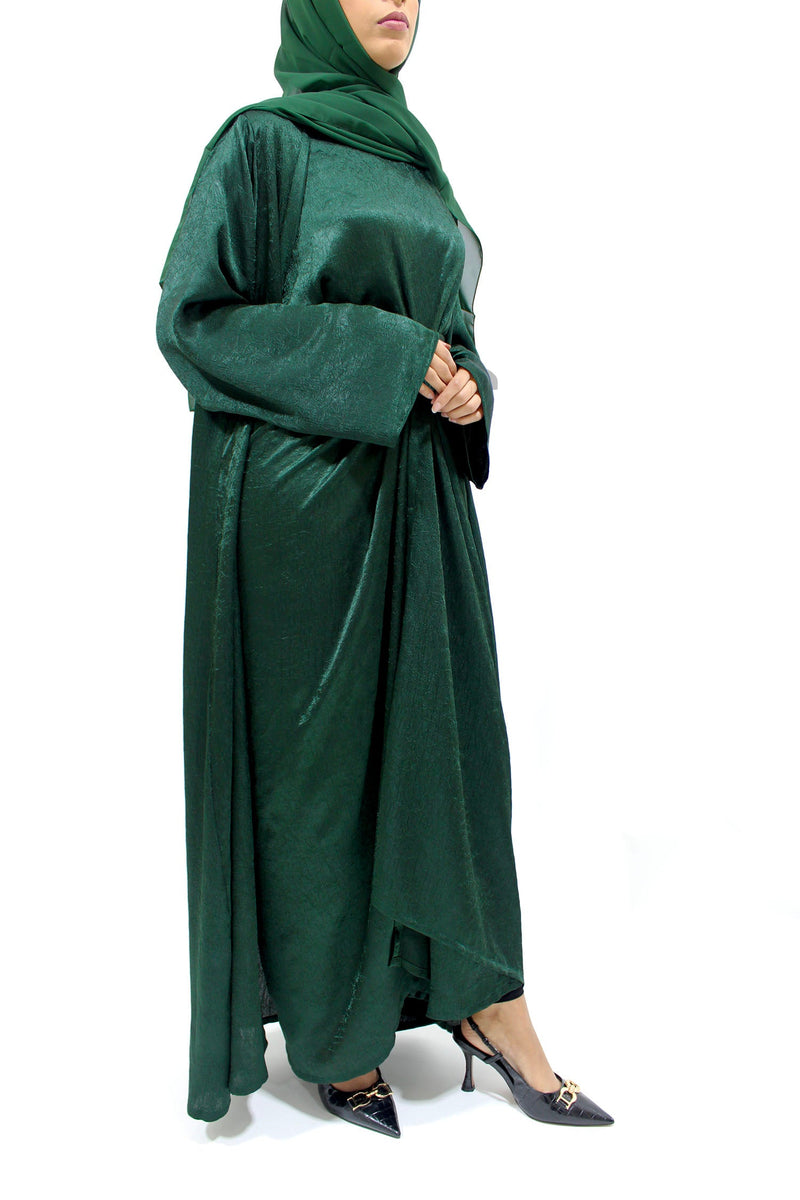
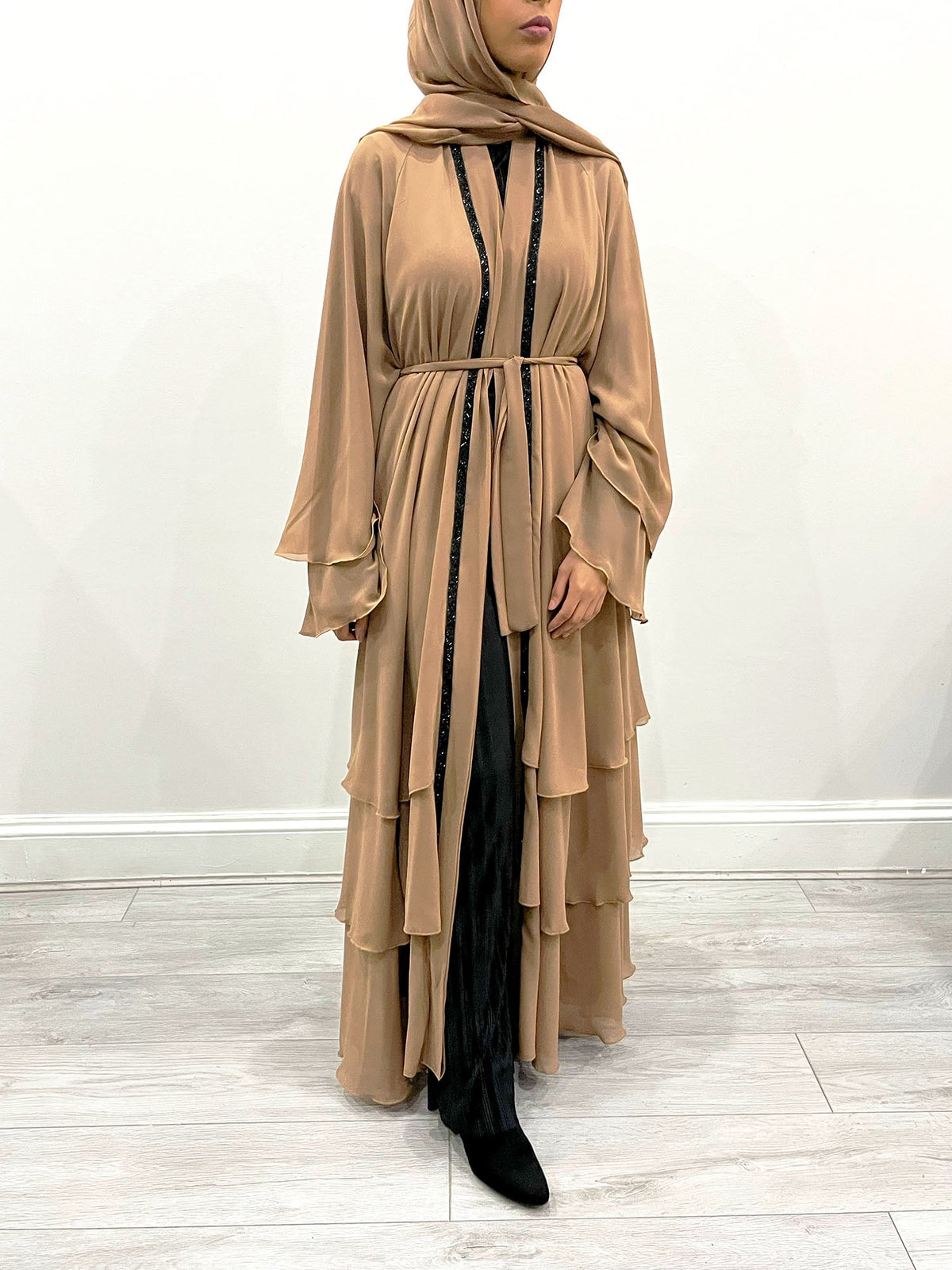
Look at the actual abaya as well as the fabric description. The amount of cloth, number of layers, sleeve shape and decoration all affect how it hangs. A full, layered design will not necessarily feel like a simple single-layer scarf made from a similar material.
Find out where the coverage comes from
Check whether the garment is lined through the body, sleeves or both. Some chiffon abayas are intended as outer layers over a separate outfit. Others include an inner dress, but that piece may not cover every area you want covered.
Read the list of included items. A model’s underdress or scarf is not automatically part of the purchase. If an inner garment is included, inspect its neckline, sleeves, length and opacity independently rather than assuming that a coordinated set resolves everything.
Try the complete outfit in brighter light and from the sides and back. Look at the arms and any area where the layers separate. A dark colour or a busy print can make transparency less obvious in a photograph without eliminating it.
Choose an inner layer that lets the outer fabric move
A simple inner surface can help the chiffon fall without catching on bulky seams or raised details. Try the pieces together and see whether the outer layer settles naturally or gathers around the waist and hips.
The inner outfit needs its own comfortable fit. A dress that is too restrictive does not become suitable because a loose chiffon layer is worn over it. Check sitting, reaching and walking before concentrating on the visual effect.
For an open-front style, treat the inner outfit as something that will be seen. The front can move apart with an ordinary step or turn. A fastening at one point may not control the whole opening, and an improvised pin is not a reliable substitute for a complete coverage plan.
Compare the hems as a pair
Put the layers on with your intended shoes. Decide whether you prefer the inner and outer hems to sit close together or show a deliberate difference. Check the result from several angles, because a visible lower band can look different at the back.
Walk and use a step in a suitable space. Fine outer fabric may move around the inner layer in ways that are not obvious while standing. Make sure neither hem catches beneath your foot or repeatedly tangles with the other.
Do not choose excessive length solely for a flowing photograph. If alterations are needed, ask how the chiffon edge, lining and any decoration will be handled. The work should preserve the intended relationship between the layers.
Inspect the edges and seams closely
A fine, sheer fabric makes finishing visible. Examine the front edges, hem, cuff and seams for an appearance that suits the design. Look for unwanted pulling or an edge that seems heavier than the surrounding cloth.
Check how closures are attached and how they affect the hang. A small fastening can create a noticeable pull if it concentrates tension in one area. Use the garment as intended rather than forcing the front into a different position.
For embroidered or beaded chiffon, assess the decorated area in movement. The weight and stiffness of the detail may differ from the plain fabric beside it. Sit and bend your arms to see whether the transition remains comfortable.
Use colour to manage the layers
A similarly coloured inner dress can give the outfit a quieter, more continuous appearance. A contrasting layer makes the transparency and open front more visible. Both are styling options, but compare the actual materials rather than relying on matching colour names.
With printed chiffon, consider which parts of the pattern remain clear over the inner colour. A strong contrast beneath may change the appearance of the print. A quieter base can let the outer motif remain the main detail.
Keep the scarf decision connected to that choice. If the outer pattern and inner colour already provide contrast, a plain hijab may be enough. The guide to styling a printed abaya offers a useful way to compare pattern scale and supporting colours.
Let the hijab complement the movement
A chiffon abaya does not require a chiffon hijab. You may prefer a scarf with a different surface or a more stable arrangement. Choose the scarf for the coverage, drape and comfort it gives in your usual wrap.
Try it with the actual neckline. A long scarf end can hide an outer border or gather against a tie. Several layers around the neck can change the feel of an outfit that otherwise appears light.
Turn your head and reach forward after arranging the scarf. Check for catching at decorative details and for unintended gaps around the inner neckline. Our hijab fabric guide helps separate a fabric’s appearance from the way it functions in a wrap.
Plan daytime use around the activity
For a relaxed gathering, a relatively simple chiffon outer layer over a suitable inner dress can be easy to coordinate. Keep the bag and shoes practical, and let the moving fabric provide interest without adding several decorative elements.
For errands or a busy working day, inspect the sleeve and hem more critically. A very full cuff may be inconvenient near food, desks or bag openings. A delicate surface may also meet rough straps or fastenings repeatedly.
Chiffon is not automatically unsuitable for regular wear, but the particular design should fit the activity. Choose the amount of fabric and detail you can manage comfortably rather than expecting every flowing garment to be effortless.
Build an occasion outfit without relying on extra sparkle
A more formal effect can come from a considered colour relationship, a refined cut or a small amount of decoration. You do not need to add a necklace, ornate scarf and reflective bag simply because the event is in the evening.
Test the outfit under ordinary indoor light. A subtle surface or thread detail may become more noticeable than it was in daylight. Compare the complete arrangement from a little distance before deciding whether another accessory improves it.
Check sitting and travel layers too. A close coat sleeve can compress a fuller chiffon sleeve, and a bag strap can alter the front drape. Those practical interactions matter just as much at a celebration as they do on an everyday outing.
Do not confuse visual airiness with a temperature guarantee
Consider the whole outfit’s thickness, lining, fit and number of layers. A sheer outer garment may require substantial coverage beneath, so its light appearance does not tell you how warm the complete arrangement will feel.
For warmer conditions, avoid unnecessary layers while retaining the coverage you need. For cooler conditions, add warmth through pieces that fit comfortably beneath or over the abaya. Try the combination rather than assigning it a season solely from the word “chiffon”.
Comfort also depends on the setting and activity. A garment that feels suitable for a short indoor visit may be less practical for a long journey with changing conditions. Plan for the day you actually have.
Follow the label rather than a fixed washing recipe
Do not assume that every chiffon abaya should be handwashed, soaked for a particular number of minutes or kept out of a washing machine. The correct method depends on the fibre, finish, lining and decorative details of the individual garment.
Read all supplied instructions before cleaning. Where a method is permitted, follow it without adding an untested soak or treatment. A delicate-looking fabric is not helped by guessing that a “gentle” product or low setting must be suitable.
For marks, avoid rubbing or experimenting on a visible area. Identify the material and seek appropriate advice when the treatment is uncertain. An immediate but unsuitable attempt can make a small problem harder to resolve.
Be cautious with heat and storage
Check whether ironing or steaming is allowed before using either. A low setting or a pressing cloth is not a universal safeguard. Follow the directions for the actual garment, particularly where trim or a special finish is involved.
Choose storage that supports the construction without unnecessary strain or crushing. Hanging and folding are not interchangeable for every chiffon design. Keep rough zips, hooks and projecting jewellery away from the surface.
Store the abaya clean and fully dry, and inspect it before an important wear. A garment cover can reduce dust exposure, but it is not a guarantee against every storage problem.
Plan how the chiffon will sit when you are not standing
Long, floating panels look particularly clear in standing photographs, but a seated event asks different things of the outfit. Try the abaya on a chair similar to the kind you expect to use. Arrange the fabric naturally rather than carefully spreading it for a photograph. Check whether the outer panel falls beneath the chair, catches at the armrest or pulls against the inner dress when you stand again.
For a meal, bring your hands towards the middle of a table. Notice where the sleeve ends and loose front edges travel. A design can be entirely suitable for dinner while another, equally attractive chiffon abaya needs more attention than you would enjoy giving it. Choose according to your own routine, not a rule that all flowing clothing is impractical.
Give your bag a place in this test. A chain strap or a heavily textured surface should not be dragging repeatedly across a delicate panel. A smoother bag carried separately may suit the outfit better, provided it remains convenient to use.
These checks are also useful before an alteration. A hem that seems long while standing may not be the only source of inconvenience; the opening, sleeve shape or interaction with the underdress might be the more important issue. Identify the actual difficulty before deciding what should be changed.
Pack for travel with realistic expectations
Chiffon should not be treated as automatically crease-proof or exceptionally durable under compression. Pack the garment according to its construction and care needs, with protection from items that could snag or mark it.
Separate the garment from shoes, exposed zips and toiletries during packing. Keep any removable belt or matching piece together in a suitable compartment so it is not lost, but avoid letting rough fittings rest directly against the fine fabric. A clean bag or cover can be useful when it suits the garment, provided the outfit is completely dry before it is enclosed.
Allow room for the inner layer as well. On arrival, unpack and inspect the outfit in time to address any issue appropriately. Do not rely on an unfamiliar iron or steamer being a safe solution in the final minutes before an event.
A well-chosen chiffon abaya offers movement you can enjoy because the rest of the outfit has been thought through. Clear lining information, suitable inner clothing and realistic care are what turn a light-looking garment into a wearable one.