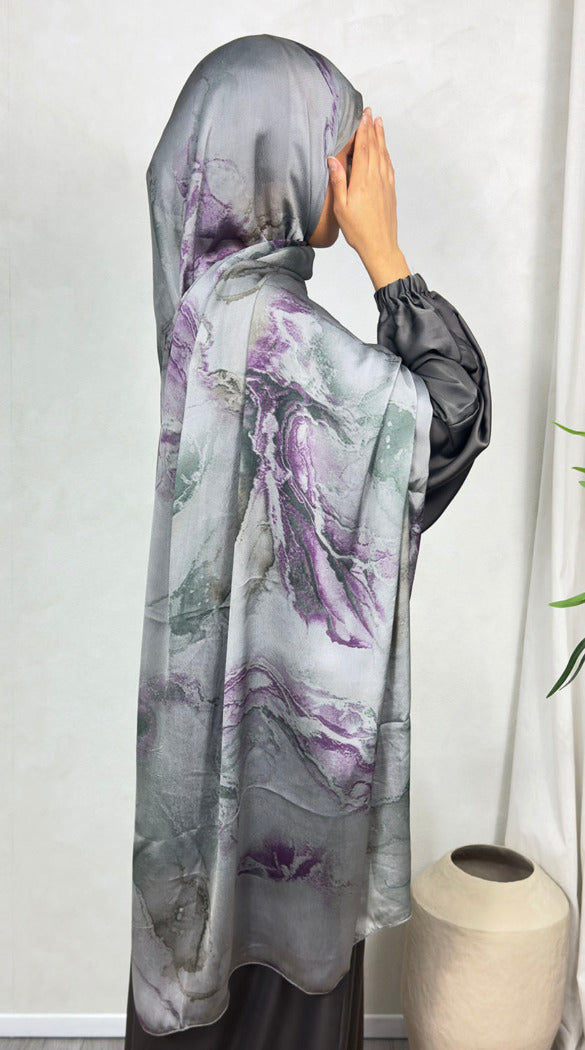
Your Graduation Hijab Outfit Has to Work in Real Life, Not Just in the One Photo You Planned
The gown changes the rules of an outfit in ways you do not fully appreciate until you put one on. A dress that looked perfectly proportioned at home can disappear under several metres of dark fabric. A hijab that sat softly around your shoulders can suddenly bunch against the gown neckline. Then the cap arrives, the tassel needs somewhere to fall, somebody is calling your name for photographs, and the ceremony that looked like a two-hour event turns into most of the day.
That is why a graduation hijab outfit needs to be planned as a sequence rather than a single look. You may travel in it, check in, collect your gown, pin or adjust your scarf, sit through speeches, walk across a stage, remove the cap for family photographs, pray, eat, go outside into British weather and still be wearing the same outfit hours later. A style that works beautifully for one posed photograph can become irritating if it needs rebuilding after every one of those moments.
The hijab is also dealing with more competition than usual. The gown creates a strong neckline and shoulder shape. Academic hoods add another layer of colour and fabric. Some ceremonies use mortarboards; others use different caps or no cap at all. Flowers, medals, cords, bags and coats can all end up in the same small area around your neck and shoulders. If the scarf has too much volume there, everything starts fighting for space.
You do not need to make graduation styling complicated. In fact, the most successful outfit is often the one where each piece has a clear job. The dress or modest outfit underneath gives you coverage when the gown comes off. The gown creates the formal silhouette for the ceremony. The hijab frames your face, works with the cap if you are wearing one and stays settled through movement and photographs. Once those jobs are clear, the choices become much easier.
If you are still comparing scarf fabrics, undercaps and everyday wrapping methods more broadly, our complete hijab guide covers those foundations. Here, the focus is much more specific: making your hijab work with graduation dress rather than asking graduation dress to work around the scarf at the last minute.
Start with the graduation gown, because it will cover more than you expect
The mistake I see most often in graduation outfit planning happens before the hijab is even chosen: the outfit underneath is styled as though the gown does not exist. You build a beautiful silhouette, perhaps with a statement sleeve, a structured shoulder or a detailed neckline, and then the academic gown covers nearly all of it.
Borrow or collect your gown early if your university allows it. If that is not possible, find out its colour, neckline, sleeve shape and whether there is an academic hood or stole. Look at official photographs from previous ceremonies at your institution. You are not copying another graduate's outfit; you are learning what physical object will actually be sitting over yours.
Most graduation gowns create a dark, strong block around the body. That can be useful because it gives the hijab room to become one of the few visible personal choices. But it also means a scarf that looked subtle with your dress may suddenly become the main colour next to your face.
Notice the gown neckline. Some sit relatively open; others close high around the throat. A soft hijab tail placed neatly across the chest can be pushed upwards once the gown is fastened. Extra fabric that was lying flat can become a bulky ridge. If you are using an academic hood, that creates yet another layer around the same area.
The gown also changes proportion. A very voluminous scarf plus wide gown shoulders can make the upper half feel larger than you expected. A very small, tightly wrapped scarf can do the opposite and make the gown look visually heavy. Neither is automatically wrong. You simply need to see the complete shape before graduation morning.
Take one full-length photograph with the gown closed or arranged exactly as it will be during the ceremony. The mirror can be misleading because you are looking at yourself from close range. A photograph shows the overall proportion much more like the family pictures will.
Your outfit underneath has to make sense both with the gown on and with it off
The gown is important, but it may not stay on all day. You might remove it for travel, lunch, prayer, family photographs or the celebration afterwards. That means the clothes underneath still need to feel like a complete modest outfit rather than an invisible base layer chosen only to support the gown.
This is where the graduation dress question becomes practical. A long modest dress can be an easy solution because it creates one clean line under the gown and still looks formal when the academic layer comes off. A coordinated skirt and blouse can work too, especially if you prefer separates or need more flexibility with fit. A modest trouser outfit may suit some graduates and institutions. An abaya can also work if its cut sits comfortably beneath the gown and does not create too much bulk.
The important thing is not to turn this article into a complete graduation-dress rulebook. Your hijab needs to cooperate with whatever modest base outfit you choose. Look especially at the neckline, sleeves and surface texture near the scarf. A heavily embellished high neck under a wrapped hijab can feel crowded. A slippery satin collar may encourage the scarf to move. A rough sequin shoulder can catch delicate chiffon.
Think about temperature too. Academic gowns can be warm indoors. If you wear a heavy dress, a thick hijab, an undercap and then the gown, the total outfit may become much warmer than each piece seemed separately. Conversely, a summer ceremony followed by outdoor photographs may still involve a cold air-conditioned hall or British drizzle.
You want the base outfit to be polished enough that removing the gown does not feel like revealing the unfinished part of the look. But it should also be simple enough that the gown can sit over it without wrestling with sleeves, belts, shoulder pads or large decorative features.
If you are choosing between two outfits, try both under the gown. The prettier dress on its own may not be the better graduation outfit once academic dress is added.
The shoulder area is the busiest part of the whole outfit
Graduation puts an extraordinary amount of fabric and hardware around a small part of the body. Your hijab may cross the shoulder. The gown sits there. An academic hood may be anchored there. A handbag strap may pass over it. Flowers might rest against it. Your coat may go over everything when you step outside.
This is why I would avoid building unnecessary hijab bulk directly on the shoulder. A beautiful draped tail can still work, but ask where it will go once the hood and gown are on. If the fabric is trapped under the gown, will it pull at the face frame? If it sits over the gown, will it hide or disturb academic dress that needs to be visible?
Try moving the scarf tail slightly more towards the front or back and see what gives the cleanest result. Sometimes the difference of a few centimetres stops three layers from stacking on top of one another.
Be careful with brooches or decorative magnets placed exactly where the gown seam sits. Something that feels harmless in a normal blouse can become a pressure point once the heavy gown presses it into your shoulder. The same applies to bulky folds and knots.
Put your bag on during the rehearsal. A cross-body strap can flatten one side of a scarf and drag the other. A shoulder bag may slide constantly over smooth hijab fabric. If the bag is only needed before and after the ceremony, you may prefer to leave it with family where permitted rather than building the hijab around it.
The calmest graduation look usually comes from reducing competition in this area. Let the gown sit properly. Let the hood sit properly. Then let the scarf frame your face without needing to dominate the same shoulder space.
The graduation cap has to sit on your head, not on a mountain of scarf fabric
If your ceremony uses a mortarboard or another fitted graduation cap, the scarf arrangement underneath it matters enormously. A cap designed to sit on relatively flat hair will behave differently over several folded layers of hijab fabric.
Do not wait until the morning to discover this. Get the actual cap if possible, or at least confirm its shape and size. Put on your intended undercap, hijab and pins first, then place the graduation cap. If it rocks from side to side, sits unusually high or feels as though it is balancing rather than resting, there is probably too much bulk at the crown.
The solution is rarely to push the cap down harder. That can create uncomfortable pressure, disturb your scarf and make the cap spring off when you move. Instead, flatten the scarf layers underneath it. Keep knots or bulky folds away from the crown. If you normally wrap one side over the top of your head several times, graduation may be the day to use a simpler version of that style.
Check the front edge of the cap too. You need enough room for your face frame without the cap crushing the scarf towards your eyebrows. If the cap is worn at a particular angle by your institution, practise that exact placement.
Then walk quickly. Turn your head. Look down and back up. Sit and stand. A cap that survives a still mirror test can still slide once the tassel swings or you move onto the stage.
If your cap feels insecure, ask your university whether there are permitted ways to secure it. Different caps and ceremony rules vary, so do not assume a method used in an online video is appropriate for your academic dress. Your goal is a stable, comfortable fit that does not damage the scarf or create a complicated construction you cannot easily reproduce.
An undercap can help, but only if it is solving a real problem
An undercap is useful at graduation when it improves friction, keeps hair contained or gives you a stable surface for the hijab and cap. It is less useful if it simply adds another hot, tight layer because you feel that formal styling requires one.
If you normally wear an undercap comfortably, use the type you already trust. Graduation is not the ideal time to test a new compression-style cap that gives you a headache after two hours. Wear the full setup for the length of a normal working day before the ceremony.
Keep the crown smooth. A bulky bun, large scrunchie and thick undercap can create a raised area that changes how the graduation cap sits. You do not need to flatten your hair painfully, but you may need to position it lower or distribute the volume differently.
Check the undercap edge in photographs. If your hijab frame is slightly wider than usual to make room for the mortarboard, more of the undercap may show around the forehead. That can be intentional and neat, but it should not be a surprise you notice only in the professional photos.
Temperature is another reason to test. A secure cotton undercap might grip beautifully but feel too warm under a dense jersey scarf and gown. A lighter undercap may be more comfortable but provide less friction. There is no universal best option because the scarf fabric and your own comfort matter.
The undercap should disappear into the system. If you are constantly aware of it squeezing, sliding or bunching, it is not helping enough to justify the extra layer.
Build the face frame to survive the cap going on and coming off
Graduation photos rarely follow a neat sequence. You may take some before the ceremony with no cap, some with the cap, some immediately after it is removed, then another set twenty minutes later when family members finally find each other. Your face frame has to survive those changes without needing a complete rewrap.
Practise removing the cap slowly while looking in a mirror. Does it catch the front of the hijab and pull it backwards? Does the tassel snag a pin? Does the cap lift the whole undercap slightly? Those are fixable problems if you know about them in advance.
A face frame with a little structural independence from the crown tends to recover better. In other words, do not make the entire front shape depend on one fold that is trapped beneath the cap. Secure the scarf in a way you already know is comfortable, then allow the mortarboard to sit over the stable base.
Keep the area immediately above the forehead relatively smooth. Dramatic pleats can look beautiful without a cap but become crushed beneath it. If pleats are part of your signature style, move the detail slightly lower or to the sides where the cap will not flatten it.
Look at both sides of your face, not only your favourite angle. Professional photographers may direct you quickly, and family pictures will happen from every direction. A frame that is beautifully sculpted on one side but loose on the other can look uneven once the cap presses on it.
You do not need perfection. You need a face frame that still looks like itself after real handling. That is a much kinder standard for a day when your attention belongs to more important things than rebuilding your scarf between photographs.
Pin placement matters because the cap and gown will keep touching the scarf
Pins, magnets and scarf fasteners are tiny until another object starts pressing against them. Graduation adds pressure from the cap, gown collar, academic hood and sometimes a coat, so placement becomes more important than usual.
A sharp pin positioned high on the head may sit directly beneath the cap. Even if it never touches your skin, repeated pressure can become uncomfortable. A large magnet at the shoulder can be trapped beneath the gown seam. A decorative brooch can catch a hood as you move.
Use the smallest number of fastening points your usual style genuinely needs. This is not the day to experiment with an elaborate arrangement simply because you want extra security. More fasteners create more places for the outfit to catch.
If you use magnets, check their strength through the actual fabric layers. A magnet that holds one chiffon layer beautifully may be less effective through doubled fabric or a thick jersey fold. If you use pins, make sure they are in good condition and do not snag the scarf when the cap is removed.
Do a touch test after the full outfit is on. Run your fingers around the neckline and shoulder areas. If you can feel hard fasteners underneath the gown, ask whether they can be moved.
Also plan one easy repair method. Carrying a spare pin or magnet is sensible if that is what you normally use. Carrying fifteen different emergency accessories is usually unnecessary. The best graduation scarf is not the one secured by the most hardware; it is the one whose basic wrap is stable enough that the hardware only supports it.
Hijab fabric changes the cap problem, but graduation is not a fabric competition
Different fabrics behave differently under academic dress. Chiffon can create a light, polished frame but may need more deliberate anchoring because smooth layers can shift. Jersey often grips and stays put well, but thicker jersey can create extra crown bulk. Modal and other soft woven scarves can drape beautifully yet vary enormously in texture and transparency.
The useful question is not which fabric is “best for graduation” in the abstract. It is which fabric you already know how to wear securely for a long day, under the specific cap and gown you have.
If you are choosing chiffon, test it against the gown collar. Some rougher gown fabrics can catch delicate scarves. Look for pulls after the rehearsal. Check whether your preferred undercap gives enough grip without creating visible ridges.
If you choose jersey, pay attention to thickness at the crown and sides. You may be able to use fewer wraps because the fabric itself has more body. That can help the cap sit lower.
If you choose a light woven scarf, test opacity in daylight and flash photography if that matters to you. The gown may cover the chest, but the scarf around the face and neck still needs to give the coverage you intend.
Most importantly, do not buy an unfamiliar fabric because somebody online said it is the perfect graduation hijab. If you have spent years knowing exactly how your favourite scarf behaves, that experience is worth more than a trend. Familiar fabric frees you to solve the genuinely new part of the problem: the cap and gown.
Colour planning should begin with the gown and academic hood, not an isolated swatch
Graduation colour decisions are unusual because the garment covering most of your body may not belong to you. Your gown could be black, navy, maroon, green or another institutional colour, and the academic hood may introduce one or two more shades. Your hijab becomes part of that temporary palette.
Before buying anything, find a reliable image of your university's academic dress for your degree. Pay attention to the hood lining or trim as well as the gown. A scarf that looks perfect with a black dress might clash with a vivid faculty colour sitting directly below it.
You do not have to match the hood. Sometimes matching creates too much of one colour around the face. A neutral scarf can calm a colourful academic combination. Equally, a carefully chosen colour can make a dark gown look more personal and photograph beautifully.
Your skin tone matters, but do not reduce the decision to a rigid “warm versus cool” rule. Hold the scarf near your face in daylight. Then photograph it. Some shades look richer to the eye than they do on a phone camera. Others reflect light and become much brighter in pictures.
Look at the outfit underneath too. If the gown comes off for photographs, the hijab still needs to work with the dress or separates you chose. A colour that only works with the academic gown gives you less flexibility later in the day.
Bring the whole palette together on your bed: hijab, outfit, shoes if they will show, graduation gown if you have it and any hood or stole. The colour choice should make sense as a group. Graduation is one of those occasions where a slightly quieter scarf often photographs more elegantly than a colour chosen only because it is beautiful on its own.
Matching the gown exactly is only one option
A dark gown can tempt you to buy a scarf in the exact same shade because it seems like the safest way to look coordinated. That can work, especially if you prefer a very streamlined outfit. But exact matching is not the only route, and it can sometimes flatten the photograph if there is no visual separation between your face, hijab and gown.
A tonal approach uses a related shade rather than an identical one. With a navy gown, that might mean a softer blue-grey or deeper ink depending on the outfit underneath. With a black gown, charcoal, taupe, muted rose, deep green or another restrained colour can create a clear face frame without turning the hijab into a statement piece.
Neutrals are useful because they can bridge several colours at once. If your academic hood contains two strong shades, a neutral scarf avoids introducing a third competing colour. Creams and pale neutrals need a photography check because they can reflect light strongly; deeper neutrals may give more definition.
Contrast can also be deliberate. A light scarf against a dark gown draws attention towards the face. That can look striking in group photographs where the gown creates a sea of dark colour. The trade-off is that every fold and shadow in a pale hijab becomes more visible, so the wrap needs to be comfortable rather than overworked.
If you love bold colour, you do not have to abandon it for graduation. Just ask whether the colour remains the part of the photograph you want people to notice first. Sometimes the answer is yes. Sometimes you would rather your face and the moment lead.
There is no official graduation palette for your hijab. The gown gives you constraints; within them, you still get to look like yourself.
Photos care about contrast, texture and shadows more than the mirror does
A graduation outfit is photographed repeatedly, often under lighting you cannot control. There may be professional flash photography indoors, phone pictures outside, family photos under trees and quick group shots in a crowded hall. Your hijab does not need to be camera-perfect, but a little testing can prevent surprises.
Take photographs in several types of light before the day. Stand by a window, under indoor lighting and outside. If possible, use the same phone someone in your family is likely to use. Check how the scarf colour changes.
Texture matters because cameras exaggerate some surfaces. A very shiny fabric can catch bright highlights. Deeply textured fabric can create shadow patterns around the face. Matte fabrics often photograph calmly, but there is no need to avoid sheen completely if you like it.
Check the chin and cheek area. A fold that looked soft in the mirror can cast a dark line in strong side lighting. If you wear glasses, the combination of lens reflection, cap shadow and scarf folds can make the face feel visually busy. Adjusting one small fold may be enough.
Do not judge the outfit from one close selfie. Ask someone to take a full-length photograph from a few metres away. Graduation pictures include the gown, your posture, flowers, family and the setting. The scarf is one part of that bigger frame.
And remember that movement will change everything. The photograph taken just after you crossed the stage may show the scarf slightly differently from the carefully posed picture at home. That is normal. The goal is not photographic immobility; it is a style that still looks coherent when it has lived through the day.
The gown neckline can shorten one side of your hijab without you noticing
This is a very specific graduation problem. You arrange your hijab with two balanced front lengths. Then the gown closes, one side gets trapped beneath the neckline or academic hood, and suddenly the visible scarf looks lopsided.
Put the gown on slowly during your rehearsal and watch what happens to each front panel. If one side is repeatedly dragged upwards, decide whether it should sit fully inside the gown or fully outside rather than half caught between.
If you prefer chest coverage from the hijab itself, make sure the gown does not pull that fabric away from where you placed it. You may need a slightly wider front drape or a different fastening point. Test this standing and sitting because the gown neckline can shift as your posture changes.
Academic hoods are especially relevant. Their weight can pull on fabric beneath them. If your institution requires the hood to be worn in a specific arrangement, prioritise that and adapt the scarf around it rather than forcing the hood over a bulky hijab tail.
Look at the back as well. A long scarf tail may be trapped beneath the hood or gown collar, creating a lump. If you want the tail visible, decide intentionally where it will sit. If you want it hidden, flatten it before the gown goes on.
This is exactly the sort of tiny problem that can consume ten minutes on graduation morning if you have never seen the complete outfit before. Once you know which layer goes where, dressing becomes much quicker.
Walking across the stage changes what matters about the outfit
The stage walk may last less than a minute, yet it is often the part graduates are most nervous about. You are listening for your name, watching the steps, thinking about where to stand, perhaps shaking a hand or receiving a certificate and trying not to walk too fast. Your clothing should not demand attention at the same time.
Wear the complete graduation outfit and practise walking at a normal, slightly brisk pace. If your dress or abaya underneath is long, make sure the gown does not hide a hem that is catching your shoe. Check whether the gown sleeves interfere with your hands.
For the hijab, the stage test is mainly about stability. Turn your head from side to side as though responding to directions. Look down briefly, then up. If the mortarboard moves, solve that before the ceremony. If the scarf tail swings into your face, change its placement.
Consider the tassel. On some caps it moves freely and can brush the scarf or glasses. Practise whichever side or position your institution uses. You do not want to discover during the procession that the tassel catches a decorative pin every time you move.
Shoes matter too, even though this is a hijab article. Unfamiliar heels can change your posture and walking speed, which changes how the gown and scarf move. If you choose heels, practise in them with the full outfit. Comfortable flats or lower heels can be just as polished depending on your style.
The goal is to walk across the stage thinking about the moment rather than thinking, “Is my cap sliding?” If the outfit gives you that freedom, it is doing something valuable.
Sitting for a long ceremony is a different fit test from standing for photographs
Graduation styling content often focuses on the moment you are standing outside with flowers. The ceremony itself may involve a great deal of sitting, sometimes in a warm hall, with the cap and gown still on.
Sit in the full outfit for at least half an hour before graduation. Notice whether the undercap becomes tight, whether pins press differently against the headrest or chair, and whether the gown collar pushes the scarf upwards when your shoulders relax.
Your base outfit matters here too. A belt, structured waistband or heavy embellished back may be fine for a photograph and uncomfortable through a long ceremony. If discomfort makes you keep shifting in your seat, the gown and scarf will shift with you.
Check heat. A scarf that was comfortable while you were moving may feel much warmer once you are sitting among hundreds of people. If you have chosen a very thick hijab purely for shape, ask whether a lighter familiar version could give you the same look with less warmth.
Keep the neckline calm. When you sit, fabric can rise. A scarf tail tucked neatly into the gown while standing might begin pushing upwards towards the chin. Adjust the amount of fabric before the ceremony rather than repeatedly pulling it down later.
Comfort during the seated part of the day is not less important because nobody is photographing it. It may be the longest single part of graduation. A successful outfit needs to work there too.
British weather may give you indoor heat and outdoor wind within five minutes
UK graduation days are perfectly capable of producing sunshine, wind and rain before the family has finished taking photographs. That means your hijab needs a weather plan that does not undo the styling work you did indoors.
Wind is the obvious problem. Long loose scarf tails can lift or wrap around the face. If your graduation style includes a flowing end, test whether you can secure it discreetly before going outside without changing the face frame. You might choose to tuck or pin the tail for outdoor photographs and release it later if that is comfortable for you.
Rain creates different issues. Delicate light scarves can show water spots temporarily. Some fabrics become more transparent when wet. Carrying an umbrella is sensible, but remember that one hand may already be holding flowers, a certificate folder or the gown.
A coat can be awkward because the graduation gown itself is bulky. If you need one for travel, decide whether it will go over or under the gown and whether you will remove it before photographs. A scarf with huge shoulder volume becomes even more difficult once a coat collar is added.
Then there is indoor heat. The outfit that protected you from a cold morning can become overwhelming in the hall. Removable outer layers are better than building all the warmth into the hijab itself.
Check the forecast close to the day, but do not rebuild the entire look around a weather app. A stable scarf, sensible outer layer and small umbrella usually give you more flexibility than an elaborate last-minute styling change.
Prayer practicality deserves a place in the plan if the day crosses a prayer time
A graduation day can start early and continue into the evening, so prayer may form part of your schedule. That is worth planning calmly rather than realising at the last minute that your formal outfit is difficult to manage.
Know where you are likely to pray and what clothing arrangement you normally use. If you carry additional prayer clothing, make sure it fits in the bag you will actually have access to. If your hijab is already giving you the coverage you follow for prayer, check that the cap can be removed without disturbing it excessively.
Wudu can affect the outfit too. Long sleeves, fitted cuffs and makeup are separate practical considerations, but the hijab may need to remain secure while you wash. If your style depends on many delicate pins or an elaborate drape that cannot be touched, it may create more stress than necessary.
A simple scarf arrangement can be helpful because you can remove the graduation cap, pray and put the cap back on without reconstructing the whole look. Practise that sequence once at home.
Do not turn this into a universal religious ruling. Muslim women follow scholarly guidance and personal circumstances that may differ. The practical point is simply that if prayer will be part of your graduation day, your clothing should make that easier rather than treating worship as an unexpected interruption to the outfit.
Graduation is meaningful because of what you have completed. Making room for the rest of your day, including prayer, helps the celebration sit comfortably inside your life rather than outside it.
Flowers, medals, cords and stoles can crowd the same space as your scarf
The accessories you receive on graduation day are often not part of the outfit plan. Someone hands you a large bouquet. Your course has an honour cord. You receive a medal. Your family brings a sash or cultural stole. Suddenly the carefully clean chest and shoulder area is full.
If you know you will wear academic cords or an official stole, rehearse with them if possible. They usually sit around the neck or shoulders, exactly where a hijab may drape. Keeping the scarf relatively flat there can help both pieces remain visible.
Flowers deserve more thought than they seem to. Large bouquets can brush against chiffon and delicate scarves. Leaves, wrapping tape or pins may snag fabric. Hold the bouquet during a test photograph and see whether it covers most of your chest drape. You may prefer to hold it slightly lower for some pictures.
Medals can create weight and movement. If they sit over the gown, keep scarf fabric away from the ribbon or clasp so it does not become trapped.
Personal stoles and cultural accessories can be deeply meaningful, and there is no reason the hijab has to compete with them. Often the cleanest approach is to keep the scarf shape simple enough that the additional piece has room to be seen.
Think in layers. First the base outfit, then hijab, then academic gown and official hood, then any formal cords or stoles, then temporary things like flowers. When each layer knows where it belongs, you are less likely to spend the day untangling them.
Glasses need a rehearsal because cap pressure can change their position
If you wear glasses, you already know that hijab styling can affect the arms of the frames. Add a graduation cap pressing on the scarf and the relationship changes again.
Put your glasses on before finalising the face frame. Some people prefer the arms beneath a scarf layer; others place them over. Use the arrangement you already find comfortable. Then add the cap and notice whether it pushes the scarf down onto the glasses.
Pressure at the temples can become uncomfortable over a long ceremony. If the combination of undercap, scarf, glasses and mortarboard feels tight after ten minutes, it is unlikely to improve after three hours. Reduce bulk or tension where you can.
Photographs also deserve a check. Cap brims can cast a small shadow, and lenses can reflect strong indoor lighting. You do not need to remove glasses if they are part of how you normally look. Simply test the cap angle and face frame so your eyes remain comfortably visible.
Be careful with scarf pins placed near the glasses arms. Taking the glasses off temporarily should not drag the hijab with them. If you need to clean the lenses during the day, you want to be able to do it without dismantling the side of your scarf.
Graduation is not the moment to force yourself into contact lenses or a different eyewear choice purely for photographs unless that is something you genuinely want and are already comfortable with. Your everyday face is allowed to be the face in the graduation pictures.
Four graduation hijab outfit formulas that keep the scarf at the centre of the decision
Outfit formulas are useful when they explain relationships rather than prescribe specific products. These four are deliberately flexible. You can adapt the dress, abaya or separates to your wardrobe and the gown your institution provides.
A quiet tonal formula
Choose a base outfit and hijab from neighbouring tones, then let the graduation gown create the main contrast. A taupe dress with a slightly deeper taupe scarf, for example, can look calm beneath a black or navy gown without needing exact matching.
This works especially well if the academic hood already contains strong colour. The tonal base keeps the face frame settled and gives official colours space to appear. Use texture for interest rather than adding another bright shade.
The practical advantage is flexibility when the gown comes off. Because the hijab and outfit already relate to each other, the post-ceremony look remains complete.
A deep colour with controlled contrast
If you love richer colour, choose one deep scarf shade and keep the outfit underneath relatively quiet. Burgundy, forest green, deep plum or ink blue can photograph beautifully against many dark gowns when the undertone works with your skin and academic colours.
Avoid repeating the deep colour in every visible accessory. The scarf can carry it. Shoes, bag and base outfit can support rather than compete.
This formula works nicely when you want the hijab to remain recognisably part of your personal style without turning graduation into an occasion for elaborate scarf decoration.
A light hijab against a dark gown
A cream, stone, soft grey or other pale hijab can create a clear face frame against black or navy academic dress. This is particularly effective in large group photographs because your face is not surrounded by one continuous dark block.
Test the scarf in flash photography. Very pale fabric can reflect a lot of light, and thin layers may become more transparent. Make sure the undercap or inner arrangement is intentional.
Keep the wrap tidy but not rigid. Every tiny fold shows more clearly in a pale scarf, so overworking it can make you more conscious of imperfections. A soft, familiar drape often photographs better than one you have tried to sculpt into complete symmetry.
A restrained pattern with a plain outfit
A patterned hijab can work at graduation if the print does not fight the academic hood or create too much visual noise around the face. Smaller, lower-contrast patterns are often easier to combine with official colours than large multicoloured prints.
Keep the outfit underneath plain and let the scarf be the personal element. Pay close attention to how the pattern falls around the forehead and cheeks. A print can look completely different depending on which section of the scarf becomes the face frame.
Because graduation photographs last much longer than trend cycles, choose a pattern you genuinely love rather than one you feel pressured to wear because it looks current online.
The cap-and-gown rehearsal is worth more than another hour of online inspiration
At some point, stop saving outfit pictures and put your own clothes on. Inspiration is useful until it delays the only test that matters: your hijab with your gown, your cap, your face, your body and your actual way of moving.
Give yourself a full rehearsal at least several days before graduation. Wear the base outfit, shoes, undercap, hijab, gown, academic hood and cap. Add glasses, jewellery and the bag if you will use them. Style your makeup too if it changes how you judge the scarf colour.
Then live in it for an hour. Sit at a table. Walk upstairs. Bend down. Use your phone. Take the cap off and put it back on. Put a coat over the outfit if the weather may require one. Ask someone to take photographs from the front, side and back.
Do not make ten changes at once. If the cap slides, solve the crown bulk first. If the scarf bunches under the gown, change the shoulder drape. If the colour looks wrong in photos, reconsider the colour after you know the structure works.
Write down the final dressing order. It sounds excessive until graduation morning is busy. Knowing “undercap, hijab, pins, gown, hood, cap” or whatever your sequence is prevents you from discovering that the hood needed to go on before a particular scarf drape.
The rehearsal also tells you what not to pack in your emergency kit. Once you know the style is stable, you stop imagining every possible wardrobe disaster and carry only the few things that genuinely help.
A small emergency kit should solve likely problems, not every imaginable disaster
Graduation bags become heavy quickly. Phone, keys, wallet, tissues, makeup, water, programme, perhaps prayer essentials and then every scarf accessory you own. You do not need all of it.
For the hijab, carry the fastening method you actually use: perhaps one or two spare pins or magnets. Add a small mirror if you prefer one, although your phone camera can work. A couple of safety pins may help with the gown itself if permitted, but do not use anything that could damage rented academic dress.
A tiny lint roller can be useful with dark gowns and light scarves, especially if the academic fabric sheds or picks up fibres. Blotting paper or a tissue can help if you become warm around the forehead without requiring a full makeup bag.
If your scarf fabric creases easily, steaming it before leaving is more useful than carrying a portable solution. Fold or hang the scarf carefully the night before. Once it is on your head, minor creases are usually far less visible than you imagine.
Think about what you would actually fix during the ceremony. You are unlikely to leave your seat to completely restyle the hijab. You might replace a lost pin, smooth a fold or secure a loose tail. Pack for those realistic repairs.
Then stop. The emergency kit should make you feel prepared, not remind you every ten minutes that the outfit might fail.
Shopping for the hijab is easier when you already know the cap, gown and outfit colours
If you need a new scarf for graduation, shop after the major pieces are known. That sounds obvious, but buying the hijab first can create a chain of compromises later.
Take photographs of the gown and academic hood in natural light if you have them. Bring the base outfit with you or keep an accurate photo on your phone. If you are shopping online, compare the scarf colour across several product images rather than trusting one studio photograph.
Use product descriptions for fabric information, but remember that fabric names do not guarantee identical behaviour across brands. If you already know a scarf line that works under caps or stays comfortable for long wear, familiarity can reduce uncertainty.
Check dimensions if they are listed. A scarf that is much larger than your everyday style may create extra crown and shoulder bulk. A very small scarf may not give you the drape or coverage you want. The graduation cap is another reason to buy for your actual wrapping method rather than for the fabric name alone.
Allow time for returns. The colour may look different at home, or the fabric may not work with the mortarboard. Do not leave the order so late that you feel forced to keep the wrong scarf because the ceremony is two days away.
If you want to compare current scarf options, you can shop related styles and use the live product pages for the latest colours, fabrics and availability. Choose from what is actually there at the time rather than planning around a product or shade that may change before your graduation.
Family photographs are often taken after the gown has shifted
The first formal photograph might happen while the gown is perfectly arranged. The family photographs come later, after you have hugged people, carried flowers, removed and replaced the cap, walked across campus and perhaps put a coat on. The outfit will have moved.
Before a big round of pictures, take twenty seconds to reset rather than attempting a full restyle. Check that the gown neckline is straight, the academic hood is not pulling one scarf side upwards and the cap is sitting where you intended. Smooth the front hijab drape with your hands.
Ask one trusted person to notice practical things. A sister or friend can tell you if the hood has twisted or a scarf tail is trapped. Ten relatives giving simultaneous styling instructions will make you more stressed.
Think about flowers. For one photograph, hold them lower so the scarf and academic hood remain visible. For another, hold them naturally. You do not need every photograph to show every detail of the outfit.
Take some pictures without the cap if you like the way your hijab looks on its own. If you rehearsed cap removal, the face frame should recover easily. This gives you variety and allows the scarf colour and styling to be seen without the strong mortarboard shape.
Most importantly, do not let outfit checking swallow the photographs. Once the obvious layers are straight, look at the people you are with. The pictures you value later may be the ones where nobody is perfectly arranged because everyone is laughing.
“Classy” graduation style is usually about restraint and proportion
The word “classy” gets used so loosely in fashion that it can mean almost anything. For graduation, I think the useful idea underneath it is restraint. The academic gown is already formal and symbolic. You do not need the hijab, dress, jewellery, bouquet and accessories all competing to prove that the day is special.
Choose where the detail lives. If your hijab has a soft shimmer or beautiful texture, perhaps the outfit underneath can be simple. If the dress has embroidery at the cuffs or neckline, the scarf can be quiet. If you are wearing a meaningful brooch or family jewellery, give it space to be noticed.
Proportion matters more than price. A modest inexpensive scarf wrapped cleanly with the gown can look far more polished than a luxury fabric that has been forced into a style it does not naturally hold.
Keep the crown controlled if a cap is involved. Huge volume beneath a mortarboard changes the entire line of the outfit and may make the cap unstable. Keep the shoulder drape deliberate so the academic hood remains visible.
Colour restraint does not mean beige. Deep jewel tones can look sophisticated. Pattern can look sophisticated. Even a bright colour can work if the rest of the outfit gives it room. The point is not to make yourself visually smaller; it is to let the choices relate to one another.
You have already achieved the thing the gown represents. The clothes do not need to manufacture importance. They can simply meet the occasion with care.
What to do the night before graduation
The night before is not the time to design a new hijab style. Your work should already be done. Use the evening to make the tested outfit easy to reproduce.
Steam or iron the scarf according to its care needs and lay it flat or hang it safely. Prepare the undercap, magnets or pins in one place. Put the base outfit and shoes together. Check that the gown, hood and cap are accounted for if they are already with you.
Charge your phone. Pack the small emergency kit. Put any makeup you genuinely need in the bag. Check where the ceremony is, what time you must arrive and whether there are specific academic-dress instructions from your institution.
If you wrote down the dressing order during rehearsal, keep it accessible. This is particularly helpful if another person is helping you with the academic hood and does not know which scarf layer should sit above or below it.
Do one final weather check and choose the outer layer accordingly. Do not change the hijab fabric at midnight because the forecast moved by two degrees. You chose a scarf that works across the day; trust the rehearsal.
Then leave it alone. Graduation morning should not begin with you comparing five scarves on the bed while the taxi is outside. Preparation has done its job when the outfit becomes one less decision to make.
Frequently asked questions about graduation hijab outfits
What hijab style works best with a graduation cap?
A relatively smooth, low-bulk style usually makes a mortarboard easier to wear because there is less fabric at the crown for the cap to balance on. You do not need a completely different style from your usual hijab. Keep the face frame familiar, reduce thick folds on top of the head and rehearse with the actual cap before graduation.
How do I keep a graduation cap on over hijab?
Start by making sure the cap fits properly and the scarf beneath it is not excessively bulky. Test the cap while walking, turning your head and sitting. Ask your university about permitted securing methods because cap designs and academic-dress rules vary. Do not rely on forcing a tight cap down over thick layers; comfort and stability matter through a long ceremony.
Should I match my hijab to my graduation gown?
You can, but exact matching is only one option. Tonal shades, quiet neutrals and controlled contrast can all work beautifully. Consider the academic hood as well as the gown because it may introduce strong colour near the scarf. Test the complete palette in photographs and make sure the hijab also works with your outfit when the gown comes off.
What colour hijab photographs well at graduation?
There is no single best colour. A shade that gives enough contrast from the gown and suits your face can photograph well. Pale colours can brighten a dark gown but may reflect more light; deeper shades can add definition. Test your scarf in daylight, indoor light and phone photographs rather than choosing from an isolated swatch.
What should a hijabi wear under a graduation gown?
Choose a modest outfit that remains complete when the gown is removed and is comfortable beneath the academic layer. That might be a long dress, coordinated separates, a modest trouser outfit or another option that fits your practice and ceremony. Avoid unnecessary shoulder or neckline bulk because it can interfere with the gown, academic hood and hijab.
Can I wear an abaya under a graduation gown?
An abaya can work if the cut fits comfortably beneath the graduation gown and gives you the coverage and movement you want. Test both garments together. Very wide sleeves, heavy embellishment or large shoulder volume may bunch beneath academic dress, while a simpler abaya can create an easy complete outfit when the gown comes off.
How do I stop the gown neckline catching my hijab?
Rehearse the exact layer order and decide whether each scarf tail sits fully inside or outside the gown rather than letting fabric become half trapped. Keep bulky folds away from the collar and check how the academic hood sits over the scarf. Once you find the arrangement that stays flat, repeat the same dressing order on graduation morning.
How should I style my hijab if I want to remove the cap for photos?
Build a stable face frame that does not depend on folds trapped beneath the cap. Keep the crown relatively smooth and practise lifting the mortarboard away without dragging the scarf backwards. After removal, you should need only a quick smoothing rather than a complete rewrap. Take some test photos both with and without the cap before the day.
What shoes work best with a long graduation outfit?
Choose shoes you can walk in securely with both your base outfit and the graduation gown. Practise on stairs and at the pace you might use crossing the stage. If you prefer heels, make sure the hem remains clear at that height and that you can stand comfortably for photographs. Polished flats or lower heels can work just as well.
How do I make a graduation hijab outfit comfortable all day?
Wear the complete outfit for a long rehearsal. Check undercap pressure, crown bulk, pins, gown neckline, fabric warmth, sitting comfort and cap stability. Use a hijab fabric and wrapping method you already trust, keep shoulder layers controlled and pack only a small repair kit. Comfort comes from removing repeated adjustments before the day begins.
The best graduation hijab outfit lets you forget the outfit for a while
There is a moment on graduation day when the practical work should end. The scarf is on. The cap fits. The gown sits properly. You have walked enough at home to know the hem will not catch and sat long enough to know the undercap will not give you a headache. At that point, the outfit has passed its test.
You do not have to spend the ceremony wondering whether every fold still looks exactly as it did in your bedroom. It will move. Someone will hug you. The tassel will swing. The gown may twist slightly. Wind might lift a scarf edge when you step outside. Those are signs that you are living inside the day rather than posing beside it.
Make the major decisions carefully: a scarf fabric you trust, manageable crown volume, a face frame that survives the cap, colours that work with academic dress, an underneath outfit that stands on its own and enough comfort for the hours ahead. Rehearse them once as a complete system.
Then allow graduation to become about graduation. Listen when your name is called. Walk across the stage. Find your family afterwards. Take the serious photograph and the ridiculous one. Pray when you need to. Eat before you realise you are starving. Keep the flowers even when they become awkward to carry.
Your graduation outfit should honour the occasion without becoming another exam. Once it has passed the rehearsal, let it do its job — and let yourself graduate.