How to wear an organza abaya
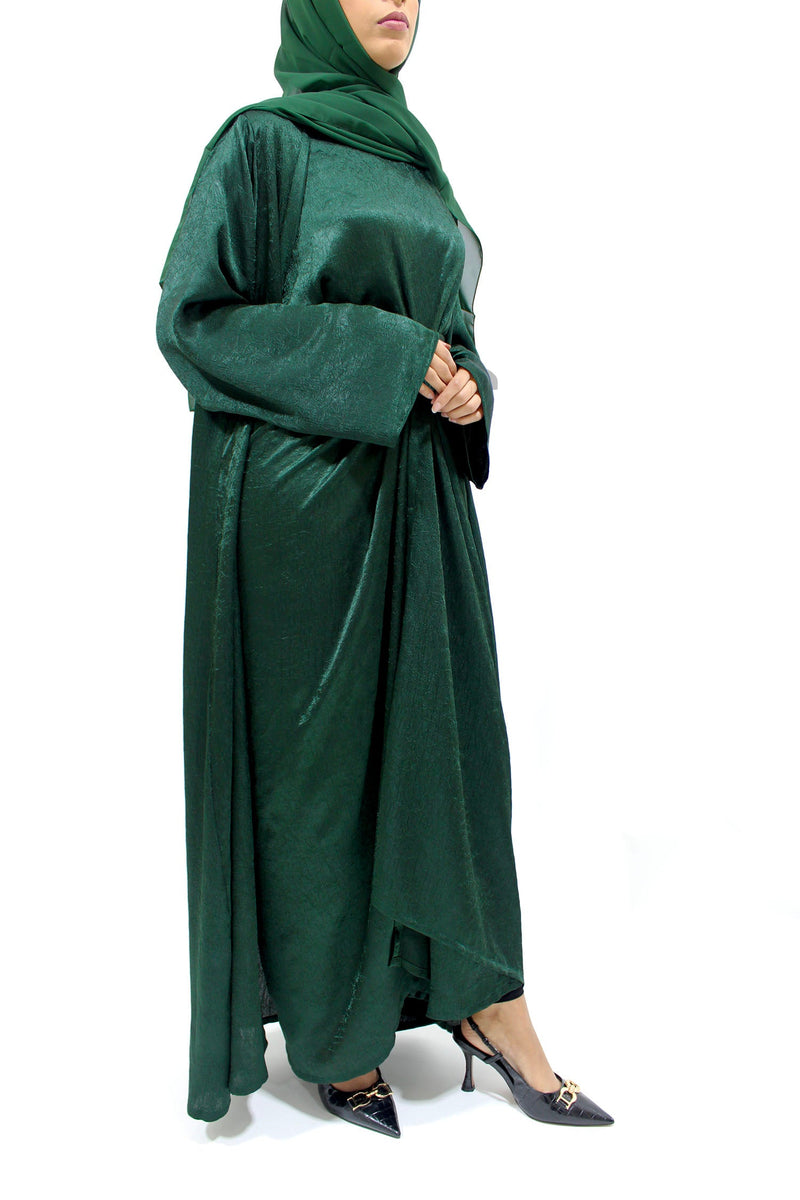
An organza abaya can look almost weightless in a photograph while holding a surprisingly definite shape when you put it on. That combination is its appeal: a light, translucent surface with edges and sleeves that do not necessarily collapse into a soft drape. It is also the reason to plan the inner outfit before deciding that the outer layer is right for you.
Think of organza as a visible part of a layered arrangement, not as a shortcut to a complete modest outfit. The fabric beneath, the length of the two layers and the way the sleeves are covered all influence the finished result. Once those points are settled, the styling can be quite simple.
What organza means
Organza is a sheer, crisp, plain-woven fabric. It can be made from different fibres, including silk and manufactured fibres, so the name alone does not establish composition or care. Check the label on the garment you are considering rather than assuming that “organza” means pure silk.
The characteristic crispness helps the fabric hold space around the body. That can give a sleeve, front opening or skirt edge a defined outline. It is different from choosing a very fluid fabric because you want it to fall close and softly. Neither effect is better in itself; they simply create different garments.
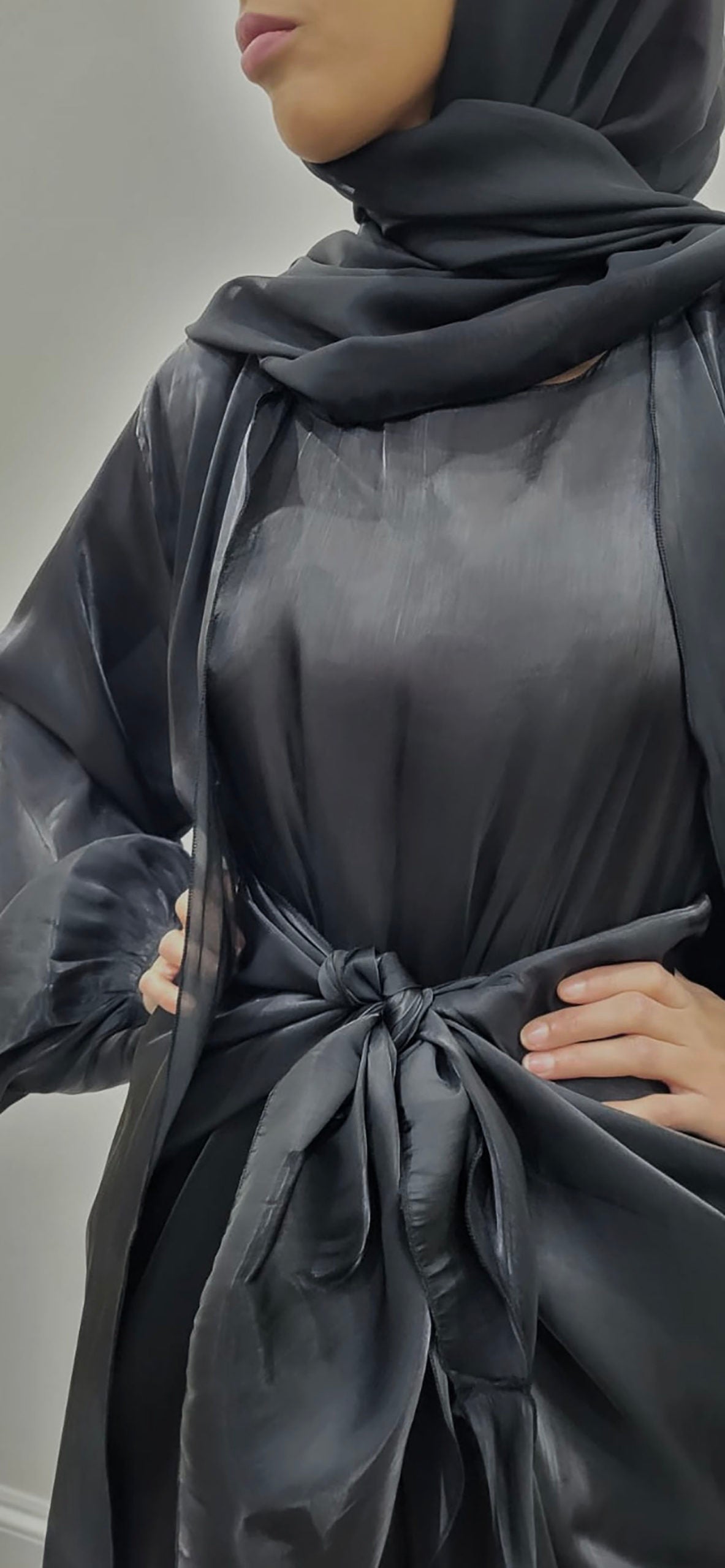
Not every organza has the same shine or stiffness. Some finishes are relatively quiet; others are more reflective or change appearance with the light. Iridescence is a feature of particular fabrics, not something that every organza abaya automatically has.
Work out what is actually lined
Read the construction details carefully. A garment may be fully lined, lined through the body but not the sleeves, or sold as an unlined outer layer. Photographs against a pale studio background can make these differences difficult to see. Ask for clarification rather than treating the word “abaya” as a promise of opacity.
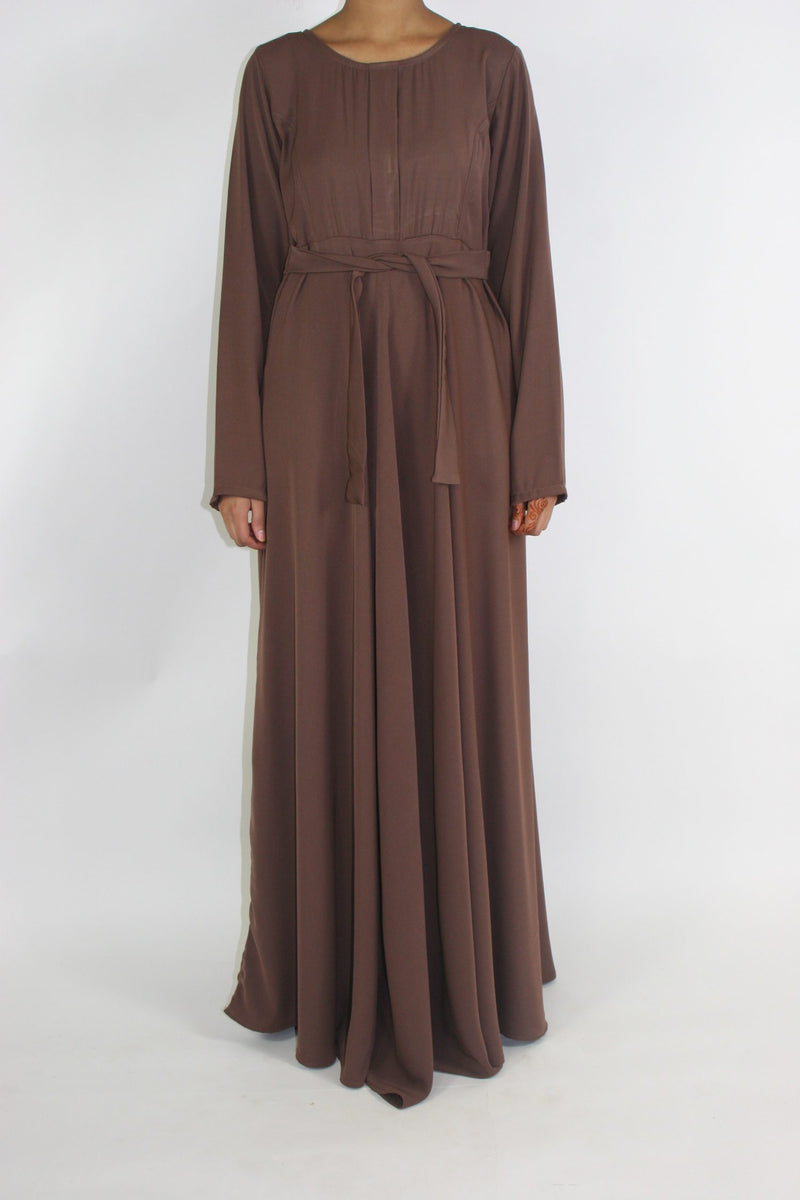
If an inner dress is shown, check whether it is included. Then check that inner dress separately: its neckline, sleeve arrangement, length and fabric determine much of the coverage. A coordinated colour does not tell you whether the two pieces function as a complete outfit.
Try the garment in brighter light and from more than one angle. Examine areas where layers separate, including the sides of an open front and the arms. A flattering front photograph can conceal a gap that becomes obvious as soon as you turn or lift a hand.
Choose the inner colour deliberately
A closely coordinated inner layer allows the organza’s surface and outline to be the main features. The outer shade may appear richer over a similar colour, but test the exact fabrics together. Two items described as the same colour can still produce a contrast you did not expect.
A contrasting inner layer makes the transparency more visible. This can be an attractive choice, particularly when the contrast is repeated in a small accessory, but it requires a clean, considered inner outfit. Seams, straps and abrupt changes in colour underneath may show through.
For a soft daytime combination, you might try pale organza over a plain inner dress with a quiet scarf. For an evening outfit, a deeper outer shade over a related dark tone can give the layers definition without introducing several competing colours. These are starting points to test, not promises about how every fabric will behave.
Let the two hems have a clear relationship
Put the inner and outer layers on together with your intended shoes. If both finish near the same point, check that neither repeatedly catches the other as you walk. If one is deliberately shorter, decide whether the visible band of the lower layer looks intentional from the front, side and back.
An organza outer layer that is too long may be harder to manage than its light weight suggests. Its shape can spread across a step or gather under a chair. Do not rely on holding it up for an entire event. Choose a workable length or seek appropriate alterations advice before wearing it out.
Consider decorative borders before altering. A plain hem and a hem with embroidery or a shaped edge are different jobs. Shortening the inner layer may solve one proportion issue while creating a coverage issue elsewhere, so assess the complete outfit rather than adjusting one piece in isolation.
Inspect seams, edges and closures
Sheer fabric makes construction easier to see. Look at side seams, the shoulder area, front edges and cuffs. The finish should suit the design and look intentional through the fabric, rather than being hidden in the expectation that you will never notice it.
Check closures for both appearance and use. A fastening that pulls a small section tightly can disturb the line of the whole front. An open style may be intended to remain open, in which case the inner outfit needs to provide the coverage you want without depending on an improvised pin.
For embellished organza, inspect how the weight of the decoration is supported. A heavily worked area can behave differently from a plain panel beside it. Lift your arms and sit down during a suitable try-on to see whether the garment settles comfortably.
The broader guide to abaya cuts and fabrics helps separate the outer shape from the material name. An organza coat-style abaya and an organza cape-like layer can have very different practical demands.
Keep the hijab comfortable beside a structured fabric
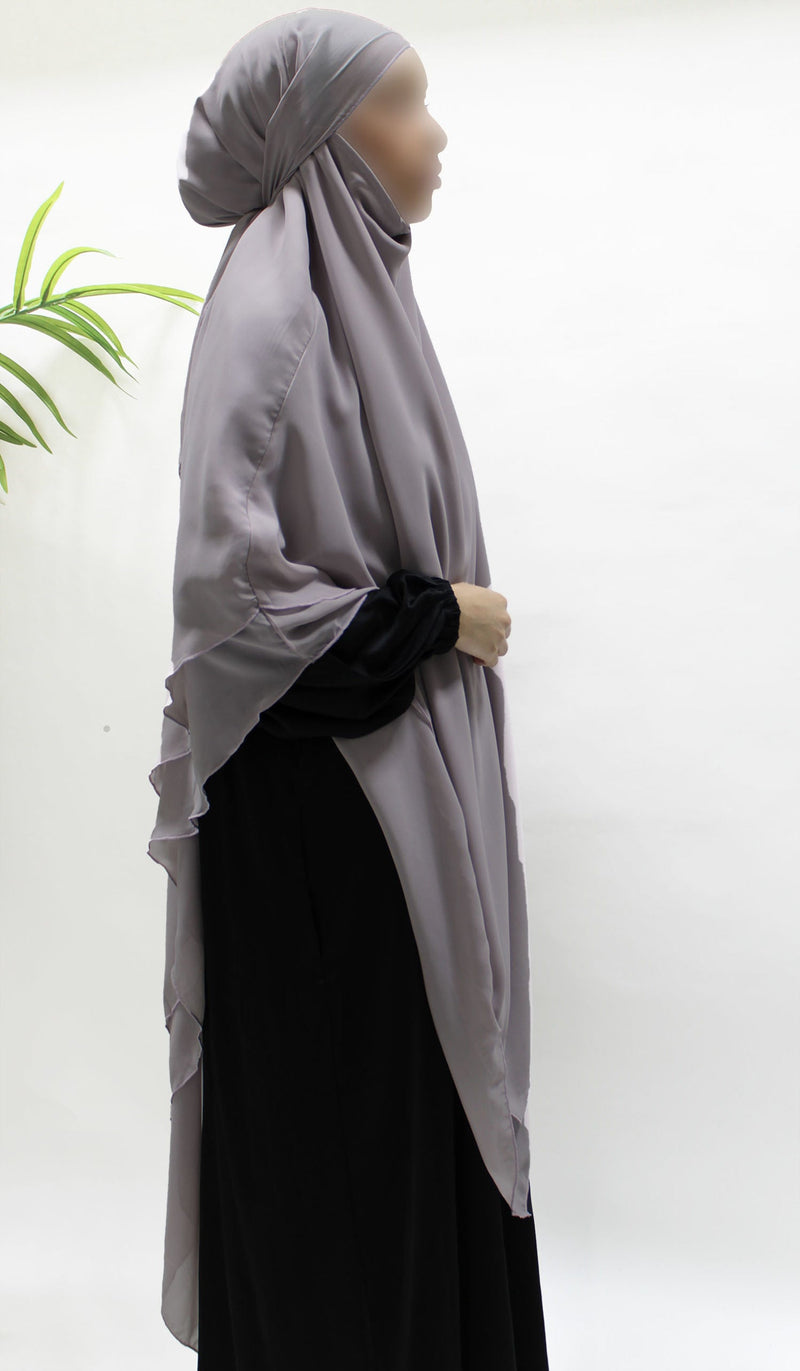
Organza already contributes shape, so a scarf with a less bulky arrangement can be a useful counterpoint. Try a smooth front line or a controlled drape before building several folds around the neck. The goal is not to make the hijab plain at all costs, but to avoid competing structures that are awkward to wear together.
Check the contact points. A crisp collar or decorated shoulder may catch the scarf as you turn. A long scarf end can conceal a feature of the abaya or rub against a rough fastening. Arrange the two pieces together, then move rather than judging only from a mirror pose.
You can echo the inner dress in the scarf colour to make the layers feel connected. Alternatively, choose a shade from the outer fabric’s detail. Our hijab fabric guide is useful when deciding which scarf will give you the drape and coverage you need.
Style for the actual occasion
For a wedding guest outfit, begin with the invitation, setting and your own comfort requirements. Organza does not automatically make every abaya formal enough, nor is a sheer layer automatically unsuitable. A well-coordinated inner outfit, considered footwear and a manageable sleeve can matter more than adding extra sparkle.
For an Eid gathering or family celebration, think about the activities as well as the photographs. Will you sit on the floor, help serve food or move between homes? A dramatic sleeve may be beautiful but inconvenient near a table. Try the movements and choose a version that lets you participate comfortably.
For work, the relevant question is the workplace’s expectations. A restrained organza detail might suit some environments, while a full sheer outer layer may feel too occasion-led in others. Do not assume that changing shoes turns every evening garment into office clothing.
For a daytime meeting with friends, you can make the outfit less formal with a simple inner dress and practical shoes. The organza itself is enough of a feature. A large decorative bag or highly reflective scarf is optional, not a requirement for making the look complete.
Balance accessories against the surface
Start with one bag and one pair of shoes that fit the day’s practical needs. Look at how their surfaces interact with the fabric. A plain bag can give the eye a resting point beside reflective organza. A small metallic detail can be enough when the outer layer already has a noticeable sheen.
Check straps and fittings for snagging. The route of a cross-body strap is particularly worth testing because it lies across the visible front and may flatten the shape you liked. A different strap position or bag style may work better without requiring you to change the abaya.
Jewellery should be assessed in the same practical way. A textured bracelet can catch a sleeve; a brooch can change how a sheer panel hangs. Put the complete outfit on before deciding which additions improve it and which merely add another thing to manage.
Plan for sitting, travel and an outer coat
A garment with a crisp outline takes up space differently from a soft one. Sit in it during the try-on and see where the fabric gathers. Make sure you can arrange the skirt without trapping it under a chair or pulling on a fastening as you stand.
For a journey, consider the bag, seat and weather layer you will use. A close-fitting coat may crush the organza sleeves or force the front into awkward folds. Trying the coat over the full outfit is more informative than assuming that a lightweight fabric will fit under anything.
If the occasion involves carrying the garment and changing on arrival, pack it according to its construction and care needs. Do not promise yourself that all creases can be steamed out immediately. Access to suitable equipment and permission to use heat are separate questions.
Care for the garment, not an imagined fabric category
Follow the label for the actual fibre, finish, lining and decoration. Organza made from one fibre cannot be assigned the same heat or cleaning method as every other organza. Avoid testing an iron directly on the visible front simply because the fabric looks thin.
Where pressing or steaming is permitted, use the method and temperature appropriate to the garment and its instructions. If you are uncertain, seek advice before applying heat. For cleaning, do not assume that handwashing is safe or that professional dry cleaning is required without checking.
Store the abaya with enough room that its structured parts are not permanently crushed between other clothes. Keep it away from rough zips, hooks and loose decorative fittings. A little care in how it is put away is more useful than expecting a delicate-looking garment to remain immaculate without attention.
Check how the outline changes against different backgrounds
A sheer outer layer can appear quite different against a dark doorway, a pale wall or the inner dress itself. During a try-on, move between ordinary indoor light and daylight and assess the actual coverage, not merely the apparent colour of the organza.
This is especially useful when choosing photographs for an occasion. A picture may emphasise the outer shape while concealing the details of the lining, or do the reverse. Use the mirror and the garment’s construction as your main evidence rather than expecting one photograph to settle the question.
Check the side view with your arms relaxed. A shaped organza sleeve may sit away from the body and reveal an inner sleeve that was barely noticeable from the front. Decide whether you enjoy that contrast and whether it meets your coverage preferences.
If the outline feels too expansive, try a simpler scarf and smaller bag before changing the garment. If the problem is an awkward sleeve or insufficient lining, accessories will not correct it. Distinguishing a styling choice from a construction problem helps you decide whether to keep the abaya, add a suitable layer or choose a different design.
Repeat that comparison with the actual underdress you intend to wear, rather than a convenient substitute.
When organza is the right choice
Choose organza when you enjoy a sheer, defined outer layer and are happy to plan what goes beneath it. It is less compelling when you want the simplest possible one-layer outfit or a fabric that collapses into an entirely soft line.
A successful purchase is not a “must-have” for everyone. It is an abaya whose inner outfit, sleeves, length and care fit your life. When those elements work, the distinctive shape can speak for itself without a collection of promises about glamour, attention or effortless perfection.