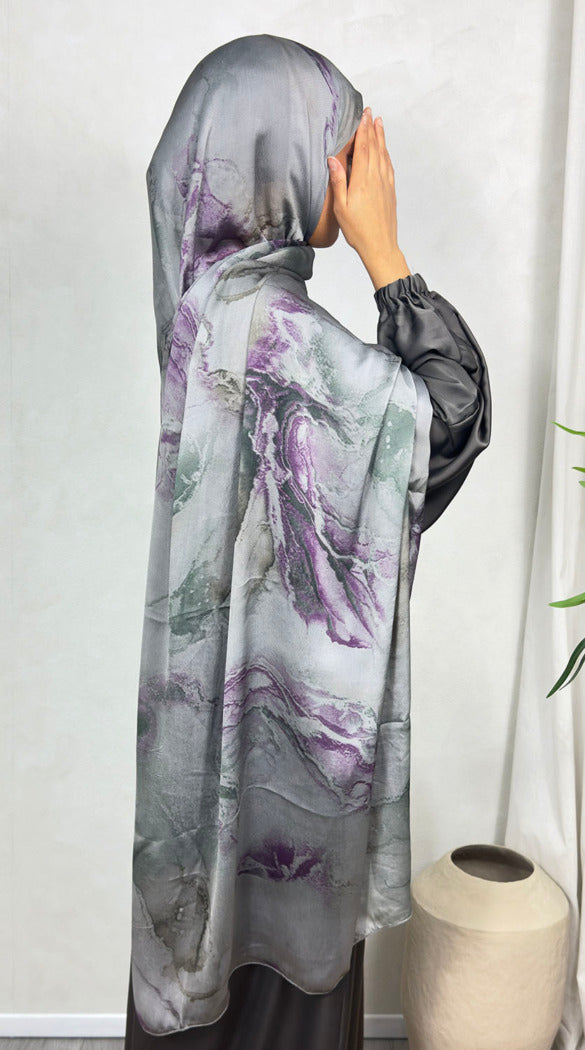
Butterfly Niqab Online Shopping Is Full of Beautiful Photos — Here’s What Those Photos Don’t Tell You
A butterfly niqab can look wonderfully soft in a product photograph, but the photograph cannot tell you what happens when the fabric drops over your shoulders, meets your abaya and moves with your breath. That is the part that matters. A sister may open a page because the drape looks generous, the front looks graceful, and the word butterfly promises ease. Then the parcel arrives and the real questions begin: does the fabric sit where it should, does the face opening feel secure, does the layered shape cover without pulling, and can she walk outside without adjusting it every few minutes?
That is why butterfly niqab online shopping should be slower than it first feels. The aim is not to chase the biggest-looking drape or the newest label. The aim is to understand the garment before you buy it, especially when different sellers use the words niqab, burqa, butterfly, cape, khimar-style and overhead veil in slightly different ways. A design that looks full from the front may be narrow at the sides. A layer that looks flowing may be sheer in daylight. A long back piece may feel beautiful indoors but awkward under a coat, across a bag strap or in wind.
This guide is for the sister who wants coverage with calm, not confusion. It explains the shape, the layers, the names, the length, the price signs and the practical online checks that matter before you choose. It does not assume that one design suits every woman. Some sisters prefer a lighter niqab that works with their own abaya and hijab layers. Some want a broader butterfly shape because it gives more shoulder coverage. Some need a secure face opening because they move through school runs, work journeys, masjid entrances and busy pavements. The right choice begins with knowing what the garment is actually doing.
Why the Butterfly Shape Looks So Appealing Online
The butterfly shape draws attention because it seems to soften everything. Instead of a narrow front panel sitting close to the face and chest, a butterfly-style niqab often spreads more generously across the shoulders or upper body. In photographs, that can look modest, elegant and easy. The sides fall like wings, the front appears smooth, and the whole outfit can seem more complete with less styling. For many women, especially those who already feel exposed in slimmer face veils, that extra spread is exactly why the design becomes interesting.
But the beauty of the shape is also where the risk begins. A butterfly outline can be created in several ways. It may be a true wide-cut niqab with enough fabric across the shoulder line. It may be a normal niqab photographed with the arms out slightly, making it appear wider than it is. It may be a burqa-style overgarment using butterfly sleeves, not a separate face veil at all. It may be a cape-like upper layer attached to a head opening. Online, those differences can blur because the model is still, the lighting is flattering, and the fabric is arranged for the image.
Before you judge the design, look for evidence of cut rather than mood. Does the product show the garment from the side, back and shoulder area? Does the description explain whether the fabric is attached around the head, tied behind the head, pulled over the head or worn with a separate hijab underneath? Does it mention one layer, two layers, a flip layer or an eye opening? These details matter more than the soft impression of the photograph.
The promise of easy coverage
A butterfly niqab feels attractive because it seems to remove several small anxieties at once. A sister may not want to think about whether her chest is visible when she bends, whether her scarf has slipped at the side, or whether the neckline of her abaya is showing. A broad draped layer can help with those concerns when it is cut well. It gives a feeling of quiet coverage across the upper body, especially when the fabric has enough width to fall naturally rather than cling.
Still, easy coverage is not only about size. If the fabric is too light, it may float away in wind. If it is too heavy, it may pull around the face. If the opening is too loose, the whole piece may shift. If it is too tight, it can press against the nose bridge or cheeks. The best butterfly niqab design is not simply the widest one. It is the one where the width, fabric weight, face fit and lower garment work together.
Niqab, Burqa and Butterfly Terms Are Often Mixed Online
One of the most important checks is language. The word niqab usually refers to a face veil, while burqa can refer to a fuller covering garment in some cultures and shops. In online clothing listings, those terms are not always used precisely. A seller may call an item a butterfly burqa design because it has wide flowing sides, even when the item functions more like a niqab or an upper drape. Another seller may describe a butterfly wala niqab because customers in that market recognise the phrase, even if the construction is similar to a khimar-style veil.
This does not mean the listing is automatically wrong or useless. It means the buyer has to look past the name. A sister may type one phrase because that is the wording she has heard from family, seen on a marketplace, or used in her own language. She may see butterfly wala burqa, butterfly niqab ka design, or new butterfly burqa and wonder whether these are different garments or simply different labels. Often they overlap. The safer question is not “which name is correct?” but “what arrives in the parcel, how is it worn, and what coverage does it give?”
For a broader grounding in garment terms, the niqab and hijab guide explains the difference between face-covering styles and head-covering styles in more detail. For this article, the practical point is simple: do not buy from the name alone. Use the name as a clue, then confirm the structure. If the listing does not show enough, ask the seller or choose a clearer option.
Questions to ask before trusting the label
Ask whether the item covers only the face, the face and chest, or the face plus the upper body. Ask whether it needs a separate hijab, undercap or abaya to work modestly. Ask whether the back is long enough for your preference. Ask whether the side view remains covered when your arms move. These questions protect you from assuming that every “butterfly” item gives the same result.
The most disappointing online purchases often happen when a sister thought she was buying one function and received another. She expected a full upper-body drape but received a narrow face veil. She expected a niqab but received a burqa-style outer garment. She expected a two-layer face cover but received a decorative light piece better suited to photographs than daily wear. Clear language helps, but clear construction evidence helps more.
The First Real Check Is the Face Opening
The face opening decides whether a niqab feels peaceful or irritating. A beautiful drape cannot make up for an opening that slips, presses, gaps or blocks vision. With butterfly styles, this becomes especially important because the extra fabric around the sides can add gentle pull. If the opening is poorly shaped, the garment may tug down at the nose, widen around the eyes, or sit unevenly when you turn your head.
Look for close images around the eyes, not only full outfit shots. A good product page should show how the forehead, nose bridge and cheek area sit. If there is a tie, check where it ties and whether the width appears adjustable. If there is an elastic or band, consider whether it may feel secure or tight. If there is a built-in cap, check whether the cap looks deep enough to grip without sliding back. If there is a flip layer, check whether lifting it changes the fit of the main opening.
Comfort around the face is not a small detail. A sister may wear the niqab for several hours, speak to someone at a counter, look down at a child, read signs, step into rain, or move from indoor warmth to outdoor cold. A loose opening can become distracting. A tight opening can make the whole garment feel heavier than it is. The best online listing gives enough evidence for you to imagine those ordinary moments, not just the still photograph.
Vision and side awareness
Butterfly styles often have more fabric at the sides, so peripheral vision matters. If the side panels sit too close to the eyes, they can interrupt awareness while crossing roads or moving through crowded spaces. This is especially relevant for sisters who drive, walk with children, use public transport or move through busy shopping areas. Modesty should not require you to feel unsafe or constantly uncertain of what is beside you.
Check whether the eye opening looks level and whether the side fabric falls away from the eye area. If the model’s head is turned in every photo, look for a straight front image. If the listing only shows a heavily posed angle, it may be hiding how the garment sits in normal use. A niqab should let you lower your gaze without losing practical awareness of your surroundings.
Layers Change Both Coverage and Weight
A butterfly niqab may have one broad layer, two layers, a flip layer, an attached veil, a cape-like shoulder fall, or a longer back panel. Each layer changes the way it feels. More layers can give more opacity and a softer fall, but they can also add warmth, weight and movement. Fewer layers can feel lighter, but they may need a darker or denser fabric to remain confidently covered in daylight.
Online, layers are easy to misunderstand. A product may look opaque because the photograph is taken indoors, against a dark abaya, or with the fabric doubled at the front. Outside, especially in strong daylight, the same layer may reveal more than expected. That is why you should read fabric information and image evidence together. If the seller says chiffon, georgette, crepe, nidha, jersey or cotton blend, think about how that fabric usually behaves. Chiffon can float beautifully, but it may need doubling. Crepe may be more stable, but the weight and texture can vary. Jersey can grip, but it can also cling if cut without enough width.
Layering also affects heat. A sister wearing niqab in summer may prefer breathable fabric and fewer heavy overlaps. A sister who wants strong coverage in winter may welcome a slightly denser drape. Neither is wrong. The question is not which layer count sounds most modest on paper, but which combination lets you keep coverage without struggling through the day.
Opacity in real light
If a listing includes only studio photos, pay attention to the fabric edge. Thin fabric often looks more transparent at the hem, the eye layer or where it lifts away from the body. If there is a video, pause it when the model moves near bright light. Movement tells you more than a still pose. You can see whether the layer clings, floats, twists or separates.
For darker colours, opacity is usually easier, but not guaranteed. For lighter colours, such as beige, cream, dusty rose or soft grey, you should be more careful. A pale butterfly shape can look gentle and beautiful, but it may need a lining, a double layer or a darker underlayer to feel properly covered. The product page should make that clear. If it does not, treat the item as uncertain rather than assuming the best.
Length Should Match Your Body, Coat, Bag and Abaya
Length is one of the most misunderstood parts of a butterfly niqab. An extra long butterfly niqab may sound more modest because it promises more fabric, but extra length only helps when it works with your body and outfit. If the front is too long, it may catch when you sit, reach or climb stairs. If the back is too long, it may bunch under a coat or feel awkward with a backpack. If the sides are too short, the butterfly shape may not give the shoulder coverage you expected.
Always read measurements. Do not rely on words like long, full, maxi or modest without numbers. A seller should ideally provide front length, back length, width, layer length and sometimes face-opening size. If they only provide one measurement, decide whether that measurement truly tells you what you need. A back length alone does not explain chest coverage. A front length alone does not explain shoulder spread. A width without a model height may still be hard to judge.
Your own wardrobe matters too. If you wear open abayas, a butterfly layer may help soften the front, but only if it reaches the area you want covered. If you wear closed abayas with high necklines, you may not need as much front coverage, but you may care more about face fit and side fall. If you wear coats in cold weather, a very wide shoulder layer may need arranging before the coat goes on. If you carry a crossbody bag, the strap can pull the fabric diagonally and change the whole shape.
How to read model photos realistically
Model height changes everything. A niqab that looks chest-length on a petite model may sit higher on a taller sister. A wide drape photographed with the model’s arms slightly lifted may look narrower once her arms rest naturally. If the seller gives the model’s height, use it. If not, compare the garment to visible body points: shoulder, elbow, wrist, waist, hip and knee. Those points help you estimate where the fabric may fall on you.
It is also worth looking at the hem shape. Some butterfly designs curve lower at the sides, while others are even across the front. A curved side may give beautiful movement but less consistent coverage when you raise your arms. An even cut may feel calmer, but it may not create the same soft wing shape. Neither is automatically better. The right one depends on how you move.
Fabric Decides Whether the Shape Falls or Fights You
The same butterfly niqab design can feel completely different in different fabrics. A light fabric may create a graceful float, but it can move too much in wind. A heavier fabric may stay where placed, but it can pull the face opening or feel warm. A crisp fabric may hold the wing shape, but it may rustle or crease. A very soft fabric may feel comfortable, but it may collapse against the body instead of spreading gently.
When buying online, read fabric claims with care. Some listings use fabric names loosely. A product called chiffon may be very fine or slightly heavier. A product called crepe may be soft, textured, thin or dense depending on the supplier. A product called cotton may mean pure cotton or a blend. Rather than trusting the name alone, look for practical clues: does the seller mention breathability, drape, opacity, hand wash, ironing, stretch or lining? Does the photo show the fabric hanging smoothly or wrinkling around the face?
The fabric also has to work with your climate. In the UK, a niqab may need to cope with damp air, wind, public transport heat and cold outdoor walks on the same day. A floaty layer can feel lovely indoors but frustrating outside if it constantly lifts. A dense layer can feel secure outside but too warm in a heated shop. If you live somewhere warmer, airflow may matter more than wind resistance. If you travel or perform Umrah, rules, comfort and heat need separate consideration. Do not assume one fabric solves every setting.
Texture near the face
Any texture near the nose and cheeks becomes noticeable quickly. A slightly rough fabric may not bother your shoulders, but it may irritate the face. A slippery fabric may look polished, but it may slide back unless the tie or cap is well designed. A stretchy fabric may feel forgiving, but it can sit too close to the mouth if the cut lacks space. If reviews mention itching, slipping, warmth or breathing space, take them seriously.
It is also wise to think about sound. Some fabrics make a faint rustle when moving. That may not matter to every woman, but for a sister who already feels self-conscious in public, a noisy fabric can add another layer of discomfort. Modest clothing should help her feel settled, not make her aware of herself at every step.
Price Should Be Read Alongside Construction, Not Alone
Butterfly burqa price can vary widely because sellers may be offering very different things under similar names. One listing may be a simple lightweight face veil with a wider drape. Another may include multiple layers, a built-in cap, better stitching, longer fabric and more careful finishing. Another may be a full burqa-style garment rather than a niqab. Comparing only the number on the page can make a cheaper item look better than it really is, or make a fair price seem high because you have not yet seen what is included.
Start by identifying what you are paying for. Are there one or two layers? Is the fabric named clearly? Are the hems finished neatly? Is the face opening adjustable? Are there photos of the stitching, ties, side fall and back length? Is there a return policy if the fit is not right? Does the listing show the actual colour in more than one light? These things have value because they reduce uncertainty. A low price with almost no information may cost more emotionally if the garment arrives unusable.
That does not mean the most expensive option is always best. A high price can still hide vague wording, weak construction or a style that does not suit your life. A simple, fairly priced design may be perfect if the shape is clear, the fabric is practical and the seller shows honest images. The wise approach is to compare price with evidence, not with longing. Ask what problem the garment is solving for you, then see whether the construction supports that answer.
Return policies are part of the cost
With niqab, small fit differences matter. A neckline that sits two centimetres too low, an eye opening that feels too wide, or a layer that is more transparent than expected can change whether you wear the piece. If an online shop does not accept returns, or if return postage is expensive, that should affect how much risk you are willing to take. The garment may be affordable, but the uncertainty may not be.
Reviews can help, but read them carefully. A review saying “beautiful” tells you less than one saying “opaque in daylight”, “tie is secure”, “short on tall sisters”, or “fabric is light but needs layering”. Practical reviews are especially valuable for butterfly styles because photos alone can exaggerate the width and softness of the drape.
Coverage Is Tested by Movement, Not Stillness
A butterfly niqab can look perfectly covered while the model stands still. Real life asks more from it. You bend to pick something up, turn your head, lift a child, reach for a shelf, sit in a car, step into wind, adjust your sleeve, carry shopping, answer the door, or lean forward during a conversation. Each movement changes the fall of the fabric. That is why coverage should be judged by motion, not by the first front-facing image.
Look for product videos whenever possible. If there is no video, look for multiple still photographs that show different positions. A side view can show whether the upper chest remains covered. A back view can show whether the fabric sits neatly or opens unexpectedly. A seated image is rare but useful. A close-up of the tie or cap can show whether the shape is likely to stay put. If every photograph is the same pose, the listing may be giving you style without function.
The question is not whether the garment can be arranged modestly for ten seconds. The question is whether it returns to modesty after you move. A good butterfly shape should not need constant rescue. It may need normal adjustment, as all garments do, but it should not collapse, twist or expose every time your arms move. This is especially important for sisters who are new to niqab and do not yet have the confidence to keep adjusting in public.
Try to imagine your most ordinary day
Before buying, picture the least glamorous part of your week. Maybe it is school pickup in wind. Maybe it is carrying groceries. Maybe it is walking from the train station with a coat over your abaya. Maybe it is visiting family where you will sit, stand, serve tea and move around people who ask questions. If the niqab only makes sense in a still mirror selfie, it may not be the right one for that season of your life.
Modesty is not only about how covered you look in a product image. It is also about whether the garment lets you move with dignity. The more a piece needs fussing, the more it can pull your attention away from your intention. A calm garment gives you room to forget about yourself a little, which is often what many sisters are hoping for.
Colour Changes the Way a Butterfly Shape Feels
Black is often the easiest colour for butterfly niqab styles because it gives visual depth, tends to look more opaque, and pairs naturally with many abayas. But black is not the only option. Some sisters prefer brown, navy, charcoal, olive, beige or soft muted tones because they feel gentler with their wardrobe or complexion. Colour can change how formal, heavy, soft or noticeable the garment feels.
With lighter colours, check opacity more carefully. A cream or beige layer may look beautiful on the page, but it may need a double layer or a darker underlayer to feel properly covered. With strong colours, ask whether the shade is easy to pair with the abayas you already own. A new butterfly burqa in a striking colour may feel exciting, but if it only matches one outfit, it may not become the practical piece you hoped for.
Colour also behaves differently in different light. A soft brown may look warm indoors and grey outside. A black fabric may photograph matte but arrive slightly shiny. A navy layer may look almost black unless placed beside true black. If colour matters to you, look for unfiltered photos, customer images and descriptions that name undertones rather than simply “blue” or “green”. Online lighting can make a garment feel more luxurious than it is.
Matching is not the only modest concern
It is natural to want the niqab to match the abaya, but matching should not outrank coverage and comfort. A perfect shade that slips around the face will not feel peaceful. A beautiful tone that becomes transparent in daylight will not give confidence. A dramatic colour that attracts more attention than you wanted may make the garment harder to wear. Choose colour after you understand the shape, not before.
For many sisters, a calm neutral works best at first. Once you know which cut, length and fabric behave well on your body, you can consider other colours with more confidence. That order protects you from buying several pretty pieces before discovering that the underlying construction does not suit you.
How to Compare Product Photos Without Being Misled
Product photography is designed to make clothing look appealing. That is not wrong, but it means you need to read images actively. A butterfly shape can be widened by how the model holds her arms. Layers can be made smoother by clips at the back. Fabric can look denser against a dark underlayer. Length can look more generous on a shorter model. A face opening can seem neat when the head is tilted slightly down. None of these details mean the seller is dishonest; they simply mean photographs are not the same as wearing.
Begin with the first image, then move past it. The first image sells the feeling. The later images, if they exist, often reveal the truth. Look for the side fall, the back, the hem, the tie, the cap, the eye opening and the fabric close-up. If the listing includes a video, watch how the garment behaves when the model walks or turns. If the piece lifts dramatically, clings at the mouth, or swings open at the sides, decide whether that suits your life.
Customer photos can be more useful than polished images because they show the garment in ordinary light. They may be less elegant, but they often reveal length, opacity and fit more honestly. Still, remember that another sister’s height, abaya, underlayers and styling will differ from yours. Use her image as evidence, not as a guarantee.
Red flags in listings
Be cautious when a listing has only one photo, no fabric information, no measurements, no return details, and no image of the face opening. Be cautious when several sellers use the exact same photograph but describe the item differently. Be cautious when the words promise full coverage but the images do not show the side or back. Be cautious when a very low price is paired with vague wording and no real garment detail.
A careful buyer is not being difficult. She is protecting her money, her comfort and her modesty. Online buying requires trust, but trust should be supported by information. The more specific the listing, the easier it becomes to decide with calm instead of guessing.
How to Choose for Different Kinds of Days
A butterfly niqab for occasional wear may not need to do the same job as one for daily errands. If you want it mainly for gatherings, Eid visits, family events or occasional masjid trips, you may care more about drape, softness and how it pairs with your abaya. If you want it for everyday outdoor wear, you may care more about secure ties, fabric stability, easy washing and whether it behaves in wind. If you are new to niqab, you may need something forgiving, not dramatic.
For a first butterfly style, choose clarity over decoration. A simple colour, understandable construction, comfortable face opening and clear measurements will teach you more than a complicated design. Once you know what length and fabric suit you, you can explore wider drapes or more distinctive pieces. It is better to build confidence slowly than to buy the most striking option and feel overwhelmed.
If you already wear niqab daily, you may know your non-negotiables. Perhaps you need a narrower eye opening, a longer back layer, a non-slip tie, or a fabric that does not fog glasses as easily. Use that knowledge. Do not let a beautiful photograph persuade you to ignore what experience has already taught you. A garment can be lovely and still wrong for your body or routine.
Work, study and family settings
Some sisters wear face-covering styles in settings where they need to speak, study, work or interact regularly. In those cases, breathing space, visibility and security matter deeply. A broad butterfly drape may feel modest, but if the fabric constantly brushes the mouth or shifts when speaking, it may become tiring. Check reviews for comments about conversation, glasses, heat and face fit.
Family settings can bring another kind of pressure. A sister may want coverage but not want to feel like she is wearing something too formal or difficult around relatives. A soft butterfly shape can help because it feels gentle rather than severe, but the design still needs to be practical. The more comfortable it feels, the less she has to defend it with her body language.
Care and Washing Should Be Checked Before Buying
A niqab that looks beautiful once but becomes difficult after washing is not a helpful purchase. Butterfly styles often have more fabric than a simple face veil, so care matters. If the fabric creases heavily, holds water, loses shape, shrinks or becomes staticky, the garment may need more effort than expected. Always check care instructions before buying, especially if you plan to wear the piece often.
Hand washing may be recommended for delicate fabrics, but that may not suit every life. Some sisters need something that can be washed regularly and dried quickly. Others are willing to hand wash special pieces but want an everyday option that is simpler. Think honestly about your routine. If you already struggle to keep delicate garments ready, choose a fabric and colour that will not add pressure.
Ironing is another practical point. Wide panels can look untidy if they crease across the front, but some fabrics are hard to press safely. A garment that needs careful steaming every time may not work for school runs or regular travel. If you prefer low-maintenance clothing, look for fabrics described as soft, crease-resistant or easy care, while remembering that sellers’ descriptions should still be supported by reviews where possible.
Storage affects shape
Butterfly niqabs can crease when folded tightly. If the face opening, cap or tie area becomes misshapen, the garment may feel different the next time you wear it. Hanging may help, but not every wardrobe has space. Folding along natural seams and avoiding heavy piles on top can preserve the drape. For travel, a breathable pouch may keep the fabric cleaner and easier to find.
These care details may feel unromantic, but they decide whether the garment becomes part of your life. Modest clothing is not only chosen at checkout. It is chosen again every time you reach for it, wash it, hang it, pack it and decide whether it is easy enough to wear today.
What to Do When You Are Between Two Designs
If two designs both look suitable, compare them by function rather than excitement. Which one gives clearer measurements? Which one shows the face opening better? Which one has more useful reviews? Which fabric suits your climate? Which length works with the abayas you already wear? Which seller has a clearer return policy? Which garment solves your actual worry: chest coverage, side coverage, opacity, comfort, breathability, or secure fit?
Sometimes the quieter option is the better first purchase. A dramatic butterfly shape may look more impressive, but a balanced design may be worn more often. The piece you wear regularly is usually more valuable than the piece you only admire. This is especially true for sisters building a modest wardrobe gradually. Every purchase should teach you something useful about your preferences.
If you are still unsure, pause for a day. Online shopping can make urgency feel bigger than it is. A sister may fear that the item will sell out, the colour will disappear or the price will change. Sometimes that happens. But it is still better to pause than to buy from confusion. If the design is right, it should make more sense after reflection, not less.
A simple decision order
First, confirm garment type. Second, confirm face opening. Third, confirm measurements. Fourth, confirm fabric and opacity. Fifth, confirm return policy. Sixth, consider colour and price. This order keeps the beautiful parts in their proper place. It does not remove emotion from clothing; it protects emotion from leading you into a poor fit.
Many sisters are not only buying fabric. They are buying a feeling of readiness, privacy, worship, identity or courage. That deserves care. The most beautiful purchase is not always the most elaborate one. Sometimes it is the garment that lets a sister leave the house with her shoulders relaxed because she knows the coverage will hold.
Measurements That Deserve More Attention Than the Main Photo
Measurements are not exciting, but they are often the difference between a niqab you wear and a niqab that stays folded in a drawer. For a butterfly style, a single length measurement is rarely enough. The useful details are front drop, back drop, side width, eye opening, cap depth if there is one, tie length and sometimes the distance from the eye line to the lower hem. These numbers help you understand whether the piece gives chest coverage, shoulder spread, back coverage or simply a decorative fall.
If a seller provides only “one size”, do not assume it will suit every sister. One size may mean the garment has adjustable ties, but it does not mean every body height, face shape, shoulder width or abaya style will receive the same coverage. A taller sister may find the front shorter than expected. A petite sister may find the same piece overwhelming. A sister with a rounder face may need more give around the eye opening. A sister with narrow shoulders may find the sides slide differently. Modesty is personal in the body, not only in the description.
Use a tape measure against a niqab or scarf you already own. Hold the tape from your eye line to the point where you want the front to fall. Then check your preferred side length and back length. This simple step turns online uncertainty into something more concrete. You may discover that the garment you thought was generous is actually shorter than your current everyday piece, or that the extra-long design is much longer than you would comfortably manage.
Why width matters as much as length
Butterfly styles are often bought for their width, so do not ignore the measurement across the shoulders or total fabric spread. A long but narrow niqab may still feel exposed at the sides. A wide but short one may give lovely shoulder softness without enough front coverage. The best option depends on what you are trying to solve. If your worry is chest coverage, front length matters. If your worry is shoulder and side coverage, width matters. If your worry is overall softness over an abaya, both need to work together.
When measurements are missing, contact the seller with specific questions. “How long is it?” may bring a vague answer. “What is the front drop from the eye opening to the hem?” is clearer. “How wide is it across the shoulder drape when laid flat?” is clearer. A careful seller should understand why these details matter. If they cannot answer, you can still choose to buy, but you should recognise that you are accepting more risk.
Reviews Can Tell You What Product Copy Cannot
Reviews are useful because they often come from the moment after the garment has met real life. Product copy tells you what the seller wants to emphasise. Reviews tell you what sisters noticed when they wore it, washed it, opened the parcel, stood in daylight or tried to move with it. For butterfly niqabs, the best reviews mention practical things: whether the fabric is see-through, whether the tie slips, whether the length suits taller sisters, whether the eye opening sits neatly, and whether the drape stays in place outdoors.
Do not be discouraged by one review that simply says the item was too long or too short. That may reflect the reviewer’s height rather than a fault. Instead, look for patterns. If several sisters say the fabric is thinner than expected, believe them. If several say the colour is different in person, take that seriously. If several mention that the niqab feels secure and easy to wear, that is valuable evidence. A repeated comment carries more weight than a single emotional reaction.
Also notice what reviews do not say. If every review praises beauty but none mention coverage, comfort or opacity, you still have unanswered questions. The garment may be lovely, but it may not have been tested for the problem you care about. If you are buying for daily modest wear, practical reviews are more useful than compliments. If you are buying for occasional use, beauty may matter more, but comfort should still not disappear from the decision.
Customer photos need careful reading too
Customer photos can reveal ordinary lighting, true length and real fabric behaviour, but they can still mislead if you forget context. A sister may be wearing a matching black abaya underneath, making a thin fabric look more opaque. She may be shorter or taller than you. She may have styled the garment with pins, an undercap or a particular hijab underneath. Use customer photos to understand possibilities, not promises.
If a review includes a height, body frame or styling note, it becomes much more helpful. A comment such as “I am 5 foot 7 and it reaches mid-chest” tells you more than “perfect”. A note like “needs a dark underlayer in sunlight” can prevent a disappointing purchase. These small pieces of shared experience are part of how women quietly help one another shop more wisely.
Modesty Should Feel Like Stability, Not Constant Management
The emotional side of choosing niqab matters. A sister may be moving towards more coverage because she wants privacy, sincerity, obedience, identity, confidence or simply more calm in the way she dresses. If the garment she chooses demands constant adjustment, that calm can be replaced by worry. She may keep touching the face opening, pulling the sides forward, checking the chest, or wondering whether the layer has shifted. That is not the kind of ease most women are hoping for.
A good butterfly niqab should support stability. It should help the sister feel that her upper body is softly covered, her face opening is secure, and her fabric is behaving with her rather than against her. It should not make her feel like she is performing modesty for the garment instead of living inside it. The right design may not be the most dramatic one. It may be the one that lets her walk, sit, speak and lower her gaze without being pulled back into self-consciousness every minute.
This is why online buying needs patience. A garment can be visually modest and still emotionally tiring if it does not fit your life. A very wide layer can make you feel hidden in a comforting way, or it can feel like too much fabric if you are not used to it. A lighter design can feel free, or it can feel insecure if it lifts easily. Honour what your body tells you. Modesty is not meant to be a costume you fight with all day.
Ease is not the opposite of seriousness
Some sisters worry that choosing for comfort means they are being less serious about coverage. That is not true. Comfort can help consistency. A garment that lets you breathe, see, move and carry your day is often the garment you will actually wear. The one that looks strict but makes daily life harder may become a source of avoidance. Choose the piece that supports your intention over time.
There is also no shame in learning slowly. Your first butterfly niqab may teach you that you prefer a shorter front, a deeper cap, a heavier fabric or a narrower eye opening. That learning is not failure. It is part of building a wardrobe that serves your deen, your body and your real responsibilities.
Questions Worth Asking the Seller Before Checkout
If the listing is almost right but leaves gaps, ask before you buy. A short message can prevent an expensive mistake. Ask for the front length from the eye opening, the back length, whether the fabric is see-through in daylight, whether the niqab has one layer or more, whether it needs an undercap, and whether the tie or cap is adjustable. If you wear glasses, ask whether customers have mentioned glasses comfort. If you are tall, ask whether the model height is available. If you are buying a lighter colour, ask whether it is double layered.
The way a seller responds also tells you something. A helpful seller gives specific answers, not only reassurance. “It is modest” is less useful than “the front drop is approximately seventy centimetres and the fabric is double layered over the face”. “It fits everyone” is less useful than measurements. “It is good quality” is less useful than fabric, stitching and care details. You are not asking to be difficult. You are asking because the garment touches worship, privacy and daily comfort.
Keep the conversation simple and polite. Sellers may not know every technical term, especially across languages, but they should be able to answer basic construction questions. If they cannot, choose whether the risk is worth it. Sometimes a vague listing is still acceptable for a low-cost experiment. For a more expensive purchase, vague answers should make you pause.
Save the answers
Keep screenshots of measurements, care claims and seller replies until the item arrives. If there is a problem, these records can help with returns or exchanges. More importantly, they help you learn. If the seller said the fabric was opaque and you find it too sheer, you will know what wording to avoid next time. If the measurements match perfectly, you will know what numbers to look for again.
Online shopping becomes easier when each purchase teaches you something. Over time you stop buying only from hope and begin buying from knowledge. That is especially helpful with niqab, where small details can change the whole feeling of the garment.
Choosing Slowly Can Protect Both Money and Niyyah
It is easy to feel rushed online. A design appears, the photos look graceful, the name feels exactly right, and suddenly the garment seems like the missing piece. But niyyah benefits from calm. Before buying, let the first excitement settle. Ask whether the garment answers your actual need or simply looks beautiful in a moment when you wanted to feel more covered, more ready or more certain.
This does not mean you should overthink every purchase until joy disappears. Modest clothing can be joyful. A soft drape, a thoughtful cut and a colour you love can make getting dressed feel easier. But joy should be joined with honesty. Will you wear it with what you own? Will it suit your daily movement? Will it help you feel nearer to the person you are trying to become, or will it sit unused because the practical details were never right?
There is something quietly spiritual about choosing with restraint. You are not only asking “is this pretty?” You are asking “will this help me carry myself with dignity?” You are asking “does this serve the purpose I am buying it for?” You are asking “am I being drawn by benefit or by urgency?” Those questions protect your wardrobe from becoming cluttered with beautiful mistakes.
A purchase can be modest in process too
Sometimes modesty is not only in the garment but in the way we approach buying it. We slow down. We avoid waste. We ask practical questions. We choose what we can care for. We resist the pressure to own every new design. We remember that clothing is a means, not the heart itself. The butterfly shape may be lovely, but the peace you are seeking is deeper than fabric.
If the right piece is there, you can buy it with a steadier heart. If it is not, leaving it behind is also a decision. There will be other garments, other designs and other seasons. What matters is that your clothing helps you move through the world with sincerity, not panic.
A Gentle Closing Thought Before You Buy
Before you press buy, imagine the garment after the parcel excitement has faded. Imagine it on an ordinary morning when you are slightly tired, the weather is awkward, and you need to get out of the house. Will it help you feel covered without fuss? Will it sit around the face without taking over your attention? Will the layers make sense with your abaya? Will the colour and fabric still feel wearable after the first photograph? Will you reach for it because it serves you, not only because it looked beautiful online?
A butterfly niqab can be a beautiful choice. Its softness can make coverage feel graceful. Its wider shape can give confidence across the chest and shoulders. Its drape can help a sister feel less exposed when she is still finding her way with niqab or with more covered dressing. But the design needs to be understood before it is trusted. The name alone cannot promise coverage. The photograph alone cannot promise comfort. The price alone cannot promise value.
Choose with calm. Read the description. Study the face opening. Check the measurements. Think about your weather, your body, your abayas, your movements and your own comfort. If a listing gives you enough information, you can buy with more confidence. If it hides the practical details, that uncertainty is part of the decision too.
May Allah place ease in the choices that help you dress with sincerity, dignity and peace. And may every garment you choose support your intention rather than distracting from it.
FAQs About Butterfly Niqabs and Online Buying
Is a butterfly niqab the same as a burqa?
Not always. A butterfly niqab usually refers to a face-covering style with a wider, wing-like drape, while burqa can mean a fuller covering garment depending on the seller and cultural context. Online listings often mix these words, so check construction, measurements and how the piece is worn rather than relying on the label alone.
What should I check first when buying a butterfly niqab online?
Start with the face opening, because comfort and security around the eyes, nose and cheeks decide how wearable the niqab feels. Then check length, side coverage, layers, fabric opacity, measurements, model height, return policy and whether photos show the garment from more than one angle.
Is an extra long butterfly niqab always more modest?
Extra length can help with coverage, but only when it suits your height, abaya and daily movement. If the front is too long, it may catch when sitting or walking. If the back is too long, it may bunch under coats or bags. Measurements matter more than the word long.
How can I tell whether the fabric will be opaque?
Look for fabric details, customer photos, videos and close-ups of the hem or layer edge. Darker colours are often easier, but not guaranteed. Lighter shades may need double layers or a suitable underlayer. If the seller does not show the garment in clear light, treat opacity as uncertain.
What does butterfly wala niqab mean?
Butterfly wala niqab is a phrase some sellers or shoppers use for a niqab with a butterfly-style drape. It usually points to a wider, flowing shape, but the exact construction can vary. Check whether it is a separate niqab, attached cap, overhead veil or burqa-style piece before buying.
Why do some listings say butterfly burqa design?
Some sellers use butterfly burqa design for garments with wide flowing sides or a fuller upper-body shape. It may describe a burqa-style garment, a niqab with a broad drape, or a regional naming habit. The practical check is whether the item covers the face, head, chest or full body.
Is a butterfly niqab suitable for daily wear?
It can be suitable for daily wear if the fabric is comfortable, the face opening is secure, the length works with your outfit and the layers are manageable in your climate. A very dramatic or delicate design may be better for occasional wear, while a simpler stable style may work better every day.
How do I compare butterfly burqa price between sellers?
Compare price with construction. Check layer count, fabric type, measurements, stitching, opacity, adjustability, care instructions, photos, reviews and returns. A cheaper item with vague details may be riskier than a clearer mid-priced option. The best value is the garment you can actually wear with confidence.
Can I wear a butterfly niqab with glasses?
Some sisters can, but the face opening, fabric position and breathing space matter. Look for reviews mentioning glasses, fogging or eye comfort. A tight opening may press the frames, while a loose one may shift. A stable tie or cap can make the garment easier to manage.
What colour is safest for a first butterfly niqab?
A calm neutral such as black, charcoal, brown or navy is often easiest because it pairs with many abayas and usually gives stronger visual opacity. Lighter colours can be beautiful, but they need extra opacity checks. Choose shape and comfort first, then colour.