Choosing an abaya cut you feel comfortable in
You do not need to decide whether your body resembles a fruit or a geometric shape before choosing an abaya. Those labels leave out much of what determines fit: shoulder width, sleeve reach, torso length, the position of a seam and the way a particular fabric moves.
A more useful approach starts with two questions. How do you want the garment to look, and what do you need to do comfortably while wearing it? The answer may be a straight, uninterrupted line, a wider skirt, a loose drape or some adjustable structure. None is a correction for a body that needs changing.
Separate fit from silhouette
Fit concerns whether the garment has the right space and length at the points that matter. Silhouette is the overall outline you choose. A loose silhouette can fit well; a structured one can also allow comfortable movement. Tightness is not proof of a good fit, and a large amount of fabric is not proof of an easy one.
Try to identify which issue you are seeing. If a neckline pulls when you reach, that is different from simply preferring a less full skirt. If the sleeve opening is uncomfortable, changing the scarf colour will not solve it. Naming the problem makes the next decision more precise.
Use photographs as a starting point, then test the garment in ordinary movement. A pose can make a cut look narrower, longer or more fluid than it will appear when you are standing naturally.
Begin with the shoulders and upper arms
The upper part of the abaya supports much of the garment. Check where the shoulder area sits and whether you can reach forward without pulling across the back. Lift your hands to a comfortable height and notice whether the neckline or main body rises significantly.
Look at upper-arm room separately from cuff width. A generous wrist opening does not compensate for a restrictive sleeve higher up. The intended inner layer also matters: a garment that fits over a thin top may feel different over a thicker sleeve.
Where the cut does not have conventional shoulder seams, ask how its measurements are taken. A broad sleeve-body design needs a different assessment from a set-in sleeve. The relevant question is still whether you can move comfortably in the shape you like.
Compare straight and widening cuts
A straight-cut abaya can give a relatively continuous outline from the upper body down. Check that it has enough room at the hips and hem for sitting and walking. Do not assume that a straight line requires the fabric to sit close to the body.
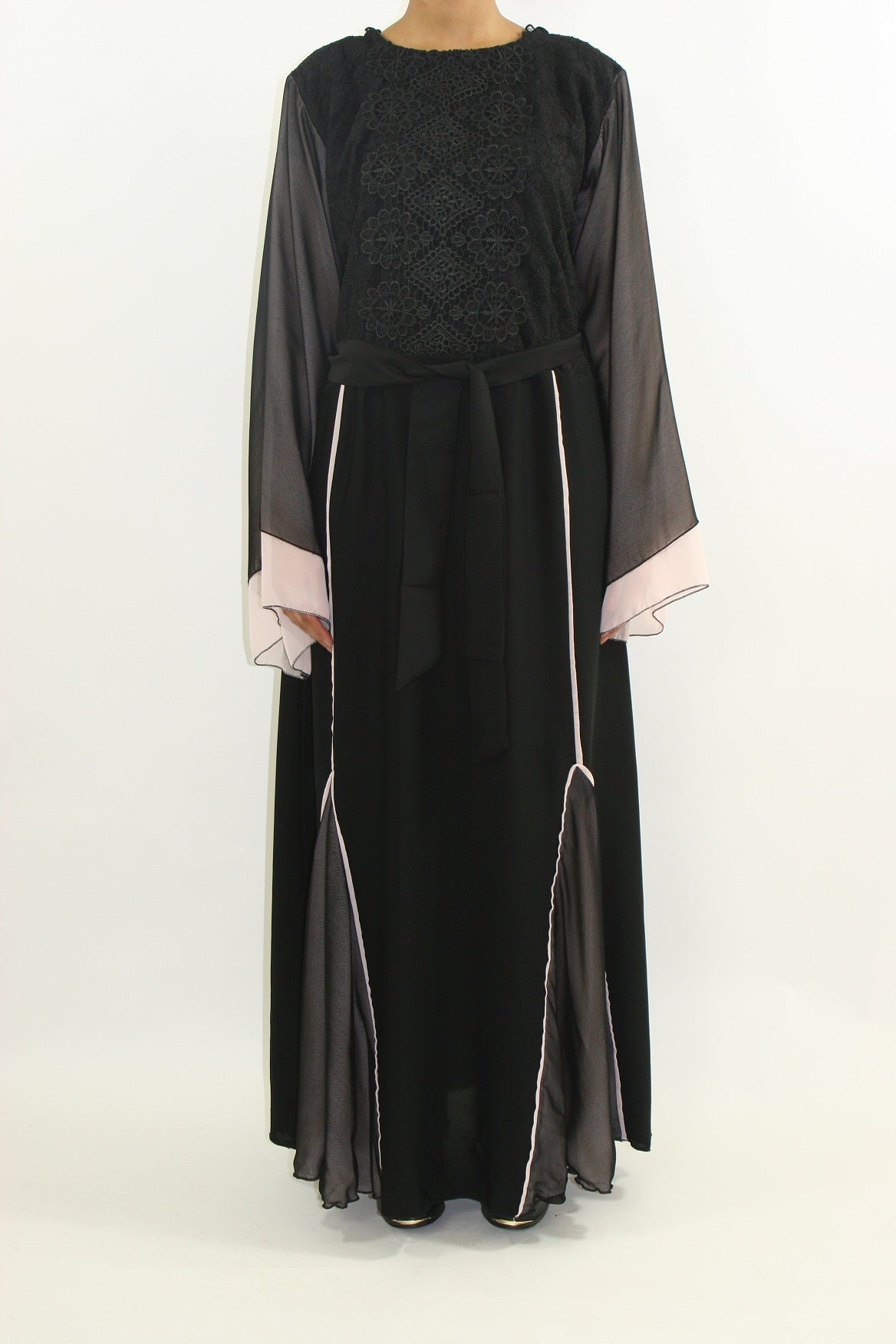
An A-line or otherwise widening cut offers more space towards the lower part of the garment. That can be useful for movement and may create the outline you prefer, but the shoulders and sleeves still need their own fit checks. A full skirt cannot solve a tight upper section.
Compare the two cuts in similar fabrics where possible. Otherwise, a difference you attribute to the pattern may actually come from the cloth. A fluid material and a stiff one can make the same general shape look quite different.
Consider broad sleeves and joined drapes
Butterfly, batwing and related broad-cut descriptions can refer to garments with generous connections between the sleeves and body. Their relaxed outline may be quite different from the shape shown with the arms extended.
Look at both positions. Then try carrying a bag, reaching towards a table and sitting. Notice where the folds gather and whether the sleeve movement lifts the rest of the garment. Choose the amount of fabric you enjoy rather than assuming that a wider cut suits every person equally.
Check the wrist opening carefully. It often determines whether a generous sleeve feels manageable during daily tasks. The opening should work with your hand, wrist and inner sleeve without constant pushing or pulling.
Decide where you want structure
Some abayas use a seam, panel, tie or belt to create a more defined area. That can be a design choice you enjoy, but it is not compulsory for any body category. Try the garment in its intended loose and adjusted arrangements where both are available.
A seam placed at a particular height may sit differently on people with different torso proportions. Check its position while seated as well as standing. If it feels uncomfortable or pulls the fabric into an unwanted shape, another design may be preferable to tightening or loosening it repeatedly.
Belts redistribute fabric. They can change sleeve movement, front coverage and hem balance, especially in a broad joined cut. Assess those effects before deciding that a belt has improved the fit simply because it has changed the outline.
Use length as a measurement, not an illusion
Choose length for your height, shoes and daily movement using the measuring route given by the seller. Do not make the garment shorter merely because a rule says a shorter wearer should avoid full length. Equally, do not choose excess length because it creates a dramatic photograph.
Amani’s numbered abaya lengths refer to shoulder-to-feet inches rather than full standing height. Compare the product information with a suitable garment measured in the same way, and check the shoulders because the point from which the dress hangs affects the result.
For taller wearers, adequate sleeve reach matters alongside hem length. For shorter wearers, shoulder and cuff proportions may matter as much as shortening the skirt. A length alteration alone does not always resolve the whole fit.
The complete abaya guide is a useful reference for these measurement distinctions.
Let fabric support the silhouette you prefer
A fluid cloth can settle into soft folds, while a more structured one holds space away from the body. Neither is reserved for a particular height or shape. Decide which effect you like and whether the finished garment remains comfortable.
Check weight, lining and stretch as separate features. A stretchy fabric may allow movement but still show more of the inner outline than you intend. A lined garment may hang neatly but feel more substantial than the outer material suggests.
Try the exact layers planned for the outfit. A rough seam, bulky waistband or full inner sleeve can change the way an otherwise suitable abaya falls. Fit is a relationship between the garment and what is worn with it, not a number in isolation.
Choose detail by what you want to enjoy
You can place attention at a neckline, cuff, hem or patterned panel because you like the design—not because one body area must be hidden and another displayed. Look at whether the detail remains visible with your usual hijab and accessories.
A heavily decorated shoulder may catch a scarf or bag strap. A hem border may complicate shortening. A large print may look different once the fabric folds. These are practical considerations that apply regardless of a body-shape label.
If you prefer a quieter garment, let the cut and fabric be the main features. There is no need to add ruffles or embellishment to create an outline someone else has described as ideal.
Use colour without turning it into a restriction
A single colour can make the garment’s line easier to see. Contrasting panels or an open front can create a different visual rhythm. Choose the effect you enjoy and compare the actual fabrics in the light in which you will wear them.
Dark colours are not mandatory for one body type, and bold prints are not reserved for taller people. Pattern scale and contrast are choices within an outfit. Test them with the scarf, bag and shoes rather than accepting a general instruction about who is allowed to wear what.
Our printed-abaya styling guide offers a garment-focused way to balance detail without treating the wearer as a problem to solve.
Try a useful movement sequence
Walk a few normal steps, sit in a chair and reach forward. Raise your hands, turn and look at the back in a mirror or photograph. Notice whether the garment returns comfortably to its resting position or needs repeated rearrangement.
Use the bag and shoes you expect to wear. A strap may gather side fabric, and a change in shoe height may alter the hem. Those details can explain why a garment feels different at home from the way it appeared in a fitting room.
For an open style, check the inner outfit when the front separates. For a closed one, check the lower opening and stride. The silhouette should support the coverage you intend through movement, not only while still.
Know what an alteration can and cannot promise
Before buying an unsuitable size on the assumption it can be changed, ask a competent alterations professional to assess the actual garment. A simple length adjustment is different from moving a shoulder, changing an armhole or reconstructing a decorated panel.
Consider the total cost and the risk to the design. If several important areas need changing, a different cut may be a better starting point. Alterations can be valuable, but they are not a guarantee that any abaya can become the right one.
Keep the desired result specific: enough sleeve reach, a manageable hem or a better-positioned fastening. Avoid vague instructions to make the garment “more flattering” when the practical issue can be named.
For online purchases, request actual garment measurements when the available chart gives only general body-size ranges. Clarify the measuring points before comparing.
Compare two cuts without changing every other variable
Trying a straight abaya in a crisp woven cloth against a wide-cut abaya in a soft knit can tell you which garment you prefer, but not necessarily which silhouette you prefer. The fabric, size and construction are changing at the same time. Keep that distinction in mind before concluding that an entire category of cuts is wrong for you.
For a clearer comparison, try garments with reasonably similar fabric weight and the same intended length. Wear the same inner clothing and shoes. Let each garment settle, then look at the front, side and back without adjusting your posture to suit it. Notice where the fabric rests and where you would like more or less room.
Write observations in concrete terms. “The upper sleeve pulls when I reach forward” is more useful than “this shape does not suit me.” “I prefer the extra space at the hem” records a preference without turning it into a rule for everyone with similar measurements. It also gives a seller or alteration specialist something specific to respond to.
Try the preferred option again after putting on the scarf and bag you normally use. A shoulder strap can change the appearance of a loose cut, while a substantial scarf can alter the balance at the neckline. The final decision belongs to the whole outfit you will wear.
You may find that two different cuts work for different purposes. There is no need to choose a single permanent silhouette or to organise your wardrobe around a body-shape label.
Build a record of what works for you
When you find a useful cut, note its measurements, fabric and the features you appreciate. Record the shoulder arrangement, sleeve shape and hem width where that information is available. These details are more transferable than a broad size label.
Your preferences can change with activity, season or the kind of outfit you want. There is no need to remain loyal to one silhouette because it was once recommended for your body. Choose the garment that fits the life you are dressing for now.
A successful abaya does not create a better body. It gives your body comfortable space, the coverage you want and a shape you enjoy wearing.