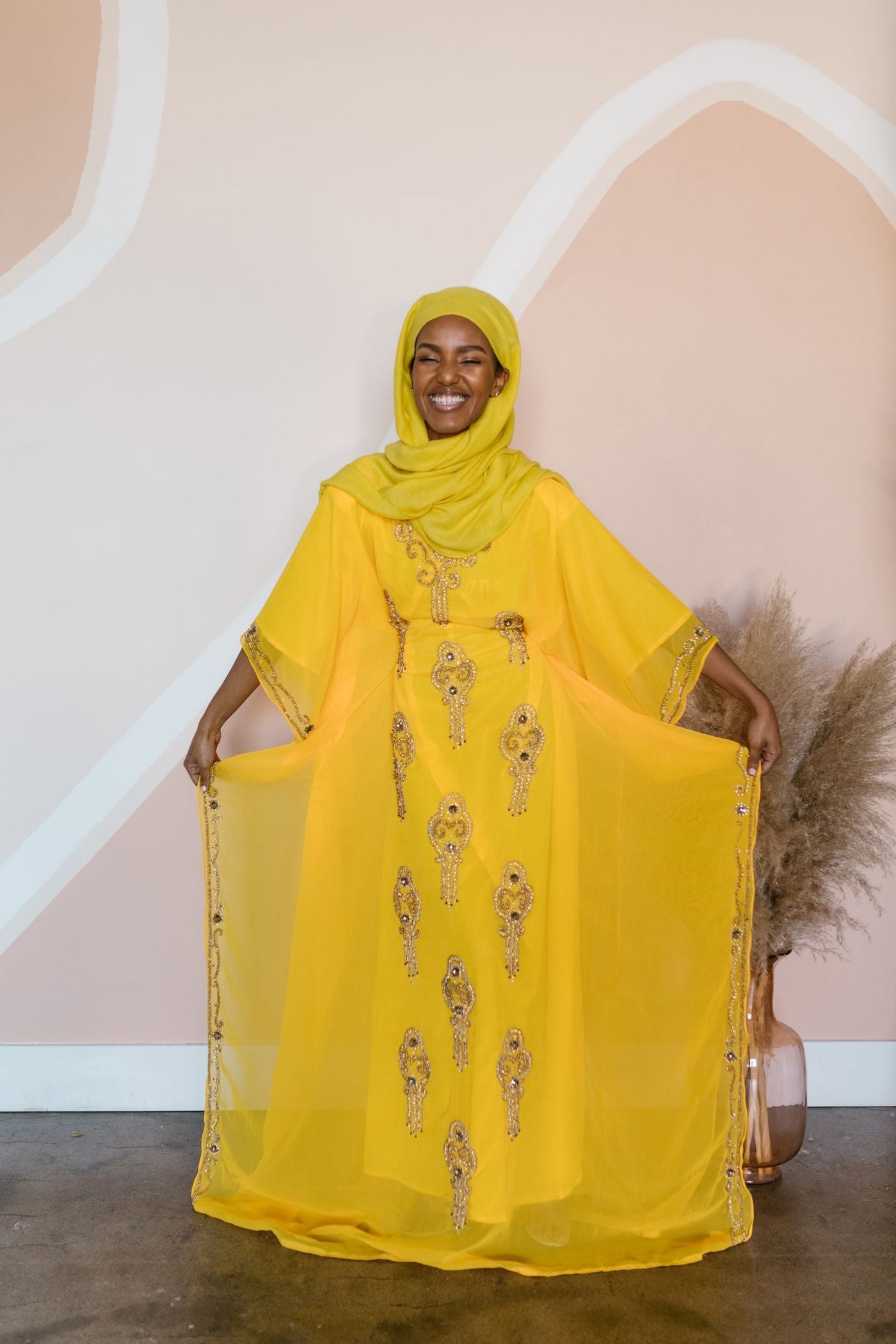
When Eid Feels Too Special for an Ordinary Dress: How to Choose Something Modest, Joyful and Truly You
Eid can make an ordinary dress feel suddenly too quiet. You may open the wardrobe and see clothes that work for errands, school runs, work, family lunches and ordinary weekends, yet none of them seem to hold the tenderness of takbir in the morning or the joy of seeing people you have missed. That feeling does not mean you need the most expensive outfit or the most decorated dress. It means the day matters to you, and you want what you wear to acknowledge that meaning without taking over the day.
The difficulty begins when celebration becomes pressure. A sister can spend weeks looking for modest Eid dresses, comparing colours, sleeves, fabrics and silhouettes, only to choose something that photographs beautifully but becomes tiring before the first visit is finished. A neckline shifts during salah, a satin skirt shows every crease, a narrow lining pulls at the knees, or a long hem catches on wet steps. The dress looked special, but it did not serve the day.
This guide begins with the actual shape of Eid rather than the loudest trend. We will consider prayer, greetings, travel, hosting, children, weather, photographs, rewear, body changes and budget. We will look at chiffon, satin, velvet, prints, colour, hijabs, shoes and accessories, but every styling choice will return to the same simple question: will this help you remain covered, comfortable and present?
The wider complete modest fashion guide explains everyday foundations of coverage, fabric and wardrobe building. This guide stays with Eid: how to choose celebration clothing that feels joyful, dignified and practical for a Muslim woman's real day. The goal is not an outfit that proves how much Eid means. The goal is one that lets you live the meaning of Eid with ease.
There is permission to wear a simple dress and make it special through intention, care and one beautiful detail. There is also permission to choose colour, embroidery or a flowing silhouette because celebration is part of the day. Modesty and joy are not enemies. Bismillah, let us build an outfit where they can sit together.
Begin with the actual shape of your Eid day
Write the day's movements
Will you attend Eid salah, walk from parking, visit several homes, host guests, care for children, travel by public transport or spend part of the day at work? Each answer changes the dress. A long train may suit a quiet indoor gathering and become difficult across grass, stairs and crowded doorways.
List the movements before choosing fabric or colour. Include prayer, sitting on the floor, carrying food, greeting relatives, changing shoes and getting in or out of cars. The right outfit is designed around this real sequence rather than one perfect photograph.
Choose the level of formality
An early prayer and family breakfast may call for soft crepe, an abaya or a simple set. An evening celebration may support satin, velvet or more embellishment. You can also change one layer, scarf or accessory rather than buying two full outfits.
The most useful question is not whether the dress is special enough in theory. It is whether it matches the Eid you are actually living this year, with your family, body, budget and responsibilities.
Before the dress, remember why Eid feels different
Let the outfit honour the day, not overtake it
Eid is not special because the dress is new. Eid is special because of what came before it: worship, patience, tired evenings, quiet du'as, family memories, forgiveness, food being prepared, children getting excited and the sound of takbir making the morning feel unlike any other morning. The outfit should recognise that feeling, not try to replace it.
That is why a beautiful dress can feel right when it helps you enter the day with ease, gratitude and confidence. It becomes a problem only when it starts demanding too much from you: too much money, too much adjustment, too much worry, too much comparison. A dress should help you enjoy Eid, not make you feel as though you have to perform it perfectly.
Choose joy without letting pressure dress you
There is nothing wrong with wanting colour, embroidery, soft fabric or a silhouette that feels more special than what you wear on an ordinary day. Joy belongs in Eid. Beauty belongs in Eid. But the best choice is usually the one that lets you breathe, pray, greet people, eat properly, sit comfortably and still feel like yourself when the day becomes busy.
When the intention is clear, shopping becomes calmer. You are not trying to prove that Eid matters through the most dramatic outfit. You are choosing something that helps you live the day with modesty, warmth and presence. That is where the dress begins to feel truly special.
How modest Eid dresses should support the whole day
Coverage must keep working
Good modest Eid dresses do more than cover while standing still. They keep working through greetings, salah, photographs, serving food, carrying children, walking outside and sitting for a long meal. A dress that only works in one fixed pose can turn the day into constant adjustment.
Check the neckline, sleeve opening, lining, back view and skirt width before deciding. The strongest dress is often the one you stop worrying about once you leave the house.
Joy should not depend on discomfort
A celebratory dress can have colour, flow, texture or embroidery, but it should not demand pain as proof of effort. If the waist digs in, the sleeve scratches, the scarf keeps slipping or the shoe makes every step careful, the outfit is taking too much attention from Eid.
Choose beauty that gives energy back to the day. When fabric, fit and coverage cooperate, you have more space for prayer, family and gratitude.
Modest dresses for Eid: choose by need, not by panic
Start with your non-negotiables
When sisters look for modest dresses for Eid, the first filter should be practical: secure neckline, long enough sleeves, opaque fabric, enough ease across the bust and hips, and a skirt or lining that allows salah. Those requirements are not boring. They are what allow the outfit to feel calm.
After that, choose the celebratory detail. It might be a soft print, a richer colour, a textured scarf, a sleeve shape, embroidery at the cuff or a polished shoe. One thoughtful detail can make the whole outfit feel intentional.
Avoid choosing from pressure
A dress chosen only because time is running out often brings regret. Leave room for delivery, trying on, returns and simple alterations. If that is not possible, use an outfit you already trust and refresh it with styling rather than accepting a bad fit.
Eid deserves care, but care does not always mean a new purchase. Sometimes the wisest choice is the garment you know will let you move freely and remain covered all day.
Eid dresses modest enough for salah and joyful enough for the day
Covered should still feel beautiful
An Eid dress can look modest on a hanger and still fail once the day begins. The real test is movement: raising your hands for salah, sitting with family, carrying food, greeting people at the door and walking outside when the weather is not behaving. The dress needs to stay covered through all of that, not only when the model is standing still.
This is where the search for Eid dresses modest in coverage becomes a very real concern, even when the words themselves sound plain. A sister is usually asking for something simple and sincere: a dress that feels special without making her tug at the neckline, hide a transparent sleeve or worry about the lining every time she sits down.
Let the garment prove itself in real life
Look for the small details that protect the day: a neckline that does not spread, sleeves that stay dependable, fabric that is opaque in daylight, a skirt that opens enough for steps and sujood, and a fit that does not turn a full Eid meal into discomfort. These are not small matters when the whole day is long, social and full of movement.
Once those checks are passed, beauty becomes easier to enjoy. You can choose the colour, embroidery, scarf and shoes with more confidence because the foundation is already safe. The outfit stops asking for constant correction and starts giving attention back to Eid.
Building a modest Eid outfit, not only choosing a dress
Think in layers
A modest Eid outfit includes more than the dress. It includes the underlayer, hijab, undercap, shoes, coat, bag, prayer garment if needed and any jewellery. One weak piece can disturb the whole outfit, especially on a long day.
Try everything together before Eid. A high collar may fight a thick scarf. A narrow coat may crush a full skirt. A slippery shoe may make you lift the hem repeatedly. The full outfit test reveals what a hanger cannot.
Make every piece serve the same purpose
If the dress is decorative, keep accessories quieter. If the dress is plain, let the scarf, brooch, shoe or bag add the occasion feeling. The aim is not to add everything you own. It is to create one calm, joyful direction.
When each piece has a job, the outfit feels polished without becoming heavy. That is often where modest styling looks most confident.
A Muslimah Eid dress should respect worship and celebration
Prayer is part of the design test
A Muslimah Eid dress should be judged with salah in mind. Raise the hands, move into ruku, kneel for sujood and sit. Watch the neckline, sleeve opening, back, skirt and lining. If the outfit makes prayer physically distracting, it needs adjustment.
This does not mean the dress has to look plain. It means the beauty should not come at the expense of worship. Celebration and devotion can sit in the same garment when the construction is thoughtful.
The day includes public and private moments
Eid may move from masjid to family home, from photographs to cooking, from a crowded doorway to a quiet moment of du'a. A dress that respects those changes will feel more useful than one designed only for one scene.
Choose a garment that lets you be a daughter, sister, mother, friend, host or guest without constantly managing fabric.
Long sleeve Eid dress checks that actually matter
Sleeve length is only the beginning
A long sleeve Eid dress can still expose the arm if the cuff is wide, the armhole is low or the fabric pulls upward when you reach. Lift both arms, hug someone, carry a bag and move into prayer. The sleeve should stay dependable through real movement.
Check whether the sleeve is lined, transparent, elasticated, flared, cuffed or slit. Chiffon and lace sleeves can look covered in product photos but reveal more in bright light or when bent at the elbow.
Comfort around the wrist and shoulder
Beautiful sleeves can become irritating if the cuff is too tight, the beadwork scratches or the shoulder seam sits in the wrong place. Eid includes long hours, so small discomfort can grow.
A good sleeve gives shape and elegance without requiring constant tugging. It should support modesty quietly, not make the wearer keep checking herself.
Modest Eid outfits for women are not one formula
Every sister's Eid asks something different
Modest Eid outfits for women can mean very different things depending on the sister wearing them. One woman may be walking to Eid salah with children, another may be hosting guests all afternoon, another may be visiting in-laws, studying, working, travelling by train or trying to enjoy the day gently after a difficult year. One fixed outfit formula cannot honour all of those lives.
That is why the best choice begins with the day in front of you. A soft co-ord may suit travel, an abaya may suit prayer and hosting, a satin dress may suit an evening meal, and a printed maxi may suit warm family gatherings. The point is not to copy the most polished image online. The point is to choose clothing that lets you take part in your own Eid.
Dress for participation, not only appearance
The outfit should let you sit on the floor, carry food, walk outside, remove shoes, hug relatives and pray without rearranging everything. If you feel nervous every time you move, the outfit is asking too much from you, even if it looks beautiful in a photograph.
When the answer to those practical questions is yes, the outfit is doing its work. It lets you be present instead of self-conscious. That is far more powerful than looking impressive for one still image and feeling restricted for the rest of the day.
Coverage should survive greeting, prayer and photographs
Test the neckline and sleeves
Raise both arms, reach forward and turn the head. A neckline that appears high can spread when the shoulders move. Sleeves should cover through greetings and prayer without becoming so wide that they expose the inner arm.
Use daylight and flash to check chiffon, lace and pale fabric. A dress may be opaque indoors and reveal the lining or body outline outside.
Check the back and side
Ask someone trusted to photograph the complete outfit from behind and while seated. Scarf tails move, bags pull tops upward and side openings widen. The dress should remain secure without relying on a perfect pose.
This is not about becoming anxious over every fold. It is about finding genuine problems before the day, then letting the outfit live once Eid arrives.
Test the outfit for salah
Raising the hands and ruku
Wear the intended hijab and underlayers. Raise the hands, move into ruku and check the neckline, back, sleeves and skirt. A low armhole can lift the entire dress even when the body is oversized.
Make sure jewellery, cuffs and wide sleeves do not interfere. The outfit should allow attention to remain on prayer rather than fabric.
Sujood and sitting
Kneel and sit. Narrow linings, tight knees and long hems become obvious. If using a separate prayer garment, practise putting it on over the Eid outfit so it does not crush the hijab or trap a full skirt.
If the dress needs a slip, leggings or an inner layer, test those pieces as part of the outfit. A missing underlayer on Eid morning can change the whole decision.
The right fabric depends on weather and activity
Breathability and weight
A fabric can look luxurious and still be wrong for a warm crowded home. Polyester satin, layered tulle and velvet trap heat. Lightweight crepe, cotton blends and georgette may feel easier, but opacity must be checked.
Consider travel and children. Delicate fabric that snags easily may keep you anxious around bags, jewellery and small hands. Practicality is not the opposite of beauty.
Recovery after sitting
Eid includes long meals and visits. Crush a small section of fabric in your hand and release it. Some wrinkles are natural, but a dress that collapses after one car journey may require more maintenance than you want.
If the fabric creases easily, decide whether that will bother you after prayer, breakfast or a drive. Sometimes a slightly less dramatic fabric gives a calmer day.
Chiffon and georgette for soft Eid movement
Soft movement
Chiffon creates graceful layers and works beautifully for spring or summer Eid. The outer layer does not provide coverage by itself. Check lining length, width and opacity, especially in sunlight.
Georgette has more texture and grip. It may feel less slippery and hide small creases better. Both fabrics need protection from rough jewellery and bag hardware.
Sleeve construction
Wide chiffon sleeves can reveal the arm. Use fitted inner sleeves or secure cuffs. Several transparent layers may still become see-through when stretched at the elbow and shoulder.
If the dress is pale, check the underlayer colour. A lining that is too short or too close to the skin can create an effect you did not intend.
Satin, shine and the temptation to over-style
Satin magnifies fit
Reflective fabric turns pull lines bright. A satin dress needs enough ease across the bust, upper arms, waist and hip. Take flash photographs while sitting and moving. Bias-cut satin may follow the body more closely than the hanger suggests.
A matte hijab often balances satin. If the dress already shines, keep the bag, shoes and jewellery controlled. One reflective surface can feel luxurious; several can compete.
Water and crease marks
Satin can show water, perfume and pressure. Plan steaming and storage. If the day includes cooking, children or outdoor travel, decide whether you can wear the fabric without fear.
If you will be hosting, eating with small children nearby or moving between homes, a less delicate finish may protect your peace.
Velvet, jacquard and richer winter fabrics
Velvet depth
Velvet brings richness without needing heavy embellishment. It suits cold-weather Eid but can become hot indoors. Wear it in a heated room for time. Check pressure marks and follow specialist care instructions.
A simple velvet silhouette often feels more refined than dense gathering and beadwork. Let the pile and colour create the occasion effect.
Jacquard structure
Jacquard holds shape and can turn a simple dress into something special through woven pattern. It may be stiff, so test sitting and prayer. Metallic threads should not scratch the neck, wrists or hijab.
Structured fabric can be elegant, but it must still move with the body. Eid is not spent standing like a display mannequin.
Choose colour for joy, not for permission
No shade is automatically too much or too little
Soft cream, dusty rose, sage, sky blue, plum, emerald, navy and black can all feel festive depending on fabric and styling. Choose the colour that brings life near your face and works with scarves you own.
Do not let a chart tell you that your undertone forbids a shade you love. Test the dress in daylight with several hijabs. Colour guidance is a tool, not a cage.
Think about rewear
A colour that works with two or three hijabs and an existing coat is easier to repeat. Rewear does not make Eid clothing ordinary. It allows the garment to carry more good memories.
If the shade only works with one new scarf, one new bag and one new shoe, the outfit may cost more than the dress label suggests.
Soft colours and pale dresses
Opacity first
Ivory, blush, mint, powder blue and pale lilac reveal lining differences and undergarment contrast. Hold the complete dress against a bright window. Check sleeves, back and the point where the lining ends.
A matching slip can improve coverage, but it should be breathable and wide enough for prayer. Nude lining may create an illusion effect that some sisters do not want.
Prevent the palette becoming flat
Add depth through texture or one slightly darker hijab. A mushroom scarf with blush, soft navy with powder blue or deeper sage with mint can create definition without harsh contrast.
Pale colours often need more careful styling because every shadow and layer shows. That care can be worthwhile when the final look feels soft and sincere.
Strong colours and jewel tones
Let one colour lead
Emerald, royal blue, burgundy and deep plum already carry visual energy. Pair them with calm hijabs such as cream, taupe, black, navy or soft grey. Metallic details should follow the dress hardware rather than being added everywhere.
Flash and sunlight intensify jewel tones. Test the outfit before the day so the colour shift feels expected.
Balance near the face
A deep dress with an equally dark scarf can look elegant but may need a lighter edge, undercap or jewellery detail. Judge the combination on your face, not only flat on the bed.
If the colour makes you feel confident but the scarf makes the face look tired, try a softer frame before rejecting the dress.
Prints for Eid
Choose scale for the garment
Small florals feel gentle and easy to repeat. Large prints create more drama and need careful placement at the bodice and seams. Check whether the pattern draws attention where you are comfortable and whether it remains balanced from the back.
A printed dress usually needs a plain hijab. Pull one quieter colour from the pattern rather than matching the brightest motif.
Pattern and modest fit
Busy print can hide tension lines in photographs, but it cannot correct a tight garment. Perform the same movement, opacity and seated tests. Construction remains the foundation.
Look at where the print lands when seated, not only when standing. A beautiful motif can sit differently once the skirt folds.
Hijab harmony starts with the dress neckline
Bring the scarf to the fitting
A high collar, bow, pleat or beadwork changes how the scarf sits. Test the actual hijab fabric and undercap. Magnets and pins should not damage delicate dress detail.
The neckline should remain covered if the scarf moves. Do not depend on a long front drape to hide a low or unstable opening.
Fabric relationship
A matte scarf steadies satin or velvet. A softly luminous scarf can lift a plain crepe dress. When both dress and hijab are heavily textured, the outfit may feel crowded near the face.
Your scarf is not an afterthought. On Eid it often frames the whole outfit, so it deserves the same movement and comfort test as the dress.
Tonal hijab styling
Create visible difference
A tonal look works when the scarf is clearly lighter, darker, warmer, cooler or differently textured. An almost-match may appear accidental under changing light. Photograph the fabrics together in daylight.
Use a neutral bag or shoe to create breathing space. The aim is harmony, not disappearing into one block of colour.
Tonal neutrals
Cream with ivory, taupe with camel and grey with silver can feel soft and refined. Check that pale tones do not become transparent and that warmer and cooler shades have a deliberate relationship.
If the outfit feels too flat, add texture before adding a new colour. Texture often gives modest Eid styling the quiet richness it needs.
Contrasting hijabs
Muted contrast
Dusty rose with green, soft gold with navy, plum with grey or teal with rust can bring joy without harshness. Let one colour dominate and repeat the contrast only once if desired.
Strong complementary combinations can look beautiful, but test them near the face. A colour that excites the dress may overpower the wearer.
Patterned scarves
A patterned hijab suits a plain dress when one print colour quietly repeats the garment. Fold the scarf to see which section frames the face. Secure slippery fabrics for a long day of movement.
If the dress is already printed, a patterned scarf needs restraint. Two patterns can work, but only when scale and colour are carefully controlled.
Shoes for prayer, visits and a long day
Comfort creates composure
Eid may involve standing, walking, driving and removing shoes repeatedly. Flats, loafers, trainers, low block heels and soft sandals can all look intentional. Choose grip, support and a height that keeps the hem safe.
Pain changes posture and makes the sister lift the dress more often. A beautiful shoe that prevents full participation does not serve the celebration.
Plan the shoe transition
If wearing special shoes for photographs and comfortable ones later, test the dress length with both. Carry a clean bag for the change and make sure the hem does not drag when the heel height drops.
Shoes should suit the places you will enter. Masjid, family homes, pavements, grass and public transport all ask for different kinds of practicality.
Bags, jewellery and the one-detail rule
Let one element carry the occasion
If the dress is embroidered, use a simple bag and jewellery. If the dress is plain, a textured clutch, brooch or polished shoe can add celebration. The one-detail rule prevents every accessory from competing.
Bag straps can pull a long top or crush a delicate sleeve. Wear the bag during the movement test and check the back view.
Jewellery and hijab
A necklace may disappear beneath the scarf or fight a decorated neckline. Bracelets can catch chiffon and lace. Choose after the full hijab shape is decided. Meaningful jewellery does not need to be visible in every photograph.
If earrings are part of your style, make sure the scarf still covers to your standard and does not become unstable because of the jewellery placement.
Fit should allow a full Eid meal and a full breath
Seated comfort
Sit for at least five minutes. Check the waist, bust, upper arms and hip. A dress that feels fine standing may become restrictive after breakfast or a long visit. Elastic should stretch without rolling or pressing.
Do not buy tightly in the hope that your body changes before Eid. Choose the body you have and let the garment serve it.
Skirt and lining width
Take a full step and sit on a low chair. The lining should allow the same movement as the outer layer. A flowing shell over a narrow underskirt is not a successful fit.
Check whether the dress pulls backward when walking. If it does, the issue may be hip room, lining width, fabric grip or the way layers have been cut.
Petite Eid dressing
Proportion beyond the hem
Petite sisters should check shoulder width, sleeve placement, waist seam, pocket height and where the skirt flares. Shortening only the hem may leave the dress visually and physically unbalanced.
Simple seams and lighter fabrics are easier to alter. Large motifs should be placed intentionally rather than cut awkwardly at the hem.
Volume is still allowed
A petite sister can wear a full skirt, kaftan or wide abaya when the shoulder and length are controlled. The goal is correct proportion, not making herself smaller.
Choose where the volume begins. When it starts from the right place, a generous silhouette can feel graceful rather than overwhelming.
Tall Eid dressing
Length in the correct places
Tall fit includes torso, sleeve, waist and skirt length. Sizing up may add width while leaving sleeves and bodice short. Ask for finished measurements and tall-specific options.
Check the dress with flat shoes as well as heels. A product photograph on a shorter model may suggest floor length that the garment does not provide.
Use the vertical line confidently
Long panels, capes and flowing sleeves can look beautiful on a tall frame. Choose movement and placement rather than trying to hide height.
If the hem is slightly short, decide whether it looks intentional with the shoe. A visible ankle gap can change the whole modesty standard for some sisters.
Plus-size Eid dressing
True grading
A larger number should include more upper-arm, shoulder, bust, hip and seated ease, not simply a wider outline. Ask for garment measurements and look for photographs on several bodies. A dark colour cannot correct poor pattern grading.
Structure can be elegant when it supports rather than compresses. A-line, panelled and softly gathered shapes often provide dependable movement.
Style is not camouflage
Plus-size sisters are not limited to black, tiny prints or shapeless layers. Choose colour and detail with joy. The practical standard is coverage, movement, breathability and personal recognition.
If a dress only feels acceptable because it hides you, keep looking. Eid clothing should make room for your body, not apologise for it.
Maternity and postpartum Eid
Changing length and balance
Pregnancy changes bust, ribcage, abdomen and front length. A dress may be wide enough but rise in front. Look for extra front fabric, flexible seams and a waist that does not press.
Postpartum bodies need softness, nursing access and patience. Choose the present body rather than a hoped-for timeline. Hidden zips or layered fronts should open and close securely while seated.
Temperature and fatigue
Pregnancy and recovery can change heat tolerance and energy. A lighter dress, flat shoe and simpler hijab may protect the day. Comfort is not a lesser form of celebration.
Plan a backup layer or scarf in case your first choice feels too heavy on the morning. Bodies can feel different from one day to the next.
Children's needs can shape a mother's outfit
Hands-free movement
A mother may carry a child, push a pram, prepare food and manage shoes. Secure cuffs, pockets, washable fabric and a stable hijab can matter more than delicate embellishment. Test crouching and lifting.
Beading and sequins may scratch small faces or catch fingers. A smooth dress can still feel special through colour and silhouette.
Allow for real marks
Food, perfume and little hands are part of family life. Choose a fabric you can enjoy rather than guarding it through every embrace. Celebration should not create distance.
A garment that accepts real family life may become more loved than the one you were afraid to touch.
Hosting in an Eid dress
Kitchen and serving safety
Wide sleeves, long trains and loose scarves need control around heat and food. Choose secure cuffs or change into a practical outer layer for preparation. The hem should clear steps and crowded rooms.
Pockets can be useful for a phone, tissues or keys, but heavy items distort delicate fabric. Test their placement.
Sitting after the work
A host deserves to enjoy the gathering. Choose a dress that remains comfortable after hours of movement and a meal. Breathable lining and a forgiving waist protect that transition.
If the outfit only works before guests arrive, it is not serving the whole day. Build in the moment when you finally sit down.
Family visits and travel
Cars and public transport
Full skirts and long hems behave differently in cars, buses and trains. Practise entering and sitting. Keep fabric away from doors and wheels. A crossbody bag leaves hands free but should not pull the dress upward.
Wrinkle-resistant crepe, soft knits and controlled layers often travel better than stiff or highly delicate fabrics.
Shoe removal
Choose shoes that can be removed gracefully at homes or the masjid. Long laces and difficult fastenings can become frustrating. Socks or foot coverage should suit your own standard and the dress length.
If you will visit several homes, simplicity becomes elegance. The less you fight with the outfit, the more relaxed you appear.
Eid in warm weather
Reduce layers through better fabric
Choose opaque breathable cloth so you do not need several corrective layers. Cotton blends, lightweight crepe, georgette and selected viscose fabrics can work. Test cling and transparency.
Light colours reflect heat but may reveal more. Dark colours can still be comfortable when the fabric is airy and the fit generous.
Hijab comfort
Use a breathable undercap and a scarf style that does not wrap too many layers around the neck. Secure it for prayer and travel without excessive pins.
A warm Eid can make heavy styling feel oppressive. Let fabric choice do more of the work so the outfit remains modest without becoming suffocating.
Eid in cold or wet weather
Outerwear is part of the outfit
Try the coat, abaya or cape over the dress. It should close without compressing the shoulders or trapping the skirt. Camel, black, navy, cream and grey can support many festive colours.
Wet hems become heavy. Leave safe ground clearance and choose shoes with grip. A beautiful indoor outfit needs an outdoor plan.
Thermal layers need room
Tights, leggings and base layers change the fit. Test them beneath the dress. Static and bunching can make fabric cling, so use compatible materials and enough ease.
If you need warmth, add it deliberately. Random emergency layers can alter length, transparency and silhouette in ways you did not expect.
Photographs without turning Eid into a performance
Use photographs to check, then stop checking
Before Eid, take daylight and flash images to identify transparency, gaping or an accidental colour clash. Correct genuine problems. On the day, allow fabric to move and faces to laugh. A fold is not a failure.
The most meaningful photograph may not be the most polished. It may show the family together after prayer or a child reaching for someone they love.
Comparison steals attention
Social media can make a calm outfit feel insufficient. Return to the choices made for your body, day and values. You were not dressing to defeat another sister's look.
A photograph should help you remember the day, not judge whether you performed it well enough.
Making a simple dress feel special
One intentional change
A beautiful hijab, brooch, loose belt where appropriate, polished shoe or meaningful jewellery can lift a simple dress. Fresh steaming, careful colour harmony and a good fit often create more elegance than extra decoration.
A plain dress can also support a special outer layer such as an embroidered open abaya or cape. Ensure the base remains secure and the layers move comfortably.
Ritual gives clothing meaning
Prepare the dress the night before, make du'a and dress without rushing. The care around the garment can make it feel special even when the design is familiar.
Sometimes ordinary clothing becomes Eid clothing because of the morning it enters: the takbir, the perfume, the greeting at the door and the intention you carry with it.
Rewearing a dress without making Eid feel ordinary
Change the supporting pieces
Wear the same dress with a different hijab, coat, shoe or jewellery direction. A satin scarf can formalise crepe; a jersey scarf can make it practical for another family event. Rewear reveals versatility.
Alter a removable belt, cuff detail or brooch rather than replacing the whole outfit. The garment can serve weddings, dinners and future Eids.
Memory adds value
A dress worn again can carry gratitude rather than boredom. You may remember the first Eid after a difficult year or the day a family member returned. Clothing becomes meaningful through life, not novelty alone.
When a garment serves you well, repeating it can be a sign of wisdom. The memory becomes part of the fabric.
Buying online before Eid
Order early enough for truth
Leave time for delivery, movement testing, return and alterations. A last-minute order can force you to accept poor sleeves or length because no alternative remains.
Check whether the size chart describes body or garment measurements. Request upper arm, shoulder, bust, hip, sleeve, length, lining and lower sweep. Model height is supporting evidence, not a substitute.
Read the return terms
Sale items, custom lengths and occasionwear may be non-returnable. Keep tags attached during the home test. Protect the garment from perfume, makeup and floor contact until the decision is final.
If you are between sizes, think about prayer, sitting and eating rather than only the standing photo. Eid requires more ease than a product page usually shows.
A practical Eid dress comparison table
Use the table as a decision aid
The table below is not a rulebook. It helps compare common Eid directions against real needs: fabric, movement, styling and care. Start with the row that resembles the dress you are considering, then test the garment on your own body.
| Dress direction | Strengths | What to check | Useful styling |
|---|---|---|---|
| Matte crepe A-line | Versatile, calm, repeatable, travels well | Fabric weight, sleeve ease, lining | Textured hijab, polished flat, simple jewellery |
| Chiffon layered dress | Soft movement, warm-weather elegance | Opacity, lining width, wide sleeves | Plain hijab, low-shine bag, secure cuff |
| Satin occasion dress | Luminous and formal | Pull lines, water marks, flash, body cling | Matte scarf, restrained accessories |
| Velvet or jacquard dress | Rich winter texture, needs little decoration | Heat, weight, seated movement, care | Simple hijab, one metal finish, boots or flats |
| Printed maxi dress | Joyful, easy colour palette, rewearable | Pattern placement, opacity, fit beneath print | Plain scarf drawn from a quiet print colour |
| Abaya or kaftan | Generous coverage, cultural and elegant options | Neckline, sleeve openings, belt dependence | Secure inner layer, simple shoe, coordinated hijab |
| Coordinated set | Flexible, practical for hosting and travel | Top length, trouser rise, side openings | Tonal scarf, clean trainers or loafers |
Shopping after the day has been understood
Use the checklist before the collection
Once the day's movements, fabric, fit and coverage standard are clear, browse current Amani's styles with those decisions beside you. Compare garments rather than allowing the newest image to rewrite the plan.
Look for pieces that work with existing hijabs, shoes and outerwear. A dress that requires a completely new supporting wardrobe may cost more time and money than the product price suggests.
Let usefulness rank highly
The strongest choice may be the dress that works for Eid, a wedding guest event, dinner and another celebration. Usefulness does not remove joy. It gives the garment a secure place in your life.
If two dresses both feel beautiful, choose the one that will serve more moments with less adjustment. That is often the more elegant decision.
The night-before preparation
Prepare the complete outfit
Steam or iron according to the label. Lay out the dress, underlayers, hijab, undercap, magnets, shoes, bag and outerwear. Check that every fastening works and that the hem is clean.
Pack a small fabric-safe stain cloth, spare pin or magnet, comfortable shoe option and any prayer garment. Preparation protects the morning from rushed decisions.
Protect sleep and worship
Do not sacrifice the whole night to outfit adjustments. Complete the practical work early, then allow room for rest, takbir and intention. The dress should not consume the spiritual beginning of Eid.
A calm morning often begins the evening before. Give the outfit its place, then let the heart return to the day itself.
The complete Eid movement test
Upper body
Raise the arms, embrace someone, carry a bag, turn the head and put on the coat. Watch neckline, back, sleeves and scarf. Sit for two minutes and notice pressure.
If something shifts, decide whether it needs a pin, a different underlayer, a new scarf style or a different garment. Do not leave the problem unnamed until the morning.
Lower body
Take long steps, use stairs, sit low, kneel and stand. Check the lining, side openings and hem. Practise prayer. If the outfit passes, stop searching for imaginary flaws. If it fails, name the garment problem and choose a solution.
The movement test is not meant to make you anxious. It is meant to give permission to stop worrying once the outfit has honestly passed.
When Eid includes work, school or a public commute
Build celebration into practical clothing
Some sisters cannot spend the whole day at home or in family gatherings. A polished work dress, colourful hijab or beautiful brooch can acknowledge Eid without becoming impractical for a uniform, classroom or commute.
Choose wrinkle resistance, secure layers and shoes that manage public transport. Carry a small change of accessory for an evening gathering if helpful.
Do not measure the day by other people's schedules
Work or study does not make your Eid less sincere. Protect prayer where possible, share food or greetings and choose clothing that supports the obligations in front of you.
A modest outfit that helps you move through public spaces calmly can still honour Eid beautifully.
Choosing Eid clothing for older women and changing mobility
Ease of dressing
Front openings, soft elastic, manageable buttons and lighter fabric can help sisters with arthritis, limited shoulder movement or fatigue. A beautiful outfit should not require painful dressing assistance.
Hem safety and shoe grip are essential. Full skirts can remain elegant when their weight and width are controlled.
Respect personal style
Older women are not limited to dull colours or shapeless garments. Ask what she enjoys and adapt fastenings, sleeve room or length around that preference. Practical support should not erase identity.
The best Eid clothing helps a woman feel recognised, not managed.
A beautiful Eid outfit on a careful budget
Begin with what already works
A trusted dress can become Eid-ready through a different hijab, borrowed bag, polished shoes or simple alteration. Cleaning, steaming and thoughtful colour can transform a familiar garment.
Set a full-outfit budget rather than focusing only on the dress. Delivery, alterations and accessories can quietly double the cost.
Choose quality where it matters
Prioritise fit, opacity, fabric and construction over decorative extras. A well-made plain dress can serve for years. Cheap embellishment on poor fabric may look tired after one wear.
A careful budget can produce a more graceful outfit than rushed spending. Clarity protects both style and peace.
Tailoring and last-minute alterations before Eid
Good alteration candidates
Hems, cuffs, small neckline inserts, button placement and modest side-opening adjustments can often be completed safely. Bring shoes, underlayers and hijab to the fitting.
Major shoulder, armhole or bodice reconstruction needs time. Do not expect a tailor to rebuild a garment the night before Eid.
Keep a backup outfit
A trusted dress removes pressure when alterations run late or a delivery fails. The backup does not need to feel second best. It is the outfit that protects the day from panic.
If the new dress works, beautiful. If it does not, you still have a dignified plan.
Borrowing, swapping and wearing pre-loved Eid dresses
Shared clothing can carry generosity
A sister's dress may become new to you through a different scarf and styling. Check fit, care and any alterations. Agree on cleaning and return expectations before wearing it.
Pre-loved clothing can reduce spending and waste while allowing beautiful fabric to be used again. Inspect zips, seams, underarms and hems carefully.
Remove comparison from the exchange
Bodies fit garments differently. A borrowed dress that does not work is not a judgement on either sister. Return it kindly and choose another option without commentary about size.
Clothing shared with adab can become part of Eid generosity instead of pressure.
Cultural dress, family heritage and your own modesty needs
Honour meaning, not pressure
Kaftans, shalwar kameez, boubous, jalabiyas, abayas and regional dresses can carry family memory. Check neckline, sleeve, lining and movement while preserving the details that matter.
A tailor can add an inner panel, lengthen a sleeve or adjust a belt so the garment supports your standard. Culture and modesty can be in conversation rather than conflict.
Allow your own expression
You may wear a traditional garment, a simple maxi dress or a mix of both. Eid clothing does not need to prove cultural loyalty through discomfort. Choose with gratitude and honesty.
A garment can honour family while still honouring the woman wearing it.
When an abaya, kaftan or coordinated set feels more like you
A dress is not the only celebration shape
Some sisters feel most themselves in an embroidered abaya, flowing kaftan or long tunic and trouser set. These options can provide easier prayer, hosting and travel. Judge them with the same neckline, sleeve and movement standards.
Belts should be optional when they change the modest silhouette. Open garments need secure inner pieces. Wide trousers require enough rise and opacity.
Choose recognition over expectation
The right Eid outfit is the one that feels like you on a joyful day, not the garment most commonly shown in advertisements. Personal recognition creates confidence that styling tricks cannot manufacture.
If a co-ord, abaya or kaftan lets you move with more ease than a dress, let that be enough.
Sensory comfort and invisible needs on a long Eid day
Seams, tags and texture
Some sisters are sensitive to scratchy lace, tight collars, perfume, static or heavy headwear. Remove labels, line rough seams and choose a scarf pressure that remains comfortable. Sensory needs are real even when others cannot see them.
Wear the outfit for time before Eid. A small irritation can become overwhelming across prayer, travel and several visits.
Quiet adjustments
Build in breaks, a lighter scarf or a change of shoe. Choose a bag with water or necessary medication. Celebration should make room for the whole person.
An outfit that respects invisible needs is not less beautiful. It is more honest.
After Eid: cleaning, storing and remembering the dress well
Treat marks early
Follow the care label. Blot stains rather than rubbing delicate satin, chiffon or velvet. Air the garment and clean it before long storage, especially if perfume, food or outdoor moisture touched the fabric.
Use a padded hanger for structured shoulders and fold heavy knits or beadwork when hanging would stretch them. Protect from sunlight.
Record useful lessons
Note what worked: the sleeve width, shoe height, scarf fabric or coat. Also record what you would change. These observations make the next Eid search calmer and more accurate.
A few honest notes can save hours of uncertainty next time.
Sadaqah, gratitude and making space in the wardrobe
Let celebration create generosity
Eid is a natural moment to notice what the wardrobe contains. Pass on clean, useful garments that no longer serve you, following local charity guidance. Give with dignity, not as a way to dispose of damaged clothing.
A new purchase can be accompanied by gratitude and responsible care. The point is not a rigid one-in-one-out rule, but awareness of abundance and usefulness.
Keep the garment without guilt when it serves
Generosity does not require discarding everything special. A well-used Eid dress can remain for future occasions. Stewardship includes wearing, caring for and appreciating what you own.
When gratitude leads the wardrobe, both buying and giving become softer.
Frequently asked questions
What makes a dress suitable for Eid?
It should meet your coverage standard, allow prayer and the day's movement, suit the weather and feel joyful without becoming exhausting. The right level of formality depends on your actual Eid schedule, not on someone else's photographs.
How do I choose modest Eid dresses online?
Check finished bust, shoulder, upper arm, hip, sleeve, length, lining and lower sweep measurements. Read return terms, order early and test the complete outfit through sitting, walking, prayer, daylight and flash photographs.
Are modest dresses for Eid always heavily embellished?
No. A simple dress can feel special through fit, fabric, colour, steaming, a beautiful hijab or one meaningful accessory. Heavy embellishment is only useful when it still allows comfort, coverage and movement.
How do I choose Eid dresses with modest coverage?
Choose by movement, not only appearance. Check the neckline, sleeves, opacity, lining, skirt width and seated comfort. The dress should feel joyful while still supporting salah, greetings, travel and family visits.
What makes a complete modest Eid outfit?
A complete modest Eid outfit includes the dress or set, underlayers, hijab, undercap, shoes, bag, outerwear and prayer plan. Test every piece together because one unstable layer can affect the whole look.
What should a Muslimah Eid dress allow?
A Muslimah Eid dress should allow salah, greetings, seated meals, walking, family visits and photographs without constant adjustment. It can be colourful or elegant, but it should not distract from worship or presence.
What should I check in a long sleeve Eid dress?
Check cuff width, sleeve lining, armhole height, transparency, shoulder placement and what happens when you raise the arms. Long sleeves only serve modesty when they remain secure during real movement.
Which fabrics are best for Eid?
There is no single best fabric. Crepe is versatile, chiffon is soft, satin is formal, velvet suits cold weather and jacquard adds structure. Choose according to climate, opacity, movement, care and how long the day will be.
What hijab should I wear with an Eid dress?
Start with the dress neckline and fabric. Use matte scarves with reflective dresses, soft sheen with plain crepe, or a clearly tonal or muted contrasting colour. Test the combination near your face in daylight.
What shoes work best for Eid?
Choose shoes that support prayer, walking, visits and repeated removal. Flats, loafers, trainers, sandals and low block heels can all look intentional. Test the hem with the actual shoe height.
How can plus-size sisters choose an Eid dress?
Look for true grading at the shoulder, upper arm, bust, hip, waist, lining and length, then test seated comfort and prayer movement. Colour and style are personal; the garment should provide room without erasing shape.
Do I need to buy a new dress for Eid?
No. A clean trusted garment can feel special through thoughtful styling, intention and care. Buy new when it is useful and affordable, not because celebration requires proving itself through consumption.
A final word when Eid feels too special for ordinary clothes
The feeling that an ordinary dress is not enough often comes from love for the day, not vanity. You want the outside to acknowledge what the heart is celebrating. Honour that feeling, but do not let it convince you that joy must be expensive, elaborate or uncomfortable. A dress becomes Eid clothing because it accompanies prayer, gratitude, family and the small moments that make the day recognisable.
Choose coverage that survives movement, fabric that suits the weather and a silhouette that lets you breathe after breakfast and sit beside the people you love. Add colour, embroidery or shine where it genuinely brings joy. Remove the details that create anxiety. The strongest modest Eid dresses do not demand constant attention; they give attention back to the day.
When you stand ready to leave for salah or open the door to family, may the outfit feel like a gentle yes: yes to celebration, yes to modesty, yes to being fully present. Whether the dress is new, borrowed, repeated or simple, let it serve the meaning rather than compete with it. Eid is already special. Your clothing only needs to help you live that truth with comfort, gratitude and joy.