Finding a hijab that works with your abaya
Two pieces can be lovely separately and still feel awkward together. The scarf may hide the abaya’s neckline, the colours may almost match without quite agreeing, or both fabrics may have so much texture that neither stands out. Usually, the solution is not a more complicated wrap. It is deciding what relationship you want between the two garments.
Start with the abaya on, including any inner layer. Hold a few scarves beside it before wrapping one. Then test the most promising option in the arrangement you normally wear. Colour, drape and coverage need to work at the same time; a flat-lay match is only the first step.
Choose between continuity and contrast
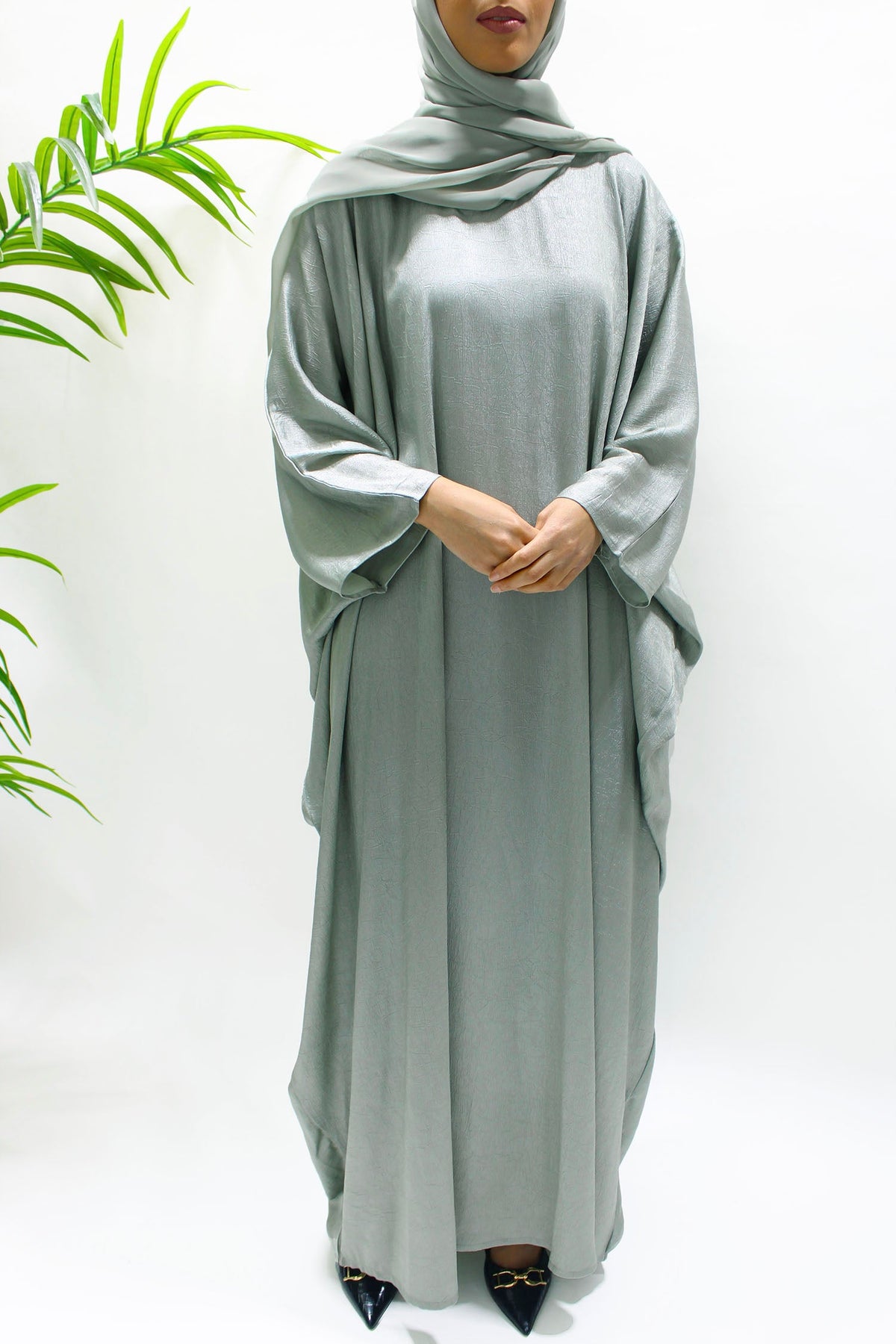
A scarf in a related shade can make the outfit feel continuous. This is useful when you want the abaya’s cut or detail to be the main feature. The fabrics do not have to be identical, but compare them closely around the neckline, where a slight difference will be most noticeable.
A contrasting scarf gives the upper part of the outfit a clearer boundary. That can work with a plain abaya or with a garment whose colour you would like to set off more distinctly. The contrast may be light against dark, warm against cool, or simply one familiar colour beside another you enjoy.
Neither approach is automatically more elegant. Try both before deciding. A combination that looks strong in a photograph may feel more pronounced than you want in everyday wear, while a low-contrast arrangement may be exactly the quiet effect you prefer.
Compare the actual shades, not just their names
Descriptions such as beige, navy, pink and ivory cover a wide range of appearances. Put the scarf and abaya beside each other in natural light where possible. Look at whether one seems warmer, cooler, greyer or brighter than you expected.
Pay particular attention to near matches. Two dark blues may be attractive together if they are clearly different, but an almost identical pairing can feel accidental to you. Moving farther apart in shade is sometimes easier than searching for a perfect duplicate.
Texture changes the comparison. A smooth, reflective scarf and a matte abaya may look different even when their underlying colours are close. Assess the result as worn, not as a colour-matching exercise that must produce an exact answer.
Use a print as a source of options
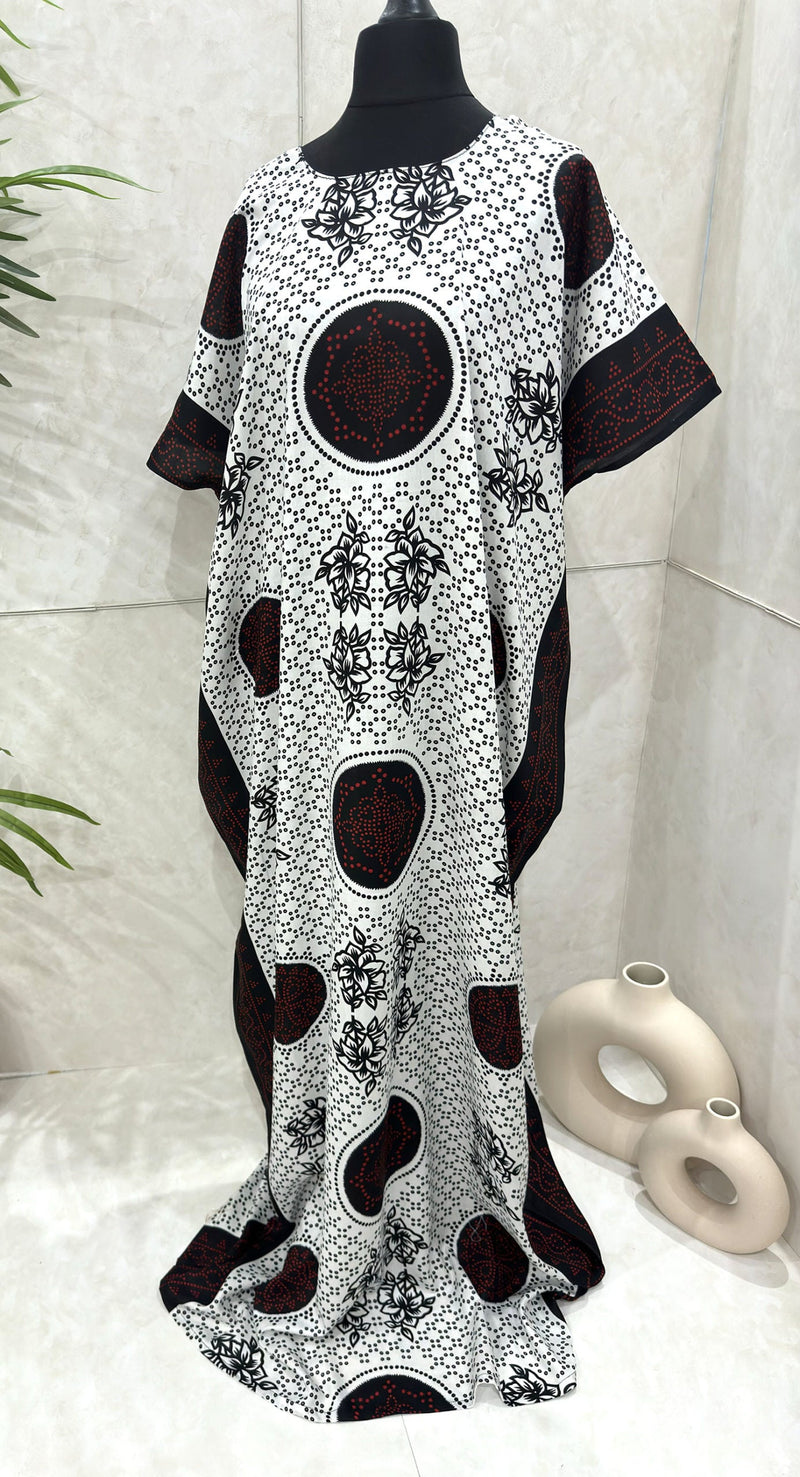
With a printed abaya, choose a small colour from the pattern and try it in a plain scarf. You do not have to select the most obvious shade. A quieter background colour can connect the outfit while allowing the print to remain readable.
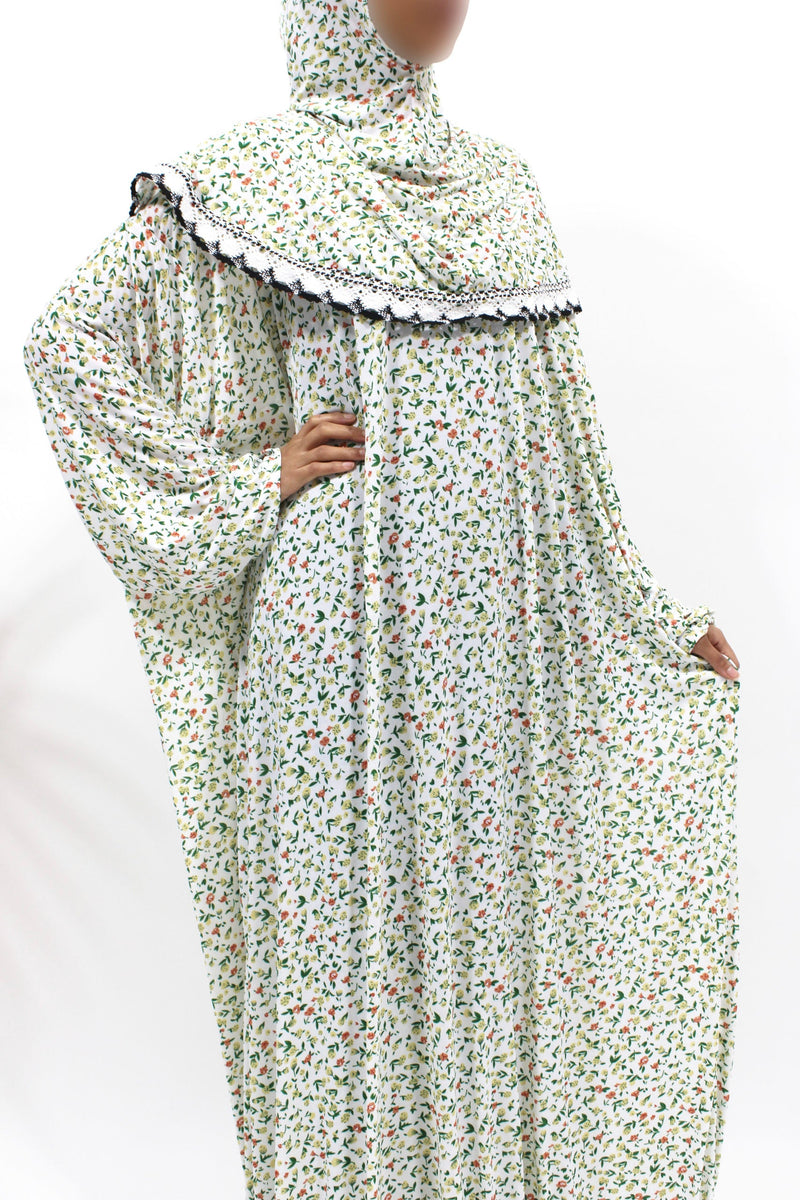
With a plain abaya, a printed hijab can provide the main detail. Check the scale of the pattern around the face and shoulders. A large motif may appear very different once folded, and the section visible in the final wrap may not include the colour you intended to repeat.
Try arranging the scarf in more than one orientation. Sometimes a simple turn brings a useful colour to the front and makes the outfit feel more coherent. This is a styling adjustment, not a reason to keep buying another scarf with almost the same print.
For combinations involving a patterned outer garment, the guide to styling printed abayas without competing details gives a fuller approach to scale and visual balance.
Let one surface be quieter
When the abaya has strong texture, pronounced pleats or dense embroidery, start with a scarf whose surface is relatively simple. This makes it easier to judge the garment’s detail and avoids adding another physical layer of bulk near the neckline.
A plain abaya gives you more room to experiment with scarf texture. A subtle rib, a soft sheen or a small woven effect can add interest without a bold print. Keep the choice connected to how the scarf drapes and stays in place, not only how it looks in your hand.
Matching two lustrous fabrics can work, but compare them under the light in which you will wear the outfit. One may reflect far more strongly than the other. The goal is an effect you enjoy, not a rule that every fabric surface must match.
Choose the scarf material for the way you wear it
Fabric categories are not strict dress codes. A comfortable cotton-containing scarf is not automatically wrong for an occasion, and a jersey scarf is not confined to days when appearance does not matter. The finish, colour, arrangement and complete outfit all contribute.
Likewise, do not assume that every viscose scarf slips, every chiffon scarf requires the same undercap or every satin surface behaves identically. Check the actual scarf’s weight, transparency, grip and flexibility. Fibre composition and fabric construction are different pieces of information.
Try the scarf with the underlayer you use, if any. Assess whether the combination feels secure without excessive tension and whether it provides the coverage you intend. Adding more layers to solve slipping can create another problem if the opening or wrap is unsuitable.
Our guide to hijab fabrics explains the main distinctions. For matching an abaya, the useful choice is the fabric that produces the required line comfortably in your own arrangement.
Read the neckline before deciding on the drape
A high or structured neckline may leave less space for several scarf folds. A decorative collar may be something you want to show, but it can also create contact points that catch the fabric. Put the scarf on with the garment fastened as intended.
A lower neckline needs a deliberate coverage plan. Do not rely on a loose end remaining in precisely the same position through the day. Turn your head, reach and lean forward to see whether the arrangement still works from the sides and back.
With an open abaya, include the inner garment’s neckline in the assessment. The scarf should work with both layers. A long front drape may hide the outer border or create a thick area where the two fronts meet; a different arrangement may let the design sit more naturally.
Use proportion without turning it into a body rule
A very full abaya and a large scarf arrangement can create more volume around the upper body than you want. Try a more controlled drape and compare. Conversely, a simple straight garment may leave room for a longer scarf line that you enjoy.
These are choices about the garments, not instructions to correct a face or body shape. You do not need to hide particular features or manufacture a different outline. Decide how much fabric you like around the face, neck and shoulders, then check that the result remains usable.
Look at the outfit from a conversational distance. Close-up photographs can make small scarf folds seem more important than they are in the full silhouette. A little distance often makes it easier to see whether the two pieces belong together.
Four combinations to test with pieces you already own
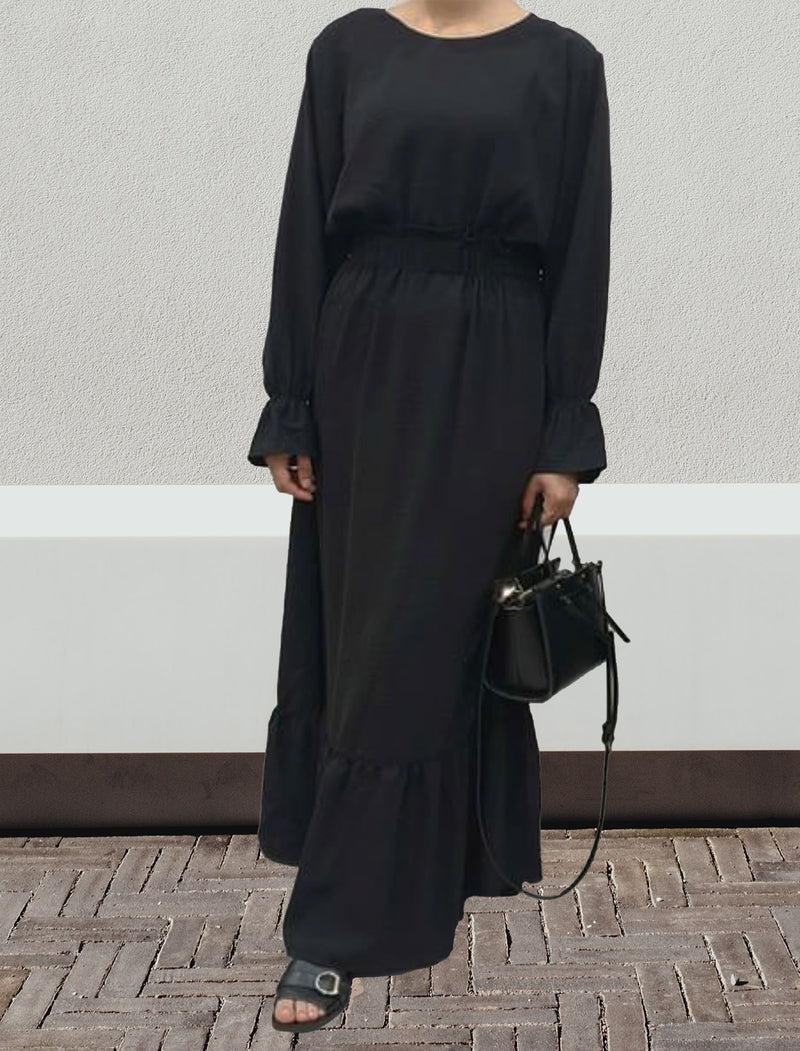
For a dark plain abaya, compare a light neutral scarf with a deeper related shade. The first gives a clearer contrast near the face; the second produces a more continuous effect. Keep the bag and shoes unchanged while comparing so that you can see what the scarf alone is doing.
For a pale abaya, try a scarf that is slightly deeper rather than exactly matching. This can give definition without introducing a new colour family. Check the combination in daylight, particularly when one fabric has a warmer cast.
For an embroidered abaya, take a small colour from the threadwork into a plain hijab. Arrange the scarf so it does not conceal or catch the area you chose the garment for. You may find that little additional jewellery is needed.
For a patterned scarf and a plain abaya, let the scarf be the main detail. Use a quieter bag and consider repeating one small shade elsewhere only if it improves the outfit. Repetition can connect the pieces, but it does not need to appear at every point.
Check the day’s conditions as a complete outfit
Consider the total number of layers around the head, neck and body. A light scarf may still feel different beneath a close coat collar or alongside a high neckline. A warm outer layer changes the arrangement again.
For a windy journey, see whether long ends can be managed without pulling the face opening. For a desk or meal, check that the drape does not repeatedly fall into your working space. Those practical details are part of matching because they determine whether the pieces can be worn together comfortably.
A fabric name alone cannot promise comfort in every season. Use the actual weight, construction and layers to guide the decision, and keep an alternative arrangement available when conditions change.
Keep accessories subordinate to the pairing
Once the scarf and abaya work together, add the bag, shoes and any jewellery. Check whether they support the colour relationship or create a new competing focus. There is no requirement to use a brooch just because the outfit is plain.
Fastenings should suit the material and the way the garment is designed. Avoid putting a heavy decorative piece on a fine scarf without assessing the support. Check rough edges near sleeves and shoulders, especially when the abaya has embroidery or a delicate surface.
Remove anything that makes the outfit harder to wear without adding something you value. A successful combination can be quite spare.
When an almost-matching scarf feels wrong
Sometimes a scarf seems close to the abaya in colour but never looks quite settled beside it. Instead of buying another near-match immediately, decide what is causing the hesitation. Is one fabric much shinier? Does the scarf have a warmer cast? Is a wide area of one colour competing with a narrow edge of another? These are separate questions, and changing the arrangement may be enough.
Try showing less of the scarf across the front while maintaining your chosen coverage. Then try a fuller drape. The same two shades can feel quite different when their proportions change. Keep the shoes and bag unchanged during this comparison so you are judging the pairing rather than several simultaneous adjustments.
If the close match still looks accidental to you, use a clearer contrast from your existing wardrobe. A cream scarf beside a deep blue abaya makes a different statement from two almost-identical blues; it does not pretend to be a matching set. Alternatively, repeat a small colour from embroidery or a printed border.
There is no requirement to rescue every possible pairing. Keep the scarf for an outfit where you enjoy it and use another for this abaya. A useful wardrobe allows pieces to have different partners rather than demanding that everything match everything else.
Keep a record of the pairings that last
After a full wear, note whether the scarf stayed comfortable and whether the colours still felt right in different light. A combination that worked for an hour indoors may need a small adjustment for a long journey or an outer coat.
Photograph dependable pairings and keep the notes simple: which scarf, which wrap, which inner layer. This creates a useful personal reference rather than a collection of rules borrowed from other people’s wardrobes.
Matching a hijab with an abaya is ultimately a process of comparison and testing. When colour, surface, neckline and movement agree, the outfit does not need to announce how carefully it was planned.