What to check before buying Islamic clothing online
Online shopping gives you time to look closely at an outfit without a fitting-room queue or a journey between shops. It also removes something useful: the chance to touch the fabric and see how it moves before paying. A good shopping process makes the most of the first advantage while taking the second limitation seriously.
For Islamic clothing, the most productive starting point is not a search for the “best” garment. It is a clear description of what you need it to do. An everyday abaya for a long commute, a separate prayer dress and an outfit for a family celebration may all belong in the same wardrobe, but they do not need the same fabric, cut or level of detail.
Write a short brief before opening more tabs
Choose the occasion, the coverage you want and the pieces you already own that must work with the purchase. Add any practical requirements: accessible fastenings, room over another outfit, manageable sleeves or a length that works with flat shoes. This gives you a way to reject unsuitable options even when the photographs are appealing.
Keep the brief realistic. A single garment may not be your ideal choice for a very warm journey, a formal evening and a heavy winter layer. Decide which use matters most. A purchase that does one regular job well is often more useful than an ambitious compromise that stays in the wardrobe.
It helps to set a complete-outfit budget rather than looking only at the headline price. A transparent outer layer may need an underdress; a set may not include the scarf shown in the photograph. Consider those additions before deciding which option is actually affordable for you.
Understand what the garment name does—and does not—tell you
Names are helpful starting points, but retailers do not always use them in exactly the same way. An “open abaya” might be sold alone or with an inner garment. A “jilbab set” can have different top and lower-piece arrangements. A “prayer dress” may have an attached covering, a separate scarf or another construction.
Read the list of included pieces and inspect the photographs of each component. Do not count a belt, scarf, brooch or underdress as included unless the listing says so. When a term is unfamiliar, ask about the physical garment rather than trying to infer everything from the name.
Our explanation of different forms of modest clothing and covering is useful background. The final decision still belongs at product level, where measurements, fabric and construction can be checked.
Make measurements comparable
Use the seller’s stated measuring method. A body circumference, a garment circumference and a flat width are not the same measurement. If a chart gives a flat chest width, ask for clarification before treating it as the full measurement around the garment. Likewise, do not assume that a size label transfers unchanged between unrelated ranges.
For length, establish the starting point. Shoulder-to-hem and head-to-hem measurements will produce very different results. Compare the listing with a garment you already know fits well, measured along the same route. Note the shoes and layers you expect to wear, because they influence how the finished outfit works.
Check more than the largest body measurement. Shoulder room, upper-arm space, cuff opening and the position of a waist seam can determine whether a loose-looking garment feels comfortable. A full skirt cannot compensate for a restrictive sleeve.
Amani’s numbered abaya lengths use inches measured from shoulder to feet, not full standing height. Use the information for the particular item alongside that convention. The complete abaya guide provides more context for comparing cuts and proportions.
Read photographs as evidence, not a promise
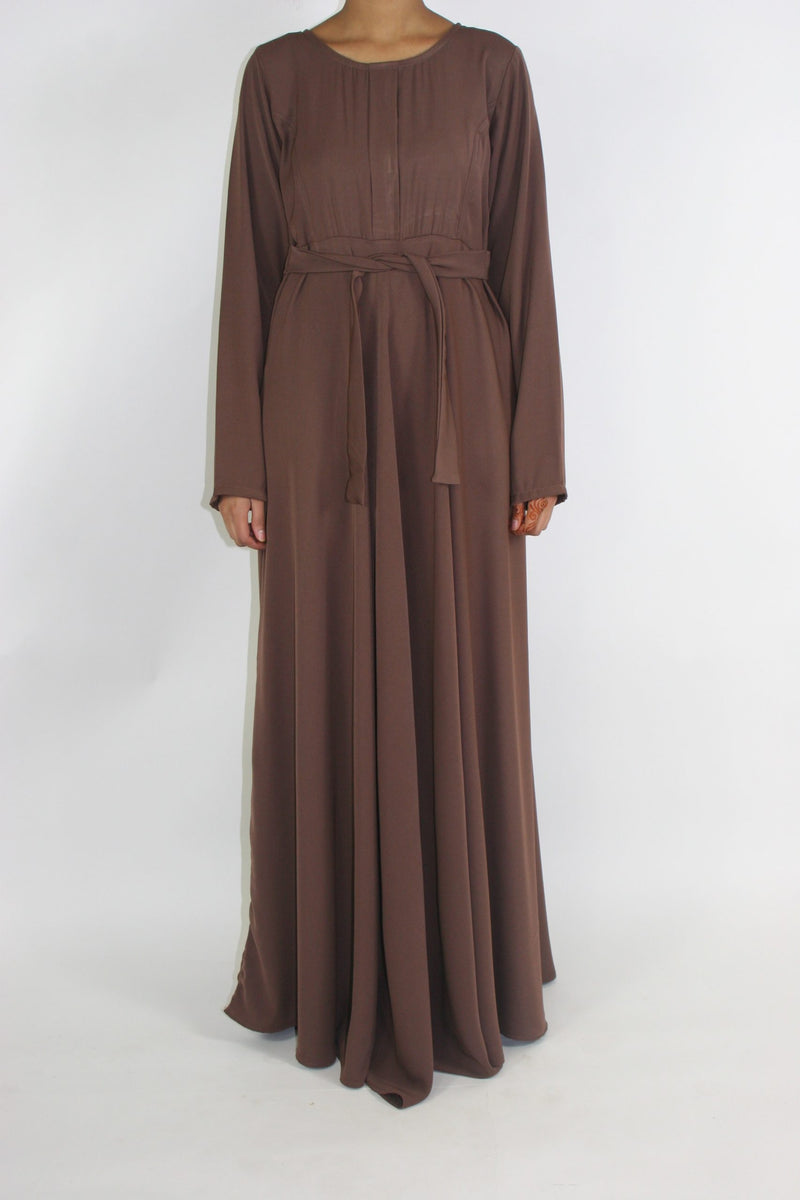
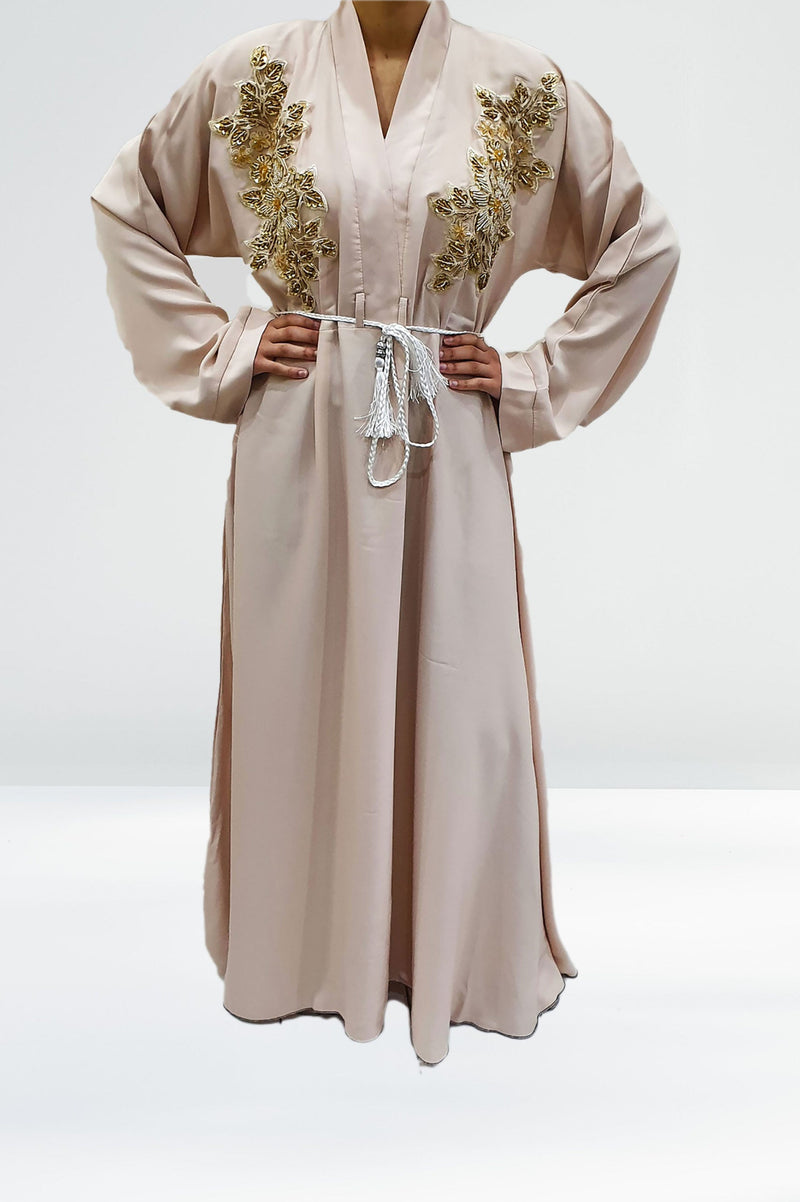
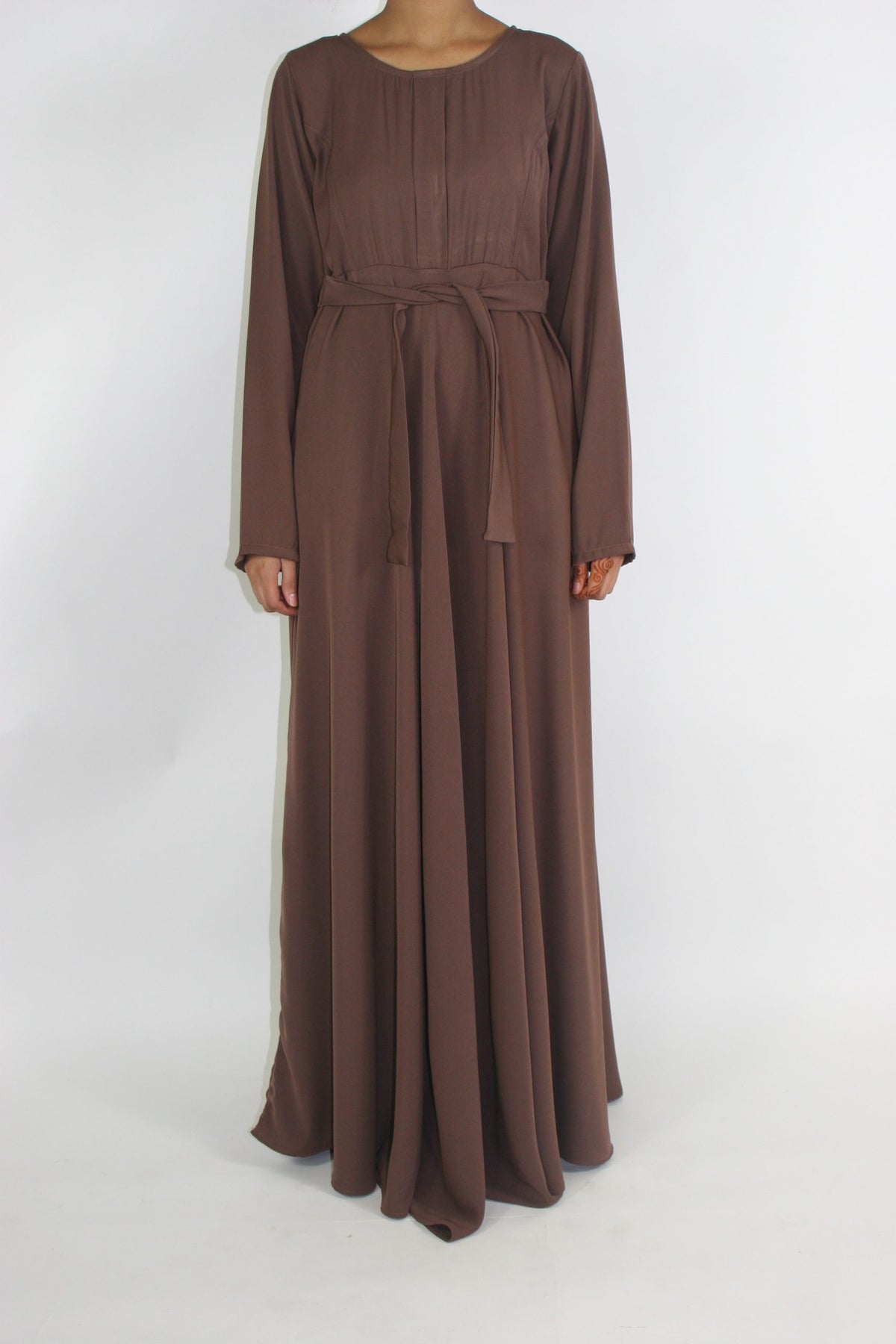
Look for front, side and back views, then examine the details that matter to your brief. Can you see the cuff clearly? Is the front fastened in every image? Does a hand or accessory conceal a seam, pocket or opening? A beautiful photograph is not automatically a complete explanation of the garment.
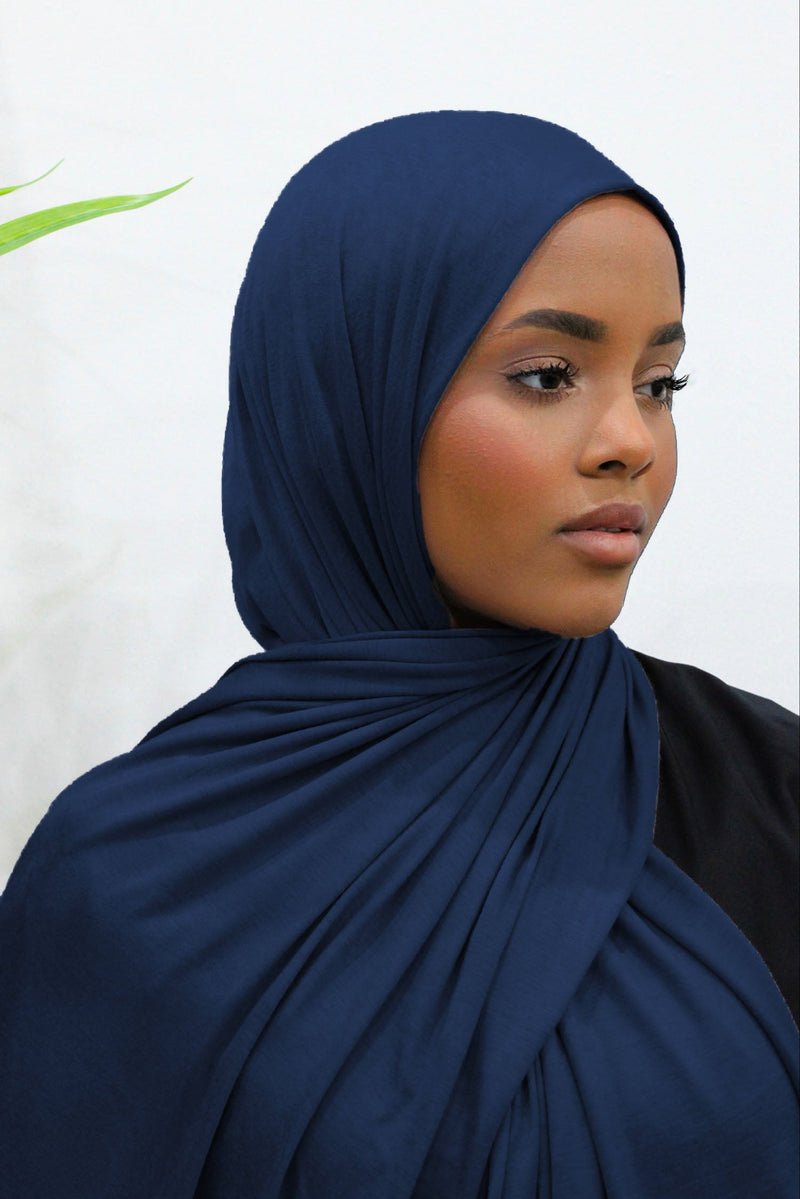
Try to separate the garment from the styling. A belt may create the shape you like, while the unbelted dress falls quite differently. A carefully arranged scarf may cover a neckline you would otherwise want to inspect. Check whether the model’s pose is doing work that the garment itself will not do when you stand naturally.
Colour is another reason to look at several images. Screens and lighting can affect how a shade appears. Ask for a clearer description or additional detail when the distinction matters, especially if you are matching an existing scarf or buying several coordinated pieces.
Ask questions that can be answered precisely
A useful message identifies the product and the missing information. “Could you confirm the sleeve length and whether the cuff opens?” is easier to answer than “Will this fit me?” “Does the price include the underdress shown?” resolves a specific uncertainty without requiring the seller to guess your expectations.
For fabric, ask for composition and lining details rather than a general assurance that it is good quality. For an occasion purchase, ask about the relevant dispatch information and check the delivery terms for your destination. Keep the response with your order information so that you can refer to it later.
Good communication does not mean a retailer can promise a perfect fit remotely. What matters is whether the answer is clear, relevant and consistent with the listing. If an important detail remains uncertain, pause that option rather than filling the gap with optimism.
Keep the shortlist small enough to compare properly
Three well-understood options are easier to assess than thirty open tabs. Compare them against the same brief: included pieces, measurements, fabric information, care requirements, total cost and any unresolved questions. You do not need a complicated scoring system; a few written notes can prevent repeated browsing of the same unsuitable items.
Reviews can help identify questions worth asking, but treat them in context. Another person’s height, fit preference and use may differ from yours. A complaint that a garment is very loose may describe exactly what someone else likes. Look for concrete observations rather than assuming that enthusiasm or disappointment transfers directly to your circumstances.
Community outfit ideas can be inspiring without becoming shopping instructions. You can borrow a colour combination or layering idea while choosing a different cut that suits your own needs. There is no requirement to recreate every item in somebody else’s photograph.
Check the practical terms before ordering
Read the current delivery, return and exchange information for the actual seller and destination. Look for the steps you would need to follow if the garment is unsuitable, including how to contact the retailer and any conditions attached to trying it on. Do not assume that every online purchase has an identical process.
For international shopping, establish which costs are included and which might be charged separately. When timing matters, leave room for a fitting assessment rather than planning to open the parcel immediately before an event. A stated dispatch date and an arrival date are different things.
Keep order confirmations and the product details you relied on. Use the retailer’s normal checkout and contact channels, and be cautious about unexpected messages asking you to pay or disclose information somewhere else. These habits are part of sensible shopping, not a substitute for resolving doubts about the seller before purchasing.
Give the first try-on a proper setting
Open the parcel somewhere clean and well lit. Check that the item, colour, size and included pieces match the order. Before wearing it beyond a try-on, examine fastenings, seams and any decorative details. Keep packaging and tags as required while you decide whether the garment is right.
Try it with the layers and shoes you planned. Walk, sit, reach and turn; look at the back as well as the front. Check the hem, sleeve movement and any opening that changes position. This is a more useful assessment than deciding from a quick glance while wearing an unrelated outfit underneath.
If something is wrong, describe it clearly and follow the seller’s stated process. A photograph of a specific issue and the order reference are more useful than a long, uncertain explanation. Do not alter or wash a garment before resolving a concern about keeping it.
A useful way to record the first fitting
Separate what you can measure from what you simply prefer. You might note, “The sleeve matches the listed measurement, but I prefer more room over a jumper,” or, “The set was described as including a scarf, but no scarf arrived.” The first is a suitability decision; the second is a question about the order itself. Keeping them separate makes your message clearer and helps you decide which information to check next time.
Take any measurement photographs using the seller’s stated method, with the tape visible and the garment resting naturally. Describe the issue without guessing its cause. There is no need to conclude that the fabric was cut incorrectly when the immediate question is whether the delivered item matches the specification.
Let evidence carry the bigger claims
Words such as “ethical”, “sustainable”, “artisan” and “luxury” deserve specific supporting information. Look for an explanation of the material, production or practice being described. Attractive packaging and a warm brand story do not, by themselves, establish how an item was made.
Most importantly, choose clothing for your life rather than for an idealised shopping experience. A successful order is not necessarily the most exciting unboxing. It is the item whose measurements made sense, whose details were clear and whose place in your wardrobe remains useful after the packaging has been put away.