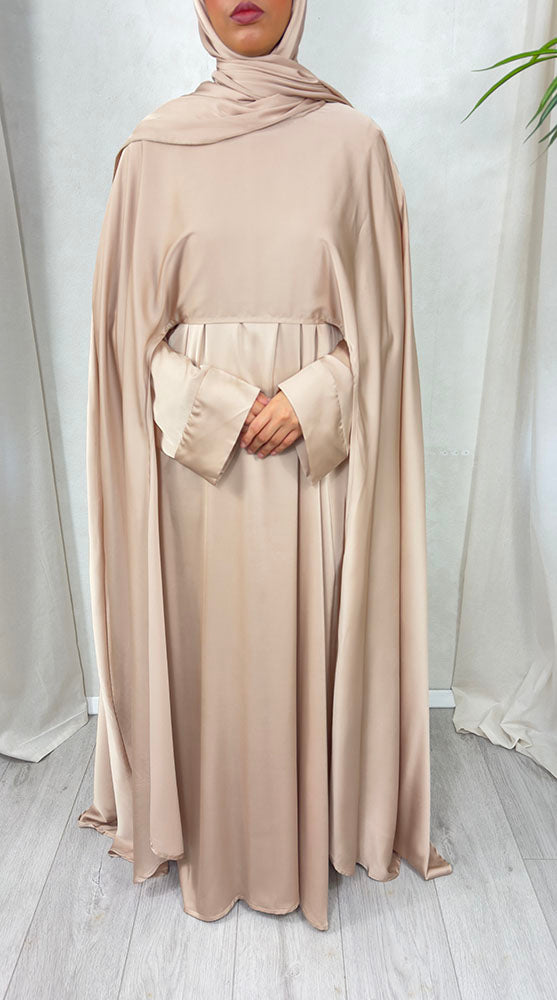
Islamic Fashion Today: Creativity, Choice and Representation
A modest fashion campaign can make a style newly visible to a wide audience. Behind that image are people making more lasting choices: a designer deciding how a garment should work, a retailer deciding which sizes to stock, and a woman deciding how she wants to dress.
That is a useful way to understand Islamic fashion today. Its public visibility brings opportunities for creativity and recognition, alongside questions about whose experiences are represented. Looking at the people and decisions behind the clothes helps us discuss those questions with more care.
This article explores contemporary fashion and representation. For the longer story of textiles, regional dress and changing trade, read our history of Islamic clothing.
What do Islamic fashion and modest fashion mean?
In this discussion, Islamic fashion refers to clothing and style cultures shaped by Muslim lives, beliefs and communities. It can include familiar garments such as abayas and hijabs, alongside tailoring, occasionwear, streetwear and sportswear. The term does not describe a single outfit or a uniform way of being Muslim.
Modest fashion is a broader description used for clothing chosen with particular coverage preferences in mind. People can arrive at similar garments through faith, cultural practice, comfort or personal taste. Cooper Hewitt’s curatorial introduction to modest fashion emphasises that interpretations of modesty vary among individuals and communities.
A commercial label can help someone find clothes. It cannot settle a religious question for every wearer. When religious guidance matters to a decision, the relevant tradition and trusted guidance deserve their own consideration.
Who shapes the fashion people see?
Designers turn a need into a garment
Design is where a general wish for coverage becomes a specific decision about cut, fabric, movement and use. A long sleeve, for example, still needs a suitable opening and enough room to move. A garment intended for a formal occasion may answer different needs from one worn through a working day.
Paying attention to these decisions gives designers credit for their work. It also gives a wearer a better question to ask than whether a collection looks fashionable: what problem does this design solve, and does that solution suit me?
Retailers influence which choices are available
A design becomes an everyday option when someone can find it in a suitable size, understand its details and afford it. Retail decisions about measurements, stock, prices and product information therefore matter alongside the creative work.
This is a useful distinction when reading about an exciting launch. A striking photograph may introduce a collection, while the product pages show how widely that collection can actually be used. Look for the information you need to make a decision: garment measurements, fabric composition, lining, photographs from several angles and clear returns terms.
Wearers, writers and institutions shape the conversation
Cooper Hewitt’s Contemporary Muslim Fashions exhibition considered Muslim women as designers, entrepreneurs, consumers, journalists and influencers. That range is helpful: influence includes creating and selling clothes, deciding what to buy, and explaining what a style means.
A wearer’s account can bring attention to a practical difficulty or a personal meaning that a photograph leaves unexplained. A curator can place garments in a cultural context. An editor chooses which voices appear in a story. Each contributes something different, and each makes choices about what the audience sees.
What makes representation useful?
Begin with the people represented. Are they able to explain their own preferences? Are several experiences included, or is one person expected to speak for a whole community? A person’s head covering, colour choices or silhouette cannot tell us everything about her beliefs, circumstances or freedom to choose.
Then look at the clothes and the customer experience. Cooper Hewitt’s 2020 discussion of size inclusion in modest fashion treated pricing, quality and functionality as part of the subject, alongside the range of bodies represented. This gives readers a practical way to assess a claim of inclusion.
For example, a campaign might show women of different heights. A useful next question is whether the garments come in lengths that serve those women. If a collection presents itself as suitable for different body shapes, check whether its measurements and fit information support that claim. These questions connect the image to the experience of wearing the clothes.
No single campaign can represent every Muslim woman. A more thoughtful approach leaves room for different ages, cultures, bodies and approaches to dress, without ranking those women’s dignity or sincerity by appearance.
Give cultural influences their names
Descriptions become more informative when they identify a maker, place or technique. “Inspired by tradition” tells a reader relatively little. Naming the tradition and explaining how it has been adapted gives the design a clearer context.
In her 2020 account of textile traditions in contemporary Muslim fashion, curator Laura L. Camerlengo describes Indonesian designer Dian Pelangi’s connection to Sumatra’s songket textiles. The exhibited designs used machine-made songket, a choice she relates to the significance of the handwoven cloth. That detail helps explain a design decision and the cultural knowledge behind it.
The same habit of looking closely can guide everyday reading. Does a collection identify the craft it references? Does it name the people involved, where that information is available? Is the description clear about a technique being woven, printed or embroidered? These are useful questions about attribution and accuracy; they do not require treating every cross-cultural influence as the same kind of exchange.
Read commercial promises with care
Greater visibility can make it easier to discover designers and find clothing that suits a particular need. It can also introduce another stream of launches, aspirational images and pressure to keep buying. A wearer can welcome more choice while deciding how much attention to give each new collection.
Keep different promises separate. Modest describes an approach to dress; it does not, by itself, establish how a garment was made, how long it will last or how workers were treated. If a brand makes environmental or labour claims, look for specific evidence about the claim being made. A reassuring name or a carefully styled photograph is only a starting point for that enquiry.
Similarly, the word empowerment becomes more meaningful when a story explains the opportunity involved. That might be a designer building a business, a wearer finding clothing that supports an activity, or someone gaining space to speak about her own experience. Keep the person and the opportunity in view instead of assuming that a purchase will produce the same feeling for everyone.
Read a fashion image with three separate questions
When an image catches your attention, separate what it shows, what its caption claims and what you would need to know next. This lets you enjoy the creative work while keeping your description accurate. It is particularly useful when a photograph has travelled through several accounts and lost its original explanation.
First, describe the visible design in ordinary terms. You might see a long outer layer, a repeated floral pattern and a contrasting scarf. Those observations do not yet establish the fibre, the method used to make the pattern, the designer's cultural intention or the wearer's beliefs. A close-up or a maker's explanation may answer some of those questions.
Second, locate the original context where possible. Is this a collection photograph, an exhibition installation, an editorial image or a customer's own outfit? Keep the creator's name and the date with the image. A photograph from a past exhibition can be valuable historical evidence without telling you what is available in a shop today.
Third, choose a question that matches your interest. If you admire the textile, look for the maker's account of its construction. If you are discussing representation, examine whose words accompany the image. If you want to wear something similar, check whether the piece was made for sale and whether its actual specifications are available.
Imagine a caption describing an embroidered coat, while the original collection notes identify a printed fabric. Correcting that detail does not diminish the design. It gives the right credit to the work involved and prevents a visual impression from becoming an inaccurate claim repeated elsewhere.
Ask different contributors about their own work
A good conversation becomes more specific when the question fits the person answering. A designer can explain a design decision; a wearer can describe using the garment; an editor can explain how a feature was assembled. None needs to supply an answer on behalf of every Muslim woman.
- For a designer: Which part of the garment took the most adjustment, and what changed between the first sample and the finished design? Ask for an example rather than assuming the original brief.
- For a maker: Which processes did you carry out, and how would you like that work credited? Keep separate contributors visible when several people worked on the same piece.
- For a wearer: When do you choose this garment, and what works or does not work for that use? Let her decide whether faith, family or another personal subject belongs in the account.
- For an editor or organiser: How were the contributors selected, and what could the finished feature not include? Space limits and selection decisions are useful context for the reader.
If you are preparing a small interview, agree the topic and intended audience beforehand. Check names, garment terms and technical descriptions with the person who supplied them. Distinguish a direct quotation from your own summary, and do not turn a tentative answer into a confident headline.
For feedback on a design, ask the wearer to describe a particular use rather than give a general score for modesty. “The front opened when I reached across my desk” identifies a construction question. “This was comfortable for my short evening visit” describes a limited experience. Neither statement needs to become a claim about every wearer or an entire working day.
Record any relevant change to the outfit too. If someone shortened a hem or wore an additional layer, that context helps readers understand her account. Give her the opportunity to check that your summary reflects what she meant. A useful review can acknowledge both a successful feature and an unresolved difficulty, without turning an individual preference into a universal rule for how Muslim women should dress.
Compare fashion stories without ranking women's identities
For a reading group, classroom project or personal notebook, choose two or three examples that answer a defined question. You might compare how different features explain textile workmanship, or how campaign captions include the wearer's voice. Keeping one question in view makes the comparison more revealing than collecting attractive images under a broad label.
Use the same headings for each example: publication and date, people named, garment described, explanation offered and information still missing. Record absence carefully. “This caption does not name the maker” is supported by the caption you read; “the brand never credits makers” is a much wider assertion requiring further evidence.
Consider this hypothetical comparison. One feature includes a designer's account of a fabric choice but says little about everyday use. Another gives a wearer's detailed account of using a garment at work but offers no information about the textile's production. Each helps with a different question. You can identify both strengths without claiming that one woman's way of dressing is more authentic.
Look for the boundaries of the material too. A feature about one city, age group or event should be described at that scale. A small selection can introduce unfamiliar experiences, but it cannot establish what an entire country prefers. Keep words such as “some”, “these contributors” and the relevant place or date when they are needed for accuracy.
End the exercise with an unanswered question worth pursuing. Perhaps you want to hear from the person who stitched a detail, understand why a wearer altered a sleeve, or learn how a curator identified a textile. That next question gives the comparison a purpose beyond deciding which photograph you like best.
Planning a small display or discussion
If you are organising a community display about Islamic fashion, begin with a manageable subject. “Three family garments and the choices behind them” gives contributors a clearer invitation than asking them to represent Muslim fashion as a whole. Explain where the display will appear, whether images will also be shared online and what participation involves.
Let each contributor choose what she wants to discuss. Someone may be happy to explain a practical alteration but prefer not to discuss her religious practice or family history. A display can include that garment without filling the silence with assumptions about empowerment, oppression or identity.
Write object labels from information supplied or checked. A useful label might identify who designed or made the piece, when it was acquired, how it was used and which details remain uncertain. For an inherited garment, distinguish the present owner's memories from the original wearer's account. Do not assign an exact date simply because the style resembles an online photograph.
Arrange the material so visitors can see differences without being invited to judge the wearers' faith. Questions about cut, use, repair, personal preference and attribution can open discussion. A proposed sequence from “traditional” to “modern” needs particular care if it implies that one person's clothing is a stage everyone else should progress beyond.
Before the display opens, ask contributors to check their names, captions and the way their photographs are presented. Agree what will happen to borrowed garments and digital material afterwards. Those practical choices make participation clearer and give the people involved a way to raise concerns about how their work or experience is described.
Leave room to correct a first impression
Fashion writing can improve as better information becomes available. If a maker corrects a technique, a contributor clarifies a quotation or a date turns out to refer to a later exhibition, update your description. State the corrected fact plainly rather than preserving an attractive story that the evidence no longer supports.
For material you share, keep a simple note of the source behind names, dates and technical claims. You can then find the relevant explanation again when someone asks a question. A saved image alone is less useful than an image accompanied by its original caption and context.
You can also revise your personal response without needing a new purchase. A discussion may make you appreciate a familiar garment's construction, notice an alteration that would make it more useful, or seek out the work of a maker you had not previously recognised. Enjoying fashion can include looking, learning, maintaining and wearing what you already have.
That leaves room for enthusiasm without treating every launch as a verdict on your wardrobe. A collection may be inventive while offering nothing you need at present. A widely shared image may be interesting while leaving your main question unanswered. Being clear about those limits helps you decide how much weight to give the story.
Keep your own reasons for dressing in view
There is room to enjoy colour, workmanship and new ideas while keeping your own priorities steady. You might be looking for reliable everyday coverage, clothing for an occasion, or a way to express a connection to your background. Those reasons can help you decide which fashion stories are useful to you.
If your next question is practical, our modest fashion guide focuses on building outfits and choosing coverage. When reading about the industry, return to a different set of questions: who made the clothes, whose voice explains them, what needs do they serve, and what evidence supports the promises being made?
Those questions make space for creativity and faith, cultural specificity and individual choice. They also help keep the people who make and wear Islamic fashion at the centre of the conversation.