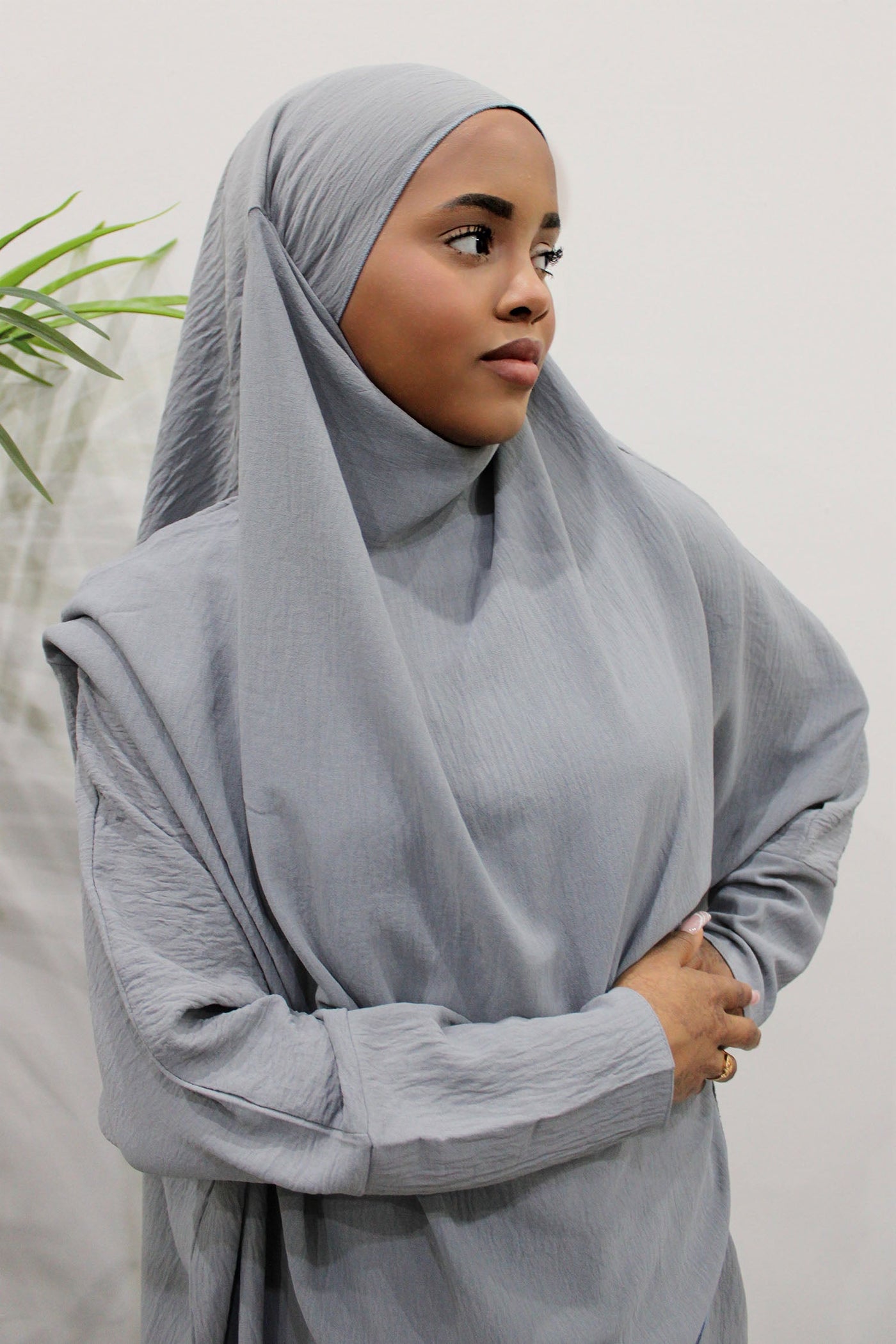
Complete Modest Fashion Guide: Dressing Beautifully with Coverage
Sister, modest fashion can look beautifully simple from the outside and still feel surprisingly complicated when you are the one standing in front of the wardrobe. You may know that you want more coverage, yet not know which garment will give it without making you feel heavy, hidden or unlike yourself. You may own long dresses that become clingy when you walk, tops that seem modest until you lift your arms, or scarves that photograph well but demand attention every few minutes. You may be trying to dress for faith, comfort, work, motherhood, culture, confidence or several of these at once.
Perhaps you are beginning after taking Shahadah. Perhaps you have dressed modestly for years and your body, work or taste has changed. Perhaps you are returning after a season in which getting dressed felt difficult. You may be a student trying to build a wardrobe on a careful budget, a mother who needs clothing that survives a school run, a professional who wants to feel composed without becoming overly formal, or a sister who simply wants to stop buying beautiful pieces that never work in real life.
This complete modest fashion guide is designed to help you make calmer decisions. It will not tell you that every woman needs the same wardrobe, colour palette or silhouette. It will help you understand what garments actually do, how fabrics behave, how coverage changes in movement, how to judge fit online, how to build outfits without unnecessary bulk, and how to choose clothing for British weather, prayer, work, travel, occasions and ordinary days.
We will look at abayas, jilbabs, khimars, hijabs, maxi dresses, longline tops, skirts, trousers, base layers and outerwear. We will compare cotton, linen, crepe, jersey, modal, chiffon, satin and other common materials. We will talk about opacity, lining, static, sleeves, necklines, hems, sizing, proportion and care. We will also speak about confidence, visibility and identity, because modest clothing is worn by a real woman with a real life. A garment problem can become an emotional problem very quickly when you assume the difficulty is your fault.
Amani's is a clothing brand, not a source of religious rulings. This guide offers practical garment knowledge and compassionate wardrobe support. Personal religious questions deserve qualified scholarship and an understanding of your circumstances. Where you need a ruling, speak to a trusted qualified scholar. Here, the purpose is to help you recognise whether a garment gives the coverage, comfort and function you intend.
You do not need to replace everything you own. You do not need to become a different personality. You do not need to buy an entire modest wardrobe before you are allowed to begin. One well-chosen layer, one dependable dress or one scarf that finally stays in place can change the experience of getting dressed. The goal is not perfection. The goal is clothing that helps you live your day with dignity, ease and enough confidence to stop thinking about every seam.
Take this guide slowly. Notice which sections describe your real difficulties. Your best next step may be a new garment, but it may also be a different size, a better fabric, a useful underlayer, a simple alteration or permission to stop forcing a style that never felt right.
What modest fashion means when real life matters
Modest fashion is a broad approach to dressing that gives deliberate coverage while allowing room for personal style, culture, comfort and practical need. It may involve longer hems, higher necklines, sleeves, looser silhouettes, opaque fabrics and head covering. The exact combination differs between women, communities and situations.
For many Muslim women, modest clothing is connected to faith and worship. For others, covered dressing may also reflect culture, privacy, sensory comfort, body confidence, professional preference or a love of elegant silhouettes. These reasons can overlap. A woman does not become less sincere because she also cares about colour, fabric or beauty.
The word fashion sometimes creates unease because it can suggest trends, attention or constant consumption. Yet fashion also means the practical language of clothing: shape, cloth, proportion, construction and the way garments relate to a life. Modest fashion can be thoughtful rather than excessive. It can help a woman build a small wardrobe that works repeatedly instead of chasing a new appearance every week.
Modest fashion is not one uniform. A black closed abaya is one expression. A loose maxi dress with a long cardigan is another. A jilbab, khimar, wide-leg trouser outfit, long tunic or layered work look may all belong within a modest wardrobe, depending on the wearer's intended standard and guidance.
It is also important to separate a product label from actual function. A dress can be sold as modest and still have a low neckline, transparent sleeve or clingy fabric. An oversized shirt can look loose when standing and pull tightly across the hips when sitting. An abaya can be full length and still become difficult if the sleeve opening is too wide or the fabric reveals shape in bright light.
That is why this guide treats modesty as garment behaviour rather than marketing language. We ask what happens when you walk, bend, sit, raise your arms, put on a coat and step into sunlight. We consider whether a piece supports prayer, work, travel and care. The name on the product page is only the beginning.
Sister, you are allowed to take clothing seriously without turning it into a measure of your whole heart. Garments matter because they support your choices, but they cannot summarise your faith, character or worth. A useful modest wardrobe gives you structure and then becomes quiet enough for the rest of your life to continue.
Start with the life you actually live
Before choosing a style, picture an ordinary week. Do not begin with the wedding you attend twice a year or the outfit that looked striking in a video. Begin with Monday morning. Where do you go? How long are you out? What do you carry? Which movements happen repeatedly? What weather do you face?
A modest wardrobe for a healthcare worker may need secure sleeves, washable fabrics and layers that follow workplace safety requirements. A university student may need practical outerwear, comfortable shoes and garments that stay in place beneath a backpack. A mother may need clothing that allows her to bend, lift, feed, drive and move quickly. A woman who works from home may value softness and prayer ease more than formal structure.
Write down your three most common settings. Make them specific, such as:
- Office and commute for nine hours.
- School run, errands and prayer at home.
- University, public transport and evening class.
Now ask what each setting demands. Do you need pockets? Easy washing? A hem that clears wet pavements? Sleeves that remain secure when reaching? A neckline that does not require constant scarf adjustment? Fabric that stays opaque under bright workplace lighting?
Your frustrations are useful evidence. The dress you avoid may be too warm, not unflattering. The trousers may be the correct size at the waist but too narrow through the thigh. The open abaya may be beautiful but difficult because the base outfit has no reliable neckline. The problem becomes easier to solve when it is named precisely.
Notice what you repeat without thinking. The same navy abaya, soft jersey hijab or long black cardigan may already be telling you what you value: stability, easy coordination, gentle fabric or enough room to move. Repetition is not a lack of style. It is often proof that a garment is serving you well.
There is emotional practicality too. Some women feel secure in an all-black outfit. Others feel unlike themselves unless there is colour. Some prefer a clear, structured silhouette. Others need softness and flow. A garment can meet a technical checklist and still feel wrong. Your sense of ease deserves attention.
Stop asking which modest wardrobe is best for every woman. Ask which system supports this season of your life. That question protects you from buying for an imagined version of yourself and helps you build around the woman who actually needs to get dressed tomorrow.
Modesty as garment behaviour, not a product claim
A product page can use words such as modest, loose, maxi or full coverage without explaining how the garment behaves. Good decisions begin when you translate those labels into observable features.
Coverage has several parts:
- Length: where the hem, sleeve and top finish during movement.
- Width: how much ease the garment has around the bust, waist, hips, thighs and arms.
- Opacity: what can be seen in daylight, under flash, when stretched and when wet.
- Neckline: whether it remains secure without pulling, gaping or constant layering.
- Movement: what changes when you sit, bend, climb stairs or raise your arms.
- Drape: whether the fabric skims, clings, floats or collapses around the body.
A long garment is not automatically loose. A loose garment is not automatically opaque. A thick garment is not automatically comfortable. A high neckline can still gape when the shoulders move. Every feature needs to be considered as part of the whole piece.
Test garments in the positions in which you will use them. Sit on a chair. Reach above your head. Bend to tie a shoe. Walk towards a bright window. Put on the coat and bag you normally carry. If a garment works only while standing still in front of a mirror, it has not completed the test.
Fabric weight changes behaviour. A light fabric may float away from the body but become transparent. A heavy fabric may be opaque but fall closely over curves. Stretch can improve movement and also reveal shape when the garment is too small. Lining can add opacity and warmth while reducing breathability.
Construction matters too. Side slits, cuffs, buttons, zips, pockets and seams affect coverage. A long tunic with deep side openings may expose more of the trousers than expected. A wrap dress may loosen. A button front can pull across the bust. A dropped shoulder can offer ease but create very wide sleeves.
This is not a reason to become afraid of every garment. It is a reason to use evidence. Once you understand behaviour, shopping becomes less mysterious. You can recognise which feature needs changing rather than blaming your body or buying another random piece.
A practical coverage checklist before styling begins
Coverage is easiest when it is built into the outfit from the beginning. Trying to repair every issue with a long scarf or emergency cardigan often creates heat, bulk and anxiety.
Begin with the base layer. Ask whether the neckline, sleeves and lower half are secure enough for your intended standard. Then add an outer layer for further coverage, weather or style. This order means the hijab or khimar can sit naturally rather than being forced to solve the whole outfit.
Neckline
Check the front, back and sides. A neckline may appear high from the front but dip at the back or widen when you bend. Buttons should lie flat rather than pull. A fine high-neck top can support an open neckline, but the base should remain comfortable and breathable.
Sleeves
Raise both arms. Do the cuffs slide far back? Are the sleeves transparent? Do wide openings expose more than expected? Elasticated cuffs, fitted wrist layers or sleeve covers can help, but choose a solution that does not create painful pressure.
Length and side openings
Check the hem while walking and sitting. Deep side slits can change the coverage of a tunic or dress. A maxi length should clear the floor enough to avoid tripping and wet pavements. If the garment is deliberately shorter, make sure the lower layer provides the coverage you intend.
Fit through the body
Look from the side and back as well as the front. Fabric may pull across the bust, hips or upper arms even when the label says oversized. Sit down because many garments become tighter in that position. Size up or choose a different cut rather than expecting a scarf to hide persistent pulling.
Opacity
Use daylight and a contrasting underlayer. Check pale colours, sleeves and areas under tension. Camera flash can reveal sheerness, but ordinary bright windows are often enough. Keep tags attached during the test when possible.
Movement and security
Walk, bend, reach and put on outerwear. Make sure the garment does not rise, open or twist in a way that requires constant correction. A secure outfit should let you stop monitoring it.
Your religious standard may involve considerations beyond this practical checklist. Seek qualified guidance where needed. The clothing question here is simple: does the garment physically do what you intend throughout the day?
Key modest garment terms and what each piece actually does
Modest fashion becomes confusing when several garments are treated as interchangeable. Understanding the practical role of each piece helps you choose the right pathway.
Abaya
An abaya is a long outer garment, usually worn over other clothing. It may be closed, open, zipped, belted or designed as a coordinated set. A closed abaya gives one-step body coverage. An open abaya offers flexibility but depends on the base outfit beneath it.
Jilbab
The word jilbab is used in different ways across communities and retailers. In clothing shops, it often describes a loose outer garment that may include an integrated head covering or be sold as a one-piece or two-piece set. Check the actual construction rather than relying on the name.
Khimar
A khimar is generally a ready-shaped head covering that pulls over the head and drapes across the shoulders, chest and back. Lengths vary from short shoulder coverage to designs that fall much further down the body.
Hijab
In everyday clothing language, hijab often means the scarf worn around the head and neck. It may be rectangular, square, instant or pull-on. Fabric, size and styling decide how much chest and shoulder coverage it provides.
Maxi dress
A maxi dress is defined mainly by its long hem, not by modest construction. Check neckline, sleeve length, opacity, fit and slits. A long-sleeve maxi can become an easy base, while another may need several layers.
Tunic or longline top
A tunic extends lower than a standard top and can support coverage over trousers or skirts. Length and side openings vary. A piece described as longline may still finish above the hips on a taller woman.
Prayer dress or prayer outfit
A prayer garment is designed to provide quick, easy coverage for salah. It may be one piece or include a skirt and head covering. A prayer dress has a specific home or prayer role and should be judged for movement, opacity and comfort in worship.
If the names feel confusing, the guide to the differences between abaya, jilbab, hijab, khimar, niqab and burqa gives a closer comparison of each garment. Once the terms are clear, it becomes much easier to see how the pieces can work together in a practical wardrobe through layering, movement and everyday outfit choices.
Modest fashion and Islamic clothing: where the terms overlap
Modest fashion is a broad category. Islamic clothing is more specifically connected to Muslim dress and may include recognised garments such as abayas, jilbabs, khimars, hijabs and prayer wear. The categories overlap, but they are not identical.
A long dress can be modest fashion without being designed as Islamic clothing. An abaya can be Islamic clothing while also reflecting fashion through colour, cut, embroidery and fabric. A woman may combine mainstream garments with specialist pieces to create the coverage she needs.
This distinction matters when shopping. A product in a general modest fashion category may focus on length and loose styling without considering prayer, head covering or Islamic garment terminology. A specialist Islamic clothing retailer should still give clear information rather than assuming the garment name answers every practical question.
Do not rely on category identity as proof of suitability. Check the piece. A jilbab can differ greatly in fabric, sleeve construction and head fit. An abaya may be occasion-focused, nursing-friendly, open or designed for everyday wear. A prayer outfit may be lightweight for home use and not intended as outdoor clothing.
At the same time, do not feel that every useful item must carry an Islamic label. A long coat, opaque maxi skirt, high-neck knit or wide-leg trouser can support a modest wardrobe when chosen thoughtfully. The goal is a coherent clothing system, not a collection of labels.
For religious boundaries, use qualified knowledge. For garment function, use measurements, fabric details and movement testing. Keeping these two sources of guidance in their proper roles prevents both careless assumptions and unnecessary fear.
Foundation layers that make modest outfits easier
Many modest outfits become difficult because the foundation is unreliable. A secure base layer can reduce the need for repeated adjustments and allow beautiful outer garments to sit as intended.
High-neck tops
A light high-neck or mock-neck top can support open collars, sleeveless dresses and loose necklines. Choose breathable fabric and enough length so it does not ride up. Very tight synthetic layers may feel hot and show through outer fabric.
Long-sleeve base tops
These are useful beneath short sleeves, transparent sleeves and pinafore styles. Match the sleeve shape to the outer garment. A bulky cuff beneath a narrow sleeve creates discomfort, while a very slippery base may twist.
Slips and underdresses
A full or half slip improves opacity and can help an outer dress move without clinging. Check the neckline and straps. Anti-static or smooth fabrics may work well beneath some garments, while breathable cotton blends may feel better in heat.
Leggings and undertrousers
These can provide warmth, opacity and comfort beneath dresses or skirts. They should not be used as the only solution for a transparent outer garment if the overall effect still feels exposed to you. Choose soft waistbands and avoid excessive compression for long days.
Sleeve covers and wrist layers
These can secure wide cuffs or short sleeves. They should stay in place without cutting into the arm. A full base top often feels more stable than separate sleeve pieces, though individual needs differ.
The foundation should solve a defined problem. More layers are not automatically more modest or more comfortable. A sheer dress over several tight layers may feel warmer and less practical than one well-made opaque garment. Use the minimum system that gives the intended result.
Test all layers together. Fabrics can create static, bunching and unexpected colour show-through. The right foundation becomes almost invisible in your awareness. The wrong one turns every movement into an adjustment.
Modest dresses and maxi dresses: one-piece ease with careful checks
A long dress can be the calmest piece in a modest wardrobe. It creates a complete vertical line, reduces matching decisions and moves from home to work or an occasion depending on fabric and detail. Yet the word maxi only describes length. The rest still needs examination.
For everyday use, look for an opaque fabric, secure neckline, comfortable sleeves and enough room through the body. A gathered waist may create shape without clinging, while an A-line or loose column cut can offer easy movement. Deep tiers and very full skirts create beautiful flow but may feel heavy or catch in wind.
Check whether the dress rises when you lift your arms. A bodice that is too short can pull the whole hem upwards. Sit to see whether the fabric stretches across the thigh or opens at a button placket. Walk on stairs and test the length with your normal shoes.
Printed maxi dresses can make outfit coordination easy because the pattern already contains several colours. Choose one shade for the hijab or outer layer. Plain dresses are flexible foundations and can change character through scarves, coats and open abayas.
A dress with a lower neckline may work with a high-neck base, but ask whether you will realistically wear the layer every time. A sleeveless design can be useful beneath an abaya or cardigan. A dress that needs four repairs before it feels secure may not be the simplest purchase.
For prayer, test bowing and sujood. Make sure the neckline does not open, sleeves remain where intended, and the hem does not create a tripping risk. For outdoor use, consider pockets, coat interaction and whether the fabric marks easily in rain.
One dependable long-sleeve dress can serve more often than several delicate styles. Choose the role first: daily, work, occasion, summer, winter or layering base. Then let colour and detail follow.

Abayas: complete outerwear, easy dressing and many different roles
The abaya is one of the most versatile garments in a modest wardrobe because it can provide a complete outer layer in one step. Its success depends on choosing the right construction for the setting.
Closed abayas
A closed abaya offers simplicity. There is no front opening to manage, and the base outfit can remain minimal. It is useful for daily wear, travel, masjid visits and mornings when you want fewer decisions. Check the neckline, sleeve opening, pockets, fabric and whether the cut allows a comfortable stride.
Open abayas
An open abaya behaves more like a long outer layer. It can transform a dress, skirt or trouser outfit and adapt across seasons. Its coverage depends on what sits beneath it and whether the front remains open, ties, buttons or closes fully.
A strong open-abaya system begins with reliable base pieces. A full-length underdress or long tunic and trousers can prevent the wearer from spending the day holding the front together. Belts may add shape but can also change the looseness, so use them according to the coverage you intend.
Abaya sets
Coordinated sets may include an underdress, open layer, belt or hijab. They remove colour-matching decisions and can provide good value when every piece is useful. Confirm exactly what is included and whether the components work separately.
Everyday and occasion abayas
Everyday abayas benefit from washable fabric, secure sleeves, useful pockets and restrained detail. Occasion abayas may use satin, chiffon, embellishment, lace or fuller cuts. Choose for the full event, including prayer, sitting, travel and care, not only for the first photograph.
Measure an abaya you already own. Length labels such as 54 or 56 may refer to garment length in inches, but systems vary. Check the retailer's guidance and your preferred clearance from the floor. Width, shoulder cut and sleeve length matter as much as overall length.
Explore the Amani's abaya collection when you know the role you need. If you are comparing a particular style, the guide on how to buy an abaya online gives a practical checklist for measurements, fabric, opacity, construction and returns. Those details are easiest to judge when you also consider the dresses, hijabs, outerwear and base layers that will complete the wardrobe around it.
Jilbabs: fuller-coverage systems with construction that must be understood
Jilbab products vary more than the name suggests. Some are one-piece outer garments. Some combine a head covering with a long body section. Two-piece jilbabs may include a khimar-style top and skirt or loose trousers. Retailers and regions use the term differently, so photographs and construction details are essential.
A jilbab can reduce styling decisions because the pieces are designed to work together. This can be valuable for prayer, study, masjid visits, travel and sisters who prefer consistent fuller coverage. The same garment can become difficult if the face opening, sleeve system or length does not suit the wearer.
Check how the head section adjusts. Ties should remain secure without painful pressure. A chin cover or integrated niqab option may be present, but the exact design needs clear explanation. Test whether the fabric moves when turning the head and whether glasses or hearing devices fit comfortably.
For one-piece styles, consider arm mobility and the way the garment behaves in wind. Elasticated or fitted cuffs can support wrist coverage. Wide sleeves may offer air flow but need careful movement. A skirt portion should allow a full stride without pulling.
For two-piece sets, confirm the overlap between top and bottom. Raise the arms and sit down to ensure the layers remain connected. Separate pieces can be easier to wash and size, while one-piece designs may feel quicker.
Fabric weight affects the whole experience. A long jilbab in heavy material can feel secure in winter and tiring in warm indoor spaces. A light fabric may be comfortable but require opacity testing. Crepe and nida-style materials vary greatly between suppliers.
Choose according to your intended practice and routine. A jilbab should not be bought simply because it appears to be the most covered product. It should fit, move and support the life in which you will actually wear it. Browse the jilbab collection once you have identified the construction you prefer.
Khimars and hijabs: head covering as part of the outfit system
A head covering changes more than the area around the face. Its size, fabric and volume affect the neckline, shoulders, chest, outerwear and overall balance of the outfit. Choosing it after every other piece can create unnecessary problems.
Khimars
A khimar offers ready-shaped coverage over the head, shoulders and chest. It can remove wrapping and reduce the number of pins needed. Shorter khimars work easily with many abayas, while longer designs create a fuller silhouette and may overlap with the body garment.
Check the front length, back length, face opening and tie construction. A long front can provide calm coverage and may also fall into food, water or work surfaces if not managed. A very tight face opening can become painful, while a loose one may shift. Test the garment with glasses, outerwear and the movements of prayer.
Loose hijab scarves
Rectangular and square scarves give greater styling freedom. They can be coordinated with dresses, abayas, workwear and casual outfits. The trade-off is that fabric behaviour and technique matter more. Jersey grips and stretches, chiffon drapes and may slip, modal feels soft and fluid, and cotton often offers structure.
Size decides coverage. A long narrow scarf may wrap well but provide limited chest coverage. A wide scarf may cover beautifully but create bulk at the neck. Compare exact measurements rather than relying on words such as XL or oversized.
Instant and pull-on styles
These reduce the need for folding and fastening. They can support beginners, active days, prayer, work and women with limited hand movement. Fit is especially important because there is less freedom to reshape the garment.
The head covering should work with the neckline rather than rescue it. A secure base garment allows the hijab to drape naturally. When every outfit depends on a scarf being pinned across an open chest, getting dressed becomes fragile.
For detailed wrapping support, use the live hijab styling guide. Browse the hijab collection or khimar collection according to the role you need.
Longline tops and tunics: flexible coverage without building a complicated outfit
A longline top can make trousers and skirts easier to wear by extending coverage over the hips and upper legs. The best versions combine enough length with secure side seams, comfortable sleeves and fabric that does not cling.
Product photographs can make length difficult to judge because model height varies. Check the garment measurement from shoulder to hem and compare it with a top you own. A piece that reaches the knee on one woman may finish at mid-thigh on another.
Side slits deserve close attention. They can improve movement and reduce pulling, but a deep opening changes the effective coverage. Look at where the slit begins rather than only where the hem finishes. Curved hems and high-low cuts also create different front and back lengths.
For work, a structured tunic in crepe, cotton poplin or a stable blend can feel polished with wide trousers. For casual wear, soft jersey or brushed cotton may feel easier. Very thin jersey can outline the body and may need a looser cut or outer layer.
Buttons create flexibility for nursing and layering but may pull across the bust. Sit and move during fitting. A concealed placket or generous overlap can feel more secure. Pockets add function but may create bulk over the hips if they are poorly placed.
A tunic does not have to be oversized everywhere. A clean shoulder and loose body can look intentional while allowing movement. The aim is not to disappear inside fabric. It is to choose enough ease for the garment to fall without strain.
Use longline tops as repeatable wardrobe anchors. One black, navy, cream or olive tunic can work with several bottoms and scarves. A printed version can become the focus of a simple outfit. Choose pieces that make the rest of the wardrobe more useful rather than adding another isolated colour.
Maxi skirts and trousers: lower-half coverage that survives sitting and walking
Skirts and trousers create flexible modest outfits, but their behaviour changes more in movement than many product pages show. Test them sitting, climbing stairs and walking at a normal pace.
Maxi skirts
A-line and softly gathered skirts usually offer good movement without excessive volume. Pleated skirts create vertical flow but can cling through static or open under wind. Straight skirts may feel elegant and become restrictive if the back slit is too high or the fabric lacks ease.
Check the waistband. A very tight elastic can become uncomfortable through a long day. A smooth front with elastic at the back may feel more polished for work. Pockets are useful, though heavy items can pull a light skirt out of shape.
Opacity is especially important around the legs where fabric stretches while walking. A lining or slip can help, but make sure the layers move together rather than twisting. Test pale colours in daylight.
Wide-leg trousers
Wide trousers can offer freedom of movement and work well beneath tunics, open abayas and long coats. The width should begin high enough to avoid clinging through the thigh. Fabric with some structure often falls more cleanly than thin stretch jersey.
Check the rise, waistband and seat while sitting. A trouser that looks loose from the front may pull across the back. Pockets can gape when the hip area is too small. Size for the widest point and alter the waist if necessary.
Layering trousers beneath dresses
Light trousers can add warmth, security and ease beneath open garments. Keep the layers smooth and avoid bulky waistbands. Cropped undertrousers may prevent fabric gathering at the ankle while still providing the intended support.
The lower half should connect with the top. A short top over wide trousers may not give the coverage you want, while a very long tunic over a full skirt can create too much volume. Use the complete silhouette to judge comfort rather than evaluating each piece alone.
Modest outerwear: coats, jackets and the layer that meets British weather
Outerwear can either protect a modest outfit or undo its ease. A coat that is too narrow may pull an abaya tightly across the body. A short jacket can change the intended silhouette. A rough lining may drag a hijab backwards.
Test coats over the clothing you will actually wear. A winter coat fitted over a thin top may not accommodate a loose dress, knit layer and scarf. Move your arms, sit and fasten it fully. Shoulder mobility matters more than the size label.
Long coats
A long coat creates continuity with maxi garments and offers useful weather protection. Choose a hem that clears wet ground. Back vents improve walking but can open widely in wind. A gentle A-line cut often fits over abayas better than a sharply tailored narrow coat.
Trench coats
A trench can provide light rain protection and a polished line. Belts can be tied loosely at the back or front according to preference. Check whether the fabric becomes transparent when wet and whether the lapels leave the neckline exposed.
Long cardigans and coatigans
These add warmth without the structure of a coat. They are useful indoors and during transitional weather. A knit can cling to the garment beneath or grow longer with wear, so check recovery and care instructions.
Waterproof layers
Practical rainwear may not match the romantic picture of modest fashion, but staying dry matters. Look for longer waterproof coats with adjustable cuffs, a hood that works with hijab and enough room through the shoulders. Function is part of elegance when it allows you to move calmly through the day.
Scarves and khimars should be tested with collars and hoods. A narrow hood can crush volume. A high zip may catch delicate fabric. Smooth linings reduce friction. Choose the outer layer as part of the outfit system rather than an afterthought kept by the door.
Choose fabric before colour because fabric controls the day
Colour creates the first attraction, but fabric decides whether a garment becomes part of your life. It controls opacity, drape, warmth, breathability, stretch, static, creasing, care and the way clothing responds to movement.
Think of fabric as behaviour. Cotton absorbs and breathes but may crease. Linen feels airy and develops a relaxed texture. Crepe offers drape and can range from light to substantial. Jersey stretches and follows the body. Modal feels soft and fluid. Chiffon floats and often needs lining. Satin reflects light and may show marks.
No fabric is universally modest or immodest. The same fibre can be woven into very different materials. A thick cotton twill behaves differently from cotton voile. A dense polyester crepe can be opaque and fluid, while a thin polyester chiffon is sheer. Composition gives clues but not the whole answer.
Ask what you need the garment to do:
- Remain opaque in one layer.
- Allow air flow during warm weather.
- Resist creasing through a commute.
- Wash easily after frequent wear.
- Hold a structured shape for work.
- Drape softly for an occasion.
- Avoid cling around the body.
Then read the composition, care instructions, lining details and reviews. Words such as premium, luxury and buttery soft are impressions, not specifications. You deserve to know what the fabric is and how it should be handled.
Imagine the piece after six hours, not only during the first mirror moment. Will it feel warm under a coat? Will it crease across the lap? Will the hem collect static? Will you hand wash it? Will a child pulling the sleeve damage it? Realistic questions protect both your money and your peace.
Cotton and linen: breathable structure with a naturally lived-in finish
Cotton and linen are often chosen for warm weather and everyday comfort, but weight and weave decide how they perform.
Cotton
Cotton poplin feels crisp and can create clean tunics, shirts and dresses. It breathes well but may crease quickly. Cotton jersey stretches and feels soft, though thin versions can cling. Cotton voile and lawn are light and often sheer, making them better for layers than one-piece coverage.
A cotton-rich blend may reduce creasing or add drape. Polyester can improve durability and shape retention. Elastane adds stretch. Blends are not automatically lower quality; suitability depends on the role.
Cotton absorbs moisture, which can feel comfortable in heat and slow drying after rain. Deep colours may fade if washed harshly. Follow the care label and avoid high heat when shrinkage is a concern.
Linen
Linen feels airy and has a beautiful natural texture. It creases as part of its character. A linen abaya, dress or tunic can feel elegant and relaxed, but very light linen may be transparent. Linen blends often soften the creasing and improve drape.
Check whether the garment is pre-washed and whether shrinkage is expected. A slightly generous fit can work well because linen has limited stretch. Areas of strain may become shiny or weakened over time.
For a polished look, steam the garment and accept some movement creases. Trying to keep linen perfectly smooth all day creates an impossible standard. Its beauty often lies in looking worn, breathable and real.
Both fibres work well when the cut gives enough ease. A breathable fabric pulled tightly across the body can still feel hot and reveal shape. Choose room first, then enjoy the natural comfort.
Crepe, nida-style fabrics and flowing woven materials
Crepe is a family of fabrics with a slightly textured surface. It can be light and airy, medium weight and fluid, or heavy and structured. Many abayas, jilbabs, dresses and work garments use crepe because it drapes without the high shine of satin.
The word nida is commonly used in abaya retail for smooth, flowing fabrics, often made from synthetic fibres. The exact composition and weight vary between suppliers. One retailer's premium nida may feel cool and dense, while another's may be lighter or more matte. Ask for specifics where possible.
Medium-weight woven fabric often gives a useful balance between opacity and flow. It can skim rather than cling and may resist creasing better than cotton. Synthetic versions can feel warmer and create static, especially with tights, slips and dry indoor heating.
Hold the fabric to light and check tension areas. A black crepe may appear fully opaque while a cream version needs lining. Lining adds security but changes warmth and care. Some occasion fabrics include a light outer layer over an opaque underdress, which can create movement without sacrificing coverage.
Look at seams and hems. Fluid fabric reveals uneven stitching and puckering. A narrow rolled hem may suit chiffon, while a deeper hem can help a heavier abaya hang cleanly. Side seams should fall straight rather than twist.
For daily use, choose a fabric that tolerates your washing routine. Some crepes machine wash gently, while others need hand washing. A garment cannot serve an ordinary week if its care demands exceed what you can realistically provide.
Do not assume flow means coolness. Air movement, fibre and number of layers all matter. A loose polyester abaya may feel comfortable outdoors and warm in a heated building. Build seasonal options if your routine spans different environments.
Jersey, modal and stretch fabrics: softness with attention to cling
Stretch fabrics can make modest clothing comfortable because they move with the body. They can also reveal shape when the cut is narrow or the material is thin.
Jersey
Jersey is knitted rather than woven. It ranges from fine T-shirt material to dense ponte and substantial premium jersey. Light jersey works well for base layers, hijabs and relaxed dresses but may cling to every layer beneath. Medium and heavy jersey offer opacity and smooth drape, though weight can add warmth.
Look for recovery. Gently stretch the fabric and see whether it returns. Poor recovery can leave knees, elbows and seat areas bagged. Pilling may develop where bags, coats and arms rub.
Modal and viscose
These fibres can create soft, fluid garments that feel gentle against the skin. They often drape beautifully and may be breathable, but light versions can become transparent or show every line beneath. They can also weaken when wet and require careful washing.
Ponte and stable knits
Ponte is a denser knit with more structure. It can suit trousers, skirts and work dresses because it holds shape. The same density may feel warm. Check whether the garment remains loose enough through the body.
Stretch should provide movement, not replace correct sizing. If a garment fits only because the fabric is stretched continuously, it may reveal more shape and wear out quickly. Choose enough ease for the material to rest rather than strain.
Use smooth base layers beneath clingy fabrics and check static. A slip can help a jersey dress fall, though some combinations create more friction. Test at home before committing to a full day.
Chiffon, satin and occasion fabrics: beauty that should survive the event
Occasion fabrics bring light, movement and richness to modest clothing. Their success depends on lining, security and realistic care.
Chiffon
Chiffon is light and often sheer. In dresses and abayas, it usually works as an outer layer over an opaque base. It can float beautifully and catch on jewellery, rough bags and embellishment. Sleeves deserve particular attention because lining may stop above the wrist.
Georgette has a slightly more textured surface and often offers greater control. It can provide an elegant drape without the same level of slipping.
Satin
Satin refers to a weave that creates a smooth reflective surface. It may be made from polyester, silk or another fibre. Light travels across it, which can emphasise creases and the outline of layers beneath. A looser cut and good lining help it fall gracefully.
Satin can show water, perfume, oil and makeup marks. Test products before an important event and store the garment away from rough surfaces. Steam at the permitted temperature and never assume high heat is safe.
Embellished fabrics
Beading, crystals, embroidery and lace add beauty and weight. Check the backing because rough threads can catch base layers or irritate skin. Heavy embellishment around cuffs and necklines can become tiring through a long day.
Choose for the full event. Will you travel, pray, sit for hours, carry children and move between warm rooms? A garment is more successful when it lets you participate without fear. Beauty should invite you into the day rather than make you protect the outfit from life.

Opacity, lining, cling and static: the hidden reasons an outfit does not feel secure
Many clothing disappointments are not caused by style. They are caused by the interaction between fabric, light and layers.
Opacity
Test pale and dark colours separately because dye and density affect transparency. Place a contrasting layer beneath the fabric and stand near a bright window. Stretch the sleeve or skirt slightly because the weave may open under tension.
Lining
A full lining can improve opacity and help the outer fabric move. It also adds warmth and may shorten differently after washing. Check whether the lining reaches the hem and wrists. Half linings may protect the body while leaving sleeves sheer.
Cling
Cling may come from stretch, humidity, static, body moisture or friction between layers. A garment can be generously sized and still attach to the body during movement. Smooth slips, appropriate anti-static products and different fabric combinations can help.
Static
Synthetic fabrics, tights, dry air and carpeted interiors often create static. Test the outfit after walking, sitting and wearing a coat. Use an anti-static product only according to instructions and test an unseen area first. Moisturising skin and changing the underlayer can also reduce friction.
Wind and light
Outdoor conditions reveal behaviour that a fitting room cannot. A full skirt can wrap around the legs in wind. Bright sun can reveal a silhouette through thin fabric. An open abaya can separate. Secure layers and a sensible cut matter more than trying to hold everything in place.
Do not describe yourself as the problem when fabric behaves according to its construction. Change the layer, size, material or setting. Evidence offers a calmer solution than self-criticism.
Fit and sizing online: use measurements instead of hope
Modest clothing needs enough room to move and fall, which makes sizing especially important. Choosing the largest available size without understanding the cut can create poor shoulder fit, excessive sleeve length and unnecessary volume. Choosing your usual high-street size without checking measurements can lead to pulling through the body.
Begin with your body measurements, taken over the type of base layers you expect to wear. Record bust, waist, hips, shoulder width, arm length and preferred garment length. Keep the tape comfortably level without pulling it tight.
Then measure a garment you already trust. Lay it flat and record:
- Armpit to armpit.
- Shoulder to shoulder.
- Sleeve length.
- Upper-arm width.
- Waist and hip width.
- Shoulder to hem.
- Side-slit height.
Garment measurements and body measurements are not the same. A loose dress needs ease beyond the body. Compare a successful garment with the new product rather than expecting the size label to tell the whole story.
Check whether measurements are taken flat or around the garment. A 60-centimetre flat chest usually represents approximately 120 centimetres around, though construction and stretch matter. Read the retailer's method.
For abayas, length numbers may correspond to inches from shoulder to hem, but systems vary. Height charts are useful starting points, not absolute rules. Your preferred shoe, body proportions and desired floor clearance affect the choice.
Look at the model information, but do not use it as your only evidence. Models may be wearing samples pinned or adjusted for photography. A garment can appear oversized because the model sized up or because the fabric was arranged carefully.
Read return terms before ordering. Keep tags attached and test at home with normal layers. Sit, walk and put on outerwear. If the fit is wrong, return or exchange it rather than promising yourself that discomfort will become acceptable.
An alteration may solve a good garment. Hemming, sleeve shortening or taking in a waist can create a better result than compromising on the whole piece. Choose alteration only when the basic shoulder, body ease and construction are sound.
Body shape guidance without teaching women to correct themselves
Style advice often divides women into shapes and gives rules about what should be hidden, balanced or made smaller. This can become harsh very quickly. A more useful approach is to understand how garment construction affects comfort, movement and the amount of visual or physical volume.
A-line garments widen gently from the upper body and allow room through the hips. Column cuts fall straighter and may feel clean and elegant, but they need enough width to avoid pulling. Tiered dresses create fullness and movement. Dropped shoulders offer ease while sometimes making sleeves longer and the upper body wider.
None of these shapes is universally flattering. The right cut is the one that gives the coverage you intend, sits comfortably and feels like you.
If you have a fuller bust, buttons and high armholes may pull even when the waist and hips fit. Choose more room through the chest, a concealed placket or a cut without front fastening. If you have fuller hips, size for that area and alter elsewhere if needed. If your shoulders are broad, raglan or dropped sleeves may feel easier than a narrow set-in shoulder.
These are construction observations, not instructions to make a body look smaller. The body is not a design error. Clothing needs to accommodate it.
Use mirrors from several angles and sit down. Ask whether the garment falls without strain, whether the fabric gathers where it should and whether you can move. Avoid judging yourself through a frozen photograph taken from an unkind angle.
Volume can be managed for practical reasons. A very wide khimar over a very full dress and oversized coat may feel physically overwhelming. A neater base can make outer coverage easier. This is about comfort and control, not obeying a rule that large women need less fabric or petite women cannot wear flowing garments.
Sister, you deserve clothes that meet your body rather than requiring your body to earn the clothes. Use fit knowledge as care, not correction.
Petite and tall modest fit: proportions that standard size charts often miss
Height affects more than hem length. It changes where waist seams, tiers, pockets, cuffs and side slits sit. Petite and tall women can wear the same modest styles, but the garment may need a different proportion.
Petite fit
For a shorter frame, excess length can become a safety issue on stairs and wet pavements. Hemming is often the simplest solution. Check whether embroidery or border details prevent easy alteration. A garment with a plain lower section is easier to shorten.
Oversized pieces can look intentional and still become difficult when shoulders fall too low, sleeves cover the hands and pockets sit near the knees. Look for petite proportions or choose a smaller shoulder size with enough body ease. Raglan sleeves can offer flexibility.
Large prints and long khimars are not forbidden to petite women. The practical question is whether the scale and volume feel manageable. A simple base outfit can support a dramatic outer piece.
Tall fit
Tall women often face sleeves and hems that finish short. Check exact shoulder-to-hem and sleeve measurements. Size increases may add width without enough length, so a dedicated tall cut can work better.
Side slits and waist seams may sit higher than intended. A midi dress on a tall woman can still be used with trousers or a skirt, but it should be chosen as that kind of layer rather than expected to behave like a maxi.
For abaya length, consider shoes and desired clearance. A garment that brushes the floor in the house may become difficult outdoors. A small visible shoe is often more practical than a hem that collects water.
Both petite and tall women benefit from measuring a trusted garment. Generic advice based only on height ignores torso length, leg length and personal preference. Your own evidence is the best chart.
Plus-size modest fashion: ease, proportion and the right to real choice
Plus-size women are often offered either shapeless basics or overly decorative pieces without thoughtful fit. Modest fashion should provide genuine choice, not simply add width to a smaller pattern.
Good grading considers shoulders, upper arms, bust, waist, hips, rise, pockets and garment length. A dress can have enough circumference and still feel restrictive at the armhole. Trousers can fit the waist and pull across the seat. Look for detailed measurements and reviews that discuss the specific cut.
Ease is essential. Fabric should fall rather than remain stretched across the body. Stretch can improve comfort but should not be the only reason the garment closes. Woven A-line dresses, abayas with generous sleeves and tunics with thoughtful side shaping can all work beautifully.
Do not accept the idea that dark colours are the only modest or flattering choice. Black is useful, but navy, brown, olive, burgundy, blue, cream and print belong in every size range. Colour preference is not a privilege reserved for one body.
Placement of detail matters for comfort. Heavy embroidery across a high-friction area may feel stiff. Patch pockets can add bulk or become useful design features. Belts should be optional rather than required to give the garment meaning.
Check seating comfort. A long day involves chairs, cars and public transport. Waistbands should not cut in, buttons should not pull, and the hem should remain manageable. A garment that works only while standing is not fully fitted.
Brands should show a meaningful range of bodies and provide measurements. In the absence of perfect imagery, contact customer service with specific questions. You deserve more than being told that a piece is oversized.
Sister, modesty does not require you to disappear. Choose clothing with enough room, quality and beauty to support the life you are living now.
Sensory comfort, health changes and bodies that do not stay the same
A modest wardrobe may need to change after pregnancy, illness, surgery, menopause, weight change, migraines, skin sensitivity, disability or a shift in mobility. This is not inconsistency. It is clothing responding to a body that is alive.
Sensory needs
Pay attention to seams, labels, cuffs, necklines, sound and texture. Crinkle fabric may feel rough or noisy near the ears. Embroidery can scratch through a thin base. Tight elastic can become unbearable after several hours. Remove labels carefully only after deciding to keep the garment, and avoid leaving sharp edges.
Pregnancy and after birth
Loose dresses, open abayas and adjustable garments can adapt through pregnancy. Check that the front hem does not rise too much as the body changes. After birth, nursing access, soft waistbands and quick outer layers can reduce difficulty. A practical garment can still feel beautiful.
Menopause and temperature changes
Breathable layers make it easier to respond to sudden warmth. Choose lighter undercaps, natural or moisture-managing base layers and outer pieces that can be removed without leaving an incomplete outfit.
Mobility and disability
Women who use wheelchairs may need controlled lengths that do not catch in wheels or controls. Seated fit changes where hems, pockets and waistbands sit. Magnetic fastenings, front openings and pull-on garments may improve independence for limited hand movement, though magnets require appropriate caution around some medical devices.
Medical and professional devices
Hearing aids, cochlear devices, braces, stomas and other equipment may need access, space or fabric protection. Test clothing with the device in place. Seek guidance from the relevant healthcare professional where safety is involved.
Persistent pain, skin symptoms, hair loss or other health concerns should be taken to an appropriate professional. Clothing changes can improve comfort but cannot diagnose a condition.
Do not interpret adaptation as spiritual weakness. A softer scarf, shorter khimar, front-opening abaya or different sleeve can support the same intention more kindly. You do not owe loyalty to a painful garment.
Colour in modest fashion: build connection instead of collecting random shades
Colour can make a wardrobe feel coherent or create the sense that nothing works together. Begin with the garments you already wear most often.
Choose three or four base colours that connect easily. Black, navy, chocolate, taupe, charcoal, olive, stone and cream are common foundations, but your base can include burgundy, deep blue or another shade you genuinely repeat.
Then identify supporting colours. A wardrobe built around black, cream and olive might add rust, soft rose or muted gold. Navy, grey and white might support plum, dusty blue or teal. The goal is not a perfect palette. It is enough connection for scarves, layers and outerwear to work across several outfits.
Colour near the face affects mood and contrast. Black can feel grounding and clear. Brown or navy may feel softer. Pale colours reflect light. Deep jewel tones create richness. Skin-tone systems can offer ideas, but they are not commands. A shade that should suit you on paper may still feel wrong.
Test colour in daylight. Online images change through screens and studio lighting. Read shade descriptions and return terms. A colour called mocha can range from warm beige to deep brown.
Tonal outfits use related shades, such as cream, taupe and chocolate. They create a calm long line without requiring exact matching. Contrast can also be beautiful, such as navy with rust or black with emerald. Choose one clear relationship rather than trying to match every accessory.
Repeating colour is one of the easiest ways to make outfits feel intentional. A scarf that echoes the shoe, print or embroidery can connect the whole look. It does not need to match exactly.
Most importantly, colour is allowed to carry joy, heritage and memory. Modest clothing does not need to be emotionally colourless. Choose beauty thoughtfully without using it to compare yourself with another woman.
Prints, texture and embellishment without making every piece compete
Print and detail can give a modest wardrobe personality. The easiest outfits usually allow one piece to lead.
A printed dress works well with a plain hijab and simple outerwear. An embroidered abaya often needs a quieter base. A patterned hijab can lift a plain black dress. This is a guide, not a rule. It simply prevents the common feeling that every garment is demanding attention at once.
Consider print scale according to your own preference. A large floral can feel expressive and flowing. A small geometric print can feel calm and easy to repeat. Do not let body-shape advice ban you from patterns you love.
Placement matters. A border print can draw attention to the hem or sleeve. Vertical embroidery can lengthen the visual line. Heavy chest embellishment may feel physically warm or stiff. Choose the detail for how it behaves, not only how it looks.
Texture adds interest without colour. Pleats, crinkle, jacquard, lace, ribbing and embroidery can make a tonal outfit feel rich. Textured fabrics can also catch, cling or require specialist care. Check the reverse side and seams.
For occasion wear, inspect stones and beads. They should be secure and not create painful weight. Keep spare pieces if supplied. Store embellished garments separately so they do not damage hijabs or other clothing.
Ask whether the piece will be worn more than once. A distinctive garment may still be valuable for an important role. Imagine at least two settings and several scarf options. If it only works with one exact combination, know that before buying.
Layering for coverage without heat, bulk and constant adjustment
Layering is one of the foundations of modest fashion, but more layers are not always better. A successful system uses each layer for a clear reason.
Begin with the smallest problem. If the neckline is open, a high-neck base may be enough. If sleeves are sheer, a light long-sleeve top may solve it. If the whole dress is transparent, choose an underdress rather than separate pieces that twist.
Keep fabrics compatible. A smooth outer garment over a smooth slip may move well. Two clingy knits can gather. A rough wool cardigan may catch chiffon. Test movement, not only appearance.
Use thin, breathable foundations beneath structured outerwear. Save thicker layers for warmth. In winter, one thermal base may work better than several ordinary tops. In summer, an opaque single layer often feels cooler than sheer fabric folded or doubled repeatedly.
Watch the neckline. Multiple collars can create pressure and visible ridges. A simple base with a clean neck gives the hijab room. Keep the underlayer close enough not to bunch but not painfully tight.
Balance volume. A wide khimar, tiered dress and oversized coat can be beautiful and become difficult on public transport. Choose one or two flowing elements and let another layer remain controlled.
Open abayas and long cardigans should sit over a complete base outfit. This allows you to remove the outer layer indoors without feeling exposed. It also prevents the day from depending on the front staying perfectly arranged.
Layering should create confidence, not a fragile construction. If the outfit needs ten pins and constant mirror checks, simplify it. The strongest modest outfit often uses fewer, better pieces.

Modest outfit formulas that reduce morning decisions
An outfit formula is a repeated combination of garment roles. It saves time without forcing you to wear the same appearance every day.
Closed abaya formula
Closed abaya, secure hijab or khimar, comfortable shoes and weather-appropriate coat. Change colour, fabric and accessories while keeping the structure.
Long dress formula
Opaque long-sleeve dress, coordinating hijab and one outer layer when needed. A belt can be optional rather than essential.
Tunic and trouser formula
Longline tunic, wide-leg trousers, simple hijab and long coat or cardigan. Check that the tunic length and side openings give the intended coverage.
Open abaya formula
Full-length underdress or long top and trousers, open abaya, secure head covering and a controlled fastening if desired.
Maxi skirt formula
Opaque maxi skirt, long top or tucked base with long outer layer, hijab and practical footwear. Keep waist layers smooth.
Photograph successful combinations and keep them in a phone album. This is not vanity. It is a practical record that reduces decision fatigue and reveals which pieces are doing the most work.
When you want more outfit-building ideas, the modest fashion styling guide brings together capsule examples, colour choices and practical ways to vary these formulas. On busy mornings, the simpler combinations above can still give you a dependable starting point without turning getting dressed into another decision-heavy task.
Everyday modest fashion: clothes that can be washed, repeated and lived in
Everyday clothing carries the heaviest workload. It meets food, public transport, children, weather, errands, prayer, work and tired mornings. It deserves as much attention as occasion wear.
Choose fabrics that tolerate frequent use. Medium-weight crepe, cotton blends, stable jersey and washable woven materials often work well. Delicate hems, loose stones and dry-clean-only labels may not suit a garment expected to be worn twice a week.
Pockets can transform daily ease. Check whether they are deep enough for keys or a phone and whether weight pulls the garment. Secure cuffs reduce sleeve interference while cooking, washing and caring for children.
Build around a small group of dependable pieces. Two everyday abayas, a long dress, a tunic and trouser combination, and several coordinating hijabs may support many days. Your exact number will differ. The principle is to repeat function before multiplying colour.
Prepare outfits the evening before when mornings feel pressured. Keep one emergency combination that always works. It might be a navy abaya, soft jersey scarf and long waterproof coat. Familiarity can be a form of care.
Do not save every beautiful garment for a perfect occasion. If a piece can survive ordinary life, wear it. At the same time, do not force delicate clothing into daily service because you feel guilty about the purchase. Give each garment a realistic role.
Everyday style can include colour, print and thoughtful detail. A clean silhouette, coordinated scarf and good fabric often feel more polished than complicated layering. The goal is not to look unfinished. It is to make elegance sustainable through a normal day.
Modest fashion for work, university and long days away from home
Professional and study outfits need to remain secure through commuting, sitting, presentations, warm rooms and cold corridors. Choose clothing that lets your attention stay on the work.
A long tunic with wide trousers, a structured maxi dress, a simple abaya or a skirt with a longline layer can all feel professional. Matte fabrics and clear lines are easy to coordinate, though colour and print can also belong in professional spaces.
Test lanyards, bags, laboratory coats, uniforms and safety equipment. Long loose sleeves or scarf ends may need securing in healthcare, catering, childcare, manufacturing and other regulated environments. Follow workplace requirements and seek appropriate advice where accommodation is needed.
For interviews, wear a garment you already trust. A new slippery hijab or unfamiliar dress adds uncertainty. Prepare it the evening before and test it with the coat, shoes and bag.
Students carrying backpacks should check whether straps pull the hijab or abaya backwards. A backpack can also cause pilling on soft fabrics. A tote or crossbody bag changes the pressure points, though safety and comfort should guide the choice.
Keep a small spare item only when it genuinely helps. A neutral hijab, undercap or base top may be useful during a very long day. Avoid carrying an entire second wardrobe out of fear.
Visible Muslim identity can bring questions or prejudice. A polished outfit may support confidence, but it cannot solve another person's assumptions. Your competence is not created by a perfect fold. Clothing should prepare you to participate, not make you responsible for representing every Muslim woman.
Prayer, masjid visits and clothing that becomes quiet
For prayer and masjid visits, many women value clothing that goes on quickly, stays secure and allows movement without repeated arrangement. Religious requirements should be taken to a qualified scholar. Garment testing can show whether a particular piece physically supports the practice you intend.
Bow, sit and move through the positions in which you will wear the outfit. Check the neckline, sleeves, hem and head covering. A long loose scarf may fall forward. A dress may pull at the back. A khimar may provide calm coverage and feel warm in a crowded space.
A prayer dress is designed specifically for salah, often for use at home or in a private prayer setting. It may be one piece or a coordinated set. Choose opacity, secure coverage and comfortable movement. It does not need accessories or complicated styling.
For masjid visits, consider entrances, shoe areas and wet floors. Keep hems controlled and long ends away from the ground. A simple abaya, jilbab or long dress with a secure head covering often reduces distraction.
If you make wudu away from home, choose layers that can be adjusted with privacy and restored without a complete restyle. Some women prefer a separate prayer garment. Others use their daily outfit. There is no need to create extra wardrobe rules when the existing system works.
The most useful prayer clothing often becomes quiet once it is on. It supports the moment without making the wearer think about fabric. Browse the prayer wear collection when that is the role you need.
Eid, weddings and occasions: dress for the full day
Occasion dressing allows more detail, colour and celebration. It also asks garments to survive travel, prayer, food, photographs, greetings and long periods of sitting.
Begin with the event rather than the outfit image. Is it a daytime nikah, evening wedding, Eid prayer, family meal or formal hall? How warm is the venue? Will you move between indoor and outdoor spaces? How many hours will you wear the garment?
Choose one leading element. An embellished abaya may need a simple hijab. A satin dress can work with matte chiffon. A printed outer layer may sit best over a plain underdress. Tonal shades often look more refined than an almost-exact match.
Test the outfit before the day. Sit, eat, put on outerwear and move through prayer if relevant. Check earrings, brooches and bags against delicate fabric. Make sure the hijab does not depend on painful tightness.
Consider rewear without demanding that every occasion piece become an everyday garment. A plain satin hijab, elegant open abaya or neutral underdress may combine with other pieces later. A highly distinctive garment can still be valuable when it carries meaning and is cared for properly.
Sister, comfort does not reduce beauty. The successful outfit lets you greet family, laugh, eat, pray and remain present. A garment that only works while standing still has not served the event.
Modest fashion through British weather
British weather can move from rain to sun to overheated interiors within one journey. A flexible modest wardrobe needs layers that can be added and removed without leaving the base outfit incomplete.
Spring
Use light outer layers with enough wind control. A trench, long cardigan or medium abaya works over a secure base. Keep scarf ends controlled on exposed platforms. Mid-tone colours often handle rain marks more easily than very pale fabrics.
Summer
Breathability depends on the whole system. One opaque cotton or light crepe garment may feel cooler than sheer chiffon over several synthetic layers. Reduce unnecessary fabric around the neck and choose a light undercap only when needed.
Respond to heat seriously. Move to a cool place, drink water and seek appropriate help if you feel unwell. Clothing advice should never override health.
Autumn
Rain, wind and changing temperatures reward washable fabrics and dependable coats. Jersey, crepe and textured scarves stay controlled. Olive, brown, navy, burgundy and charcoal coordinate easily with autumn outerwear, though any palette can work.
Winter
Use thermal foundations rather than stacking several bulky tops. Choose a coat with enough room over abayas and dresses. Tucked or controlled hijab styles often sit better beneath collars and hoods. Waterproof footwear protects long outfits from creating a miserable journey.
Keep the hem clear of wet ground. This practical adjustment does not reduce elegance. Clothing that lets you walk naturally looks more composed than a beautiful garment you have to hold up all day.
Travel and modest clothing: comfort without losing a sense of yourself
Travel tests clothing through long sitting, temperature changes, security procedures, luggage and unfamiliar laundry. Choose pieces that are soft, secure and adaptable.
A simple abaya, loose trouser set or long dress can work well. Avoid thick knots or high buns against a headrest. Keep scarf ends controlled around luggage and moving walkways. Test the outfit with your backpack, crossbody bag or travel pillow.
Carry one spare head covering and perhaps a clean base layer for a long journey. Store them in a breathable pouch. More than that may create unnecessary luggage.
Choose fabrics that release creases through hanging or gentle steaming. Crinkle, jersey and some crepes travel well. Delicate satin and structured linen may need more care. Check whether your accommodation allows washing and drying.
For warm destinations, reduce layers and choose opacity in the base garment. For cold destinations, use thermal pieces beneath a medium-weight outfit. Airport temperature rarely represents the destination.
Travel for Umrah or Hajj involves religious and practical considerations that deserve qualified guidance. From a garment perspective, simplicity, opacity, breathability, secure coverage and easy washing are often valuable.
A familiar outfit can provide emotional steadiness in an unfamiliar place. It does not need to be the most photographed item in the suitcase. It needs to help you move through the journey with dignity.
Active days, walking and movement in modest clothing
Active modest clothing should allow movement, manage heat and avoid loose hazards. The right solution depends on whether you are walking, exercising, cycling, caring for children or working physically.
Purpose-designed sports hijabs and modest activewear may offer secure construction and quick-drying fabric. For gentle activity, a long top, loose trousers and controlled hijab may work. Test the exact movements before leaving home.
Raise your arms, bend, squat and walk quickly. Make sure the top does not rise, trousers do not become transparent under stretch and scarf ends remain safe. Never compromise helmets, visibility equipment or other safety gear for a particular style.
Long skirts and abayas can work for walking when the hem and width allow a full stride. Very full fabric may catch in wind or on equipment. Choose controlled volume for the setting.
Wash active garments according to the label and allow them to dry fully. Rotation helps when you exercise regularly. If you feel overheated, dizzy or restricted, stop and respond appropriately.
Movement belongs in a modest life. Clothing should support the body rather than become a reason to avoid an activity you enjoy.
For new Muslims and sisters returning to modest dressing
Beginning modest dress can feel much larger than buying clothes. You may be learning unfamiliar words, meeting family reactions and trying to recognise yourself in a new silhouette. Excitement and fear can exist together.
Start with one reliable pathway. A long-sleeve maxi dress, simple abaya or long tunic with loose trousers can reduce decisions. Choose a forgiving hijab fabric or pull-on style if head covering is new to you. Practise at home while doing ordinary things.
Do not buy an entire wardrobe immediately. Experience will teach you whether you prefer abayas, dresses, skirts, khimars or loose separates. One successful garment gives more information than ten rushed purchases.
Use colours you already enjoy. You are not required to adopt black, beige or another woman's palette to look established. Your culture, history and personality remain yours.
Prepare a short answer for questions: “This is how I am choosing to dress”, “I am learning”, or “This is important to me.” You do not owe every person a complete explanation.
Find compassionate support and qualified religious guidance. Social media confidence is not always scholarship. Avoid people who turn every practical problem into a judgement of your sincerity.
If beginning feels overwhelming or unfamiliar, the first-time modest fashion guide offers gentle reassurance for those earliest steps. Practical confidence can then grow through small experiences with fabric, fit, layering, shopping and weather as you learn what actually works for your own life.
Sister, a difficult morning does not erase a sincere direction. Check whether the undercap hurts, the dress is too small or the weather is wrong for the fabric. Solve the physical problem before telling yourself a painful story.
Family comments, workplace questions and the feeling of being visible
Changing the way you dress can make a private choice visible. Family may worry about safety, culture, discrimination or what others will say. Colleagues may ask sincere, clumsy or intrusive questions. Strangers may comment without invitation.
Decide which conversations deserve your energy. A trusted family member may need time and reassurance. A manager discussing practical uniform requirements may need a clear solution. A stranger demanding a debate may deserve no answer.
Boundaries can be simple: “I would rather not discuss my clothing at work”, “That is personal”, or “I am happy to explain another time.” Politeness does not require unlimited access.
If a workplace policy affects modest clothing, ask for it in writing and discuss reasonable practical options. Seek union, workplace or legal guidance where needed. A fashion guide cannot give case-specific legal advice.
Do not answer prejudice by becoming perfectionistic. You are allowed a rushed scarf, a creased dress and an ordinary day. You are not personally responsible for correcting every stereotype through flawless clothing.
Safety matters. Respond according to your environment, share plans when appropriate and seek support if a setting feels threatening. Taking precautions is not shameful.
Over time, people who genuinely know you will see more than the garment. Your work, humour, interests and relationships continue to speak. You are not a question waiting to be answered.
Confidence, identity and personal style within modest fashion
Confidence does not always arrive before you wear the outfit. It often grows through ordinary repetition. You learn that you can commute, work, make mistakes, laugh and remain yourself while dressed differently.
Keep one outfit that always feels safe. A trusted colour, familiar scarf and dependable cut can support difficult days. Prepare it when you expect an unfamiliar setting.
Personal style develops through evidence. Notice whether you repeatedly choose clean lines, romantic prints, black layers, earthy colour, structured coats or soft flowing fabric. Style is not what you admire most online. It is what you feel willing to live in.
You may miss earlier ways of dressing or showing your hair. Missing something does not automatically mean rejecting your new direction. Change can include grief and gratitude.
Do not compare your beginning with another woman's established wardrobe. You cannot see the years of practice, returns and difficult mornings behind one photograph.
Enjoying beauty does not make modest dress superficial. Fabric, craftsmanship and colour can bring gratitude and joy. The boundary between personal style and religious practice deserves thoughtful knowledge, not public judgement.
If anxiety becomes overwhelming or affects daily functioning, seek appropriate emotional or professional support. Clothing can help you feel prepared, but it cannot replace care.
Sister, modest fashion should make room for your whole person. It is not a costume that asks you to perform a stereotype. Let your wardrobe become more recognisably yours through calm, repeated choices.
Build a modest capsule wardrobe around roles
A capsule wardrobe is a connected group of pieces that creates enough outfits for your life. It is not a strict number or a challenge to own as little as possible.
Begin with roles:
- Everyday home and errands.
- Work or study.
- Prayer and masjid.
- Weather and outerwear.
- Occasions.
- Travel or active needs.
A possible foundation might include two everyday abayas or long dresses, two tunic and trouser combinations, one maxi skirt, several base tops, one long coat, one lighter outer layer, dependable hijabs and one occasion garment. Your routine may require fewer or more.
Choose a connected palette so scarves and outerwear repeat. Vary function before buying duplicates. Three black garments can be useful when one is a daily abaya, one a work dress and one an occasion layer. Three nearly identical delicate dresses may not add meaningful choice.
Photograph outfits and review unworn pieces kindly. Ask why they are avoided. A garment may need alteration, a better layer or a different setting. It may also be wrong for you. Return, sell, donate or pass it on appropriately.
Leave room for change. Bodies, seasons and jobs shift. A capsule is a working foundation, not a permanent uniform.
Explore all Amani's collections only after identifying the role that is missing. Shopping with a role is calmer than browsing for a feeling you cannot name.
Responsible buying, longer wear and a wardrobe with less regret
Modest garments often use more fabric than standard clothing, which makes thoughtful buying especially meaningful. The aim is not to deny every pleasure. It is to give each purchase a realistic chance of being worn.
Begin with the gap. Do you need a washable daily abaya, a breathable summer dress, a work tunic or an occasion layer? A precise need protects you from buying another item that solves nothing.
Imagine at least three outfits or settings. A distinctive piece may have one special role, but know that before purchasing. A neutral garment is not automatically useful if the cut or care does not suit you.
Choose quality according to frequency. Daily clothing needs durable seams, stable colour, washable fabric and hems that survive movement. Occasion clothing needs secure embellishment and appropriate storage. The most responsible garment is often the one that is genuinely used.
Repair early. Restitch a loose hem, replace a button and secure a bead before the problem spreads. Simple alterations can extend life and improve fit. Learn which repairs you can manage and when a professional is worth the cost.
Wash only as needed for hygiene and care. Air clean garments after short wear. Overwashing can fade colour and weaken fibres, while underwashing close-contact layers creates discomfort. Use judgement based on fabric, weather and activity.
When a garment no longer serves you, consider resale, donation or passing it to someone who wants it. Clean it and be honest about condition. Donation should not become a way to transfer damaged items that you would not wear.
Some clothing carries memory. A first abaya, wedding outfit or gift may deserve to remain even when it is not part of a capsule. A meaningful wardrobe does not need to be ruthlessly minimal. Keep with intention rather than guilt.
How to buy modest fashion online without relying on photographs alone
Online shopping removes touch and fitting, which means the product page must provide evidence. Read the description before allowing the styling photograph to make the decision.
Look for:
- Exact garment measurements.
- Fabric composition.
- Lining information.
- Opacity guidance.
- Fastening and pocket details.
- Model height and worn size.
- Care instructions.
- Included pieces.
- Return terms.
Compare dimensions with a trusted garment. Do not rely on small, medium, XL, one size or oversized. These labels vary between retailers and cuts.
Inspect every image. A front photograph does not show back fit, side slits or sleeve openings. Zoom into hems, embroidery, buttons and fabric texture. Video can reveal movement, but remember that professional styling, pins and lighting may conceal practical issues.
Read reviews for specifics. Useful comments mention sheerness, warmth, actual colour, height, sizing, sleeve length and behaviour after washing. “Beautiful” is encouraging but does not answer whether the garment works.
Contact customer service with precise questions: “What is the flat armpit-to-armpit measurement?” “Is the cream colour opaque in one layer?” “Does the underdress come with the open abaya?” Specific questions invite useful answers.
When the item arrives, keep tags attached. Test it in daylight with normal underlayers. Sit, walk, bend, raise your arms, put on a coat and carry your bag. Do not apply perfume or makeup until you know you will keep it.
Use the return policy when the garment does not match the description or your role. Keeping an unworn piece costs more than return postage. At the same time, give packing creases a fair chance to release through permitted steaming.
Record successful measurements, fabrics and cuts. This becomes your personal modest fashion buying guide and reduces future uncertainty.
How to recognise quality beyond price and packaging
Quality appears in fabric consistency, construction, finishing and the way a garment responds to use. Price can reflect these things, but it can also reflect branding and presentation.
Fabric
Check for uneven thin areas, pulls, flaws and inconsistent colour. Prints should align reasonably at visible seams where the design allows. Stretch fabric should recover after gentle movement.
Seams
Seams should lie flat without puckering. Stress points at pockets, armholes, zips and side openings need secure stitching. Loose threads can be trimmed, but repeated unfinished areas may indicate careless construction.
Hems and cuffs
A long garment depends on a stable hem. It should be even and appropriate to the fabric. Cuffs should fasten securely without rough edges. Elastic should stretch and recover without twisting.
Fastenings
Buttons should be attached firmly and buttonholes finished cleanly. Zips should move without catching lining. Press studs and magnets need secure backing.
Embellishment
Stones, beads and embroidery should be attached consistently. Check the reverse side for roughness. Heavy detail needs enough fabric support to prevent sagging.
Fit and purpose
A beautifully constructed garment can still be poor value if it does not suit your life. Quality includes suitability. A scratchy fabric or dry-clean-only daily abaya may never serve you.
Use cost per wear as one perspective. A £50 dress worn weekly can offer more value than a £20 dress worn once. An expensive occasion garment may still be meaningful when craftsmanship and future use justify it.
Good clothing should invite use. It should not make you afraid to sit, wash or move according to its intended role.
Washing, drying, steaming and storing modest clothing
Care begins with the label. Read it before the first wash. The same garment name can include very different fibres and construction.
Everyday crepe and synthetic abayas
Many can be washed cool on a gentle cycle, but follow the specific instruction. Turn embellished pieces inside out and use a mesh bag where appropriate. Avoid rough zips and hook-and-loop fasteners in the same load. High heat can damage fibres and embellishment.
Cotton and linen
These may shrink under heat. Wash cool when uncertain and reshape while damp. Steam or iron according to the label. Accept that linen develops natural creases.
Jersey and knits
Use gentle washing and avoid hanging heavy wet garments in a way that stretches them. Lay flat where recommended. Keep knits away from rough items that cause pilling.
Chiffon, satin and delicate occasion wear
Hand washing or specialist cleaning may be required. Do not wring. Support wet fabric and dry away from harsh heat. Use a low steamer setting only when permitted. Protect surfaces from perfume, oils and makeup.
Embellished garments
Store with tissue or soft fabric between decorated areas. Avoid hanging very heavy pieces from weak shoulders for long periods. Repair loose detail early.
Wash dark and pale colours separately, especially at first. Use an appropriate detergent and avoid excess product that leaves residue. Air garments fully before storage.
Long pieces need space. Fold or hang according to fabric. Keep them clear of jewellery, rough hooks and damp wardrobes. Seasonal storage should be clean and breathable.
Care is not about preserving clothing as untouched objects. It is about helping garments serve you longer. Gentle signs of wear can be evidence of a useful life.
Common modest fashion problems and the first practical fix
The dress is long but clings
Check size, fabric and underlayer. A smooth slip may help, but a garment stretched across the body needs more ease. Static can also create cling.
The neckline keeps opening
Try a secure high-neck base, concealed fastening or alteration. If the garment depends on constant scarf placement, it may not be the simplest daily choice.
The sleeves expose the wrists
Use a comfortable wrist layer, sleeve cover or alteration. Check arm length before future purchases. Tight elastic is not the only solution.
The abaya feels bulky under a coat
Choose a roomier A-line coat, reduce inner layers or use a lighter abaya. Test outerwear before buying. A narrow tailored coat may not suit full garments.
The skirt wraps around the legs
Address static with a suitable slip, different tights, appropriate anti-static product or fabric combination. Wind can also cause the effect, so choose more controlled material for exposed days.
The outfit feels shapeless
Clarity can come from a clean shoulder, tonal colour, one structured layer or controlled volume. You do not need a tight belt to make an outfit intentional.
Everything feels too warm
Count the complete layers. Replace several sheer pieces with one opaque breathable garment. Reduce synthetic underlayers and choose a lighter head covering where suitable.
The garment rises when you lift your arms
The bodice or sleeve construction may be too tight or short. Size up, try a dropped shoulder or choose a longer base. A scarf cannot reliably repair this movement.
The online colour looks wrong
Test in daylight and with several garments. Screens and studio light change colour. Use the return policy if it does not fit the wardrobe.
You own many clothes but no outfit feels easy
Organise by role and create formulas. Photograph successful combinations. The missing piece may be a neutral layer, not another statement garment.
Most wardrobe frustration has a cause. Name the behaviour before buying a replacement. The solution may already be in your wardrobe.
Common buying mistakes and what they can teach you
Buying the colour before the role
The shade is beautiful, but the garment does not fit any real setting. Name the role before the colour.
Ignoring measurements
The size label felt familiar, but the sleeves, bust or length are wrong. Compare exact dimensions with a trusted piece.
Buying several colours before testing one
A multi-buy feels efficient until the fabric is hot or the cut pulls. Wear and wash one before building a set.
Choosing for an imagined life
You buy occasion pieces while needing daily clothes. Redirect the next purchase towards the week you actually live.
Assuming oversized means loose everywhere
The shoulder may be wide while the hip remains narrow. Read garment measurements and test sitting.
Using layering to rescue every poor fit
Layers can add coverage but cannot create missing room or correct a badly placed seam. Start with a sound base garment.
Keeping clothing from guilt
Money is not recovered by leaving the piece unworn. Return, sell, alter or pass it on appropriately.
Following harsh body rules
A colour, print or silhouette can feel right even when a chart says otherwise. Use advice as an experiment, not a command.
Ignoring care
A delicate garment may not suit frequent use. Be honest about washing, steaming and storage.
Expecting one garment to do every job
A daily abaya, work dress and occasion layer serve different needs. A small functional range is better than forcing one piece into every setting.
Write specific notes. “Did not work” becomes useful when translated into “too narrow at the armhole, transparent in cream and too warm beneath my coat.” That knowledge protects the next decision.
A week of modest fashion decisions
Picture a sister moving through a normal week. On Monday she wears a navy closed abaya, soft jersey hijab and long coat for work. The fabric stays composed on the train and the sleeves fit beneath the coat.
On Tuesday she chooses a long tunic, wide trousers and modal hijab for university. The tunic has secure side seams and enough length beneath her backpack.
Wednesday brings rain and the school run. She wears a washable black abaya, waterproof coat and controlled scarf. The hem clears the pavement and pockets hold what she needs.
On Thursday she works from home and attends an evening class. A soft maxi dress and long cardigan provide comfort without requiring a complete change.
Friday includes the masjid. A simple jilbab or abaya with khimar gives the intended coverage and reduces styling decisions.
Saturday is a family wedding. She chooses a navy embellished open abaya over an opaque underdress, with a plain chiffon hijab. She tested sitting, prayer and outerwear beforehand.
Sunday is quiet. She washes high-use pieces, checks a loose button and photographs two successful outfits. She notices that the wardrobe does not need another black dress. It needs a breathable summer layer.
Your week may look completely different. Map your own days and assign existing clothing. Gaps become visible. This exercise often prevents the random purchase made from general frustration.
A quick decision map for mornings when you do not want to overthink
If you have five minutes
Choose the closed abaya, pull-on garment or outfit formula you already trust. Do not introduce a new scarf or complicated fastening.
If the day is long
Prioritise breathable layers, comfortable waistbands, secure sleeves and proven shoes. Test the coat and bag.
If it is hot
Use one opaque breathable base where possible. Reduce unnecessary neck and undercap layers. Respond to your health.
If it is wet or windy
Choose controlled hems, washable fabric, secure scarf ends and a coat with room for the outfit.
If you are going to work or an interview
Wear clothing you have already tested. A calm, clean silhouette matters more than novelty.
If you are praying away from home
Choose a garment that remains secure in movement and is easy to adjust after wudu. Seek qualified guidance for religious questions.
If you are attending an occasion
Test the full outfit, including sitting, eating, prayer, jewellery and outerwear. Beauty should survive participation.
If you feel emotionally exposed
Return to a familiar colour and silhouette. Contact a supportive person and keep the first outing manageable.
If nothing feels right
Name the problem before shopping. Too warm, too sheer, too short and too difficult to coordinate all require different solutions.
A final modest fashion checklist before you buy
- Role: Name the settings in which the garment will be worn.
- Coverage: Check neckline, sleeves, length, side openings and movement.
- Fabric: Understand opacity, drape, warmth, stretch and care.
- Measurements: Compare exact dimensions with a trusted garment.
- Ease: Make sure the fabric rests rather than remaining stretched.
- Layers: Know which undergarments or outerwear are required.
- Weather: Consider rain, wind, heat, coats and indoor temperature.
- Activity: Test sitting, walking, prayer, work and travel.
- Colour: Confirm that it connects with several pieces you own.
- Quality: Inspect seams, hems, fastenings and embellishment.
- Care: Be honest about washing, steaming and storage.
- Return terms: Know the deadline and keep tags attached during testing.
- Emotional fit: Ask whether you feel settled, not only impressed.
If important information is missing, pause and ask. A sale ending is not more important than buying a garment you can use.
When the evidence is strong, allow yourself to decide. Endless research can become another form of fear. No garment will perform every role. You are looking for a good match for a defined part of your life.
A practical modest fashion glossary
Abaya
A long outer garment that may be closed, open or part of a coordinated set.
Jilbab
A term used for several forms of loose outer clothing, sometimes with an integrated or matching head covering. Check construction.
Khimar
A ready-shaped head covering that drapes over the shoulders, chest and back in varying lengths.
Hijab
In everyday clothing use, a scarf or ready-made covering worn around the head and neck.
Maxi
A length description for a dress or skirt. It does not guarantee sleeves, opacity or loose fit.
Tunic
A longer top that extends over part of the hips or legs. Exact length and side openings vary.
Underdress
A base dress worn beneath an open or sheer outer garment.
Slip
A smooth underlayer used to improve opacity and reduce cling.
Crepe
A broad fabric family with a textured surface and many different weights and compositions.
Nida-style fabric
A retail term often used for smooth flowing abaya fabric. Composition and weight vary by supplier.
Modal
A soft cellulose-based fibre used in fluid garments and scarves.
Opacity
The extent to which light, colour or shape can be seen through fabric.
Ease
The extra space in a garment beyond body measurements, allowing movement and the intended silhouette.
Drop shoulder
A sleeve construction where the shoulder seam falls below the natural shoulder, often creating more room.
A-line
A silhouette that widens gradually from the upper body towards the hem.
One size
A single garment size intended to fit a range. It is not universal, so exact measurements remain essential.
Layering piece
A garment designed to sit beneath or over another piece to add coverage, warmth or visual structure.
You do not need to memorise every term. Return to construction, measurements and behaviour whenever a fashionable label creates confusion.
Frequently asked questions about modest fashion
What is modest fashion?
Modest fashion is a broad approach to clothing that gives deliberate coverage while allowing personal style, culture, comfort and practical needs to remain visible. It may include longer hems, higher necklines, sleeves, looser silhouettes, opaque fabrics and head covering. The exact combination differs between women and settings.
A product does not become suitable simply because it is labelled modest. Check how it behaves when you sit, walk, bend and raise your arms. Length, width, opacity, neckline, sleeves and fabric all work together. For Muslim women, personal religious standards deserve qualified guidance. A clothing guide can help you judge whether a garment physically provides the coverage and function you intend.
What is the difference between modest fashion and Islamic clothing?
Modest fashion is the broader category. Islamic clothing usually refers more specifically to garments associated with Muslim dress, such as abayas, jilbabs, khimars, hijabs and prayer wear. The categories overlap, and many women combine specialist Islamic garments with long dresses, coats, skirts, tunics and trousers from wider fashion ranges.
Do not rely on the category name alone. An abaya can differ greatly in cut and fabric, while a mainstream maxi dress may provide useful coverage when its neckline, sleeves, opacity and fit are suitable. Use qualified scholarship for religious questions and garment evidence for practical choices.
How can I start dressing modestly without replacing my whole wardrobe?
Begin with the clothing you already own. Identify which pieces need only one support, such as a high-neck base, long cardigan, opaque slip or secure scarf. Build one repeatable outfit formula before buying several new garments.
Your first purchase should solve a clear problem. It might be a dependable abaya, long-sleeve maxi dress, longline top or wide trouser. Choose colours that connect with your existing wardrobe and test the piece through a normal day. Experience will show whether you prefer dresses, separates, abayas or fuller-coverage garments. One successful addition is more useful than a rushed complete wardrobe.
What are the most useful modest wardrobe basics?
Useful basics depend on your routine, but many wardrobes benefit from secure base tops, one or two long dresses or abayas, a longline layer, loose trousers or a maxi skirt, dependable outerwear and several coordinating head coverings where relevant. Comfortable shoes and suitable underlayers matter too.
Build by role rather than by a universal list. A healthcare worker, student, mother and office worker need different functions. Choose pieces that work together across several settings. The best basic is not the plainest garment. It is the one you can wear repeatedly without discomfort, complicated styling or an entirely separate set of accessories.
How do I know whether a dress is genuinely modest?
Check more than the hem. Look at neckline height, sleeve length, side openings, opacity, body ease and movement. Sit down, raise your arms, bend and walk towards a bright window. A dress can be full length and still pull tightly, gape or become transparent.
Consider the layers required. A slightly open neckline may work with a comfortable base, while a fully sheer garment may need so many layers that it becomes impractical. Your personal standard may involve religious considerations beyond a garment checklist, so seek qualified guidance where needed. From a clothing perspective, the dress should keep doing what you intend throughout the day.
What is the difference between an abaya and a maxi dress?
An abaya is generally a long outer garment associated with Muslim clothing. It may be closed, open, zipped or sold as a set. A maxi dress is defined mainly by its long hem and may be designed for many different fashion settings.
The practical differences depend on the individual pieces. A closed abaya often gives quick outer coverage, while a maxi dress may be a complete outfit or a base beneath another layer. Neither name guarantees opacity, loose fit or secure sleeves. Check construction, fabric and measurements. Choose according to the role rather than assuming one garment is automatically more useful.
How loose should modest clothing be?
There is no single measurement that applies to every woman or garment. Practically, the fabric should have enough ease to fall and move rather than remain stretched across the body. Check the bust, hips, thighs, upper arms and seat while standing and sitting.
Stretch should improve movement, not compensate for a garment that is continuously under tension. Compare the measurements of a trusted loose piece with the product page. Personal religious standards deserve qualified guidance. The clothing test is whether the garment provides the intended silhouette and comfort during normal movement without constant pulling or adjustment.
Which fabrics are best for modest clothing?
The best fabric depends on the role. Cotton and linen can feel breathable but crease. Crepe offers varied levels of drape and opacity. Jersey stretches and may cling. Modal feels soft and fluid. Chiffon creates light movement and usually needs lining. Satin gives occasion shine and requires careful handling.
Choose behaviour before colour. Ask whether you need one-layer opacity, easy washing, structure, breathability or crease resistance. Read composition and care details, then test the garment in light and movement. No fibre is automatically best. Weight, weave, cut and the number of layers decide the experience.
How can I layer modest clothing without getting too hot?
Use each layer for one clear purpose. Replace several sheer pieces with one opaque breathable base where possible. Choose thin high-neck tops or underdresses only where a neckline, sleeve or transparency issue needs support.
Keep fabrics compatible and reduce unnecessary wrapping around the neck. In winter, one thermal base may work better than several ordinary tops. In summer, cotton, light crepe, modal and suitable linen blends can help, though opacity still matters. If you feel unwell in heat, respond to your health and seek appropriate help. Clothing advice should never require harmful endurance.
How do I choose modest clothing for a petite frame?
Use exact length, shoulder and sleeve measurements. Petite fit is not only about shortening the hem. Pockets, tiers, waist seams and side openings should sit in useful places. Choose garments that can be altered easily when the basic shoulder and body fit are sound.
Petite women can wear oversized silhouettes, long khimars and bold prints. The question is whether the physical volume feels manageable. A controlled base outfit can support a fuller outer layer. Keep hems clear of the floor for safety, especially on stairs and wet pavements.
How do I choose modest clothing when I am tall?
Check shoulder-to-hem and sleeve measurements rather than assuming a larger size adds enough length. Standard garments may increase in width without moving waist seams, side slits and pockets to the correct position.
A midi dress can become a useful tunic over trousers, but it should be chosen for that role rather than expected to behave like a maxi. For abayas, compare length with a trusted garment and consider footwear. A hem that clears the floor slightly is often easier outdoors than one that collects rain.
What should plus-size women look for in modest fashion?
Look for detailed measurements through the bust, upper arms, waist, hips, rise and seat. Good plus-size fit involves more than adding width. Armholes, sleeves, pockets, shoulders and garment length should be proportioned thoughtfully.
Choose enough ease for fabric to rest rather than stretch continuously. A-line dresses, generous abayas, structured tunics and wide trousers can all work depending on the individual cut. Colour, print and detail belong in every size range. You do not need to limit yourself to dark shapeless clothing. The garment should meet your body with room, comfort and genuine choice.
How do I stop modest dresses and skirts from clinging?
Cling can come from fabric stretch, static, moisture or friction between layers. First check that the garment is not too small. A smooth slip or underdress may help woven fabric move, while the wrong synthetic combination can create more static.
Try a different underlayer, appropriate anti-static product after patch testing, or a fabric with more structure. Check the garment after walking, sitting and wearing a coat. A generous size can still cling in wind or dry indoor air. Name the cause before buying another piece.
What modest outfit works best for work or university?
A dependable option might be a long tunic with wide trousers, a structured maxi dress, a simple abaya or a maxi skirt with a longline layer. Choose fabric that stays comfortable through commuting, sitting and temperature changes.
Test the outfit with lanyards, backpacks, glasses, coats and any required safety equipment. Secure loose sleeves and scarf ends in regulated settings. Wear a familiar combination for interviews. Professional clothing does not have to be only black, but it should let your attention remain on your responsibilities rather than repeated adjustment.
What should I wear for prayer or a masjid visit?
Choose clothing that provides the coverage you intend, stays secure in movement and does not create a tripping risk. A simple abaya, jilbab, long dress, khimar or prayer outfit may work depending on your practice and setting.
Test bowing, sitting and head movement. Check the neckline, sleeves and loose ends. A prayer dress is a practical garment for salah, often used at home or in a private prayer setting, and does not need accessories. Religious requirements should be discussed with a qualified scholar. The clothing goal is for the garment to become quiet once it is on.
How can a new Muslim become comfortable with modest fashion?
Begin with one simple outfit pathway and practise at home. A forgiving abaya, long-sleeve maxi dress or long tunic with loose trousers can reduce decisions. Choose a head covering that feels secure rather than trying several difficult styles at once.
Build slowly and stay within your budget. Keep your colours, culture and personality. Find compassionate sisters and qualified religious guidance. Expect mixed feelings without treating them as failure. If the garment hurts, slips or feels wrong, solve the practical issue. Confidence often grows through ordinary repetition rather than arriving before the first public wear.
How many modest outfits do I actually need?
There is no correct number. The useful amount depends on how often you wash clothing, your work, climate, family responsibilities and social life. Build enough rotation for your real week rather than copying another woman's wardrobe.
Start with roles: everyday, work or study, prayer, weather, travel and occasions. Several pieces can serve more than one role when colours and layers connect. A small wardrobe feels abundant when every garment fits, coordinates and has a reason to be there. Add only after repeated wear reveals a genuine gap.
How can I shop modest fashion online more safely?
Read exact garment measurements, composition, lining, opacity, fastening, included pieces, care and return terms. Compare dimensions with clothing you own. Inspect front, side, back and close-up images, and use reviews for specific fit information.
When the garment arrives, keep tags attached and test it in daylight with normal layers. Sit, walk, bend, raise your arms, add outerwear and carry your usual bag. Contact customer service when information is missing. Use the return policy if the piece does not match its description or your intended role.
How do I build a modest capsule wardrobe?
List the settings in your week and create a small number of outfit formulas. Choose connected base colours, then add garments that work across several formulas. Vary function before buying near-duplicates.
A capsule might include everyday abayas or dresses, one or two loose separates, reliable underlayers, suitable outerwear, head coverings and an occasion option. Your version may be smaller or larger. Photograph successful outfits and review unworn pieces. A capsule is a working foundation, not a permanent uniform or a competition to own the fewest clothes.
Where should I begin shopping at Amani's?
Begin with the role you need, then choose the garment type. For quick everyday outer coverage, explore abayas. For a fuller coordinated system, consider jilbabs or khimars. For head covering, compare hijab fabrics and sizes. For salah, use the prayer wear category.
Read measurements, fabric, opacity and care before choosing colour. Use the specialist guides for deeper support and keep tags attached during home testing. When you are unsure which category fits your need, browse all Amani's collections with the checklist from this guide rather than relying on appearance alone.
Alterations and tailoring: when the right garment needs a smaller correction
A garment can be almost right and still remain unworn because one detail creates difficulty. Thoughtful alteration can turn a good piece into a dependable one, but it is important to know which problems are worth correcting.
Hemming is the most common change for abayas, dresses, skirts and trousers. Check borders, embroidery, zips and curved hems before buying because they can make shortening more complex. Bring the shoes you expect to wear when deciding the final length.
Sleeves can often be shortened from the cuff or shoulder. Cuff detail, elastic and buttons affect the method. A sleeve that is only slightly long may be easy to correct. An armhole that is too small or a shoulder that sits badly is a more structural issue.
Waist and side seams may be adjusted when the garment has enough seam allowance and the overall cut is sound. A plus-size garment chosen for hip or bust room can sometimes be refined elsewhere. Avoid removing so much ease that the fabric begins to pull during sitting and movement.
Necklines can sometimes be raised with a modesty panel, concealed fastening or permanent insert. This may create a cleaner solution than wearing an extra base layer every time. Test whether the change affects getting the garment over the head or nursing access.
Open abayas can be given discreet press studs, ties or buttons when you want optional closure. Choose placements that allow a natural fall rather than pulling the front into sharp tension.
Before paying for alteration, calculate the total value and likely use. A well-made garment in a trusted fabric may deserve investment. A poor-quality piece with several major problems may not. Ask the tailor what is possible before removing tags when return terms allow.
Tailoring is not about forcing every body into one standard shape. It is a way of asking the garment to meet the wearer more precisely.
A compassionate modest wardrobe audit
A wardrobe audit should give information, not shame. Set aside enough time to try pieces calmly and sort by role rather than by guilt.
Create four groups:
- Works now: garments that fit, coordinate and are genuinely worn.
- Needs support: pieces requiring a layer, alteration, repair or better outfit combination.
- Different season or role: clothing that is useful but not for the current weather or routine.
- Ready to leave: items that do not fit your life and have no realistic correction.
Try the uncertain pieces with the correct underlayers and outerwear. A dress may have been judged unfairly without a slip. An open abaya may become useful with a complete base. Another garment may remain uncomfortable despite every attempt.
Write the reason beside each unworn item. “Too warm for work”, “needs sleeve shortening”, “colour only matches one scarf” and “transparent in daylight” are useful findings. They reveal patterns in past purchases.
Photograph successful combinations and store them in a simple album. Count outfit formulas rather than individual garments. Ten disconnected pieces can create less choice than five coordinated ones.
Repair and alter within a realistic period. A permanent pile of future projects becomes another form of clutter. Set a date, then decide whether the garment should move on.
Keep meaningful clothing deliberately. A first hijab, Eid dress or family gift may belong in memory storage rather than the daily wardrobe. Separating these roles reduces the pressure to wear an item simply because it matters emotionally.
At the end of the audit, create a very short gap list. You may discover that you need no more dresses, only one breathable base top and a rain-friendly coat. That clarity is more valuable than a general desire for something new.
Moving a modest wardrobe between seasons
Seasonal change does not require rebuilding the wardrobe. A connected base can move through the year when fabric weight, outerwear and underlayers are adjusted thoughtfully.
In early spring, keep winter bases and replace the heavy coat with a trench or long cardigan. Introduce lighter hijabs while retaining secure styles for wind. Use mid-weight dresses and abayas that tolerate both cold mornings and warm afternoons.
For summer, identify the few pieces that are genuinely breathable and opaque. Wash and prepare them before hot weather arrives. Store heavy knits away from daily reach so the wardrobe does not feel crowded. Check whether pale garments need slips or underdresses.
In autumn, inspect waterproof outerwear, hems and footwear. Repair buttons and zips before the first difficult commute. Deep seasonal colours can be introduced through scarves and layers rather than a complete new wardrobe.
For winter, bring back thermal bases, heavier abayas, knit dresses and long coats. Test the full combination because a coat that fitted over summer clothing may become narrow over winter layers. Keep one lighter indoor option for heated buildings.
Wash garments before long storage and allow them to dry fully. Use breathable containers and protect delicate embellishment. Do not store clothing with untreated stains, as marks can become harder to remove.
At each transition, review what was actually worn. The untouched summer dress may have been too sheer. The favourite winter abaya may justify a second colour or repair. Let the previous season provide evidence for the next.
What a trustworthy modest fashion product page should provide
Women should not have to guess about the features that decide coverage and comfort. A useful product page should describe the garment clearly enough for an informed choice.
Exact measurements should be available, including length, chest or width, sleeve and relevant fit notes. “One size” and “oversized” are not substitutes for numbers. Model height and worn size provide context but should not replace garment dimensions.
Fabric composition should be named. Words such as luxury, premium and soft can support a description but cannot stand in for fibre content. The page should explain lining, stretch, opacity and care.
Construction needs clarity. Customers should know whether an abaya closes, whether a belt is included, whether a jilbab is one or two pieces, whether a khimar has ties, and whether a photographed underdress or hijab comes with the product.
Images should show front, back, side, detail and movement. Pale colours should be photographed honestly. Video can help demonstrate drape, but it should not rely on fast movement and distant shots that hide construction.
Care instructions and return terms should be easy to find. A customer cannot judge value without knowing whether a garment is hand wash, machine wash or specialist clean.
Modest fashion marketing should not use religious anxiety to force a sale. A brand can describe fuller coverage, opacity and function without ranking a woman's faith. Clear information is more respectful than moral pressure.
When product pages provide evidence, women can buy less, choose better and trust the relationship. That is good service as well as responsible commerce.
What modest fashion does not decide about a woman
Clothing can communicate visible choices, but it cannot reveal the whole woman. An abaya does not tell you the depth of her knowledge. A colourful hijab does not tell you the seriousness of her faith. A particular silhouette cannot explain her culture, health, safety, family or private circumstances.
Fashion language can create rankings. One garment is called more elegant, one colour more mature and one style more modest, until women begin measuring themselves through products. Garment features can be compared. A dress can be longer, looser or more opaque. A woman's heart cannot be assessed from those facts.
Brands and communities should avoid selling shame. Clothing may support a practice and still remain clothing. No purchase is a shortcut to righteousness, belonging or confidence.
Women also deserve freedom from the assumption that enjoying fashion makes modesty shallow. Beauty, craftsmanship, colour and personal expression can exist alongside sincere intentions. Religious boundaries deserve qualified guidance rather than public speculation.
Do not use another sister's outfit as an invitation to correct her publicly. You may not know her stage, knowledge, health or safety. Compassionate advice has a proper relationship, time and manner.
Apply the same mercy inward. A difficult outfit day does not define your faith. A beautiful abaya does not prove it. Let clothing support your life without becoming a scorecard held against it.
Modest fashion on a budget: spend where the wardrobe works hardest
A modest wardrobe does not need to be built through one large purchase. In fact, buying slowly can protect both budget and fit because each garment teaches you what to choose next.
Begin with cost per wear, not only ticket price. A dependable £45 abaya worn twice a week may offer better value than a £20 dress that needs several layers, special care and an occasion that never arrives. Price is not proof of quality, but use matters.
Spend first on high-frequency roles: daily outerwear, comfortable shoes, reliable head coverings, practical base layers and weather protection. Occasion clothing can remain limited until a real event creates the need.
Choose connected colours so one new piece works with several existing items. A neutral underdress can support multiple open abayas. One long coat can serve dresses, jilbabs and trouser outfits. A scarf in a repeated wardrobe colour can make several garments easier.
Use alteration and repair before replacement. Hemming a good dress or securing an open abaya may cost less than buying again. Replace only when fabric, fit or construction cannot be made suitable.
Sales can be useful when the item was already on a defined list. A low price does not create a need. Check return restrictions because sale items may have different terms.
Second-hand shopping, swaps and community resale can expand choice. Inspect condition, measurements and care needs. Clean garments appropriately and avoid buying simply because the original price was higher.
Build a waiting period for non-essential purchases. Save the item, imagine three outfits and review the wardrobe after several days. Desire may remain, or the missing role may become clearer.
Do not compare the speed of your wardrobe with influencers, brands or sisters in different circumstances. Repeating an abaya is normal. Caring for a small number of garments is not evidence that you are behind.
A budget is not an obstacle to personal style. It is a boundary that encourages clarity. Choose the pieces that remove the most difficulty, then allow the wardrobe to grow through experience.
Turn this guide into your personal modest fashion plan
Information becomes useful when it leads to one clear next action. You do not need to apply every section at once. Build a short plan from the difficulties that appear most often in your own week.
First, name the strongest problem in one sentence. Avoid broad phrases such as “I have nothing to wear.” Write something observable: “My work dresses become transparent near the window,” “My coat is too narrow over abayas,” “I keep buying scarves that slip,” or “My tunics are not long enough when I sit.” A precise problem points towards a precise solution.
Second, check what you already own. Try the difficult garment with different underlayers, outerwear or accessories. Measure a successful piece. Look for an alteration or repair. The answer may be a slip, a longer base top, a better undercap or a coat from another part of the wardrobe.
Third, decide whether a purchase is genuinely needed. Write the role, preferred fabric, minimum measurements, colour connections and care limit. For example: “A washable navy closed abaya, at least this wide through the chest, with secure cuffs and a hem that clears my work shoes.” This is a shopping brief, not a vague wish.
Fourth, set a realistic budget and waiting period. Save possible products and compare evidence. Do not let a limited-time message erase the checklist. A garment that fits the role will still need the correct size, fabric and care.
Fifth, test the purchase properly when it arrives. Keep tags attached, use daylight, add your normal coat and bag, and move. Photograph the complete outfit if that helps you judge it calmly. Return the piece when it fails the role.
Finally, record what you learned. The next decision becomes easier when you know that a certain sleeve measurement, fabric weight or dress length works. Personal evidence turns modest fashion from repeated guesswork into a system.
Review the plan after several wears, not only after the first successful outfit. The tenth wear reveals whether the fabric keeps its shape, the colour coordinates easily, the care feels manageable and the garment remains comfortable through the full day. A piece can make a strong first impression and still fail the routine. Another can seem simple and become the most valuable item you own.
Share the plan with anyone who helps you shop, alter or gift clothing. Exact measurements and roles are kinder than asking another person to guess your style. A family member who knows that you need a breathable work abaya with secure sleeves is more likely to choose helpfully than someone told only that you want modest clothes.
Keep the plan flexible. A new job, pregnancy, health change, move or season may alter the priorities. Updating the wardrobe brief is not starting again. It is evidence that the system is listening to your life.
Your plan can remain very small. One month may focus only on finding a reliable daily outfit. Another may address summer heat or occasion clothing. Progress does not need to look dramatic. A wardrobe becomes supportive through a series of quiet decisions that remove friction from real days.
A final word for the sister standing in front of her wardrobe
There is a moment many women know. You are dressed, almost ready to leave, and something still feels uncertain. The sleeve seems too short. The dress is clinging. The scarf will not sit. Or perhaps every garment is technically fine and the real question is whether you feel ready to be seen in a different way.
This guide cannot remove every difficult comment, every fitting-room disappointment or every morning when confidence feels far away. What it can do is give you practical language. You can now separate a fabric problem from a body problem, a sizing problem from a failure of style, and a missing layer from a judgement about your sincerity.
You know that modest fashion is not one uniform. It can be a closed abaya on a rainy commute, a jilbab for the masjid, a long dress at work, a soft khimar during prayer, a tunic and wide trousers at university, or an embellished open abaya at a wedding. The garments can differ while the wardrobe remains connected through intention, coverage and care.
You know how to ask better questions. What is the exact measurement? Is the fabric opaque in daylight? Does the sleeve remain secure when I move? Will the coat fit over it? Can I wash it realistically? Does it solve a role in my life, or am I buying for a woman I imagine becoming?
You also know when the problem is not you. A garment that pulls is too small or wrongly cut. A transparent dress needs a suitable layer or another fabric. A painful undercap needs changing. A product page without measurements has not given enough evidence. Practical honesty is kinder than self-blame.
Build slowly. Repeat what works. Wear colour when it brings joy and black when it brings peace. Alter a good garment. Return the one that will never serve you. Keep meaningful clothing without demanding that it become a daily basic. Let your body change and allow the wardrobe to meet it again.
Seek qualified guidance for religious questions and compassionate support for emotional ones. Do not let a brand, influencer or stranger rank your heart. Clothing can support a choice, but it cannot carry the whole meaning of your faith or identity.
When you are ready to shop, explore Amani's modest fashion collections with your real week in mind. Move to the abaya collection for complete outer layers, the hijab collection for scarves, the jilbab collection for fuller coordinated coverage, the khimar collection for ready-shaped head coverings, or the prayer wear collection for garments designed around salah.
Sister, the best modest wardrobe is not the one that makes you look like someone else. It is the one that helps you step into your own day with coverage you trust, comfort you can live with and enough calm to stop thinking about every seam. Choose the next piece with knowledge, take a breath, and let the rest of you walk through the door.
More focused modest fashion guides for specific wardrobe decisions
If you are working through one particular colour, garment or occasion rather than rebuilding the whole wardrobe, these focused guides take the same practical approach and narrow it to the decision in front of you.
Colour, skirts and everyday separates
- how to style a modest white blouse
- modest blue jean skirt styling
- choosing and styling a hunter green modest dress
- styling a pink modest dress without overdoing the sweetness
- grey Muslimah dress styling
- gray modest dress outfit ideas
- silver modest dress styling
- styling modest khaki skirts
- nude modest dress styling with enough contrast
- choosing and caring for a modest denim skirt
Work, travel and real-life occasions
- modest beach outfits that work in wind, sand and water
- building practical Muslimah work attire
- formal office wear for a Muslimah
- packing modest holiday clothes without overpacking
- choosing a modest graduation dress for under and after the gown
- choosing a modest Christmas party dress
Sets, wraps, kaftans and fabric-led dresses
- choosing an elegant modest two-piece top and trousers set
- making two-piece modest sets work as one outfit
- making a wrap dress work comfortably for a Muslimah
- choosing a modest kaftan dress without being overwhelmed by volume
- choosing and layering a chiffon Muslimah dress
- building a secure base beneath kimono modest wear
Prom, red-carpet and wedding dressing
- red-carpet Muslimah styling with coverage intact
- choosing a modest maroon prom dress
- choosing a modest purple prom dress
- styling a modest gold prom dress
- checking the Milabridal Malist crepe wedding dress before choosing it
- wearing the Maya cape-sleeve embellished maxi dress comfortably
- planning a Muslimah nikah outfit
- choosing a modest nikkah dress
Understanding Muslim clothing and headwear choices
- understanding the different types of Muslim clothing
- what to consider before choosing a Muslimah turban style
Use the focused guide that matches the problem you are actually trying to solve. A specific answer about a hem, fabric, colour or occasion is often more useful than adding another general rule to your wardrobe.