Women
( 2 Products )
Some days call for your favourite black abaya; others invite a new colour, a floral print or a little sparkle. Our women’s collection brings those possibilities together through abayas, long dresses, open layers, coordinated sets and prayer wear, with pieces for the everyday and the occasions you look forward to.
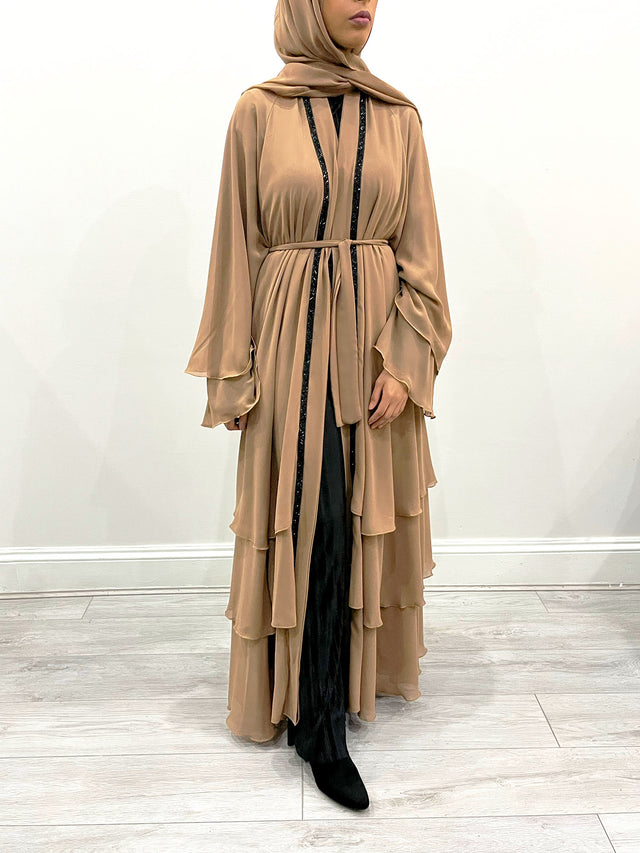
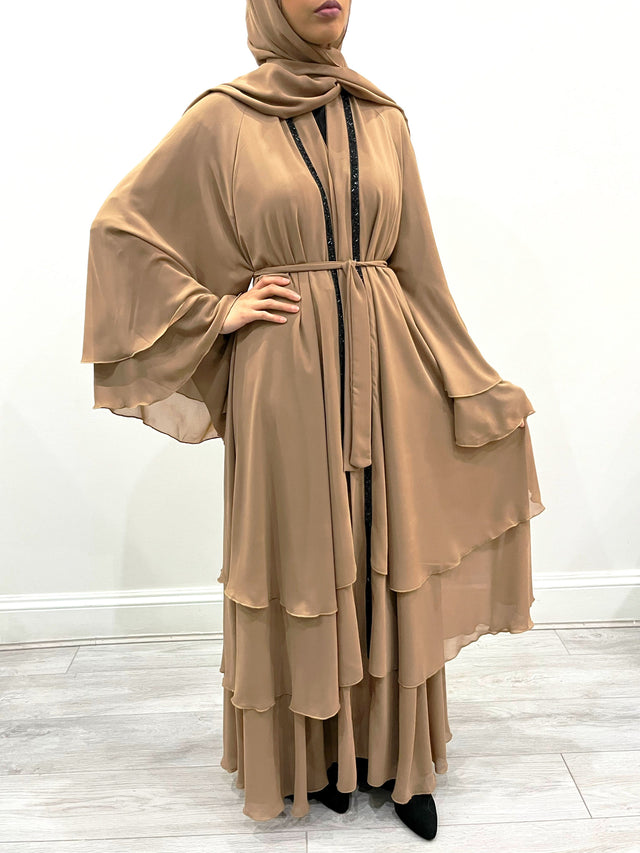
Deep burgundy and teal bring colour to soft hooded prayer abayas, while a black abaya and diamond-shaped khimar create a matching look in crepe. For Eid, weddings and evening gatherings, tonal diamante piping adds shine to an open silhouette. There is room here to return to the colours you love and find a new way to wear them.
Other filter counts do not include your size selection.
Women’s modest clothing for everyday dressing and occasions
Build a wardrobe around the way you spend your days. Amani’s women’s collection brings together different approaches to modest dressing, from abayas and long dresses to coordinated layers and dedicated prayer clothing. The right combination can give you an uncomplicated everyday outfit, a familiar prayer arrangement and something distinctive for a celebration without asking every garment to do the same job.
Shape is a useful place to begin. Decide whether you want one main garment, an open layer over clothes you own or a coordinated set. Then consider fabric, colour and detail. Those choices become easier when you know how the outfit will be worn, how much layering you enjoy and the coverage you want through movement.
Give everyday, prayer and occasion clothing different roles
An everyday outfit needs to work beyond a still photograph. Think about sitting at work or study, walking between places and wearing a coat or carrying a shoulder bag. A manageable hem and comfortable sleeve room can make a simple garment especially useful.
Dedicated prayer clothing has a different set of practical details. The head covering, face opening, cuffs and ease through the body work together through salah. Keeping a suitable garment ready at home or with your travel things may be more useful than trying to adapt every outfit in the same way.
For an occasion, decide what should provide the interest: a fluid silhouette, a rich colour, a print or embellishment. You can build around one strong feature and use simpler pieces elsewhere. A wardrobe with several clear roles leaves room for beautiful details while keeping daily dressing straightforward.
Open and closed abayas create different outfits
Explore women’s abayas by how you want the garment to sit. An open abaya creates a frame around the clothes underneath. It is useful when you want to change an existing dress or coordinate contrasting layers. A closed design gives the front a more continuous line, with less of the base outfit on show.
Look at the sleeves and the lower part of the garment as well as the front. A fuller cut allows a different shape and movement from a straighter one. The arrangement should work when you reach, sit and carry your usual bag, with enough room for the layers underneath.
The Black Open Abaya with Embellished Piping gives one occasion example: black diamante detailing follows the edges of a Zoom-fabric open layer, supplied with a matching hijab and belt. The base outfit remains your own. That is a different purchase from a set containing an inner dress, even when the finished photographs look equally complete.
Long dresses, prints and a simple outfit foundation
A long dress can give an outfit its main colour and line in one garment. The long sleeve maxi dress collection is useful when you prefer to begin with a dress, then choose a scarf, footwear and any outer layer around it.
With a plain dress, texture or a contrasting scarf can bring interest near the face. With a printed dress, repeating one quieter shade from the pattern can connect the outfit without requiring an exact match. Leave some space between decorative elements so a print, a necklace and an embellished outer layer are not all competing for attention.
Fit still depends on the actual neckline, sleeves and body measurements. A relaxed silhouette can feel very different over a fitted base than over several loose layers. If you intend to add an abaya, compare the sleeves and hems of both garments before settling on the combination.
Attached hoods, khimars and slip-on prayer dresses
The prayer wear range offers different ways to organise head and body coverage. The Double Hooded Prayer Abaya brings a built-in double hood, elasticated ruched cuffs and two pockets into one soft CEY garment. Burgundy, navy and teal offer different colour directions within that construction.
The Black Abaya and Khimar Set takes a separate-pieces approach: a loose overhead abaya and a long diamond-shaped khimar in soft crepe. Two straps tie behind the head to secure the khimar. The pieces can also be considered with suitable garments already in your wardrobe.
Floral slip-on prayer dresses offer another arrangement with an attached hijab. These have their own sizing and fabric details; the adult floral designs are not interchangeable with a numbered abaya or a child’s prayer dress. Choose according to how you want to dress, keep the garment together and move in it, rather than colour alone.
Use coordinated sets where they make dressing easier
A set can remove the need to find an inner dress and scarf in related shades, provided those pieces are included. It is especially useful when you need one complete arrangement for an event. Read the components as individual garments: an outer abaya, inner dress, scarf and belt each have a different role.
Separates make sense when part of the outfit is already in your wardrobe. A plain duster can frame a printed dress, while a suitable inner garment can make an open abaya more useful. Before buying, picture one complete combination you can wear immediately. Further combinations become a benefit once the first one works.
A component’s usefulness on its own depends on its cut. An inner dress supplied with an outer layer may be sleeveless or have a different neckline, so assess it separately before treating it as another complete outfit.
Choose fabric for drape, finish and the layers beneath it
Fabric changes the character of a silhouette. A smooth matte surface can keep attention on the shape, while satin catches the light and makes folds more visible. A print brings its own colour relationship; beading or piping directs attention towards particular parts of the garment.
Use those visual qualities alongside the stated material and care information. CEY, Neda, Zoom and satin names are useful starting points, but a name alone does not establish fibre composition, lining, weight or opacity for every design. Those details belong to the individual garment.
Consider the complete arrangement in the setting where you will wear it. Several layers may be useful in one outfit and feel unnecessary in another. The goal is a drape and level of coverage you enjoy, with a care routine you are willing to follow.
Measure length and room through the body separately
For a numbered abaya length, follow the shoulder-to-hem measurement method given for the garment. It is a garment length rather than your full height or a general dress size. Compare with an abaya that already falls where you want it to, using the footwear planned for the new outfit.
Width and ease need their own assessment. Check the bust, hips, sleeves and shoulder area where measurements are supplied, allowing for the layers beneath. A longer size does not automatically solve a width issue. Lettered sizes and Free Size garments have their own measurements too.
The size guide helps explain the store’s measuring approach. If a dimension essential to your fit is missing from an individual product, establish it before choosing. A comfortable outfit should retain the coverage you prefer when you sit and move, as well as when standing.
Build a palette that leaves room for variety
Begin with colours you already enjoy wearing together. A black or navy foundation can sit beside softer neutrals, while burgundy and teal offer richer colour without requiring a print. Brown can connect with cream and warm beige. These are styling possibilities, rather than rules about what every wardrobe needs.
Try repeating a colour in two places, such as a scarf and a small detail in a dress, while leaving the rest simple. For a tonal outfit, different textures can create interest even when the colours are close. For a printed garment, choose whether the print or the accessories should be the main feature.
Exact matches are harder to judge across separate photographs because light, fabric sheen and screens affect colour. Related tones can often make a more flexible combination than a purchase that depends on two shades being identical.
Keep the clothes you use ready to wear
Consider washing, drying and ironing instructions while choosing a garment. A set may contain fabrics or decorative details that need different handling. Store components together, and keep beading, chains and rough fastenings away from surfaces that could catch.
The most useful wardrobe is one you can maintain in your normal routine. Keep the garments used frequently easy to reach, and prepare occasional pieces before the day you need them. A little attention to hems, matching scarves and the right base layer can make dressing much easier without adding more clothes.
Choose the next piece for a real outfit
A useful purchase should answer a clear need: an everyday garment with the shape you prefer, a prayer outfit that suits your routine, a base layer or a celebration look. Put the proposed item beside the pieces that will complete it and consider whether the arrangement still feels right.
Review the selected option and included components, then read the current returns information. If the outfit is needed for a date, consult delivery details and leave time to try it. This gives a new garment a clear place in the wardrobe from its first wear.
Questions about women’s modest clothing
How can I begin a modest wardrobe without buying everything at once?
Choose one outfit for the part of your week that needs attention, then build from it. A familiar colour, a comfortable shape and a realistic plan for layers will help the first garment work with later additions.
Should I choose an open or a closed abaya?
Choose an open design when you want an outer layer that shows and frames the outfit beneath. A closed design creates a more continuous front. Assess the neckline, fastening and coverage of the actual garment in either case.
When is a set more useful than separates?
A set helps when its included components provide the combination you need. Separates are useful when you already have a suitable dress, scarf or outer layer and want to fill one gap.
Can I wear a prayer abaya beyond salah?
Some designs are described for prayer and everyday wear, including the Double Hooded Prayer Abaya. Consider the fit, hem, head covering and other layers for the setting in which you intend to wear it.
Does Free Size mean a garment fits everyone?
No. Use the design’s stated measurements and construction. Free Size describes the offered option, rather than a universal fit.
How can I make an occasion outfit easier to wear again?
Choose a colour and silhouette you already enjoy, and identify one simpler arrangement using clothes or accessories you own. A coordinating scarf or outer layer may work separately when its own cut and coverage suit the new outfit.