How Can a Cargo Abaya Combine Practicality with Modern Design?
A cargo abaya brings practical details into view. Pockets, zip lines, tabs and adjustable sections can become part of the design, giving a long, modest silhouette a more purposeful, contemporary character. The most successful outfit lets those details work together: you can reach what you need, move comfortably and enjoy the shape without every accessory adding another buckle, strap or competing line.
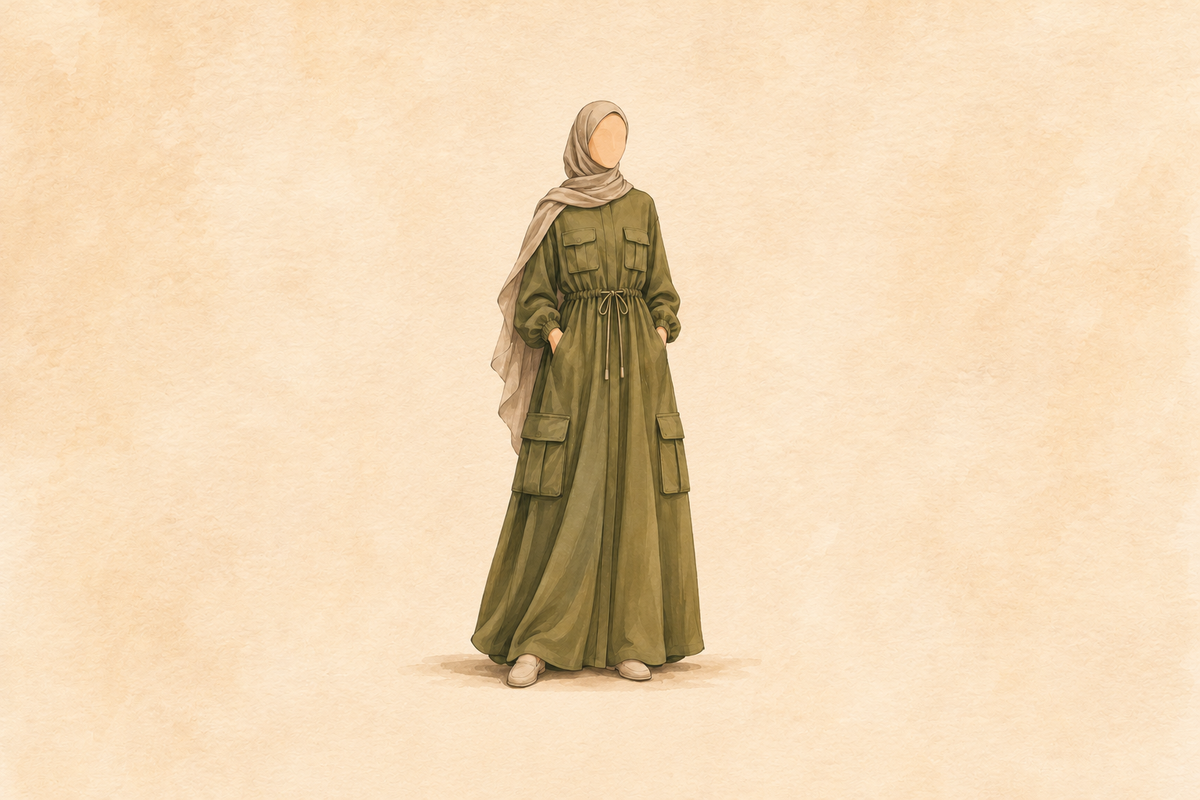
Start with the particular abaya in front of you. One may have a pair of flat patch pockets; another may combine several flap pockets with a waist adjustment or a visible front zip. Their styling needs will differ. Look at the positions of the details, decide which ones you will use, then build the scarf, underlayers, shoes and bag around that arrangement.
Olive, navy and beige provide useful starting points, especially if you already wear those colours. Trainers can make a cargo abaya feel relaxed; a neat blouse and loafers can make the same garment feel more considered. The aim is a complete outfit whose practical elements look intentional and remain comfortable through an ordinary day.
Read the design before adding anything
Lay the abaya flat or hang it where you can see its entire front. Identify the strongest feature. It might be a row of large pockets, contrasting stitching, a central fastening or an adjustable waist. That feature gives you a useful starting point for styling. An abaya with prominent pockets already has plenty of visible detail, while a quieter version can accommodate a more expressive scarf.
Next, separate working features from decorative ones. Open the pockets gently, inspect the fastenings and check whether a tab actually adjusts anything. If you are choosing online, look for clear photographs or ask a precise question. “Does the waist drawcord change the fit?” is more useful than “Is this practical?” A stitched decorative strap and a functioning adjustment create different options.
Then look at how the design falls on your body. A pocket placed neatly on the model's hip may sit somewhere else on you. A belt may cross an opening, or a long scarf end may cover a chest detail you wanted to show. Use these observations to place the scarf and bag comfortably around the garment's shape while keeping the coverage you prefer.
Choose how much of the utility detail to show
For a clearly defined cargo look, leave the main pocket shapes visible and keep the surrounding clothes fairly simple. A plain hijab, uncomplicated footwear and one bag are often enough. If the abaya has several flaps or a strong zip line, an additional vest with its own pockets can make the front unnecessarily crowded.
You can also soften the effect. A gently draped scarf, a blouse collar at the neckline or a warm brown bag can give a structured cargo abaya a less stark finish. Choose one softening element first. You do not need to cover every utilitarian detail to make the garment feel elegant.
Try a front and side view with the whole outfit on. Check whether several features collect at the same level: scarf tails, pocket flaps, a bag and a belt buckle can all meet around the waist. Moving the bag or changing the scarf's drape may solve the congestion immediately. Keep the coverage you want while giving each piece enough space to sit naturally.
Let pockets support the outfit without carrying the whole day
Visible pockets are central to many cargo designs, but filling every one changes how the garment hangs. Begin with the pockets empty so you can judge the intended shape. Add only the small items you actually want within reach, then check whether a flap lifts, a seam pulls or one side drops.
A pocket can be useful for a tissue or travel card even if it is unsuitable for a heavy phone. Think about access as well as capacity. A pocket low on the leg may look attractive but require an awkward reach; a chest pocket may be partly covered by your hijab. Choose the accessible pockets for frequent use and leave the others as part of the design.
If your essentials need a bag, choose one that sits comfortably between the cargo details. A smooth, compact shoulder bag may be easier beside prominent hip pockets than a large crossbody bag pressing directly across them. Try your own bag before considering a replacement. Our guide to useful abaya pockets explains how placement, depth and load affect the garment.
Adjust the shape a little at a time
Where a cargo abaya includes an adjustable waist, start with it comfortably loose. Make a small adjustment, smooth the surrounding cloth and look at the pocket openings. Stop when the shape feels right for your preferred coverage. Pulling the waist tighter can move the pockets, gather the front fastening or make the upper body lift as you reach.
Sit before deciding that the setting works. The adjustment should remain comfortable across the abdomen and back, and you should be able to reach forward without the waist anchoring the whole garment. A drawcord that needs loosening every time you sit may be better left at the more generous setting throughout the day.
If you add a separate belt, check that it has a clear place to sit. A narrow, simple belt can provide definition on a quiet cargo abaya, but a wide belt may cover several useful features. Keep any loose ends tidy using the garment's intended loops or fastenings. Where the relaxed shape already looks good, wearing it without a belt is a complete styling choice.
Olive cargo abaya: cream, black and a relaxed finish
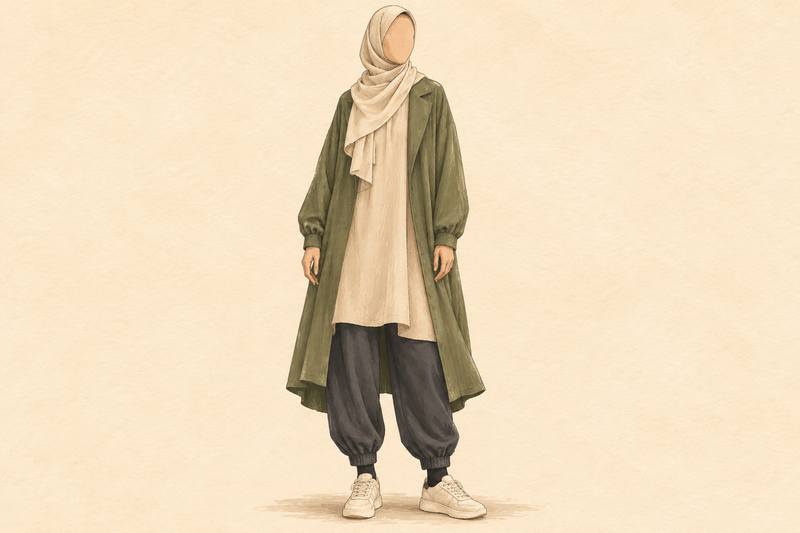
For a casual outfit, try an olive cargo abaya with a cream hijab, simple black footwear and a compact black bag. The light scarf gives the face area a distinct place in the outfit, while the darker accessories provide a quieter base. Choose a cream you enjoy beside the actual olive fabric: a warm ivory and a cooler chalk shade can produce quite different effects.
If your abaya opens at the front, a plain cream or black underlayer can continue the combination through the centre. Keep its neckline and sleeves compatible with the abaya so you are not arranging several competing cuffs and collars. For a closed design, let the scarf provide most of the lighter colour instead.
Plain trainers suit the relaxed direction. If yours have a thick sole, check the hem over them from the side as well as the front; if they are very low, make sure the fabric does not collect around the heel. A small printed scarf can replace the cream one on another day, especially when the print repeats a little olive or black.
Keep jewellery close to the body where it might meet pocket flaps or zip pulls. A watch or simple ring can finish the outfit without adding another large feature. If the abaya already has contrasting hardware, try the complete look before deciding it needs a conspicuous belt buckle as well.
Navy cargo abaya: a polished blouse and loafer combination
Navy offers a useful route when you want the cargo details to sit within a more polished outfit. Try a pale blue blouse beneath an open abaya, a navy or soft grey hijab, loafers and a structured bag. The blouse creates a clear, finished inner layer while the cargo construction keeps the outer garment interesting.
Look closely at the neckline. If the abaya has its own collar, a second large collar can feel crowded beneath the scarf. A small blouse collar or a simple neckline may sit more comfortably. Arrange the scarf with the coverage you prefer, then decide how much of the blouse you want visible.
Choose trousers or a skirt that remain a complete modest outfit if the outer front moves. A navy inner column can make the pale blouse the main contrast; grey trousers can give the lower half a lighter finish. Use the abaya's actual opening and length to judge the effect rather than relying on a carefully held pose.
For a workplace, consider the expectations and tasks of that particular setting. Quiet hardware, neatly lying pocket flaps and secure sleeves may be easier to manage around a desk than long loose tabs. Keep items that you repeatedly need in your bag or an accessible pocket, so getting through the day does not disturb the outfit each time.
Beige cargo abaya: warm brown accessories and a tonal scarf
A beige cargo abaya can work well with a taupe scarf and brown shoes or a bag. Begin by comparing the shades together. A pinkish beige, a yellow sand and a cooler stone colour each respond differently to the same brown. Hold the scarf beside the abaya in daylight, then check them again under the lighting where you usually get dressed.
Use a little contrast between the scarf and the garment so their edges remain visible if that is the effect you want. A scarf slightly deeper than the abaya can make the upper part feel settled without introducing a new strong colour. Alternatively, a cream scarf gives a lighter, fresher arrangement.
Brown loafers and a simple bag can keep the outfit fairly polished. Trainers with a small brown or beige detail can make it more casual. You do not need an exact match between every accessory: compare the complete outfit and decide whether the different shades feel related to you.
With pale fabric, inspect the pockets and underlayers in normal daylight. Check the garment both empty and with your intended small contents. If a dark pocket lining or an object creates an outline you dislike, a different underlayer may help with coverage, while moving the object to a bag deals with the pocket shape itself.
Use a darker inner outfit to frame an open cargo abaya
An open cargo abaya offers a clear way to combine utility details with a simple inner outfit. Try a long plain top and trousers in related dark shades, then let the abaya form the outer shape. When the visible centre is quiet, pockets and fastenings can remain distinct without competing with a busy print underneath.
The inner top needs enough length and coverage for the way you plan to wear the outer garment. Walk, reach and sit with the front open. If you prefer it fastened, check the fastened arrangement as well. Choose an inner outfit you are comfortable wearing through those movements, including any gaps between closures.
A turtleneck can make this combination feel more enclosed in cooler conditions, provided it sits comfortably beneath the scarf and abaya neckline. If the layers feel crowded at the neck, try a lower, simpler inner neckline with your usual hijab coverage. A style photograph is useful inspiration, but your comfort determines which version earns repeat wear.
Give a cargo abaya a more dressed-up finish
For a dinner or gathering where a cargo abaya suits the dress code, work with its existing lines. A navy design with discreet pockets can look composed with a plain deep-blue scarf, a small smooth bag and shoes with a modest amount of shine. Keep the pockets lightly filled or empty so the front retains the shape you chose.
If your abaya has bold flaps or contrasting zips, let those details remain the main feature. Try an olive design with a dark brown scarf and polished brown shoes, or beige with a deeper taupe scarf and a simple metallic clutch. Compare the metal finish with the garment's hardware before adding jewellery. You may find that the bag provides enough extra detail.
For an open version, a plain long dress beneath the abaya gives a different effect from the blouse-and-trouser combination. Check the two necklines together and look at where each hem falls. A dress that pools beneath a shorter outer garment will need attention even if the layers look attractive in a still photograph. Choose a combination that stays manageable when you walk to a table or take a seat.
Keep the change small when moving from a daytime outfit to an evening one. Swap the everyday bag for a compact one and change your shoes if you wish; leave a scarf arrangement that already feels comfortable in place. If the occasion requires a very formal outfit, compare the cargo abaya with another garment you own. Choose the one whose design and your preferred styling comfortably suit the invitation.
Bring in print without losing the cargo shape
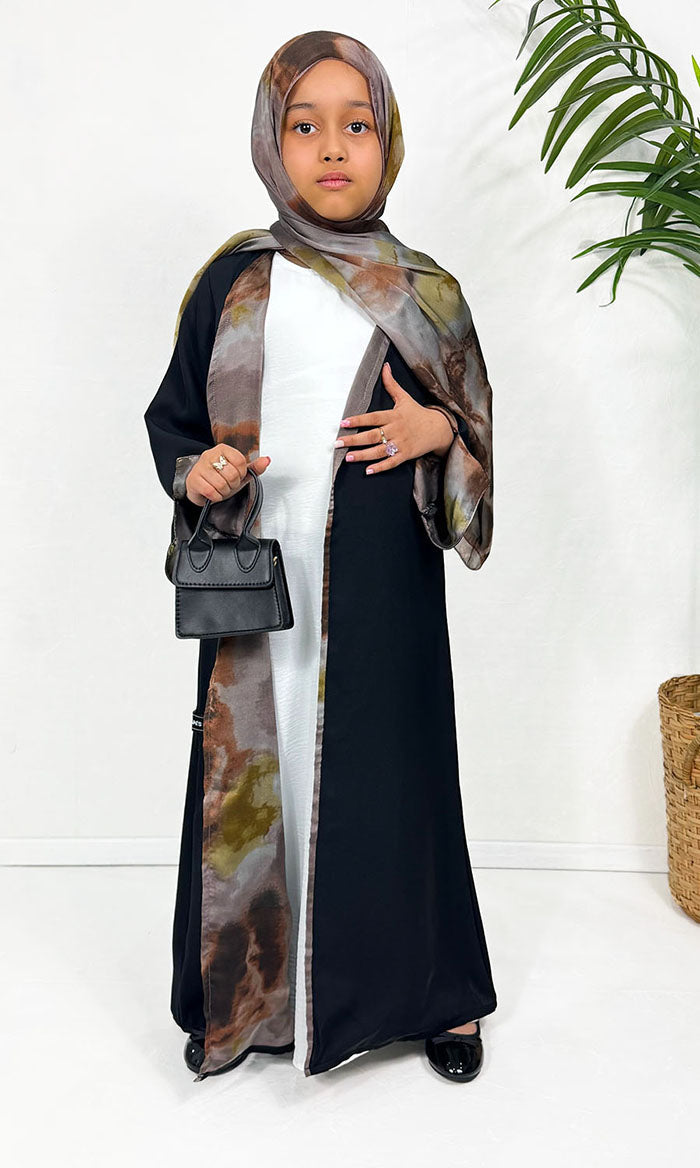
A patterned hijab can give a neutral cargo abaya a more personal finish. Begin with a print that contains at least one colour you already have in the outfit. For example, an olive abaya can sit beside a small cream-and-olive pattern, while navy can work with a print containing pale blue and a little warm brown.
Think about the size of the print beside the pocket shapes. Large rectangular pockets already create a strong visual rhythm. A scarf with equally large, high-contrast blocks may feel deliberately bold, whereas a smaller, quieter pattern keeps the cargo details more prominent. Neither approach requires every other accessory to become a statement.
Arrange the print with the scarf actually wrapped. A striking motif at the edge may disappear in the folds, while a small patch of bright colour can become very noticeable beside the face. Try a different starting point or drape before changing the entire scarf. Keep the neckline and chest coverage you want as you experiment.
Choose footwear for the hem and the mood together
Trainers are an easy starting point for cargo styling, but their shape matters. A broad, chunky trainer gives a different finish from a low, slim one. Place each beneath the abaya and look at the amount of shoe that shows when you stand normally. Then walk: the moving view often explains why a combination feels balanced or cumbersome.
Loafers or simple flat boots can make the same abaya feel more composed without requiring a completely new outfit. If you prefer a small heel, check that its back does not catch the hem and that the length still works during ordinary steps. Pick shoes you can comfortably use for the actual route and duration of your day.
Do not rely on footwear to correct an unsuitable garment length. A hem that is only manageable with an impractically high shoe may need alteration or a different size. Ask about the effect on lower pockets, vents or adjustable hems before shortening a cargo design; those details can limit where a clean adjustment is possible.
Coordinate hardware with your accessories
Visible zips, studs, buckles or buttons can influence the rest of the outfit. Look at their finish beside your bag and jewellery. A shiny silver-coloured zip may be enough metal detail on its own, while small dark fastenings may blend into the fabric. You can keep other accessories simple without trying to repeat every feature exactly.
Mixed finishes can also work if you enjoy them. Try the complete combination and choose where you want the eye to settle. A bag with a large decorative chain, a substantial belt buckle and several prominent garment zips will create a stronger effect than a smooth bag and small jewellery.
Consider contact as well as appearance. A ring can catch beneath a flap when you reach into a pocket; a bag clasp can press against a chest fastening. If an accessory keeps meeting the same point on the abaya, move or change that accessory. A visually attractive arrangement should still let you use the garment naturally.
Layer over it without burying the useful features
For an outer coat, check the shoulders and sleeves with the cargo abaya underneath. Raised tabs or substantial cuffs may need more space than a plain sleeve. Put on both garments and bend your arms rather than judging the combination only while standing straight.
Notice where the coat ends. A short jacket may sit just above the main pockets and leave them accessible; another may end directly across the openings. A long coat can cover all the cargo detail, which may be entirely comfortable for the journey, but you will need another place for anything you want to reach while it is fastened.
A plain outer layer often gives a detailed cargo abaya more room visually. If both pieces have prominent utility pockets, try wearing the coat open where the weather and setting allow, or choose the simpler of the two for that day. Keep rain protection and warmth as separate checks of the actual outer garment rather than assuming a utility appearance provides them.
Check the details during a realistic fitting
Once the colours and accessories are chosen, put on the whole outfit for a short fitting at home. Sit in a normal chair, reach for your bag, walk through a doorway and use the pockets you expect to need. Keep tags and the garment's condition in line with any applicable return requirements while deciding whether to keep a new piece.
Look for linked problems. If raising an arm lifts the waist adjustment, loosen the adjustment and try again. If a bag pushes a pocket flap outwards, reposition the bag before assuming the abaya is the wrong size. If a zip edge catches your scarf, change the scarf's arrangement or choose a different neckline combination.
Some issues do call for a different garment. Persistent pulling across the shoulders, a fastening that will not lie comfortably or pocket positions you cannot reach are worth taking seriously. A larger size may change length and pocket placement as well as width, so compare the actual measurements rather than assuming it solves every difficulty.
Compare two designs against clothes you already wear
When two cargo abayas appeal to you, set out the same scarf, shoes and bag beside each option if you can. This keeps the comparison focused. A beautifully styled product photograph may feature accessories very different from yours; the garment that works with your regular pieces is more likely to become easy to repeat.
For example, imagine one olive abaya with broad hip pockets and another with smaller pockets higher on the body. If you usually wear a long chest-covering scarf and a crossbody bag, examine where those pieces meet each design. The upper pockets may disappear beneath the scarf, while the lower ones may sit directly beneath your bag. Neither arrangement is automatically a problem, but it changes which details you can show and use.
Next compare the setting you expect to wear most often. An open cargo abaya needs compatible inner outfits. Count the combinations you already have that provide your preferred coverage when the front moves. A closed version may simplify that part of dressing, but its neckline, cuffs and length still need to work with your usual scarf and footwear. Choose the arrangement that fits the way you actually get ready.
Finally, inspect what happens when the optional styling is removed. Loosen the belt, take off the bag and let your arms rest naturally. You should still like the garment's basic shape. If you only enjoy it while holding a particular pose or adding several accessories you do not normally wear, give yourself time to compare another cut. A useful cargo abaya has a strong starting shape as well as interesting details.
Keep the care routine specific to the garment
Before cleaning, empty every pocket, including small decorative-looking ones that you have used. Check for tissues, receipts and loose objects. Follow the care label and any instructions for removable belts, straps and fastenings. Keep detachable pieces together so the outfit is ready to wear again.
The care label applies to the whole garment, including the combination of cloth, trim and construction. GINETEX's care-symbol guide explains the instructions for washing, drying, ironing and professional care. Use the permitted method instead of choosing a cleaning temperature from the cargo style or the fabric's appearance.
After care, inspect the details you use most. A loose pocket corner, twisted adjustment or lifting tab is easier to assess before you load or fasten it again. Ask a suitable repairer about a worn feature rather than repeatedly pulling it into place. Store the abaya with its shape supported and its hanging straps or belts arranged neatly.
Build one dependable outfit, then vary one element
Choose the combination you most want to wear first: olive with cream and trainers, navy with a pale blouse and loafers, or beige with taupe and brown accessories. Set out the complete outfit and decide where your belongings will go. A few intentional choices make the cargo details feel connected to the way you dress.
On the next wear, change one element. Replace a plain scarf with a print, swap the trainers for loafers or remove the belt for a looser line. Keeping the rest familiar helps you see what each change does. You can build several distinct outfits without adding more and more equipment to a garment that already has its own character.
A cargo abaya combines practicality with modern design most convincingly when its features have room to work. Comfortable adjustment, accessible pockets, a clear scarf arrangement and footwear that suits the hem create the foundation. Your colours and accessories then give that foundation a personal finish.