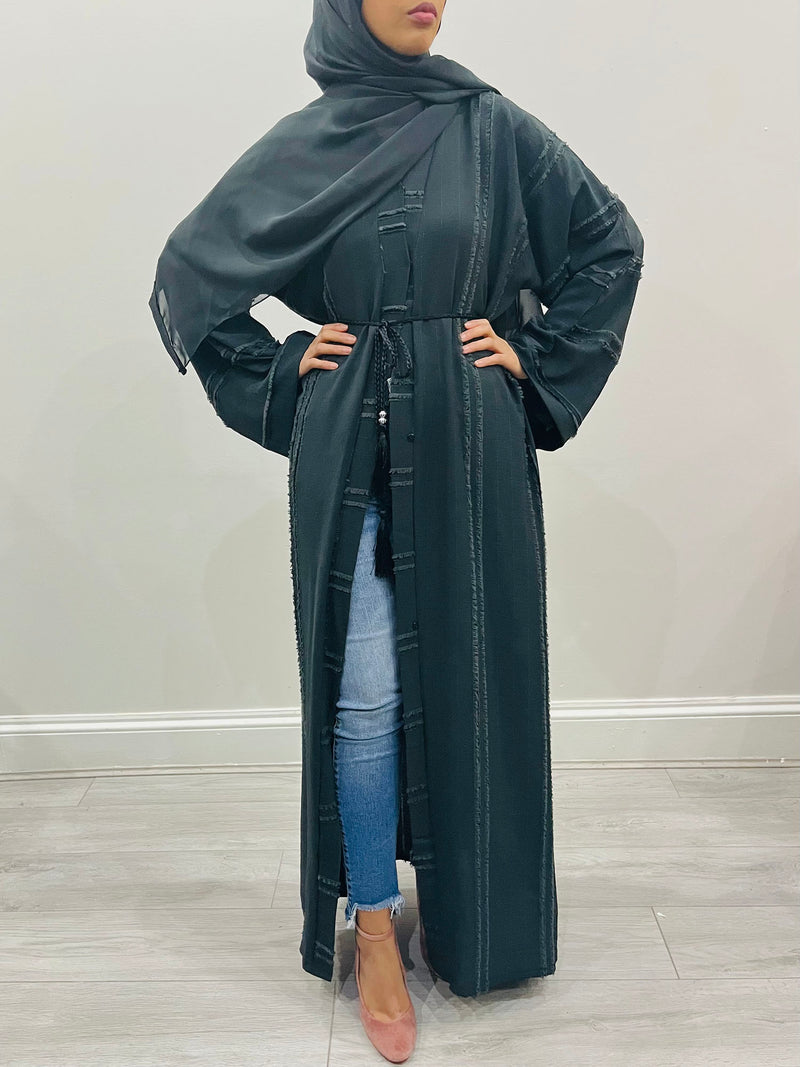
Can a Wedding Abaya Feel Special Enough for the Occasion Without Becoming Difficult to Sit, Walk or Pray In?
The right wedding abaya starts with the woman wearing it
A wedding abaya is never only a pretty garment. It belongs to a real woman walking into a real room with family, photographs, food, prayer, greetings and hours of movement ahead of her. Before I think about colour or decoration, I think about the person wearing it. Is she the bride, a nikah bride, a walima bride, a sister, a mother, a close family member, a wedding guest or someone attending a formal modest event? The answer changes everything.
A bride may want softness, ceremony and a feeling of emotional weight. A guest may want elegance without looking as though she is trying to stand at the centre of the day. A close family member may need sleeves that behave, a hem that survives stairs and a bag that does not catch on decorative detail. When the role is clear, the abaya can be chosen with dignity instead of panic.
I would use the broader complete abaya guide first if the basic questions of cut, fabric, length or everyday abaya structure still feel unclear. Once those foundations are settled, the wedding decision becomes less about chasing every beautiful image and more about matching one garment to one role, one setting and one modest comfort level.
A wedding abaya should feel special without making modesty feel heavy
I do not believe modesty and wedding beauty are opposites. A sister can want detail, colour, shine or softness without wanting to be exposed. The better question is whether the abaya protects her coverage, movement and comfort while still letting the day feel joyful. Beauty should support the moment, not make the wearer anxious inside it.
This is why I judge a wedding abaya by how it behaves after the first photograph. Can she sit without tugging at the front? Can she walk without holding the hem every few steps? Can she greet family, make wudu if needed, pray without panic, eat comfortably and travel home still feeling composed? If the answer is yes, the garment is doing something deeper than looking decorative.
That balance is where many sisters feel most emotional. They do not want to look ordinary on a meaningful day, but they also do not want the outfit to demand constant correction. A good abaya gives room for joy without making the wearer feel watched by her own clothing. It lets her remember the gathering, not only the garment.
Bride, guest, nikah and walima roles need different answers
A bridal abaya carries a different emotional responsibility from a wedding guest abaya. The bride may want a softer colour, a more ceremonial fabric, a more refined finish or a design that feels memorable in photographs. A nikah abaya may feel calmer and more spiritual in tone, while a walima outfit may lean more formal depending on the family, venue and timing.
A guest abaya, on the other hand, should feel respectful. It can still be beautiful, but it should not compete with the bride unless the dress code or culture clearly allows a shared level of formality. A mother or sister of the bride may need something elevated but practical because she may be moving, helping and standing for long periods. One wedding word does not create one outfit rule.
I also think about how close the wearer is to the main family. A distant guest may choose something simpler. A sister or mother may need more formality because she appears in many photographs, yet more practicality because she may also be helping. That mix is why the role question matters before the colour question.
Colour should respect the setting, not follow one universal rule
Wedding abayas are not limited to white. White, ivory, cream, champagne and pearl tones can feel bridal, but they are not required for every bride and they are not automatically right for every guest. Blush, dusty rose, sage, navy, burgundy, silver, gold, mocha, chocolate, black and muted jewel tones can all belong in the right setting when they suit the wearer and the family context.
The mistake is treating colour as a rule without checking role. A guest wearing pale cream to a wedding may look too bridal in one family and perfectly normal in another. A black abaya may feel elegant in an evening venue and too sombre in a different daytime ceremony. I would rather ask, “Will this colour honour the event, photograph well and keep me comfortable?” than pretend one shade is always correct.
Undertone matters as much as colour name. One cream may be yellow and warm, another may look cool and almost white. One burgundy may feel rich and wedding-ready, another may look too dark for a daytime event. I would always hold the hijab, shoes and abaya together before deciding whether the colour feels harmonious.
Pale wedding colours need stronger opacity checks
Pale colours can be beautiful, but they ask for more testing. White, ivory, cream, champagne, blush, nude and silver-toned abayas may look covered indoors and then become more revealing in daylight, flash photography or bright venue lighting. A wedding abaya does not become opaque just because it is formal. Fabric density, lining, weave, colour and inner layers all matter.
I check pale wedding abayas with the intended inner layer, hijab and lighting. Hold the fabric near a window. Look at sleeves, side openings, front panels, the skirt and the back. If the abaya is open, the outfit underneath must be modest on its own. A soft bridal look should never depend on hope. It should depend on layers that have already been checked.
The underlayer also changes the result. A white inner dress under cream can brighten the look, while a nude or beige base may change the tone completely. Dark underlayers can create shadows under pale fabric. The safest approach is to test the whole outfit exactly as it will be worn rather than judging the abaya alone.
Fabric matters more than the word wedding in a product title
The word wedding does not prove fabric quality. A wedding abaya may be made from crepe, nidha, satin-finish fabric, chiffon, georgette, lace-style panels, organza-style overlays, tulle-style layers or embellished material, but each fabric has to be judged separately. I do not assume silk just because something looks shiny, and I do not assume lining just because the garment looks formal.
Satin can look elegant, but it may reflect light, crease, show water marks or cling if the cut is narrow. Chiffon and georgette can soften a look, but they often need a stronger base underneath. Crepe may be more controlled, but the weight and opacity still need checking. A wedding abaya should be judged by construction, not by romantic wording.
Comfort is part of fabric judgement too. A fabric can look luxurious and still feel scratchy, heavy or warm. Another can look quiet but sit beautifully for hours. Wedding shopping often rewards the dramatic photo, but real wear rewards the fabric that lets the sister stay relaxed while moving through a long day.
Lining should give coverage without stealing movement
A lining can make a wedding abaya feel safer, especially in pale colours or lighter fabrics. It can protect modesty, smooth the fall of the outer fabric and help the garment photograph with more confidence. But lining is not automatically perfect. If it is too narrow, too short, too clingy or poorly attached, it can create movement problems under a beautiful outer layer.
I check lining at the sleeves, bodice, skirt, side openings, underarms and front panels. I also check static between layers, because a lining that sticks while walking can make the garment uncomfortable. The best lining gives confidence quietly. It does not make the abaya heavy, hot or difficult to move in.
If the abaya has a separate inner dress, I check that piece as carefully as the outer layer. A weak inner dress can make a beautiful outer abaya unreliable. It needs a neckline that works with hijab, enough width to sit, enough length to cover and fabric that does not become transparent under light.
Open wedding abayas depend on the layer underneath
An open wedding abaya can be graceful, especially when it has soft front panels, elegant sleeve detail or a floaty outer layer. But an open abaya is a layering garment. It should not be treated as complete unless the inner outfit gives proper coverage by itself. The base dress or outfit has to handle movement, sitting, light and photographs before the outer layer is trusted.
I ask whether the front closes, whether the overlap is secure, whether a belt changes coverage, whether side openings reveal the inner dress and whether decorative detail sits on panels that may move. If the wind catches the abaya or the wearer sits at a low table, the inner layer becomes visible. That is not a problem if the whole outfit was planned properly.
I also think about photographs from the side. An open front may look elegant from straight ahead but reveal more at an angle, especially when walking or turning. A secure inner layer prevents that anxiety. The outer abaya can then be enjoyed for movement and beauty rather than forced to hide every practical weakness.
A wedding abaya dress needs both beauty and ease
A wedding abaya dress can feel complete because it is not simply an open outer layer. It may have a full shape, decorative finish, fitted-looking structure or gown-like presence. Even then, it still needs the abaya test. The neckline, sleeves, opacity, lining, closure, hem width, fabric weight and sitting comfort all matter.
Some abaya dresses look beautiful while standing but pull across the lap when seated or narrow around the stride when walking. Others have sleeves that look dramatic but become difficult at dinner or wudu. I want the dress feeling without losing the ease. A wedding abaya dress should let the wearer feel dressed up and still breathe normally.
A complete dress style can be a relief for sisters who do not want to build many layers. But complete does not mean careless. If the fabric is pale, check the back. If the sleeves are narrow, check wudu. If the bodice has decoration, check whether it pulls when sitting. The simplest-looking piece still needs evidence.
Embellishment should support the day, not take over
Wedding abayas may have embellishment, but detail should be judged by placement and evidence. I avoid making strong claims about pearls, crystals, handwork, designer finish or durable stones unless the actual product information proves those details. Without proof, it is safer to talk about decorative detail, stone-style work, embroidery-style panels or occasion detail.
Placement changes everything. Detail near the cuff may catch on food, sleeves, chair arms or prayer spaces. Detail near the neckline may affect hijab drape. Raised work near the shoulder may rub against a bag strap. Heavy front panels may pull the garment forward. Decoration is not only visual. It changes weight, movement, care and comfort.
There is also an emotional side to decoration. Some sisters feel more themselves with a quiet abaya and a beautiful hijab. Others feel the day deserves visible detail. Neither choice is automatically better. The better choice is the one that supports modesty, role, comfort and the atmosphere of the wedding without making the wearer feel unlike herself.
Photographs matter, but they should not become the whole decision
Weddings are photographed, so it is sensible to think about daylight, warm venue lighting, cool venue lighting, phone cameras and flash. Pale fabrics can behave differently under bright light. Satin-finish fabrics can reflect strongly. Dark colours may photograph with less visible detail indoors unless the fabric texture or embellishment is clear.
Still, I would not buy a wedding abaya only because the model photograph is beautiful. Studio posing can hide issues with sleeve width, back view, fabric thinness, lining and movement. I prefer product evidence that shows multiple angles, close-up fabric, the back, sleeve shape and how the garment falls without being held perfectly in place.
Flash can also make weak construction more obvious. Uneven lining, thin sleeves, tight pull lines, creased satin-finish fabric and pale transparency may all appear more strongly in pictures. I never promise that any abaya will photograph perfectly. I simply prefer testing light honestly before the day, so there are fewer surprises afterwards.
A bride should not have to choose exposure to feel bridal
For a bride, the abaya may carry memory. It may be worn for nikah, family photographs, a small ceremony or part of a larger wedding day. Bridal beauty can come through ivory, cream, soft shimmer, controlled detail, graceful sleeves, beautiful drape, a secure hijab and calm confidence. It does not need exposure to feel special.
I would plan a bridal abaya with the hijab from the beginning. The scarf fabric, undercap, pins, neckline and any veil-style layer have to work with the abaya rather than fight it. The bride should be able to sit, pray, greet family and move without feeling that the outfit only works while she is standing still.
For some brides, the most beautiful moment is not the most decorated one. It is the moment the outfit feels settled, the hijab feels secure and the heart feels calm enough to remember the meaning of the day. A bridal abaya should serve that peace. It should not make the bride perform confidence she does not feel.
A guest abaya should feel dressed up without competing
For a wedding guest, elegance is usually strongest when the outfit has one clear statement. That might be a rich colour, a satin-finish fabric, controlled decorative borders, a graceful sleeve or a beautiful hijab pairing. When the abaya, scarf, jewellery, bag and shoes all try to be the main feature, the look becomes noisy.
A guest can look polished without appearing bridal. Soft neutrals, jewel tones, black with refined detail, navy, burgundy, mocha, olive, sage and muted metallic accents can work depending on the venue and family custom. I would check whether the outfit feels respectful beside the bride, comfortable in family photos and easy to wear for several hours.
The safest guest outfits usually have enough occasion detail to show respect and enough restraint to show adab. That may mean a darker abaya with refined cuffs, a muted colour with a satin scarf, or an embroidered outer layer over a calm base. The wearer should not feel invisible, but she should also not feel like the outfit is asking for the room.
Nikah and walima outfits can ask for different moods
A nikah outfit may feel quieter, softer and more reflective than a reception outfit. Some sisters prefer clean cream, ivory, soft blush, gentle embroidery or an understated abaya dress that lets the moment feel sincere. A walima outfit may feel more formal, especially when the venue, guest list and family expectations are larger.
The same abaya can sometimes serve both with a change of hijab, bag, shoes or jewellery, but not always. If the nikah is in a masjid or home, practicality around prayer, sitting and family movement may matter more than drama. If the walima is in a formal hall, lighting, photographs, heat and long-event comfort become stronger tests.
Timing matters as well. A morning nikah may suit softer fabric and lighter styling. An evening walima may carry stronger colour or richer texture. A hot indoor room may make heavy layering difficult. A cold journey may require a coat that does not crush sleeves or snag detail. The event schedule should shape the outfit.
Movement is the test that exposes weak wedding outfits
A wedding abaya must move. Standing in front of a mirror is only the first check. Walk across the room. Sit down. Stand up. Raise the arms. Reach for a bag. Pretend to greet someone. Try stairs. Try the coat. Try the shoes. Check whether the sleeve slips, the front opens, the lining twists or the hem pulls.
This test protects dignity. A garment can look perfect in one still photograph and become stressful during the actual day. Wide sleeves may drag, narrow skirts may restrict stride, long hems may catch and heavy detail may pull the shoulder down. The best wedding abaya keeps its beauty when life starts moving.
I also like checking whether the abaya still feels modest while turning quickly or stepping into transport. Those small moments are where many outfits fail. A front panel may swing open, a slit may reveal the inner dress, a sleeve may slide too far back or a hem may need constant lifting. Real movement gives honest answers.
Prayer planning should be practical, not performative
A Muslim wedding day may still include prayer, but the article should stay humble and practical. I do not treat a wedding abaya as automatic prayerwear, and I do not create religious rulings around it. I simply ask whether the outfit allows wudu, ruku, sujood and secure coverage if the wearer needs to pray during the day.
Sleeves should be manageable for wudu. The neckline should stay covered with the hijab. The hem should not create panic in sujood. If the abaya is delicate, heavily decorated or difficult to pray in, a separate prayer layer may be wise. AMANI'S prayer garments are for home or private prayer use, not ordinary outdoor wedding outfits, so category confusion should be avoided.
This is not about turning every wedding outfit into a prayer garment. It is about preventing stress. If the wearer knows she will need a separate layer, she can prepare one. If the sleeves need pinning or folding for wudu, she can plan that. If the hijab needs stronger pins, she can test them before leaving home.
Hijab pairing is about fabric, face contrast and staying secure
Hijab choice can change a wedding abaya completely. A matte hijab can calm a shiny fabric. A soft chiffon scarf can add bridal softness. A crepe or jersey hijab can add control and security. The right choice depends on the abaya colour, fabric finish, face contrast, undertone and whether decorative detail sits near the neckline or shoulders.
I check the hijab beside the abaya in real light. Ivory with ivory may look soft or may wash the face out. Gold detail may prefer warm cream, champagne, taupe or mocha. Silver-toned detail may suit pearl grey, soft white or cool neutrals. The hijab also has to stay secure for several hours, not only look graceful in the first photograph.
The scarf should also respect photographs around the face. Very shiny fabric near a shiny abaya may reflect too much. A very flat colour may make the outfit feel heavy. A slightly different texture can create depth without adding another colour. Good hijab styling often comes from contrast in finish, not only contrast in shade.
Accessories should finish the outfit, not rescue it
Accessories can help a wedding abaya feel complete, but they should not be used to rescue a weak garment. If the abaya already carries decorative detail, jewellery can stay quiet. If the neckline is plain, a refined necklace or brooch may help, provided it does not interfere with hijab coverage. If the cuffs are detailed, bracelets may be unnecessary.
Bags and shoes need practical thought. A rough bag strap can catch raised detail. Very high heels can make the hem unsafe. Metallic shoes may look beautiful but feel too loud with shiny fabric. The goal is balance. Let one part of the outfit speak clearly and let everything else support it.
Shoes are especially practical. They decide how the hem falls, how easily the wearer walks and whether the abaya drags. A beautiful heel can ruin ease if the wearer cannot move naturally. A lower shoe can still look refined when the hem length and fabric fall correctly. Wedding elegance should not require discomfort.
Wedding venues change what the abaya has to survive
A wedding abaya should be chosen with the venue in mind. A hotel hall, home nikah, masjid setting, garden photograph session, restaurant dinner and community venue all create different problems. UK weather adds another layer, especially with rain, wind, wet pavements, coats, stairs and travel between places.
Long hems need checking against shoes and venue floors. Pale fabrics need protection from wet ground and makeup transfer. Warm indoor venues can make lined or heavy embellished abayas feel hot. Long sleeves at tables can become awkward around food. The outfit should be beautiful inside the actual day, not only inside an imagined room.
Car travel matters more than people admit. A long abaya can crease while sitting in a car, wide sleeves can be awkward under a coat and delicate detail can rub against seat belts or bags. A sister may look perfect at home and arrive already stressed if the outfit was not tested for the journey.
Alterations need caution with wedding fabrics and detail
Wedding outfits often need more careful alteration decisions than everyday abayas. Shortening a plain hem may be simple, but shortening a hem with embroidery, lace-style trim, bead-style detail or shaped panels can change the look. Sleeve shortening may affect cuffs, lining or decorative placement. Side seams may not be safe to alter if the fabric is delicate.
Before altering, check the return terms, fabric construction and whether a professional tailor is needed. I would not cut into satin-finish fabric, chiffon, georgette, raised decorative work or lined panels without understanding what will happen. A small alteration can make the abaya better, but a rushed one can ruin proportion.
It is also worth asking whether alteration will change modesty. Shortening a lining too much can make a pale abaya less secure. Taking in side seams can make sitting harder. Moving a closure can change overlap. A wedding alteration should improve the garment without quietly removing the ease that made it modest.
Care begins with the label, especially for occasionwear
Wedding abayas can meet makeup, perfume oils, deodorant marks, food, water, hem dirt, bag friction, scarf dye transfer, pressing shine and snagging. There is no single universal wash instruction that suits every occasion abaya. Care begins with the garment label and the actual fabric.
I avoid high heat, rubbing stains aggressively or ironing directly over decorative detail. Pale colours need quick gentle attention when marks appear, but stain removal should never be promised. If raised detail is present, storage and cleaning need extra care. A beautiful abaya deserves a care plan before the wedding, not only after something goes wrong.
Preparation helps. Keep makeup away from collars and scarves when dressing. Let perfume settle before wearing delicate fabric. Keep food and drinks away from wide cuffs when possible. None of these steps guarantee perfection, but they reduce the kind of marks that are hardest to face on pale or decorative occasionwear.
Storage protects the abaya before and after the event
A wedding abaya may need careful storage even before it is worn. Hanging it too tightly between other garments can crush raised detail or crease delicate panels. Leaving a long hem on a dirty floor can mark pale fabric. Storing it with snag-prone scarves can damage sleeves or embroidery-style sections.
I prefer clean, dry storage with enough space around the garment. Heavy abayas may need stronger hanger support. Long pieces should be lifted away from the floor. After the event, check makeup, hem dirt and cuff wear before putting the abaya away. Storage is not glamorous, but it protects the money and emotion inside the garment.
If the garment has raised detail, I would avoid pressing heavy items against it. If it has a satin-finish surface, I would avoid careless folding that creates deep creases. If the hijab is delicate, I would store it separately so pins, trim or textured panels do not pull the fabric. Small care choices protect the next wear.
Plus-size wedding abayas need proportion, not hiding
A plus-size wedding abaya should not be treated as a garment whose only job is to hide. The goal is proportion, dignity, comfort and beauty. A good shoulder line, generous arm room, enough width through the body and fluid fabric can make the abaya feel graceful without clinging or boxing the wearer in.
Detail placement matters here too. Large decoration across one area may feel heavy, while vertical flow can feel elegant. Thin fabric may reveal more than intended, while stiff fabric may add bulk without ease. Plus-size occasionwear should give the sister permission to feel styled, not simply covered.
Length is also important. Too short can feel unfinished with formal shoes, while too long can become unsafe and visually heavy. The right length should allow walking without constant lifting. When proportion, sleeve room and fabric flow work together, the abaya can feel beautiful without being tight.
Simple wedding abayas can carry quiet beauty
A simple wedding abaya can be powerful when it is chosen with care. Clean crepe, soft satin-finish fabric, gentle ivory, muted blush, calm black, champagne or refined neutral tones can all feel special without heavy decoration. Simplicity is not laziness. It can be a deliberate choice for serenity.
This is especially true for smaller nikah ceremonies, registry moments and family gatherings where the wearer wants the day to feel meaningful rather than theatrical. A simple abaya may rely more on fabric quality, fit, hijab styling, shoes and posture. When those details are right, plainness can feel deeply elegant.
A simple piece can also be easier to rewear. That matters for sisters who do not want a garment that only leaves the wardrobe once. With a different scarf, shoe, bag or outer layer, a quiet wedding abaya can return for Eid, family dinners and formal visits. Reuse does not make it less special. It makes it wiser.
Newer designs should be filtered through timeless judgement
New wedding abaya designs can be inspiring, but newness alone does not prove value. Dramatic sleeves, heavy shimmer, unusual cuts or highly specific colour combinations may feel exciting online and harder to rewear later. I filter new designs through timeless checks: coverage, fabric, lining, movement, care, prayer practicality and whether the piece can serve more than one occasion.
Older saved images can also be useful when they teach proportion, sleeve shape, colour balance or decorative placement. The year attached to an image matters less than the feature that made it attractive. Instead of copying an old look exactly, take the useful idea and apply it to a garment that works for the wearer now.
A newer design is worth considering when it improves the experience, not only when it looks different. Better sleeve control, more reliable lining, thoughtful closure, softer drape or safer opacity are real improvements. A dramatic feature that makes the garment harder to wear is not progress just because it is new.
A role-by-role comparison makes the decision calmer
When a sister is overwhelmed, I like separating the decision by role. The same abaya can feel perfect for one woman and wrong for another because the emotional responsibility is different. A bride, guest, close family helper and evening reception attendee are not solving the same problem.
The table below keeps the decision practical. It is not a rulebook. It is a way to notice what the outfit must do before it is trusted for a wedding day.
This is also helpful when shopping with family. Instead of debating whether an abaya is simply “nice,” the sister can ask what job it needs to do. Is it meant to make a bride feel softly ceremonial? Help a guest feel polished? Let a close family member move all day? The right answer becomes clearer when the job is named.
| Wedding role | Abaya direction | Main check before buying |
|---|---|---|
| Bride or nikah wearer | Soft ivory, cream, champagne, blush or another shade that feels meaningful and covered | Opacity, hijab plan, lining, prayer movement and emotional comfort |
| Wedding guest | Elegant colour, refined fabric or one controlled statement detail | Respecting the bride, sitting comfort, shoes, scarf stability and rewear value |
| Close family helper | Polished abaya with practical sleeves, secure layers and reliable length | Walking, carrying, greeting, food, children, wudu and long-event comfort |
| Evening reception attendee | Richer tone, satin-finish fabric, textured detail or a stronger occasion shape | Heat, lighting, bag friction, shine level and whether the outfit still feels calm |
| Simple home or masjid nikah | Clean abaya dress or soft open layer with a complete modest base | Ease, sincerity, prayer practicality and whether the outfit can be worn again |
Children's occasion pieces should not be used for adult wedding-abaya decisions
Adult wedding abaya decisions should stay separate from children's occasionwear. A flower-girl dress, child's embellished outfit or small occasion abaya cannot prove what an adult bride or guest needs. The wearer, measurements, modesty requirements, movement and social role are different.
This boundary matters because wedding shopping can blur categories quickly. A beautiful children's garment may use decoration, colour or fabric that inspires an adult look, but it should not be treated as evidence that the adult abaya will fit, cover or move properly. Audience matters as much as design.
For an adult woman, check adult garment measurements, sleeve width, body ease, opacity and returns. Do not borrow confidence from a different category. The wedding abaya should be judged on the product and wearer it actually serves.
Current product details should be confirmed before trusting them
If a product description mentions composition, lining, included pieces, care, exact embellishment materials or bridal suitability, I would confirm those details before relying on them. Product titles can be beautiful but incomplete. A wedding day is too important for assumptions about whether a belt, scarf, inner dress or lining is included.
Photographs help, but they do not replace clear information. Close-up views, measurement charts, back views, fabric notes and care details are useful because they reduce guesswork. A stunning image can inspire the heart, but the practical evidence protects the day.
When information is missing, I keep the advice evergreen: check the label, verify the measurements, confirm the layers and choose the garment that gives the most reliable coverage and movement.
Rewear value can make the wedding abaya feel wiser
Many sisters feel guilty buying something that only works once. Rewear value can soften that feeling. A wedding abaya with calm colour, balanced detail and a practical silhouette may return for Eid, family dinners, invitations or formal visits. Styling can change the mood without needing a new garment every time.
This does not mean the abaya has to be plain. It means the special detail should not trap the piece inside one event. A controlled sleeve, elegant border, subtle shimmer or refined colour may feel wedding-ready now and still useful later. Extreme trend details often have a shorter life.
A wise wedding purchase should make the wearer feel beautiful on the day and grateful after it. That combination is more valuable than a garment that photographs once and then feels impossible to repeat.
The emotional test matters because weddings can be overwhelming
Weddings can bring comparison, family opinions and quiet pressure. A sister may worry she looks too plain, too dressed up, too bridal, too dark, too bright or too different from everyone else. A good wedding abaya cannot remove every emotion, but it can reduce the clothing anxiety.
I like asking whether the outfit helps the wearer feel settled. Does she stand differently because she feels covered? Does she stop pulling at the neckline? Does she smile without checking the sleeves? Does she feel like herself, only more prepared for a special day? Those signs matter.
The best wedding abaya gives beauty without taking peace. It lets the sister honour the occasion while still feeling safe inside her own modesty.
Final checks before keeping a wedding abaya
Before keeping a wedding abaya, I check role, colour, opacity, lining, fabric finish, sleeve movement, front coverage, hijab compatibility, embellishment placement, shoe height, bag friction, coat compatibility, travel, prayer plan, care label and whether the garment can be worn again.
Then I ask the quieter question: will this outfit help me feel present? Not just photographed. Not just admired. Present. If the abaya lets a sister feel beautiful, covered, comfortable and emotionally settled, it has honoured the occasion in the way that matters.
After that, check the live abaya collection for available styles, colours, sizes, fabric information and prices. Availability changes, so a guide can teach the judgement, but the collection should confirm what can actually be chosen today.
Family customs should guide the outfit without swallowing the wearer
Wedding clothing often sits inside family expectation. One family may love pale bridal softness. Another may prefer richer colour. Another may expect guests to avoid anything that could look bridal. Another may welcome formal black, while a different family may read it as too heavy. I do not treat these customs as small details because they can change how comfortable the wearer feels once she enters the room.
The answer is not to let every opinion control the outfit. The answer is to listen for the real setting. Who is the bride? What has the family asked for? Is there a dress code? Is the ceremony quiet or highly formal? Is the wearer close family or a distant guest? These questions help the abaya feel respectful without making the sister disappear inside everyone else's preference.
A wedding abaya should let the woman honour the gathering and still recognise herself. If the colour is chosen only to please others, she may feel uncomfortable. If the style ignores the family setting completely, she may feel exposed in a different way. The balanced choice usually sits between personal dignity and social awareness.
Ordering online means checking the whole day on paper first
When buying a wedding abaya online, I slow the decision down. Product photographs can make everything feel urgent, especially when the garment looks soft, formal or limited. But a wedding outfit deserves more than excitement. Before ordering, I compare the garment measurements with an abaya or dress that already fits well. I check shoulder width, bust ease, hip ease, sleeve length, garment length and whether the cut allows sitting.
I also check the return window before imagining alterations. If the abaya arrives too long, too narrow, too sheer or different in colour, the return terms matter. A sister should not discover after delivery that removing a tag, trying a minor alteration or missing a deadline has trapped her with a garment that cannot serve the wedding.
Online shopping becomes safer when the decision is written down. What shoes will be worn? What hijab fabric is planned? Is the inner layer already owned? Will a coat be needed? Will the abaya travel in a car, on public transport or between venues? If those answers are missing, the outfit is not ready just because the product image is beautiful.
The at-home rehearsal is where hidden problems appear
I trust an at-home rehearsal more than a perfect product photo. Put on the abaya, inner layer, hijab, shoes and bag together. Sit on a chair. Walk across the room. Raise the arms. Bend slightly as if picking something up. Try the coat. Stand near daylight. Take a phone photo from the front, side and back. These small checks show whether the outfit behaves like a wedding outfit or only looks like one.
This rehearsal is especially important for pale colours, open fronts, wide sleeves and decorative panels. A cream abaya may look opaque until the wearer stands near a window. A sleeve may look graceful until it drags at a table. A bag may look harmless until the strap catches raised detail. A hijab may look elegant until it slips near the neckline after ten minutes of movement.
The rehearsal should not make the sister more anxious. It should remove uncertainty. If something fails, there may still be time to change the scarf, add a stronger inner layer, choose different shoes, adjust the bag or prepare a separate prayer layer. The point is to meet the problem at home, not during the wedding.
When the abaya feels too plain, check structure before adding sparkle
Many sisters worry a simple abaya will not feel special enough for a wedding. Before adding more jewellery or decoration, I check structure. A beautiful shoulder line, neat sleeve, smooth fall, strong lining, graceful hem and calm colour can make a simple abaya feel more elegant than heavy decoration placed without purpose.
If the structure is good, small details can be enough. A refined hijab, polished shoe, soft clutch, warmer lipstick shade or carefully chosen pin can lift the outfit without turning it into a costume. If the abaya already has good fabric and proportion, restraint often looks intentional rather than unfinished.
If the structure is weak, sparkle rarely saves it. A tight sleeve remains tight. A see-through skirt remains see-through. A dragging hem remains difficult. The plainness may not be the problem. The construction may be. That is why I fix fit, opacity and fabric confidence before adding occasion detail.
When the abaya feels too much, remove pressure without removing beauty
The opposite worry is also real. Sometimes a wedding abaya looks beautiful online and then feels too loud on the body. The shine may feel stronger than expected. The sleeves may feel dramatic. The colour may feel more bridal or more formal than the wearer intended. In that moment, the answer is not always to reject beauty. Sometimes the answer is to calm the styling around it.
A shiny abaya can be softened with a matte hijab. A heavily detailed sleeve may need simple jewellery. A strong colour may need quieter shoes. A formal abaya may feel calmer with a clean underlayer and minimal bag. Styling should help the garment breathe instead of adding more pressure to it.
If the abaya still feels unlike the wearer after removing extra noise, that is useful information. Wedding clothing should not make a sister feel as if she is pretending to be someone else. The right amount of beauty is the amount she can carry with ease, dignity and calm.
The final choice should feel calm after the excitement settles
Excitement matters. A wedding abaya should make the heart lift a little. But after the first excitement, I want the garment to still make sense. Does it fit the role? Does it respect the setting? Does it cover in light? Does it move on stairs? Does it work with the hijab? Does it allow the sister to sit, pray, eat, greet and travel without becoming preoccupied by clothing?
That calm test protects against regret. A garment can feel thrilling for five minutes and stressful for five hours. Another can feel quietly beautiful at first and become more loved because it keeps working all day. For a wedding, reliability is part of beauty.
When the final choice gives both feeling and function, the sister can stop shopping in circles. She can prepare the outfit, care for it properly and enter the day knowing she chose something that supports her. That is the kind of wedding abaya worth keeping.
Frequently asked questions about wedding abayas
These questions focus on the practical decisions sisters usually face when choosing a wedding abaya for bridal, guest, family or formal occasion wear.
What is the best abaya for a wedding guest?
The best abaya for a wedding guest is elegant, respectful and comfortable for several hours. Look for a loose modest fit, reliable opacity, manageable sleeves and one clear statement such as colour, fabric finish or controlled decorative detail. It should honour the event without looking as though it is competing with the bride.
Can a bride wear an abaya as a wedding dress?
Yes. A bride can wear a bridal abaya for a nikah, walima, registry or family ceremony when it gives enough coverage, opacity, movement and emotional presence. The safest choices plan the abaya, hijab, lining, shoes and prayer needs together so the outfit feels beautiful without requiring exposure.
What colour wedding abaya should I choose?
Choose colour according to role, venue, family custom and lighting. Brides may prefer white, ivory, cream, champagne or soft blush, but they are not required. Guests may choose jewel tones, muted neutrals, navy, black, burgundy, sage, mocha or other respectful colours when they suit the setting.
How do I check whether a pale wedding abaya is see-through?
Check it with the intended inner layer in daylight, bright indoor light and, where possible, phone flash. Look at sleeves, skirt, back, side openings and front panels. White, cream, nude, champagne, silver and pastel shades often need stronger lining or a more opaque base.
Is an open wedding abaya modest enough?
An open wedding abaya can be modest when the inner outfit is complete, opaque and loose enough on its own. Check whether the front closes, whether movement exposes the base layer, whether side openings reveal too much and whether the belt or overlap stays secure while sitting and walking.
What should I check before buying an embellished wedding abaya?
Check where the decoration sits, whether it may catch on hijabs, coats, bags, chairs or cuffs, and whether the product evidence supports the detail being claimed. Also check weight, care, lining, sleeve movement and whether the embellishment still feels comfortable after several hours.
Can I wear black to a wedding?
Black can work at some weddings, especially for evening events or cultures where black occasionwear is accepted. Styling, fabric and detail can make it feel formal rather than sombre. Always consider the bride, family custom, venue and dress code before choosing a black wedding abaya.
How do I make a simple abaya feel wedding-ready?
Choose a good fabric, clean fit, refined hijab, polished shoes and restrained accessories. A simple abaya can feel wedding-ready through ivory, cream, satin-finish fabric, soft crepe, neat drape, elegant sleeves or a beautiful scarf. The look should feel intentional rather than heavily decorated.
What should plus-size sisters check in a wedding abaya?
Plus-size sisters should check shoulder fit, arm room, body width, stride, fabric flow, lining and where decorative detail sits. The goal is proportion and ease, not hiding. Avoid clinging fabric, overly stiff cuts or decoration that pulls attention awkwardly to one area.
Where should I look for current AMANI'S wedding-appropriate abayas?
Use this guide for the decision checks, then visit the live AMANI'S abaya collection to see available colours, sizes, fabrics, prices and styles. Availability changes, so the collection is the right place to confirm what can actually be bought today.