Hijab styles to try with a round face
Searching for hijab styles for a round face can quickly turn into a list of things you are supposedly meant to hide. Your cheeks do not need correcting, and a scarf does not have to make your face look narrower to be successful. A more useful question is which frame, folds and drape you enjoy wearing while keeping the coverage and comfort you want.
The same scarf can create a softly rounded opening, a more defined front edge or an asymmetric drape simply through a different fold. Those are styling options, not a ranking of better and worse face shapes. You can experiment with them without measuring your face or deciding that you must fit one exact category.
This guide offers practical ways to compare those options, including a simple wrap, a side drape and more decorative arrangements. It also covers the less photogenic details that determine whether a style works beyond the mirror: room to speak, a comfortable undercap, glasses, secure fastenings and enough fabric in the places you want covered.
Separate the face opening from the rest of the scarf
When a hijab style feels wrong, identify which part you want to change. The face opening is the edge that sits around the forehead and sides. The drape is the fabric that falls over the shoulders, chest or back. The two are connected, but they do not have to be adjusted in the same way.
You might like the shape around your face but want less fabric at one shoulder. In that case, changing the scarf-end arrangement may be enough. Alternatively, the chest drape may be comfortable while the front edge keeps collapsing. That points towards a question about folding, fabric or support rather than a need to replace the whole style.
Look at the opening while your face is relaxed. Then speak, smile naturally and turn your head. A frame that only works when you keep still is not a reliable everyday arrangement. Leave enough room for your ordinary expressions without pulling the fabric tightly across the cheeks or beneath the chin.
A description such as round is only a rough visual shorthand. People with the same broad description can have different preferences, head sizes, hair arrangements and scarf needs. Treat a tutorial as a starting point to adapt, not a promise that it will look identical on everyone.
Choose a scarf you can learn from
For the first comparisons, use a scarf you already know rather than several new pieces. Keep the outfit and undercap the same while changing the fold. This makes it easier to see which adjustment caused the difference.
Check the scarf's shape and dimensions. A rectangular scarf gives you two ends to arrange in different proportions. A square scarf folded diagonally creates another starting shape. Neither is restricted to one face type; the useful question is whether it provides enough fabric for the arrangement and coverage you prefer.
Notice the edge finish. A firm border may hold a visible line, while a very soft edge may fall closer to the face. A thick hem can create a more substantial fold. These details can explain why a technique works with one scarf but not another, even when both are described with the same fabric name.
Try the scarf in the number of layers you intend to wear. Folding a sheer fabric more deeply can change both its appearance and the amount of material left for the chest drape. Assess those effects together rather than solving one area at the expense of another.
Our guide to hijab fabrics and how they handle can help you compare scarves without assuming that one material is universally best for a round face. Weight, finish and dimensions often matter more to a particular wrap than a broad material label.
Check the underlayer before changing the visible style
An undercap can influence where the front edge sits and how much movement the scarf has. If the cap is uncomfortable or repeatedly slips, the outer scarf may not be the main problem. Try the cap on its own and check its position before adding the wrap.
Do not pull it tighter simply to create a different face outline. The fit should allow comfortable wear. If you need a particular amount of hair or neck coverage from the underlayer, choose its construction with that purpose in mind rather than relying on the outer scarf to conceal a poor fit.
The visible amount of undercap is a styling choice. Try a little showing, then a different position, while keeping your intended coverage intact. A contrasting band can become a deliberate detail; a closer colour can make the layers less visually distinct. Neither arrangement is prescribed by face shape.
Keep the hair arrangement beneath the scarf comfortable and familiar. You do not need to create extra height or volume to make your face acceptable. If a particular arrangement changes where the scarf sits, adjust the wrap around it rather than forcing an uncomfortable shape.
For a more detailed look at support options, see our guide to what you wear beneath hijab. Use the information to choose a practical foundation, not to add layers automatically.
A simple comparison method before trying new styles
Stand in front of a mirror where you can see your shoulders as well as your face. Begin with your usual wrap and identify one thing you would like to explore: a softer edge, a slightly more open frame, less fabric at the chin or a different shoulder drape.
Change only that feature for the first attempt. If you change the scarf, undercap, outfit and fold simultaneously, it is difficult to learn what helped. A small controlled comparison can be more useful than trying five elaborate tutorials in succession.
Look from a normal conversational distance, not only very close to the mirror. A fold that seems prominent in a close-up may look entirely balanced within the complete outfit. Check the side as well, because the scarf's fall around the shoulders can influence the overall impression.
Wear the arrangement for a little while and move normally. You are comparing how the style feels and behaves, not searching for a single perfect photograph. Keep the version you prefer even if it differs from an online rule about round faces.
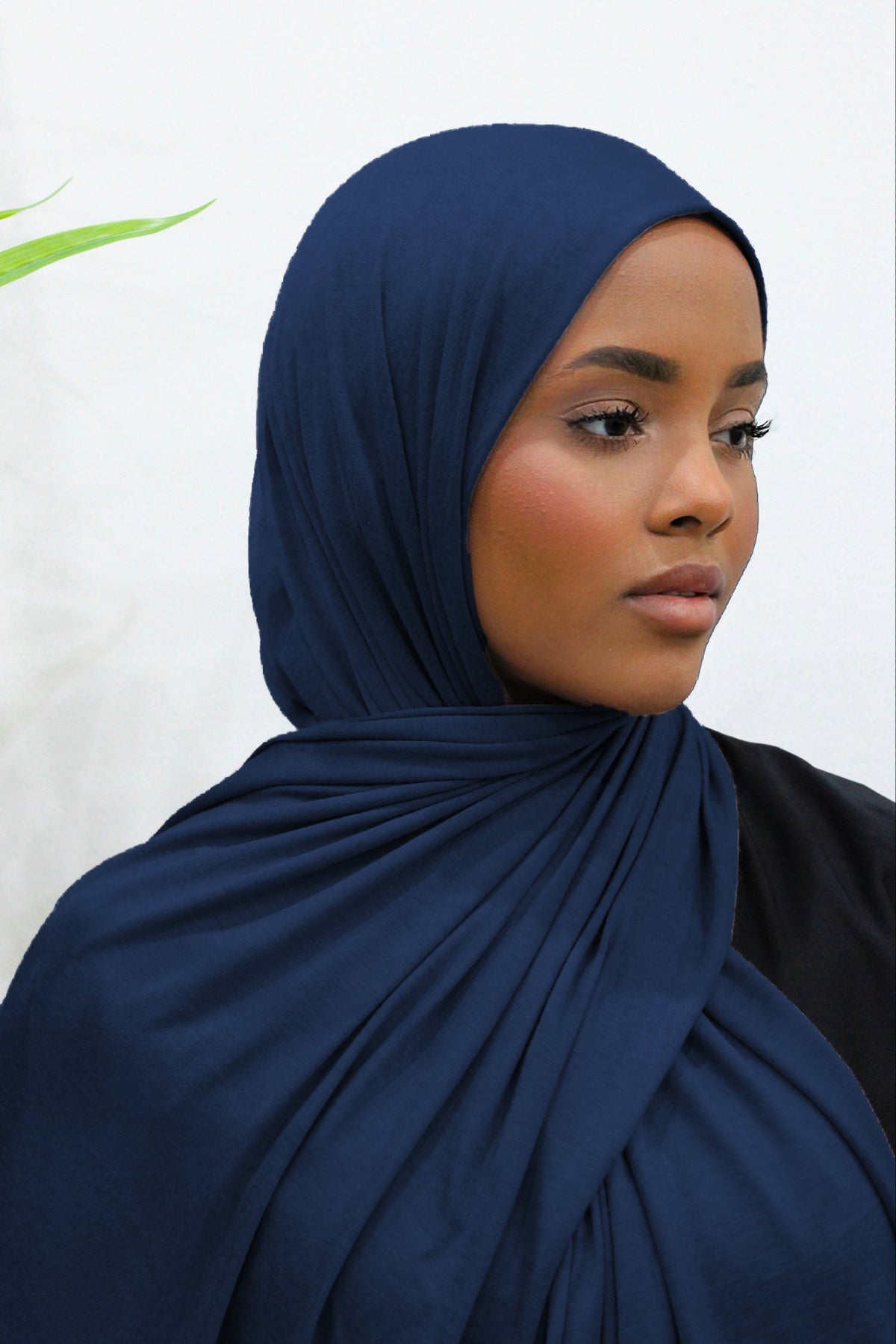
Style one: a soft everyday frame
Begin with a rectangular scarf and place it over your head with enough fabric at the front for the coverage you want. Let the edge sit naturally before folding it. Decide whether you prefer a smooth curve or a small amount of definition above the forehead.
Arrange the sides without pulling them inward to hide the cheeks. Leave a comfortable opening around the face. If the fabric feels crowded beneath the chin, release it and reassess the fold rather than tightening the fastening.
Bring the ends into a familiar drape, keeping sufficient fabric across the chest or shoulders according to your preference. Secure the arrangement using an accessory you can handle safely and confidently, or a pin-free method that genuinely stays in place with that scarf. Do not assume a method is secure solely because it is described as effortless.
Turn your head in both directions and look down. Check whether the front edge moves into your eyes or whether one side pulls away from the coverage you wanted. Adjust the length distribution between the ends before adding more fastenings.
This style is useful as a baseline because it makes the fabric's natural behaviour visible. Once it works, you can alter the drape or colour without rebuilding the face frame every time.
Style two: a considered side drape
A side drape shifts some of the scarf's visual weight towards one shoulder. It can create an asymmetric outline without any need to claim that it changes the actual shape of your face. Choose it because you like the arrangement and because it works with your outfit.
Start with unequal scarf ends, allowing enough length on the longer side for the intended drape. Set the face opening first, then bring the longer end across or around in the way your scarf and coverage preferences allow. Let it settle over the shoulder rather than pulling it tight to reach a fixed position.
Check both sides of the chest and neck after arranging the end. An attractive fold on one side should not create a gap on the other that you do not want. You may need to redistribute the starting lengths or use a larger scarf rather than stretching the fabric across.
Try the outfit's bag strap and outer layer. A drape that sits comfortably on a bare shoulder area may be displaced by a coat or strap. Move the end to the other side or simplify the fold if that makes the arrangement more practical.
Keep the side detail proportionate to the rest of the outfit. If the top has a large collar or shoulder decoration, compare a simpler drape. You can enjoy asymmetry without placing every interesting feature in the same small area.
Style three: a more defined front fold
A firmer front fold can provide a different frame from a soft curve. Try folding the scarf edge back evenly, using a depth that the fabric can support without creating a heavy roll. Place it over the head and let the centre sit comfortably before adjusting the sides.
You may prefer a gentle point, a flatter line or a rounded fold. None is a compulsory correction for a round face. Compare the options by slightly changing the centre fold while leaving the rest of the scarf arrangement familiar.
If the fold collapses repeatedly, look at the scarf rather than blaming your face. The fabric may simply be too soft for the shape you are trying to hold. Choose a different edge arrangement or another scarf with a finish that better supports the intended line.
Avoid pushing rigid objects or improvised supports against the head to force a shape. The style should come from suitable fabric and a comfortable arrangement. If it needs constant pressure or an awkward fastening to remain in place, it may not be a useful everyday option.
Finish the ends in a straightforward drape and check the result while speaking. A defined front can still be relaxed around the cheeks and chin. Structure does not require tightness.
Style four: a decorative twist with the coverage planned separately
A twist can be used as a decorative fold rather than as a way to reshape the face. Start with an arrangement that already provides your intended coverage, then consider where a small twist of the scarf end could sit comfortably.
Keep the twist loose enough not to pull the front edge backwards. Check its weight and fastening position. A large bundle at the forehead or side may feel different after a few minutes than it did during the first mirror check.
Do not twist fabric tightly across the neck or use the decoration as the only thing keeping the scarf in place. The underlying arrangement should remain secure and comfortable. If the decorative detail compromises that, simplify it or leave it for another scarf.
Try the twist with the outfit's neckline. It may work better beside a simple top than above a large collar or several accessories. Let it be one detail rather than adding a headband, brooch and bulky fold around the same area.
This option may suit an occasion when you have time to test it properly. For a busy day, a familiar wrap can be the better choice. A more elaborate arrangement is not inherently more flattering or more complete.
What about turban-style arrangements?
A turban-style head wrap can leave the neck or chest uncovered depending on how it is arranged. It should not be presented as automatically giving the same coverage as a scarf draped over those areas. Decide first what you want covered, then assess the complete outfit.
You may use a suitable separate layer where that fits your preferences, but check how the pieces meet during movement. A high neckline, for example, does not necessarily cover every area exposed by a head wrap. Look at the sides and back as well as the front.
Do not choose added height or volume because you have been told a round face needs it. You can enjoy that shape as a personal styling choice, but it should remain comfortable and secure. There is no requirement to alter your natural outline.
When a tutorial leaves out the neck and chest arrangement, treat it as incomplete for your own purposes rather than filling in the gaps by assumption. A head-wrap technique and a complete modest outfit are related but different things.
Find a comfortable balance of fabric around the face
Too much or too little fabric is a personal and practical judgement, not a fixed ratio. If the scarf feels crowded, identify where the extra material gathers. It may be beneath the chin, at one temple or around the shoulder rather than throughout the wrap.
Try changing the starting fold or distributing the ends differently. A larger scarf folded very deeply can create more thickness at the front than you need. A different size or shape may achieve the same coverage with a more manageable arrangement.
If you enjoy a full drape, keep it. You do not have to reduce volume simply because of a face-shape label. Check that the fabric does not obstruct your vision, pull at the fastening or make the outfit difficult to manage.
Remember that the shoulders and neckline affect the overall look. A scarf can seem large in a close-up but balanced with a long, simple garment. Assess the complete outfit before deciding that the face frame is the problem.
Colour, prints and texture are options, not corrective tools
A plain scarf makes the shape of the fold easier to see, which can be useful when learning a new arrangement. A print adds another element. Neither is automatically better for a round face.
When using a print, look at which part lands around the face. A large motif may be divided by the front fold, while a small repeated pattern may remain more consistent. Rotate the scarf or adjust the fold to compare the effect without changing the entire outfit.
Choose colours beside the clothes you intend to wear. The relationship between scarf and top can matter more to the outfit than a rule about which colours supposedly slim the face. You can use contrast, a close match or a related palette according to your taste.
Texture can also change the appearance of the frame. A smooth scarf and a visibly textured one may create different edges even in the same colour. Try both in a familiar wrap so you can distinguish the effect of texture from the effect of a new technique.
There is no need to avoid bright colours, light shades or large prints to make your face acceptable. The question is whether you enjoy the result and whether the scarf works comfortably.
Make room for glasses and other everyday equipment
Put on your glasses during the styling trial. Notice whether the scarf presses the arms towards the head or shifts the frames when you turn. Adjust the fabric around the temples without forcing the glasses into a new position.
Do not bend or reshape frames to fit one scarf arrangement. If the glasses themselves are uncomfortable, seek appropriate fitting advice. If they are comfortable until the scarf is added, compare a less bulky fold or another route for the fabric.
Our advice on wearing hijab comfortably with glasses explains how to compare arm placement, scarf folds and the undercap without using the scarf to force a frame into place.
Headphones, hearing devices or a work headset need similar consideration. Use the equipment as you normally would and check whether the wrap interferes with it. A style that looks neat but makes something important difficult to use needs changing.
For a video call, view the complete upper outfit in the camera preview. Lighting and camera position can alter how a fold appears, so do not assume an unfamiliar image means the style is wrong for your face. Adjust the setup as well as assessing the scarf.
Choose accessories for the arrangement you have
A pin or brooch can be decorative, functional or both. Check that it suits the fabric and sits where it will not press, catch or pull. A heavy accessory on a fine scarf may change the drape you have just arranged.
Keep pins closed when in use and store spare accessories securely. Do not hold pins in your mouth while styling. If an accessory is damaged or difficult to fasten safely, replace it with a suitable option rather than improvising.
A headband can introduce a visible line or texture, but it is not required to balance a round face. Try it with the complete scarf arrangement and notice whether the added pressure or thickness is comfortable. You can decide that the scarf looks better without it.
Jewellery is optional and does not need to be used to draw attention away from any feature. If you enjoy it, check how it interacts with the scarf and clothing. The outfit should not require repeated untangling.
Troubleshoot the behaviour, not your face
The front edge keeps moving
Check the support and starting fold before adding more fastenings. The scarf may be pulling from an end that is too short or caught under an outer layer. Release that tension, redistribute the fabric and test again. A tighter face opening is not the only way to make a wrap feel secure.
The fabric gathers beneath the chin
Compare the fold depth and the point where the sides meet. Too much material may be collected in one place. Open the arrangement, smooth the fabric and try a different distribution. Keep enough room for speaking and moving the jaw comfortably.
One side looks fuller than the other
First decide whether you mind the asymmetry. It may be part of the style. If you prefer a more even frame, check the starting placement and the amount of scarf folded on each side. Correct the specific difference rather than repeatedly pulling at the finished wrap.
The style works until a coat goes on
The coat may be lifting a scarf end, compressing a shoulder fold or crowding the neck. Try arranging the final drape after the coat is on, or choose a simpler wrap for that outer layer. You do not have to use the same arrangement with every neckline.
The scarf feels secure but uncomfortable
Take the discomfort seriously. Loosen or remove the arrangement and identify the pressure point. Check the cap, fastening and fabric distribution separately. A style that depends on enduring discomfort is not a useful solution, regardless of how closely it resembles a tutorial.
You like the mirror view but dislike every photograph
Do not let one camera angle overrule how the scarf feels and looks in ordinary use. Compare photographs taken from a normal distance and different angles, or leave photographs out of the decision altogether. You are choosing a style to wear, not a permanent still image.
Adapt the wrap to the occasion without starting again
For everyday wear, keep a reliable face frame and vary the scarf colour or end arrangement. This allows some variety without turning each morning into a new technical exercise.
For work or study, test the style with the collar, bag and equipment you use. A compact shoulder arrangement may be convenient in one setting, while a broader chest drape may be your preference in another. Use the actual activity to guide the practical details.
For an occasion, allow time for a complete trial with the outfit and accessories. A more decorative scarf may need a simpler fold to show its detail, or a plain scarf may support a special arrangement. More complexity is not automatically more suitable.
Our guide to building a complete modest outfit can help you connect the scarf with the rest of the clothes. Face framing is one part of the look, not a separate task that must dominate every decision.
Questions to leave behind, and more useful ones to ask
Which style will make my face look least round?
You do not need to make that the goal. A more useful question is whether you prefer a soft edge, a defined fold or an asymmetric drape. Those choices let you explore the scarf's appearance without treating your natural features as a fault. Try two arrangements with the same scarf and choose the one you enjoy, even when it does not follow a supposed slimming rule.
If you do like a longer-looking drape, you can wear it as a visual preference. Keep the language practical: you like the line of the scarf, not a corrected version of yourself. The distinction helps make styling an enjoyable choice rather than an ongoing inspection of your face.
Must I show some undercap to create a good frame?
No. You can show a band, use a close colour or keep the cap beneath the scarf, according to the arrangement and coverage you want. Compare the actual positions while making sure the cap itself stays comfortable. A visible band is one design detail, not an essential technique for a particular face shape.
If showing the cap makes the front feel too busy, try a less contrasting colour or another position. If you like the contrast, keep it. You can make that decision without adding extra layers or tightening the cap.
Why does a tutorial look different when I follow the same steps?
The scarf may differ in size, thickness or edge finish, and your starting placement may not be identical. The outfit neckline, undercap and hair arrangement can also change the fall. Look for the first point at which the fabric behaves differently rather than assuming you have failed at the whole technique.
Pause there and adapt. You may need more length on one side, a shallower fold or a simpler finish. A good result is a version that works with your own materials, not an exact copy of a frame on a screen.
Do I need several pins to keep a fuller style secure?
Not necessarily. First check whether the weight is distributed sensibly and whether an end is pulling against the rest of the arrangement. Additional fastenings can create more pressure or make the scarf harder to remove. Use only suitable accessories that the fabric and style genuinely need, and test their position while moving.
For a scarf that repeatedly slips in one elaborate arrangement, a simpler style or a different scarf may be the more practical answer. Security should not depend on making the wrap increasingly tight.
Can I wear the same style for both casual and formal outfits?
Yes. A familiar frame can accompany different scarf fabrics, colours and garments. For an occasion, you might change the drape or choose a scarf with its own decorative detail rather than inventing a completely new technique. Check the changed material carefully, because it may not handle like the everyday version.
Keeping one element familiar can make an occasion outfit easier to manage. You still have room for personal expression in the clothes, colour relationship or accessories without changing every part of the wrap.
What if I am tired of trying to find the perfect style?
Return to a comfortable arrangement that meets your needs and give yourself permission to stop experimenting. There is no obligation to discover a signature wrap or a permanently ideal face frame. A scarf can be a practical part of getting dressed without becoming a project every day.
When you feel like trying something different, choose one small adjustment rather than a complete reinvention. The aim is to gain options, not to make your usual style feel inadequate.
Keep the useful discoveries
It can help to keep one simple comparison note with the scarf: which edge you folded, which end started longer and where the drape finished. Describe the fabric arrangement rather than judging your face. For example, “this edge stays clearer with a shallower fold” gives you something repeatable. “This is the only style that suits me” closes off useful options and is unlikely to reflect the full range of ways you could wear the same scarf.
When a style works, note the scarf, fold and support you used. A simple description is enough. You might record that a shallower front fold works better with one scarf or that a side drape needs the longer end on a particular side.
Care for the scarf according to its instructions so that the edge and fabric remain in usable condition. Inspect fastenings and store small accessories safely. A familiar style is easier to repeat when its components are ready to use.
You do not need one permanent “best” hijab style for a round face. You may enjoy a soft frame one day and a more defined fold another. The useful result is a small set of comfortable arrangements that let you dress as you wish without treating your features as a problem to solve.