What to look for in a closed abaya
A closed abaya can simplify an outfit because the front does not need to be arranged like an open outer layer. That is a useful feature, but it does not answer every question about coverage or comfort. Neck openings, sleeve shapes, side slits and fabric transparency still vary from one design to another.
Choose the garment by those details rather than by the promise that one closed style will suit every day and occasion. A good fit should make dressing more straightforward without requiring you to overlook a difficult fastening, restrictive sleeve or unsuitable length.
What does “closed” describe?
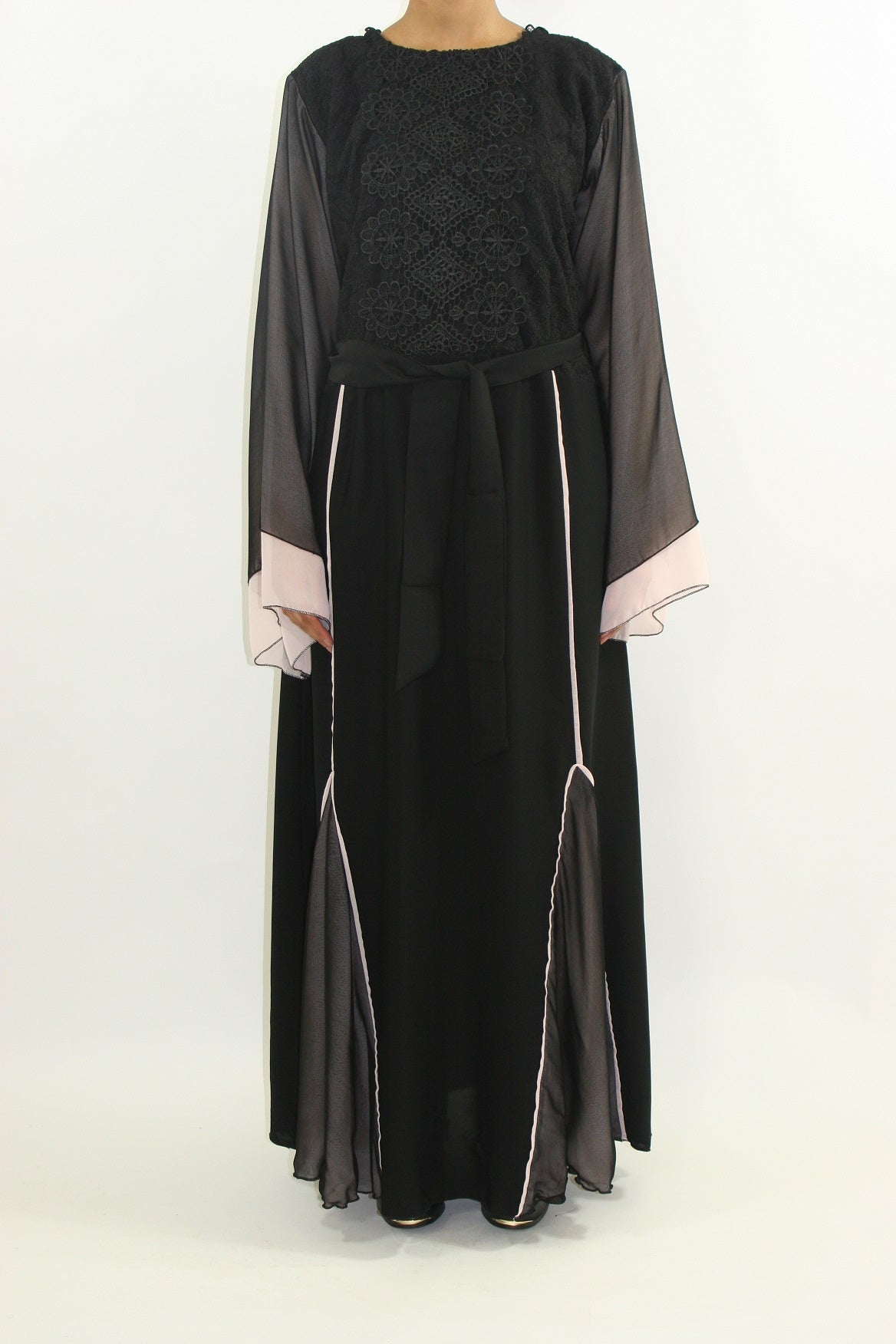
The term usually distinguishes a garment with a substantially closed front from an abaya designed to open down the front as an outer layer. It does not necessarily mean that the dress has no fastenings. There may be a short zip, buttons or another opening to make it easier to put on.
Read the description and inspect the photographs. Check whether the neckline opens, how far the closure extends and whether any side or lower openings are part of the design. A product name is not a substitute for seeing how the garment is constructed.
For a wider explanation of shapes, the abaya style guide helps distinguish the main cuts. The particular garment’s measurements and details remain the basis for choosing your size.
Make sure getting dressed is comfortable
A pullover design needs an opening that works for you without force. Consider the hairstyle, glasses and any undercap or inner clothing involved in your normal routine. Try putting the garment on and taking it off carefully while following the seller’s try-on conditions.
For a fastening, check whether you can reach and use it easily. A small back closure may look discreet but be inconvenient if you dress without help. A front opening may be more accessible, though its length and construction still need assessment.
Do not assume that a loose body makes dressing access easy. The neck opening and shoulder area are separate parts of the fit. If you have particular access needs, ask about the actual opening and closure rather than relying on a broad description such as “comfortable”.
Assess opacity separately from the front construction
A closed front does not make every fabric opaque. Check the garment in brighter light and in areas where the material is under gentle tension. Look at the sleeves as well as the body, because lining may not extend through every section.
If an inner layer is needed, choose it as part of the outfit. Its neckline, sleeve length and hem should work beneath the abaya without creating unwanted ridges or gaps. Test the combined warmth and bulk rather than assessing each item on its own.
Dark colour is not a guarantee of coverage, and a printed surface does not replace an opacity check. Decide what the complete outfit needs to provide for your own use. For specific religious requirements, seek appropriate qualified guidance rather than treating a garment category as an automatic ruling.
Check the upper body before judging the skirt
Begin with the shoulders, upper arms and back. Reach forward, raise your hands and sit down. Notice whether the neckline lifts or the fabric pulls across the shoulders even though the main body looks generous.
Different cuts distribute room differently. A straight garment, an A-line style and a broader sleeve-body construction can all be sold as closed abayas. Choose the one whose movement and outline you prefer rather than using the word “closed” to predict the fit.
Check any lining in the same way. It should allow the intended movement of the outer garment. A restrictive inner section can make the abaya feel smaller than it appears from the outside.
Choose sleeves for the tasks you do
A loose sleeve can be comfortable, but its end should be manageable near tables, bags and washbasins. A closer cuff may be useful, provided it does not restrict the wrist or make dressing difficult. Open, elasticated and fastened finishes each behave differently.
Try the sleeve over the layer you normally wear beneath. A fine inner top and a thicker garment require different amounts of space. Check whether the sleeve twists or catches as you move your arm.
Decoration at the cuff adds another consideration. Raised detail may be visible and attractive but can meet a watch, bracelet or bag strap repeatedly. Choose a finish that you can enjoy without continually protecting it from ordinary activity.
Measure length using the stated route
Follow the starting point used in the product information. A shoulder-to-hem measurement should be compared with the same measurement on a suitable garment or on your body. It is not interchangeable with your full standing height.
Amani’s numbered abaya lengths refer to shoulder-to-feet inches. Use that convention alongside the specific width and sleeve details for the item. Two garments with the same stated length may sit differently if their shoulder or neckline construction differs.
Try the abaya with your intended shoes and walk at a natural pace. Check stairs or a step in a safe, suitable space. A hem that looks graceful while standing should not require constant lifting during normal use.
Consider the hem opening as well as the length
A closed garment needs enough room at the lower body for the stride you normally take. A narrow hem can be restrictive even when the dress fits comfortably above it. Check any slits or panels and decide whether they meet your coverage needs as you move.
Do not automatically size up to solve one restriction without reassessing the rest of the garment. The neckline, shoulders and sleeves may then become unsuitable. A different cut can be a better answer than a larger version of a shape that does not work for you.
Before planning alterations, ask how they would affect the design. Shortening a plain hem may be relatively straightforward for a suitable professional, while changing a decorated border or the width of a lower section can be a different task.
Build an everyday outfit around the useful details
For regular wear, start with a scarf arrangement that suits the neckline, shoes that work with the hem and a bag that sits comfortably on the shoulder or across the body. The closed front may make the outfit simpler, but those contact points still deserve attention.
A plain colour gives you room to vary the scarf or bag. A patterned abaya can provide enough detail on its own, with quieter accessories supporting it. You do not need a statement necklace or a belt to make a simple garment look intentional.
Check pockets if they are included. Their position and support matter more than their mere presence. A phone that pulls the side seam down may be better carried in the bag, even when it technically fits inside the pocket.
Make an occasion version without changing the fit rules
A closed abaya can suit a celebration through its fabric, colour, cut or decoration. Choose the detail that matters most to you rather than assuming that formality requires a closer shape or several additional accessories.
Try the hijab with the completed neckline. Embroidery or a raised collar may affect how the scarf drapes and whether it catches. A plain scarf can let the garment’s detail remain visible; a textured scarf may add interest to a simpler abaya.
Use the same movement checks as for everyday clothing. Sit as you will at the event, carry the bag and walk in the chosen shoes. An occasion garment should still let you participate comfortably rather than limiting you to a posed outline.
Evaluate hoods and sashes as optional features
A hood changes the upper construction, but it does not automatically make the abaya suitable for cold or wet weather. Consider the actual fabric, lining and fit, and whether a separate weather layer is needed for the conditions.
Try the hood with your hijab arrangement where relevant. Check its depth, the pull around the neck and where it rests when not worn. A hood that looks attractive at the back may add bulk under a coat collar.
A sash or tie can change where the fabric gathers. Compare the garment tied and untied if both are intended options, then sit and reach in each arrangement. There is no need to define the waist unless that is a silhouette you enjoy.
Layer without creating a hidden fit problem
For cooler days, test an outer coat over the full outfit. The coat needs room for the abaya’s sleeves and any scarf folds. A colour match does not solve a narrow armhole or a closure that pulls against the fabric beneath.
When adding an inner layer, check that it does not catch or climb as you move. A thick waistband, rough seam or high collar can alter how the closed abaya sits. The best combination is one in which the pieces work together without constant adjustment.
The complete abaya guide provides more context for choosing the base cut before adding layers.
Decide whether an alteration would genuinely help
Separate a small adjustment from a change to the basic cut. A hem that needs a little shortening is a different question from a shoulder area that restricts your reach. Before buying a garment on the assumption that it can be altered, show a suitable tailor the actual design and explain the problem you need solved.
Take the intended shoes and inner layers to the fitting. Ask the tailor to mark the proposed change while you are standing naturally, then check it seated and in movement before anything is cut. For an uneven or shaped hem, discuss how the full outline will be retained rather than requesting a fixed amount off every point.
Decoration and lining deserve their own discussion. A border near the hem may prevent a simple shortening method from preserving the appearance you like. A lined sleeve may need work on both layers. Ask what will happen to those details, what the finished result should look like and whether the proposed method suits the garment’s material.
Adding room is not the same as taking fabric away. Ask whether there is enough usable material in the relevant seams; do not assume that a larger-looking skirt provides spare fabric where the shoulders need it. A proposed new opening also needs an appropriate finish. Cutting into the neckline is not a sensible home shortcut to easier dressing.
Compare the total cost and likely result with choosing another abaya. An adjustment can be worthwhile when the rest of the garment already works, but several uncertain changes can turn an attractive purchase into a difficult project. Keep any return options available until you have decided whether the garment is suitable without irreversible work.
Keep care and repeated use in the decision
Read the instructions for washing, drying and pressing before you buy. A garment intended for frequent wear should fit your practical care routine, whether that means suitable home care or planned professional attention.
Inspect the neckline, cuffs, fastenings and hem regularly. These are the parts you handle or bring near other surfaces most often. Address a small issue appropriately rather than allowing it to become the reason a useful dress stays unworn.
Keep the product measurements and care information with your wardrobe notes. When a particular cut works well, those details make a later comparison more reliable than remembering only the size label or colour. This is especially helpful when two closed styles look similar online but have different sleeves or openings.
A closed abaya is not a universal wardrobe solution, but it can be a dependable one when the access, fabric and fit suit you. Choose it for those concrete advantages, then style it in a way that makes the garment easy to enjoy.