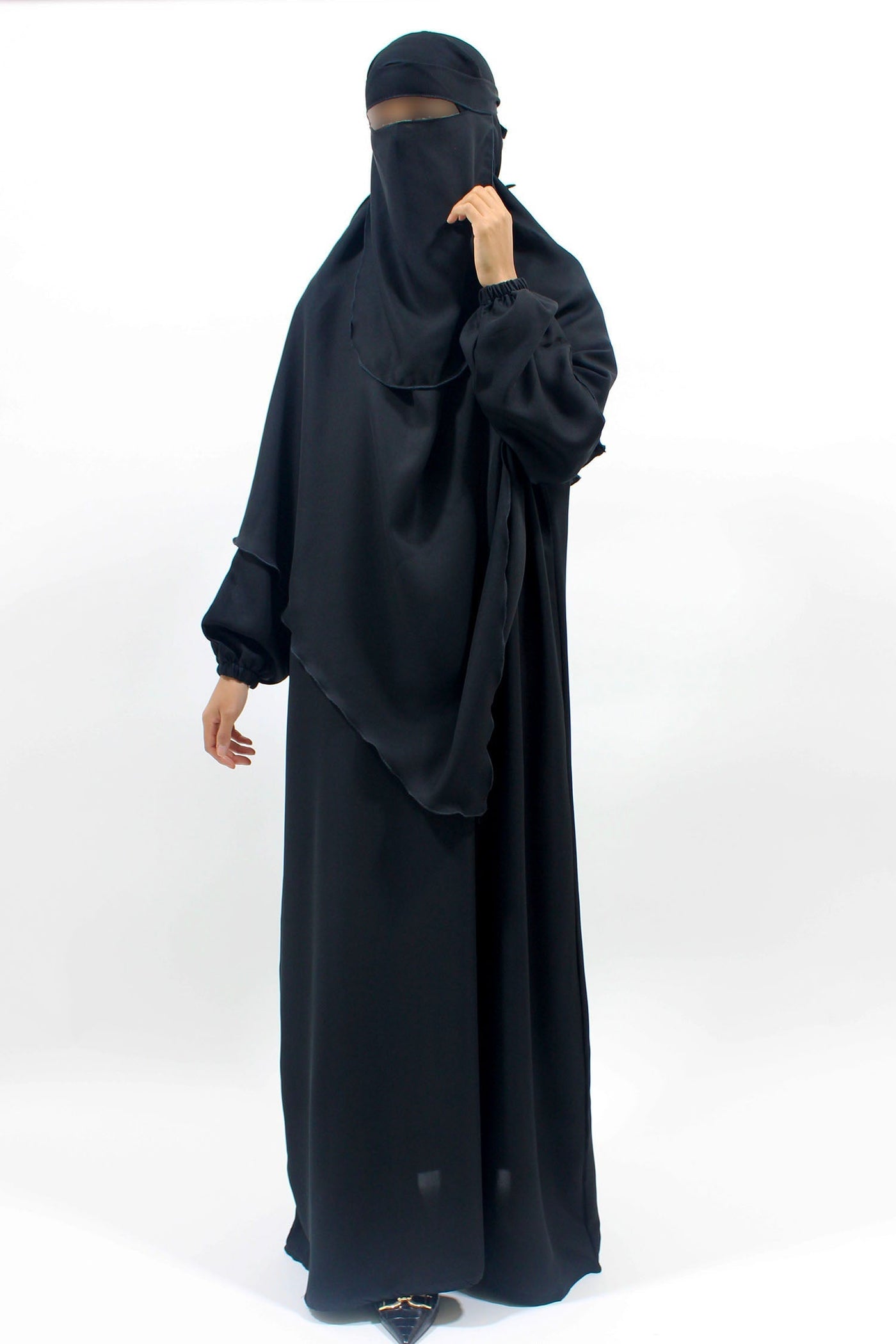
Niqab and Hijab Guide: Differences, Styling and Modest Coverage
Bismillah. Questions about hijab and niqab are often presented as though every woman is asking the same thing. In reality, one sister may be learning the words for the first time, another may have worn hijab for years and be considering fuller face coverage, and another may simply want to understand a loved one’s clothing without reducing her to it. A useful guide must make room for all of them. It should explain the garments clearly, discuss everyday comfort honestly, respect differences of scholarly opinion and personal circumstance, and never turn modest dress into a competition.
This guide is written for Muslim women, new Muslims, relatives, colleagues and thoughtful readers who want a calm explanation of the niqab and hijab difference. It covers meaning, coverage, common styles, fabrics, fit, visibility, breathing, glasses, skin comfort, British weather, work, study, travel, family conversations, shopping and care. It does not issue a personal religious ruling. Questions about obligation, recommended practice, exceptions and individual circumstances should be taken to a qualified scholar whom you trust.
Throughout the guide, hijab is used in two ways. It can refer to the broader Islamic principle of modesty, and it can refer to the headscarf commonly worn to cover the hair, neck and chest. The surrounding sentence makes the intended meaning clear. Niqab refers to a face veil that usually leaves the eyes visible. Neither word tells you everything about a woman’s character, knowledge, confidence or relationship with Allah. Clothing is visible. Intention, struggle and sincerity are not.
Quick answer: what is the difference between hijab and niqab?
Hijab, when used to mean a garment, commonly covers the hair, ears and neck while leaving the face visible. It is normally worn with clothing that provides the rest of the desired coverage. Niqab is a face veil worn with a head covering and modest clothing. It covers most of the face while leaving an opening for the eyes, although designs and methods of wear vary.
The simplest difference is facial coverage. A headscarf leaves the face uncovered. A niqab adds a layer across the lower face. That visual distinction is easy to describe, but the lived experience includes more: how the eye opening sits, whether the fabric touches the eyelashes, how air moves, how glasses fit, how the veil behaves in wind and how a woman manages identity checks or meals away from home.
A woman may wear hijab without niqab. A woman who wears niqab will normally also cover her hair and neck as part of the overall outfit. The terms are therefore related but not interchangeable. A niqab is not simply a different way to tie a headscarf, and hijab should not be described as an incomplete niqab. They are distinct forms of coverage within a much wider conversation about modesty.
Hijab and niqab at a glance
- Hair: covered with both when the words refer to the usual garments.
- Neck: normally covered as part of both outfits.
- Face: visible with a headscarf; mostly covered with niqab.
- Eyes: visible with both, although a niqab frames them through an opening.
- Garment structure: hijab may be a square, rectangle, pull-on scarf or khimar; niqab may be tied, elasticated, layered or attached to another covering.
- Religious guidance: scholarly views and personal circumstances differ, so a guide to clothing should not replace qualified advice.
- Everyday needs: fabric, fit, weather, communication and safety matter with both.
The comparison is useful as a starting point, not as a label for judging women. Two sisters can choose different forms of coverage while both trying sincerely to please Allah. They may also be at different stages of learning, live in different environments or have different health, family and safety considerations. Respectful language leaves room for that reality.
What hijab means
The Arabic word hijab carries a broader meaning than a single scarf. In everyday English, however, people frequently use it to mean the head covering worn by Muslim women. Both uses appear in Muslim conversations, product names and search results. Confusion begins when one person is speaking about the full principle of modesty while another is speaking only about a piece of fabric.
As a head covering, hijab comes in many forms. Rectangular scarves can be wrapped in several ways. Square scarves are folded and pinned or tucked. Pull-on styles reduce the need for pins. Jersey, chiffon, modal, viscose and cotton blends each behave differently. A khimar extends farther over the chest, shoulders or back and may be worn instead of a shorter scarf. The scarf is only one part of an outfit, so coverage also depends on the neckline, sleeves, opacity and looseness of the clothing beneath it.
As a broader principle, hijab includes conduct, gaze, speech, privacy and dress. That broader meaning is important because it prevents modesty from being reduced to a visual test applied only to women. At the same time, a practical clothing guide must still answer concrete questions about fabric and fit. The two levels can sit together: one concerns spiritual and ethical modesty, while the other concerns the garments used to support it.
What niqab means
Niqab is a face covering usually worn with hijab, khimar, jilbab or another head and body covering. Most designs cover the nose, mouth, cheeks and chin while leaving the eyes visible. Some have one layer, while others include extra veils that can be lowered or lifted. Some tie behind the head. Others use elastic, hook-and-loop fastenings or an integrated cap.
A well-fitting niqab should stay secure without painful pressure. The eye opening should allow clear vision without repeatedly slipping upward or downward. The fabric should not press tightly against the nostrils or mouth. Seams should feel smooth, especially around the bridge of the nose and temples. These details matter more than an online photograph can show, which is why measurements, fabric descriptions and construction notes are useful when buying.
Niqab is not a personality type. It does not prove that a woman is shy, strict, uneducated, oppressed, confident or especially knowledgeable. Some wearers are naturally quiet and others are outgoing. Some began wearing it after long study, while others are still learning. Some wear it consistently and others only in particular settings. Good guidance describes the garment without inventing a story about the woman inside it.
What an abaya, jilbab, khimar and burqa mean
Several modest clothing words are often placed together online, even though they do not all describe the same area of coverage. An abaya is a loose outer garment, usually full length. A jilbab is also used for an outer covering and may refer to one-piece or two-piece garments depending on regional and retail usage. A khimar covers the head and extends over the shoulders, chest and often the back. A niqab covers the face except for the eye area.
The word burqa is used differently across countries and shops. In some contexts it means a full outer garment that includes face coverage. In parts of South Asia and in online searches, it may be used more broadly for an abaya-style outer garment, sometimes with no face veil at all. Product titles therefore need photographs and precise descriptions. The word alone may not tell a shopper what is included.
For a complete outfit, think in coverage zones rather than relying only on names. Ask what covers the hair, neck, chest, arms, body, legs and face. Check whether separate pieces are included. A product called a set may contain an abaya and khimar but not a niqab, while another may include all three. Clear component lists prevent disappointment and make comparison easier.
The difference between a principle and a garment
Modesty is not manufactured in one standard size. Garments can support a woman’s intention, but they cannot display the whole of her worship. This distinction matters because Muslim women are often discussed as though a scarf or veil gives strangers permission to rank them. It does not.
A garment can be assessed for practical qualities. Is it opaque? Does it remain secure? Can the wearer see and breathe comfortably? Does it move well? Is the description accurate? These are fair product questions. A person’s sincerity, courage or closeness to Allah cannot be assessed in the same way. The unseen belongs to Allah.
Keeping principle and garment distinct also makes shopping advice more honest. A retailer can explain fabric, construction and styling. It should not promise spiritual status, purity or protection from every social difficulty. A thoughtful product page helps a sister choose what supports her needs and then leaves her personal intention with her.
Religious views and seeking qualified guidance
Muslim scholars have discussed face covering in detail, and views about its ruling differ. A clothing article cannot responsibly compress those discussions into a slogan. The relevant questions may include school of thought, evidence, local circumstances, safety, health and a woman’s personal situation. A qualified scholar can ask the questions that a general article cannot.
When seeking guidance, look for someone recognised for knowledge, sound character and the ability to explain evidence without belittling women. Ask a clear question. Mention circumstances that materially affect the answer. If the response is brief, request the reasoning or a reliable source for further study. Learning is stronger when it is rooted in understanding rather than fear of other people’s reactions.
The same caution applies to pilgrimage, medical treatment, legal identification and safeguarding situations. Clothing rules can interact with specific duties or procedures. Use current official guidance for practical requirements and qualified Islamic guidance for religious questions. Do not rely on a product caption, social media clip or anonymous comment as your only source.
Personal choice, conscience and respectful disagreement
Conversations about niqab can become harsh because people treat a woman’s clothing as a public debate rather than her lived reality. Respectful disagreement begins by speaking to her, not merely about her. It also avoids assuming that every niqab wearer has been forced or that every non-wearer has rejected faith.
Within families, one relative may worry about safety or employment while another may focus on religious conviction. Both may express care badly. A calmer conversation separates practical concerns from insults. Instead of saying, “You will ruin your life,” ask, “Which situations are you most concerned about, and what plan would help?” Instead of dismissing family fear, acknowledge it and explain the thought, study and support behind the decision.
No sister should be pressured to announce private religious reasoning to satisfy strangers. She may choose to explain, but she does not owe a public defence of her face. Equally, a woman considering niqab should be able to ask practical questions without being told that hesitation proves weak faith. Honest preparation can be part of responsible intention.
Beginning with intention rather than appearance
Before buying anything, pause over the intention. Is the decision driven by sincere worship, careful study and a desire for modesty? Is it mainly a reaction to praise, pressure, fear or online comparison? Human motives can be mixed, and noticing that does not require abandoning the step. It creates space to renew the intention.
A private written note can help. Record what you have learned, what remains uncertain, which situations worry you and which support you need. Revisit it after a week. A decision that still feels grounded after the emotional intensity has settled is easier to carry steadily.
Intention also shapes shopping. Buying many colours and styles immediately can turn a spiritual decision into an expensive rush. One or two comfortable, well-tested pieces may be wiser. You can learn what eye opening, tie length and fabric weight suit you before building a larger rotation.
Starting with hijab
For a woman beginning hijab, the first goal is not a perfect social media finish. It is a repeatable way of dressing that she can manage on ordinary mornings. Choose a fabric that stays in place, a size that gives enough chest coverage and an undercap that does not cause headaches. Practise the style when there is no pressure to leave quickly.
Build outfits around coverage, not only colour. Check that the neckline stays covered when the scarf moves. Raise both arms, bend, sit and turn. Look at the outfit in daylight to test opacity. A secure style should not require constant touching, because repeated adjustment can make a new wearer feel more conspicuous and uncomfortable.
Keep an emergency kit small: one magnet or pin, a spare undercap and perhaps a lightweight backup scarf. Too many tools can make the process feel complicated. As confidence grows, experiment with fabrics and drapes. The foundation is comfort, coverage and consistency.
Considering niqab
Considering niqab can bring excitement, peace, fear and uncertainty at the same time. Some sisters feel immediately at home in it. Others need a gradual process. Neither emotional response alone determines the right personal decision. Study, prayer, consultation and practical testing can work together.
List the settings you regularly enter: work, university, school runs, medical appointments, public transport, family homes, shops and places of worship. Consider what each setting requires. Which have identification procedures? Where will you eat? Do you use glasses or hearing aids? Do you need lip-reading support in conversation? Are there safety concerns on your route? Planning is not a rejection of trust in Allah. It is part of taking responsible means.
Choose an initial design that is easy to remove and replace. Practise tying it with different hijabs or khimars. Wear it indoors while doing ordinary tasks. Notice heat, airflow, visibility and pressure. A quiet trial reveals more than a mirror.
Trying niqab privately before wearing it outside
A home trial should last longer than a few photographs. Wear the niqab while reading, walking between rooms, climbing stairs, speaking on the phone and preparing a simple meal away from heat. Test it with your normal glasses, headphones and winter layers. The purpose is not to imitate every public situation, but to identify obvious fit problems.
Check the eye opening in several directions. Look down without the upper edge blocking your view. Turn your head rather than relying only on peripheral vision. Speak in a normal voice and listen for muffling. Take calm breaths through both nose and mouth. If fabric is drawn inward strongly with each breath, the veil may be too close, too heavy or tied too tightly.
End the trial by noting specific changes: a wider eye opening, softer nose seam, longer ties or a lighter fabric. Specific notes make the next purchase more accurate. “It felt wrong” is difficult to solve. “The seam pressed behind my ears after forty minutes” points to a construction issue.
Common niqab structures
Niqab designs vary more than a front photograph suggests. The core structure may be a simple band with a face veil attached, a layered veil with additional panels, or a cap-like piece that secures around the head. The number of layers does not automatically determine quality. A simple single layer can be excellent if the fabric, stitching and proportions are right.
Look at how the upper band meets the veil. A smooth transition reduces bunching around the temples. Check whether the opening is shaped or straight. Shaped openings can follow the brow line, while straight openings offer a more uniform gap. Neither is universally better. Facial proportions, glasses and tying method influence comfort.
Extra layers can be used for additional coverage or styling, but they add warmth and weight. A wearer who commutes in summer may prefer a lighter construction. Someone seeking flexibility for different settings may value layers that can be lifted independently.
Single-layer niqab
A single-layer niqab has one main veil panel. It is often the lightest and simplest design, making it useful for daily wear, warm weather and women who prefer less fabric around the head. Simplicity also makes washing and drying straightforward.
Because there is only one layer, opacity matters. Hold the fabric against bright light and check whether facial features become visible. Dark colours are not automatically opaque if the weave is open. The veil should also fall away from the mouth rather than clinging with every breath.
A single layer can move more in wind, so secure ties and sufficient width are important. Very narrow panels may expose the side of the face when the head turns. A good design balances width with manageable bulk.
Two-layer niqab
Two-layer designs usually include the main face veil and a second panel that can sit over the head, fall behind or be lowered according to the design. This gives styling flexibility and can add coverage without requiring a separate scarf layer.
Check whether the second layer pulls on the primary band. If it is heavy, the eye opening may shift during movement. The attachment seam should distribute weight evenly. Wearers who use glasses should test whether the extra layer presses the frames or traps too much heat.
When shopping online, read whether both layers are intended to cover the face or whether one is a head veil. Product wording is inconsistent. Photographs from front, side and back are more informative than the layer count alone.
Three-layer niqab
Three-layer niqabs provide several veil panels and can offer adaptable coverage. They are popular with some women for their flowing appearance and options. They are also warmer, bulkier and more sensitive to fabric weight.
The best three-layer designs use light, balanced material and neat seams. If all panels are dense, the garment can feel heavy around the forehead. Test each configuration rather than assuming that every layer must always be lowered.
For storage, let the panels hang or fold them loosely. Tight creases near the eye opening can affect how the veil sits. Marking the layers discreetly on the inside can make dressing faster if their lengths are similar.
Half niqab and shorter face veils
The phrase half niqab is used for several designs. It may describe a shorter veil that covers the nose and mouth, a narrow piece worn with a khimar, or a face covering with less side and lower length. Because the term is not standardised, measurements matter.
A shorter design can feel lighter and work well beneath a long khimar, but it may shift more easily or expose the lower edge when the head moves. Check the overlap with the surrounding head covering. The pieces should work together rather than leaving unexpected gaps.
This style can also be useful for a private trial because it has less fabric. It still needs the same attention to breathing, secure fastening and visibility.
Tie-back, elastic and fastening options
Long ties allow the wearer to control tension and can fit a wide range of head sizes. They take slightly longer to secure and may create a knot beneath a scarf or khimar. Soft, flat ties are usually more comfortable than narrow cords.
Elastic is quick and creates less bulk, but the tension must be right. Too loose and the opening shifts. Too tight and pressure builds around the temples or behind the ears. Elastic also relaxes over time, so construction quality and replaceability matter.
Hook-and-loop fastenings are adjustable but can catch delicate scarves if exposed. Press studs create a clean closure when correctly positioned. Whatever the fastening, test it for several hours. Comfort during the first minute is not enough.
Nose strings, bridges and internal support
Some niqabs include a narrow string, shaped bridge or internal seam that helps lift fabric away from the nose and mouth. This can improve airflow and reduce clinging. The support should be soft and should not press sharply against the nose.
A movable string allows adjustment, but hard knots or rough ends can irritate skin. A shaped bridge may hold its form better, although it must match the wearer’s proportions. Glasses can change the way a bridge sits, so test both together.
If a support becomes twisted after washing, reshape it while damp and allow the niqab to dry flat. Do not iron elastic or synthetic internal parts at high heat.
The eye opening
The eye opening is one of the most important fit points. Too narrow and it blocks vision or rubs the eyelashes. Too wide and it may reveal more than the wearer intends or move unpredictably. The correct size is personal.
Measure the comfortable vertical space while looking straight ahead and downward. Consider brow shape, glasses and whether an undercap changes the position of the niqab. The top edge should not sag into the eyes, and the lower edge should not press upward when speaking.
Do not solve slipping only by tying tighter. The pattern, fabric weight or placement may be wrong. Excess tension can create headaches without improving stability.
Choosing niqab fabric
Fabric changes almost every part of the wearing experience. It affects opacity, airflow, sound, movement, heat, washing and how neatly the veil falls. A fabric that looks elegant in a still photograph may be impractical during a long commute. Start with function, then consider finish.
Read fibre and weave information where available. Fibre names such as polyester, cotton or viscose do not tell the whole story because weight and weave alter performance. Ask whether the fabric is matte or shiny, crisp or fluid, textured or smooth, and whether it needs lining. Reviews are most useful when they describe conditions rather than giving only a star rating.
For a first niqab, a light, opaque, matte fabric with some structure is often easier to manage than an extremely slippery or delicate material. Personal preference, climate and sensitivity still matter.
Chiffon niqab
Chiffon is light, fluid and widely used for scarves and face veils. It can move air well, but very fine chiffon may be semi-sheer. Layering or a denser weave may be needed for opacity. The fabric can also move in wind and may cling when damp.
A matte chiffon is usually easier to coordinate with everyday abayas than a glossy finish. Check the edges for neat rolled hems. Rough or bulky hems near the eyes can irritate. Because chiffon can snag, keep hook-and-loop fastenings and sharp jewellery away from it.
Wash in a mesh bag or by hand using cool water and mild detergent. Let it dry naturally. High heat can set creases or damage synthetic fibres.
Georgette niqab
Georgette has a slightly grainy texture and often more body than chiffon. That texture can help it stay away from the mouth and resist slipping. It may feel warmer depending on weight, and some versions are still translucent under strong light.
The gently textured surface can disguise small creases, which is useful for travel. Test the fabric against sensitive skin because the grain may feel rough to some wearers. A smooth band around the forehead can improve comfort even when the veil itself is textured.
Georgette often drapes well with abayas and khimars made from similar fabrics. Matching exact shades is difficult online, so tonal coordination may look more intentional than trying to achieve a perfect match.
Crepe niqab
Crepe describes a family of fabrics with a textured surface. Lightweight crepe can provide a balanced combination of opacity, drape and structure. Heavy crepe may feel too warm across the face, especially in summer or crowded indoor spaces.
Ask for fabric weight or compare it with familiar products. If a retailer uses the same named fabric across an abaya and niqab set, the face veil may still be cut from a lighter version. That can be a benefit. The important point is accurate description.
Crepe usually travels well and can be less slippery than smooth chiffon. Care instructions vary, so follow the label rather than assuming all crepe is washable in the same way.
Nidha and soft abaya fabrics
Nidha is valued for a soft, flowing finish and is commonly associated with abayas. Lighter nidha-like fabrics can also be used in face coverings or coordinated sets. The softness can feel gentle, but dense versions may retain warmth.
A coordinated abaya, khimar and niqab set creates a calm visual line and reduces colour matching decisions. It also means several layers may use similar fabric, so assess total warmth. A soft outer garment can be paired with a lighter face veil even when the colours match.
Check whether the description uses nidha as a precise fabric name or a general style term. Retail terminology varies. Photographs, care information and fabric feel notes give a fuller picture.
Cotton, modal and viscose blends
Natural and regenerated cellulose fibres can feel soft and absorb moisture, which appeals to wearers with sensitive skin. Pure cotton may become damp, crease easily or sit close to the mouth. Blends can improve drape and drying time.
Modal and viscose can be breathable and smooth, but thin versions may lack opacity. They may also stretch or change shape when wet. A stable upper band and reinforced seam help maintain the eye opening.
These fabrics can suit indoor use, dry weather and women who dislike the feel of textured synthetics. Test washing carefully because shrinkage and colour transfer are more likely than with many polyester chiffons.
Jersey and stretch fabrics
Jersey is soft, stretchy and secure, which makes it popular for hijabs and pull-on styles. For a niqab, too much stretch can distort the eye opening or draw fabric toward the face. A carefully engineered stretch design can still be comfortable.
The benefit is reduced slipping and fewer fastenings. The drawback is warmth and the possibility of cling. Look for lightweight jersey and avoid tying or fastening so tightly that stretch becomes pressure.
Jersey pairs well with casual outfits and active days. It also absorbs sound differently from thin woven fabric, so test speech clarity if communication is a priority.
Opacity and light testing
Opacity should be tested in the conditions where the garment will be worn. Indoor lighting can hide transparency that appears in daylight. Hold the fabric over a contrasting surface near a window. Then test it while worn, because stretching and distance from the face change how light passes through.
Black is not automatically opaque. A loose weave can reveal more than a dense lighter fabric. Conversely, excessive thickness is not the only route to coverage. A well-chosen weave can provide opacity without heavy weight.
If a veil needs two layers for opacity, assess breathing and warmth with both in place. Product descriptions should state whether photographs show one layer or several.
Breathability and airflow
Breathability is influenced by weave, space around the mouth, humidity and activity. A niqab should not be painfully tight against the nose or mouth. Fabric that moves slightly with breathing is normal, but strong suction, dizziness or a sense of restricted air is a sign to stop and reassess.
Leave enough room beneath the veil and choose a lighter weave for warm conditions. Hydration, breaks and sensible pacing matter during long days. In crowded or hot environments, a wearer may need a private place to cool down or adjust.
Anyone with respiratory illness, panic symptoms or another health condition should seek appropriate medical advice. A clothing guide cannot determine whether a particular design is safe for an individual.
Clear vision and peripheral awareness
Safe vision matters more than achieving a particular eye-opening shape. The wearer should be able to see straight ahead, down toward steps and sufficiently to the sides for the activity. A veil that repeatedly falls into the eyes is not merely inconvenient. It can create risk.
Test the design in a well-lit, familiar place. Walk, turn, use stairs and notice blind spots. Peripheral awareness is especially important near roads, platforms and busy public spaces. Turn the head fully rather than depending on side vision alone.
Do not wear any style for driving or operating equipment unless vision is fully unobstructed and all applicable rules are met. If in doubt, choose a different arrangement.
Wearing glasses with niqab
Glasses add pressure points and can cause fogging. Frame shape, nose bridge, veil position and temperature all influence the result. Place the glasses securely first, then position the niqab so it does not lift the frames or press them into the face.
Air escaping upward causes fogging. A soft nose bridge that directs breath downward can help. Anti-fog products made for the relevant lens coating may also help, but follow the manufacturer’s instructions. Tightening the veil excessively is not a good solution.
Test sunglasses and prescription glasses separately because their frames may sit differently. Carry a clean lens cloth. During wet British weather, rain on the lenses can combine with fogging, so allow extra time and prioritise clear sight.
Hearing, speech and communication
Niqab does not prevent communication, but fabric can soften speech and remove facial cues. Speaking slightly more clearly, facing the listener and reducing background noise can help. Shouting is rarely necessary and may make the interaction more uncomfortable.
Some people rely on lip-reading or facial expression. A wearer may choose another communication method, such as writing, text, a speech-to-text tool or a private accommodation where appropriate. The right approach depends on consent, accessibility and the setting.
Colleagues and relatives can support communication by listening patiently rather than pretending not to understand. Clear introductions and calm tone often matter more than visibility of the lower face.
Sensory needs, disability and neurodivergence
Sensory experience varies widely. Fabric touching the lips, pressure behind the ears, heat around the cheeks or the sound of cloth moving may be tolerable to one woman and overwhelming to another. This is not a moral failure. It is information about the body.
Test one variable at a time. A smoother fabric, wider veil, different fastening or softer forehead band may solve the problem. Seamless undercaps and tag removal can reduce irritation. Short trials allow the nervous system to adjust without forcing endurance.
Women who use hearing aids, mobility equipment, oxygen, communication devices or other medical aids should check how the niqab interacts with them. The aid and the wearer’s safety come first. Tailoring can sometimes create a practical solution, but professional advice may be needed.
Skin comfort, moisture and breakouts
Warmth, friction and trapped moisture can irritate skin. Start with clean, fully dry fabric. Rotate niqabs rather than wearing the same piece repeatedly without washing. Use fragrance-free detergent if perfume or residue causes sensitivity.
A tight band can create pressure marks, while fabric rubbing the nose or chin may worsen irritation. Adjust the pattern or fastening instead of relying only on skincare products. Heavy makeup beneath the veil can transfer and increase cleaning needs, although each woman’s skin behaves differently.
Persistent rash, pain or breathing difficulty deserves medical attention. Do not use online clothing advice to diagnose a skin or respiratory condition.
Measuring for fit
Niqab sizing is less standardised than dress sizing. Useful measurements include the distance across the eye area, the desired length from the bridge or upper cheek, head circumference at the fastening point and tie length. Measure over the undercap or head covering normally worn beneath it.
Compare measurements with the product diagram, not only labels such as regular or large. A wider veil can improve side coverage and airflow, but excessive width may add bulk. Longer panels provide more overlap with the chest covering but can interfere with meals or movement if not managed.
Record the measurements of a comfortable niqab. This becomes a reliable reference when shopping across brands.
A ten-minute comfort test
Before removing tags or deciding to keep a new niqab, conduct a structured test. Wear it with the usual undercap and scarf. Sit quietly for two minutes, speak for two minutes, walk and use stairs for two minutes, look in all directions for two minutes and spend the final two minutes noting pressure or slipping.
- Can you breathe calmly without fabric sealing against the nose or mouth?
- Can you see steps and obstacles clearly?
- Does the eye opening remain in place?
- Are the ties secure without pain?
- Do glasses remain level and mostly clear?
- Does the lower edge overlap the surrounding garment?
- Can you speak at a normal volume?
A ten-minute pass does not guarantee all-day comfort, but it catches immediate faults. Extend the test indoors before wearing the piece for a long public day.
Movement and coverage testing
Stand in front of a mirror and turn the head fully left and right. Look up and down. Raise the arms, bend and sit. The niqab should continue to overlap the khimar or scarf without revealing unexpected gaps at the sides or beneath the chin.
Walk near an open window or use a fan on a gentle setting to simulate movement. Notice whether the panel blows across the eyes or lifts excessively. A heavier hem can improve stability, but too much weight may pull the entire veil.
Test with the outer garment that will actually be worn. A high jilbab neckline interacts differently from a loose scarf. Coverage is created by the whole outfit.
Wind, rain and sudden weather
British weather can change quickly. Wind can lift light layers, push fabric against the face and reduce visibility. A secure fastening, sufficient overlap and a slightly structured fabric help. Avoid loose decorative pieces near the eyes.
Rain adds weight and can make fabric cling. Carry a compact umbrella and a dry spare if the day is long. Once indoors, change a soaked face veil rather than leaving damp fabric against the skin.
Cold wind may make the eyes water. Glasses or suitable clear lenses can offer some protection, but visibility must remain clear. Walk more slowly on wet pavements and use full head turns near traffic.
Spring in the UK
Spring combines cool mornings, warmer afternoons, wind and pollen. Layering should be adjustable. A medium-light niqab with a breathable khimar can work well, while a compact spare allows a change after rain.
Allergy symptoms can make fabric around the nose uncomfortable. Keep tissues accessible and choose a design that can be removed and replaced easily in privacy. Wash face coverings regularly during high-pollen periods because particles collect on fabric.
Pastel or soft neutral colours can suit the season, but opacity must still be tested. Pale fabric often needs a denser weave than its appearance suggests.
Summer in the UK
Summer heat is variable, but public transport and crowded indoor spaces can become warmer than the forecast. Choose lightweight, opaque fabric and reduce unnecessary layers. Dark colours absorb heat in direct sun, although fabric density and airflow also matter.
Plan water breaks and avoid demanding activity during the hottest part of the day where possible. A private, safe place to cool down can be part of the plan. Change damp fabric to reduce irritation.
Heat illness is serious. If you feel faint, confused, weak or unwell, seek help and prioritise health. Modest dressing should be managed with knowledge and care, not by ignoring warning signs.
Autumn in the UK
Autumn brings wind, drizzle and rapid temperature changes. Medium-weight fabrics often feel comfortable. A long khimar or jilbab can provide extra warmth, but check that wet layers do not become too heavy.
Darker earth tones, navy, olive and warm neutrals coordinate easily with seasonal outerwear. Exact colour matching is not necessary. A tonal outfit is often more practical when pieces come from different fabric batches.
Keep a clean spare niqab in a breathable pouch. Autumn rain and indoor heating can make one piece feel damp or stuffy across a full day.
Winter in the UK
Winter layering can create pressure around the head. Hats, hoods, undercaps, glasses and niqab fastenings may all compete for space. Build the layers slowly and check that nothing pushes the eye opening downward.
A hood should not block side vision. Scarves worn around the neck should not pull the face veil. Choose warm body layers rather than making the niqab itself excessively thick. Breath on cold lenses increases fogging, so test the complete outfit before leaving.
After coming indoors, condensation can form on glasses and fabric. Allow time to adjust and keep a dry lens cloth accessible. If the veil becomes damp, replace it.
Daily commuting
A reliable commuting setup should be simple enough to repeat when the train is delayed or the weather changes. Use a fastening you can secure consistently, keep the eye opening clear and avoid long loose layers that can catch on bags, doors or escalators.
On crowded transport, awareness matters. Keep belongings close and turn fully before moving sideways. If headphones reduce environmental awareness, use them cautiously. A small mirror can help after wind, but repeated checking is not necessary when the design has already passed a movement test.
Plan a private adjustment point at the beginning or end of the journey if needed. It may be a staff room, accessible changing space or another suitable location. Knowing the plan reduces stress.
Workplaces and professional life
Workplace experiences differ by role, employer and country. A woman considering niqab should read current policies, understand genuine safety or identification requirements and prepare to discuss practical solutions. Do not rely on old online anecdotes as though they are universal rules.
A professional conversation focuses on tasks. Explain how identity can be confirmed, how personal protective equipment will fit, how communication will work and whether any role-specific hazards affect loose clothing or vision. Ask for requirements in writing when clarity is needed.
For interviews, choose a clean, secure and comfortable style so attention can remain on the conversation. Prepare a brief response if asked an appropriate practical question, but remember that legal and policy matters are specific. Seek qualified employment advice where necessary.
Study, college and university
Students move between lecture halls, laboratories, libraries, placements and social spaces. Each environment may have different requirements. Laboratory and workshop safety can involve masks, goggles, helmets or fitted equipment. Test compatibility in advance and follow safety instructions.
Introduce yourself to tutors or support staff early if identification, presentations or placements may require planning. A calm email can prevent rushed discussions later. Keep the focus on access to learning and safe participation.
For group work, face the speaker, use clear voice and choose quieter seating where possible. Niqab does not remove personality. Consistent participation helps classmates learn how to communicate naturally.
Healthcare and medical appointments
Healthcare may require the face to be examined, identity to be confirmed or equipment to be fitted. Tell the provider what privacy would help, such as a female clinician or a private room, while recognising that urgent care must prioritise health and safety.
A design that can be removed and replaced quickly is practical for appointments. Avoid complex pins near areas that may be examined. Bring a clean storage pouch so the veil does not touch an unclean surface.
Do not delay essential treatment because a perfect arrangement is unavailable. Ask respectfully for accommodation, but seek care when it is needed. Religious questions about exceptional circumstances should be directed to a qualified scholar.
Identity checks and official procedures
Airports, examinations, financial services, secure buildings and official appointments may require facial identification. Procedures vary. Check the current requirements before attending and allow extra time.
Where a private check or female staff member can be requested, ask early and calmly. Carry the correct documents. A simple explanation such as, “I wear a face veil and am happy to confirm my identity in a private space,” keeps the conversation practical.
There may be situations in which the available procedure is different from what you hoped. Decide in advance whom to contact for advice. Avoid turning a routine staff interaction into a theological debate; the immediate task is secure identification.
Public transport, roads and personal safety
Clear sight and spatial awareness are essential near roads and platforms. The niqab must not obscure downward or side vision. Windy platforms require extra care because light panels can move unexpectedly. Hold loose outer layers securely and stand back from edges.
When travelling alone, share plans with a trusted person if that is part of your normal safety routine. Keep a charged phone and know alternative routes. These are ordinary precautions, not evidence that niqab makes public life impossible.
If harassment occurs, prioritise moving toward safety, staff or other people. You do not owe an argument. Record details only when safe and seek appropriate support afterward.
Driving and cycling
Any face covering used while driving or cycling must leave vision completely clear and must not interfere with helmets or safety equipment. Test peripheral and downward sight before beginning. If the design moves, fogs lenses or narrows awareness, do not use it for that activity.
Cycling adds airflow that can push fabric toward the eyes. A secure, shorter design may behave better, but helmet fit and local rules still control the decision. Loose fabric near wheels or moving parts is dangerous.
Driving laws and insurance requirements can change and differ by place. Check current official guidance. Clothing advice cannot certify a setup as safe or legal.
Eating and drinking away from home
Eating requires a practical plan. Some women lift the lower edge discreetly, use a private space or choose seating that offers more privacy. The best method depends on the design, setting and personal comfort.
Avoid letting the veil touch food or drinks. A clip used only for temporary management can help, but it should not create strain or expose sharp edges. Wash any fabric that becomes stained rather than repeatedly covering marks with perfume.
For long journeys and workdays, identify suitable break locations in advance. Hydration should not be postponed because the arrangement feels awkward.
Prayer and the masjid
A niqab wearer may remove or adjust the face covering in women-only spaces according to her circumstances and the guidance she follows. A clean pouch keeps the garment protected during wudu or prayer. Avoid placing it directly on a floor or shared surface.
Masjid entrances can be busy, so choose a fastening that will not loosen while removing shoes or outerwear. Keep pins and magnets secure around children. If the women’s area is visible from a corridor or camera, decide how you will manage coverage before removing anything.
Questions about the ruling of face covering during prayer or particular rites are religious questions, not product questions. Seek qualified guidance rather than relying on retail copy.
Umrah, Hajj and pilgrimage planning
Pilgrimage has specific rules and conditions that affect clothing and face covering. A general styling article should not present a shopping recommendation as a religious ruling. Study with a qualified teacher and use current official travel guidance well before departure.
From a practical perspective, choose light, washable, replaceable pieces and carry spares. Crowds, heat, long movement and repeated wudu make complicated fastenings less convenient. Label personal items discreetly and store clean and used pieces separately.
Medical needs, crowd safety and identification procedures should be included in the plan. The most beautiful pilgrimage wardrobe is one that supports worship without creating preventable difficulty.
Travelling by air
Air travel combines identity checks, security, dry cabin air, sleep and meal arrangements. Check airline and airport guidance before the journey. Arrive early and prepare a calm request for private identification where available.
Use a niqab that can be removed and retied easily. Keep a spare in hand luggage, not only in a checked suitcase. Dry air can irritate skin, so begin with clean fabric and avoid heavy fragrance.
For sleep, ensure the design does not restrict breathing or become tangled with blankets, headphones or a travel pillow. Comfort and safety take priority over keeping the same arrangement for every stage of the journey.
Hotels, shared rooms and privacy
Travel accommodation may include housekeeping, shared rooms or unexpected maintenance. Clarify room access and use door signs or locks appropriately. Keep an easy outer layer and face covering within reach without living in constant anxiety.
A breathable hanging bag helps niqabs dry after washing. Do not seal damp pieces in plastic. Pack neutral colours that coordinate with several outfits to reduce luggage.
If sharing with non-mahram relatives or travelling in a group, discuss privacy arrangements before arrival. Clear expectations are kinder than last-minute conflict.
Family conversations
Families may react from love, fear, unfamiliarity or concern about community opinion. Begin with the relationship. Choose a calm time, explain that you have been studying and acknowledge practical questions without accepting insults.
It can help to separate three topics: religious understanding, personal intention and practical planning. A parent may not agree with the religious conclusion but may feel calmer after hearing the safety and employment plan. Another relative may accept the choice but need time to adjust emotionally.
Do not use niqab as a weapon in an argument. Do not allow others to use love as a reason for humiliation. Boundaries can be respectful and firm.
Marriage and household communication
A decision about niqab can affect routines, social events, travel and extended family relationships. Married couples benefit from discussing expectations honestly. The conversation should not treat the wife as property or the husband as irrelevant. It should address worship, rights, safety, finances and family realities with knowledge.
If there is disagreement, seek wise mediation from a qualified, trustworthy person rather than collecting social media comments that intensify conflict. Avoid announcing private disputes publicly.
Practical support may include budgeting for suitable clothing, arranging privacy at gatherings or helping with transport. Support is strongest when it respects conscience rather than controlling appearance.
New Muslims and gradual learning
A new Muslim may encounter hijab, khimar, jilbab, abaya and niqab in the same week and feel that everyone expects immediate certainty. Learning does not have to happen through panic. Begin with prayer, foundational belief and reliable teaching, then build clothing knowledge steadily.
Avoid purchasing an entire wardrobe based on unfamiliar labels. One practical scarf, a suitable undercap and a loose outfit can provide a workable beginning. Add pieces after learning what fabrics and cuts feel comfortable.
Community members should offer help without turning the new sister into a project. Explain options, accompany her shopping if invited and leave room for questions. Shame weakens trust.
Confidence, attention and being recognised
Niqab may reduce some forms of unwanted attention while attracting curiosity in other settings. A wearer can feel private and visible at the same time. Preparing for that contradiction helps. Confidence is not the absence of nerves; it is the ability to continue calmly when nerves appear.
Practise short responses to common questions. “It is part of how I choose to dress modestly” may be enough. A genuine conversation can continue when time and safety allow. Intrusive questions do not require a detailed answer.
Let people learn your identity through consistent character, work and speech. The veil changes what is visible, not your right to participate.
Responding to rude comments
Decide in advance which comments will be ignored, which will receive a brief correction and which should be reported. This reduces the pressure to invent a perfect reply while upset.
- For curiosity: “A niqab covers the face while leaving the eyes visible.”
- For a personal question: “I prefer to keep that private.”
- For a workplace issue: “Please send the requirement in writing so I can respond properly.”
- For harassment: move toward safety and seek support rather than debating.
After a difficult encounter, speak to someone trustworthy. Do not blame yourself for another person’s behaviour. Adjust safety plans if needed without treating fear as the only voice in the decision.
Social gatherings
Before attending, find out who will be present and whether spaces are genuinely separate. Family descriptions such as “women only” can change when guests arrive. An easy-to-wear niqab or outer khimar provides flexibility.
Eating arrangements, photographs and door access are common practical points. Tell the host privately if you do not want your uncovered image shared. Avoid assuming everyone understands the same privacy boundaries.
A woman can be warm, humorous and engaged while wearing niqab. Participation does not require surrendering boundaries.
Eid and weddings
Occasions invite richer fabrics, colour and detail, but the face veil still needs to function. Embellishment near the eye opening can scratch, reflect light or add weight. Keep decorative elements away from vision and fastening points.
Coordinate texture rather than forcing exact colour matches. A matte black niqab can balance an embellished abaya. A soft tonal veil can suit a coloured khimar. The outfit should remain manageable through greetings, meals, prayer and travel.
Check photography expectations. If uncovered photographs are taken in a private women’s space, agree how they will be stored and shared. Digital privacy is part of occasion planning.
Colour choices
Black is classic and easy to coordinate, but it is not the only colour used for niqab. Navy, brown, grey, olive, taupe and other muted shades can create a soft, cohesive outfit. Light colours require careful opacity testing and show marks more quickly.
Colour can behave differently near the face than on a full garment. Warm beige may brighten one complexion and feel draining to another. Personal preference matters, but comfort and coverage come first.
When ordering a matching set, expect small shade differences between batches and fabrics. Tonal harmony is more realistic than perfect identity.
Coordinating niqab with hijab
A shorter headscarf can be worn with niqab when it covers the required areas securely. The niqab ties should sit without creating a visible bulky knot or pulling the scarf backward. An undercap may help stabilise both pieces.
Place the niqab first or scarf first according to the design. Practise both sequences. The best order is the one that keeps the eye opening stable and the neck and chest covered.
Avoid excessive pins around the temples. Magnets can reduce holes but must be kept away from children and used carefully around medical devices according to professional advice.
Coordinating niqab with khimar
A khimar provides extended head, shoulder and chest coverage, making it a natural partner for niqab. Some designs include a separate matching face veil. Others have enough overlap for an independent niqab to sit underneath.
Check the forehead layers. A tie-back khimar plus tie-back niqab can create pressure and bulk. Alternate knot positions or choose one pull-on component. The neck opening should remain comfortable when both pieces are worn.
For coordinated shopping, the Amani’s khimar collection can help you compare lengths, layers and fabrics. Confirm product contents because a khimar listing does not automatically include a niqab.
Coordinating niqab with abaya
An abaya supplies full-length outer coverage but does not cover the hair or face, so it is combined with hijab, khimar or niqab according to the wearer’s choice. Open abayas also require a suitable inner layer.
Balance volume. A very wide khimar and umbrella-cut abaya create a flowing silhouette, while a simple straight abaya can keep the outfit lighter for commuting. Sleeve openings, front closures and neckline coverage should be checked during movement.
Explore the Amani’s abaya collection after deciding the function you need: everyday, work, travel or occasion. Compare the cut, fabric, sleeve shape and closure with the way you expect to wear it.
Coordinating niqab with jilbab
One-piece and two-piece jilbabs can provide an integrated base for niqab. Overhead styles reduce separate scarf adjustments, while two-piece styles may give more flexibility for fit and movement.
Check how the niqab band sits beneath the jilbab headpiece. Too many elasticated layers can create pressure. The complete jilbab guide explains cuts, fabrics and coverage in more depth.
A coordinated jilbab and niqab should remain secure during walking, sitting and prayer. Test the outfit as a complete system.
Building a small niqab wardrobe
A useful starting rotation might include two everyday niqabs, one lighter warm-weather option and one spare kept clean for travel or emergencies. This is enough to learn preferences without overbuying.
Choose colours that work with several garments. Black, charcoal, navy or brown can cover most wardrobes. Add a special colour only after confirming the preferred fit and fabric.
Rotation improves hygiene and extends garment life. It also prevents a single damaged fastening from disrupting the routine.
A modest capsule wardrobe
A capsule wardrobe reduces decision fatigue. Begin with two outer garments, two khimars or secure hijabs, three niqabs, suitable underlayers and weather-appropriate outerwear. Every piece should coordinate with at least two others.
Photograph complete outfits for private reference. This makes busy mornings easier and reveals gaps before buying more. The goal is not aesthetic perfection. It is a dependable system for real life.
Seasonal adjustments can be small: lighter face veils for summer, warmer body layers for winter and rain-ready pieces for transitional months.
Shopping for niqab online
Online shopping should answer practical questions before creating desire. Look for front, side and back photographs, measurements, fabric description, opacity notes, layer count, fastening type, care instructions and a clear list of included pieces.
Read the returns policy before ordering, especially if face coverings have hygiene restrictions. Check whether opening packaging affects eligibility. Measure a comfortable item and compare it with the listing.
Be cautious with vague claims such as “breathable luxury fabric” without detail. Useful descriptions explain weight, texture and construction. A trustworthy shop also avoids promising that a garment will transform faith or solve every confidence problem.
Product photographs: what to inspect
Front photographs show the eye opening and overall fall. Side views reveal cheek coverage, tie position and how far the veil stands from the mouth. Back views show knot bulk and extra layers. Close-ups reveal stitching and texture.
Check whether lighting makes dark fabric appear lighter. Zoom for transparency around the face. Confirm whether the model is wearing an additional veil beneath the product.
Images should help a woman understand the item, not create pressure through unrealistic editing. Accurate alt text also supports customers who use screen readers.
A niqab quality checklist
- The eye opening is symmetrical and neatly finished.
- The upper band feels smooth against the forehead.
- Ties or elastic are secure and evenly attached.
- The veil is wide enough for side coverage when the head turns.
- Fabric is opaque in relevant light without unnecessary heaviness.
- The lower panel falls away from the mouth.
- Seams do not scratch the nose, temples or ears.
- Extra layers move independently without pulling the primary opening.
- Care instructions match the fabric.
- The product description accurately lists every included piece.
Quality is not the same as decoration. A plain niqab with excellent proportions can serve a woman better than an ornate design that shifts, scratches or blocks vision.
Common buying mistakes
The first mistake is buying by colour alone. A beautiful shade cannot compensate for an uncomfortable eye opening. The second is assuming that more layers always mean more modesty or quality. Layers must suit the wearer’s needs and climate.
Another mistake is tightening a poor fit instead of changing the design. Excess tension causes pain. Shoppers also overlook return restrictions, product measurements and whether a set actually includes the niqab shown in styling photographs.
Finally, avoid buying a large collection before testing one piece. Preferences become clearer through real wear.
Buying coordinated abaya, khimar and niqab sets
A coordinated set can simplify colour, fabric and coverage planning. Confirm each component: abaya, khimar and niqab. Check whether the abaya is open or closed, whether an inner dress is included and whether the niqab is detachable.
The total fabric weight matters. Three coordinated pieces can create more warmth than separate light layers. Check sizing for the abaya independently because a one-size khimar does not mean the body garment is one size.

The black Amani’s set above demonstrates how matching pieces create a continuous line. Use the image as a construction reference, then read the live product details for current contents, sizing and availability.
Comparing set colours
Black is versatile and formal, grey is soft and neutral, dark beige creates a warm tonal look and pine green offers colour while remaining easy to coordinate. The best choice is the one that fits the wearer’s existing wardrobe and care routine.

Grey can vary under cool and warm lighting. Pair it with charcoal, black, cream or muted colour rather than requiring every accessory to match.

Beige shades show makeup and handling marks more easily, so rotation and gentle washing are useful.

Pine green works well with black, brown and warm neutral accessories. Opacity should still be judged independently of colour.
Price and value
Value comes from wearability, not only low price. Divide the likely cost by realistic uses. A comfortable everyday niqab worn weekly may provide better value than several cheaper pieces that remain in a drawer.
Construction, fabric consistency, ethical business practices and clear customer service can affect price. Expensive does not automatically mean superior, so use the quality checklist.
Budget for washing and replacement. Elastic, ties and pale fabrics may need attention over time.
Avoiding overconsumption
Modest fashion is still fashion retail, and it can encourage constant buying. A sincere wardrobe can be beautiful without being endless. Pause before purchasing duplicates and ask what specific need the item fills.
Repair loose seams, replace elastic and rotate garments. Sell or donate suitable clean items according to local hygiene expectations. Face coverings may not always be accepted second-hand, so check first.
Contentment protects both budget and attention. Newness is not a spiritual requirement.
Washing niqab safely
Always begin with the care label. When the fabric is unknown, cool hand washing is the cautious option. Use a small amount of mild detergent, avoid aggressive rubbing and rinse thoroughly so residue does not remain near the face.
Fasten hooks and close hook-and-loop tabs before washing. Place delicate chiffon or georgette in a mesh bag if using a gentle machine cycle. Wash dark and light colours separately, especially for the first few cleans.
Do not use strong fragrance to disguise infrequent washing. A face covering sits close to skin and breath, so cleanliness and complete rinsing matter more than perfume.
Drying
Gently press out water without twisting the eye opening or internal bridge. Roll the niqab in a clean towel to absorb moisture, then reshape it and air dry away from intense heat.
Hang from the upper band or lay flat according to construction. Heavy wet layers can stretch if hung from one corner. Keep the eye opening straight while drying.
Do not wear the item until it is fully dry. Damp fabric can feel colder, cling more and irritate skin.
Ironing and steaming
Many niqabs use synthetic fabrics that can mark or melt under high heat. Use the lowest suitable setting and place a clean cloth between the iron and garment. Avoid elastic, hook-and-loop fastenings and plastic supports.
Light steaming can release creases, but keep hot steam away from the face and hands. Hang the niqab securely and allow it to cool and dry before wearing.
A well-folded travel method often removes the need for ironing. Roll soft panels loosely around another garment rather than pressing sharp folds into the eye area.
Stain care
Treat stains promptly with cool water and a small amount of suitable detergent. Blot rather than rub delicate fabric. Makeup marks around the upper edge may respond to gentle pre-treatment, but test products on a hidden area.
Oil, food and sunscreen can darken fabric. Keep the veil away from meals and allow skincare to absorb before dressing. Do not mix household chemicals.
If a stain remains, accept that replacement may be safer than repeated harsh treatment that weakens the fabric near the face.
Storage at home
Store clean, dry niqabs in a drawer, on padded hangers or in breathable pouches. Separate everyday pieces from occasion layers so the daily choice is easy.
Avoid strong fragrances, damp wardrobes and direct sunlight. Sun can fade black and coloured fabric. Do not compress internal bridges or elastic beneath heavy garments.
Label similar designs discreetly with size or fabric notes. This prevents repeated trial when one style is reserved for glasses, summer or travel.
Packing for travel
Pack at least one niqab in hand luggage. Use separate clean and used pouches, both breathable. A small laundry soap, lens cloth and spare fastening can solve common travel problems.
Roll rather than tightly fold delicate veils. Place them near the top of the bag so weight does not crush the eye opening. Keep official documents accessible without searching through clothing.
Count pieces before leaving accommodation. Lightweight niqabs can be overlooked on hooks or behind doors.
Simple repairs
A loose hem or tie can often be repaired before it becomes a larger tear. Use matching fine thread and small stitches. Reinforce the base of ties from the inside without creating a hard lump against the head.
Elastic can sometimes be replaced by opening a small seam, threading new elastic and closing neatly. Measure the comfortable length from an existing piece and avoid excessive tension.
Repairs near the eye opening must remain smooth and symmetrical. If stitching distorts vision or scratches skin, professional alteration or replacement is better.
When to replace a niqab
Replace a niqab when fabric becomes transparent, the eye opening no longer holds shape, fastenings cannot be secured or repeated repair creates roughness. Persistent odour after correct washing can also indicate that the fabric has reached the end of useful life.
Fading alone may be cosmetic, but uneven fading around the face can make coordination difficult. An older piece can remain useful for private practice if it is clean and safe.
Dispose of worn face coverings thoughtfully. Cut or wrap them if privacy is a concern, and follow local textile recycling options where suitable.
Troubleshooting a slipping eye opening
First check position. The band may be too high or low, or the undercap may be pulling it. Retie with even tension. If slipping continues, compare the opening width and fabric weight with a successful design.
Do not add multiple sharp pins near the eyes. A small safe fastening at the side, used according to the garment design, may help. Non-slip undercap fabric can improve grip.
If the pattern is wrong for the wearer’s proportions, alteration or another design is the real solution. Tightness should not be used to force compatibility.
Troubleshooting fogged glasses
Fogging occurs when warm breath reaches cool lenses. Ensure the veil directs air downward and does not push frames away from the nose. Clean lenses and use a compatible anti-fog treatment if recommended for them.
In winter, pause after entering a warm building and let lenses adjust. A dry cloth helps, but wiping repeatedly with unsuitable material can damage coatings.
If vision remains unreliable, change the niqab arrangement. Clear sight is not optional.
Troubleshooting fabric touching the mouth
A veil may cling because it is too narrow, too soft, damp or tied close. Look for a structured nose support, wider panel or slightly firmer fabric. Adjust the lower edge so it falls forward.
During exercise or fast walking, breathing draws fabric inward more strongly. Slow down, take a break or choose a setup designed for the activity.
Do not insert unsafe rigid objects near the face. Any support should be part of a well-finished design.
Troubleshooting headaches and pressure
Headaches can come from tight ties, elastic, undercaps, pins, glasses or the combined weight of layers. Remove the outfit and identify each pressure point separately. A looser fastening may help, but the garment still needs stability.
Change knot position and reduce stacked bands. A one-piece khimar or pull-on hijab can remove one set of ties. Drink water and consider other ordinary causes of headache.
Persistent or severe pain needs medical advice. Endurance is not a fitting method.
Troubleshooting heat
Reduce total layers, choose lighter fabric and improve airflow around the mouth. Body layers can often be adjusted while maintaining the intended coverage. Plan cooler routes and times where possible.
Carry water and a dry spare. Fabric damp with sweat becomes less comfortable and may irritate skin. Rest in a safe private place when needed.
Know the signs of heat illness and seek help promptly. Clothing decisions should never prevent urgent care.
A practical decision framework
When comparing two niqabs, score each from one to five for vision, breathing, pressure, stability, opacity, compatibility with glasses, weather suitability, washing and value. Do not let colour dominate the result.
Give double weight to vision and breathing. A design that looks beautiful but scores poorly on either should not be the everyday choice. Then consider the setting: commuting, worship, occasion, travel or home trial.
Keep the scores after wearing. Real use may change them. This creates a personal fit record and reduces repeated buying mistakes.
Questions to ask a retailer
- What are the exact width and length measurements?
- How wide and high is the eye opening?
- What fabric and approximate weight are used?
- Is the fabric opaque in daylight?
- How many layers are included and how are they intended to sit?
- Does the design have a nose string or structured bridge?
- Is the fastening tie-back, elastic or adjustable?
- Which pieces shown in the photograph are included?
- What are the washing instructions?
- Can a face covering be returned or exchanged?
A retailer may not have every technical number, but clear answers show whether the listing has been prepared carefully. Vague reassurance is less useful than an honest limitation.
How friends can support a niqab wearer
Ask rather than assume. Some women appreciate company during a first public outing. Others prefer no extra attention. Offer practical help, such as checking a private space or taking photographs only with permission.
Do not treat ordinary difficulties as proof that the choice was wrong. Everyone has clothing problems. Help solve the specific issue, whether it is fogging, a broken tie or an awkward venue.
Defend her dignity when others speak disrespectfully, while following her lead about confrontation. Support should not replace her voice.
How employers and educators can communicate respectfully
Address the person directly, use her name and explain genuine requirements clearly. Avoid turning a routine accommodation conversation into a debate about Islam. Focus on identification, communication, safety and access.
Ask what works rather than demanding personal religious disclosure. Record agreed arrangements and apply policies consistently. Seek appropriate professional advice for legal questions.
Respectful practical planning often resolves concerns that become larger when handled through assumptions.
How relatives can ask questions
Begin with curiosity rather than accusation. “What have you been learning?” invites conversation. “Who made you do this?” begins by denying agency. If you are worried, name the exact worry.
Listen to the answer before preparing a rebuttal. You do not need instant agreement to preserve love. Avoid discussing her clothing with a wide family group without permission.
A relative’s face may be covered in public, but she still needs familiar warmth at home.
What this guide cannot decide for you
This guide cannot decide the religious ruling that applies to your situation, guarantee how every workplace will respond, diagnose a health concern or remove all social risk. It can make the practical questions clearer.
The final decision may involve study, istikhara, consultation, family responsibilities, health, safety and personal conviction. Take the process seriously without demanding perfect certainty before every step.
A wise choice is not always the one that looks most decisive online. It is the one carried with knowledge, sincerity and responsible preparation.
Frequently asked questions about hijab and niqab
Is niqab the same as hijab?
No. In common clothing language, hijab usually means a headscarf that covers the hair and neck while leaving the face visible. Niqab is a face veil that covers most of the face and leaves the eyes visible. A niqab wearer normally also uses a head covering and modest clothing, so niqab is part of a fuller outfit rather than a replacement for all other garments.
The word hijab can also refer to the broader Islamic principle of modesty. In that broader sense, the relationship is more complex. This is why it helps to ask whether someone means the principle or the scarf.
Does niqab cover the eyes?
Most niqab designs leave the eyes visible through an opening. Some layered designs include an additional light veil that can be lowered, but this is not the only style and should never compromise safe vision. The wearer must be able to see clearly for the activity.
Eye openings vary in height, width and shape. Glasses, facial proportions and tying method affect the fit. Product measurements are more useful than relying on a generic label.
Can a woman wear hijab without niqab?
Yes. A headscarf and modest clothing are commonly worn without a face veil. Muslim women follow different scholarly views and make decisions in different circumstances. A clothing guide should explain the garments without ranking women.
Questions about personal religious duty should be taken to a qualified scholar. Other women’s clothing choices should not become a shortcut for judging their faith.
Can a woman wear niqab without an abaya?
Niqab covers the face, not the body. It can be worn with an abaya, jilbab or another outfit that provides the intended body coverage. The important practical question is how the full outfit covers, moves and remains opaque.
An abaya is one common outer garment, but the word itself does not guarantee every modesty feature. Fit, sleeves, neckline, fabric and layering still matter.
What is the difference between niqab and burqa?
Niqab usually covers the face while leaving the eyes visible. Burqa can refer to a full covering that includes a mesh or panel over the eyes, but the term is used differently by region. In some retail markets, burqa is used broadly for an abaya-style garment.
Because the word is inconsistent, examine photographs and component lists. Do not assume face or eye coverage from the title alone.
What is the difference between niqab and khimar?
A khimar covers the head, shoulders, chest and often the back. It normally leaves the face visible. A niqab covers the lower face and is worn with a head covering. The two can be combined.
Some khimar sets include a matching niqab, while others do not. Check the listing carefully. The complete khimar guide explores khimar lengths, layers and styling in detail.
Is a black niqab required?
A general clothing guide should not issue a religious ruling about colour. Black is widely chosen because it is versatile, opaque and easy to coordinate, but niqabs are also made in navy, brown, grey, beige, green and other shades.
Whatever the colour, consider opacity, simplicity, local context and the guidance you follow. Pale fabric may require a denser weave and more frequent care.
Which niqab fabric is most breathable?
Lightweight, open but sufficiently dense weaves often feel more breathable than heavy fabric. Chiffon, light georgette and some soft blends can work well, but the exact construction matters more than the fibre name alone.
Space around the mouth, humidity and activity also affect airflow. Test the garment. Stop and reassess if breathing feels restricted or you become unwell.
How can I stop my glasses fogging under niqab?
Position the niqab so exhaled air moves downward rather than toward the lenses. A soft nose bridge can help. Make sure the frames sit securely and use only anti-fog products compatible with the lens coating.
Do not tighten the veil painfully. If fogging still blocks vision, change the design or arrangement. Safety comes first.
How tight should a niqab be?
It should be secure enough to keep the eye opening stable but not so tight that it causes headache, pressure, skin marks or pain behind the ears. The correct tension depends on fastening and pattern.
If the veil slips at a comfortable tension, it may be the wrong shape or size. Tightness should not be used to force a poor fit.
How do I know whether the eye opening is too small?
It is too small if it rubs eyelashes, blocks downward sight, narrows peripheral awareness or repeatedly falls into the eyes. Test while walking, using stairs and turning the head.
A small opening is not beneficial if it makes movement unsafe. Seek a different cut or careful alteration.
Can I wear niqab in hot weather?
Many women do, but heat needs active management. Choose lightweight opaque fabric, reduce unnecessary layers, stay hydrated, plan breaks and watch for signs of heat illness.
Health conditions and individual tolerance vary. Seek medical advice when relevant and do not ignore dizziness, confusion or weakness.
How many niqabs do I need?
A practical starting rotation is two everyday pieces and one spare. This allows washing and comparison without overbuying. Add a summer or occasion option after learning the preferred fit.
The right number depends on frequency, climate and washing routine. Quality and usefulness matter more than quantity.
How often should a niqab be washed?
Wash according to wear, heat, skin products and fabric. Because it sits close to the face, rotate and clean it regularly. A piece worn all day in warm weather needs washing sooner than one worn briefly.
Use the care label, mild detergent and thorough rinsing. Begin each wear with fabric that is clean and fully dry.
Can niqab be worn with makeup?
Some women wear skincare or makeup beneath niqab, while others do not. From a garment-care perspective, products can transfer to the upper edge and increase washing. Allow skincare to absorb and choose products that do not irritate under warmth.
Religious questions about adornment should be taken to a qualified scholar rather than answered by retail guidance.
Can I wear niqab at work or university?
This depends on the role, institution, safety needs and current rules. Read policies, ask for clear requirements and discuss practical solutions for identity, communication and equipment.
Legal rights and procedures are location-specific and can change. Obtain qualified advice where needed instead of relying on a general article.
What should I do for an identity check?
Check the procedure in advance and request a private space or female staff member where available. Carry the correct documents and allow extra time. Cooperate with legitimate identification requirements while explaining your privacy needs calmly.
Airports, exams and secure services may use different processes, so current official guidance is important.
Can I travel in niqab?
Yes, many women travel in niqab, but preparation helps. Expect identity checks, pack a spare in hand luggage, plan meals and hydration, and choose a design that is easy to remove and replace.
Check current rules for every stage of the journey. Pilgrimage also involves specific religious guidance, so study that separately.
How do I speak to family who oppose niqab?
Choose a calm time, explain what you have learned and ask them to name their exact concerns. Separate religious disagreement from practical fears. Show the safety, work and travel plan.
Maintain respect while setting boundaries against insults or coercion. Wise mediation can help when conversations become stuck.
What if I try niqab and feel overwhelmed?
Pause and identify the source. Is it pressure, heat, vision, public attention, family conflict or uncertainty about the religious question? Different causes need different responses.
A gradual trial, different design, trusted support or further study may help. Feeling overwhelmed is not proof of failure. Seek medical or professional help if anxiety or physical symptoms are significant.
A Calm First Week Plan
A first week does not need to prove anything. Its purpose is to help you notice how a niqab behaves in ordinary life. Begin with short, familiar journeys where you know the route, the facilities and the people around you. Wear the design at home first, then on a quiet walk, then during a simple errand. Check vision at kerbs, stairs and doors. Notice whether the upper edge remains stable when you speak, turn your head and look down. Keep the first outings short enough that you can think clearly about comfort rather than simply enduring the garment.
Prepare the practical details before leaving. Carry a clean spare, tissues, water, lip balm if you use it, a small pouch for temporary storage and any glasses cloth you need. Choose clothing that already feels secure so you are not adjusting several unfamiliar layers at once. Tell one trusted person where you are going if that supports your confidence. Avoid planning the first trial around a crowded celebration, important appointment or long journey. A quiet beginning gives you better information.
Day one: learn the fastening
Spend time learning how firmly the tie or elastic needs to sit. Too loose can allow the eye opening to move, while too tight can create pressure across the temples or nose. Practise tying it consistently and check the position from the front and sides. Speak, smile, yawn and look down. The fabric should remain useful without digging into the skin. Record the fastening method that worked so you can repeat it rather than starting from guesswork each time.
Day two: test movement
Walk indoors, use stairs, bend to pick up a light object and turn your head before crossing an imaginary road. The aim is not to imitate every public situation but to find obvious restrictions. A design that seems comfortable while sitting may behave differently when the body moves. Check that the lower panel does not catch on a zip, bag strap or outer garment. If it does, adjust the layering rather than accepting constant interference.
Day three: take a familiar walk
Choose a route you know well and walk at an unhurried pace. Pay attention to peripheral awareness, wind, sound and the temptation to touch the fabric repeatedly. If you need to adjust it, step somewhere safe rather than doing so while crossing a road. After returning, note what happened in plain language. For example, the upper edge slipped after ten minutes, glasses fogged near the mouth, or the fabric felt calm and stable. Specific notes lead to useful changes.
Days four to seven: add one variable
Add only one new challenge at a time, such as public transport, a longer conversation, a shop, light rain or a busier route. This prevents several problems from becoming mixed together. A sister who adds a new fabric, new fastening, unfamiliar place and long outing at once may not know which element caused discomfort. Slow testing is not hesitation. It is careful learning that protects confidence and safety.
A Thirty Day Review
After several weeks, review the experience without turning it into a verdict on your worth. Ask what is working, what remains difficult and what needs outside support. Separate garment problems from social pressure, health concerns and religious questions. A slipping niqab may need a different fastening. Persistent breathlessness needs health attention. Uncertainty about religious responsibility belongs with qualified scholarship. Hostility at work may require policy guidance or professional advice. Clear categories stop one problem from colouring everything else.
- Comfort: Can you wear the piece without pain, dizziness, overheating or constant adjustment?
- Vision: Can you see steps, kerbs, traffic, signs and people approaching from the sides?
- Communication: Can others hear you in the settings that matter, and can you adapt when needed?
- Routine: Do washing, storage and spares fit realistically into your week?
- Environment: Have you tested work, study, transport and family settings that are part of your actual life?
- Support: Do you know whom to ask for religious, medical, legal or emotional guidance?
- Intention: Does the choice feel considered and sincere rather than driven by panic, competition or pressure?
A review may confirm that the current style works well. It may show that another fabric or shape is better. It may reveal that more time is needed. It may also show that niqab is not the decision you are making at present. Honest review is more valuable than forcing a predetermined conclusion.
Building a Small Practical Niqab Kit
A small kit can prevent minor issues from becoming stressful. Keep it light enough to carry and simple enough to maintain. A clean spare niqab is the most useful item because it covers spills, unexpected rain, fastening failure and a piece that becomes uncomfortable. Add a breathable storage pouch so a worn item is not pressed directly against clean belongings. A glasses cloth, tissues and a few safety pins can be useful, although pins should never be placed where they could scratch the face or create a hazard.
A kit is not a reason to buy many accessories. Start with what solves problems you have actually experienced. Someone who does not wear glasses does not need anti-fog products. Someone whose fastening is secure may not need spare clips. The best kit is personal, clean and easy to replenish.
- One clean everyday niqab in a familiar design
- A separate washable pouch for the worn piece
- Tissues and a small glasses cloth
- A small mirror for private adjustments
- A spare fastening only if the design uses one
- Water and any personal comfort item you normally carry
- Emergency contact and travel information where appropriate
Niqab with Glasses, Hearing Aids and Medical Devices
Personal devices need space and stability. Glasses arms, hearing aids, cochlear implant components, oxygen tubing or other equipment can interact with ties and fabric. Do not assume that a standard tying method will be comfortable. Test where the fastening crosses the head and whether removing the niqab could dislodge a device. A design that opens or releases quickly may be more practical for appointments and emergencies.
For glasses, keep the lower edge away from the lenses as far as the design permits and direct exhaled air down rather than up. For hearing devices, check that ties do not press behind the ear or create rubbing. Ask the relevant clinician for device-specific advice. Garment guidance cannot safely decide how fabric should sit around medical equipment.
Face masks and protective equipment
Some workplaces and healthcare settings require masks or other protective equipment. A niqab is not a substitute for certified protective equipment, and protective equipment may need to seal directly against the face. Follow the setting's safety rules and ask how religious clothing can be accommodated without reducing protection. This can involve a private area for fitting, a clean over-layer after the mask is secured, or another arrangement approved by the responsible safety team.
Never alter required equipment merely to make the outer appearance neater. Protection, fit testing and emergency access come first. Where rules are unclear, request written guidance rather than relying on informal assumptions.
Privacy, Photography and Women Only Spaces
A sister may feel differently about her face being seen in private women-only settings than about photographs being stored or shared. These are separate questions. Before removing niqab at an event, ask whether photography is allowed, whether staff are taking promotional images and how guests are expected to handle phones. A women-only room can stop being private if an image is uploaded later without consent.
Hosts can support guests by stating a clear photography policy, providing a genuinely private area and responding promptly when someone ignores the rules. Guests can help by asking before filming and by keeping cameras away from people who have not consented. Respect should not depend on whether someone understands every reason behind the request.
Changing rooms, salons and beauty appointments
Book with providers who can explain their privacy arrangements. Ask whether windows are covered, whether male staff enter the area, whether CCTV is present and whether doors can be secured. A private appointment slot may be useful, but never assume that a label such as women-only guarantees every detail. Calm questions before arrival are easier than discovering a problem after changing.
Online photographs and video calls
Consider where an image or recording may be stored, who can access it and whether automatic recording is enabled. In work or study, ask whether camera use is essential and whether an alternative identity process is available. Do not share another woman's uncovered image, even in a private group, without her clear permission.
Emergency Planning and Quick Removal
Every face covering should be removable quickly when health or safety requires it. Practise releasing the fastening with one hand and in low light. Avoid complicated knots that become tighter under tension. Know how the fabric interacts with a coat hood, helmet, lanyard or bag strap. Emergency staff may need immediate access to the face or airway, and this must not be delayed.
If you feel faint, short of breath, confused, unusually weak or unable to see safely, move to a secure place, remove or loosen the covering and seek help. Do not remain covered to avoid embarrassment when health is at risk. Tell trusted companions what support you would prefer, but understand that urgent responders may need to act quickly.
Fire alarms and evacuations
Follow the evacuation route and do not stop to perfect clothing. Keep the eye opening clear, leave belongings behind when instructed and move with the group. If smoke or emergency equipment is involved, follow official instructions. A spare garment can be dealt with after reaching safety.
Lost or separated while travelling
Carry identification, destination details and an emergency contact in a secure place. Agree on a meeting point when travelling with family. A charged phone is useful, but do not rely on it alone. Children and vulnerable companions should know how to identify you through more than one feature, such as coat colour, bag, voice and agreed contact details.
Speaking, Voice and Facial Expression
Niqab changes some visual cues, but it does not remove personality, warmth or communication. Clear speech, attentive listening and respectful wording become especially valuable when part of the face is covered. In noisy places, face the listener, reduce distance where appropriate and speak slightly more slowly rather than simply raising the volume. Ask whether you were heard instead of assuming misunderstanding is hostility.
The eyes, posture, hands and tone still communicate. A greeting, introduction and brief explanation can ease unfamiliar interactions. At the same time, a woman should not be expected to perform extra friendliness to justify her clothing. Courtesy is mutual. Others can listen patiently, avoid intrusive questions and address her directly rather than speaking to a companion as though she is absent.
Telephone and video communication
Phone calls remove facial cues for everyone, so concise structure helps. State your name and purpose, confirm important details and ask for written follow-up where useful. On video calls, good audio matters more than forcing a camera angle that feels uncomfortable. A headset microphone can improve clarity, but check that it does not conflict with the fastening.
Teaching, presenting and customer-facing work
Test the room acoustics and microphone before an important session. Written slides, captions and handouts can support understanding. Employers and organisers should assess actual communication rather than assuming a covered face makes a role impossible. Safety-critical identification and communication needs still require practical discussion.
Children, Parenting and Family Routines
Children often respond to niqab with simple curiosity. A calm explanation is usually enough: it is clothing some Muslim women choose to wear for modesty. Avoid frightening language or presenting the wearer as hidden, dangerous or unreachable. Let the child hear her voice and respond naturally. Questions can be answered without asking the woman to uncover.
A mother who wears niqab may need to think about school collection, medical appointments, swimming lessons and identity procedures. Introduce yourself to relevant staff, learn the agreed process and keep documents ready. Children should know that staff may sometimes need to verify a parent's identity in a private, respectful way.
Helping young children recognise you
Use voice, name, coat, bag and consistent meeting points. Explain what to do if separated and whom to ask for help. Do not rely on clothing colour alone because many garments may look similar. For very young children, practise the routine in a calm setting.
Answering a child's questions about choice
Use age-appropriate language and avoid turning a personal practice into a measure of every Muslim woman's faith. Explain that Muslim women dress modestly in different ways and may follow different scholarly guidance or personal circumstances. This teaches respect without creating confusion or judgement.
Food, Hydration and Long Days
Long days require planning because repeatedly lifting fabric in public can feel awkward and inadequate hydration is unsafe. Eat before leaving when possible, identify private or quieter places for breaks and carry water that is easy to use. Some sisters prefer a design with a liftable lower layer; others temporarily move to a private space. Test the method at home so it does not become stressful when tired.
Do not reduce water intake to avoid managing the niqab. Heat, travel, fasting outside its proper context and certain health conditions can increase risk. During Ramadan, consider how the garment will feel during commuting and crowded evening prayers, while following appropriate health and religious advice for your circumstances.
Restaurants and family meals
Choose seating with privacy where available, such as a corner or screened area, but recognise that complete privacy cannot always be guaranteed. A trusted companion can help with positioning without creating a spectacle. At family gatherings, agree on doors, windows and photography before removing the covering.
Medication and urgent nourishment
Take prescribed medication as directed and do not delay treatment for clothing convenience. Carry what you need and know where you can access it. Anyone with diabetes, allergies or another condition requiring urgent food or medication should follow their medical plan first.
A Realistic Budget Ladder
The first purchase should teach you about fit, not lock you into a large collection. Begin with one dependable everyday piece in a neutral colour and, after testing, add a spare of the same or a closely related design. Only then consider a seasonal fabric or occasion option. This ladder reduces waste and makes comparisons meaningful.
Stage one: one learning piece
Choose a design with clear photographs, measurements and care information. Prioritise a stable eye opening, comfortable fastening and fabric suited to the current season. Do not spend extra on decoration before knowing the basic structure works.
Stage two: a reliable rotation
Add a second everyday piece once the first has been tested through washing and normal use. A spare supports hygiene and avoids pressure to wear a damp or unsuitable garment. It can be the same colour if coordination is easier.
Stage three: solve a specific need
Add a lighter summer piece, more protective winter fabric or coordinated occasion option only when that need is real. Write down the problem first. Buying with a defined purpose is more useful than collecting near-duplicates.
Stage four: replace rather than accumulate
When a piece becomes distorted, damaged or no longer hygienic, replace it thoughtfully. Keep serviceable spares, but release garments you never use where donation or textile recycling is appropriate and safe.
A Side by Side Comparison Checklist
When comparing two niqabs, use the same questions for both. Marketing names can make products sound more different than they are. A consistent checklist reveals practical differences in structure, fabric and care.
- Is the eye opening height stated or visible clearly?
- Can the width be adjusted without causing bunching?
- Does the upper edge contain a nose support, elastic or plain seam?
- How many layers sit over the mouth and chest?
- Is the fabric opaque in daylight and under indoor lighting?
- Does air move through it comfortably during walking?
- Will the fastening conflict with glasses, hearing devices or an undercap?
- Can the lower panel be lifted or moved safely for eating and identity checks?
- Are washing, drying and ironing instructions provided?
- Is the return policy suitable for trying fit while protecting hygiene?
- Are photographs detailed enough to show the real shape rather than only styling?
- Does the price reflect construction and fabric rather than only branding?
Score each feature as suitable, uncertain or unsuitable. An uncertain answer is a reason to ask the retailer, not a reason to assume. If several core details remain unknown, choose a listing with clearer information.
Glossary of Useful Niqab and Hijab Terms
Hijab
Hijab can refer broadly to modesty and, in everyday clothing language, commonly refers to a headscarf that covers the hair and neck while leaving the face visible. The exact way it is discussed can vary by context.
Niqab
A face covering worn by some Muslim women, usually leaving the eyes visible. Designs vary in layers, fastening, eye opening and fabric.
Khimar
A head covering that falls over the shoulders and upper body. Lengths vary from short shoulder coverage to long styles extending over much of the body.
Jilbab
A loose outer garment. In modern retail use, the word may describe one-piece or two-piece garments with different head and body constructions.
Abaya
A long, loose outer garment worn over clothing. It may be open or closed and can have many cuts, fabrics and sleeve styles.
Burqa or burka
The word is used differently across regions and retail markets. In some contexts it refers to a full-body covering with a screened eye area, while elsewhere it may be used loosely for an abaya, jilbab or face-covering outfit. Product details matter more than the label alone.
Half niqab
A shorter face covering that covers the lower face while leaving the forehead and eyes visible. Construction and coverage can vary.
One-layer niqab
A design with one main face panel. It is often lighter and simpler, although fabric density still determines comfort and opacity.
Two-layer or three-layer niqab
A design with additional panels that may be worn down, lifted or arranged in different ways depending on construction. More layers do not automatically mean better comfort or suitability.
Tie-back
A fastening secured behind the head with fabric ties. It offers adjustability but needs consistent tying.
Elastic fastening
A stretch fastening intended for quick wear. Comfort depends on tension, width and placement.
Nose string or nose support
A flexible element near the upper edge that helps shape the opening around the nose. It should support stability without painful pressure.
Opacity
The degree to which fabric prevents light, skin tone and features from showing through. Opacity should be checked in real lighting and not assumed from colour alone.
Drape
The way fabric falls and moves. Softer drape can feel fluid, while firmer fabric may hold shape more clearly.
Breathability
How readily air and moisture move through fabric. It is affected by fibre, weave, layers, fit, weather and activity.
A Practical Wardrobe Audit
Before buying another niqab, place the pieces you already own together and assess them by function. Separate them into dependable everyday wear, seasonal options, occasion pieces, spares and items that no longer work. This reveals whether the wardrobe has a real gap or simply several versions of the same garment. A sister may discover that she owns five delicate pieces but no stable design for wind, or several heavy options but nothing comfortable for summer travel.
Check each item in daylight. Examine the upper seam, eye opening, ties, elastic and lower panel. Look for thinning, stretched areas and colour transfer. Try every piece with the hijab, khimar or undercap you normally use because a niqab can behave differently within the full outfit. Record its strengths in a few words, such as secure for commuting, light but slippery, comfortable with glasses or suitable only for short wear.
Keep
Keep garments that remain safe, hygienic and useful. A piece does not need to be fashionable or frequently photographed to deserve its place. Reliable everyday clothing often provides the greatest value.
Repair
Set aside pieces with a repairable tie, loose seam or minor edge problem. Complete the repair promptly and test it before returning the item to regular use. A repair pile that remains untouched for months is not an active wardrobe.
Reassign
A piece that is unsuitable for long commuting may still work for a short local errand or as a clean emergency spare. Reassign it only if it remains safe. Do not use a restricted eye opening or painful fastening merely because the garment has already been purchased.
Release
Remove pieces that are permanently stained, transparent, distorted or uncomfortable. Donation should be limited to items another person could use with dignity. Recycling may be more appropriate for worn fabric.
Preparing for a Workplace or University Conversation
A clear conversation is easier when you know the practical request. Write down the situations that may need discussion, such as identity verification, laboratory equipment, communication during teaching, security photographs or uniform rules. Distinguish everyday preference from a formal requirement. Bring the relevant policy if available and ask who has authority to agree an arrangement.
Explain the garment in simple terms. State that the niqab covers the lower face and that you are willing to discuss legitimate identification and safety procedures. Offer practical options without surrendering your dignity, such as uncovering briefly in a private space with a female staff member where available, using an identification photograph held securely, or adjusting clothing where certified equipment must fit.
Questions worth asking
- Which exact task or rule creates the concern?
- Is the requirement written, and may I receive a copy?
- How are private identity checks normally handled?
- Can a female member of staff complete the check where available?
- Does any protective equipment require direct contact with the face?
- Is a risk assessment needed for this specific role or room?
- Who can confirm the agreed arrangement in writing?
- How will my privacy and personal information be protected?
Keep notes after the discussion, including the date, people present and agreed next steps. Where a decision may affect legal rights, professional registration or access to education, seek qualified advice rather than relying on a retail article.
Seasonal Packing Checklists
Spring
- A medium-weight everyday niqab that remains stable in changeable wind
- A clean spare protected from sudden rain
- A light outer layer and secure khimar or hijab arrangement
- Tissues for pollen or watery eyes
- A storage pouch for damp fabric
Spring can shift quickly between cool mornings, bright sun and rain. Test how the eye opening behaves when wind changes direction and avoid fabrics that become transparent when wet.
Summer
- A breathable, opaque piece with minimal unnecessary layering
- Water and planned private hydration breaks
- A clean spare for sweat or product transfer
- A lightweight pouch that allows the garment to dry after wear
- Sun protection that does not interfere with vision
Summer planning should prioritise heat management. Choose shorter outings for early tests, avoid reducing water intake and respond promptly to dizziness, weakness or unusual breathlessness.
Autumn
- A stable fastening for gusts and frequent hood use
- A spare in case of rain
- A glasses cloth for condensation
- A layer that coordinates with changing outerwear
- Reflective or visible accessories where darker evenings affect road safety
Autumn often combines rain, wind and temperature changes. Check that hoods and scarves do not narrow peripheral awareness.
Winter
- A fabric that offers comfort without pressing tightly against the mouth
- A spare dry piece for long journeys
- A glasses cloth and anti-fog routine if needed
- Warm head layers that do not make ties painfully tight
- A safe, visible outer layer for dark commutes
Cold air can increase condensation, while indoor heating can make heavy layers uncomfortable. Plan for transitions rather than choosing only for the outdoor temperature.
Creating a Personal Product Brief
A personal product brief is a short description of what the garment must do. It prevents attractive photographs or popular recommendations from replacing your own needs. Write it before browsing and use it to reject unsuitable options quickly.
- Use: everyday commuting, work, study, prayer visits, travel or occasional wear
- Climate: current UK season and typical indoor temperature
- Structure: one layer, extra panels, tie-back or elastic
- Vision: required eye opening and peripheral awareness
- Devices: glasses, hearing aids or medical equipment
- Fabric: preferred drape, opacity and breathability
- Coordination: colours and garments already owned
- Care: washing frequency, drying space and ironing tolerance
- Budget: total amount including delivery and possible returns
- Non-negotiables: features that must be present for safety or comfort
A brief might read: I need a black one-layer niqab for a thirty-minute commute, compatible with glasses, stable in wind, washable at home and comfortable under a khimar. That sentence is more useful than searching for the most beautiful or most popular niqab.
How to Review a Purchase After Washing
The first wash is part of product testing. Follow the care label exactly and note whether the fabric changes in size, texture, opacity or shape. Check whether the upper seam twists, the nose support moves, ties crease permanently or dye transfers. A garment that looked stable before washing may reveal construction weaknesses afterwards.
Try it again with the same underlayers used before washing. Compare the eye opening, fastening tension and drape. If the item no longer matches the stated description, document the issue with clear photographs and contact the retailer promptly. Keep order details and care instructions. Do not continue altering the garment before raising a possible quality problem because that may make assessment harder.
A simple review record
- Date received and date first worn
- Fit before washing
- Care method used
- Drying method used
- Fit and opacity after washing
- Any seam, fastening or colour change
- Whether the item remains suitable for its intended use
Respectful Language Around Niqab
Language shapes whether a conversation feels curious, hostile or humane. Describe the garment accurately rather than using words associated with danger, disappearance or lack of identity. A woman in niqab remains fully present, capable of decision and deserving of direct conversation. Avoid asking whether she is forced unless there is a genuine safeguarding reason and the question is asked privately and responsibly.
Muslims should also use careful language with one another. Terms such as better Muslim, not modest enough or extreme can turn clothing into a tool for judgement. Discuss evidence and personal practice with knowledge and humility. Do not convert a sister's visible choice into permission to speculate about her marriage, upbringing, politics or character.
Helpful questions
- What term do you prefer for this garment?
- Is there a practical way I can support you?
- Would you like a private space for the identity check?
- Are photographs allowed in this room?
- Did you hear me clearly, or should I repeat that?
Questions that are usually intrusive
- Did your husband make you wear it?
- Why are you hiding?
- Are you allowed to speak?
- Can I see your face?
- Are you dangerous or oppressed?
Curiosity does not create entitlement. A respectful person accepts that a woman may choose not to explain private religious or family matters.
A Guide for Retailers Describing Niqab
Clear product information helps customers choose safely and reduces avoidable returns. A listing should describe construction rather than relying on decorative names. State the number of layers, fastening type, approximate eye opening, fabric composition where known, panel length, presence of a nose support and care instructions. Show the product from front, side and back with enough detail to understand how it sits.
Photographs should not exaggerate opacity or hide key seams. Include close views of ties, elastic, upper edge and layer arrangement. Explain whether additional panels can be lifted and whether the niqab is sold alone or as part of a set. Use accessible image alt text that describes the garment rather than stuffing keywords.
Claims retailers should avoid
- Claims that a garment guarantees religious reward or purity
- Claims that one design is required for every Muslim woman
- Unsupported medical statements about breathability or skin safety
- Vague words such as premium without explaining fabric or construction
- Implying that more layers always provide better modesty
- Using edited photography that makes thin fabric appear fully opaque
- Presenting a coordinated set as proof of stronger faith
Retail guidance should support informed choice. It should never replace scholarship, medical advice or individual assessment.
A Final Pre-Wear Safety Check
Before a long outing, take one minute to check the complete arrangement. Look left and right without turning the shoulders. Look down at your feet and up at signs. Speak a full sentence and take several normal breaths. Confirm that glasses, hearing devices and underlayers remain secure. Check that no fabric trails near zips, doors, wheels or moving equipment.
- Eye opening centred and stable
- Peripheral vision adequate for the route
- Fastening secure without painful pressure
- Mouth and nose area free from clinging fabric
- Hearing and communication adequate for the setting
- Outer layers not pulling the niqab
- Spare and identification packed where needed
- Weather and hydration plan suitable
- Quick-release method remembered
Repeat the check when changing to a thicker hood, helmet-compatible arrangement or unfamiliar outer garment. Safety is not a one-time feature of the product. It depends on the whole outfit and the activity.
Which Path Describes You?
I wear hijab and only want a clear comparison
Focus on the definitions, religious guidance section and practical differences. You do not need to buy or trial niqab to understand it respectfully. Use the guide to correct common misconceptions and support women whose choices differ from yours.
I am considering niqab
Begin with qualified religious learning, then use the private trial, first-week plan, fabric, fit and safety sections. Buy one learning piece rather than a wardrobe. Review after real use and seek help for any issue that belongs outside clothing advice.
I already wear niqab
Use the guide as a troubleshooting and wardrobe review. Check whether existing pieces still support clear vision, comfort, hygiene and your current routine. Seasonal needs, medical devices, work or travel changes may justify a different structure even when your long-standing style has served you well.
I am a family member or friend
Read the choice, respectful disagreement, communication and safety sections. Ask what support is wanted instead of assuming. Practical help may involve listening, attending an appointment, respecting photography boundaries or helping research a workplace process.
I am an employer, educator or service provider
Start with communication, identity checks, safety equipment and privacy. Discuss the actual task and any genuine requirement. Avoid treating unfamiliarity as evidence that accommodation is impossible. Seek qualified legal or policy advice for decisions that affect rights or access.
More Frequently Asked Questions
Does wearing niqab make someone more religious?
Clothing alone does not allow other people to measure a woman's sincerity, character or standing with Allah. A sister may wear niqab with deep conviction, while another follows a different scholarly view or personal circumstance. Avoid ranking women by outward appearance. Religious practice deserves humility, knowledge and good character rather than comparison.
Should I pressure someone I love to wear niqab?
Pressure can damage trust and may replace sincere learning with fear. Share reliable knowledge respectfully, listen to concerns and encourage qualified scholarship. Do not use ridicule, threats, marriage pressure or social exclusion. A garment retailer cannot determine an individual's religious obligation.
Should I pressure someone to remove niqab?
No one should use humiliation or coercion to control another woman's clothing. Raise genuine safety or practical concerns calmly and specifically. Where law, work or health is involved, seek the correct professional guidance. Disagreement does not justify abuse.
Can a niqab be too loose?
Yes. If the fastening is too loose, the eye opening may drop, twist or shift during movement. The lower panel can also catch on clothing or bags. Tighten only enough for stability. If secure positioning requires painful tension, the design may not suit your head shape.
Can a niqab be too tight?
Yes. Pressure can cause headaches, skin marks, ear discomfort and distraction. Loosen it, change the fastening position or try a wider tie. Persistent pain, dizziness or numbness should not be normalised. Remove the garment and seek medical advice when symptoms warrant it.
Why does my niqab move when I speak?
Speech changes the shape of the cheeks and jaw, which can pull a close lower panel. The fastening may also sit too low or the fabric may lack enough room. Test a slightly looser lower drape, a higher stable fastening or a different cut. The mouth area should not feel pinned.
Why does the eye opening twist?
Uneven tying, slippery underlayers or an opening that is too wide can cause rotation. Centre the garment before tying, use equal tension and check whether the undercap fabric is creating movement. A nose support can help some designs, but it should not compensate for a fundamentally unsuitable shape.
Can I wear an undercap with niqab?
Many women do, particularly when niqab is combined with a hijab or khimar. Choose an undercap that does not become too tight when additional ties are added. Smooth, very slippery fabric may reduce stability, while thick layers can trap heat. Test the complete system together.
What colour is easiest for a first niqab?
A neutral colour that coordinates with clothing you already own is usually practical. Black is common, but dark brown, grey, navy or beige may suit a wardrobe better. Opacity, fabric and comfort matter more than choosing the most expected colour.
Does a light-coloured niqab become transparent?
It can, depending on fibre, weave, lighting and number of layers. Check it in daylight and strong indoor light. Place a hand or contrasting fabric behind it to see what shows. Do not rely only on a studio photograph or colour name.
Is chiffon always breathable?
No. Chiffon describes a fabric structure rather than one guaranteed level of airflow. Fibre content, weave density, finish and layering all matter. Some chiffon feels airy, while another version may trap heat or cling. Test the actual piece.
Is cotton always best for sensitive skin?
Cotton can feel soft and absorbent, but seams, dyes, detergent, moisture and friction can still cause irritation. Modal or other smooth fabrics may suit some people better. Wash new garments before extended wear where the care instructions allow, and seek medical advice for persistent skin problems.
How do I stop lipstick or skincare transferring?
Allow products to settle before dressing, use lighter layers near the mouth and wash the contact area regularly. A slightly roomier lower panel may reduce rubbing. Transfer is a garment-care issue, but questions about adornment and religious practice should be directed to a qualified scholar.
Can I attach pins near the nose?
Avoid placing sharp pins close to the eyes, nose or mouth. Sudden movement or impact can make them hazardous. Prefer the built-in fastening, a properly designed support or a safer adjustment away from the face.
Can I alter the eye opening myself?
Minor sewing may be possible if you understand the construction, but changing the opening can affect symmetry, strength and safety. Pin or baste a temporary change first, test vision carefully and use a skilled alteration service when unsure. Never reduce peripheral awareness merely for appearance.
How should I store a niqab in my handbag?
Fold it loosely into a clean breathable pouch. Keep it separate from food, makeup, pens and damp items. Do not leave a wet piece sealed in plastic. Wash the pouch regularly because clean fabric placed in a dirty pouch is no longer truly clean.
What if my niqab gets wet in the rain?
Change into a dry spare when possible. Wet fabric can cling, cool the face and become harder to breathe through. At home, wash if needed and dry fully according to the care label. Do not store it damp.
Can I wear niqab during exercise?
Exercise increases breathing, heat and moisture. A face covering can change comfort and may be unsuitable for some activities or health conditions. Choose a safe women-only or private setting where possible, follow facility rules and obtain medical advice when needed. Never ignore breathing difficulty, dizziness or reduced vision.
Can I swim in niqab?
Ordinary niqab fabric is not designed for swimming and can become heavy, cling or obstruct breathing. Use purpose-designed modest swimwear in an appropriate environment and follow pool safety rules. Seek a qualified instructor or facility for safe options.
What should I do if a stranger demands that I uncover?
Prioritise safety. You do not owe private information to a stranger. Move toward staff, security, a trusted companion or a populated area. For legitimate identity procedures, ask who is responsible and request the formal process, including a private area or female staff member where available. Contact emergency services if threatened.
How can shops serve a customer wearing niqab respectfully?
Speak directly to her, offer the same courtesy given to other customers and avoid staring or intrusive religious questions. Explain any genuine identity or security process calmly. A private option and female staff member can support dignity where available. Do not assume she cannot communicate or decide for herself.
Can niqab be worn with a hood?
It can, but the hood must not narrow vision, pull the fastening or press fabric against the mouth. Test head turning and peripheral awareness. In wind, a hood may improve protection, but it can also reduce hearing. Use the combination only when it remains safe.
Can niqab be worn under a motorcycle or cycling helmet?
Safety equipment must fit exactly as designed. Loose fabric can interfere with straps, vision or moving parts. Follow the helmet manufacturer's instructions and obtain expert advice for the activity. Do not modify certified equipment or allow trailing fabric near wheels and mechanisms.
What if I cannot find a design that feels safe?
Do not force an unsuitable garment. Keep learning, ask detailed questions and try another structure in a controlled setting. Health, disability, sensory needs and head shape can affect fit. Religious questions about what your circumstances mean should be taken to a qualified scholar.
Can I return a tried-on niqab?
Policies vary because face-worn garments involve hygiene. Read the return terms before opening packaging, keep tags attached and use a clean underlayer if the retailer permits trials. Ask questions before purchase when returns are restricted. Do not return a worn item as unused.
How do I know when fabric has worn out?
Look for thinning, transparency, stretched elastic, distorted seams, permanent odour or an opening that no longer holds its shape. Compare it with a newer piece in daylight. Retire a garment that cannot provide the intended function safely and hygienically.
Can I donate used niqabs?
Clean, undamaged pieces may be suitable if the receiving organisation accepts face-worn garments. Wash and dry them fully, package them honestly and disclose wear. Heavily worn or damaged fabric may be better for textile recycling where available.
Is a coordinated set necessary?
No. A coordinated set can simplify matching and create consistent coverage, but separate pieces can work equally well. Buy a set because its structure, fabric and use suit you, not because matching items are presented as spiritually superior.
Where should I go next after reading this guide?
For deeper garment guidance, explore the complete hijab guide, the complete khimar guide, the complete jilbab guide and the complete modest fashion guide. For personal religious questions, speak to a qualified scholar who can understand your school of thought and circumstances.
Final Practical Questions
How long should I test a new niqab at home?
Test it long enough to move beyond the first impression. Twenty to thirty minutes can reveal pressure, slipping and fabric contact, but a longer session may be needed to understand heat and moisture. Walk, speak, read, use stairs and wear your normal glasses or underlayers. Stop immediately if vision, breathing or wellbeing is affected.
Should I choose ties or elastic for travel?
Either can work. Ties offer more adjustment and can be loosened after a long journey, while elastic is quick to put on and remove. Choose the fastening you can operate confidently during identity checks, meals and emergencies. Carry a familiar spare rather than travelling with an untested design.
What is the best niqab for windy weather?
Look for a stable upper edge, secure fastening and enough weight to resist lifting without becoming heavy or restrictive. The lower panel should coordinate with the outer garment so it does not flap into the eyes or catch on bags. Test the full outfit in a safe place before a long commute.
What is the best niqab for a new wearer?
A simple one-layer design with an adjustable fastening is often easier to study because there are fewer panels to manage. However, head shape, glasses, sensory needs and climate can change what feels easiest. Choose clear construction, safe vision and a manageable return policy rather than following a universal label.
Can I wear the same niqab every day?
A favourite design can be worn often, but regular rotation supports washing and allows fabric to dry fully. Keep at least one clean spare if niqab is part of your daily routine. Inspect the everyday piece for stretched ties, thinning and changes to the eye opening.
Why does a new niqab smell strongly?
Packaging, dye, finishing products or storage can create an odour. Follow the care label and air or wash the garment before extended wear where permitted. Stop using it if the smell causes irritation, headache or breathing discomfort, and contact the retailer about persistent chemical odour.
What should I do when the colour runs?
Separate the item from other clothing, follow the care label and use cool water if allowed. Document significant dye transfer and ask the retailer whether it is expected. Avoid wearing fabric that transfers dye to skin or other garments until the issue is resolved.
Can I combine niqab with patterned clothing?
Yes, coordination is a styling decision rather than a requirement for everything to be plain or identical. Balance can come from repeating one colour, keeping the face covering simple or choosing a pattern that does not compete with several other details. Religious questions about adornment should be discussed with a qualified scholar.
How can I make a neutral outfit feel intentional?
Use texture, proportion and careful colour matching. A black niqab can sit with charcoal, navy, brown or muted colour rather than only an exact black set. Keep the fastening and layers neat, choose clean garments and let one element provide contrast. Intentional does not need to mean elaborate.
What is the most important buying rule?
Choose for safe function before appearance. If you cannot confirm vision, fastening, fabric, care or return conditions, pause the purchase. A beautiful garment that cannot be worn comfortably and safely is not good value.
Explore Amani's with Clarity
Amani's offers modest garments that can be compared by their real construction and intended use. Browse khimars when you want upper-body coverage, abayas for loose outerwear, and the verified coordinated abaya, khimar and niqab sets shown in this guide when a complete combination suits your needs. Read every product page carefully because colour, fabric and layers can vary.
Shopping should follow understanding. Begin with the need, compare the details and buy only what earns a place in your routine. A calm decision is usually better than a rushed basket built around fear of getting modesty wrong.
Amani's Editorial Promise
This guide is designed to inform without pressuring, to respect religious seriousness without inventing rulings, and to help women compare garments without ranking one another. Use the practical comparisons here to decide what questions still need answering before you choose a garment. Health, law and individual religious responsibility remain with the qualified professionals and scholars able to assess the real situation.
As products, policies and personal needs change, return to the principles that remain useful: clear information, safe vision, comfortable breathing, hygienic care, respectful communication and sincere intention. These create a steadier foundation than trends or online arguments.
Final Guidance
The difference between hijab and niqab is simple at the level of clothing: hijab usually leaves the face visible, while niqab covers the face and usually leaves the eyes visible. Living with either choice involves more than a definition. Fabric, fit, vision, health, communication, work, travel, privacy, family and personal conviction all shape the experience.
No guide can replace qualified religious scholarship, medical care, legal advice or the wisdom of understanding your own circumstances. It can, however, help you ask better questions and recognise what safe, thoughtful garment selection looks like. Test before committing, keep vision and breathing clear, respect women whose practice differs and refuse the idea that clothing gives strangers permission to rank faith.
May your choices be made with knowledge, sincerity and gentleness. Take the next step that is genuinely yours, not the step that fear, pressure or comparison demands.
Closing Reflection
Modest clothing can carry deep meaning while still needing ordinary practical care. A niqab must be washed, tied, tested and sometimes replaced. It may sit within worship and conviction, yet it also meets rain, glasses, public transport, family meals and workplace procedures. Holding both realities together leads to wiser decisions.
The strongest conclusion is not that every reader should make the same choice. It is that every woman deserves accurate information, qualified religious learning, safe garments and freedom from humiliation. Learn carefully, ask for help where a question exceeds clothing guidance and treat other Muslim women with the generosity you hope to receive.
When you return to this guide later, your answers may have changed. A new job, different commute, pregnancy, illness, glasses, family responsibilities or a move to another climate can alter what feels practical. Reassessment does not cancel the sincerity of an earlier decision. It simply recognises that clothing serves a living person whose circumstances develop. Keep the pieces that remain useful, replace what has become unsafe, and ask fresh questions when a situation moves beyond what you already know. Most importantly, leave room for mercy. Mercy toward the sister learning slowly, the sister who wears niqab confidently, the sister who follows another scholarly view, and the sister whose health or safety requires adaptation. Modest dress should not become a reason to speak harshly, spread suspicion or ignore another person's needs. Knowledge is strongest when it produces careful action and better character. Whether your next step is studying, trying one garment, improving an existing fit, speaking with family or deciding not to purchase anything today, let it be deliberate. A useful guide should reduce confusion rather than create urgency. Close the page with a clearer understanding of the difference between hijab and niqab, a safer method for comparing garments, and a list of the qualified people to consult for questions that clothing advice cannot answer.
Explore More Niqab and Burqa Guides
If you want to go deeper than the main comparison above, these focused guides look at individual colours, fabrics, cuts and occasion choices in more detail. Use them when the specific garment in front of you raises a more practical question about fit, styling or everyday wear.
Colour and styling guides
- Black burqa designs and styling
- Blue burqa colour choices
- Light green burqa styling
- Navy blue burqa styling
- Pink niqab styling
- Red burqa styling
- Brown burqa styling
- Cream burqa styling
- Grey niqab styling
- Purple niqab styling
Fabrics, construction and everyday wear
- Kaftan burqa shape and movement
- Butterfly niqab online shopping
- Denim burqa fabric and care
- Two-piece niqab fit and construction
- Cape burqa design and movement
- Cotton designer burqa fabric and care
- Burka shawl layering and coverage