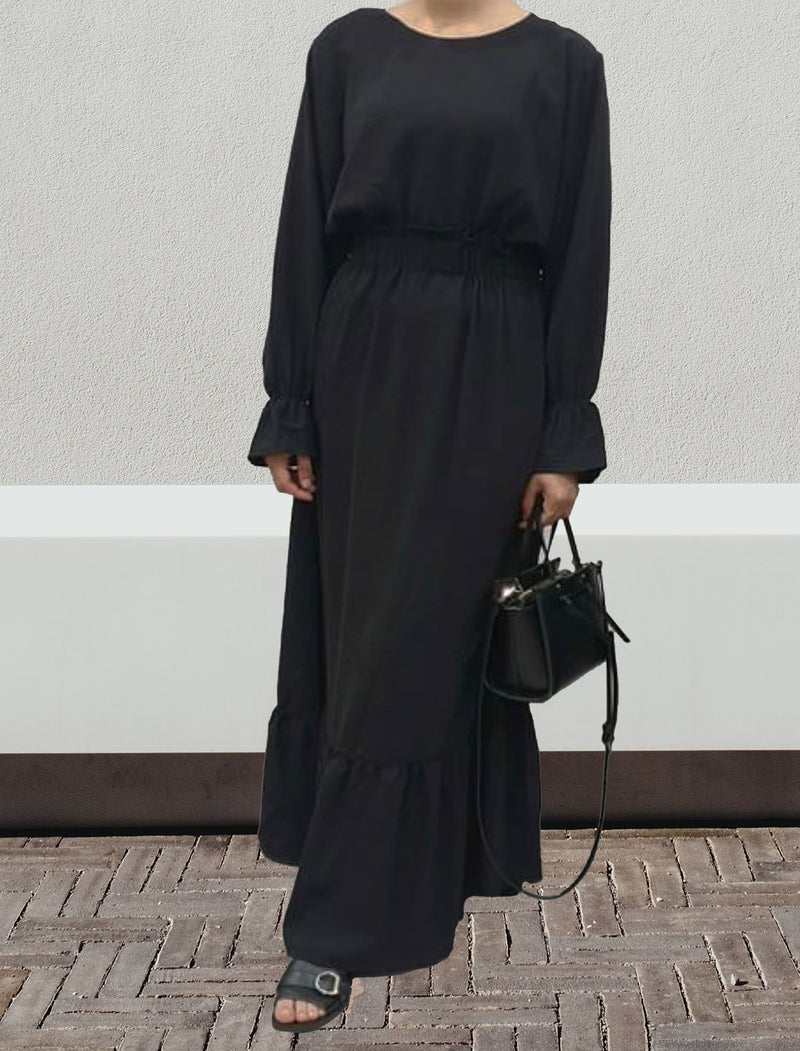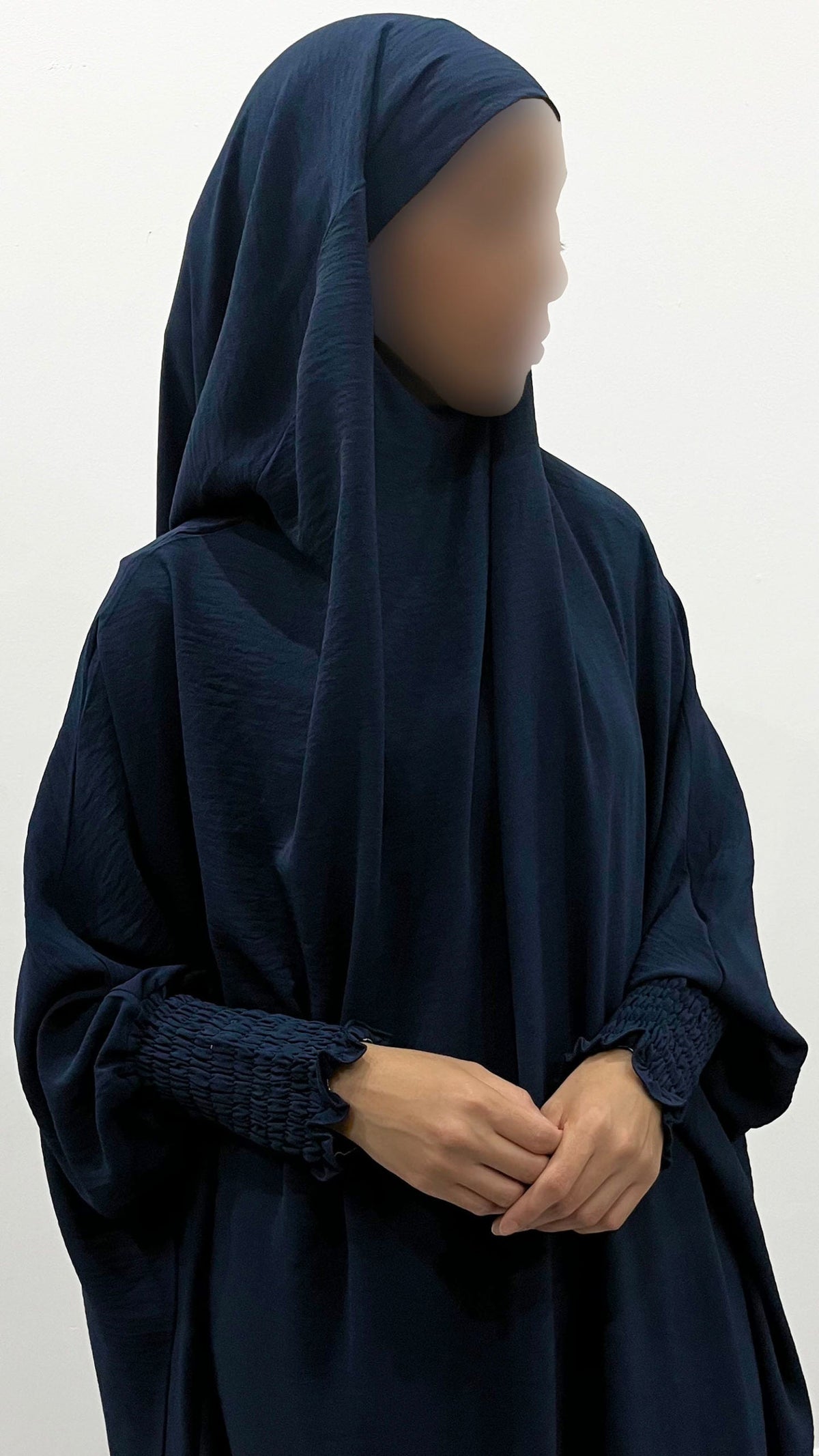
Is a poncho-style prayer abaya right for you?
A poncho-style abaya can look wonderfully spacious when held out at the sides. The important question is what happens when you put your arms down, reach forward or move into a different position. A wide outline does not automatically tell you where the garment closes, how its sleeves work or whether the side openings provide the coverage you need.
Begin with the construction rather than the name. Retail descriptions can use poncho-style for different draped shapes. Once you understand the openings, neckline and length, you can decide whether the garment suits prayer, everyday wear or a particular occasion.
Identify the shape you are considering
Look at full photographs of the front, back and sides. Does the garment have distinct sleeves, arm openings or a broad draped body? Are the sides sewn closed, partly open or shaped in another way? These details affect how it behaves far more than a generous-looking silhouette.
Ask for clarification when the images show only one pose. A garment displayed with arms extended may conceal the way it gathers or opens when worn normally. A back view and information about seams can make the design much easier to understand.
Do not assume that every poncho-inspired abaya shares one historical origin or a fixed construction. The term can describe an appearance without establishing those details. Clear measurements and design information are more useful than an elaborate story about tradition.
Check the neck opening first
Try putting the garment on and taking it off without force. The opening should accommodate your normal dressing routine and any head covering worn beneath it. A soft, wide garment can still have an awkwardly small neckline.
Once it is on, turn your head and look down. Notice whether the neckline shifts forward, pulls backwards or exposes more than you intend. Repeatedly rearranging the whole garment is not a reliable substitute for a neckline that fits.
If the abaya includes an attached head covering, inspect how it joins the body. If it does not, plan a separate scarf as part of the outfit. The word prayer does not by itself tell you what components are included.
Understand the arm and side openings
Bring your arms forward, raise them and reach to each side. Check the space beneath the arms and along the side seams. A draped design may create an opening that is not obvious while standing still.
Use the inner clothing you actually intend to wear during the test. If an additional sleeve or body layer is needed, assess the comfort of that complete arrangement. The benefit of a loose outer shape may change when several extra garments are required beneath it.
Where the design has cuffs, check their position and ease. They should not restrict the wrists or pull the body of the abaya every time you move. Where there are no cuffs, make sure the fabric remains manageable for the activities you expect to do.
Check prayer movements carefully
In a private, suitable space, assess the full clothing arrangement through standing, bowing, kneeling and prostration. Observe the neckline, head covering, wrists, back and lower edges as your position changes.
A wide garment can lift or shift in ways that are difficult to predict from its flat measurements. The fabric may gather beneath the knees or pull at the shoulders. Move normally rather than holding a careful pose that keeps the cloth in place.
Check against the coverage requirements you follow. If a particular area remains unresolved, consider a different construction or an appropriate layer rather than assuming that a broad silhouette is sufficient. For religious requirements, consult trusted guidance; a product description should not be treated as a ruling.
A successful prayer garment should allow you to settle into use without repeatedly managing loose ends and openings. Decoration and a dramatic shape are secondary to that practical result.
Measure length in the correct way
Confirm how the seller measures the garment. A shoulder-to-hem length differs from a measurement starting at the top of an attached head covering. Do not compare the two as though they describe the same dimension.
Amani’s numbered abaya lengths refer to shoulder-to-feet length in inches, not full standing height. A poncho-style garment may also have different lengths at the front, back or sides, so ask about the longest points when necessary.
Check the hem in the intended footwear situation. An outdoor outfit and a prayer outfit may be used differently. Walk, turn and kneel as appropriate, noticing whether the fabric becomes trapped or needs to be held clear.
Choose fabric with the whole design in mind
A broad cut contains a different distribution of fabric from a narrower garment. A material that feels light in a small swatch may still create a substantial amount of cloth around the body. Consider the weight of the finished abaya and any lining.
Inspect opacity in the areas where the fabric stretches or falls close to the body. A fluid drape does not guarantee coverage. Equally, a more substantial fabric is not automatically uncomfortable when the cut and conditions suit it.
Read the composition and care information before deciding. The abaya cut and fabric guide can help you compare the shape with other designs without assuming that one silhouette is universally best.
Try ordinary daily tasks
Reach for a door handle, sit at a table and put on your usual bag. Notice where excess fabric gathers. A garment that is pleasant for a quiet gathering may be inconvenient for tasks requiring closely managed sleeves.
Keep loose fabric clear of cooking surfaces, moving equipment and other situations where it could catch or create a hazard. Follow any specific clothing requirements in your workplace or activity. A generous cut should not be described as suitable for every environment.
Check whether the bag strap pulls the garment across the body or hides an opening you need to reach. A different bag or carrying method may help, but it is also reasonable to choose another abaya for a particularly active day.
Build a simple outfit around the shape
The draped silhouette already contributes visual interest. Try a plain scarf and uncomplicated accessories first. This makes it easier to assess the shape without several competing details.
A soft neutral palette can keep the outfit quiet, while a stronger garment colour makes the silhouette more noticeable. Choose the effect you enjoy. There is no need to attach a particular personality or cultural meaning to the colour.
For an open or partly open design, use an inner outfit that works independently wherever it is visible. Check the relationship between its hem and the outer shape, and make sure the fabrics do not repeatedly catch against one another.
Use accessories where they remain comfortable
A watch or bracelet may work with a defined cuff, but it can become caught beneath an expansive sleeve. Try it during movement rather than deciding from appearance alone. Keep rough edges away from delicate cloth.
A necklace may be hidden beneath the scarf or sit awkwardly against a broad neckline. Choose visible, comfortable details rather than completing an accessory checklist. Sometimes the garment and scarf are enough.
A belt changes the way a draped body hangs. It can alter the side openings and lift sections of the hem, so test it carefully before using it. Keep it only when the result suits both the design and your coverage preferences.
Assess an occasion version on its own merits
A poncho-style abaya with embroidery or a refined finish may suit a dinner or family celebration. Check the level of formality and the host’s expectations rather than assuming any flowing garment is appropriate.
Try the seated position for more than a moment. Decoration can press against a chair, and broad side fabric may need space. Choose a bag and shoes that work through the occasion without adding more things to manage.
Personal memories can make a garment meaningful, but there is no need to invent a heritage story for it. You can enjoy the shape as a contemporary clothing choice while respecting the fact that people’s relationships with modest dress differ.
Consider the outer layer before a cold-weather purchase
A conventional coat may not accommodate the garment’s width or arm arrangement comfortably. Try it over the actual abaya and scarf. Check whether sleeves bunch or whether the outer layer pulls at the neckline.
Do not solve the problem only by choosing an extremely large coat. Assess its own fit and usefulness too. A different abaya cut or an appropriate outerwear design may be a more practical answer.
For warmer conditions, a loose appearance alone does not establish comfort. Lining, inner layers, fabric weight and the scarf arrangement all contribute. Choose for the complete outfit and conditions, not a general claim that poncho shapes work in every season.
Ask for measurements that explain the shape
A broad flat width can be difficult to interpret on a draped garment. Ask where the measurement begins and ends, and whether it describes the full spread of the fabric or the usable space within sewn seams. Those are not necessarily the same thing.
A useful product description should also explain any arm openings, cuffs and side closures. Compare those details with a garment you already understand. This makes an online decision more reliable than choosing solely because a listing calls the fit generous or free size.
Decide how the garment fits into your prayer routine
A poncho-style prayer garment may be used at home, carried to another setting or kept as a separate layer that is put on when needed. These uses can favour different practical details. Decide which role you are buying it for before treating the widest or easiest-looking shape as automatically the best option.
For a garment kept ready at home, check that you can identify the front and arrange the opening without repeated readjustment. If there are ties or separate pieces, make sure the arrangement is clear and comfortable for you. Simplicity is valuable when it comes from a suitable design, not from overlooking a gap or an awkward opening.
For a garment carried in a bag, check the packed size and the care guidance rather than assuming a flowing shape will fold into very little space. Unpack it and try it again before depending on it away from home. A storage fold should not leave you uncertain about which opening or fastening belongs where.
If the garment will be available for more than one person, do not assume generous width establishes a shared fit. The neck opening, overall length and arm arrangement still need individual assessment. Keep each person’s coverage requirements and comfort separate.
These ordinary details help the garment support the routine for which it was chosen. Its shape can be convenient, but convenience should be confirmed in use rather than inferred from the name.
Care for the drape and construction
Follow the garment’s label for cleaning and drying, accounting for any attached head covering, lining or decoration. Avoid assuming that a lightweight-looking fabric can be treated the same way as another abaya you own.
Support the garment appropriately during storage. A broad or heavy design may place weight unevenly on a narrow hanger, while careless folding can compress decorative details. Choose a method suited to the actual construction and store it only when fully dry.
The fabric care guide provides a wider routine. Inspect frequently handled seams and fastenings so small problems can be addressed before they affect how the garment sits.
A good poncho-style prayer abaya is not defined by how much fabric it contains. It is defined by how comfortably its shape, openings and length work together through the movements and coverage needs of the person wearing it.