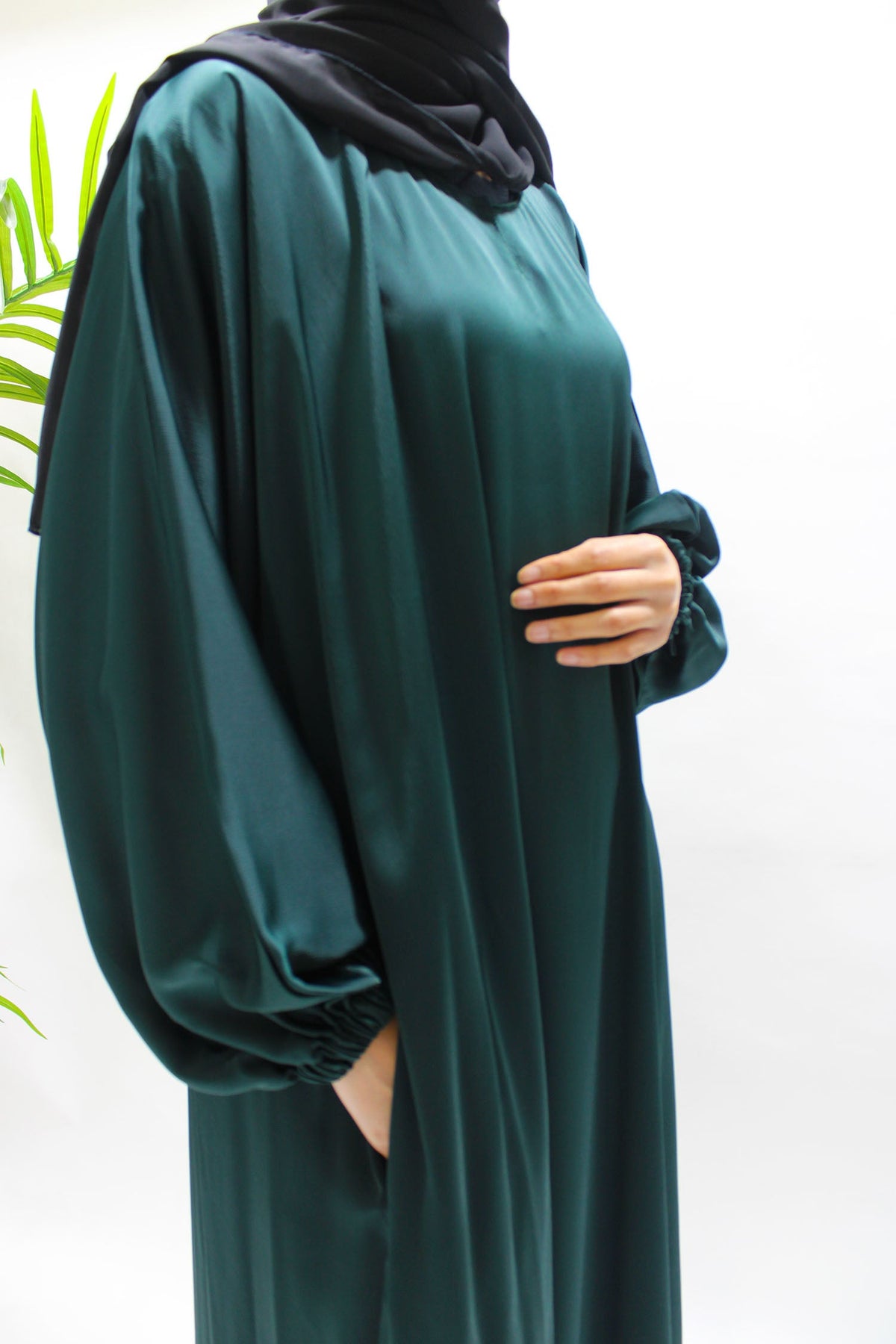
Are the pockets on your abaya actually useful?
A pocket is only useful when you can reach it comfortably and trust it to hold what you put inside. On an abaya, there is another consideration: the garment still needs to hang and move well. A phone that pulls one side down or keys that show through a delicate fabric can undo the convenience you hoped to gain.
That does not make pockets a bad idea. It makes them a detail worth examining properly. Rather than choosing an abaya simply because a listing says “with pockets”, look at where they sit, how they open and what they can reasonably carry. A thoughtful pocket can be a small improvement you appreciate every time you wear the garment.
Start with what you actually need to carry
Make a short, realistic list. Perhaps you want somewhere to put a tissue, a travel card or your hands while standing outside. Perhaps you need a pocket that accommodates your phone during a brief walk. Those are different requirements, and an abaya that meets one may not meet the other.
Measure the phone with its case on. A slim pocket that accepts the bare device may struggle with a thicker case or attached grip. Consider its weight as well as its dimensions. A pocket can be large enough for an object without the surrounding fabric supporting that object comfortably.
Do not assume that pockets replace a bag for everything. Keys, a wallet, a phone and several small items can become a surprisingly heavy load. A small bag may remain the better option for valuables, while the pockets handle a few light, frequently used things.
Understand the pocket style
A side-seam pocket can be discreet when empty because its opening follows a garment seam. That does not guarantee invisibility when filled. The pocket bag, its position and the weight of the contents all affect whether a bulge appears at the hip.
A patch pocket is visible on the outside of the abaya. It can be a deliberate design feature rather than something to hide. Check its proportions against the garment and whether the opening suits your hand. Decorative stitching or a flap may look attractive but should not obstruct ordinary use.
Some pockets have a zip, button or other closure; others remain open. A closure can help retain suitable contents, but it does not make a garment theft-proof or guarantee that nothing will escape. Inspect the actual fastening and how the pocket behaves while you sit and bend.
Find a comfortable position
Put your arms by your sides, then reach for the pocket without looking. You should not need to twist the garment or lift your shoulder awkwardly. A pocket that sits comfortably on someone else may feel too high or low on you, particularly if the abaya’s proportions differ from your own.
Check both sides separately. The opening should remain accessible when you carry your usual bag or wear an outer layer. A long coat can cover the pocket entirely, while a crossbody strap may lie across the opening and make reaching inside inconvenient.
Consider alterations before buying. Shortening a hem does not move the pockets higher up the body. If an abaya is much too long overall, a simple hem adjustment may leave its pockets and other design details in an awkward position. Ask an experienced alterations professional what is realistic rather than assuming every fit issue can be corrected at the bottom edge.
Test depth and access together
A deep pocket may hold a phone well, yet make a small key difficult to retrieve. A shallow pocket may be easy to use while standing but release its contents when you sit. There is no single ideal depth for every person and purpose.
During a careful try-on, test an appropriate item without stretching or damaging the garment. Walk, sit and rise again. Notice whether the item tilts towards the opening or presses uncomfortably against your leg. Follow the seller’s return conditions and avoid loading a garment in a way that marks it before deciding to keep it.
The opening needs attention too. A narrow opening can catch a phone case or make access awkward. A very wide opening may gape. If there is a zip, make sure it moves freely and does not scratch your hand or catch the neighbouring cloth.
Watch what happens to the abaya’s shape
Stand in front of a mirror first with the pockets empty, then with a modest, realistic load. Look at the side seams and hem. If one side drops visibly or the pocket pulls the fabric diagonally across your body, the load is affecting the fit.
That may be a reason to carry less rather than to reject the garment altogether. A pocket intended for light use can still be useful. The important thing is to know its limits before relying on it for a full day without a bag.
Check the view from the side and back as well as the front. Contents can create an outline that changes the coverage you wanted. This is especially noticeable with lightweight cloth or a closer-fitting cut. More fabric at the hem does not necessarily provide more room around the pocket.
Look beyond the outside finish
Where you can inspect the inside, look at the pocket bag and its attachment. Loose threads, obvious gaps or distorted seams deserve a closer look. Turn the garment gently rather than pulling the pocket out forcefully. An attractive external finish should be accompanied by construction that suits the intended use.
Different fabrics and linings will behave differently. A fine outer material may need a thoughtfully supported pocket; a heavier material may show less outline but add weight of its own. The guide to abaya fabric and fit provides useful context when comparing otherwise similar designs.
A repairable problem is not the same as a harmless one. If stitching is already separating on a new garment, contact the seller rather than assuming you should reinforce it yourself. For a well-loved abaya, a competent repair may restore a pocket that has begun to weaken.
Keep sharp and heavy items in perspective
Loose keys can scratch a phone and press through the fabric. A compact key holder or a separate bag compartment may be more suitable than putting everything into the same pocket. Check that any protective case does not make the combined load too bulky.
A pocket is not a good place for an uncapped pen, an open cosmetic or anything likely to leak. Keep small items contained, and do not rely on the garment to protect them from rain or spills. Remove valuables before changing clothes or leaving the abaya unattended.
With delicate embellishment, avoid reaching past sharp jewellery that could catch the pocket edge. This is not about making clothing precious and unusable. It is about recognising a few predictable sources of damage and choosing an easier arrangement.
Style the garment without fighting the pockets
A plain pocketed abaya can be a useful base for a patterned scarf or interesting shoes. Try one clear point of interest first. A black abaya with a muted green scarf, for example, needs no additional statement accessory unless you enjoy one.
A belt changes the relationship between the waist and pockets. It may pull the openings upwards or make them difficult to reach. Try it with the pockets in normal use, and check the effect while seated. Leave the belt out when it makes a comfortable garment less practical.
For a tonal outfit, use different depths of one colour across the abaya, scarf and bag. Texture can provide the variation: a matte scarf beside a smoother abaya, or a structured bag against a fluid silhouette. Pockets do not dictate a particular style; they should support the way you already like to dress.
Three everyday arrangements to try
A short local errand: use the pockets for a tissue and one light item, with your phone and valuables wherever they are most secure for the route. Wear shoes that work with the hem and avoid adding a bag solely because an outfit photograph appears to need one.
A workday or study day: keep larger essentials in a suitable bag. Let the abaya pockets hold the few things you need close at hand, provided that suits the setting. Overloading them with everything from your desk is unlikely to be comfortable.
A family visit: check how the pockets behave when you sit for a long time. A phone can press against your thigh or slide towards an opening. Moving it to a bag during the visit may be more comfortable than repeatedly adjusting your position.
Questions worth asking an online seller
Look for a photograph showing the pocket opening and, ideally, its position on the garment. Ask whether the pockets are functional rather than decorative. Where dimensions are important, request their approximate depth and opening width instead of asking only whether they fit “a phone”.
Confirm whether both sides have pockets and whether either has a closure. Check garment measurements alongside that information. A pocket description alone cannot tell you whether the abaya will fit your shoulders, sleeves or preferred length.
Reviews may reveal useful experiences, but they cannot guarantee your own result. Someone carrying a smaller device or wearing the garment more loosely may find the pocket behaves differently. Use those observations as questions to investigate, not as substitutes for the actual specification.
Discuss pocket alterations before assuming they are simple
An otherwise well-fitting abaya may tempt you to have pockets added, moved or deepened. Take the actual garment to a suitable alteration specialist and explain what you intend to carry. The request is more specific than “make the pockets better”: a hand-resting pocket, a place for a tissue and somewhere to carry a phone are different jobs.
Ask where the new pocket would sit and how its opening would affect the existing seam or decoration. There must be suitable space inside the garment as well as an attractive position outside it. A lighter cloth may also show a pocket bag or its contents more clearly than you expect.
Try any agreed positioning while standing and seated before the alteration is finalised. Reach with your usual hand rather than choosing the position solely by appearance in a mirror. If the proposed work changes the garment more than you would like, using a small bag is a reasonable solution. Practicality does not require every abaya to carry belongings within its own fabric.
Give pockets a place in the care routine
Empty every pocket before cleaning the abaya. Check the corners for tissues and small objects rather than patting the outside and assuming it is clear. Follow the care label and any fastening instructions appropriate to the garment.
After cleaning, check that the pocket area is fully dry before storage. Inspect a frequently used pocket periodically for pulled seams or damage near the opening. Addressing a small problem early is easier than continuing to load a pocket whose stitching is failing. The fabric care guide covers the wider garment routine.
The best pocketed abaya is not the one with the most storage. It is the one whose pockets you can use naturally, whose contents do not spoil the fit and whose design still feels good when the pockets are empty.