Style Maba Hijab: How Can New Students Create Trendy, Elegant Looks?
For a fresh, elegant maba hijab look, start with a comfortable outfit you already understand: a long shirt or modest top, trousers or a skirt you enjoy wearing, and a hijab you can arrange easily. Then choose one detail to give the combination personality. That might be a printed scarf, a softly coloured cardigan, a defined collar or a more interesting sleeve.
Maba is an Indonesian abbreviation of mahasiswa baru, meaning a new university student, as explained by Universitas Muhammadiyah Sidoarjo's guide to university terms. In this context, style maba hijab is a useful starting point for thinking about the outfits you want to wear as you begin university: put-together combinations that leave room for your own taste.
A good first-term wardrobe can grow from familiar pieces. Keep the coverage you prefer, find a few combinations you can repeat and experiment with colour, pattern and layers at a manageable pace. You can enjoy a new setting while continuing to dress in a way that feels like you.
Begin with the clothes you already reach for
Lay out three outfits you currently enjoy wearing. Look for what they have in common. Perhaps you like long, straight lines, soft colours, a plain scarf or a relaxed shirt over trousers. Those preferences give your university outfits a stronger starting point than a list of unfamiliar pieces.
Separate the parts of each outfit into useful roles: the base clothing, the layer that changes its shape, the hijab and the finishing details. You may discover that a favourite cardigan works with several tops, or that one scarf colour connects clothes you had not previously worn together.
Try the combinations with the bag and shoes you expect to use. A roomy tote, a backpack and a small shoulder bag each contribute a different shape. Comfortable footwear also affects where a trouser or skirt hem falls. Include those pieces while judging the outfit so that the finished result feels deliberate.
Keep any actual instructions for your course or a particular activity in mind when choosing what to wear. For ordinary outfit planning, concentrate on the clothes you enjoy, the coverage you want and the combinations that remain comfortable through your day.
Choose a clear direction for each outfit
Give the outfit a simple description before adding accessories. You might choose soft and tonal, crisp and minimal, relaxed with one print, or smart with a structured layer. This gives you a practical way to decide which pieces belong together.
For soft and tonal, try a cream top, stone trousers or skirt and a taupe hijab. Compare the actual shades together and add a cardigan if you want another layer. For a crisper effect, use a pale shirt against dark trousers and keep the scarf relatively plain. The contrast becomes the main detail.
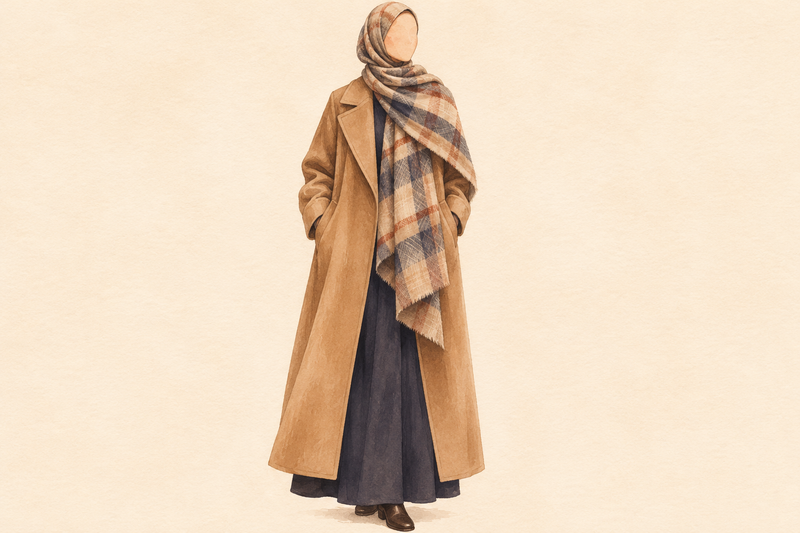
For a more playful version, start with a favourite printed scarf and choose a plain outfit around one colour from it. A muted blue in the print might connect to a navy lower garment; a warm brown could work with a cardigan or bag. You only need one clear connection to begin.
If the outfit seems uncertain, return to the description. Perhaps you intended a quiet look but have added several strong details. Keep the one you like most and simplify another area. A clear direction makes experimenting easier because you know what you are trying to create.
Build the first combination around a long shirt
A long shirt gives you several styling choices: buttoned as a top, worn over a suitable base or partly covered by a cardigan. Begin with the version you would wear most often. Check the shirt's side openings and hem while seated so that you can choose the arrangement that gives your preferred coverage.
For a straightforward outfit, try a pale blue long shirt with dark straight trousers, a soft grey hijab and familiar flats or trainers. Let the shirt supply the lighter area through the body. A plain dark bag can connect with the trousers and keep the colour combination easy to repeat.
Look at the collar beside your hijab. You may prefer the scarf draped over it, or you may enjoy seeing a small part of the collar beneath a simpler arrangement. Try both without changing the rest of the outfit. Keep the version that sits comfortably and looks clear from the front and side.
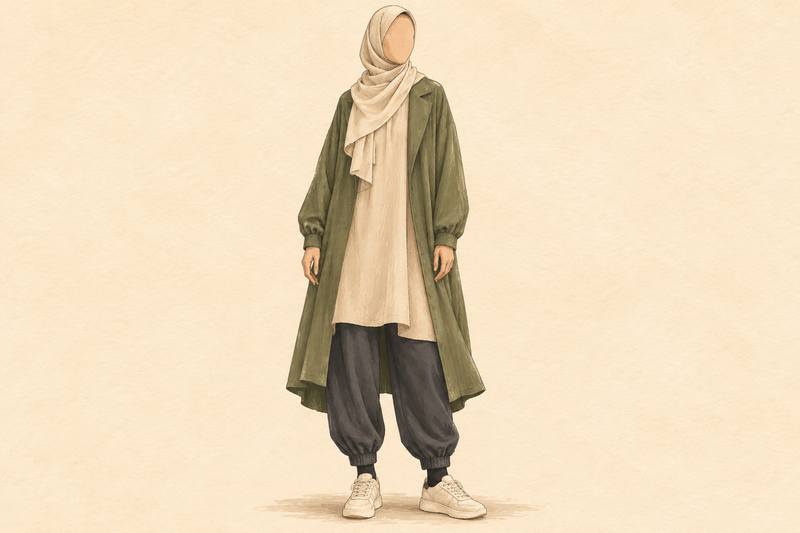
If you wear the shirt open, arrange the base outfit first. Choose a top and lower garment that provide the coverage you want when the shirt fronts move apart. The open shirt then adds a longer outline and another colour, while the clothes beneath remain a complete combination.
Finish by checking the sleeves when you write or reach for your bag. Adjust the cuffs using their intended fastening. A comfortable sleeve and collar arrangement makes the shirt easier to use again with a different scarf or lower garment.
Use a cardigan to soften a simple base
A cardigan can bring a quieter, relaxed quality to a maba hijab outfit. Start with a plain base, such as a long-sleeved top and trousers, then compare the cardigan's length with the top beneath it. Decide whether you like the two hems visible together or prefer one clearer outer line.
Try a brown cardigan over a cream top with dark trousers and a taupe hijab. The warmer shades connect the upper half while the darker lower garment grounds the combination. If the colours feel too close, compare a slightly lighter scarf or a darker bag before adding a new colour.
With a long skirt, look at where the cardigan ends. A shorter cardigan over a longer top creates several visible layers; a longer one may give a more continuous line. Neither needs to be your permanent choice. Compare the actual garments and keep the proportion you enjoy.
Consider the scarf's surface beside the knit. Arrange it and move normally, noticing whether the two pieces sit comfortably together. If a textured cardigan catches a delicate scarf, try a smoother scarf you already own or a different route for the loose ends.
Keep a cardigan combination in your wardrobe notes once it works. It can become a useful alternative when you want a softer outline than a blazer, with the familiar base and shoes doing most of the outfit planning.
Make a blazer feel like part of your own style
A blazer changes an outfit most clearly through its shoulders, lapels and defined edges. Choose one that sits comfortably over your intended top and hijab arrangement. Reach forward and sit with it fastened in the way you expect to wear it so that the shape remains comfortable.
For an elegant version, try a dark blazer over a plain light top, with loose trousers and a softly coloured scarf. Keep the base top simple so that the lapels have room to create the outline. A bag with a clean shape can continue that effect without adding several decorative elements.
If you prefer a more relaxed result, compare the same blazer with a familiar long shirt or a quieter, less structured bag. The balance of the whole outfit matters more than treating the jacket as something reserved for one mood. You can make it feel more personal through colour and the clothes around it.
Arrange the hijab after putting the blazer on. Check whether its front edges cover the lapels in a way you like or whether a small redistribution makes the upper half clearer. Keep your preferred coverage while allowing the scarf and jacket to sit comfortably together.
For a presentation or event with a stated dress expectation, choose the complete combination around that information. Once the practical needs are clear, the same colour and layering decisions can help the outfit feel polished and familiar.
How can you use a high-neck top without crowding the hijab?
A high-neck top or turtleneck can give a layered outfit a continuous base around the neckline. Try the exact top with your scarf before adding outerwear. Notice how much fabric sits around the neck and whether the top's collar stays comfortable when you turn or look down.
Keep the scarf arrangement straightforward for the first trial. A front drape over the top may be easier to judge than several tucked folds. If you want the high neck partly visible, adjust the scarf around the coverage you prefer and check the side view as well as the front.
Now add the cardigan, shirt or blazer. A collarless layer creates a different effect from a shirt collar or broad lapels. Compare the complete combination and simplify one part if the neck and shoulders feel crowded. A thinner base or a different scarf route may be all you need.
Choose this version for the conditions in which you find it comfortable. The same outer layer may work better over a simpler neckline on another day. Keeping both options gives you useful variety while preserving the overall style of the outfit.
Let a patterned hijab lead one outfit
A printed scarf can make familiar clothes feel different without changing the entire combination. Lay the scarf beside a plain top and lower garment. Choose one colour from the print to repeat elsewhere, then look at the proportions of those colours across the outfit.
For example, a scarf with cream, muted green and dark brown might work with a cream shirt and dark trousers. A brown bag can provide a small connection if you already own one. You can also keep the bag black and let the scarf remain the only patterned piece.
Arrange the scarf before deciding how the pattern looks near your face. A large motif may appear in separate sections once folded, while a small repeat can create a more continuous effect. Move the starting position slightly if you want a particular part of the design to be visible.
Look at the shirt collar and outer layer as part of the same upper area. If the print is strong, a plainer collar arrangement may make it easier to appreciate. If the outfit feels too quiet, compare a more visible colour from the scarf in one other piece.
For more ideas on using a scarf as the colour focus, our guide to styling colourful hijabs with everyday outfits explores combinations that give each shade room to work.
Try a patterned top with a plain scarf
If you prefer the pattern in your clothes, start with a printed shirt, tunic or blouse and choose a plain hijab. This gives you an easy way to see how the print relates to your face and shoulders. Keep the lower garment familiar while you compare scarf colours.
A striped shirt can work with a scarf drawn from the lighter or darker stripe. Try both. The lighter choice may create a softer transition beside the face, while the darker choice creates a clearer contrast. Decide from the actual colours and the effect you enjoy.
With a floral or abstract print, look for a background shade as well as the most noticeable accent. A scarf that echoes the background can feel quieter; an accent shade makes a stronger connection. You can keep two different combinations in mind for the same top.
When adding a cardigan or jacket, see how much of the pattern remains visible. An open layer can turn a larger print into a narrower central section. That may be a useful way to enjoy a bold shirt within an otherwise simple outfit.
Give statement sleeves enough space
A puffed, flared or otherwise detailed sleeve can be the feature that makes a simple outfit interesting. Begin by wearing the top with a plain scarf and lower garment so that you can judge its outline clearly. Notice where the sleeve's volume sits: near the shoulder, through the arm or towards the cuff.
Try the top with the outerwear you need. A sleeve that looks appealing on its own may gather differently beneath a close-fitting jacket. Compare another outer layer or keep the statement-sleeve top for days when that extra layer works comfortably with it.
Use your hands as you normally would when studying, writing or reaching into a bag. Decide whether the cuff gives you enough freedom and whether the sleeve needs frequent rearranging. A detail becomes more enjoyable when it fits the way you use the garment.
Balance the visible volume with the scarf arrangement. A cleaner front drape can leave the sleeve as the main feature. If you prefer a fuller scarf, compare the complete outline and choose the combination that feels intentional to you.
Create a relaxed, sporty version with familiar pieces
For a more casual mood, try a long relaxed top, comfortable loose trousers and trainers you already enjoy wearing. Use a simple hijab arrangement and choose a bag that suits what you need to carry. The clean relationship between those pieces can give the outfit a fresh, easy character.
Begin with a small palette, such as navy, grey and cream. A grey top with navy trousers and a cream scarf creates visible differences without requiring several strong colours. Compare the trainers and bag with the outfit so that their shape and tone feel included.
If you prefer a skirt, try it with the same top and shoes. Check the top's length over the waistband and the skirt's movement when you walk. You can retain the relaxed mood while changing the lower garment to match your preference.
Keep the scarf familiar while experimenting with the clothes. Once the base outfit works, try a different colour or fold if you want to refresh it. Changing one element at a time helps you find the combinations you can repeat easily.
Choose scarf fabrics by the way you like to arrange them
Start with a scarf you already know how to wear. Notice its useful qualities: perhaps it falls into the folds you like, holds a simple front shape or feels comfortable with your usual undercap. Use that experience when choosing another scarf for the same outfit.
If you are comparing scarves described as chiffon, jersey or silk, look at the actual item as well as its name. Check its dimensions, composition and care information, then try the arrangement you want. The resulting coverage, folds and feel are more useful to your outfit planning than expecting every scarf with a similar label to behave identically.
Test the scarf with the collar or outer layer it will accompany. A fabric that works well beside a plain top may need a different arrangement with a textured cardigan. Include glasses, if you wear them, and the bag straps you expect to use.
Choose a second scarf because it adds a useful option: perhaps a plain shade that works with patterned tops or a print that refreshes several simple outfits. That gives each addition a clear place in the wardrobe you are building.
Make a small first-week outfit map
Choose a few complete combinations before focusing on individual purchases. You might begin with a shirt outfit, a cardigan outfit and a slightly smarter layered version. Write down every part, including the scarf, shoes and bag, so that each combination is ready to use.
| Outfit direction | Possible combination | Detail to settle beforehand |
|---|---|---|
| Crisp and simple | Long pale shirt, dark trousers, grey hijab and familiar flats | The shirt collar beside the scarf |
| Soft and relaxed | Plain top, long skirt, cardigan and tonal hijab | The relationship between the cardigan and skirt |
| Pattern as the focus | Plain outfit with a printed scarf | Which colour connects the print to the clothing |
| A smarter layer | Plain base with a blazer and simple hijab arrangement | Room through the shoulders, sleeves and lapels |
| Casual and sporty | Relaxed long top, loose trousers and trainers | The top length and hem with the chosen shoes |
Use these as starting combinations and substitute the clothes you own. If you prefer dresses, replace a separates base with a suitable dress and compare the same cardigan or blazer over it. Keep the exercise focused on complete outfits that reflect your taste.
Before an early start, place the chosen scarf beside the complete outfit and check that the pieces are ready to wear. Include any fastening you normally use and the layer you expect to take off later. If one item is unavailable, choose a replacement within the same colour or shape plan. This keeps a missing cardigan or scarf from turning into a last-minute search for an entirely different outfit.
After wearing a combination, record one observation. Perhaps a scarf shade worked particularly well or a cardigan's length felt less useful than expected. Those notes help you refine the next version from real experience.
Refresh an outfit by changing one visible detail
Once you have a dependable combination, change a detail with a clear purpose. A different scarf colour can lighten or deepen the area near your face. A structured bag can make a relaxed base feel sharper. A cardigan can soften the outline of a crisp shirt.
For example, keep a navy shirt and dark trousers together while comparing a grey hijab with a muted rose one. Use the same shoes and bag for the comparison. You will see more clearly what the scarf contributes than if every part changes at once.
Another option is to keep the scarf and base outfit, then compare outer layers. A long cardigan may give you a relaxed line, while a blazer creates more defined edges. Choose the version you want for that day's plans and note the other as an alternative.
Small changes can also help you explore a new trend. Try the colour, shape or detail through a piece you already own where possible. Wear it as part of a complete outfit before deciding whether you want to build more combinations around it.
Keep accessories useful and personal
Choose the bag around the items you need to carry, then consider how its shape completes the outfit. A large bag occupies visible space, so include it when looking at the overall balance. Try it over your chosen outer layer and scarf to see whether the straps sit comfortably.
A watch, a simple bracelet or jewellery you already wear can give the outfit a familiar finishing detail. Put it on with the complete combination and check how it sits beside cuffs and scarf ends. Keep the pieces you can enjoy wearing through the day.
If the outfit has a printed scarf, detailed sleeves and prominent bag hardware, decide which element you want to notice first. You may enjoy the combination as it is, or prefer one quieter accessory. The useful question is whether the details work together in the way you intended.
Personal style can also come from repetition. A scarf colour you love, a familiar bag or a favourite way of arranging a collar can become a recognisable part of your outfits. Keep those preferences while exploring new combinations around them.
What can you change when a combination feels unfinished?
Identify the part that seems uncertain before replacing the outfit. Look at the scarf and neckline, the line where the top meets the lower garment and the relationship between the outer layer and bag. One of those areas may explain what you are noticing.
- If the upper half feels crowded, compare a simpler scarf arrangement or a top with fewer collar details.
- If the colours seem disconnected, repeat one existing shade in a smaller area, or remove an unnecessary accent.
- If the layers look busy, compare their hems and keep the combination with the clearest arrangement.
- If a plain outfit feels unfinished, introduce one texture, print or accessory you already enjoy.
- If a fashionable detail feels awkward during ordinary movement, try the idea in another garment or reserve it for a different setting.
Take a step back and look at the whole outfit after each change. You may find that the useful adjustment is smaller than you expected. Keep the parts that already feel comfortable and concentrate on the detail that improves the combination.
Let your first-term style develop through wearing it
Keep a short record of the outfits you want to repeat. Include the exact scarf and layer, because those can change the feeling of familiar clothes. A note such as “blue shirt, dark trousers, grey scarf, plain flats” is enough to give another morning a starting point.
Before adding something new, name the role it would fill. You might want a plain scarf for two patterned tops, a cardigan that works over a favourite dress or trousers that suit an existing long shirt. Try to identify more than one useful combination for the piece you are considering.
Check the finished garment information and care instructions when choosing it. Give yourself time to try it with the clothes it is meant to join. The most satisfying addition is one that becomes part of your outfits, rather than remaining a separate idea in the wardrobe.
Style maba hijab can be an enjoyable way to explore a new stage of life through clothes. Begin with comfortable bases, use pattern and colour deliberately, and choose layers that bring out the look you want. Repeat what works, adjust what you learn from and let your own preferences guide the next outfit.