How Can You Create a Unique and Contemporary Indie Hijab Style?
An indie-inspired hijab outfit can begin with an unexpected pairing: a bright printed skirt beneath a precise, plain jacket; an embroidered tunic with everyday trousers; or a familiar dress with a scarf colour you have never tried beside it. The pleasure is in bringing your own pieces together and finding a combination that feels personal. Start with clothes that provide the coverage and comfort you want, then experiment with colour, texture and proportion.
You can take this in a colourful, understated, tailored or loosely layered direction. A distinctive outfit does not require every item to be unusual. Often a familiar base makes it easier to enjoy one adventurous choice, such as a geometric scarf or a blouse with expressive sleeves. The aim is to recognise something of your own taste in the finished look and still feel comfortable wearing it through an ordinary day.
The ideas below develop that approach through complete outfits, practical pattern combinations and ways to mix treasured, pre-owned and contemporary pieces. Use them as starting points, changing the garments and colours to suit what you already enjoy wearing.
Choose the details that make the style yours
Before looking for more clothes, choose two qualities you would like an outfit to have. You might want it to feel colourful and relaxed, graphic and precise, or soft with one surprising detail. Two clear qualities give you something useful to work towards. A long collection of unrelated inspiration pictures can leave you wanting a different wardrobe every time you get dressed.
Look through the pieces you reach for voluntarily. Perhaps you repeatedly choose strong collars, small prints, long sleeves with unusual cuffs or bags with an interesting shape. Those preferences are more helpful than deciding that an indie look must contain a particular item. Write down the details you like, then notice which garments already supply them.
Choose one piece to experiment around. A skirt with a lively print is an especially clear starting point because its colours can guide the scarf and top. A plain garment can be just as useful: its shape might be the interesting feature, leaving you free to introduce colour elsewhere. Keep the first experiment small enough that you can tell which change you enjoy.
Your coverage preferences belong in those first decisions. If you like a longer top over trousers, use that length from the beginning. If you prefer a scarf that covers the chest, build the neckline and jacket around that arrangement. Personal style becomes easier to repeat when the clothes support the way you already want to dress.
Build a reliable base for the more adventurous pieces
A complete base outfit gives you room to change the visible layers. Try a plain long-sleeved dress, a comfortable top and long skirt, or a tunic with trousers that have the room you want. Wear that combination with your hijab before adding the jacket, waistcoat or printed overshirt. You should be happy with the coverage if the outer layer comes off indoors.
Check how the garments meet. A tunic's side opening may reveal a different amount of the trousers when you sit; a blouse can lift above a skirt waistband when you reach. Choose the hem and fastening arrangement you intend to wear, then try those movements. It is easier to solve a practical gap now than after arranging several decorative layers over it.
Give the fabrics space to settle together. A softly gathered skirt under a stiff overshirt produces a different shape from the same skirt under a loose knit. Neither combination needs to create a narrow waist to look considered. A change in garment length or a clearly different surface can make two generous shapes distinct.
For a first experiment, keep the shoes and bag familiar. They help you judge the new pairing in the context of your real wardrobe. Once the clothes work, you can decide whether a different accessory would add something useful.
Use colour to connect pieces that were never bought as a set
Look for a small colour that two garments share. A printed skirt may contain a little blue that relates to a plain jacket, even when blue is not the main colour in either piece. That connection can make an unexpected combination feel deliberate without requiring everything to match exactly.
For example, place an ochre-and-cream printed skirt beside an ink-blue jacket, then try a cream hijab and a muted blue one. The cream makes a lighter area around the face; the blue creates a stronger relationship with the jacket. Keep the shoes unchanged while you compare them. You are deciding how you want the same clothes to read, rather than starting a new outfit each time.
Another approach is to use a colour in two different surfaces. A plum scarf and a loosely woven plum jumper may be close enough to relate while still looking separate. Add a plain skirt in a colour you enjoy alongside them. Texture can give this restrained palette plenty of interest without an additional print.
If you want a bright accent, choose its location. A vivid scarf changes the area around your face and shoulders; a bright bag places the colour lower in the outfit. Try each option with the same base and notice which you prefer. There is no need to use both simply because they happen to match.
Compare actual garments in the light where you get dressed and near a window. Names such as mustard, sage and burgundy cover a range of shades. The relationship between the pieces in your hands is the useful reference. For more ways to give the scarf a clear role, see our colourful headscarf styling guide.
Combine patterns by changing their scale
Two prints can work together when each remains easy to recognise. Begin with a larger pattern on one garment and a smaller repeated detail on another. A broad floral skirt and a finely striped scarf make a different combination from two large florals placed beside each other.
Find one shared colour to connect the prints. With a cream-and-navy skirt, a scarf containing a fine navy line gives you a clear link. Keep the top plain for the first fitting. That makes it easier to judge the relationship between the two patterns without a third one changing the result.
Then consider how much of each print will be visible. A scarf's pattern changes when it is folded: a decorative border may become the dominant feature, while a large central motif may disappear. Arrange the hijab as you would actually wear it before deciding whether it works with the skirt or dress.
You can also separate the patterns with a plain area. A solid-colour longline top between a patterned hijab and printed skirt gives each print its own space. If you prefer the patterns close together, try that too. The important comparison is whether you like the finished outfit at a normal viewing distance and while moving, rather than only as a flat arrangement on the bed.
When a combination feels unsettled, change one part of it. Try a smaller scarf pattern, turn a border away from the face, or replace the jacket with a plain one. Keep the version that makes the individual pieces more enjoyable to wear.
Outfit idea: a printed skirt with a clean-lined jacket
Begin with a long skirt in an ochre, cream and blue print, a plain cream blouse and a simple ink-blue jacket. Choose a hijab in cream or a blue that sits comfortably with the jacket. Flat shoes or trainers you already find comfortable can keep the outfit suitable for a casual afternoon.
The contrast comes from the print and the jacket's clearer outline. Let the skirt's pattern remain visible below the jacket, and check where the jacket hem finishes. If it catches at the fullest part of the skirt, compare a longer or shorter outer layer. Keep the skirt's comfort and movement intact while adjusting the relationship between the two garments.
Try the blouse both in your preferred untucked position and with any other arrangement you already find comfortable. A visible plain hem can create another line between the jacket and skirt. If several hems feel distracting, a simpler blouse length may be enough to settle the outfit.
A plain bag lets the pattern remain the main feature. If you enjoy a more expressive accessory, try one with an interesting shape before adding another strong print. A rounded bag beside a straighter jacket can introduce another small contrast through form alone.
For a quieter version, keep the jacket and scarf but replace the skirt with a plain one. For a more colourful version, retain the print and try a scarf that picks up one of its smaller colours. Both variations grow from the same outfit, making it easy to see what you prefer.
Outfit idea: an embroidered tunic with contemporary separates
An embroidered tunic you already own can become the centre of a fresh everyday outfit. Try it with plain trousers in a colour that appears in the embroidery, a comfortable hijab and a practical bag. A clean, simple shoe gives the tunic room to remain the most detailed piece.
Look first at where the embroidery sits. A decorated chest panel may work well with a plain scarf draped to provide your preferred coverage. If the detail is concentrated at the cuffs or hem, you can leave those areas clear of optional accessories. You do not need to expose every decorative section for the outfit to be successful.
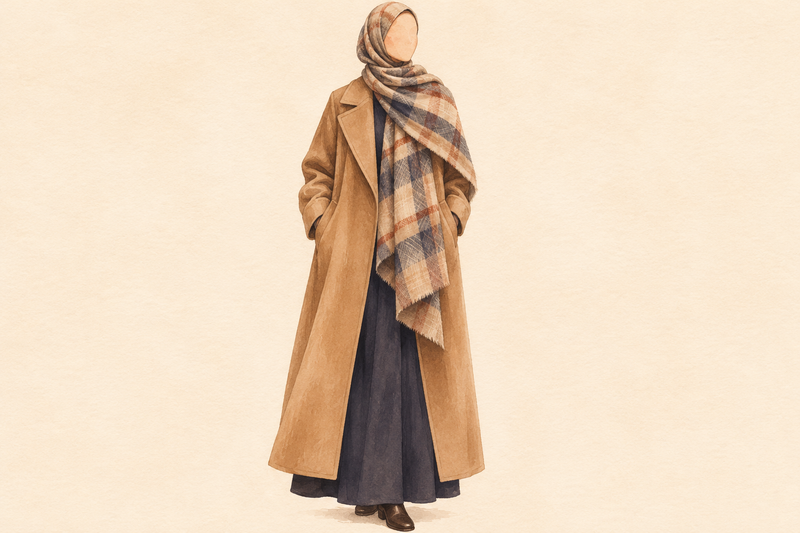
A simple car coat or long jacket can make an interesting partner for the tunic. Check that the outer sleeve accommodates the tunic's cuff and that its front does not pull the embroidered area out of shape. Try the outfit with the coat removed as well, especially if you are dressing for an indoor visit.
If the garment belongs to your family or heritage, let the details you know about it remain personal and specific. You might enjoy wearing a familiar piece in a new combination without changing its embroidery or cutting it to fit a trend. A different scarf, shoe or outer layer can make the outfit feel contemporary while keeping the garment itself intact.
For jewellery, start with a piece that does not catch against the threads. A small ring or smooth watch may be a more comfortable addition than a necklace resting directly on embroidery. Keep the final choice tied to the garment you have, rather than treating every embroidered item as needing the same accessories.
Outfit idea: a quiet colour palette with expressive sleeves
A blouse with gathered, flared or otherwise distinctive sleeves gives you another way to build an individual outfit. Try a soft lilac blouse with a long grey skirt and a deeper purple hijab. The colours remain related, while the sleeve shape supplies the main point of interest.
Choose the skirt by how it sits with the blouse. A straight, generously cut skirt makes one outline; a fuller skirt gives the outfit a different kind of movement. Compare the blouse untucked in both combinations. If its hem catches on the waistband, another skirt or a different blouse length may be easier than repeatedly rearranging the fabric.
Pay attention to the scarf near the shoulders. A very full drape can sit against the upper sleeve detail, which you may enjoy, or it can make that area feel crowded. Redistribute the scarf comfortably while keeping your preferred coverage. You can leave more of the detail visible at the cuffs even when the upper part of the blouse is covered.
Check the sleeves during the activity you have planned. Sit at a table, put on your coat and carry your bag. If an especially wide cuff makes a meal awkward, choose a different blouse for that outing and save this combination for a setting where the shape is easier to enjoy. Your personal style can include several versions for different days.
A smooth grey or plum bag keeps this outfit focused on shape. For a sharper finish, compare a geometric bag or a shoe with a clear, simple outline. One change in accessory can make the same colours feel quite different.
Outfit idea: relaxed tailoring over a long tunic
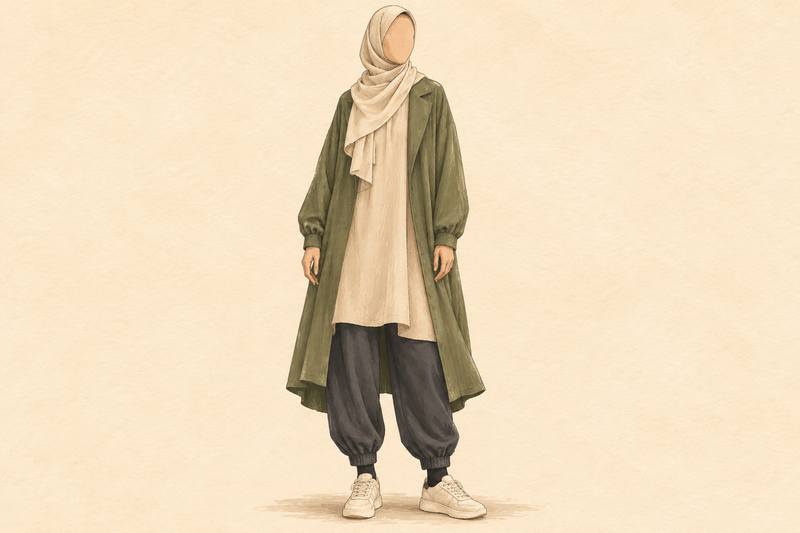
Try a generously cut waistcoat over a plain long-sleeved tunic, with comfortable trousers and a hijab that connects to one of the neutral shades. A charcoal waistcoat over an ivory tunic with navy trousers is one combination to explore. The longer tunic remains visible below the waistcoat, making the layered lengths part of the design.
Start with the tunic and trousers as a complete outfit. Choose the side openings, fabric and fit that give you the coverage you want. Then add the waistcoat and see how its edges sit. An open version can show more of the tunic, while a fastened version needs enough room through the chest and shoulders to remain comfortable.
Keep a collar or pocket detail visible where it suits your scarf arrangement. If the tunic has a substantial collar, compare a simpler scarf fold before adding a necklace or another upper layer. A plain neckline may be the easier partner for a fuller hijab drape.
This combination can draw on tailored pieces from whichever department offers the cut you like. Check the actual garment measurements, shoulder position and armholes rather than relying on the category printed on a shop sign. The useful result is a shape that works over your existing layers.
For a casual version, use familiar trainers and a soft bag. For a meeting, choose suitable shoes and a more structured bag, then check the setting's expectations. You can retain the layered character without keeping every accessory identical across both outfits.
Give a pre-owned favourite a fresh setting
A printed dress, unusual cardigan or well-loved jacket can bring something individual to a contemporary outfit. Begin with the feature that made you keep or choose it: perhaps the buttons, a particular colour or the shape of the sleeves. Let that feature guide the new combination.
For a long printed dress, try a plain hijab and a simple modern jacket. Choose a scarf colour from a small part of the print, then compare it with a neutral scarf you already own. The first connects the scarf closely to the dress; the second allows more separation. A plain trainer or uncomplicated flat can make the outfit useful for an everyday outing.
Look at the dress without the jacket too. If you need another layer for the neckline or sleeves, include it during the first fitting. Check the full outfit with your bag on and after sitting down. A garment you already know can behave differently beneath an outer layer with a shorter sleeve or a closer armhole.
If you want to lean further into older shapes and prints, the vintage hijab outfit guide offers another direction to explore. You can also keep just one older piece and give it a new setting with simpler contemporary clothes. The combination does not need to reproduce a whole decade.
A repair or small alteration may make a favourite easier to wear. Decide what the garment needs before changing it: a secure button, a better hem length or a repaired pocket are different tasks. For unfamiliar construction, ask someone with suitable skills to assess it while you wear the intended layers and shoes.
Choose the hijab's role in each outfit
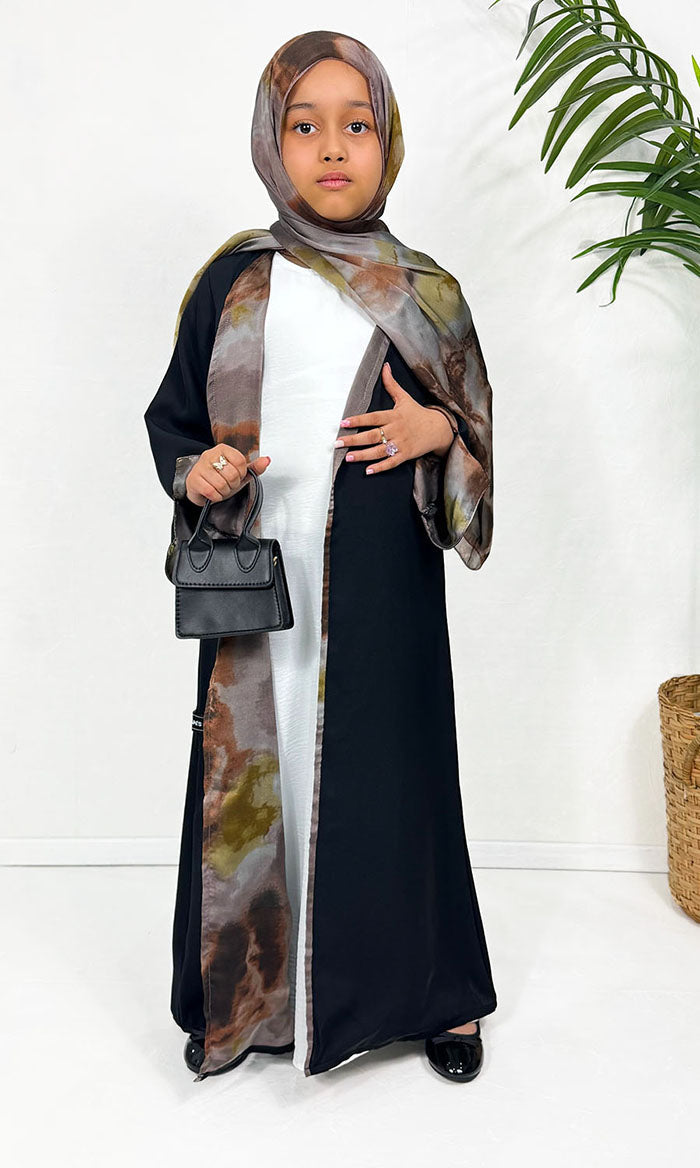
The hijab can connect colours, introduce a pattern or create a quiet area beside a detailed garment. Choose which of those jobs matters for the outfit you are building. With the printed-skirt combination, a plain scarf makes the skirt easier to see. With the tailored tunic outfit, a small geometric scarf can provide the unexpected detail.
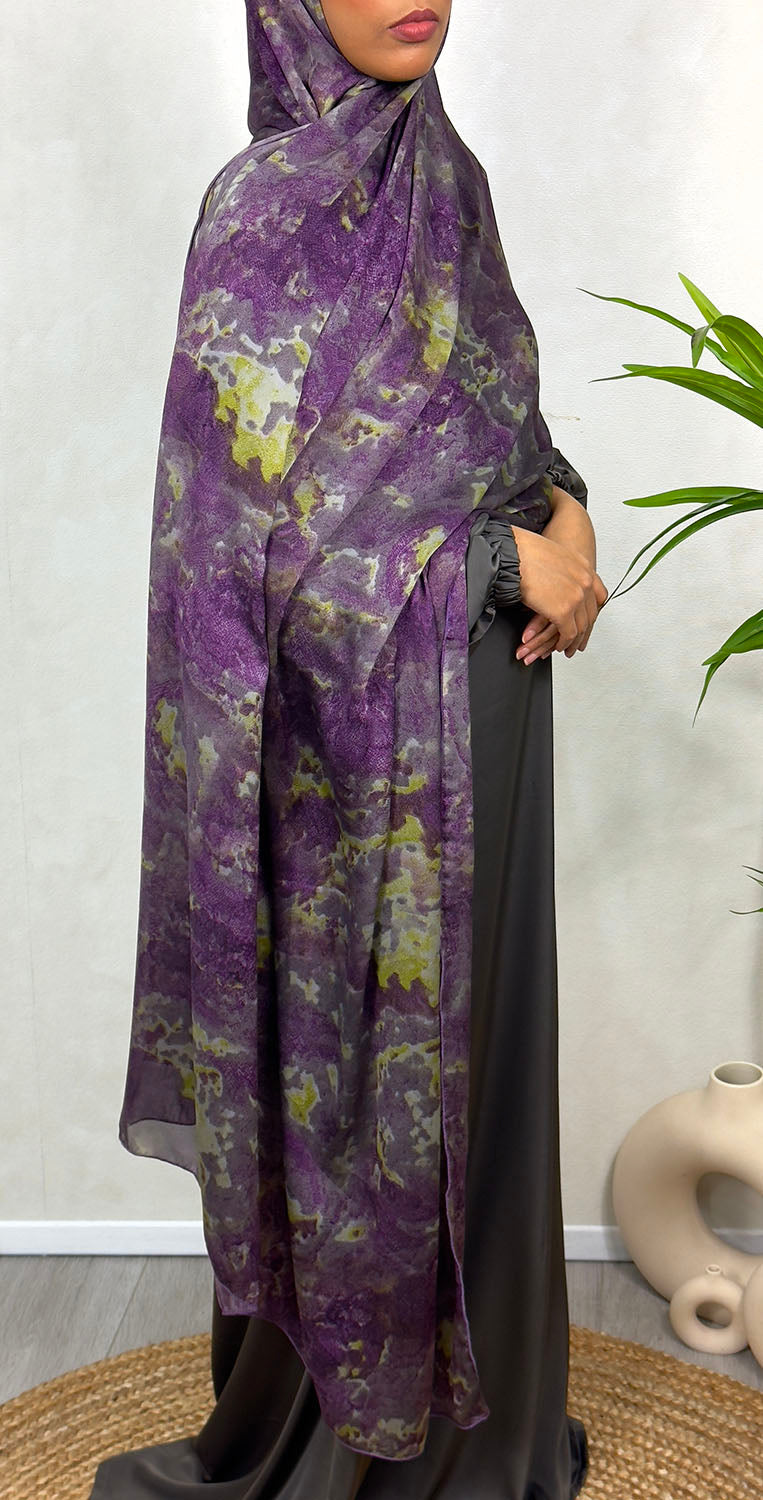
Fold a patterned scarf in more than one way before judging it. A wide border around the face creates a different effect from the same border shown at one hanging end. You may discover a useful colour inside the print that is much less visible when the scarf lies flat.
Texture matters alongside colour. Compare the surface of the scarf with the jacket, blouse or knit nearest to it. A smoother scarf beside a textured jumper creates one relationship; a lightly textured scarf beside a plain shirt creates another. Choose the combination you enjoy while keeping the wrap comfortable.
For the practical differences between scarf options, the complete hijab guide is a useful reference. When trying an unfamiliar scarf, use the undercap and fastening arrangement you expect to wear, then turn your head and put on your outer layer. Colour coordination is only one part of choosing a scarf you will reach for again.
Use accessories to make the outfit more personal
A distinctive bag, watch, pair of glasses or familiar piece of jewellery can be the detail that makes an outfit feel yours. Begin with something you already enjoy using. It might relate to the clothes through colour, or its shape might introduce a deliberate contrast.
Consider the objects that touch one another. A bag chain can meet an embroidered cuff; a necklace can sit against a textured scarf. Try the accessories with the actual garments and remove anything that catches or becomes uncomfortable. A beautiful detail is easier to appreciate when you do not have to keep rescuing the fabric beside it.
A scarf, glasses and strong jacket collar all occupy the upper part of an outfit. Put them on together before deciding that another accessory is needed. If you enjoy a fuller arrangement, keep it; if the individual details become difficult to see, simplify one area and compare the result.
You can also add character through a practical choice. A coloured tote, a neatly shaped backpack or a familiar pair of trainers may suit the day better than an occasion accessory. Personal style should remain visible in the things you actually use.
Shop for a useful addition, whether it is new or pre-owned
Turn an outfit idea into a clear description before shopping. For example, you might need a long blue jacket with room for a blouse sleeve, or a plain cream top with a neckline that works beneath your preferred scarf. Those details help you judge a garment more accurately than a broad search for an entire aesthetic.
For a pre-owned piece, check measurements, condition and any alterations. Ask for the views that would settle your decision: the back of a blouse, the inside of a cuff or the actual hem can be more useful than another styled front photograph. Compare measurements with a similar garment you wear comfortably, using the same method.
When discovering a smaller label or an unfamiliar designer, look for clear information about the specific item. Establish its fabric composition, supplied pieces, size measurements and care instructions, along with the ordering and return arrangements. A distinctive photograph can introduce the design; those details help you decide whether it belongs in your wardrobe.
A designer piece and a less expensive or pre-owned garment can share an outfit when their fit and appearance work together. Keep attention on the combination rather than trying to make every item occupy the same price bracket. Your most useful addition may be a simple missing base layer that lets you wear an expressive piece you already own.
Before ordering, name two complete outfits that would use the item. Include the hijab, shoes and any necessary underlayers. If both depend on several further purchases, pause and compare what you could create with a different addition. A clear use makes it easier to enjoy something distinctive after the initial excitement.
Adjust the outfit when something feels unfinished
An inspiration photograph is most useful when you can identify the particular idea you want to try. Save a note with it: the contrast between a short jacket and long tunic, a small stripe beside a larger print, or the way a bright scarf relates to a plain bag. That gives you a starting point even when you own none of the pictured garments.
Try translating that idea with your own clothes before looking for exact copies. If the photograph uses a skirt length you would not wear, keep the colour relationship and choose a length that suits you. If its scarf arrangement gives less coverage than you prefer, retain the colour and use your usual drape. You can enjoy fresh inspiration while making the resulting outfit clearly your own.
If the colours feel disconnected, choose one small colour to repeat through the scarf, bag or top. If the outfit feels too closely matched, change the surface or depth of one piece. A textured scarf in a related shade may introduce enough variety without changing the whole palette.
If the shapes seem crowded, look at the points where garments meet: collar and scarf, cuff and coat sleeve, blouse hem and waistband. Change the one junction that is causing difficulty. A longer outer layer, a simpler collar or a different bag position may let the pieces settle more comfortably.
If you love the outfit at home but seldom choose it, examine the practical reason. Perhaps the shoes do not suit your journey, the outer layer feels cumbersome indoors or the scarf takes more time than you want to give it. Keep the detail you love and replace the part that interrupts the day.
Finish by making three complete combinations you would willingly wear this week. Record them with a private photograph or a short note, including any adjustment that mattered. An indie-inspired wardrobe becomes more personal through those small decisions: the print you keep returning to, the unexpected colour you discover, and the familiar clothes you find a new way to enjoy.