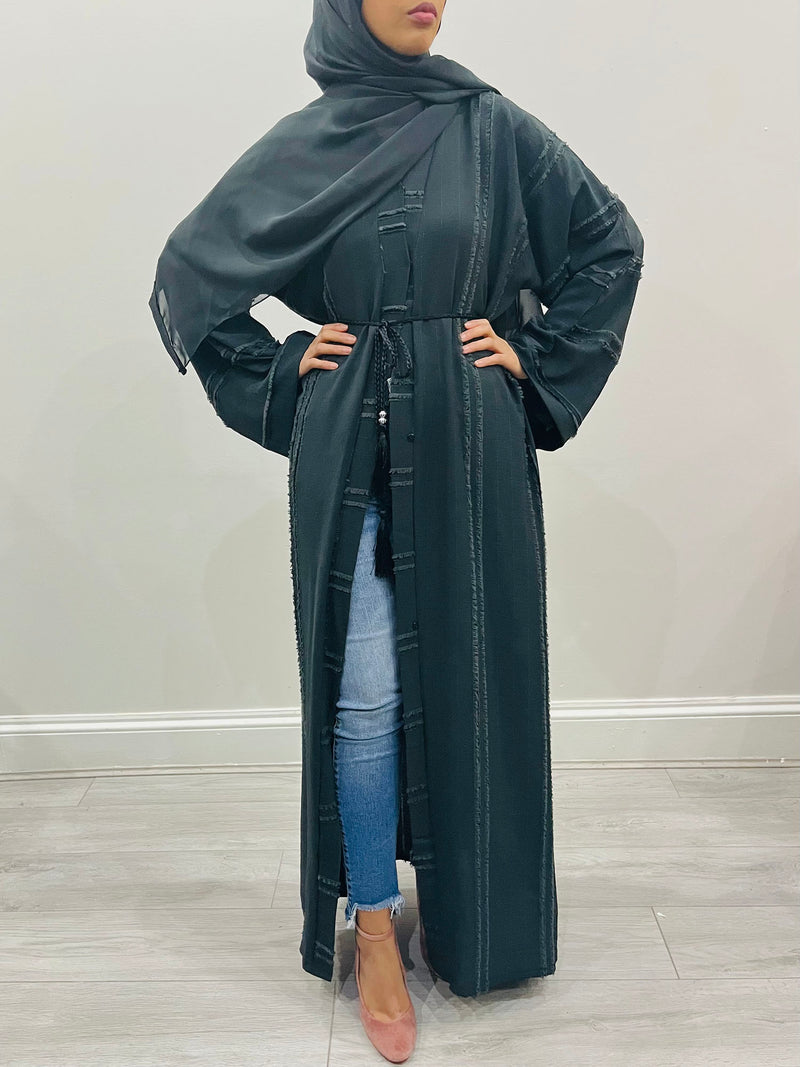
Wool Peach Jilbabs Feel Beautifully Soft — but the Name Won’t Tell You Whether You’ll Overheat
A wool peach jilbab can feel lovely the moment you touch it: soft, smooth, a little brushed, and easier on the skin than a crisp fabric that rustles every time you move. That first feel is often why people notice it. The real question comes later, when the jilbab has to carry you through a normal day: is the cloth the right weight for the season, the right drape for your shape, and the right level of comfort for how long you will actually wear it?
The name sounds cosy, but it can also confuse shoppers. Some hear wool and imagine winter warmth. Others hear peach and imagine a delicate, velvety hand-feel. In product language, wool peach usually points more to a soft peach-finish fabric than to a guarantee of natural wool content. The sensible thing is to treat the name as a clue about touch, then check the practical details: thickness, opacity, airflow, fall, lining, care and how the garment behaves after sitting, walking, layering and washing.
This guide keeps the fabric question grounded in real modest dressing. It is not trying to turn wool peach into a luxury label or dismiss it as just another synthetic fabric name. It looks at where a jilbab wool peach style can work beautifully, where it may feel too warm or too clingy, and how to choose one without relying only on a close-up product photo.
The softness is only the first clue
Softness matters, especially in a jilbab that sits close to the neck, wrists and sides of the body. A scratchy or papery fabric can make a modest outfit feel tiring long before the day is over. Wool peach often appeals because it feels gentler, with a slightly brushed surface that can make the garment seem more comfortable straight away. That is a genuine advantage, but it is not the whole fabric story.
A jilbab is not handled like a scarf in your hand for ten seconds. It is worn while you walk, sit, drive, carry bags, bend to pick something up, make wudu, move between warm rooms and cold streets, and sometimes keep it on for several hours without much thought. During that time, softness has to work alongside structure. A fabric can feel beautifully smooth and still feel heavy, static-prone, too warm, too thin, or awkward around the sleeves.
So begin with touch, but do not stop there. Ask what the softness is doing. Does it make the jilbab fall neatly without clinging? Does it stop the fabric feeling sharp at the cuffs? Does it make the garment easier to layer? Or is the softness only pleasant on the hanger, while the overall weight makes the jilbab less practical for your climate? That distinction saves disappointment.
What wool peach usually means in modest clothing
In many modest-fashion product descriptions, wool peach refers to a woven fabric with a soft, peachskin-style finish. The surface may feel lightly brushed rather than shiny, and the fabric may have more body than a very fluid chiffon or viscose. It is often chosen because it gives a modest garment a neat fall without looking stiff, though the exact behaviour depends on the supplier, weave and weight.
The important caution is that the name alone does not tell you the fibre content. It may not contain wool in the natural-fibre sense, and it should not be judged as if it is the same as a wool coat, wool blend or winter suiting. Different shops may use the same fabric name for different compositions. If fibre content matters to you because of warmth, allergy, care, breathability or personal preference, check the product details rather than relying on the label.
For a jilbab, wool peach should be judged by function: does it cover well, move well and suit the season you are buying for? A beautiful hand-feel is welcome, but modest wear lives through the full garment, not just the fabric swatch. The name can guide your expectations, but the garment has to prove itself in use.
Weight decides whether the jilbab feels easy or tiring
The same soft finish can feel completely different when the cloth is light, medium or heavy. A lighter wool peach jilbab may feel airy enough for transitional weather, especially if the cut is loose and the sleeves are not narrow. A heavier one may feel more secure and opaque, but it can become tiring if you are wearing it indoors, travelling or moving quickly. Weight is not a small detail; it shapes the whole experience.
A modest garment often needs enough weight to fall away from the body. Too little weight can make fabric flutter, cling or show every line underneath. Too much weight can pull from the shoulders, feel warm around the arms, and make the hem feel heavy by the end of the day. The best balance depends on your height, climate, underlayers and how much movement your routine includes.
If you are shopping online, look for clues beyond the word soft. Does the fabric look dense at the hem? Does the sleeve collapse softly or hold a slight shape? Is the garment described as lightweight, midweight or winter-appropriate? Are there customer photos or measurements that show the fall? The more you can learn about weight, the less you have to guess from texture alone.
Season matters more than the fabric name
A wool peach jilbab can make sense in cool spring, mild autumn and everyday British weather where the temperature keeps changing. It can feel comfortable when you need a fabric that is not flimsy, not overly formal and not as glossy as satin. For many women, that middle-ground feeling is exactly the appeal: soft enough for daily wear, covered enough for confidence, and polished enough not to look careless.
In high summer, however, the same fabric may feel too close if the weave is dense or the cut does not allow airflow. The issue is not only outdoor heat. Shops, buses, classrooms and homes can become warm, and a full jilbab already covers a lot of the body. A fabric that felt ideal in March may feel heavy in July, especially if you wear an underlayer or carry children, bags or shopping.
In winter, wool peach may work as part of layering, but it is not automatically a substitute for proper outerwear. If the fabric is medium rather than thick, you may still need a coat, thermal base layer or warmer shoes. The name should not persuade you to expect coat-level warmth. Think of the season as a practical test: will this cloth help me stay comfortable in the weather I actually live in?
The modesty test is opacity plus movement
For a jilbab, modesty is not only about whether the fabric looks opaque when held flat. It is also about how the garment behaves while moving. Wool peach can offer good coverage when the cloth has enough body and the colour is not too pale, but every piece should still be checked in light, in motion and over the underlayers you plan to wear.
A fabric can seem opaque in a product photo and become more revealing across the knees when sitting, across the arms when stretched, or near the hem in bright daylight. Pale colours can need more caution than deep tones. A smooth finish can also catch lines underneath if the garment is cut too close, even when the cloth itself is not transparent.
The most useful modesty test is simple. Imagine walking outdoors, sitting in a car, climbing stairs, reaching forward, and standing under strong light. A good jilbab should not need constant tugging or checking. Wool peach can support modesty well when weight, colour, cut and looseness work together. If one of those fails, softness will not rescue the garment.
Drape should fall away, not wrap around
Many women like wool peach because it can have a soft drape without the slippery shine of satin. That is helpful when you want a jilbab to look calm and everyday rather than dressed-up. But drape needs care. The goal is not fabric that collapses onto every curve; it is fabric that falls away from the body with enough ease to keep the silhouette modest.
A very fluid fabric can look elegant in still photos but behave differently in wind or movement. A slightly heavier wool peach may give cleaner lines, especially in an A-line, umbrella or relaxed jilbab shape. It can help the garment hang from the shoulders rather than cling at the hips. That is why weight and cut must be judged together, not separately.
Look carefully at side-view photos if available. Does the jilbab skim, pull or cling? Does the fabric fall from the shoulder and chest in one smooth line? Does the hem have enough width for walking? A wool peach jilbab that drapes beautifully should feel modest in motion, not only graceful while the model is standing still.
Sleeves reveal the quality of the choice
Sleeves are often where a fabric’s real behaviour shows. A wool peach sleeve may feel soft at the wrist and neat under a coat, but if it is cut too narrow it can pull during wudu, washing up, driving or carrying a bag. A jilbab can look loose through the body and still feel restrictive at the arms if the sleeve design is not generous enough.
For everyday wear, check cuff shape and sleeve width. Elasticated wrists can be practical because they stay in place, but tight elastic can become uncomfortable after hours. Open cuffs can look more relaxed, but they may slide or expose the arm when reaching. A gathered sleeve can give movement, while a narrow straight sleeve may suit layering better. There is no one correct option; the right choice depends on routine.
Wool peach has enough softness that sleeve seams should not feel harsh, but construction still matters. If the fabric is dense, bulky gathers can feel warm. If it is light, sleeves may flutter more. The practical test is whether you can reach forward, lift your arm gently and roll or secure the sleeve when needed without disturbing the whole jilbab.
Neckline comfort is part of long-wear comfort
A jilbab that feels soft on the hand can still irritate if the neckline sits awkwardly. Wool peach may be gentler than a rough fabric, but the neck area involves seams, facing, zips, buttons, ties, khimar layers and hijab fabric. If anything pulls there, the whole garment becomes less restful.
High necklines can feel secure and neat, especially with a hijab or khimar, but they should not press at the throat. A zip can make the jilbab easier to put on, yet the zip edge must sit smoothly. A tie or keyhole detail may look pretty, but if it creates bulk under the scarf it may become annoying during a long day. Comfort is often found in the quiet details no one sees.
When judging a wool peach jilbab, imagine the layers you actually wear around the neck. A jersey hijab, chiffon hijab, khimar or undercap changes how the neckline feels. A garment is only truly comfortable if it works with those layers, not only as a single piece on a mannequin.
Colour changes how wool peach behaves visually
Colour can change the way wool peach looks and performs. Dark shades often make the fabric appear smoother and more opaque, while pale shades can reveal shadows, seams or underlayers more easily. Soft neutrals may suit the brushed finish beautifully, but they need careful checking in daylight. A colour that looks creamy and calm in a product photo may need a slip or a more generous cut in real life.
Deep colours can also hide creases and daily marks better, which matters if you want the jilbab for errands, school runs, work or travel. Lighter colours can feel fresher and more feminine, but they ask for more care around rain, splashes and undergarments. The fabric name does not remove these ordinary colour realities.
If you are choosing only one wool peach jilbab, begin with a shade that suits your actual wardrobe. Think about your hijabs, coats, shoes and bags. A fabric can be soft and well weighted, but if the colour never works with what you own, it will sit unworn. The best everyday jilbab is often the one that quietly fits into your week.
Layering can make or break the season
Layering is where wool peach can be either very useful or slightly awkward. In mild weather, it can work over a simple underdress or loose base layer without looking bulky. In colder weather, it may sit under a coat better than very structured fabrics because the surface is smoother and the drape is calmer. In warm weather, extra layers can quickly make it feel too enclosed.
The key is to decide what the jilbab is meant to do. Is it the main outer garment over a light layer? Is it part of a winter outfit under a coat? Is it for indoor study circles, school runs, daily errands or travel? Each use changes the underlayers. A fabric that is ideal over a thin base may feel completely different over a jumper.
Before buying, picture the full outfit, not just the jilbab. A wool peach style may need breathable inner clothing, a non-bulky hijab and comfortable shoes to feel balanced. If every layer is dense, the outfit can become heavy. If the base is too thin, you may rely on the jilbab for everything. Modest dressing is easiest when each layer has a clear job.
British weather asks for flexibility
In the UK, the season is rarely simple. A morning can be cold, a bus can be warm, rain can arrive without warning, and a classroom or office can feel completely different from the pavement outside. Wool peach often appeals in this kind of weather because it can sit between floaty summer fabric and obvious winter thickness. It can feel sensible without looking heavy.
Still, flexibility depends on weight. A midweight wool peach jilbab may be comfortable through much of the year if you adapt the layers underneath. A heavier one may become a cool-weather favourite but feel too warm indoors. A lighter one may work for spring and early autumn but need careful opacity checks. The fabric family gives a direction; the exact garment decides the result.
For everyday British use, ask whether you can move between temperatures without fuss. Can you keep it on under a coat? Does it crease badly after sitting on public transport? Does it feel damp or clingy in rain? Does the hem dry reasonably? These questions sound ordinary because they are. Ordinary details decide whether a jilbab becomes a repeat-wear piece.
Wool peach is not automatically winter fabric
The word wool can mislead. A wool peach jilbab should not automatically be treated as a winter jilbab unless the product description, weight and feel support that. Some wool peach fabrics are moderate and wearable across seasons. Others may feel warmer. The name by itself is not enough evidence.
This matters because winter modest dressing has different demands. You may need warmth at the feet, coat compatibility, room for a jumper, sleeves that do not bunch under outerwear, and a fabric that does not become uncomfortable indoors. A wool peach jilbab may contribute to that outfit, but it may not provide all the warmth required.
If you want a cool-weather jilbab, check whether the cut allows layering without pulling. If you want a year-round jilbab, look for midweight descriptions and avoid assuming that softness equals insulation. If you want summer ease, be cautious with anything dense. The season should be chosen from the garment’s behaviour, not from the name alone.
Nor is it automatically too warm
Some shoppers avoid wool peach because they assume it must be hot. That can be just as misleading as assuming it is automatically winter-ready. A lighter wool peach fabric in a loose jilbab can feel comfortable in mild weather, especially if the design has enough width and the underlayers are breathable. The problem is not the name; it is the combination of density, cut and climate.
A woman who runs warm may find even midweight fabric too much indoors. Another woman who feels cold easily may enjoy the extra body. Someone wearing a long khimar over the jilbab will experience more warmth than someone wearing a simple scarf. Someone commuting by car may experience the garment differently from someone walking long distances.
The honest answer is that wool peach sits in a middle area for many wardrobes. It can be comfortable, but it is not a magic all-season fabric. Treat it as a candidate, then check the details that match your body, weather and routine.
Care instructions tell you what life with it will feel like
A jilbab that is difficult to care for often becomes less useful, no matter how nice it feels. Wool peach fabrics can vary, so care labels matter. Some may wash easily and dry with minimal fuss. Others may need gentler handling to protect the surface finish, reduce creasing or avoid changing the drape. Always follow the garment label where it is provided.
For everyday modest clothing, care is not a tiny afterthought. If a jilbab is worn often, it may meet cooking smells, rain, children’s hands, public transport, perfume, deodorant and daily dust. A fabric that needs constant special treatment may not suit a busy routine. A fabric that washes reliably and still hangs well earns its place much more easily.
Check whether the fabric attracts lint, whether darker shades show marks, whether the surface pills with friction, and whether the hem holds its shape after drying. These are not glamorous questions, but they decide whether softness lasts beyond the first wear.
Creasing should be judged realistically
No full-length garment is completely immune to creasing, especially if you sit, drive or fold it into a bag. Wool peach may crease less sharply than some crisp fabrics, but that depends on the exact composition and finish. A soft surface can disguise gentle creases, yet a dense cloth can still hold fold lines if it is packed badly.
Think about how you use your jilbabs. If you travel, attend classes, sit at a desk or spend time in the car, creasing matters. A fabric that looks perfect only when freshly steamed may not suit your everyday life. A fabric that relaxes after hanging, or whose creases look soft rather than harsh, is often more forgiving.
Product photos rarely show the garment after three hours of sitting. That is why reviews, close-up fabric descriptions and your own experience with similar fabrics are useful. A wool peach jilbab should not need constant rescue to look respectable. The aim is neatness that survives the day, not showroom perfection.
Static and cling deserve attention
Soft fabrics can sometimes create static, especially in dry indoor heating, with certain underlayers, or when worn with synthetic slips. Static matters in modest clothing because it can make a garment cling where it should fall away. Even a loose jilbab can feel less comfortable if the fabric starts sticking to tights, trousers or an underdress.
This does not mean every wool peach jilbab will cling. It means you should think about the full outfit. Underlayers with a smoother or more breathable surface may help. A slightly heavier cut may fall better than a very light one. Humidity, washing method and fabric composition can all change the experience.
If you know you struggle with static, be cautious with very light synthetic-feeling wool peach styles. Look for enough width, avoid tight underlayers, and test the garment at home before relying on it for a long day outside. Modesty is easier when the fabric behaves quietly.
A good cut matters more than a pretty fabric close-up
Online photos often make fabric look tempting. A close-up can show softness, texture and colour beautifully, but it cannot prove that the jilbab has enough room. The cut decides whether the fabric’s softness becomes graceful or clingy, comfortable or restrictive. A poor cut in a nice fabric is still a poor everyday garment.
Look at shoulder width, armhole ease, hip room, hem sweep and length. If the jilbab is meant to be modest outerwear, it should not rely on the fabric stretching or pulling to make movement possible. Wool peach is often woven, so assume the cut must provide the ease. Do not expect the cloth to behave like jersey unless the product clearly says it has stretch.
The safest choice is a cut that lets the fabric fall without strain. A simple A-line, relaxed straight cut, umbrella shape or practical two-piece design can all work depending on preference. What matters is that the softness supports the silhouette rather than hiding a lack of room.
Length must suit shoes, stairs and prayer movement
Length is one of the most practical parts of any jilbab. Wool peach can have enough weight that a too-long hem becomes awkward, especially outdoors or on stairs. A fabric that drags is not only inconvenient; it can collect damp, dust and damage. A slightly too-short length may feel easier to walk in but may not give the coverage you want with certain shoes.
Think about your normal footwear. Trainers, flats, boots and sandals all change where the hem sits. Also think about how you move. Do you climb stairs daily? Do you carry children? Do you walk quickly? Do you need to step into a car without gathering too much fabric? A jilbab should not make ordinary movement feel like a performance.
For salah movement, the garment should allow bowing and prostration without pulling or exposing. This does not turn an outdoor jilbab into a dedicated prayer dress; it simply means any modest garment worn through the day should not fight basic movement. Length, width and sleeve control all matter here.
The hijab you pair with it changes the feel
A wool peach jilbab rarely stands alone visually. The hijab or khimar worn with it can make the outfit feel lighter, warmer, softer, sharper or more formal. A heavy scarf over a midweight jilbab may feel too enclosed. A very slippery scarf may contrast awkwardly with the matte softness of the fabric. A long khimar can add upper-body coverage but also extra warmth.
For everyday styling, texture balance helps. Jersey can make the outfit feel practical and secure. Chiffon can lighten the look if the colours work and the scarf is not too sheer. A matching or tonal khimar can create a calmer full-coverage outfit, but it should not overload the shoulders if the jilbab fabric already has weight.
Colour balance matters too. Wool peach often looks gentle in muted colours, so a scarf in a nearby tone can feel polished without effort. For deeper jilbab shades, a softer scarf can lift the outfit. The goal is not complicated styling; it is making the fabric’s softness feel intentional.
Work, errands and family days need different tests
A jilbab for work or study needs to stay neat while sitting, carrying a laptop, reaching across a desk and moving between rooms. A wool peach fabric may work well if it resists harsh creases and does not feel too warm indoors. Pockets, sleeve control and neckline comfort become especially important because the garment has to behave quietly in a structured day.
For errands, the test is more physical. You may walk, queue, bend, lift bags, move through rain and sit in a car. A soft fabric is pleasant, but hem control and easy movement matter more. A jilbab that looks refined but slows you down every few minutes will not feel like an everyday solution.
For family days, comfort may include children tugging, cooking smells, long sitting, unexpected spills and constant movement. A wool peach jilbab can be lovely here if it is washable, not too pale, and cut with enough ease. The best garment is not the most delicate one; it is the one that lets you stay covered and present without fuss.
Occasion use depends on finish, not decoration
Wool peach is often more understated than shiny occasion fabrics, but that can be a strength. A neat wool peach jilbab in a rich colour can feel dressed enough for a family visit, gathering or mosque event without becoming heavy with embellishment. The soft matte finish can make the outfit look calm, mature and modest.
If you want a more special look, add detail carefully. A structured handbag, better shoes, a cleaner hijab drape or a deeper colour may be enough. Heavy embroidery, crystals or elaborate layers can fight the fabric’s quiet character. Wool peach often looks best when the styling respects its softness rather than forcing it to perform like satin or velvet.
The question is not whether the fabric is plain or fancy. It is whether the finish suits the setting. For a practical gathering, it may be ideal. For a formal wedding outfit, you may prefer a fabric with more sheen, detail or structure. Matching the fabric to the event prevents disappointment.
Compare it with other jilbab fabrics carefully
Wool peach sits in a different place from chiffon, jersey, satin, silk, viscose, denim, nidha and polyester-focused styles. Chiffon can feel lighter but usually needs layering. Jersey can feel soft and easy but may cling if the cut is wrong. Satin brings shine but can be slippery. Viscose may drape beautifully but can crease or need more care. Denim gives casual structure but not the same softness.
The point of comparing is not to declare one fabric best. It is to choose for the job. If you want a calm daily jilbab with soft handle and some body, wool peach may be worth considering. If you need maximum airflow, it may not be the first fabric to check. If you need strong occasion shine, it may feel too quiet. If you need a forgiving midweight option, it may sit well in the middle.
A fabric guide should make your wardrobe more precise. Instead of buying every style because the photos look pretty, you can ask: what role is missing? Soft daily wear, summer lightness, formal drape, winter layering, travel resilience or easy washing? Wool peach is useful when its role is clear.
Online shopping needs evidence, not assumptions
A wool peach product page should be read slowly. Check what is actually included, what the fabric composition is if stated, how the sizing works, and whether the jilbab is one piece, two piece, open, closed, elasticated, zipped or tied. Do not assume a scarf, niqab or underlayer is included because it appears in the photographs.
Look for full-length images, close-ups, movement photos, sleeve views and clear measurements. If the model is holding the fabric out, notice the hem width. If every image is posed still, be cautious about movement. If the colour looks different across photos, expect the shade to vary with lighting. If the fabric is called wool peach but no weight is described, use the visual clues carefully.
For broader context, a complete jilbab guide can help you separate fabric, cut, coverage and styling questions before you choose a specific piece. When you are ready to browse current styles, use the collection page as a starting point rather than assuming every fabric will be available all the time.
A collection link should help, not pressure
After you understand the fabric, browsing becomes calmer. You are no longer clicking because a name sounds soft or because the model photo looks polished. You are checking whether a jilbab has the weight, shape, season and care level you actually need. That is a much better way to shop modest clothing.
If you want to compare available styles, you can browse jilbabs and look at each garment with the same practical questions in mind: Is the fabric likely to suit my weather? Does the cut have enough room? Will the sleeves work? Is the colour easy to wear? What layers will I need? The collection can show options, but your needs should lead the decision.
This is especially important with fabric names. Availability changes, fabric descriptions vary, and a product page can only show so much. A thoughtful shopper uses the page as evidence, not as a promise that every soft-looking garment will behave the same way.
Who may love a wool peach jilbab
A wool peach jilbab may suit someone who wants softness without a shiny finish, a calmer everyday look, and a fabric with enough body to feel covered. It may appeal to women who dislike very crisp fabrics, find satin too formal, or want something that can move between errands, casual visits and normal daily wear. It can also suit wardrobes built around muted colours and simple silhouettes.
It may be especially useful if you live in mild weather and prefer midweight clothing. A soft fabric that is not too thin can feel reassuring on windy days, and a matte finish can make the outfit easy to repeat. For some women, that repeatability matters more than a dramatic first impression.
The best candidate is not someone chasing a fabric name. It is someone whose lifestyle matches the garment. If you value softness, coverage, easy styling and a modest everyday feel, wool peach may deserve a place on your shortlist.
Who may want to be more cautious
Be cautious if you run very warm, live in a hot climate, need maximum airflow, or dislike any fabric that feels dense on the body. Wool peach can be comfortable, but it may not be the lightest choice. If you already overheat in layered modest outfits, choose by weight and breathability rather than softness alone.
Also be cautious if you need a garment for rough daily use and the care instructions are delicate or unclear. A soft surface can be more vulnerable to friction, lint or marks depending on the fabric. If you commute heavily, travel often, or need something that washes and dries with very little attention, care behaviour matters as much as the first feel.
Pale colours also need thought. A light wool peach jilbab can look beautiful, but it may need careful underlayers and more stain awareness. If you want one reliable daily piece, a practical colour may serve you better than the prettiest shade on the page.
How to test it at home before committing
Once a wool peach jilbab arrives, test it before removing tags where possible and before relying on it for a long day. Try it with the underlayers and hijab you actually plan to wear. Stand in daylight, sit down, walk across the room, lift your arms, bend gently, and check the hem with your normal shoes. A garment can pass the mirror test and fail the movement test.
Notice temperature too. Wear it indoors for a short while. Does it feel pleasantly soft, or does warmth build quickly? Does the neckline remain comfortable? Do the sleeves stay practical? Does the fabric cling to your underlayer? Does the colour still feel modest in bright light? These small tests reveal more than a product description can.
If it passes, you will know why. If it fails, you will also know why, which helps your next purchase. The aim is not to criticise the fabric unfairly. It is to match the garment to your real life before it becomes another unworn item in the wardrobe.
Travel and long days expose the real comfort level
A wool peach jilbab may feel ideal at home and still need a separate judgement for travel. Long journeys compress fabric, warm the body, and test whether a garment can stay comfortable while seated for hours. A fabric with a soft surface can feel kind on the skin, but if the weight is wrong it may begin to feel heavy across the lap, warm around the arms or awkward beneath a coat.
For travel, consider how the jilbab packs and recovers. Does it fold neatly without deep lines? Can it be hung overnight and look presentable again? Does the colour hide small marks from seats, luggage and weather? Does the hem stay manageable on escalators, station steps or airport floors? These are practical questions, but they matter because modest travel clothing has to reduce stress, not create another thing to manage.
If you need a wool peach jilbab for a long day, choose the easiest version of the fabric: a colour you trust, a shape that gives room, sleeves that can be controlled, and a weight that does not trap heat indoors. A garment that feels slightly less dramatic but far easier to wear will usually serve you better than one that only looks lovely in a still photograph.
Body shape changes how the same fabric falls
Two women can wear the same wool peach jilbab and experience it differently because fabric interacts with height, shoulder width, bust, hips, posture and preferred looseness. A midweight fabric may fall beautifully on one body and feel too straight on another. That does not make the fabric good or bad by itself. It means the cut has to respect the person wearing it.
If you prefer more room across the hips, check the sweep and side seams carefully. If you are petite, a heavy hem may feel overwhelming even when the garment is technically modest. If you are tall, length and sleeve reach become more important because a soft fabric that pulls short can lose its elegance. If you have broader shoulders, armhole depth and upper-body ease may matter more than the hem width.
A good wool peach jilbab should let you stand naturally. You should not have to pull your shoulders back, hold your arms close or keep adjusting the fabric to make it look right. The modest silhouette should come from the garment’s design, not from you managing your body around it.
One-piece and two-piece designs use the fabric differently
A one-piece wool peach jilbab can feel simple because the garment creates one continuous line. If the weight and cut are right, that can be beautifully easy. The risk is that any problem runs through the whole piece: too much warmth, too little room, awkward sleeves or a hem that drags. One-piece designs therefore need especially careful checks around length, shoulder comfort and movement.
A two-piece design can distribute the fabric differently. The upper piece may provide coverage while the skirt or lower piece gives walking room. This can be practical for some women, but it also introduces questions about waist comfort, overlap, whether the pieces move together, and whether the fabric creates bulk at the middle. Wool peach softness can help the layers sit neatly, but the design still has to be secure.
Do not choose one-piece or two-piece only because one sounds more modest or more fashionable. Choose by how the wool peach weight behaves in that construction. A soft fabric in the wrong structure will still frustrate you. A simple structure with the right ease can make the same fabric feel calm and dependable.
Common buying mistakes with wool peach jilbabs
The first mistake is buying only for softness. A fabric can feel beautiful and still be wrong for your season, lifestyle or layering habits. The second mistake is treating the word wool as proof of warmth or natural fibre content. The third is assuming that a matte finish means the garment will always be modest in pale colours. Each mistake comes from trusting one clue too much.
Another mistake is ignoring the sleeve. Many women check length and colour but forget that sleeves control daily ease. If you cannot wash, reach, drive or layer comfortably, the jilbab will not feel peaceful. A further mistake is choosing a dramatic length because it looks graceful in photos, then finding it difficult on wet pavements, stairs or busy days.
The better approach is slower but more reliable. Check softness, then weight. Check colour, then opacity. Check drape, then movement. Check the product image, then the measurements. Check the fabric name, then the care label. This turns wool peach from a tempting description into a real garment decision.
A simple decision checklist before you buy
Ask yourself what season the jilbab is meant to serve. If the answer is high summer, look closely at breathability and weight. If the answer is cool weather, check whether it has enough body and enough room for layers. If the answer is everyday all-year wear, look for a moderate fabric that you can adapt with lighter or warmer underlayers.
Then ask what the garment must survive. Work days, school runs, study circles, travel, mosque visits, family gatherings and errands all demand different things. A wool peach jilbab for daily use should be easy to wash, easy to move in and easy to style with your existing scarves. A wool peach jilbab for occasional wear may be allowed to be a little more delicate, but it still needs modest movement.
Finally, ask whether the fabric’s softness is solving a real problem. If you dislike scratchy cloth, need a calmer drape, want matte texture and prefer midweight coverage, it may be a wise choice. If you mainly need airflow, very fast drying or maximum lightness, another fabric may serve you better. The best choice is honest, not romantic.
It also helps to compare the jilbab against something you already own. Think of a garment that you actually reach for, not one you only admire. Is it light, structured, soft, loose, easy to wash, dark, simple, roomy at the sleeves, or forgiving at the hem? That existing favourite can tell you more than a trend ever will. A wool peach jilbab is worth buying when it improves on the practical gaps in your wardrobe, not when it merely repeats a weakness in a softer fabric.
The name should start the question, not end it
Fabric names can be useful, but they can also become shortcuts. Wool peach tells you to expect a soft handle, yet it does not tell you how the garment was cut, how dense the weave is, how it behaves after washing, or whether the colour will stay modest in daylight. A serious modest-clothing decision needs more than a pleasant name.
This is why two wool peach jilbabs from different sellers can feel unlike each other. One may be light, easy and smooth enough for mild days. Another may feel more substantial and better suited to cool weather. One may hang neatly from the shoulders. Another may need a wider cut to avoid clinging. The label groups them together, but your body and routine separate them again.
Treat the name as the first question: what kind of wool peach is this? Then look for the evidence. Weight, opacity, sleeve design, length, care, colour and layering all answer that question more honestly than the label alone.
Frequently asked questions about wool peach jilbabs
What is a wool peach jilbab?
A wool peach jilbab is usually a jilbab made from a soft peach-finish fabric with a smooth, lightly brushed feel. The name does not always mean the fabric contains natural wool. Check the product composition, weight and care details before assuming how warm, breathable or delicate it will be.
Is wool peach good for jilbabs?
Wool peach can be good for jilbabs when the weight, opacity and cut are right. It often feels soft and can give a modest garment a calm drape. It is less suitable if the fabric is too warm for your climate, too clingy with your underlayers, or too delicate for your routine.
Is a wool peach jilbab suitable for summer?
It depends on the exact fabric weight and the climate. A lighter wool peach jilbab may work in mild weather, but dense versions can feel too warm in summer, especially with underlayers. For hot days, prioritise airflow, loose cut and breathable layers rather than relying on the fabric name.
Can I wear wool peach in winter?
A wool peach jilbab can work in winter as part of layering, especially if the fabric has enough body. It is not automatically as warm as a coat or natural wool garment. Check whether there is room for base layers and whether the sleeves and hem behave well under outerwear.
Does wool peach fabric cling?
Some wool peach fabrics may cling with certain underlayers or in dry indoor conditions, while others fall smoothly. Static, fabric composition, weight and cut all affect this. A looser jilbab with enough body is usually more modest and comfortable than a close cut relying only on softness.
Is wool peach see-through?
Wool peach is not automatically see-through, but opacity varies by colour, fabric weight and lighting. Pale shades need more checking than dark shades. Test the jilbab in daylight and while sitting or moving, because modest coverage depends on both fabric opacity and how the garment falls.
How should I style a wool peach jilbab?
Style it with layers that respect the fabric’s soft matte finish. Jersey or chiffon hijabs can work depending on weather and colour. Keep the outfit balanced: avoid overloading a midweight jilbab with heavy scarves, and choose shoes and bags that suit the garment’s quiet everyday character.
How do I care for wool peach?
Follow the care label on the specific garment, because wool peach fabrics can vary. In general, treat soft brushed finishes gently, avoid harsh friction where possible, and check whether the garment needs careful washing, drying or steaming. Easy care matters if you plan to wear it often.
Is wool peach better than nidha or chiffon?
It is not automatically better; it serves a different purpose. Wool peach may offer soft midweight coverage, nidha is often chosen for drape, and chiffon is lighter but usually needs layering. Choose according to season, opacity, movement, care and the role the jilbab will play in your wardrobe.
What should I check before buying a wool peach jilbab online?
Check the fabric composition if listed, weight clues, full-length photos, sleeve shape, hem width, length, opacity, included pieces and care instructions. Do not assume a scarf or underlayer is included from styling photos. The best choice is based on evidence, not only on a soft-looking close-up.
The best wool peach jilbab is the one that suits your season
Wool peach can make a jilbab feel soft, modest and quietly polished, but softness is only the invitation. The decision belongs to weight, season, opacity, cut, care and movement. A fabric that feels beautiful in the hand still has to behave well on the body, through the weather and across the hours you expect it to serve.
For some women, a wool peach jilbab will become a dependable midweight favourite: gentle enough for daily wear, covered enough for confidence, and simple enough to style without effort. For others, it may feel too warm, too dense or too specific for their climate. Neither answer is wrong. The right garment is the one that works honestly with your life.
Choose it by asking practical questions. What season is it for? How heavy is the fabric? Does it fall away from the body? Can you sit, walk, make wudu and layer comfortably? Will the care routine suit you? If those answers are good, the softness becomes more than a pleasant first touch. It becomes part of a jilbab you can actually wear.