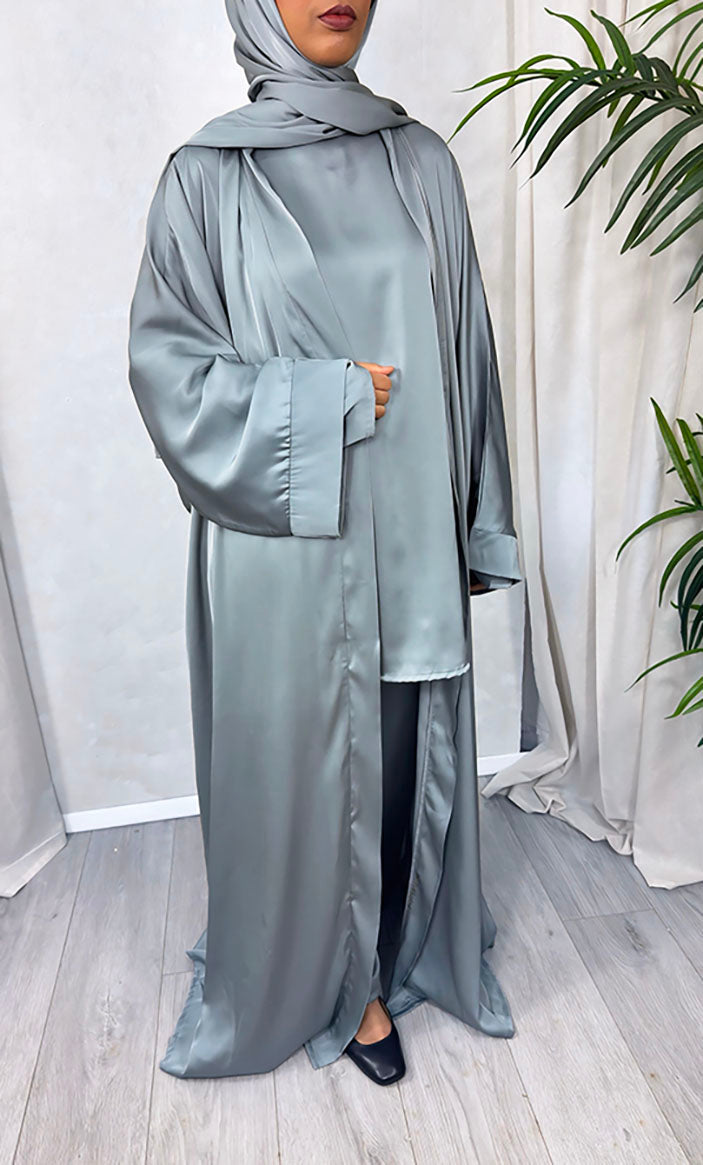
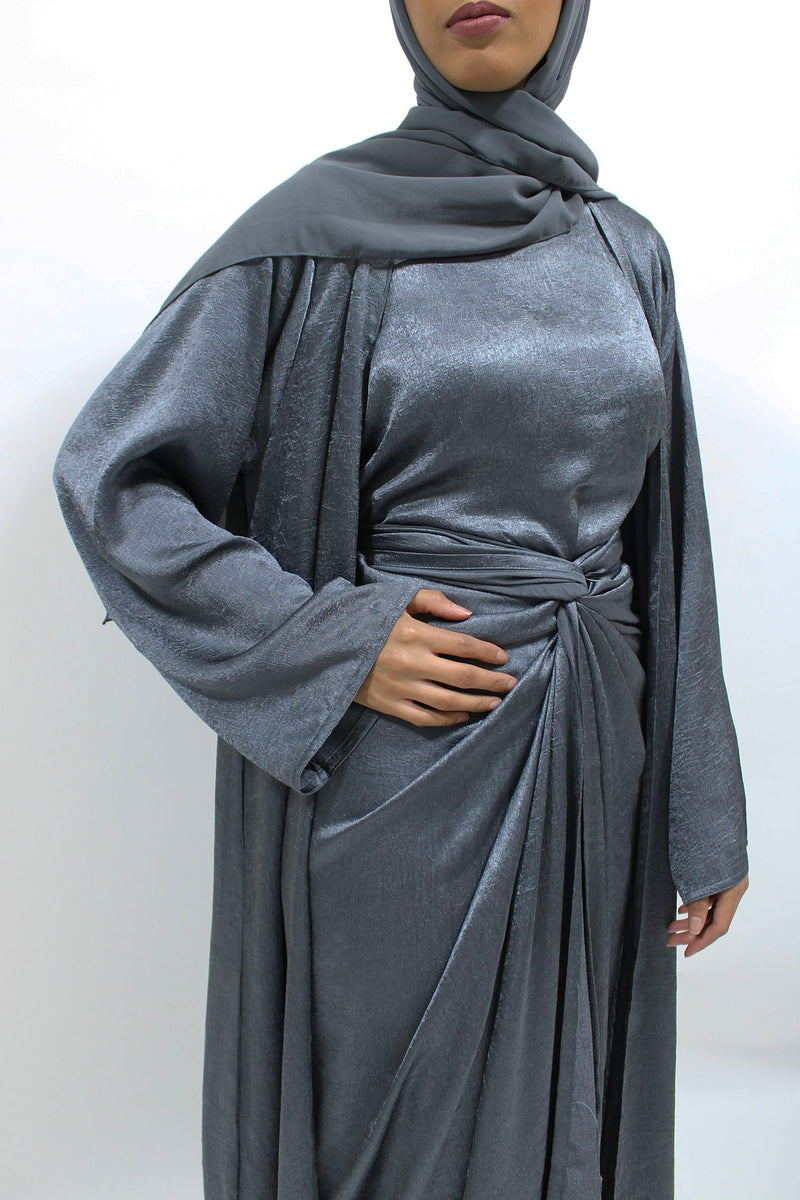
How Does an Abaya Fit Into a Modest Wardrobe When Work, Salah, Weather, Everyday Errands and Occasions All Need Different Styling?
An abaya can earn a very practical place in a modest wardrobe because it brings several needs together in one garment: coverage, ease, polish and the ability to dress for different parts of real life without rebuilding an outfit from the beginning. For some women it becomes an everyday default; for others it is one option alongside maxi dresses, skirts, loose separates, jilbabs or long outer layers. There is no need for every modest wardrobe to look identical. The useful question is what role an abaya can play in your wardrobe, and whether its cut, fabric and level of formality make getting dressed simpler.
A good abaya is often less about creating a dramatic “look” and more about removing friction. On a busy morning, a comfortable closed abaya can make dressing quick. For work, a cleaner tailored shape can feel put together without being fussy. An open abaya can work as a long outer layer over a simple base outfit, while a softer occasion style can give you something special without requiring lots of separate pieces. When chosen with the rest of your clothes in mind, an abaya can become one of the garments that connects a modest wardrobe rather than sitting in it as an isolated item.
If you are still deciding between different shapes, fabrics and lengths, our complete abaya guide covers the wider practical details. Here, the focus is specifically on wardrobe building: where an abaya fits, what it can replace, what it can complement, and how to choose one that will be worn repeatedly rather than admired once and forgotten.
Think of the abaya as a wardrobe role, not just a garment type
The easiest way to understand where an abaya fits is to give it a job. One woman may need an everyday piece for school runs, errands and family visits. Another may want a polished option for work or appointments. Someone else may already own plenty of daily clothes but need an elegant layer for Eid, weddings or dinners. The word “abaya” covers many silhouettes, so buying one simply because it is attractive can lead to duplication. Buying one because it fills a known wardrobe role is much more useful.
Look at the outfits you already reach for. Where do you feel you are improvising too much? Perhaps you have several tops but no easy full-length option. Perhaps your dresses need cardigans or coats to feel complete. Perhaps your occasion clothes are beautiful but difficult to repeat. An abaya can solve one of those gaps, but it does not need to solve all of them at once. A practical modest wardrobe usually works best when each piece has a clear reason to be there.
Why an abaya can simplify everyday dressing
One of the strongest everyday benefits is that a closed abaya is already a complete main layer. You do not have to coordinate a top with a skirt, check whether a shirt stays long enough when you move, or decide whether two loose pieces sit well together. Add the underlayers you need, a hijab if you wear one, suitable shoes and a bag, and the outfit is largely resolved. That can be especially valuable on mornings when you have very little time.
Simplicity does not mean wearing the same appearance every day. A plain black, navy, taupe or olive abaya can change character with a different scarf texture, coat, trainer, flat or tote. The abaya gives the outfit a stable foundation while the smaller pieces adjust it for weather and setting. If you find yourself repeatedly standing in front of a full wardrobe feeling that nothing works together, one reliable full-length piece can be more useful than several new separates.
Closed abayas work well as dependable one-piece foundations
A closed abaya is often the easiest style to treat as a wardrobe staple because the front is continuous and does not depend on an inner outfit being visible. That makes it useful when you want speed, simplicity and consistent coverage. The most versatile versions are usually comfortable through the shoulders and arms, have enough room for natural movement, and are made from fabric that suits the season in which you will wear them most.
For repeat use, pay attention to details that may seem small when shopping. Sleeves that are beautiful but difficult under a coat can reduce winter wear. A hem that only works with one shoe height can make the garment less flexible. Very delicate fabric may turn an “everyday” purchase into something you are nervous to wear. A closed abaya earns its place when you can put it on without negotiating with it. Practicality is part of elegance when the goal is a working wardrobe.
Open abayas can connect clothes you already own
An open abaya has a different wardrobe job. Instead of replacing the base outfit, it frames it. This can be useful if you already own simple long dresses, skirts, wide-leg trousers or tunics that you like but want an additional flowing outer layer. The strongest combinations usually begin with a calm base: one colour, a simple silhouette and minimal visual interruption. The open abaya can then provide movement, texture or contrast.
The important question is whether your existing base pieces genuinely work underneath it. If you have to buy a new inner dress for every open abaya, the purchase may be creating more wardrobe work rather than less. Before buying, mentally pair the piece with at least two or three outfits you already own. Consider length as well. An inner dress hanging awkwardly below the outer layer can make a simple outfit look accidental, while similar or deliberately graduated lengths tend to feel more considered.
An abaya does not have to replace every other modest piece
A balanced wardrobe can include abayas alongside maxi dresses, loose shirts, skirts, trousers, jilbabs and long outerwear. These garments answer different needs. A skirt-and-shirt combination may be better when you want to vary proportions. A maxi dress may suit a casual day when you prefer a different silhouette. A jilbab may serve a particular coverage preference. An abaya can sit among these options without turning the wardrobe into an all-or-nothing system.
This is useful to remember when building modest dress gradually. You do not need to remove clothes that already serve you just because you add an abaya. Instead, notice whether the new garment increases the number of easy outfits you can make. A strong wardrobe feels connected. If one new piece works with your coats, shoes, bags and scarves, it is probably doing more for you than several pieces that each require their own supporting cast.
Use your real week to decide how many abayas you need
There is no ideal number. A woman who wears abayas most days may benefit from a small rotation that allows for laundry, weather changes and different levels of formality. Someone who mainly wears separates may only need one reliable everyday abaya and one occasion option. Your calendar is more useful than a generic capsule-wardrobe number.
Think through a normal seven days. How often would you genuinely choose an abaya? Which days require something practical, which call for a smarter appearance, and which involve walking, commuting, children or long hours out? Then think about laundry frequency and climate. If one garment would realistically be worn three times a week, a second compatible option may be useful. If you would only reach for an abaya twice a month, buying six similar versions may add clutter without adding function. Wardrobe planning works best when it follows behaviour rather than aspiration.
Choose neutral colours when you want maximum repeat wear
Neutral does not have to mean only black. Navy, chocolate, charcoal, stone, taupe, olive and deep burgundy can all behave like wardrobe neutrals depending on what you already own. A useful neutral is simply a colour that works with several of your scarves, coats, shoes and bags. If most of your accessories are warm cream, brown and rust, a cool blue-grey may be less versatile for you than cocoa. If your wardrobe is mainly black, white, navy and silver-toned pieces, charcoal or navy may connect more easily.
Before buying, picture the abaya with three hijabs and two pairs of shoes already in your wardrobe. If the combinations arrive instantly, the colour is probably useful. If you can only imagine it with accessories you would also need to buy, pause. A modest wardrobe becomes easier when colours repeat across categories. The aim is not to make everything match perfectly, but to make most pieces capable of speaking to one another.
Colour can also give different abayas different jobs
If you already own one dependable dark abaya, your next one does not necessarily need to be another near-duplicate. Colour can help separate wardrobe roles. A darker everyday style may be practical for frequent wear, while a soft sage, muted rose, warm beige or blue can give you a lighter option for spring, family gatherings or daytime occasions. A richer shade can create an evening feel without requiring heavy embellishment.
The key is to choose colour intentionally rather than collecting shades for their own sake. Ask what the new colour adds. Does it work better with your lighter scarves? Does it give you an option for warm weather? Does it suit occasions when black feels heavier than you want? When colour has a job, variety becomes useful. When every colour needs a completely separate set of accessories, variety can become expensive and tiring.
Fabric decides whether an abaya truly belongs in everyday rotation
A beautiful cut in the wrong fabric can stay unworn. For daily use, think about how the material behaves after sitting, walking, carrying a bag and wearing an outer coat. Does it crease very easily? Does it cling when you move? Is it too delicate for repeated washing? Is it comfortable in the temperatures you actually experience? These practical questions matter more over time than how the fabric looks for a few minutes on a hanger.
A modest clothing abaya intended for regular wear should feel compatible with real movement. That does not mean every fabric must be heavy. In warm weather, lighter breathable-feeling constructions may be preferable; in cooler months, a denser drape can feel more substantial. Opacity may also depend on colour and lighting, so appropriate underlayers can still matter. Build around use first. A fabric you trust is one you are far more likely to reach for repeatedly.
Drape affects how easily an abaya works with the rest of your wardrobe
Drape is the way fabric falls and moves around the body. A fluid abaya can feel soft and elegant, but very fluid material may show the shape of bulky layers underneath. A more structured fabric can create a clean line but may feel less comfortable if the cut is too narrow. Neither is automatically better. The right choice depends on how you plan to wear it.
If you layer thermal tops or knitwear in winter, check that the abaya has enough ease for those layers without pulling across the shoulders. If you mainly wear it over light basics, a softer drape may work beautifully. An open style intended to sit over a dress should fall cleanly when moving and not constantly catch on the layer beneath. Thinking about drape in relation to your existing clothes prevents the abaya from becoming a “special conditions only” garment.
Fit should support coverage and movement at the same time
A modest wardrobe is not helped by a garment that looks right while standing still but becomes restrictive the moment you walk, sit or reach. Check shoulder room, sleeve length, upper-arm ease, stride and the way the fabric falls when seated. If there is a tie or belt, consider whether the abaya still feels comfortable and appropriately covered without relying on it. The best fit is one you can live in, not just pose in.
Length deserves particular attention. Too short may not give the look or coverage you expected; too long can become a practical hazard on stairs or wet pavements. Shoe choice affects this too. If you only ever wear flats, a hem designed around heels may not be useful. A versatile wardrobe piece should work with your normal footwear. Measurements are more reliable than assuming a standard size will automatically give the right length.
Layering determines whether an abaya works across seasons
Few garments are truly year-round without adjustment. An abaya becomes more versatile when there is enough room for sensible seasonal layering. In cool weather, a thin thermal base, long-sleeved top or light knit can add warmth without changing the outer silhouette too much. A coat then needs to sit comfortably over the sleeves and shoulders. Very wide statement sleeves may be lovely indoors but awkward under narrow outerwear, so think about the full winter system before choosing them for an everyday piece.
In warmer weather, breathable-feeling underlayers and lighter fabrics can reduce unnecessary bulk. An open abaya may feel especially adaptable because you can change the inner layer with temperature, while a closed abaya may be quicker and simpler. Seasonal usefulness does not mean forcing one garment through every climate. It means knowing what layers let it serve you comfortably for as much of your year as possible.
Your hijab collection can make an abaya more or less versatile
If you wear hijab, the relationship between scarf colours and abaya colours has a large effect on repeat wear. A plain abaya that works with six scarves already in your drawer has six easy starting points. One that only works with a single scarf can feel repetitive very quickly. That is why it helps to shop your hijab drawer before shopping for another abaya.
You do not need perfect colour matches. Tonal combinations, gentle contrast and familiar neutrals often look more natural than exact matching. A black abaya might work with almost every scarf family; olive can pair with cream, taupe, chocolate, muted rose and black; navy can work with grey, blue, stone or burgundy. If the abaya is embellished or printed, simpler scarves often preserve balance. The goal is to make getting dressed easier, not to create a new matching problem.
Shoes reveal whether an abaya suits the life you actually lead
Think about the shoes you wear most. If you walk a great deal, a closed abaya that only looks “right” to you with delicate occasion flats may not be a useful daily purchase. Many simple abayas work perfectly well with clean trainers, practical flats, loafers or boots, depending on the cut and setting. The hem length should cooperate with those choices.
For work, a streamlined shoe can sharpen a fluid abaya without making the outfit complicated. For errands, supportive footwear can keep the same garment relaxed. For occasions, a refined flat or heel can lift it. This flexibility is one reason a plain or quietly detailed abaya can perform several wardrobe roles. If changing the shoes changes the level of formality without making the garment feel mismatched, you have a piece with strong repeat potential.
Bags and coats should work with the abaya rather than fight its shape
Long garments interact with accessories physically as well as visually. A cross-body bag can pull an open abaya out of line or cut across decorative detailing. A large shoulder bag can bunch very fluid fabric. Neither is forbidden, but it is worth checking how your everyday bag behaves with the garment. A simple tote or hand-held bag may preserve the line better in some outfits.
Coats are equally important in a British wardrobe because outerwear can cover most of the abaya for much of the year. Check sleeve width, coat length and how much fabric needs to fit underneath. A very full abaya under a narrow coat can feel bulky; a clean straight abaya often layers more easily. If your favourite coat works with the new abaya, that is a strong sign the piece belongs in your real wardrobe rather than an imagined one.
An abaya can create an easy workwear formula
For workplaces where an abaya suits the dress environment, a simple formula can reduce morning decisions: plain abaya, neat hijab, comfortable smart shoe, structured bag and weather-appropriate coat. The result can feel polished without depending on lots of trend-led details. A clean neckline, controlled sleeve shape and fabric that does not crease dramatically can make a difference when you will be wearing the garment for many hours.
Colour can help too. Navy, charcoal, black, deep brown and muted earth tones can move easily between professional and everyday settings. If you prefer lighter shades, choose fabrics and underlayers that give you confidence about opacity. The strongest workwear pieces are usually the ones you can repeat with small changes. A different scarf or bag should be enough to make the outfit feel fresh; you should not need to reinvent it each time.
An abaya can also be a relaxed weekend default
Weekend dressing often needs the opposite of formal complexity. A soft, easy-care abaya with practical sleeves can work for errands, visiting family, travelling locally or taking children out. Pairing it with trainers, a comfortable hijab and a functional bag keeps the outfit relaxed. Pockets, where included, can be especially useful for an everyday piece, though their placement should not distort the garment when filled.
This is where comfort becomes a genuine wardrobe criterion rather than an optional extra. If a garment pinches when you drive, feels awkward when carrying shopping or needs constant adjustment, you will stop reaching for it. A modest wardrobe should support your day. The abaya that becomes a favourite is often not the most dramatic one; it is the one that lets you move through ordinary life without thinking about it constantly.
Occasion abayas fill a different gap from everyday abayas
An occasion abaya may justify a more delicate fabric, richer colour, special sleeve or restrained embellishment because its role is different. It does not need to withstand the same frequency of washing or the same practical demands as an everyday piece. What it should still do is connect with accessories you own and feel comfortable enough to wear for the full event.
Try not to make “occasion” synonymous with “maximum decoration”. A beautifully cut plain abaya in a refined fabric can feel special with a polished hijab, elegant shoes and a smaller bag. This often makes the garment easier to repeat at different events. If you prefer embellishment, consider placement. Details at cuffs, shoulders or the front opening can create interest without making every accessory compete. A versatile occasion wardrobe gives you room to change the styling rather than forcing one fixed look.
A small abaya capsule can cover several settings
If abayas are central to your way of dressing, a small capsule can be more useful than a large collection of near-identical pieces. One practical formula might include a dark everyday closed abaya, a lighter neutral or muted colour for daytime variety, a smarter structured or fluid option for work and appointments, and one occasion piece. Your own needs may require fewer or more, but the principle is role separation.
Try to make the supporting accessories overlap. If the same cream, taupe and black hijabs work across three abayas, and the same coat works over all of them, the capsule becomes efficient. The garments do not need to match one another; they need to connect to the same wardrobe ecosystem. This is where intentional repetition is useful. Repeating shoes, bags and scarves is not a styling failure. It is what allows a small wardrobe to produce many reliable outfits.
Use outfit formulas instead of chasing constant novelty
A wardrobe becomes easier when you know several combinations that already work. For example: dark closed abaya + tonal hijab + trainers + tote for errands; neutral abaya + contrasting plain hijab + flat + structured bag for appointments; open abaya + same-colour inner dress + simple scarf + boot for cooler weather. These formulas are starting points, not rules.
Once you have two or three dependable formulas, getting dressed becomes faster and new purchases become easier to judge. Ask where a potential abaya fits. Can it enter an existing formula, or does it require an entirely new one? If it works with what you already do, it is likely to earn repeat wear. If it only makes sense in a highly specific outfit you have never worn before, it may be more fantasy wardrobe than practical wardrobe.
Modesty and personal style do not have to pull in opposite directions
Modest clothing can still reflect colour preferences, texture, shape and personality. An abaya gives you a broad silhouette, but there is considerable variation within that framework: straight or flared cuts, open or closed fronts, matte or fluid fabrics, plain or printed surfaces, restrained details or cleaner minimal lines. Personal style often appears through these quieter choices rather than through adding more and more accessories.
If you prefer calm outfits, choose tonal colours and simple cuts. If you enjoy print, make one printed abaya the focal point and keep the rest of the outfit steady. If you like richer colour, choose shades that repeat across your hijabs and bags so they remain wearable. A modest wardrobe feels most natural when it reflects the person wearing it rather than a checklist of what a “modest wardrobe” is supposed to look like.
Do not let the phrase “Muslim wardrobe” turn into a shopping checklist
There is no single commercial formula that every Muslim woman must buy. Clothing choices are shaped by personal practice, interpretation, culture, climate, occupation, family life, budget and individual preference. It is therefore more helpful to think about the abaya as one widely recognised modest clothing option than as a mandatory item in a shopping list.
When people search for a muslim clothing abaya, they may be looking for a garment associated with modest dress, but the useful buying questions remain practical: does it give the coverage you want, does it fit properly, is the fabric suitable, can you move comfortably, and will it work with the rest of your clothes? Keeping the focus on function prevents broad labels from replacing the details that determine whether a garment will actually serve you.
Avoid buying several abayas that all solve the same problem
Duplication is easy because two garments can look different online while performing exactly the same wardrobe role. You might have four black closed abayas with small design differences but still feel you have nothing for a warm daytime event or a smart work setting. The solution is not necessarily a fifth black everyday abaya. It may be a different fabric, level of formality or seasonal weight.
Before buying, compare the new piece with the three most similar garments you own. What does it do that they do not? If the answer is only “the cuff is different”, decide whether that difference is worth the space and cost. Sometimes it will be, because you genuinely love and wear that category. But making the comparison deliberately helps you distinguish a useful repeat from an accidental duplicate.
Build around wardrobe gaps rather than sale prices
A discount can make an unnecessary purchase feel sensible. Reverse the process: identify the gap first, then look for the right garment at a price you are comfortable with. If you need a lightweight everyday abaya for warmer days, a heavily embellished winter-weight style is not the right answer simply because it is reduced. If you need a smarter work option, another ultra-casual piece may not help.
Keep a short wardrobe note on your phone if that helps. It might say “plain navy everyday abaya”, “light neutral open layer”, or “occasion abaya that works with cream hijab and existing shoes”. Specific gaps make shopping calmer. They also reduce the chance of collecting garments that are beautiful individually but difficult to combine. A useful wardrobe is built by solving known problems one at a time.
Cost per wear is a better test than price alone
A cheaper abaya that is worn once is not necessarily better value than a more expensive one worn weekly for years. Cost per wear is not a perfect calculation, but it encourages you to think about frequency, care and versatility. Ask whether you can picture yourself choosing the garment next month, next season and after the initial excitement has passed.
Fabric durability, stitching, ease of washing and how quickly the style may feel dated all affect long-term usefulness. So does comfort. A garment you avoid because the sleeves annoy you has poor practical value regardless of its price. This does not mean every purchase must be purely utilitarian. Special pieces can be worth having. The point is simply to know whether you are buying an everyday workhorse, an occasion garment or something in between, and judge value according to that role.
Care requirements should match the role of the garment
An everyday abaya that requires complicated care can quickly stop being an everyday abaya. Always check the care information provided for the specific garment. If you rely on frequent machine washing, a piece requiring delicate specialist care may not suit your routine. If you are comfortable hand-washing or carefully steaming occasion garments, that may be perfectly reasonable for a special style.
Think about drying and storage too. Very long garments need enough room to hang without crushing the hem, while embellishment may need protection from snagging. If a fabric creases easily, consider whether you realistically steam or iron before wear. Care is part of wardrobe fit. The right garment is one that suits not only your body and style, but also the amount of maintenance you are willing and able to give it.
Seasonal transitions are easier when colours and layers overlap
Spring and autumn often require the most wardrobe flexibility. A mid-weight abaya in a versatile colour can bridge these periods if it works both with lighter scarves and with a coat. You may wear it with a simple base layer on a mild day, then add thermal pieces and boots as temperatures fall. The same garment looks different when the surrounding textures change.
Colour overlap helps here. Olive can move from cream and tan in spring to chocolate and black in autumn. Navy can pair with light grey in warmer months and burgundy or charcoal later. A transitional abaya does not need to look “seasonless”; it simply needs to cooperate with the seasonal pieces already in your wardrobe. That is a more realistic form of versatility than expecting one outfit to work unchanged all year.
Check an abaya from the back and in motion, not only from the front
Online imagery and mirrors naturally draw attention to the front, yet a garment is experienced from every angle. When trying an abaya, walk, sit, reach and turn. Check whether the back falls smoothly, whether the fabric becomes clingy in movement, whether side slits or openings behave as expected, and whether sleeves stay comfortable when your arms are raised.
This matters for wardrobe usefulness because repeated wear depends on confidence. If you are constantly adjusting the garment or worrying about how it moves, you will probably choose something else. A successful abaya should make modest dressing feel more secure and straightforward, not create new points of self-consciousness. Movement is part of fit, and fit is part of whether the garment earns its wardrobe space.
What makes an abaya a true wardrobe staple?
A staple is not simply plain or neutral. It is a garment that solves a recurring need with little effort. Your staple abaya might be black and minimal, but it could just as easily be deep green, navy or a muted print if that is what connects with your wardrobe. It should fit well, feel comfortable, cooperate with your regular layers and work with accessories you already own.
Most importantly, you should trust it. You know what shoes work, which hijabs pair easily, which coat fits over it and how it behaves through the day. That familiarity is what turns clothing into wardrobe infrastructure. Once you have one trusted abaya, you can make more adventurous choices elsewhere because the dependable option is already covered.
How to decide whether your next abaya belongs in your wardrobe
Use a short test before buying. First: what exact role will it fill? Second: can you name at least three existing pieces you will wear with it? Third: is its fabric appropriate for that role? Fourth: does the length work with your normal shoes? Fifth: does the sleeve shape work with your outerwear? Sixth: are you willing to follow its care requirements? Seventh: does it add something genuinely useful rather than duplicate a near-identical piece?
If you can answer those questions clearly, you are shopping from the wardrobe outward rather than from the product inward. That usually leads to better repeat wear. It also makes it easier to say no to attractive pieces that do not serve your current needs. A thoughtful wardrobe still leaves room for beauty and enjoyment; it simply gives those purchases a place to land.
Where the abaya fits in a modest wardrobe overall
An abaya can be an everyday foundation, an outer layer, a workwear solution, a weekend default, a travel piece or an occasion garment. It can sit beside other modest clothes rather than replace them. Its value comes from how well it connects coverage, comfort, personal style and the practical realities of your week. The most useful abaya is therefore not automatically the most neutral, expensive or elaborate one. It is the one whose role is clear and whose styling does not require constant effort.
If your wardrobe already contains clothes you enjoy, use the abaya to connect gaps rather than restart everything. Choose colours that speak to your hijabs and coats, fabrics that suit your climate and routine, and cuts that allow comfortable movement. Whether you think of it as an everyday modest dress, a long outer layer or simply a dependable full-length option, an abaya fits best when it makes your wardrobe more coherent. That is the difference between owning another garment and gaining a piece you will genuinely use.
Frequently asked questions
Do I need an abaya to build a modest wardrobe?
No single commercial wardrobe formula suits every Muslim woman. An abaya is one useful option among many modest garments, and whether you include one depends on your preferences, lifestyle, climate, work, budget and approach to dress. The practical question is whether an abaya would make coverage and outfit building easier for you, not whether your wardrobe looks like somebody else’s.
How many abayas are useful for an everyday wardrobe?
There is no fixed number. If you wear abayas most days, a small rotation can help with laundry, weather and different levels of formality. If you usually wear dresses or separates, one everyday abaya and perhaps one smarter option may be enough. Base the number on your actual weekly routine and how often each garment would realistically be worn.
What colour abaya is most versatile?
The most versatile colour is the one that already works with several hijabs, coats, shoes and bags you own. Black is flexible, but navy, chocolate, charcoal, taupe, olive and other muted shades can function just as effectively. Look at your existing colour palette first. A “neutral” that requires a whole new set of accessories is not especially versatile for your wardrobe.
Is an open or closed abaya better for a capsule wardrobe?
Closed abayas are excellent when you want a complete one-piece foundation and quick dressing. Open abayas are useful when you already own simple inner dresses or modest separates and want a long outer layer that can create several combinations. The better capsule choice is whichever solves more of your real outfit needs with clothes you already own.
How can I tell if an abaya will get enough wear?
Give it a clear role and name at least three outfits you could make immediately with pieces already in your wardrobe. Check fabric, sleeve shape, hem length, care requirements and whether it works with your usual coat and shoes. If you can only imagine wearing it for one very specific occasion, treat it as an occasion purchase rather than expecting it to become an everyday staple.
Can one abaya work for both everyday wear and smarter occasions?
Yes, particularly when the cut is clean and the fabric sits between very casual and very formal. A plain or quietly detailed abaya can feel relaxed with trainers and a soft scarf, then smarter with a polished hijab, refined shoes and a structured bag. Extremely delicate, heavily embellished or ultra-casual styles usually have a narrower range, which is fine if that is their intended wardrobe role.