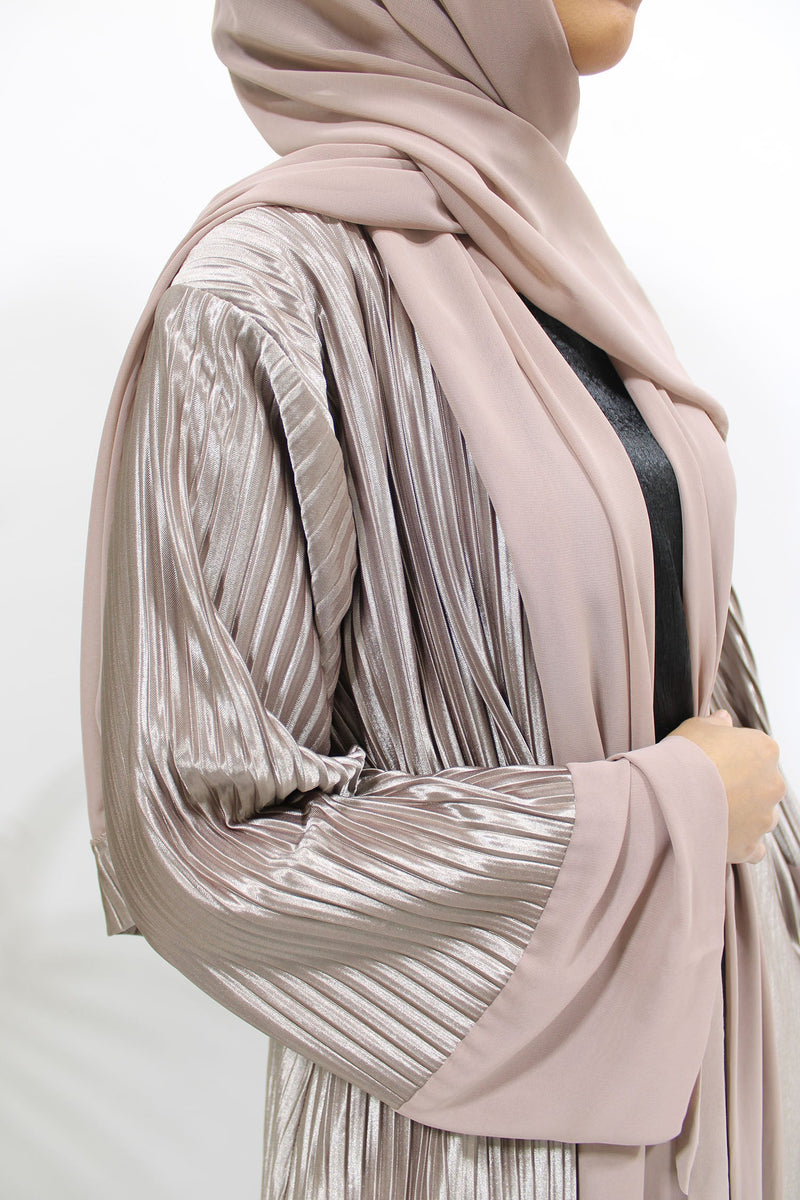
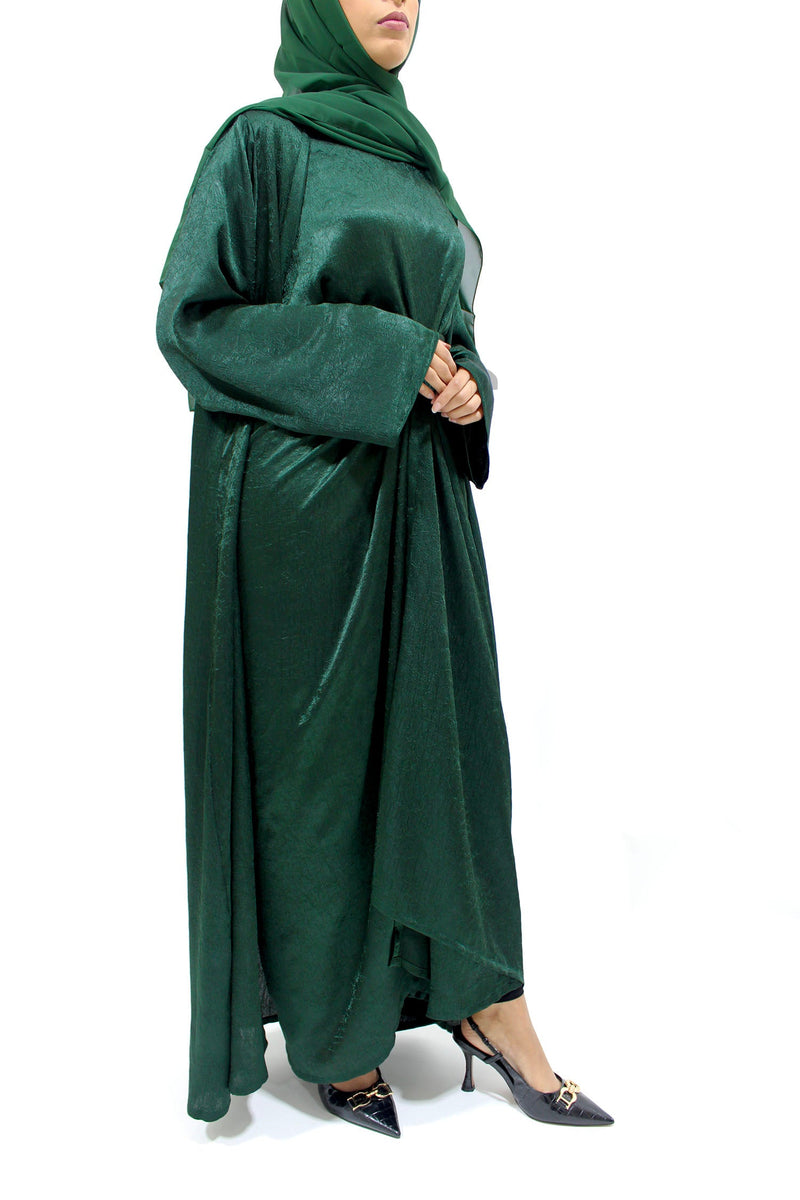
How Do You Choose a Jacket for Modest Layering So Length, Shoulder Room, Sleeves and Fabric Work Over Your Existing Clothes Without Bulk?
Choosing a jacket for modest layering is less about finding the biggest or longest option and more about choosing a layer that works with the clothes you already wear. A useful jacket should add coverage, warmth or structure without making the outfit bulky, restrictive or difficult to move in. Length matters, but so do shoulder room, sleeve width, closure, fabric weight, lining, drape and the shape of the garments underneath.
The easiest place to begin is by deciding what job you need the jacket to do. Some women want an extra layer over a dress or skirt, some need a polished layer for work, some want a casual jacket over trousers and a long top, and others need warmth without losing the loose, composed shape of the outfit. That purpose should guide the cut before colour, trend or detail does.
If you are building a wider wardrobe rather than choosing one outer layer in isolation, Amani’s complete modest fashion guide gives broader context for coverage, proportion, fabric and outfit planning. This guide stays focused on jackets: how to judge fit over layers, what to check in the fitting room or at home, and how to tell whether a jacket will make dressing easier rather than create another problem to solve.
Decide what the jacket needs to add to the outfit
Before looking at styles, name the gap in your wardrobe. Do you need extra length over shorter tops, a warmer layer for commuting, a structured piece for work, a lightweight cover for changing weather, or something that makes a simple dress feel more finished? One jacket can sometimes do several jobs, but expecting every jacket to do everything usually leads to compromise.
A jacket chosen mainly for coverage may need a longer hem and a straighter fall through the hips. A work jacket may need enough structure to look polished while remaining easy to sit in for long periods. A travel jacket may need to resist creasing and pack without taking up half a bag. A winter layer may need room for knitwear underneath without becoming tight at the shoulders.
Once the main purpose is clear, shopping becomes simpler because you can judge features by whether they help that purpose. A cropped shape may be attractive but wrong if the goal is extra hip coverage. A heavy lined blazer may look smart but be uncomfortable if you need a breathable indoor layer. The best choice is the one that answers the real need first.
Use length as a proportion tool, not a rule by itself
Jacket length changes the visual balance of an outfit and the amount of coverage it adds, but longer is not automatically better. A hip-length jacket can work well over a long tunic because the underlayer supplies length. A mid-thigh jacket can create a useful bridge over trousers or a straight skirt. A longline jacket can give a strong vertical line over dresses and wide-leg trousers.
Think about where the hem lands on your body and on the garments underneath. A jacket that finishes at the widest point of the hip can sometimes catch or kick outward, while one that falls slightly above or below may hang more cleanly. If you want the jacket to cover the seat when standing, check that it still does what you expect when you walk, bend to pick something up or sit down.
Petite and tall wearers often need to pay particular attention to proportions. A “longline” jacket may become almost coat length on a shorter frame, while the same style may finish much higher on a tall frame. Product measurements are more useful than the label alone. Compare the stated back length with a jacket you already own and understand well.
Shoulder fit is the foundation of comfortable layering
A jacket can have plenty of room through the body and still feel restrictive if the shoulders are wrong. When you layer a blouse, knit, dress or long-sleeved top underneath, the shoulder area has to accommodate both your body and the extra fabric. If the seam pulls upwards or the jacket feels tight when you reach forward, more width at the waist will not solve the problem.
Try the jacket over the thickness of clothing you genuinely plan to wear. Move both arms forward as if reaching for something on a shelf, then lift them gently and cross them in front of you. The jacket should move with you without dragging the whole body upward. A little movement is normal; sharp pulling across the upper back or armholes is a sign the cut may be too narrow.
Oversized styling can create useful ease, but simply buying several sizes larger is not always the best answer. The shoulder line can drop too far, sleeves can become cumbersome, and the body can lose intentional shape. Look for a cut designed with layering room rather than relying on size alone to create it.
Check the armhole before judging the sleeve
Many layering problems blamed on sleeves actually begin at the armhole. A high, narrow armhole can pinch when you wear a fuller blouse or jumper underneath. A very low armhole can create a different problem by pulling the jacket body upwards when you raise your arms. The best position gives enough ease for your underlayers while allowing normal movement.
Pay attention to fabric bunching where the sleeve joins the body. If several layers are being forced into a small space, you may see deep folds and feel pressure in the upper arm. This can become uncomfortable quickly, particularly when you are driving, carrying a bag or working at a desk. A slightly roomier armhole and back can make a significant difference.
If shopping online, look for garment chest and bicep measurements as well as the model photographs. A generous chest measurement does not guarantee a generous upper sleeve. When measurements are missing, customer service may be able to provide them; asking before ordering is often easier than guessing based on a letter size.
Sleeve width matters when there is another sleeve underneath
A jacket worn over a sleeveless dress has different requirements from one worn over a shirt, knit or abaya sleeve. For regular modest layering, the sleeve should have enough width to accept the underlayer without twisting it around your arm. A slim tailored sleeve can look elegant but become frustrating if every blouse sleeve has to be carefully pushed into place first.
Check the bicep, elbow and cuff, not just overall sleeve length. Bend your arm fully and notice whether fabric pulls across the elbow. If the cuff is narrow, make sure it can pass over the cuff of the garment underneath or that the inner sleeve sits comfortably inside. Wide bracelet sleeves can be stylish, but consider how much of the underlayer will show and whether that is useful to your wardrobe.
For winter layering, remember that knitwear adds thickness. A jacket that is perfect over a thin blouse may become restrictive over a jumper. If you want one jacket to work across seasons, choose enough sleeve ease for the thickest realistic layer rather than only the thinnest outfit you happen to be wearing when you try it on.
Choose the closure according to how you actually wear the jacket
Open-front jackets are quick and visually light, but they behave differently from buttoned or zipped styles. If you expect the jacket itself to provide extra front coverage, check what happens when it is left open and whether you are happy with the underlayer being visible. If you want the option to close it, make sure the closure lies flat without pulling across the bust or hips.
Buttons can offer flexibility because you may close one, several or all depending on the cut. Zips tend to create a cleaner continuous closure but can add stiffness. Wrap belts can define the waist and secure the front, yet they may also gather fabric and change the loose line of the garment. Choose the mechanism because it supports your preferred styling, not because it looks impressive on the hanger.
Always test the jacket both open and closed if it has that option. Some pieces hang beautifully open but become tight or distorted when fastened. Others look boxy open but fall neatly once one button is closed. If you are paying for a functional closure, it should work comfortably rather than being decorative in practice.
Fabric weight determines whether layers cooperate or fight
The jacket fabric needs enough substance to sit over the garments underneath without clinging to every seam, but too much weight can make the outfit heavy and hot. Lightweight twill, soft suiting, denim, wool blends, textured weaves and technical fabrics all behave differently. Think about drape, not just fibre content: two polyester jackets can feel completely different because of weave, lining and finish.
A softly draping jacket can work well over dresses because it follows the long lines underneath without creating a hard break. A firmer fabric can add useful structure over fluid trousers or skirts. Very stiff fabric may stand away from the body and create extra volume, which can be intentional but should be chosen knowingly. There is no single correct texture for modest dressing.
When comparing modest jackets, scrunch a small section of fabric gently in your hand if you are able to do so without damaging it, then let go. Notice whether it springs back, creases sharply or collapses. That small test can tell you something about how the fabric may behave through sitting, commuting and repeated wear.
Lining changes warmth, opacity and movement
A lining can make a jacket slide more easily over long sleeves, especially when the outer fabric is rough or textured. It can also improve structure and opacity. At the same time, full lining adds another layer of fabric and can make an otherwise breathable jacket much warmer. Whether lining is an advantage depends on climate, underlayers and where you plan to wear the garment.
If a jacket is pale or made from a loose weave, look closely at opacity in bright light. A lining may prevent the colour or pattern underneath from showing through. For dark or dense fabrics, partial lining may be enough to help the sleeves move smoothly while keeping the body lighter. Check the actual construction rather than assuming “lined” always means the entire jacket is lined.
Also feel how the lining behaves against your usual fabrics. A very slippery lining can make layering easy, while a static-prone synthetic lining may cling to certain dresses or tops. Static is influenced by fabric combinations and conditions, so test the jacket over the clothes you are most likely to pair with it.
Think about the silhouette underneath the jacket
A jacket is only one part of the shape. If the underlayer is very full, a narrow jacket can compress it and create bunching. If the underlayer is sleek, an extremely oversized jacket can dominate the whole outfit. The most harmonious result usually comes from allowing the two silhouettes to work together rather than making one fight the other.
Over an A-line dress, a slightly straighter or gently relaxed jacket can sit cleanly without flattening the skirt. Over wide-leg trousers, a longline jacket can continue the vertical line, while a shorter structured jacket may give clearer proportion if the top underneath already has enough length. Over a flowing skirt, pay attention to whether the jacket hem catches on the waistband or creates a bulky shelf.
You do not have to match loose with loose or fitted with fitted every time. Contrast can look deliberate. The practical question is whether the layers remain comfortable, covered in the way you intend and easy to move in. Judge the whole outfit in a mirror from the front, side and back rather than focusing on the jacket alone.
A straight or softly shaped cut is often easier to layer
Straight cuts give garments underneath somewhere to sit without being squeezed at the waist. Soft A-line jackets can also work well because they allow more room through the lower body while keeping the shoulders controlled. Highly shaped tailoring can be beautiful, but strong waist suppression may be harder to combine with thicker or looser underlayers.
If you prefer a defined shape, look for structure that comes from seam placement rather than extreme tightness. Princess seams, gentle darts or a shaped back can give polish while leaving movement room. The goal is not to remove all tailoring; it is to choose tailoring that still behaves well when the jacket is used as a layer instead of as a single garment over a thin camisole.
Try sitting in the jacket fully fastened. If the front pulls open, the hem rides high or the fabric cuts across the waist, the shape may be too restrictive for the way you want to wear it. A comfortable cut should look intentional in motion, not only while standing with perfect posture.
Collars and necklines should work with what you wear near the face
Lapels, high collars, hoods and stand collars all add fabric around the neck. If you wear a hijab or scarf, that area already has another layer, so extra bulk can become uncomfortable. A large stiff lapel may press into the scarf, while a tight stand collar can compete with fabric around the neck. Neither is automatically wrong, but the interaction deserves a real try-on.
Wear the scarf style you use most often when testing the jacket if possible. Turn your head from side to side and look down. Check whether the collar pushes fabric upwards, catches pins or creates a thick ridge under the chin. A softer collar or lower neckline can sometimes be easier, particularly for everyday wear and long commutes.
If you do not wear a headscarf, the same principle still applies to high-neck tops, roll-necks and layered collars. A jacket should have enough neck and shoulder space for the styling you actually use. Product photographs with a bare neckline may not show how the jacket behaves over a layered outfit.
Choose summer jackets by airflow, not simply by thinness
A very thin jacket can still feel hot if the fabric does not breathe and the cut traps heat close to the body. For warm-weather layering, look for room through the back and sleeves, a fabric that does not feel plasticky against the skin, and construction that avoids unnecessary padding or heavy lining. A slightly more open weave can feel cooler, provided opacity works for your outfit.
Unlined or partially lined styles often reduce bulk, but inspect the inside finishing because seams will be more exposed. Lightweight cotton blends, linen blends and soft woven fabrics can be comfortable, though creasing and transparency vary. Technical fabrics may also work well when designed for airflow, but read the composition and care details rather than relying on marketing language.
Colour can affect how seasonal a jacket feels visually, but comfort should come first. A pale jacket that requires an extra heavy underlayer to prevent show-through may be less useful than a slightly denser fabric that gives the opacity you want without added layers.
Choose winter jackets with room for insulation underneath
Winter layering often fails because the outer jacket was fitted over a thin top and then expected to accommodate knitwear. If the jacket needs to work over jumpers, thermal tops or thicker dresses, take those layers to the fitting room or recreate their thickness at home. The shoulders, upper arms and chest need enough ease for insulation without compressing it.
Heavy wool and wool-blend jackets can drape beautifully, but weight matters if you will wear the garment for hours. A long jacket with substantial fabric, lining, buttons and pockets can become tiring even when it feels impressive for the first minute. Lift the jacket on the hanger and then wear it long enough to notice shoulder pressure.
For very cold conditions, distinguish between a fashion jacket and true outerwear. A blazer-style layer may complete an outfit but not provide weather protection. If you need warmth, wind resistance or rain protection, choose those functions deliberately rather than expecting modest length alone to make a jacket suitable for winter weather.
For work, judge the jacket while seated as carefully as while standing
A work jacket may spend more time in a chair than walking down a corridor. Sit at a desk, reach for a keyboard and cross your arms comfortably. The back should not feel taut, the sleeves should not pull several centimetres up the forearm, and the front should not bunch into a thick mass at the waist. A slightly softer construction often performs better through a full day.
Longline blazers can be especially effective for modest workwear because they add length while preserving a polished line. Check the vent position at the back: a high vent can open more than you expect when you sit or walk. Side vents behave differently and may give easier movement. Look at the garment from behind during a movement test.
Neutral colours such as black, navy, charcoal, taupe or camel can be easy to repeat, but a work jacket does not have to be neutral. A muted colour or subtle pattern can function just as well if it coordinates with several base outfits. Versatility comes from your wardrobe, not from a universal colour list.
Casual jackets should still pass the same movement test
Denim jackets, chore jackets, utility styles and overshirt-inspired layers can be excellent for casual modest outfits because they bring structure without formal tailoring. Their relaxed appearance, however, does not guarantee ease. Denim can be stiff, utility fabrics can be heavy, and cropped casual jackets can finish higher than expected over trousers or skirts.
If you like denim, compare rigid and softer constructions. Rigid denim holds shape and can sit away from the body, while softer denim moves more easily and may layer better over dresses. Check whether metal buttons, seams or pocket flaps add uncomfortable bulk when the jacket sits under a coat or bag strap.
An overshirt-style jacket can be particularly flexible because it is often designed with a straighter cut and room for another top underneath. Make sure the side curves or shirt-tail hem still give the coverage you expect. What looks long at the back can rise considerably at the sides depending on the cut.
Occasion layering needs elegance without fragile construction
For weddings, dinners or formal events, a jacket can add coverage while keeping the base outfit simple. Longline tailoring, satin-finish jackets, textured woven pieces and softly structured layers can all work. The key is to check that decoration does not make the garment stiff, scratchy or difficult to sit in for several hours.
Embroidery, beading or metallic threads can catch on delicate dresses and scarves. Run a clean hand gently over the inside and edges to check for roughness. Decorative cuffs may also interfere with bracelet-length sleeves underneath. A beautiful finish is more useful when it does not require constant care during the event.
If the jacket is intended to stay on for the whole occasion, test the complete outfit together before the day itself. Check temperature, movement, photographs from different angles and how the fabrics interact. A jacket that looks elegant for five minutes but feels too warm after half an hour will not be the comfortable choice you hoped for.
Layering over dresses needs enough room through the lower body
Dresses often have more fabric below the waist than trousers, so a jacket that fits well over jeans may sit differently over a dress. Pleats, gathers, pockets and fuller skirts can create bulk beneath the jacket hem. Make sure the jacket does not compress those details into an uncomfortable ridge or catch on them as you move.
Over a straight or column dress, a longline jacket can create a clean continuous line. Over a fuller dress, a shorter jacket may allow the skirt to fall freely, while a longer A-line jacket can also work if it has enough sweep. The best option depends on proportion and movement rather than one formula.
If the dress has a belt, decide whether the belt belongs under or over the jacket. A thick buckle under a fitted jacket can create a bump and pressure point. If you prefer the belt visible, an open-front jacket may make more sense. Styling choices should support comfort rather than forcing layers into positions they resist.
Layering over skirts and trousers changes the balance at the hip
With skirts and trousers, waistbands and pockets can affect how a jacket falls. A thick gathered waistband may push a fitted jacket outward, while low-profile tailoring may disappear underneath. If you often wear wide-leg trousers, check that a long jacket does not cling to the fabric and restrict the leg line when you walk.
For straight or slim trousers, many women prefer enough jacket length or a longer underlayer to create the coverage they want. The jacket does not have to provide all of that coverage itself if the outfit is built in layers. Think in terms of the complete combination rather than judging one piece in isolation.
Skirts with a lot of volume can pair well with a more controlled upper layer, but make sure “controlled” does not become tight. The jacket should still close if designed to close and should not ride upward because the skirt is pushing against it from underneath.
Colour should make the jacket easier to repeat
A jacket becomes valuable when it can be worn often. Before choosing a colour, look at the dresses, skirts, trousers and scarves you already reach for. If most of your wardrobe is warm-toned, a warm neutral or compatible colour may integrate more easily. If you wear cool greys, blues and black, a cooler jacket may require less thought.
Neutral does not have to mean bland. Olive, chocolate, stone, deep navy, burgundy and muted blue can behave almost like neutrals in the right wardrobe. A statement colour can also be versatile if your base pieces are simple. The point is repetition: can you immediately name at least three outfits that work with the jacket?
Check colour in natural light when possible. Some black fabrics look brown or blue beside other black garments, and creams can vary from cool ivory to warm beige. Exact matching is not always necessary, but seeing the real undertone helps you decide whether the contrast looks intentional.
Do a five-minute movement test before deciding
Stand, sit, walk, reach forward, raise your arms gently, turn your torso and put your hands in the pockets. Fasten and unfasten the jacket if it has closures. These ordinary movements reveal far more than standing still in front of a mirror. Pay attention to where you instinctively tug or adjust the garment.
If you keep pulling the hem down, the jacket may be riding up because it is tight at the hips or shoulders. If you keep pushing sleeves back, they may be too long or the cuffs may interfere with the underlayer. If the collar keeps catching your scarf, the neckline may not suit the way you dress. Repeated adjustment is useful information.
Five minutes is often enough to notice pressure points that were invisible in the first thirty seconds. If you are trying the jacket at home, keep tags and return conditions intact while testing. The aim is not to find a garment that never moves, but one that moves predictably and settles without constant correction.
Online shopping works better when you compare garment measurements
Letter sizes vary between brands, so measurements are the safer starting point. Useful numbers include garment chest, shoulder width, bicep circumference, sleeve length, back length and hip width at the hem. Compare them with a jacket you own that fits the way you like, not only with your body measurements.
Remember that layering ease is the difference between your body and the garment, plus the thickness of what you wear underneath. A jacket with only a small amount of ease may fit over a thin top but not a jumper. If the product page gives only body-size guidance, read the cut description and contact the seller for garment measurements when necessary.
Photographs can help with proportion, but model height and size should be treated as context rather than a guarantee. The same jacket can finish at a different point on someone with a longer torso or different shoulder proportions. Measurements give you something concrete to compare.
Petite and tall shoppers should focus on placement, not just length
For petite wearers, the challenge may be more than an overly long hem. Pockets can sit too low, lapels can feel oversized, sleeves can cover the hands and the waist shaping can fall below the natural waist. A jacket can technically “fit” around the body while looking and feeling out of proportion because its design points are misplaced.
Tall wearers may face the reverse: sleeves finish too high, vents begin too early and longline styles become ordinary hip length. If a brand offers petite or tall ranges, those proportions may solve more than simply adding or subtracting centimetres at the hem. They can change where the whole jacket is built to sit.
Alterations can help with sleeve and hem length, but moving pockets, armholes or major seam lines is more involved. It is usually better to start with the closest possible proportions and use tailoring for refinement rather than asking alterations to rebuild the garment.
Fit through the bust and hips should be checked without judgement
Bodies carry fullness in different places, and jackets respond accordingly. If the front pulls across the bust, buttons may gape or lapels may flare. If the hips need more room, a straight jacket may lift at the back or spread at the front. These are fit signals, not problems with the wearer’s body.
Try a cut that gives room where you need it. A single-breasted jacket may sit differently from a double-breasted one; side vents or an A-line cut may give more hip movement; a softer lapel may lie more calmly over a fuller bust. The right solution is construction, not forcing yourself into a shape that fights your proportions.
If you prefer a looser silhouette, make sure the ease is intentional and balanced. Plenty of body width with narrow sleeves can still be uncomfortable. Good layering fit is three-dimensional: shoulders, arms, bust, hips and length all need to cooperate.
Alterations can improve a good jacket but cannot rescue every one
Simple sleeve shortening, button repositioning and modest hem adjustments are common ways to refine fit. Taking in a little excess at the sides can also be straightforward depending on construction. Major shoulder changes, armhole reconstruction or moving elaborate pockets can be expensive and may alter the balance of the whole jacket.
Before buying with alterations in mind, inspect the inside. Lining, vents, working buttonholes, decorative cuffs and complex seams can make apparently simple changes more involved. Ask a tailor for an opinion if the jacket is expensive or the alteration is essential to making it wearable.
A useful rule is to buy for the hardest area to alter. If the shoulders and upper arms fit well but the sleeves are long, alteration may be reasonable. If the shoulders are wrong from the start, another cut is often the better investment.
Choose one versatile jacket before building a collection
If you are starting from scratch, one dependable jacket can teach you more than buying several at once. Choose a length, fabric and colour that work with your most-worn outfits and use it through real life. You will quickly learn whether you want more sleeve room, more structure, a lighter lining or a different closure next time.
A versatile jacket does not need to be plain, but it should have multiple clear combinations in your wardrobe. Before buying, name three base outfits and at least two seasons or settings in which you would wear it. If you cannot, the jacket may be a special piece rather than the everyday layer you thought you were buying.
Once you know what works, adding a second jacket becomes more purposeful. You might choose a lighter summer version, a formal longline blazer or a casual utility layer because it fills a different need instead of duplicating the first one.
Use a simple buying checklist to make the final decision
Start with purpose, then check length, shoulder fit, armhole room, sleeve width, closure and movement. Look at fabric weight, lining, opacity, care and whether the jacket works over the actual clothes you plan to wear underneath. Check the back and side views, not just the front. Sit down and reach forward before you decide.
For online orders, compare garment measurements with a trusted jacket and keep the return policy in mind. Look for useful model information but do not rely on it alone. If a measurement that matters to you is missing, ask. A small amount of preparation can prevent repeated ordering and returning.
Finally, ask whether the jacket makes the outfit easier. Good modest layering should reduce uncertainty, not create constant tugging, overheating or awkward bulk. The most successful modest jackets are the ones that quietly support the rest of the wardrobe and can be worn again without needing a special set of circumstances.
Frequently asked questions
What jacket length works best for modest layering?
There is no single best length. Hip length can work when a longer top or dress already provides the coverage you want, while mid-thigh and longline jackets can add more coverage themselves. Compare the hem with your proportions and underlayers, then test it while walking, bending and sitting rather than judging length only while standing.
Should you size up when buying a jacket for layering?
Sometimes, but sizing up is not the only solution. A larger size may add room through the body while making the shoulders, sleeves or overall proportions too large. It is usually better to look for a cut designed with layering ease, then test it over the thickest realistic underlayer you plan to wear.
Which jacket fabrics are easiest to layer modestly?
Fabrics that combine enough weight to drape cleanly with enough flexibility to move are often easiest. Soft suiting, lighter twill, denim, wool blends and other woven fabrics can all work depending on season and outfit. Check lining, static, opacity and breathability because fibre content alone does not tell you how a jacket will behave.
Can an open-front jacket work for modest layering?
Yes, if the outfit underneath already gives the coverage you intend and you like the way the open front falls. Open-front jackets can feel light and easy, but they do not provide the same front closure as buttoned or zipped styles. Test the complete outfit in movement so you know how much the underlayer remains visible.
How do you check jacket fit over a hijab or scarf?
Try the jacket with the scarf style you normally wear, then turn your head, look down and move your shoulders. Check whether the collar, hood or lapels push fabric upwards, catch pins or create uncomfortable bulk around the neck. A softer or lower neckline may be easier if you regularly layer fabric in that area.
What measurements matter most when buying a layering jacket online?
Useful garment measurements include chest, shoulder width, bicep circumference, sleeve length, back length and width through the hips or hem. Compare them with a jacket you already like. Leave enough ease for the clothes you plan to wear underneath, especially if the jacket needs to fit over jumpers or fuller sleeves.
A good layering jacket should make dressing feel simpler
The right jacket is not defined by one length, one colour or one silhouette. It is the layer that works with your proportions, your climate and the garments you already wear. It gives the shoulder and sleeve room you need, falls cleanly over the outfit, closes comfortably if it is meant to close and moves without demanding repeated adjustment.
Choose by real use rather than by the hanger. Test sitting, reaching and walking. Look at the jacket over dresses, skirts or trousers you genuinely wear. Check the fabric in strong light, notice how the lining behaves and compare measurements before buying online. These practical checks are more reliable than a generic claim that a jacket is “oversized” or “modest”.
When the purpose, fit and fabric all line up, a jacket can become one of the hardest-working pieces in a modest wardrobe. It should add something useful—coverage, warmth, structure or polish—without making the rest of the outfit harder to manage.