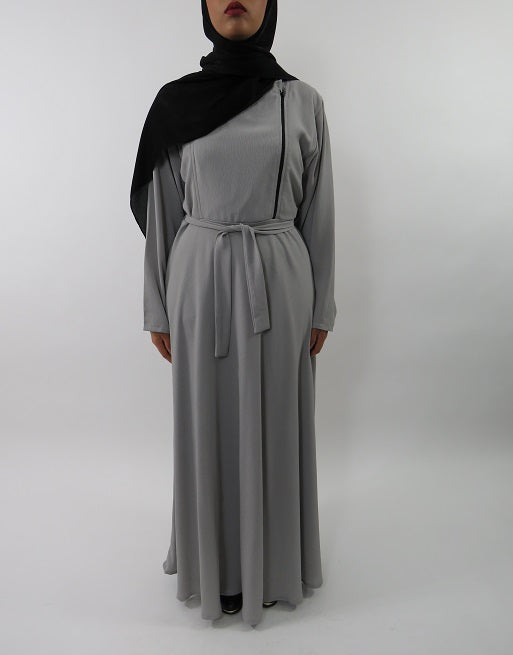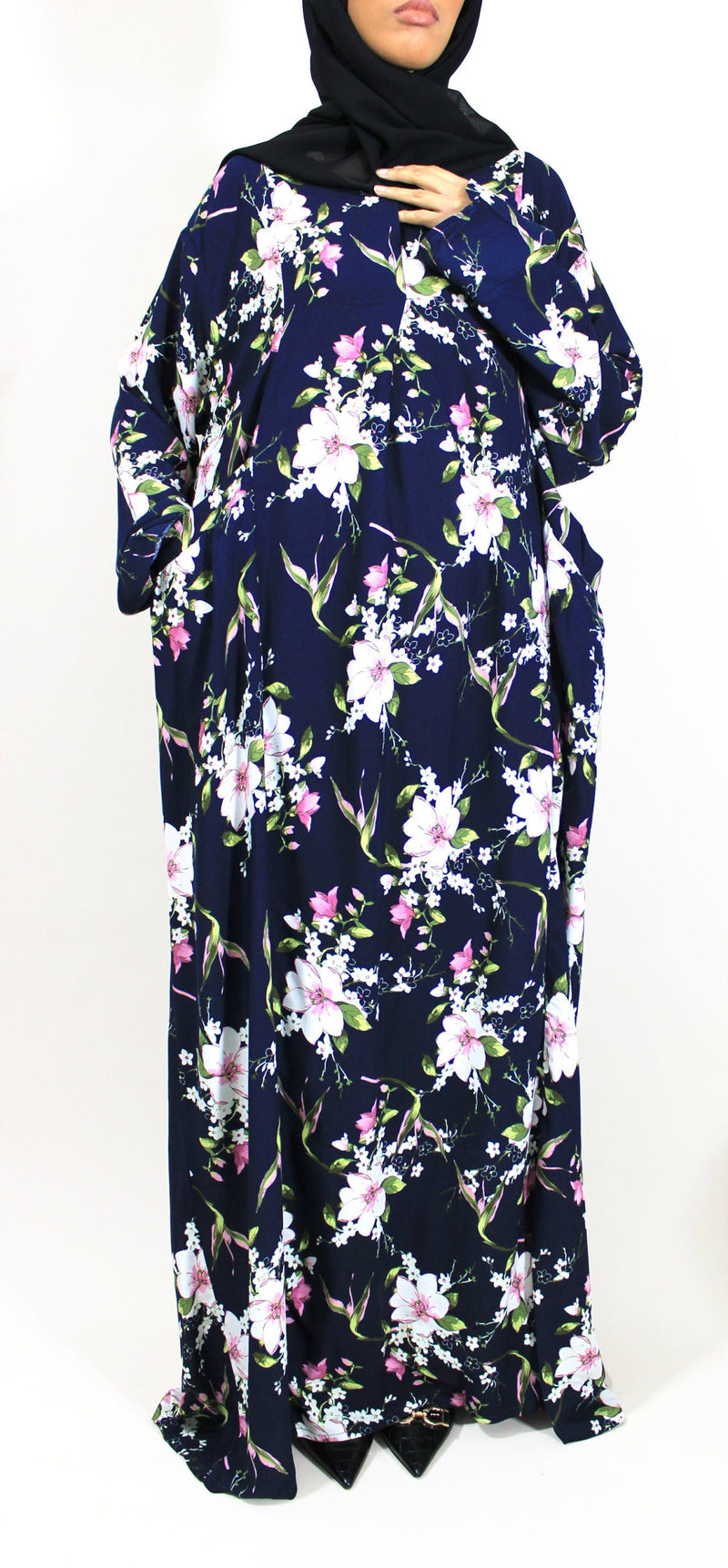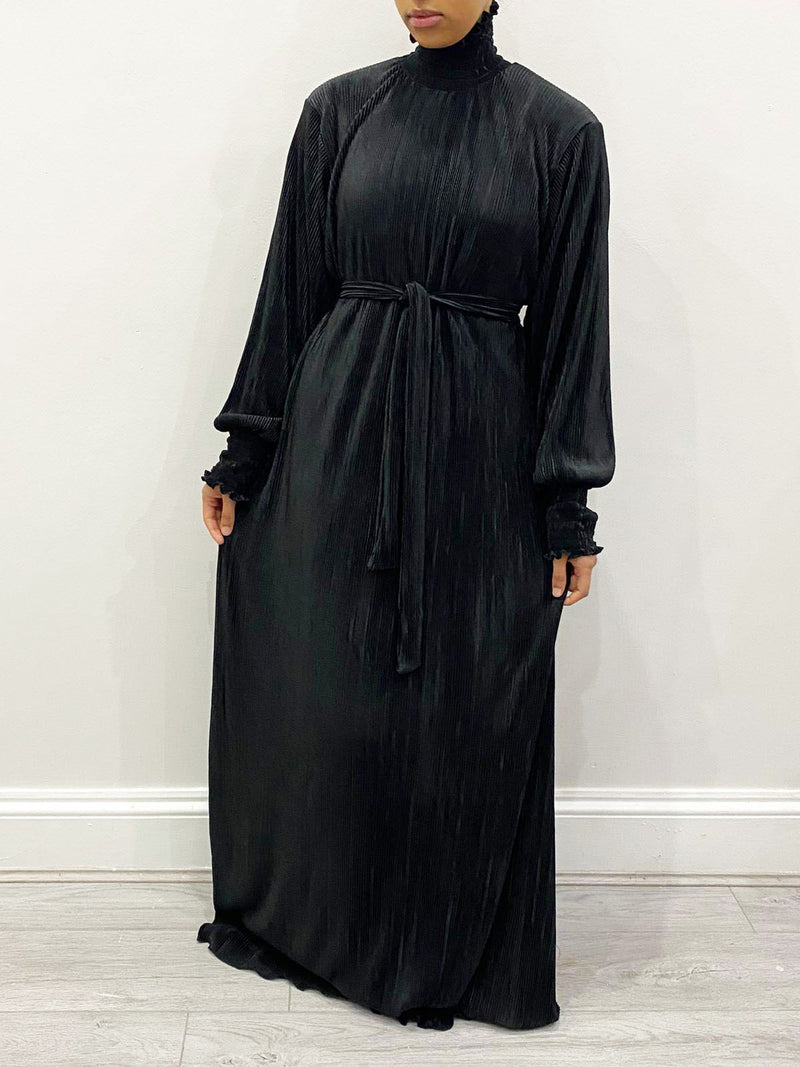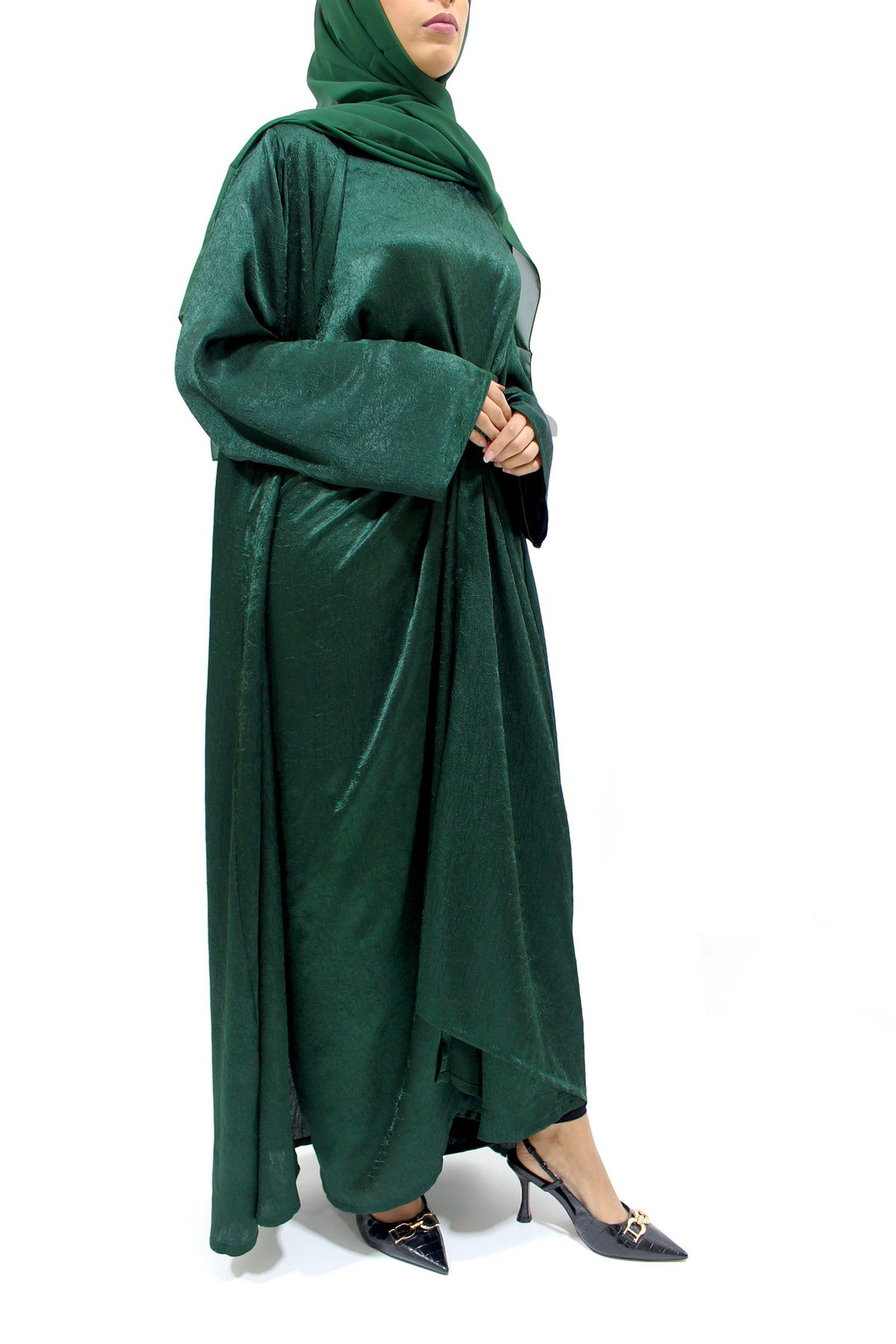
How to layer modest outfits without feeling bulky
Layering is useful when one garment does not do everything you need. A shirt can provide sleeves beneath a dress, an inner outfit can complete an open abaya, and a coat can be removed when you reach a warmer room. The difficulty begins when each new piece is added without checking what it changes elsewhere.
Suddenly the sleeves are crowded, three hems meet at the same awkward point and the hijab has no space around the collar. The outfit may contain more fabric than before without feeling more comfortable or providing more reliable coverage.
A better approach is to give every layer a clear job. Start with the clothing that needs to work closest to the body, add the main garment, then introduce only the outer pieces and scarf arrangement that help. There is no single way to put a modest outfit together. Your preferences for coverage belong at the start of the process, not as an awkward adjustment once the other clothes have been chosen.
Give each layer one reason to be there
Look at the outfit before you put it on and name what each piece contributes. One may provide opacity, another the shape you enjoy, and another protection suited to the journey. A decorative layer is also a valid choice, provided you know that its purpose is appearance rather than solving a coverage problem.
If two pieces seem to do the same job, try removing one and reassess the outfit. You may find that both are useful, but you may also discover unnecessary bulk. The aim is not the smallest possible number of garments; it is a combination whose complexity makes sense.
Keep temporary outerwear distinct from essential coverage. If a coat is the only thing covering a neckline or sleeve opening you prefer concealed, think about what will happen when you remove it. The indoor outfit should be planned, not discovered after arrival.
Likewise, do not ask a decorative scarf fold to hold an unstable dress opening in place. Choose a suitable base or fastening arrangement so the scarf can sit comfortably rather than act as a continuous repair.
Our complete modest fashion guide offers a wider view of fit and coverage. Layering becomes easier when those requirements are clear before you start combining colours and textures.
Build the base outfit first
Put on the pieces you expect to remain in place for most of the day. Check them without the cardigan, jacket or outer abaya that may later cover part of the view. This reveals the neckline, sleeves, waistband and hem relationships that the complete outfit will depend on.
For separates, check the overlap between the top and lower garment. Reach forward and sit down. A top that meets a waistband neatly while standing may move away during ordinary actions. Choose the length and fit according to the coverage you want through those movements.
For a dress, inspect any lining, openings and slits. A lining may not extend through the sleeves or to the outer hem. If you add a base layer, make sure it addresses the particular gap rather than introducing material where it is not needed.
Look at opacity in normal lighting and where the fabric comes under gentle tension. More than one layer does not automatically establish the result: two light fabrics can shift apart, and a patterned base may remain visible through a plain outer garment.
Check comfort while seated before moving on. A waistband, seam or sleeve that already feels awkward is unlikely to become more comfortable beneath another garment. Solve the base fit first rather than hoping that the outer layer will make the issue disappear.
Match sleeve room, not just body width
One of the most common layering difficulties is a roomy top with sleeves that do not fit comfortably beneath the next piece. Put the garments on together and reach forward. Notice the upper arm, elbow and underarm rather than looking only at the chest or waist.
A gathered sleeve, decorative cuff or dropped shoulder can change how an outer layer sits. A jacket may fit over a plain shirt but feel crowded over a fuller sleeve. That does not make either garment wrong; it means they may not be useful partners.
Check the order of the cuffs. Decide whether the inner sleeve should be visible and whether it stays in the position you want. A cuff that repeatedly catches inside another sleeve may need a different combination rather than constant pulling.
If you prefer a wide inner sleeve, compare outerwear designed with enough space to accommodate it. Alternatively, choose a simpler inner sleeve for the coat you already wear. Do not size up every piece automatically without checking the resulting shoulder and neckline positions.
Try removing the outer garment as well as putting it on. If the inner sleeve is dragged upwards or the scarf is disturbed every time, the combination may be less convenient than it appears during a still try-on.
Make the neckline and hijab work as one area
Count the features around the neck: shirt collar, dress neckline, jumper collar, jacket lapels and scarf folds. You do not necessarily need fewer garments, but you may need a simpler arrangement in that particular area.
A plain rounded neckline can leave room for a fuller front drape. A high collar may feel better with fewer scarf folds. A buttoned shirt beneath a dress may need the collar placed carefully so it does not collapse or press beneath the hijab.
Settle the foundation and face frame before adjusting the outer layers. Then turn your head, look down and reach forward. Check whether a collar pushes the scarf upwards or a jacket pulls an end backwards.
Do not tighten the wrap merely to resist the clothing beneath it. Identify the point that is moving it. A different collar position, scarf fabric or outer layer may provide a more comfortable solution.
Remember that different scarf arrangements provide different areas of coverage. A head-only wrap does not replace a fuller neck and chest drape. Choose the base clothing and scarf together according to your preferences rather than treating every hijab style as equivalent.
For a closer comparison of scarf behaviour, see our hijab fabrics and styling guide. The fabric should work with the neckline you are wearing, not only with the tutorial in which you first saw it.
Use hem lengths deliberately
Stand back and look at where each visible layer finishes. A shirt, jumper and jacket ending within a small area can create a different effect from a clear separation between their lengths. Decide whether you like that relationship rather than assuming that every layered outfit needs several visible hems.
A longer shirt beneath a shorter jumper can be useful when it provides the coverage you want. Check the back and sides as well as the front. The visible shirt should remain in place after sitting, not become a small strip that needs to be pulled down repeatedly.
A cropped jacket over a long dress can create a clear upper and lower relationship. Try it with the dress’s actual waist seam and skirt shape. The jacket may sit neatly with one dress and catch on the fullness of another.
With a long cardigan or open abaya, compare the outer hem with the dress or trousers beneath. A lower layer extending beyond the outer garment can be intentional, but it should not create fabric you have to manage awkwardly while walking.
Check the complete hem with the shoes. Do not choose the length only in socks and then discover that the intended footwear changes how the fabric falls. If the outfit includes asymmetrical or layered hems, inspect the longest point as well as the centre front.
Choose fabric combinations through wear, not a fibre slogan
Read the composition and care information, but assess the finished garments together. The weight, surface, stretch and construction affect how they interact. A fabric name alone cannot tell you whether two pieces will slide comfortably, cling or bunch.
Put on the base and main garment, then sit and stand. Check whether the outer piece returns to position or remains caught on the layer beneath. If it catches repeatedly, compare a different base or a different outer garment.
Notice how much material gathers at the waist and underarms. Two individually light garments can still form a crowded arrangement when both have substantial seams, pockets or elastic in the same area.
Stretch can be useful, but it should not be the only reason a layer fits. If the fabric must remain extended across the body to accommodate the outfit beneath, consider whether another size or cut would provide more comfortable room.
Do not assume that natural fibres always solve every comfort problem or that a synthetic blend is automatically unsuitable. Choose using the actual garment information, your experience of the combination and the conditions in which it will be worn.
Five reliable starting combinations
A long tunic with trousers
Start with trousers that fit comfortably at the waist and through the seat. Add the tunic and check its front, back and side lengths. Reach forward and sit to see whether the overlap remains as you want it.
Look at the tunic openings and the width of the trouser leg together. A wide trouser does not require a fitted top, and a loose tunic does not automatically require narrow trousers. Choose the proportions and movement you enjoy.
Add a jacket or cardigan only if it serves the day. Check that it does not pull the tunic upwards or compress its sleeves. Our guide to tunic dresses, trousers and outer layers goes further into those specific relationships.
A sleeveless dress over a suitable top
Check the dress armholes and upper body with the top underneath. There should be room for the sleeves without pulling the dress neckline or creating tension across the chest. A close armhole may need a different base, not simply a larger scarf.
Decide whether the underlayer is meant to blend with the dress or provide a visible contrast. Compare the actual colours and sleeve finishes. A near-match can look deliberate, but it is worth checking rather than assuming that two items called black or cream will be identical.
Assess the outfit while seated and reaching. If the top keeps riding up beneath the dress, another length or fabric may be more practical. You should not have to rearrange the base every time you stand.
An open abaya over a complete inner outfit
Try the inner dress or separates without the abaya first. Confirm the neckline, sleeves, opacity and hem. Then add the outer garment and check how the pieces move together when the front opens.
Look at the shoulders and upper arms, especially if both layers have substantial sleeves. Check the bag strap and any fastening or belt. The outer abaya should provide the shape you want without trapping the base in uncomfortable folds.
A coordinated inner outfit can be simple. It does not have to match the outer layer exactly, but the colour relationship should feel intentional. Choose the base for comfort and coverage before adding decorative details.
A jumper over a long shirt or dress
Check the jumper hem against the layer beneath. A ribbed band may catch at the waist or hips, while a straighter edge may fall differently. Sit and stand to see whether the visible lower layer remains in the position you intended.
At the neckline, decide what happens to the shirt collar or dress detail. Too many folds beneath the hijab can feel crowded. A simpler collar or scarf arrangement may be more useful than adding another fastening.
Try the coat over the full combination. The jumper’s softness does not establish that its sleeves will fit comfortably inside the outer layer. Assess the upper arm and shoulder with the actual pieces together.
A dress with a jacket or cardigan
Begin with the dress’s complete fit, then choose the outer layer according to the setting. A cardigan offers a different front arrangement from a tailored jacket. Decide whether you will wear it open or fastened and check both positions if you expect to change during the day.
Make sure the dress remains suitable when the outer layer is removed. If you rely on the cardigan for essential coverage, consider whether you will be comfortable keeping it on indoors. A different base dress may give you more flexibility.
Check the outer hem against the skirt’s fullness and any waist seam. The most useful length is the one that sits comfortably with the dress you own, not a universal rule about short or long jackets.
Layer for changing conditions without wearing every option at once
Think about where you will spend most of the day and where you will need to adjust. A journey outdoors followed by a warm indoor space may call for a removable outer layer rather than a heavy combination that cannot be changed comfortably.
In warmer conditions, avoid adding a layer solely because an outfit formula includes it. Choose garments that provide the required coverage with a manageable total amount of fabric. A sheer decorative layer does not cancel out the weight or warmth of the lined garment beneath it.
In cooler conditions, make room for the layers you genuinely need. Check the sleeves, shoulder and neckline with the coat fastened. An outfit that works only while the coat is open may not suit the journey you have planned.
For rain or wind, use outerwear appropriate to the conditions and manage loose hems and scarf ends. Fashion layering is not the same as verified weather protection. Do not assume that a long coat-like garment has protective properties that its description does not establish.
You do not have to make every piece work in every season. A garment with a clear, useful role during part of the year can be a better choice than one forced into unsuitable conditions through repeated extra layers.
Use colour and pattern to organise the outfit
Choose where you want the main visual interest. It might be a printed dress, a coloured scarf or a textured outer layer. Starting with one feature makes it easier to decide what the other pieces should do.
For a quieter combination, keep the larger garments related in tone and introduce contrast in one smaller area. For example, a plain dress and coat can leave room for a scarf colour you enjoy. The pieces do not need to match exactly.
If you want more than one pattern, compare their scale and visible area. A small printed scarf may sit comfortably with a more open pattern on a dress, while two dense patterns near the neckline may feel crowded to you. There is no fixed rule, but the actual worn combination is more informative than separate product images.
Look at the outfit after removing the outer layer. A colour plan that depends entirely on the coat may feel different indoors. Decide whether the base combination is something you would choose on its own.
Do not treat neutral colours as compulsory. A strong colour can be part of a simple, manageable outfit. The aim is a relationship between the pieces that you enjoy and can repeat, not a prescribed palette.
Combine familiar and new styles without inventing a cultural rule
You may enjoy wearing an abaya with a contemporary jacket, a kaftan with a simple outer layer or a long tunic with tailoring. Assess the garments themselves rather than dividing every item into a fixed category of traditional or modern.
Consider the shape and purpose of each piece. A jacket that works over a narrow sleeve may not fit over a broad kaftan sleeve. A long outer layer may conceal a decorative feature you wanted visible. These practical details determine the combination more than a label about cultural fusion.
If a pattern or garment has personal or cultural significance for you, choose how you want to present it. Where you are unfamiliar with a particular motif or event expectation, ask rather than assigning a meaning from appearance alone.
There is no obligation to turn every outfit into a statement about heritage, inclusion or confidence. You can choose a combination because it is comfortable, familiar or visually appealing. Personal expression does not require a public explanation each time you get dressed.
Accessories should not create new fit problems
Add the bag and shoes before deciding whether the outfit needs jewellery or a belt. These practical pieces can change how the clothing hangs. A bag strap may pin an outer layer to the shoulder, and a shoe can alter the workable hem length.
Try a belt only if you want its effect. Check the fabric above and below it while seated. It should not be used to hold several unstable layers together or pull a neckline into position.
Keep sharp or rough accessories away from delicate cloth unless they are designed and positioned appropriately. A decorative brooch can distort a scarf or catch an outer layer if the combination is not considered.
Look at the amount of hardware in one area. Buttons, a zip, a belt buckle and a bag clasp may be more detail than you intended. Removing one accessory can be more effective than adding another piece to balance it.
Choose according to your own preferences. Some layered outfits look complete with no visible jewellery; others suit a favourite statement piece. The goal is not a universal accessory count but an arrangement that feels coherent and comfortable.
A practical wardrobe audit before buying more layers
Choose three garments you already wear and build one complete outfit around each. Include the underlayers, scarf, shoes and outerwear, not only the pieces visible in a photograph. Record what is missing or difficult.
Group the problems by function. You may find that several outfits need a comfortable long-sleeved base, or that your only coat does not accommodate fuller sleeves. Solving one recurring gap can be more useful than buying another decorative cardigan.
Separate fit problems from styling preferences. A colour you no longer enjoy is different from a neckline that does not work with your scarf. The first may be addressed through a new combination; the second may require a different garment.
When considering a purchase, name the outfits it will support. “This jacket fits over two dresses and the long tunic” is a clearer reason than “this is a layering essential”. The same item may be essential for one person and unnecessary for another.
Keep successful combinations in a simple note or photograph. Repeating them is a practical use of your wardrobe. You can change one element when you want variety rather than rebuilding the whole outfit every day.
Four problems to solve one at a time
The outfit feels bulky around the waist
Look at waistbands, shirt hems, pockets and any belt in the same area. Remove one non-essential layer and compare. A longer or straighter top may sit more comfortably than several pieces gathered together, but the best adjustment depends on the actual garments.
The outer layer keeps riding upwards
Check whether it is catching on the fabric beneath or whether the sleeves and shoulders are too restricted. Try it over a simpler base to isolate the cause. Do not assume that pulling the hem down repeatedly is the only way to wear it.
The scarf becomes uncomfortable after adding a coat
Inspect the collar, hood and lapels. They may be pushing or pulling the scarf rather than the wrap itself being unsuitable. Adjust the meeting point between the garments and test again before tightening the face frame.
The outfit only works while standing still
Repeat the movements of your day and identify the specific failure: an opening, a lifting hem, a pulling sleeve or a shifting waistband. Change the piece responsible rather than adding an unrelated layer that hides the issue in a photograph.
Make day-to-evening changes realistic
Start with a base outfit appropriate to both settings. A casual garment does not automatically become formal when jewellery is added, so check the evening event’s expectations before planning a small change.
Choose one or two changes you can manage with the space and time available. A different scarf, a jacket or a bag may be enough. Keep the essential coverage unchanged so the transition does not require rebuilding the entire outfit.
If you change shoes, check the hem with both pairs before the day. A length that works with one pair may become awkward with another. Do not discover that relationship at the point when you need to leave for the event.
Pack the change as a complete small set, including any fastening or underlayer it depends on. A decorative scarf is not useful if it requires a foundation left at home. Simplicity comes from planning those dependencies, not from promising that every outfit transforms instantly.
Care for the components individually
Read the label on each garment rather than treating the outfit as one laundry category. A dress, cardigan, scarf and lining may have different care requirements even when they look similar in colour or texture.
Inspect the places where layers rub against one another, including the underarms, cuffs and areas beneath bag straps. Check fastenings and remove detachable accessories where appropriate before cleaning.
Dry and store each piece according to its construction. Avoid leaving several damp layers folded together or forcing a delicate garment into a storage arrangement chosen only to keep an outfit grouped.
Keep outfit information separately from the clothing if needed. A photograph or note can preserve the combination without storing a heavy jacket on top of a delicate scarf. Our fabric-care guide provides a useful starting point for those garment-specific decisions.
A worked edit: making a sleeveless dress useful without adding four layers
Imagine a sleeveless dress you like through the body, but which needs more arm and neckline coverage for the outfit you have in mind. Start by testing one suitable long-sleeved top beneath it. Put both pieces on together and check whether the dress armholes remain comfortable and whether the extra neckline sits neatly. If that combination works, there may be no reason to add a separate vest and an open shirt as well.
Now sit and reach forward. Watch the fabric where the top passes through the armholes. A sleeve that looked fine on its own might pull against a narrow opening in the dress, leaving a ridge or restricting your arms. That is a compatibility problem between the two garments, not evidence that you should keep adding fabric until it disappears.
If the underlayer bunches, try a different construction rather than automatically a smaller size. A smooth, comfortably fitted sleeve may sit better beneath the armhole than a gathered shoulder. The body of the top still needs enough ease for you to move. Do not accept tightness simply because the visible result looks flatter.
Next, decide whether an outer layer has a separate job. A coat for the walk outside is different from a cardigan that you must keep closed to cover a neckline. Try removing the coat indoors. If the dress and top already form an outfit you are comfortable wearing, the coat can remain a genuinely optional layer.
The scarf is the last relationship to test, not a repair for every earlier decision. Wrap it as you normally would and turn your head. Check whether its lower edge catches on the underlayer neckline or slides behind the dress strap. Choose a different neckline, scarf arrangement or garment combination where necessary, rather than relying on constant repositioning.
This exercise may leave you with three functional pieces: dress, long-sleeved top and scarf, plus the outdoor coat. It may also show that the dress is not worth adapting for this particular use. Both outcomes are useful. Keeping an unsuitable piece in a different role is often more practical than building a complicated outfit around it.
Record the measurements that explain why a combination works
When a layered outfit feels especially comfortable, note the relationships rather than recording only the size labels. You might find that a particular jacket has enough upper-arm room for your usual blouse, or that a long shirt retains the overlap you want above a certain trouser rise. Those observations are more useful for future choices than assuming that any two garments in the same labelled size will fit together.
Use a consistent method if you measure finished clothing. Lay the garment flat without pulling it, identify the start and end points and record whether a measurement is a flat width or a full circumference. A flat chest width cannot be compared directly with a body measurement around the bust. Keep photographs of the tape position where that makes the comparison clearer.
For an online purchase, compare the proposed new piece with the garment that performs the same role in your working outfit. If you are replacing the coat, use the existing coat as your first reference, not the thin dress beneath it. Ask the seller about any measurement that is missing or defined differently.
Measurements narrow the possibilities; they do not establish how two fabrics will move against one another. You still need to try the full combination. Treat your notes as a way to ask better questions and avoid obvious mismatches, while leaving the final decision to the outfit in motion.
The final test: remove, move and rebuild
Put on the complete outfit, then remove the outer layer you expect to take off indoors. Check whether the remaining clothing still provides the fit and coverage you want. Add the layer again and see whether you can do so without disturbing the scarf or dragging the sleeves upwards.
Walk, sit, reach and carry the bag. Look at the outfit after those movements before smoothing it into place. The areas that need repeated adjustment are the ones worth solving.
Finally, take the outfit off and put it together once more. Notice whether any step is unnecessarily complicated or depends on an improvised fix. A useful layered combination should be something you can repeat, not a one-time arrangement that only works after extensive adjustment.
Layering can offer creativity, flexibility and a way to use clothing you already own. Its value comes from the relationship between the pieces: enough room, reliable overlap and a clear purpose for each addition. Build those relationships first, and the finished look can be as restrained or expressive as you prefer.