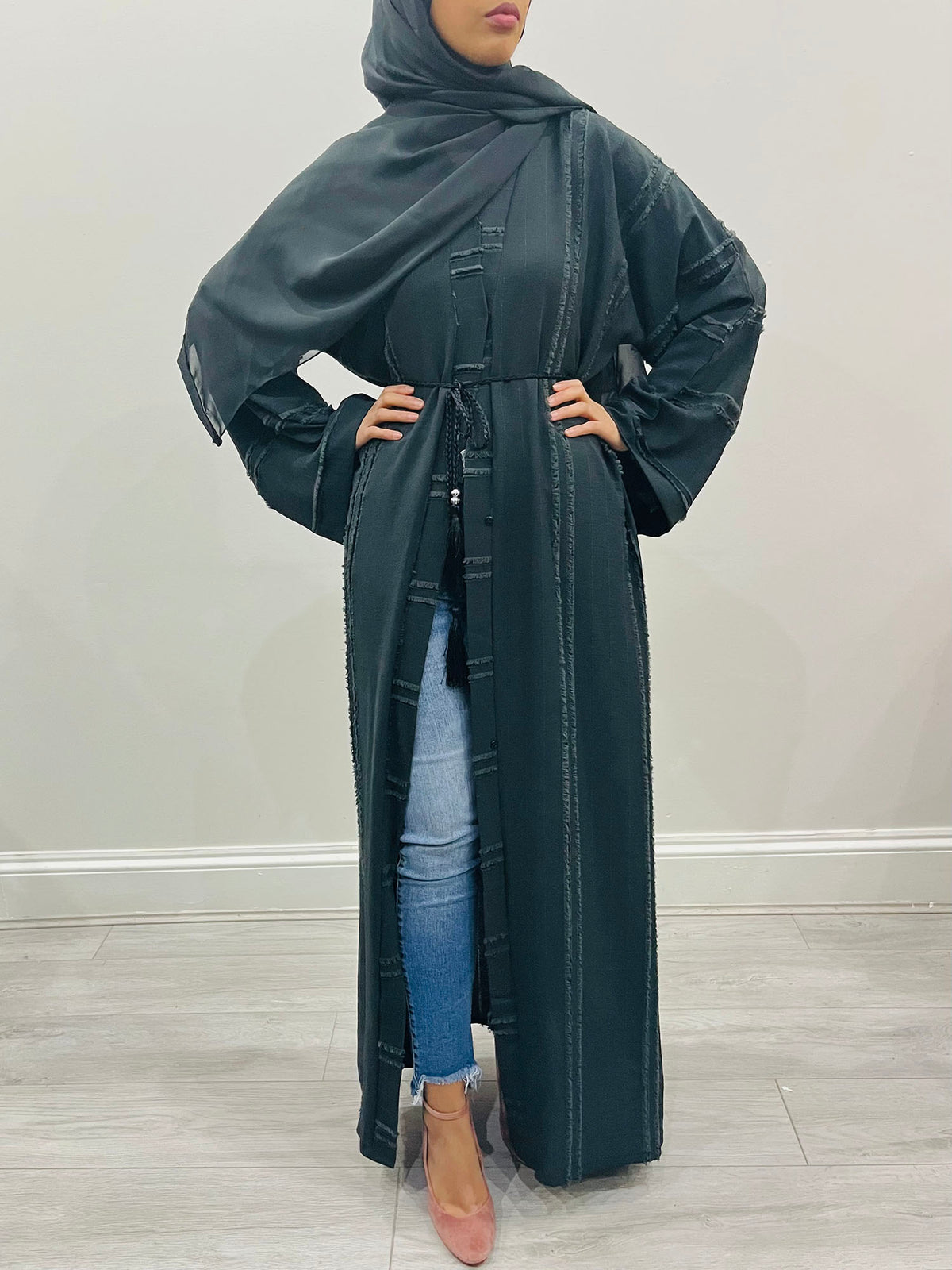
Cotton Abayas Become Favourites for a Reason — the Good Ones Make Everyday Dressing Feel Effortless
Cotton has a reputation for being the sensible fabric. It sounds familiar, washable and easy to live in, so a cotton abaya can look like the straightforward choice before you have even touched it. Then two garments both labelled cotton arrive and behave nothing alike. One is crisp enough to stand away from the body, another is soft and relaxed, a third is light enough to need careful layering, and a fourth feels much warmer than the product photograph suggested.
That difference is why I would never choose a cotton abaya from the fibre name alone. Weight, weave, cut and finishing decide whether it becomes the piece you reach for three times a week or the one that stays on the hanger because the sleeves feel stiff, the skirt catches around your legs or the fabric turns more transparent in daylight than it did indoors.
For everyday modest dressing, those small practical details matter. You need to know what happens when you sit on the bus, lift a toddler, walk quickly, put a coat over the sleeves, make wudu, carry a shoulder bag or spend a warm afternoon outside. Cotton can be excellent for all of that, but only when the garment has been designed around the way the fabric actually behaves.
If you are still comparing abaya silhouettes and fabric families more broadly, the complete abaya guide gives the wider picture. Here I am staying close to cotton itself: what the label can and cannot tell you, why weight changes opacity and drape, how cut affects movement, what to expect from washing and creasing, and how to judge a cotton abaya before it becomes part of your ordinary week.
Cotton tells you the fibre family, not the whole personality of the abaya
When I see cotton on a composition label, I know something useful, but not enough to predict the garment. Cotton fibres can be spun into many different yarns and woven or knitted into fabrics with very different surfaces, densities and weights. That is why a cotton poplin shirt, a soft jersey T-shirt and a heavy cotton canvas bag can all belong to the same fibre family while feeling completely unrelated in the hand.
An abaya can have the same kind of variation. A tightly woven cotton may feel crisp and hold an A-line shape clearly. A lighter plain weave may feel cooler and more flexible but need an underlayer in a pale colour. A brushed or washed finish may feel softer from the first wear. A cotton blend may add fluidity, crease recovery or stretch depending on what the other fibre contributes.
So I do not translate “cotton” into “breathable”, “soft”, “cool” or “opaque” as automatic promises. Those qualities depend on more than fibre content. I look at the density of the fabric, how much light passes through it, how stiffly it bends, whether it springs back after being scrunched in the hand, and how the cut gives that fabric room to move.
This also protects you when shopping online. A lovely natural-fibre label can sound reassuring, but the garment still has to work as an abaya. It still needs enough width, sensible sleeves, secure closures where relevant, a practical length and opacity that remains trustworthy when you move.
Weight is the first thing I want to understand because it changes almost everything else
Fabric weight affects drape, warmth, opacity, creasing and the amount of structure you see around the body. It is one of the most useful clues when comparing cotton abayas, yet many listings do not give a numerical fabric weight. When they do not, I look for other evidence: close-up photographs, movement video, descriptions such as lightweight or structured, whether the garment is lined, and how sharply the folds hold on the model.
A very light cotton can be pleasant in warm weather, but the trade-off may be transparency or a tendency to lift in wind. A medium-weight cotton often gives the easiest everyday compromise: enough body to fall away from the legs, enough opacity for many colours, and not so much bulk that a coat becomes difficult. A heavier cotton can feel reassuring and beautifully structured in cooler months, but it may become warm, stiff or tiring if the cut is too narrow.
I also notice where the weight sits. A garment can have a manageable skirt and still feel heavy if there are double-layered cuffs, oversized pockets, a thick collar or a lined upper body. Conversely, a wide skirt made from very light cotton may use a lot of fabric without feeling physically heavy at all.
There is no ideal number that suits every woman. Height, climate, the intended season, whether you layer underneath and how much structure you like all matter. I am looking for the weight that supports the job rather than the highest or lowest weight as a badge of quality.
Lightweight cotton is useful only when you have checked what happens in daylight
The appeal of a lightweight cotton abaya is obvious on a warm day. Less bulk can make walking and layering easier, and a loose cut can allow air to move around the body. But lightness becomes frustrating when you have to add several hot layers because the fabric is more transparent than expected.
I test a pale or lightweight cotton beside a bright window with a contrasting loose garment underneath. I check the front, back, sleeves and the areas where fabric is pulled slightly by normal movement. I also sit down, because fabric can become more taut across the knees and hips even when the standing view looks completely fine.
Colour makes a difference, but colour is not a guarantee. A dark lightweight cotton can still reveal outlines when backlit, while a well-woven pale cotton may be surprisingly opaque. The weave and density matter as much as the shade.
If an underdress is needed, I want it to be one calm, loose layer rather than a complicated collection of fitted pieces. A cotton abaya intended for heat has lost much of its practical advantage if opacity can only be achieved by building a thick synthetic outfit beneath it.
Midweight cotton is often where everyday usefulness begins
A good midweight cotton has enough substance to create a clean modest line without feeling like upholstery. It usually gives the cut a little authority: an A-line skirt keeps its shape, a straight sleeve does not collapse around the arm, and pockets are less likely to show through as obvious rectangles.
For an everyday abaya, that steadiness can be valuable. You are less dependent on perfect underlayers, the garment is less likely to fly around in a light breeze, and creases often look like normal wear rather than every fold becoming a sharp mark. There is also enough body for buttons, zips and seams to sit neatly when the construction is good.
The possible downside is warmth. A dense midweight cotton with a high neckline, close sleeves and a narrow body can feel much hotter than a loose garment made from the same fibre. That is why I always judge weight and cut together.
If I wanted one cotton abaya for work, errands, family visits and much of the British year, I would usually look for this middle ground first. It is not because medium weight is universally superior; it is because ordinary life asks one garment to cope with more than one temperature and more than one kind of movement.
Heavier cotton can give beautiful structure, but structure should not turn into resistance
Heavier cotton can look excellent in simple designs. It can create a strong vertical line, hold a generous skirt away from the legs and make a plain abaya look considered without needing embroidery or shine. In cooler weather, the extra substance can also be welcome.
What I do not want is a garment that makes me negotiate with it. If the fabric is heavy and the cut is narrow, long strides may pull across the hips. Thick sleeves may bunch under a coat. A substantial collar can press against a hijab. Large patch pockets can add still more weight to one part of the garment.
I test a heavier cotton by sitting for several minutes, raising my arms, crossing a room at a normal pace and putting on the outerwear I actually use. If the abaya becomes awkward the moment another layer is added, it is not an everyday favourite for my climate no matter how beautiful the structure looks on a hanger.
Heavy cotton works best when the pattern has been cut with that weight in mind: enough ease through the body, controlled volume where it is useful, and no decorative construction that makes an already substantial fabric more cumbersome.
Softness comes from more than the word cotton
“Soft cotton” sounds simple, but softness can come from the yarn, weave, washing process, surface finish and repeated wear. Two 100 per cent cotton fabrics can begin with very different hand-feel. One may be smooth and pliable; another may be crisp and slightly dry; another may soften noticeably after laundering if the care instructions allow it.
I therefore separate softness from drape. A fabric can feel soft between the fingers and still have enough body to hold its shape. Another can feel smooth but be so light that it clings to the underlayer. A brushed surface may feel cosy while also holding more warmth.
For sensitive skin, I would pay attention to seams, labels, cuffs and any embroidery backing as well as the main fabric. A beautifully soft body fabric does not help much if the inside of a decorative cuff scratches the wrist all day.
And I would never promise that cotton is irritation-free for everyone. Skin sensitivity is personal, dyes and finishes vary, and an individual garment may have construction details that matter more than the fibre. The practical approach is to inspect the inside and, where possible, try the garment long enough to notice pressure, roughness or heat before committing.
The weave decides whether cotton feels crisp, airy, smooth or unexpectedly dense
Fibre content is only the beginning because the weave controls how closely the yarns sit together and how the cloth bends. A close plain weave can create a clean, stable surface that holds a simple abaya shape well. A looser weave may allow more air movement but also let more light through. A twill-like structure can feel more substantial and show a subtle diagonal texture. Knitted cotton behaves differently again, usually offering more stretch and softness but often following the body more closely.
I do not expect a product page to teach textile construction in technical language, but I do want enough description and imagery to understand the result. If the surface looks crisp and paper-like, I expect stronger folds and more visible creasing. If it looks softly washed, I expect a more relaxed silhouette. If it has a visibly open texture, I plan a more careful opacity test.
Texture also changes how the abaya works with other clothes. A rougher cotton may catch slightly against a textured underdress instead of gliding over it. A very smooth cotton can layer more easily beneath a coat. Raised embroidery, dobby texture or woven stripes can add interest without print, but they may change thickness in specific areas.
This is one reason I avoid reducing cotton to a simple natural-versus-synthetic argument. Two cotton abayas can ask completely different things from the wearer because their cloth has been built differently. The practical question is what this weave does when it is cut into this garment.
Creasing is part of the decision, not evidence that cotton has failed
Cotton often shows the memory of sitting, folding and bending more readily than some synthetic fabrics. I do not automatically see that as poor quality. A softly creased everyday cotton can look natural and relaxed, especially in a washed finish. The question is whether the level of creasing suits where you plan to wear it and how much maintenance you enjoy.
For a long office day, I might prefer a cotton blend or a fabric with enough body that lap creases do not become very sharp. For a Saturday of errands or a family visit, a few natural folds may not bother me at all. A heavily structured cotton that creases at every bend can look more rumpled than a softer cloth because the folds stay defined.
I do a simple sit test at home. I sit normally for ten minutes, stand without smoothing the skirt and look at the front and back. That tells me far more about my tolerance for the fabric than a freshly steamed product image.
If you love an immaculate finish but hate ironing, be honest about that before buying. Choosing a lower-maintenance fabric is not giving up on cotton; it is choosing clothing around your actual habits. An everyday favourite earns its status by fitting the life you have, not the laundry routine you wish you had.
A 100 per cent cotton label answers one question and leaves several others open
If the composition says 100 per cent cotton, that tells you the textile fibre content of the relevant fabric. It does not tell you that the garment is automatically cool, thick, non-iron, shrink-proof, opaque or high quality. Those qualities come from how the cotton has been turned into fabric and how the garment has been made.
The same applies when a retailer describes a piece as pure cotton. I still want the formal composition information where it is available, because casual wording and fibre labelling are not always used with the same precision. I also check whether trims, lining or stretch panels use another material.
There are good reasons someone may prefer a 100 per cent cotton abaya. She may like the familiar hand-feel, prefer a natural fibre, or want a garment that develops a relaxed character through repeated wear. Those are reasonable preferences. They simply do not remove the need to check weight, weave and care.
I would rather buy a cotton blend with transparent, accurate information and a cut that works beautifully than choose a “pure” label while ignoring a garment that is too sheer, too stiff or impractical to maintain.
Egyptian cotton sounds luxurious, but the finished garment still has to prove itself
“Egyptian cotton” can attract attention because it is associated with premium cotton products, but I do not let an origin or quality phrase replace inspection of the abaya itself. The wearer experiences the finished cloth, not the marketing line in isolation.
I still want to know whether the fabric is light or substantial, smooth or crisp, closely woven or airy, and whether the full garment composition is stated clearly. I check the same things I would check on any other cotton abaya: opacity in daylight, width in movement, seam quality, colourfastness guidance and the care label.
This is especially important online, where a premium-sounding fibre description can make us fill in details that have not actually been supplied. A photograph cannot prove softness, and a prestigious name cannot prove that a particular cut will suit your routine.
If an Egyptian-cotton abaya turns out to be beautifully made, that is excellent. The useful point is simply to let the garment earn that judgement through construction and performance rather than letting one phrase make the whole decision for you.
Cotton shows the cut more clearly than very fluid fabrics do
One reason cut matters so much in cotton is that many cotton fabrics have more body than chiffon, soft nida or satin. They do not always melt into a silhouette. Seams, gathers and panel shapes can remain visible, which means pattern cutting has a strong influence on how modest and comfortable the garment looks in motion.
A good cut gives cotton somewhere to go. It allows a generous stride without dragging the whole front panel forward. It gives the shoulder enough room to reach without pulling the neckline backwards. It uses gathers where fullness is needed rather than placing bulk everywhere.
A poor cut can make even lovely fabric irritating. A narrow skirt may kick against the calves. A dropped shoulder can create too much cloth under a coat. A high armhole may make the entire garment rise when you reach. A stiff waistband or drawstring can interrupt what should be an easy loose line.
That is why I would choose the cut before I choose decorative details. Cotton already has texture and presence. If the underlying shape works, a plain garment can look polished. If the shape fights the body, embroidery or a fashionable sleeve will not rescue the experience.
A cotton abaya can look current without depending on a short-lived detail
When someone wants a newer cotton design, I would look at proportion before chasing decoration. A slightly fuller sleeve with a controlled cuff, a clean panelled skirt, a neat concealed fastening or a well-placed pocket can make a cotton abaya look contemporary without turning it into something that feels dated after one season.
Cotton responds particularly well to details that use its structure. Topstitching, crisp collars, softly gathered yokes, broad hems and restrained utility pockets can look intentional because the fabric holds them clearly. The same detail in a very fluid cloth might almost disappear.
I am more cautious with features that add bulk to an already substantial cotton: several tiers, thick ruffles, oversized double pockets and heavily gathered sleeves can make a medium or heavy fabric tiring. A lightweight cotton may handle those ideas very differently.
So I would not define the “latest” cotton abaya by one fashionable feature. A design feels current when its proportions look considered and it works with the way women actually dress now: coats, trainers or flats, practical bags, simple hijabs and days that involve much more movement than a product photograph shows. A useful modern cut can stay useful long after the visual trend that first caught your eye has moved on.
An A-line or gently flared cut gives cotton room without making every step dramatic
An A-line cotton abaya is often an easy everyday shape because it begins relatively clean through the upper body and opens gradually towards the hem. That extra lower-body width helps with walking, stairs and sitting without requiring an enormous amount of fabric around the shoulders.
I check that the flare starts early enough to be useful. A garment can look A-line in a photograph while remaining quite narrow through the hips. I take a long stride and make sure the fabric does not pull diagonally from hip to knee.
Panelled A-line cuts can be especially effective in cotton because vertical seams help distribute fullness. I inspect those seams for puckering and make sure the panels hang evenly rather than twisting. A seam that looks slightly off on a soft flowing fabric can become much more obvious in crisp cotton.
For a sister who wants an unfussy first cotton abaya, a clean A-line with straightforward sleeves is hard to dismiss. It gives the fabric enough structure to look intentional while leaving the wearer free to forget about it.
A straight cut only works when “straight” still includes enough ease
Straight cotton abayas can look neat and modern, particularly in plain colours. The danger is confusing a straight silhouette with a narrow one. An abaya should not depend on tiny steps or careful sitting to keep the line modest.
I compare the garment width at the hip and hem with a piece I already move comfortably in. I check whether the fabric has any stretch; many woven cottons have little give unless stretch fibre has been added. Then I walk quickly, climb a step and sit without arranging the skirt first.
A straight cut can be excellent for work or travel because it uses less excess cloth and layers easily under a coat. It simply needs enough release through the body. If the fabric is crisp, I want even more certainty because it will not drape around a restriction as forgivingly as a very soft cloth might.
Clean does not have to mean close. The best straight cotton abaya keeps the visual simplicity while still giving you normal human movement.
An open cotton abaya is only as easy as the outfit underneath it
An open cotton abaya can be a useful outer layer because cotton often holds the front panels neatly and can feel less slippery than satin. It can work over a loose dress, a coordinated set or another complete modest base. But the open construction means the underlayer is not optional planning.
I test the garment while walking in wind, sitting and carrying a bag. A crossbody strap can pull one panel across the body. A shoulder bag can drag one side backwards. If the outer has buttons or snaps, I check whether they gape or create tension in the cotton when closed.
The inner garment should remain loose and opaque even when the cotton panels move apart. I do not use the open abaya to hide an inner dress that would feel too fitted on its own. That creates a day of monitoring rather than ease.
Open cotton styles can be excellent for changing temperatures because the outer can be removed indoors, but that flexibility only works when both layers are independently comfortable. If you dislike planning two complete pieces, a closed cotton abaya may serve everyday life better.
Plain cotton often becomes more useful because there is less to manage
A plain cotton abaya is not a lesser version waiting for embroidery. In everyday use, simplicity can be the feature that makes the garment repeatable. There are fewer delicate trims to protect, fewer textures fighting with a coat and fewer details that date the piece to one particular mood.
Plain fabric also makes construction easier to judge. You can see whether the hem hangs evenly, whether the side seams twist, whether the pockets pull and whether the cut has enough volume. A busy print or embellishment can distract from those basics when you are trying something on.
For styling, a plain cotton abaya usually works with the hijabs and shoes already in the wardrobe. That does not mean every outfit has to be neutral. It simply means the garment is not demanding a new set of accessories before it earns its place.
I particularly like plain cotton for days that already contain enough decisions. Work, school runs, appointments, groceries and family visits do not need every outfit to make a statement. A dependable garment can be quietly beautiful precisely because it lets the woman get on with the day.
Printed cotton needs the same fabric checks, plus a closer look at how the print behaves
A printed cotton abaya can make a simple cut feel lively without adding heavy embellishment. The print may also disguise light creasing or small everyday marks better than a very pale plain cloth. But pattern introduces a few extra questions.
I inspect matching across centre fronts, pockets and major seams when that matters to the design. I check whether a large motif becomes awkwardly placed across the chest or hips. With directional prints, I make sure the pattern is not accidentally reversed on one panel.
Colour care matters too. Strongly printed fabrics can change with washing or prolonged sunlight depending on the dyes and care routine. I follow the garment label, wash with compatible colours and avoid assuming that every printed cotton can tolerate the same temperature or detergent.
Most importantly, print does not solve opacity. A busy surface can make transparency harder to notice in the mirror, so I still perform the daylight test. Pattern can change what the eye sees, but it cannot change how much light the fabric actually lets through.
“Cotton abaya dress” can describe a useful shape, but the construction matters more than the name
Retail language around abayas is not perfectly consistent. Some shops use “abaya dress” for a closed abaya that is worn as one complete outer garment; others use it for a modest maxi dress inspired by an abaya silhouette. I do not assume the same coverage from the name alone.
I look at neckline, sleeve width, body ease, fastening, length and whether the garment is designed to be worn with another outer layer. A cotton dress with a shaped waist may be lovely modest clothing while still behaving differently from a loose traditional abaya.
The same caution helps when regional terms sit beside one another. If a seller uses words such as abaya and burqa around the same cotton item, I look at photographs and construction rather than treating the terms as automatic synonyms. Depending on region and retailer, those words can refer to different forms of coverage.
Clear garment reading is kinder to the customer than pretending every label has one universal meaning. What you need to know is what is actually being delivered and how it covers in your real life.
Summer cotton works best when low weight does not create a layering problem
Cotton is often considered for hot weather, and that makes sense as a practical question. A loose, lightweight cotton can be comfortable when the weave allows air movement and the garment does not need several extra layers. But “cotton for summer” is not enough information on its own.
I look at total outfit weight. A light abaya over a thick polyester underdress may feel hotter than a slightly more substantial cotton that is opaque with one loose base. I look at sleeve shape and neckline too, because airflow through a generous cut can matter as much as the fibre name.
I also judge the actual day. Shade, humidity, direct sun, how far I will walk and whether I will be moving between hot streets and air-conditioned rooms all change what feels comfortable. No fabric label replaces sensible heat precautions or listening to your body.
For a hot-weather cotton choice, the useful test is simple: choose the lightest construction that remains comfortably opaque and stable enough for the day you have planned.
For Hajj or Umrah, cotton is one fabric option rather than a spiritual shortcut
A sister considering a cotton abaya for Hajj or Umrah is usually asking a practical question: will this garment remain manageable through long periods of walking, waiting, worship, travel and changing temperatures? Cotton can be suitable in some constructions, but the fibre itself does not make an abaya automatically right for pilgrimage.
I would check the same things more strictly because the day may be demanding. Is the abaya opaque without excessive layers? Can you take a long stride? Does the hem stay clear enough of the ground? Are the sleeves simple around wudu? Does the fabric become heavy when damp? Can it be washed and dried according to the care label without creating a difficult travel routine?
A very crisp cotton may feel less comfortable after hours of sitting. A very light cotton may require a base layer. A medium-weight, roomy design may be excellent for one woman and too warm for another. Personal tolerance and the conditions of the journey matter.
I would also keep the spiritual purpose in perspective. Fabric is a practical tool. It should help reduce clothing management so attention can remain where you want it, but it does not make worship better by itself. For religious questions beyond garment practicality, qualified guidance is the right place to turn.
Work, study and errands expose whether a cotton abaya is genuinely low-maintenance
Everyday life is the best stress test. A cotton abaya may look perfect for five minutes at home and become annoying after two hours at a desk if the fabric creases sharply across the lap, the sleeves catch on a keyboard or the pocket position pulls the side seam.
For work and study, I like controlled sleeves, enough shoulder mobility and a hem that works with my usual shoes. I sit down before buying and look at how the fabric recovers when I stand. Some creasing is normal; I am deciding whether it looks relaxed or whether the garment becomes so rumpled that I will resent wearing it again before washing or steaming.
Pockets can be helpful, but I put my actual phone in them. A crisp cotton may show a rectangular phone outline or drag one side lower. If that happens, the pocket is technically present but not very useful.
For errands, I add the bag and coat. Cotton is often praised for practicality, but practicality is not a fibre property floating in the air. It is the result of all those details working together.
British rain and cold weather reveal a different side of cotton
In the UK, an everyday abaya has to coexist with coats, damp pavements and sudden rain. Cotton can absorb moisture, so a long wet hem may feel heavier and take time to dry. That makes correct length more important than any styling rule.
I do not want the hem dragging because I am trying to preserve an elegant full-length photograph. I want enough clearance to walk safely and keep the garment cleaner. A waterproof or water-resistant outer layer can help on wet days, but it needs enough width to sit over the abaya without compressing the skirt.
In colder weather, cotton can work well as part of a layered system. A medium or heavier fabric may feel reassuring, while a lighter cotton can sit beneath a roomy coat with thermal layers underneath. I watch for static between different fabrics and make sure the coat sleeves do not crush gathered cotton cuffs.
Once home, a damp cotton abaya needs to dry fully before storage. I follow its care instructions rather than placing it near strong heat simply because I want it ready quickly.
Opacity has to be checked at the sleeves, back and seat as well as the skirt
Most of us remember to hold the skirt up to light. The places that surprise me are often elsewhere. Sleeves can be thinner because there is only one layer of fabric. The upper back can become more transparent in strong backlighting. Sitting can stretch cotton across the knees or seat, changing how much light passes through.
I use a contrasting loose underlayer during the home test and turn slowly near a bright window. I raise my arms and sit. If the abaya is open, I test the inner garment separately as well.
Seam allowances can also create visible lines in pale cotton, and pockets may appear as darker blocks because there are two layers there. None of this automatically makes a garment unsuitable; it simply tells you what kind of layering or colour choice is needed.
The best opacity solution is the one you can comfortably repeat. If the garment needs a specific thick base every time and that base makes you too warm, I would rather choose a different cotton weight than spend every wear fighting the same problem.
Sleeves, pockets and fastenings decide whether the abaya behaves like everyday clothing
Cotton is often used in designs with practical details because it can hold stitching and shape well. That can be excellent, but each feature deserves a real-life test.
For sleeves, I check wudu, eating and coat layering. Wide bell sleeves may be pretty but require an inner cuff or careful handling. Elasticated cuffs can be convenient but should not feel tight after several hours. Buttoned cuffs need enough room to open and close without pulling threads.
For pockets, I check depth, position and whether their weight distorts the side seam. A pocket that can hold keys but not a phone may still be useful; I just want to know before relying on it.
Buttons and zips should lie flat. On a crisp cotton, widely spaced buttons can create visible gaps when you sit. A zip should not ripple the whole front. Press studs need reinforcement so repeated opening does not strain the fabric. These are humble details, but humble details are what turn a cotton abaya into a piece you trust.
Length needs extra thought because cotton can change after laundering
Cotton garments can sometimes change dimension during washing and drying, but the amount varies with fabric construction, finishing and care. I never assume a particular abaya will shrink by a standard percentage, and I would not deliberately buy it too long on the hope that washing will fix the length.
I follow the stated care label and ask the retailer about expected dimensional change if the information is important and not provided. If the garment is exactly the right length before its first wash, I make sure I am comfortable following the recommended drying method rather than improvising with high heat.
Alterations should happen with that care information in mind. For a valuable or carefully finished abaya, it may make sense to wash according to instructions before final hemming if a professional tailor recommends that approach and the return situation has already been resolved.
I also measure with the shoes I actually wear. A cotton hem that is perfect with trainers may be too long with flats, and an everyday garment should not require one specific shoe to stay safe.
Washing cotton is straightforward only when you follow the garment in front of you
There is no single cotton-abaya wash rule. Fibre content, dye, embroidery, buttons, lining and finishing can all change what is safe. The care label on the actual garment takes priority over a generic tip.
I separate strong colours from pale laundry at first, particularly when a garment is new and I do not yet know how stable the dye is. I close zips and secure fastenings where the instructions suggest it, check pockets, and avoid leaving a damp garment crumpled in the machine or basket because deep creases can set while it sits.
Harsh stain treatment can create a pale patch that is more obvious than the original mark. I treat stains according to the fibre and dye guidance rather than scrubbing aggressively. Embroidery or printed surfaces may need even more caution.
If the abaya is a cotton blend, I care for the finished garment rather than choosing a method based only on the cotton percentage. The second fibre may introduce its own heat limit or handling requirement.
Good care is not about keeping cotton pristine enough to look unworn. Everyday favourites will show that they have been lived in. The aim is to preserve colour, shape and seam integrity so normal wear can continue without turning every wash into a risk.
Drying and ironing are where many cotton garments gain or lose their easy character
A cotton abaya can emerge from washing looking much more creased than it did before. That does not necessarily mean anything has gone wrong. I shake the garment out straight away, smooth major seams with my hands and dry it according to the label so folds do not sit crushed for hours.
Some cottons respond well to careful ironing or steaming; others contain trims, prints or blended fibres that require lower heat. Again, the garment instructions control the choice. I never press blindly across decoration, coated buttons or synthetic details just because the main cloth contains cotton.
Storage matters once it is dry. A heavy cotton abaya on a weak hanger can pull at the shoulders. A very crisp one folded under a pile may acquire deep lines. I choose hanging or folding based on the garment weight, available space and how quickly I expect to wear it again.
If ironing is something you truly dislike, include that in the buying decision. There is no virtue in choosing a beautiful crisp cotton and then resenting the maintenance every week. A softer washed cotton or a well-chosen blend may fit your life better.
Colour can fade or transfer, so the first few wears deserve a little attention
Deep black, navy, burgundy or printed cotton can look rich when new. Depending on the dye and finishing, some garments may release colour during washing or friction. I keep new strong colours away from pale laundry until the care routine is familiar.
I also pay attention to bags and coats. A damp dark cotton abaya rubbing against a cream bag can be a problem in either direction: the abaya may transfer dye, or the bag may leave a mark on the cotton. Testing an inconspicuous area where appropriate is better than discovering it after a rainy commute.
Direct sunlight during prolonged drying or storage can affect many dyed textiles over time, so I follow the label and avoid unnecessary exposure when preserving a dark shade matters. Printed cotton deserves the same care because uneven fading can alter the design more noticeably than on a plain cloth.
Colour care is another reason I prefer honest product information over sweeping claims such as “easy care”. Easy for whom, in what colour, and under which instructions? A useful garment tells you what it asks from you.
Buying a cotton abaya online means reading beyond the word cotton
Online, I start with the composition and then deliberately move on. I want measurements, garment length, sleeve details, opening or closure, whether lining is present, what pieces are included and how the fabric is described. If the seller shows movement video, I watch what the hem and sleeves do rather than only looking at the colour.
I compare measurements with an abaya I already own. Model height is useful context, but it does not replace garment dimensions because two women of the same height can have different proportions and preferred lengths.
I study close-ups for weave density, surface texture and construction. Sharp folds can suggest a crisper cloth; very soft folds may suggest a lighter or more washed finish, although photographs cannot prove hand-feel. If opacity is not discussed and the colour is pale, I treat that as something I will need to test at home rather than assuming.
Then I read the care instructions before checkout. A garment that needs a routine I will never follow is not a bargain. I also check the current return terms before removing tags or washing anything.
Finally, I ask whether the abaya does a job my wardrobe actually needs. Cotton can tempt us because it sounds wholesome and practical. The more useful question is whether this particular cotton, in this particular cut, will solve a real dressing problem.
A ten-minute home test tells you more than another hour of browsing
Before I decide a cotton abaya is an everyday keeper, I wear it with the base layer, hijab, shoes, coat and bag that will actually accompany it. Then I stop posing and start moving.
- Stand near a bright window and check opacity from front, side and back.
- Walk at a normal pace, take one long stride and climb a few steps.
- Sit for several minutes, then stand and look at crease recovery and pulling.
- Raise both arms, reach forward and check whether the neckline or hem shifts.
- Use the pockets with the phone or keys you genuinely carry.
- Put on your usual coat and make sure sleeves and shoulders still move freely.
- Carry your bag and check whether straps drag the fabric across the body.
- Look at the hem with the shoes you normally wear.
- Read the care label one more time and decide whether you will realistically follow it.
This test catches the issues that product photographs cannot: stiff movement, noisy fabric, awkward pocket placement, excessive warmth, transparency under tension and a hem that only works while standing perfectly still. If the abaya passes ordinary movement, it has a much better chance of becoming ordinary clothing in the best sense.
The right cotton weight and cut solve different problems
When several cotton abayas look similar online, I use weight and cut together to narrow the choice. The table is not a quality ranking; it is a way to identify the trade-off you are accepting.
| Cotton setup | What it can do well | What I would check closely |
|---|---|---|
| Lightweight, loose A-line | Warm-weather ease and low bulk | Daylight opacity, wind movement and underlayer needs |
| Midweight, gently flared | Versatile everyday wear with a clean fall | Heat, sitting creases and coat layering |
| Heavier, simple straight or panelled cut | Structure and cooler-weather stability | Stride width, shoulder weight and drying time |
| Open cotton outer | Flexible layering and changing temperatures | Complete inner outfit, panel movement and bag straps |
| Plain washed cotton | Relaxed repeat wear and easy styling | Care routine, colour change and preferred level of creasing |
| Printed cotton | Visual interest without heavy embellishment | Opacity, print placement, dye care and seam matching |
Browse only after you know which cotton behaviour you are looking for
Once you have decided whether you need lightness, medium structure, an open layer, a plain everyday piece or something more printed, browsing becomes calmer. You can ignore a beautiful garment that fails the job instead of trying to persuade yourself that the fibre name will make it practical.
Current colours, sizes, fabrics and designs change, so the live abaya collection is the sensible place to check what is actually available now. I would use individual product descriptions for composition, measurements, included pieces, care and current availability rather than relying on an older article to promise stock.
If a cotton option is available, compare it with the checklist above. If it is not, the same reasoning still helps you evaluate another fabric. The goal is not to buy cotton at any cost. It is to understand why you wanted cotton in the first place and choose a garment that genuinely delivers that benefit.
Frequently asked questions about cotton abayas
Is a cotton abaya good for everyday wear?
It can be excellent for everyday wear when the weight and cut suit your routine. I would look for enough opacity, comfortable stride width, sleeves that work under a coat and a care routine you can repeat. Midweight cotton often gives a useful compromise between structure and lightness, but a well-cut lightweight or heavier cotton may suit your climate better.
Is 100 per cent cotton always better than a cotton blend?
No. A 100 per cent cotton label tells you the fibre content, not whether the finished abaya will be softer, cooler, more opaque or easier to care for. A blend may add drape, stretch or crease recovery. Judge the finished fabric, cut, measurements and care instructions rather than treating one composition as automatically superior.
Are cotton abayas suitable for summer?
Some are. A loose lightweight cotton can work well in warm weather, especially when it is opaque enough to avoid several extra layers. A dense or heavy cotton can still feel warm. Consider total outfit weight, airflow through the cut, sun exposure and your own heat tolerance rather than relying on the fibre name alone.
Do cotton abayas shrink in the wash?
Some cotton fabrics can change dimension during laundering, but the amount varies with construction, finishing and care. Do not assume a fixed shrinkage percentage or deliberately buy the wrong length hoping washing will correct it. Follow the garment’s label and ask the retailer about expected dimensional change when that information is important.
How do I check whether a light cotton abaya is see-through?
Wear a contrasting loose layer underneath and stand near a bright window. Check the body, sleeves and back while moving, then sit because fabric can become more taut across the knees and hips. If an underlayer is needed, make sure the complete outfit remains comfortable for the season you intend to wear it in.
What is the difference between a soft cotton abaya and a structured cotton abaya?
Softness describes hand-feel, while structure describes how strongly the fabric holds a shape. A cotton can be soft and still have body, or smooth and very fluid. Structured cotton usually makes seams and silhouettes clearer; softer cotton may move more easily. The right choice depends on the cut, climate and amount of drape you prefer.
Can an open cotton abaya be worn on its own?
An open abaya normally needs a complete modest outfit underneath because the front panels can separate during walking, sitting or wind. Check whether the garment has buttons or snaps, but do not rely on the outer layer to hide an inner piece that feels too fitted or incomplete on its own.
Is Egyptian cotton automatically the highest-quality choice for an abaya?
No single phrase can establish the quality of the finished abaya. If Egyptian cotton is stated, I still check the full composition, fabric weight, weave, opacity, cut, seam quality and care instructions. The garment should earn its place through how it is made and how it performs in your routine.
Can I wear a cotton abaya for Hajj or Umrah?
Potentially, yes, if the specific garment is practical for the conditions and your needs. Check opacity, heat, stride width, sleeve control, hem length, washing and drying. Cotton itself does not make an abaya automatically suitable for pilgrimage; the complete construction and the demands of the journey matter more.
How should I care for a printed cotton abaya?
Follow the garment’s own care label because dyes, printing methods, trims and fibre blends vary. Wash with compatible colours, avoid aggressive stain treatment and do not assume high heat is safe. Dry and iron only as instructed, paying extra attention to prints or decorations that may have lower heat tolerance than the main cotton fabric.
A cotton abaya becomes a favourite when you stop asking cotton to do all the work
Cotton can be a wonderful starting point, but the fibre should not carry the whole decision. The abaya still needs enough width to move, enough density to cover, enough softness for the hours you will wear it and a care routine that fits the week you actually have.
Once you begin looking at weight and cut together, the choice becomes less mysterious. Light cotton asks for an opacity check. Heavier cotton asks for movement and layering checks. Open cotton asks for a complete base. Printed cotton asks for care and placement checks. A plain midweight piece may ask for almost nothing beyond wearing it, which is exactly why it can become so useful.
You can also stop worrying about whether cotton is the “best” abaya fabric in general. There is no prize for choosing a fibre name. The best garment is the one that remains modest, practical and comfortable through your ordinary movements and survives the care you are realistically willing to give it.
That is when cotton earns its everyday reputation: not because the label sounded easy, but because the finished abaya made getting dressed simpler and then quietly got on with the day beside you.