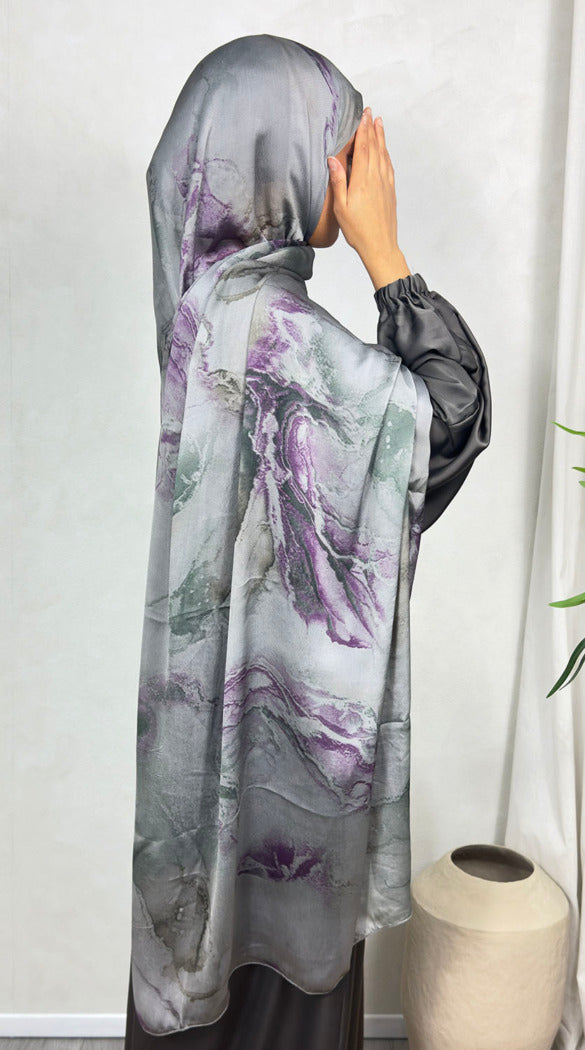
New Muslim Dress Style Isn’t About Becoming Someone Else — Start With Clothes That Still Feel Like You
There is a particular kind of wardrobe confusion that can arrive after shahadah. Nothing in your cupboard has physically changed, yet suddenly every hem, neckline and sleeve seems to be asking you a question. The dress you wore happily last month now feels too fitted through the waist. A favourite cardigan solves one problem and creates another because it keeps sliding open. The long skirt looks modest while you are standing still, then rides up when you sit on the bus. You can spend twenty minutes getting dressed and still leave the house wondering whether you look like yourself, whether you look “Muslim enough”, and whether those are even sensible things to measure.
If that is where you are, you do not need a complete new identity hanging on matching wooden hangers. You need a calmer way to look at clothes. Becoming Muslim can change what you want your clothing to communicate and how much coverage feels right to you, but it does not erase your eye for colour, your dislike of fussy details, your love of soft tailoring, your need to walk quickly to work, or the fact that British weather can give you rain, wind and bright sunshine before lunch.
A useful modest wardrobe is built where faith and real life meet. It lets you sit, bend, reach, commute, work, visit family and pray without spending the whole day managing fabric. It gives you enough coverage to feel settled rather than exposed. And, crucially, it leaves room for your personality. A woman who loved navy, trainers and clean lines before Islam does not have to wake up wanting ruffles and beige. A woman who always loved rich colour does not have to mute herself into greige to prove sincerity.
This article is about finding that middle ground deliberately. If you are still working out the broader foundations of modest dress after becoming Muslim, our New Muslim modest dressing guide gives the wider context. Here, the focus is narrower: how to turn that understanding into a dress style you can actually live in, without turning your wardrobe into a costume or your first months as a Muslim into an endless shopping project.
You are allowed to look like the same woman, only more covered
One of the quickest ways to make modest dressing feel artificial is to assume that every recognisable part of your old style has to disappear. It is easy to absorb that idea without anyone saying it aloud. You see women at the masjid in beautiful abayas, women online with perfectly coordinated hijabs, women whose wardrobes seem to have a clear visual language, and you conclude that conversion should be visible as a complete aesthetic transformation.
But modesty is not a uniform. The practical question is not, “What does a Muslim woman look like?” There are Muslim women in black abayas, long wool coats, loose denim, floral maxi dresses, tailored wide-leg trousers, jilbabs, trainers, loafers and walking boots. Geography, culture, work, age, budget and personal conviction all shape what modest dressing looks like in daily life. The shared concern is coverage and dignity, not visual sameness.
Start by identifying what made your old clothes feel like yours. Maybe it was colour. Maybe you liked a slightly masculine cut, minimal jewellery and crisp shirts. Maybe you felt happiest in long dresses because you disliked deciding which top matched which bottom. Maybe you enjoyed vintage prints, soft cardigans or monochrome outfits. Those preferences can usually survive. The adjustment happens in the dimensions that matter for modesty: length, opacity, looseness, neckline, sleeve coverage and the way the outfit behaves when you move.
That distinction matters emotionally. If every new clothing choice feels like a rejection of your former self, the wardrobe can become tangled up with grief, family tension and the feeling that Islam is asking you to perform a new personality. Faith can absolutely transform a person, but transformation is not the same thing as theatrical reinvention. Clothes should support the life you are building, not make you feel as though you are playing a role in somebody else's idea of Muslim womanhood.
Keep the visual signatures that do not conflict with your new priorities
Suppose you always wore burgundy, forest green and black. Keep them. If you love a straight silhouette, look for long shirt dresses, relaxed abayas or column-shaped maxi dresses rather than forcing yourself into tiers and gathers. If you prefer practical footwear, pair modest dresses with the shoes you can genuinely walk in. If you like prints, choose prints that make you happy and pay more attention to the cut than to whether the pattern looks stereotypically “modest”.
This also protects you from expensive overbuying. A new Muslim can easily buy ten pieces because they look like the image of modesty she has in her head, only to discover that she never reaches for them. The colours feel wrong. The sleeves catch on everything. The fabric needs ironing every time it comes out of the wash. The garment is technically loose but so wide that it is awkward on stairs. A smaller wardrobe that still resembles your taste is much more likely to become a real wardrobe.
Do not use discomfort as proof of sincerity
There can be a strange temptation to believe that the harder an outfit feels, the more religious it must be. That is not a useful test. If you are constantly pulling a sleeve down, clutching a neckline, tripping over a hem or overheating because you layered three unsuitable garments, the problem is not that you need more discipline. The problem may simply be that the clothes are badly chosen for the task.
Ease is not the enemy of modesty. In practice, clothes that stay in place and let you move naturally often support modesty better than clothes that require continual adjustment. A dress that is generously cut but balanced through the shoulders can give you room without swallowing you. A scarf fabric with enough grip can be less distracting than a beautiful slippery one that needs checking every few minutes. The point is not to make getting dressed difficult enough to feel virtuous. It is to make your intentions workable.
Begin with the clothes you already trust
Before buying anything, take an hour with your existing wardrobe. Do not sort it into “Muslim” and “not Muslim”. That creates a dramatic line where you may need a practical one. Instead, make three groups: pieces that already work, pieces that could work with one adjustment, and pieces that no longer fit the level of coverage you want.
The first group is often bigger than expected. A long-sleeved maxi dress may only need an opaque slip underneath. A loose midi dress may work over straight or wide trousers. An oversized shirt could become an open layer over a high-neck top and full-length skirt. A long blazer may improve the line of a work outfit. Even a sleeveless maxi can sometimes become useful under a long cardigan or relaxed jacket if the combined outfit stays comfortably covered.
The second group is where you learn most about your actual style. Ask what the piece needs. Is the neckline the only issue? Is it opaque in the bedroom but transparent in daylight? Does it cling when you walk? Does the split become too high when you sit? Does a belt create a shape you now prefer not to emphasise? Solving one concrete issue is easier than replacing an entire category of clothing.
The third group does not have to be handled with drama either. You may keep sentimental pieces, wear some garments at home, pass things on, or store them while you decide. You are allowed to take time. Many new Muslims are changing prayer routines, social circles, food habits and family conversations at the same time. There is no prize for turning wardrobe change into an emergency.
Photograph outfits rather than individual garments
A very practical trick is to photograph five or six complete outfits that already feel comfortable and covered. Include the shoes, outer layer and hijab if you wear one. The photos reveal patterns that a rail of clothes does not. You may notice that you consistently like a long uninterrupted line, or that you feel better when the outer layer is darker than the dress, or that every successful outfit uses the same two pairs of shoes.
Those patterns become your shopping brief. Instead of looking for “Muslim clothes” in the abstract, you can look for a charcoal maxi with sleeves because charcoal already works with your scarves and coat, or for a long relaxed blazer because your existing one fixes three outfits. That is the beginning of a personal modest style: not a trend board, but evidence from your own life.
Use five questions to judge a dress before you judge the mirror
Mirrors are useful, but they can be deceptive. A dress can look perfectly modest in a still front-facing pose and behave very differently when you move. When you are new to dressing with more coverage, a simple set of practical questions can save you from buying clothes that only work for photographs.
1. Does it cover what I intend to cover in every normal position?
Check the neckline when you bend slightly forward. Raise your arms. Sit down. Cross one leg over the other. Walk up a few stairs if you can. Look at side splits and button gaps. If you wear hijab, consider what happens at the neck and upper chest when your scarf shifts naturally. The goal is not anxiety or microscopic inspection; it is to notice obvious design features before they become daily irritations.
2. Is it genuinely opaque?
Light-coloured fabrics and thin summer fabrics can surprise you. Put a hand behind the fabric or stand near a bright window. If you can clearly see the outline or colour beneath it, plan for a lining or slip. A garment can be loose and still reveal much more than expected when sunlight hits it. This is especially worth checking with cream, white, pale pink and some lightweight viscose blends.
3. Does the cut skim rather than grip?
Size labels do not tell you how a garment will sit on your body. A larger size in a stretchy ribbed dress may still trace every curve, while your usual size in a properly cut A-line dress can fall cleanly. Look at where the fabric catches. Hips, bust, upper arms and thighs are common places where a dress that seemed generous on the hanger becomes fitted in motion.
Looseness does not require shapelessness. Good proportion matters. Shoulder seams that sit reasonably well, sleeves that do not drown the hands, and a hem that clears the floor can make a relaxed dress look intentional rather than simply oversized.
4. Can I move without managing it?
Take a long stride. Reach for something. Sit on a low chair. If you have to hold the neckline, pull the skirt down, keep closing a front opening or constantly separate fabric from your legs, the garment is creating work for you. A useful modest outfit disappears from your attention for long stretches of the day.
5. Does it suit the life I actually lead?
A dress can be beautiful and still be wrong for commuting, nursery drop-off, laboratory work, an office, a wheelchair, a long university day or a wet November pavement. Modest style becomes much easier when you stop asking one garment to be ideal for every setting. You may need a work formula, a casual formula and a prayer-at-home formula rather than one perfect dress that supposedly does everything.
These five questions turn shopping from a vague judgement of “modest enough” into a practical evaluation. They also reduce the pressure to copy somebody else's wardrobe. Two women can answer the questions differently because their bodies, routines and personal convictions differ, while both are trying sincerely to dress with modesty.
Long dresses are useful, but the word “long” does not solve every problem
For many new Muslims, dresses are the easiest bridge into modest clothing. One garment creates most of the outfit, and a full-length dress can give more continuous coverage than trying to coordinate a top with trousers or a skirt. But length alone can disguise poor design.
A maxi dress may be ankle length yet cling closely through the hips. It may have a deep wrap neckline that opens whenever you move. It may be lined only to the knee. It may have a centre split that appears modest while you stand and opens dramatically with a long stride. It may have elastic at the waist that produces exactly the defined silhouette you are trying to soften.
Look beyond the product name and study construction. A-line and gently flared shapes are often easier to wear because they give room through the lower body without enormous amounts of fabric. Tiered dresses can work well, but the gathering position matters; a tight first tier at the hips will still feel fitted. Shirt dresses offer familiar tailoring, though button placement needs checking. Straight, column-like dresses can look elegant when there is enough ease through the bust and hips and enough width for a full stride.
A dress can be modest without looking formal
When you first look for modest dresses, occasion wear, embellished abayas and dramatic floor-length silhouettes can dominate what you see. That can accidentally teach the eye that modest equals dressed up. Everyday modesty is often much quieter: jersey that is thick enough not to cling, washed cotton, denim, crepe, twill, knitwear with a loose structure, or a simple viscose dress with a proper lining.
For a weekday outfit, consider visual weight. A plain long dress with trainers and a practical coat can feel completely ordinary. A loose shirt dress over trousers can look contemporary rather than ceremonial. A dark maxi with a cardigan can be as unremarkable as jeans and a jumper once you are used to the longer line.
That ordinariness can be reassuring if you are newly visible as Muslim. You may already be adjusting to people noticing a hijab or asking questions about your faith. Clothing that feels grounded in everyday life can reduce the sense that every trip to the supermarket is an appearance.
Use layers to solve specific problems, not to pile fabric everywhere
Layering is useful when it has a job. A high-neck cotton top can close a neckline. An opaque slip can solve transparency. A long cardigan can add coverage to a slightly narrow dress. Full-length trousers can make a shorter dress workable. But if one outfit needs an underdress, two tops, leggings, a cardigan and a coat just to feel secure, it may not be a good base garment for you.
In warm weather, excessive layering becomes miserable quickly. In winter, bulky layers can make a flowing dress catch under a coat. Think in terms of one problem, one solution. The most wearable pieces are usually the ones that need the fewest corrections.
“Frock”, suit, shirt dress or abaya: translate the category into a silhouette
Clothing labels can make modest dressing sound more confusing than it is. Depending on where you grew up and which shops or communities you encounter, you may see terms such as frock, suit, maxi, kaftan, abaya, jilbab and tunic used in overlapping ways. The word “frock” may simply mean a modest long dress in one person's vocabulary. A “suit” might mean Western tailoring to one woman and a South Asian kameez-and-trouser set to another.
Instead of becoming trapped by the category name, ask what the silhouette does. Where does it finish? How close is it through the body? What happens at the neckline? Are the sleeves full length? Is there enough fabric for a normal stride? Does it require another layer?
An abaya can be a wonderfully simple option because it is designed as a long outer garment, but it is not the only answer to modest dressing. A well-cut maxi dress can serve a different wardrobe role. A long tunic with loose trousers may be far more practical for cycling, driving or chasing a toddler. A relaxed trouser suit can make sense in a professional setting if the jacket provides enough length and the trousers are not tight. The useful question is function, not whether the label sounds religious.
An old year label is inspiration, not an expiry date
Older style boards and catalogue images are sometimes labelled by year—2021 or 2022, for example. Treat the date as a visual reference, not a rule. A good silhouette does not become unusable because the image is a few years old. Look for ideas that survive trend cycles: generous sleeves that stay out of food and water, necklines that sit properly, shapes that give movement, colours you genuinely wear and fabrics that suit your climate.
That approach keeps the wardrobe from becoming a chase for whatever is currently tagged “new”. If you have just become Muslim, stability is often more helpful than constant novelty. Find two or three silhouettes that make getting dressed easy, then let details change around them.
Keep your colours, prints and small preferences
Personal style is often carried by details that have nothing to do with how much skin a garment shows. This is good news, because it means you can increase coverage without becoming visually anonymous.
If you have always loved colour, a modest wardrobe can still contain cobalt, rust, plum, emerald or a sharp red accent. If you prefer neutrals, you do not have to introduce florals because they are common in maxi dresses. If you like clean lines, avoid buying heavily embellished pieces simply because the garment is sold as Islamic wear. If your taste is soft and romantic, choose gathered sleeves or a small print without feeling that modesty requires severe minimalism.
Think about repetition. The easiest wardrobes are not necessarily the largest; they repeat a few colours and shapes so pieces work together. A new Muslim who starts wearing hijab may suddenly have an extra colour near her face every day. Building a small scarf palette that connects with existing coats, bags and shoes can make everything feel more coherent.
Use contrast deliberately
If a long dress feels like “too much fabric” visually, contrast can give it structure. A darker coat over a lighter dress creates a clear vertical frame. A monochrome outfit can make multiple layers look calm. A patterned dress with a plain hijab allows one element to speak instead of making every piece compete.
None of this is a religious requirement. It is simply the visual craft of making more fabric feel like an outfit rather than a pile of coverage solutions. Once the proportions feel intentional, you are less likely to resent the change.
Hijab changes the proportions of an outfit before it changes your taste
If you begin wearing hijab, the first surprise may not be the scarf itself. It may be how different all your familiar clothes look with a covered head and neck. A jacket collar that once framed your face disappears under fabric. A high-neck jumper and large scarf can feel visually heavy. A print you loved near your torso may suddenly compete with another colour at your face.
This is one reason women sometimes conclude that their entire style no longer works. Often it does work; the proportions simply need a little recalibration. Give yourself time to see the new silhouette as normal.
Start with scarf fabrics that make daily life easier
There is no single best hijab fabric for every woman. Some prefer jersey because it grips and can be worn with fewer pins. Others like modal or viscose for softness and drape. Chiffon can look polished but may need an undercap or careful securing depending on the fabric and your preferred coverage. The best beginner choice is often the one you can put on without spending the next eight hours thinking about it.
Try the scarf with the clothes you already own before buying many colours. A small set of practical neutrals can teach you what you actually reach for. If black feels too stark near your face, try charcoal, chocolate, navy or taupe. If neutrals make you feel washed out, keep the rich colours you always loved.
Your first hijab style does not have to become your permanent one
Hijab tutorials can create the impression that there is a correct finished look waiting to be discovered. In reality, many women adjust how they wrap as they learn what stays secure, what gives the chest coverage they want, what works with glasses, and what feels comfortable around the ears and jaw.
You may start with a very simple wrap because it is dependable. Later, you might prefer a longer front drape. You might decide undercaps give you headaches and learn a no-undercap method with a grippier fabric. Or you may discover that a style admired online is irritating in wind. None of that means you failed to “get hijab right” aesthetically. It means you are learning your own practical needs.
There can also be emotion in seeing yourself in hijab. The first few weeks can bring moments of beauty and moments of disorientation. You might feel deeply peaceful at the masjid and startlingly self-conscious in the office lift. Allow both to be true. Do not make every difficult morning a referendum on your faith. Sometimes you are simply tired and the scarf is not cooperating.
Dress for work, family and British weather—not for an imaginary modest-life backdrop
A wardrobe becomes yours when it survives ordinary Tuesday problems. Rain. A packed train. A workplace with aggressive air conditioning. A family lunch where somebody is likely to ask why you are “dressed like that now”. A long walk to the masjid. Mud at the edge of the pavement. A coat zip that catches in your dress.
For work, begin with the dress code you already know and adjust the silhouette. A loose ankle-length dress under a blazer can be professional without feeling theatrical. Wide-leg tailored trousers with a long shirt or jacket can work where dresses are impractical. A long knit dress may be warm in winter, but check whether the knit clings. A heavier woven fabric often keeps its shape better.
If your job requires uniforms, PPE or specific safety clothing, modesty may need a more specialised solution. Speak to the workplace where necessary. Faith-sensitive adjustments can sometimes be made, but safety rules still matter. Do not create hazards by adding loose fabric around machinery, laboratory flames or equipment. Modesty is lived with judgement, not through ignoring the physical environment.
Plan outerwear as part of the outfit
In the UK, the coat is often the garment strangers see most. If every modest outfit only works without outerwear, winter will expose the weakness quickly. Check that your coat is long enough for the proportions you like and roomy enough to close over layers without pulling tightly across the body. A mid-calf coat can sit awkwardly over a very full maxi dress; a long straight coat may create a cleaner line.
Rain also changes fabric behaviour. Very long hems soak up water from pavements. A dress that brushes the ground in a bedroom mirror can become heavy and dirty outdoors. Hem length is not a piety contest. Choose a length that gives the coverage you want while clearing the ground in the shoes you actually wear.
Family reactions can affect what you reach for
Clothing can become the most visible part of a conversion for relatives who do not understand the internal change. A parent may interpret a long dress or hijab as evidence that you are disappearing, being controlled or rejecting your upbringing. Their reaction can make you want either to hide your choices or to make them more dramatic as a statement.
Try not to let every outfit become a debate. You can be firm without turning your wardrobe into an argument. Familiar colours and recognisable pieces may help some families see continuity: you are still their daughter or sister, even if your priorities have changed. That is not a reason to compromise convictions you have reached sincerely. It is simply a reminder that style can communicate continuity as well as change.
Shop slowly enough to notice what you are learning
The worst time to buy an entire wardrobe is when you know least about what you need. Yet that is exactly when many new Muslims feel the strongest urge to do it. You want to solve the uncertainty. A parcel arriving at the door feels like progress. Ten “modest” garments look like a shortcut to becoming settled.
Instead, buy to remove repeated friction. If every morning you reject tops because they are too short, buy one or two longer tops. If you have three dresses that work except for transparency, buy a good full-length slip. If you are borrowing the same black hijab because it stays in place, buy two more practical colours in the same fabric. Let actual use generate the shopping list.
Check measurements, not just the size name
Modest clothing brands, high-street shops and international retailers can use very different sizing. Look for garment measurements where available. Bust and hip ease matter, but so do length, sleeve width and armhole shape. If a dress is cut generously at the hem but narrow at the upper arm, sizing up may solve one problem while making the shoulders look disproportionate.
Remember that “oversized” in a product title can still be styled on a model in a way that disguises fit. Product photography is a starting point, not proof. Reviews can sometimes reveal transparency, shrinkage or length, but treat them as individual experiences rather than guarantees.
Do the return-policy test before becoming emotionally attached
Before ordering, know whether you can return the item and what that costs. This sounds mundane, but it changes how calmly you can assess fit. If you feel you must make a garment work because returning it is expensive or impossible, you may keep something that bothers you every time you wear it.
When a parcel arrives, try the garment in daylight with the underlayers and shoes you intend to use. Sit down. Walk quickly. Reach. Put on your coat. Try the scarf. If the outfit only looks right when you stand very still and arrange the fabric, send it back if you can. Your wardrobe needs employees, not ornaments: every everyday piece should do its job.
Prayer can clarify what you need from clothes without turning every outfit into prayer wear
New Muslims often learn clothing and salah at the same time, so the two questions become tangled. You may be trying to remember the sequence of prayer, Arabic words, wudu, prayer times and what should be covered, all while wondering whether the outfit you wore to work is suitable. It can feel like too many rules arriving at once.
Separate the jobs. Everyday modest clothing is what you live in outside prayer. Prayer clothing is about being appropriately covered for salah and able to move through standing, bowing, prostration and sitting without exposure or constant adjustment. Sometimes your everyday clothes will already meet what you need for prayer. Sometimes you will add a prayer garment at home or keep something practical nearby.
For women, detailed rulings about prayer coverage can vary in how particular issues are explained, including the feet, hands and face. If you are uncertain, ask a trusted knowledgeable teacher or scholar who can explain the view you are following rather than trying to resolve every fiqh question through outfit videos. The important practical point here is that your clothes should not make salah harder than it needs to be.
Test a garment in the movements of salah
A dress that looks secure while standing can behave differently in ruku and sujood. Necklines fall forward. Sleeves slide. Shorter tops rise at the back. Wide trousers can expose ankles if they pull upward. A scarf may shift from the chest. Testing those movements at home is a simple way to understand a garment's limits.
If you use a dedicated prayer dress at home, keep its purpose clear. A one-piece prayer garment can be convenient because it is easy to put on and gives immediate coverage for salah. It does not need accessories or elaborate styling. It is prayer wear, not an outfit that has to double as going-out fashion.
Learning prayer and learning modest dress do not have to progress at identical speed
If you are learning how to pray in Islam as a beginner, you may feel guilty that your wardrobe is not equally “finished”. These are connected parts of Muslim life, but they are not a single checklist. You can be learning the steps of salah carefully while still working out which coat length is practical. You can be building confidence in hijab while keeping a dedicated prayer garment at home. Give each skill the attention it deserves.
That separation reduces panic. It also helps you recognise what clothing actually needs to do: support worship, not become the centre of worship. When you can make wudu, dress for prayer and begin salah without a complicated clothing ritual, the wardrobe is serving you well.
Let Qur’anic modesty give direction without making you afraid of every mirror
Many new Muslims eventually ask a deeper question: why does hijab or modest dress matter in the Qur’an? The question deserves more than a slogan, especially when clothing is becoming part of your everyday public identity.
The Qur’an speaks about modest conduct and dress within a wider moral life. In Surah an-Nur, 24:31 addresses believing women and includes guidance about modesty and covering. Surah al-Ahzab, 33:59 speaks about outer garments for believing women. Muslim scholars have long discussed these verses as part of the basis for hijab and modest dress, alongside prophetic teachings, with detailed legal discussions about the extent and form of coverage.
For a new Muslim, it can help to notice that the purpose is not aesthetic perfection. The Qur’anic conversation is about obedience, dignity, boundaries and a life oriented towards Allah. That makes a very different foundation from “Do I look like the Muslim women I follow online?” One question is about comparison; the other is about intention and practice.
Conviction can grow while practice is still becoming steady
You may understand a principle before you find it easy. You may believe modest dress matters and still struggle with being visibly Muslim. You may wear hijab confidently for a week and then feel exposed at a family event. You may know why you want looser clothes and still miss an old outfit that made you feel attractive in a familiar way.
Do not confuse the existence of struggle with the absence of sincerity. A wardrobe is close to the body and tied to memory, gender, culture and social belonging. Change can therefore be emotionally noisy. Keep learning from reliable sources, make du'a for steadiness, and avoid turning one difficult day into a declaration about your whole future.
It is also wise not to use the harshest voice you can find online as your only teacher. Questions about Islamic rulings deserve knowledge, context and mercy. If a detailed issue is worrying you, speak to someone trustworthy who can teach rather than merely police. Your clothing should become part of an intelligible relationship with faith, not a collection of anxieties acquired from strangers.
Build three outfit formulas before you build a big wardrobe
A formula is more useful than a shopping spree because it tells you how pieces work together. Aim for three dependable combinations that cover most of your week. Once those work, you can vary colour, fabric and detail without starting from zero every morning.
Formula one: the easy long dress
Choose a full-length or near-full-length dress with sleeves, a comfortable neckline and enough ease to move. Add the underlayer it genuinely needs, if any, plus a hijab if you wear one and practical shoes. In cold weather, add a coat that works with the volume of the dress.
This formula suits days when decision fatigue is high because there are fewer moving parts. The dress does most of the work. Keep an eye on transparency and static, especially with lighter fabrics and tights in winter.
Formula two: the long top and loose trouser
A tunic, long shirt or shirt dress over wide or relaxed trousers is useful when a full skirt is impractical. It works for driving, commuting, active jobs and days when you need pockets and freedom of movement. The top length is a personal modesty decision, but many women prefer enough coverage over the hips and upper thighs to soften the trouser silhouette.
Choose trousers that retain ease when you sit. Fabric with structure often works better than thin stretch jersey. If the outfit looks too businesslike for your taste, trainers or a softer shirt can make it more casual.
Formula three: the skirt and knit or blouse
A full-length skirt with a loose top can preserve a style you may already know. The challenge is the meeting point at the waist. Tucking a top tightly can create definition you do not want, while leaving a short top untucked can expose the waistband when you move. A longer knit, blouse or cardigan often solves the proportion.
Skirts also need a movement test. Some narrow maxi skirts restrict stride, and some elasticated styles cling. An A-line cut usually gives more room. In wet weather, check hem length carefully.
These formulas are not commandments. They are starting structures. You might eventually prefer abayas almost every day, or live in long tailored layers, or discover that dresses are inconvenient for your work. The point is to find repeatable combinations that make modesty ordinary.
A four-week wardrobe experiment can teach you more than fifty saved pictures
If you feel overwhelmed, give yourself one month to observe rather than reinvent. The exercise is simple: make small changes, wear them in real life, and record what actually helps. This turns modest style from an abstract identity question into a series of practical discoveries.
Week one: wear what already works and take notes
Choose from your current wardrobe without buying anything unless you genuinely lack basic coverage. At the end of each day, write down one thing that worked and one thing that annoyed you. Perhaps a long shirt kept riding up under your coat. Perhaps a dress that looked plain at home felt elegant with your navy hijab. Perhaps you discovered that jersey scarves make mornings much easier than chiffon.
Do not judge the outfit by compliments. Judge it by whether you could get through the day comfortably and with the coverage you intended. Compliments can be lovely, but they are a poor design metric.
Week two: solve the two most repeated problems
Look at your notes. If “neckline” appears four times, find a solution for necklines: a better base layer, a different dress shape or a scarf arrangement that gives the coverage you want. If “too tight when sitting” appears repeatedly, stop buying based on standing fit and focus on ease through the hips and thighs.
Buy only if a purchase directly solves a recurring problem. A full slip, two high-neck tops or one properly cut long dress may transform more outfits than a bag of random modest-fashion bargains.
Week three: define your visual language
Now look at the successful outfits together. Which colours keep appearing? Which silhouettes feel most natural? Which footwear works with your real walking habits? Do you prefer a long continuous line or distinct layers? Do you like structured shoulders or soft drape? Write down five style words that are not religious obligations: perhaps “clean, dark, relaxed, practical, polished” or “soft, floral, warm, feminine, easy”.
Those words keep the wardrobe personal. When you shop, you can ask two separate questions: does this support my modesty goals, and does this fit my style language? A yes to only one of those questions often produces a garment you rarely wear.
Week four: create your missing-pieces list
Only now make a list. Keep it concrete. “One opaque black maxi for work.” “Two long-sleeved base tops, cream and navy.” “One rain-friendly long coat.” “A soft brown hijab that works with three dresses.” “Loose smart trousers for days I cannot wear a skirt.”
Set a budget and rank the list by how many outfits each item unlocks. This protects you from the emotional intensity of conversion shopping. You are not buying proof that you belong. You are buying tools for a life you are already living.
At the end of the month, repeat the experiment if you need to. Modest dressing will probably keep evolving as seasons change, as you learn more, and as your confidence changes. That is normal. A wardrobe is not a creed; it can be revised.
Watch for the mistakes that make modest style feel harder than it is
Most early wardrobe frustrations are not evidence that modest dressing is impossible. They are design mistakes, shopping mistakes or expectation mistakes. Recognising them quickly can save money and emotional energy.
Buying only “Muslim-looking” clothes
Islamic clothing brands can be useful, especially for garments designed specifically for coverage, but you do not need every item to come from a modest-fashion label. Mainstream retailers sometimes carry excellent long dresses, coats, shirts and trousers. Vintage and second-hand shops can also produce useful finds. Evaluate the garment, not the marketing category.
Sizing up without considering proportion
Simply buying three sizes larger can create dropped shoulders, sleeves over the hands and necklines that become wider, while the fabric may still cling in the wrong places. Seek cuts designed with ease rather than relying on size alone. Sometimes tailoring a larger garment is worthwhile; sometimes a different shape is the better answer.
Assuming black is automatically easier
Black is versatile and can be beautiful, but it is not a requirement for everyday modest dress. If black makes you feel unlike yourself, build around the colours you actually enjoy. Dark navy, olive, brown, charcoal and deep jewel tones can be equally practical in many wardrobes.
Saving your best modest outfit only for the masjid
If one outfit makes you feel calm, covered and recognisably yourself, learn from it. Wear that formula elsewhere. The aim is not to have a “religious clothes” section that only comes out for Islamic spaces while the rest of your week remains a problem. Everyday life is where a modest wardrobe has to function.
Expecting certainty before practice
You may want to know your permanent hijab style, exact abaya preference, ideal skirt shape and final colour palette before buying anything. You will not. Style knowledge comes through wearing clothes. Make sensible small decisions, then let experience refine them.
Confidence often arrives after repetition, not before it
The first time you wear a new level of coverage outside, you may notice every glance. The tenth time, you may still notice some. Months later, what once felt enormous can become part of the background of getting dressed.
This matters because new Muslims sometimes wait to feel completely confident before making a change they want to make. Confidence is often the result, not the prerequisite. You choose the long dress, take the train, go to work, come home, and discover that the day continued. You wear the hijab to the supermarket and realise you managed the awkward encounter you had feared. Repetition gives your nervous system evidence that this is now part of ordinary life.
At the same time, do not confuse confidence with never feeling vulnerable. Being visibly Muslim can carry real social pressure, and Muslim women can face prejudice. Practical awareness matters. So does choosing safe ways to navigate your environment. Personal style will not solve discrimination, and you should not blame yourself if somebody reacts badly to your clothing.
Make room for joy as well as discipline
There is joy in finding the first dress that makes you think, “Yes, this is me.” Joy in a hijab colour that lights up your face. Joy in getting ready for Eid without feeling that modesty and beauty are enemies. Joy in praying in clothes that do not distract you. Joy in opening a wardrobe that has slowly become coherent.
Those moments matter because faith is not helped by making every clothing conversation grim. Modesty can involve sacrifice and self-discipline, but it can also involve creativity, relief and belonging. You are allowed to enjoy dressing well within the boundaries you are trying to honour.
Your modest style should become quieter in your mind over time
A mature everyday wardrobe does not demand constant thought. You know which dresses are opaque. You know which scarf stays in place when it is windy. You know the coat that works over a wide hem. You know what to wear to work, to the masjid, to visit family and to walk to the shops. The decisions become ordinary.
That quietness is a good goal for a new Muslim because there are more important things to grow into than an endless visual self-audit. Prayer, Qur’an, character, community, family responsibilities, work and rest all need space. Clothes can support your values without taking over your inner life.
If your style changes later, let it. You may become more comfortable in abayas. You may discover you prefer separates. You may move, change jobs, have children, become more active, or simply learn which fabrics you cannot tolerate. None of that invalidates the wardrobe you built first. It did its job for the season you were in.
Keep returning to the same calm question: does this let me dress with the coverage I am sincerely aiming for, move through my real day, and still recognise myself? When the answer is yes, you are not failing to look like somebody else's idea of a Muslim woman. You are building a modest life in your own actual body, climate and circumstances.
For the wider picture—hijab, prayer wear, confidence and the early practical questions that often sit around clothing—you can return to our New Muslim modest dressing guide. Then come back to your own wardrobe and make the next useful decision, not all the decisions at once.
Frequently asked questions
Do I need to throw away my old clothes after becoming Muslim?
No. Start by assessing what you already own. Some clothes may already give the coverage you want, while others can work with a simple layer such as an opaque slip, long top or cardigan. Pieces that no longer fit your modesty goals can be worn at home, stored, passed on or donated when you are ready. There is no practical benefit in turning wardrobe change into a dramatic purge if a gradual, thoughtful transition helps you make better decisions.
Is an abaya the only modest dress style for a Muslim woman?
No. An abaya is a useful and loved option for many Muslim women, but modest everyday clothing can take different forms depending on culture, work, climate and personal preference. Long loose dresses, tunics with relaxed trousers, full-length skirts and longer tailored layers can all play a role. The important questions are coverage, opacity, looseness, movement and the standards you are sincerely trying to follow, rather than whether one particular garment label appears on the tag.
How can I make dresses I already own more modest?
Identify the exact problem first. A low neckline may need a high-neck base layer; a sheer dress may need a full slip; a sleeveless maxi may work under a secure long outer layer; a shorter dress may function as a tunic over loose trousers. If the dress is fundamentally tight through the body or has a high split that opens with movement, layering may become cumbersome, and replacing that piece with a better cut can be easier.
What should a new Muslim woman wear to pray?
For salah, choose clothing that gives the required coverage and stays secure through standing, bowing, prostration and sitting. The detailed fiqh of women's prayer clothing includes issues on which explanations can differ, so ask a trusted teacher or scholar if you are unsure about the view you follow. At home, a simple one-piece prayer dress can be convenient because it can be put on quickly and is designed for prayer; it does not need accessories or outside styling.
What if I want to wear hijab but I do not feel confident yet?
You do not have to manufacture a feeling of perfect confidence before taking a step that matters to you. Practical preparation can help: choose a scarf fabric that stays put, practise one simple wrap, wear it with familiar clothes and plan for the settings that make you most nervous. Confidence often grows through repetition. If you are struggling with the religious ruling or with fear of other people's reactions, seek kind, knowledgeable support rather than relying only on social media commentary.
How many modest outfits does a new Muslim actually need to start?
Far fewer than social media may suggest. Begin with a few repeatable formulas that cover your normal week: perhaps two or three long dresses, a long-top-and-trouser combination, a skirt outfit, practical outerwear and a small scarf rotation if you wear hijab. Your exact number depends on laundry, work and climate. Buying slowly lets you discover what you genuinely wear before spending money on a large wardrobe built around assumptions.