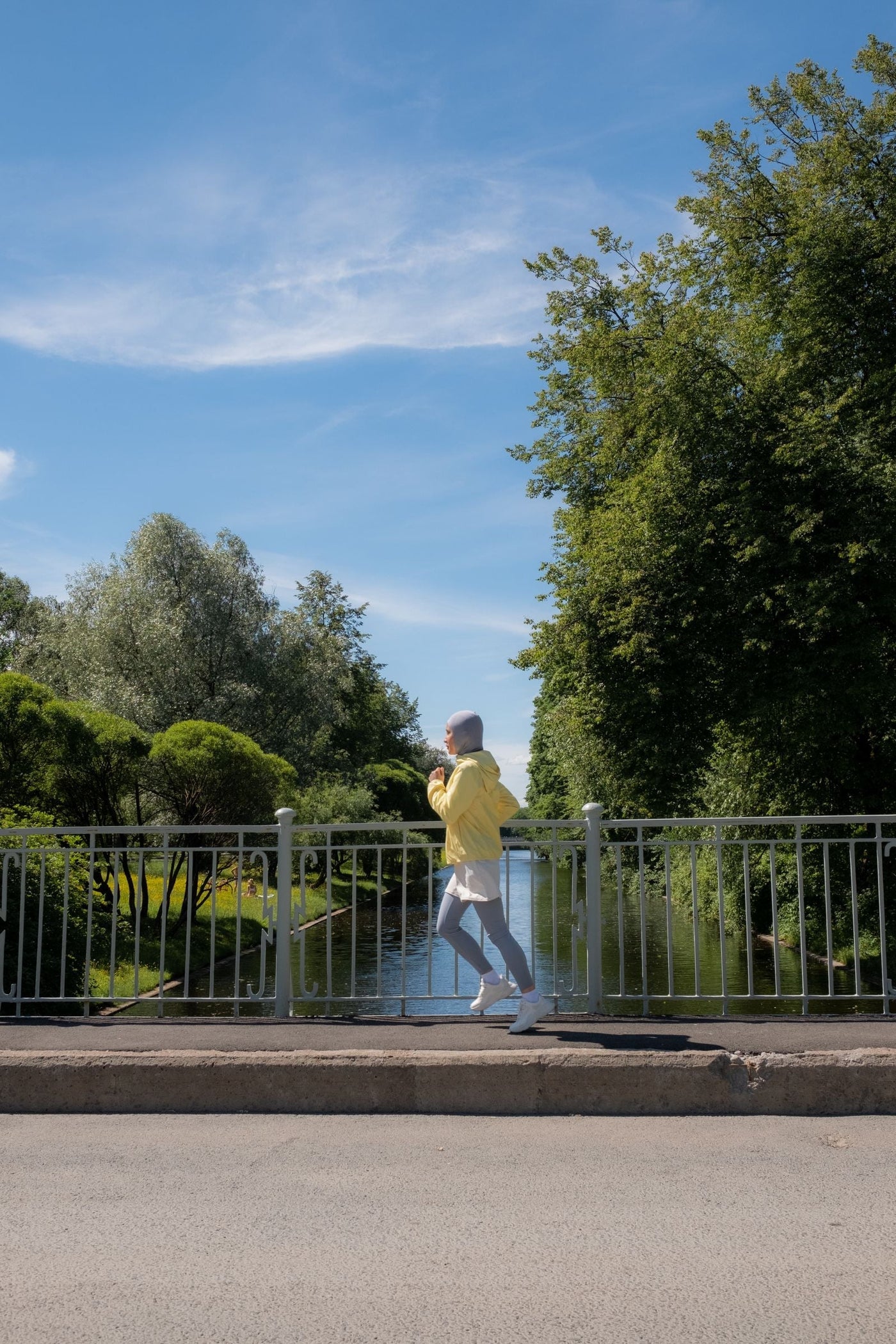
When Modest Clothes Have to Move: A Muslimah’s Guide to Sport, Swimming and Active Days
A garment can look perfectly modest while you stand still and fail the moment your body begins to move. The top rises when you reach, the leggings turn sheer in a squat, the scarf loosens during a run, or the swim skirt floats away from the layer it was meant to cover. For a Muslim woman, active clothing must do more than photograph well. It must preserve coverage, safety and comfort through the exact movement it was bought to support.
That is the real purpose of modest sportswear. It is not ordinary clothing made larger, and it is not a long top placed over unsuitable gym wear. Performance fabric, secure construction, controlled volume and activity-specific fit have to work together. The solution for strength training may differ from the solution for running, cycling, walking, swimming or a long active day that begins at the gym and continues through travel, work and family responsibilities.
When you are moving, the smallest clothing problem can become the only thing you can think about. A scarf that slips after ten minutes, a top that lifts when you stretch or a swim skirt that floats can make you feel as though the activity was never made with you in mind. So we are going to look closely at what happens when fabric meets sweat, wind, water, repeated washing and the full movement of your body. We will talk through sports hijabs, longline tops, trousers, swim sets, plus-size and maternity fit, and the quiet practical details that help you stop adjusting your clothes and start enjoying the activity.
For everyday wardrobe questions, our complete modest fashion guide can help with fabric, fit and layering. Here, Bismillah, we are focusing on movement. By the end, you should know how to test whether your clothing stays covered when you reach, run or enter the water, how to spot a design that only looks modest in a product photograph, and how to choose pieces that let you forget about every seam once you begin.
The Standing Mirror Is the Weakest Activewear Test
A still pose hides vertical movement
Reaching upward shortens sleeves, lifts hems and changes the relationship between a top and waistband. A garment that covers the hips with the arms relaxed may expose the waist during a stretch. Raise both arms slowly, then quickly, and notice whether the fabric returns without being pulled down.
Sitting does not reproduce athletic tension
A comfortable seated fit cannot predict a deep squat, lunge or running stride. Performance clothing stretches across the knees, thighs, seat, shoulders and elbows in different directions. Test the movements of the activity rather than assuming one general bend proves the garment.
The front view misses the most common failures
Sheerness, waistband movement and top lift often appear first at the back. Use a mirror, video or trusted woman to check every angle. The purpose is evidence, not body criticism. Look at garment behaviour: seams, fabric tension, openings and overlap.
Define the Activity Before Choosing the Outfit
Walking and running create repeated impact
The scarf, waistband, pockets and hems move thousands of times during a long walk or run. A loose piece that feels comfortable for two minutes may rotate or bounce after twenty. Test repetition, not only range.
Strength training demands stretch and recovery
Squats, rows, presses and floor exercises pull fabric across several joints. The garment needs enough room without loose sections catching equipment. Stretch must recover instead of leaving knees, elbows or the seat bagged.
Swimming changes the weight of every layer
Water makes fabric heavier, alters opacity and lifts skirts or loose tops. Purpose-made swimwear needs attachment points, quick-drying material and secure relationships between top, skirt, leggings and head covering. Dry fitting is only the first stage.
An active day may include several settings
A woman may exercise, commute, pray, work from a café and visit family without returning home. Her clothing system needs removable outer coverage, storage for damp pieces and an indoor outfit that remains complete. Activity does not happen in isolation from the rest of Muslimah life.
A Performance Checklist for Modest Active Clothing
| Performance question | What to test | Warning sign | Better evidence |
|---|---|---|---|
| Coverage under reach | Raise arms, rotate shoulders and reach forward | Top exposes the waist or neckline shifts | Reliable overlap and fabric that returns naturally |
| Opacity under tension | Squat, lunge and stretch beneath strong light | Fabric turns pale, shiny or transparent | Dense knit or woven layer that remains opaque |
| Waistband stability | Run, bend and sit repeatedly | Waist rolls, drops or requires tightening | Secure rise and balanced elastic pressure |
| Hijab security | Turn, jump, lean and wear headphones if needed | Scarf slips, restricts hearing or presses painfully | Breathable shape that stays secure without excessive tightness |
| Water performance | Wet the complete swim set where permitted | Skirt floats, pieces separate or fabric becomes transparent | Purpose-made material, controlled volume and attachment points |
| Equipment safety | Use the actual bike, machine, racket or weights | Loose fabric catches or obstructs visibility | Coverage shaped for the activity and safety equipment |
Fabric Must Perform Before It Can Be Styled
Breathability is a complete-system question
A breathable top can still feel hot beneath a dense underlayer, sports hijab and jacket. Count the whole outfit. Airflow, moisture movement, garment width and the activity intensity all contribute to comfort.
Quick drying matters after sweat and water
Fabric that stays damp can become cold, heavy or irritating. Technical polyester and nylon blends often dry faster than cotton, though their texture and odour retention vary. The correct choice depends on the activity and washing routine.
Weight changes movement
A heavy longline top may stay in place during walking and become tiring during running. A very light top can lift in wind or cling after perspiration. Look for enough weight to remain controlled without carrying unnecessary fabric.
Surface texture affects layering
Brushed or rough fabric can grip the layer underneath and twist. Very smooth material may slide upward. Test the exact combination of base, performance garment and outer layer rather than judging each piece alone.
Stretch Should Support Movement, Not Replace Correct Sizing
Continuous tension reveals too little ease
A garment may close because the fabric expands around the body. If the knit remains visibly stretched while standing, deeper movement can open the weave and expose underlayers. Choose enough garment room for the fabric to rest between movements.
Four-way stretch is useful but not sufficient
Stretch in multiple directions can improve mobility, yet opacity, recovery and seam strength still matter. Marketing language does not prove the material remains covered under a squat or swim stroke.
Recovery protects shape
After stretching the knee, elbow or waistband, watch whether the material returns. Poor recovery creates sagging that can interfere with movement and make the outfit feel insecure. Repeated washing usually makes weak recovery more obvious.
Opacity Has to Be Tested Under Tension, Sweat and Light
Use a contrasting base layer
Wear a light layer beneath dark activewear and a dark layer beneath pale activewear. Stretch the fabric through the widest movement. Contrast makes thinning easier to see before the garment is worn publicly.
Strong daylight is more revealing than a gym mirror
Stand near a bright window or outdoors. Artificial gym lighting may hide sheerness, while sunlight reveals the weave. Photograph from the back during movement where privacy allows.
Moisture changes colour and cling
Some fabrics darken, turn shiny or attach to the body after perspiration. Spray a small area with water during home testing and observe how quickly it dries. This is not identical to a full workout, but it gives useful evidence.
Printed panels can conceal or exaggerate tension
A print may hide sweat marks while stretching visibly across the body. Check the actual fabric rather than assuming pattern makes the garment more secure. Seam placement also affects how the print changes.
A Sports Hijab Must Protect Movement, Hearing and Comfort
Security should not come from painful pressure
A sports hijab should remain in place without constricting the jaw, throat or ears. Move the head through the full range needed for the activity. Pain, headache or restricted breathing is not evidence of a better fit.
Peripheral vision must remain clear
Fabric near the eyes can reduce side vision during cycling, running near roads or team sport. Check the face opening while turning quickly. Safety belongs within modest design.
Hearing may be part of situational awareness
Dense fabric or multiple layers over the ears can make traffic, instructions and other people harder to hear. Test the hijab in the actual environment. Earphone openings should not be treated as more important than awareness.
Neck and chest coverage must work with the top
A short sports hijab may fit securely and leave a gap at the neckline when the top moves. Check the overlap during reach, floor work and wind. A longer front needs controlled fabric so it does not catch on equipment.
Undercaps and Hair Security Affect the Whole Session
An undercap can add grip and heat
A lightweight breathable cap may stabilise smooth fabric, while a dense cap traps warmth. Test whether the sports hijab already has enough structure before adding another layer.
Hair placement changes pressure
A high or large bun can pull against a hood, headrest or helmet. Keep the hair secure without creating a hard pressure point. The style must also remain compatible with any required safety equipment.
Fastenings need sweat and movement testing
Pins, magnets and hooks can shift or press during floor exercises. Purpose-made pull-on designs often reduce loose hardware. Any fastening should remain inaccessible to children and appropriate around medical devices where relevant.
Longline Active Tops Need Controlled Length
Longer is not always safer
A top extending below the thigh can support coverage and interfere with running stride, cycling or gym equipment when it is excessively wide. Activity-specific shaping matters more than maximum length.
Side openings change the effective coverage
Splits can allow movement, but they may expose the hip or waistband during a lunge. Measure where the opening begins and test from the side. A curved hem can provide length at the back with less fabric around the legs.
The front and back need different evidence
A high-low design may protect the seat and become short at the front when arms rise. Test both. The top should overlap the waistband through every intended movement.
Hem weight can improve stability
A slightly weighted or structured hem may stay controlled better than very light jersey. Some designs use internal grip or drawcords, but these should not tighten the garment around the body or create unsafe loose cords.
Sleeves and Armholes Control Upper-Body Movement
Armholes should move without lifting the bodice
A shallow or tight armhole drags the whole top upward during presses and reaches. A very deep armhole can expose the side of the base layer. Raise, rotate and extend both arms before deciding.
Thumbholes can secure or restrict
Thumb loops keep sleeves over the wrist and may pull the shoulder during full extension. Check hand circulation and whether the sleeve remains comfortable without the loop. A feature is not useful when it must be used continuously to correct poor length.
Wide sleeves need equipment awareness
Loose cuffs can catch handles, weights or food during an active day. Elastic, internal cuffs or adjustable tabs can provide control while preserving a relaxed outer shape.
Active Trousers Need Rise, Seat and Thigh Evidence
The waistband must stay stable without cutting
A secure rise should remain in place during running, squatting and floor work. Rolling or sliding indicates a problem with size, elastic, rise or torso proportion. Tightening a drawcord cannot repair every fit issue.
Thigh room affects opacity
Fabric stretched across the thigh becomes more transparent and limits stride. Compare finished garment measurements rather than assuming a wide lower leg means generous room throughout.
The back rise matters in movement
A trouser can look high-rise at the front and drop at the back during bending. Test from the rear. The top should provide dependable overlap, but the trouser itself still needs a secure rise.
Pockets alter balance
A phone can pull lightweight trousers downward or bounce during running. Zipped pockets and internal support improve security. Test the intended items, not empty pockets.
Leggings Need an Honest Outer-Layer Plan
Compression can improve support and reveal shape
Leggings are designed to sit close to the body. A Muslimah may choose a longline performance top, controlled skirt overlay or other outer layer according to her standard. The relationship must remain stable during movement.
Opaque standing fabric can become sheer in a squat
Use the strongest tension test. Look at the seat, thigh and knee. Fabric density, colour and size all affect the result. Black is not automatically opaque.
Seams can irritate over distance
Flat seams reduce friction, while poor placement can rub during running or cycling. Wear the leggings long enough at home to detect pressure. A smooth outer layer does not remove discomfort beneath it.
Skirt Overlays Need to Be Designed for Activity
An ordinary skirt can become a hazard
Long loose fabric may catch pedals, machines or the feet. A purpose-made sports skirt uses controlled width, secure attachment and activity-appropriate length. Styling an ordinary maxi over leggings is not suitable for every movement.
Integrated skirts should not rotate
Check whether the skirt is attached to the waistband or separate. Repeated movement can twist a loose overlay around the body. Internal attachment points or a stable shared waistband improve control.
A modest swimwear skirt behaves differently in water
A modest swimwear skirt must resist uncontrolled floating and remain connected to the leggings or top. Dry drape tells you very little about buoyancy. Water testing and reliable product evidence matter.
Strength Training Needs Coverage Without Loose Equipment Hazards
Squats reveal lower-body failures
Test the deepest comfortable squat, then stand repeatedly. Check opacity, waistband, top overlap and whether the knees recover. Clothing should not turn the movement into a constant modesty check.
Overhead work tests the top and hijab together
Pressing or pulling overhead lifts the torso and can drag the neckline. Make sure the hijab, top and base layer maintain overlap. Long scarf ends should remain away from cables and bars.
Floor exercises need back coverage
Rows, bridges and core work press the garment against benches or mats. A top can ride upward through friction. Test transitions between standing and floor work, not only the exercise position.
Gloves and sleeves must not reduce grip
Very long cuffs can enter the palm or interfere with equipment. Keep the wrist covered in a way that leaves the hand secure. Safety and coverage should be designed together.
Running and Fast Walking Need Repetition Testing
Bounce appears after several minutes
Hijabs, pockets, skirts and tops may feel stable during a short jog and become distracting over distance. Run or march at home long enough to observe repeated movement. Adjust the garment, not your natural stride.
Wind changes the outer silhouette
A long top can wrap around the legs or lift at the back. Choose fabric and side shaping that remain controlled. Wind testing outdoors is more valuable than judging a studio photograph.
Reflective visibility can be added modestly
Dark activewear is common and difficult to see in low light. Reflective trims, a vest, bag or outer layer can improve visibility without compromising the intended silhouette. Road safety takes priority over a perfectly coordinated palette.
Footwear affects the hem and stride
The top or overlay should not collide with the legs or shoes. A garment that forces a shortened stride increases fatigue and may create risk. Coverage should support natural movement.
Cycling Requires the Strictest Control of Loose Fabric
Nothing should approach the chain or wheel
Long skirts, abayas, loose trouser hems and scarf ends can catch moving parts. Use purpose-designed, controlled clothing and appropriate guards where available. Do not rely on holding fabric by hand.
Helmet compatibility is non-negotiable
A sports hijab and hair arrangement must allow the helmet to fit according to its safety instructions. Do not alter or loosen safety equipment to accommodate volume. Choose thinner secure layers beneath it.
Seated fit changes top length
The cycling position stretches the back and bends the hip. Check rear coverage, waistband stability and neckline. A longer shaped back can help without adding loose side fabric.
Visibility and hearing matter
Bright or reflective outer elements improve road awareness. The hijab should not obstruct side vision or hearing. Modest design should never require reduced situational awareness.
Yoga, Pilates and Stretching Need Secure Range Rather Than Static Softness
Inversion changes gravity
Downward positions can make tops fall toward the head and scarves shift. Test the complete outfit through the deepest bend you intend to perform. Internal grip, appropriate length and a secure sports hijab can reduce movement.
Very wide fabric can obscure alignment
An instructor may need to see whether a joint is positioned safely. This does not require tight clothing, but controlled shapes can support instruction while respecting coverage. Discuss practical needs in women-only or private settings where relevant.
Floor friction moves layers
Mats grip fabric differently from smooth floors. A long top can bunch beneath the torso. Test transitions and choose a hem that remains comfortable when lying, rolling and sitting.
Team Sports Need Identity, Uniform and Safety Planning
Uniform rules should be clarified early
Ask for written kit requirements and discuss available modest adaptations. Long-sleeve base layers, sports hijabs, longer shorts over leggings or suitable trousers may be possible depending on the sport and organisation.
Numbers and colours must remain visible
Extra layers should not obscure required identification. Work with the team rather than improvising on the day. A coordinated solution protects inclusion and safety.
Contact sport changes fastening choices
Pins, brooches and loose hardware are unsuitable where they can injure the wearer or another player. Pull-on sports hijabs and smooth secure construction are safer.
Do not let clothing make you apologise for participating
Practical adaptation is part of inclusive sport. A Muslim woman should not have to prove that she belongs through perfect performance or silence. Clothing can support participation without carrying the burden of representing every Muslimah.
Hiking and Outdoor Activity Need Weather Performance
Layer for temperature, not appearance alone
A moisture-managing base, breathable mid-layer and protective shell can provide more comfort than one heavy long garment. The indoor and outdoor states should each remain complete.
Hems must clear mud and uneven ground
Controlled trousers and a shaped longline top may be safer than a floor-length skirt on difficult terrain. Choose the garment for the path. Modesty does not require ignoring trip hazards.
Backpacks affect scarf and shoulder fit
Straps can pull a hijab backward and cause pilling. Test the loaded pack with the full outfit. A smooth secure wrap and correctly fitted shoulder seams reduce friction.
Emergency layers need accessible storage
Carry weather protection, hydration and safety items according to the activity. A small clothing emergency should not displace essential outdoor equipment.
Modest Swimwear Must Be Designed for Water
Ordinary clothing becomes unpredictable when saturated
Cotton, jersey and everyday dresses can grow heavy, transparent or restrictive. Purpose-made swim fabric is safer and recovers more reliably. Coverage must be balanced with the ability to swim.
The complete set should move as one system
Top, leggings, skirt and head covering need secure relationships. Look for attachment loops, internal ties, stable waistbands or integrated construction. Each piece should remain in position during entry, strokes and leaving the water.
Quick drying reduces discomfort after swimming
Wet fabric against the body can become cold and irritating. A cover-up and dry change should be accessible. The swim set should not be treated as ordinary clothing for a long journey home.
Pool chemicals and salt affect fabric
Rinse the garment promptly and follow care instructions. Chlorine, salt and sunscreen can weaken stretch and alter colour. Rotation may be needed for regular swimmers.
Swim Tops Need Torso Length and Secure Openings
Front length changes in water movement
A top that covers the hip while standing may lift during a stroke. Check torso length, inner ties and the relationship with the leggings. Maternity and tall fit require additional front or body length.
Necklines must remain stable without restricting breath
A high neckline should not press against the throat when wet. Zips need protective backing and reliable locking. Drawstrings should remain controlled rather than floating freely.
Sleeves need shoulder mobility
Swimming demands repeated rotation. Tight shoulders increase fatigue and pull the top upward. Raglan or carefully shaped sleeves may provide better range, but the actual fit must be tested.
Swim Skirts and Tunics Need Controlled Buoyancy
More fabric does not automatically create better coverage
A very wide skirt floats, wraps and increases drag. Purposeful modest swim design uses controlled fullness and secure attachment. The garment should not need one hand to hold it down.
Length should suit the stroke
A longer tunic may work for gentle pool use and interfere with stronger swimming. Match the cut to the activity. Product videos should show movement in water rather than only poolside posing.
Layer edges should not separate
Check the top, skirt and legging overlap. Strong movement can expose a waistband or abdomen when pieces are independent. Attachment points need enough strength for repeated use.
Sports Hijabs for Swimming Have Different Requirements
Ordinary chiffon and jersey are not swim materials
They can become heavy, loose and slow to dry. A swim hijab should use suitable stretch fabric and remain secure without pins. It must allow head movement and hearing.
Excess fabric increases drag
Chest coverage needs controlled shaping. A very long loose front can move toward the face or arms. The swim top neckline and hijab should be designed as a connected system.
Hair containment must remain comfortable when wet
A tight cap can create pressure, while a loose one allows hair and fabric to shift. Test the face opening, neck and undercap relationship in water where return rules and hygiene permit.
Plus-Size Modest Activewear Needs Real Performance Grading
Upper-arm and thigh room are separate measurements
A larger body circumference does not guarantee enough room at movement points. Check sleeve width, armhole, thigh, rise and torso length. Performance grading should change the complete pattern.
Waistbands should support without rolling
Wide elastic and thoughtful rise can improve stability. Compression should not cause pain, numbness or restricted breathing. Sit, bend and move for long enough to detect pressure.
Longline tops need additional front length
A top may be long at the back and lift over the abdomen or bust. Compare front and back measurements. The hem should remain balanced in motion.
Representation does not replace measurement
Photographs on diverse bodies are useful, but detailed dimensions remain necessary. A woman deserves actual evidence rather than a promise that the style is oversized.
Petite and Tall Active Fit Require Vertical Grading
Petite garments need shorter torso placement
Extra fabric can bunch at the waist, knee and elbow. A standard legging shortened at the ankle may still place compression panels incorrectly. Look for petite performance ranges or alteration only where safe.
Tall garments need sleeve, rise and torso length
Sizing up may add width without enough vertical space. A top can expose the waist and leggings can pull down because the rise is short. Compare exact measurements.
Sports hijab size may also vary
Head, neck and shoulder proportions affect fit. One-size designs are not universal. A face opening that suits one woman can press or shift on another.
Maternity Activewear Needs Change Room in Specific Places
Growth should not destabilise shoulders
A maternity top needs adaptable room through the bust and abdomen while keeping the neckline and sleeves secure. Buying a much larger standard top can create unsafe excess above.
Waistbands must adapt without pressure
Over-bump and under-bump styles feel different through pregnancy. Choose according to comfort and professional medical guidance for activity. The waistband should remain stable as the body changes.
A modest maternity swim dress has water-specific demands
A modest maternity swim dress needs additional front length, secure top-to-legging connection, controlled skirt buoyancy and opacity when wet. A maternity label alone does not prove water performance.
Activity advice belongs with qualified professionals
Pregnancy, postpartum recovery and health conditions can change which exercise is appropriate. Clothing can improve comfort, but it cannot provide medical clearance. Seek personalised guidance where needed.
Transitions From Exercise to the Rest of the Day Need a Clothing Plan
A removable outer layer should create an immediate public outfit
A long coat, zip layer, abaya-style shell or loose overshirt can support travel before and after activity. It should fit over the performance clothes without pulling them tightly across the body.
Damp garments need separate storage
Use a breathable or waterproof compartment according to the item. Do not leave wet swimwear or sports hijabs sealed for long periods. Change where privacy and facilities allow.
The post-activity hijab may need to be different
A sports hijab designed for sweat may not feel comfortable through work or family visits. Carry one simple dry scarf and undercap when the day requires it. The goal is a planned transition, not an entire second wardrobe.
Prayer needs should be anticipated
Keep a clean prayer layer where useful and consider wudu access, footwear and storage. Activewear should not be assumed to be prayer clothing merely because it covers much of the body.
Casual Activewear Still Has to Move With You
Trainers and relaxed layers can still feel like you
You may love modest street style, muslimah casual style or a simple outfit built around your favourite trainers. Keep that personality. Just test whether the top, trousers and hijab remain secure through walking, stairs, public transport and the repeated movement of a full day.
Baggy does not guarantee safe movement
Oversized trousers, hoodies and long shirts can catch equipment or obscure the feet. Use controlled volume and test the activity. Casual appearance is not a substitute for purpose-built construction.
An active social day still needs secure clothing
A busy day with friends might include long walks, bowling, family activities, travel or an evening meal. Whatever the plan, choose a setting that agrees with your values and clothing that stays covered as you move. The outfit should help you take part without becoming the thing you are checking every few minutes.
When Your Active Day Continues Into Work or an Event
Plan the change before you leave home
Some days begin with a workout and continue into commuting, work or family responsibilities. Pack the dry hijab, outer layer and shoes you will need later, and choose a place where you can change privately. A calm transition is easier when every piece already has a purpose.
Performance fabric can look too casual indoors
A clean removable outer layer, dry hijab and simple shoe change can create a more appropriate transition. The active base should remain comfortable without pretending to be formalwear.
Long standing and travel test formal clothes too
Even on a formal day, movement still matters. A dress may need to survive a train journey, long periods of standing, stairs and a walk between venues. Test the hem, sleeves and shoes with the same honesty you would use for activewear, so comfort does not disappear simply because the outfit looks elegant.
A Familiar Brand Name Is Not Enough
A familiar name does not prove modest performance
You may begin with familiar names such as Adidas, Gymshark, Boohoo, H&M, Primark or John Lewis because they are easy to find. Still judge the exact garment in front of you. Coverage, opacity, fit, fabric and movement can vary from one product to the next, even within the same brand.
“Modest” in a collection name is not technical evidence
A retailer may use the word for a longer top or higher neckline without testing sweat, squats, swimming or secure hijab integration. Read actual measurements and material details.
Product titles can be vague or copied
Marketplace titles are often crowded with brand-like words, repeated descriptions or misspellings. Read the material, measurements and photographs instead of assuming every name refers to a recognised company or a proven modest design.
Judge the current product, not an old reputation
Stock, fabric and cuts can change. Save the current listing, read the return terms and compare recent reviews that mention the exact item. A strong reputation from several years ago cannot prove what is being sold today.
Designer and Luxury Claims Should Be Tested Against Construction
Higher price may reflect design or branding
Premium fabric, specialised pattern cutting and ethical production can add value. A logo or campaign cannot replace secure seams, opacity, recovery and activity-specific fit.
Fashion designers may prioritise appearance over performance
A runway-inspired modest top can photograph beautifully and fail during real exercise. Ask whether the garment was designed, tested and reviewed for the intended activity.
Innovation should solve a clear problem
Ventilation panels, hidden attachments, secure sports hijabs and controlled swim skirts can improve function. Decorative complexity is not the same as innovation.
Covered Swimwear Is Chosen for Many Different Reasons
You may see similar garments sold to many women
Full-coverage swimwear is worn by women from different faiths, cultures and comfort levels. Seeing a similar shape elsewhere does not change what you need as a Muslimah. Your decision still begins with your own modesty, safety and the way the garment behaves in water.
The practical questions remain the same
Opacity, buoyancy, secure attachment, shoulder movement and quick drying all deserve careful testing. A swimsuit can look covered beside the pool and still separate, float or become transparent once it is wet.
Keep your own intention and standard clear
You do not need to borrow someone else’s reason for wanting more coverage, and you do not need to defend your own. Choose a design that lets you enter the water with confidence, move safely and feel at peace with what you are wearing.
Clothing Cannot Make Someone “a Good Muslimah”
Piety is not a product outcome
No pair of leggings, swim dress or sports hijab can make a woman “a good Muslimah.” Clothing may support an intention and make an activity easier, but it cannot measure faith, character or the state of the heart.
Keep clothing advice in its proper place
We can talk honestly about opacity, fit, movement and safety. Deeper religious questions deserve qualified scholarship and compassionate understanding. No clothing brand should sell a woman the idea that one purchase raises her moral worth.
Do not judge another sister through one activewear outfit
You may not know her knowledge, health, environment, safety or stage. Garment features can be discussed without turning a woman into the problem being inspected.
Medical and Safety Limits Come Before Styling
Exercise suitability is personal
Pregnancy, injury, illness, medication and recovery can affect activity. Seek appropriate professional guidance. Clothing cannot diagnose, treat or clear someone for exercise.
Heat symptoms require action
Overheating, dizziness, confusion or unusual weakness should not be endured to preserve an outfit. Stop, move to safety and seek help where appropriate. Modesty does not require ignoring health.
Safety equipment must fit correctly
Helmets, flotation devices, visibility gear and workplace protection should be used according to their instructions. Choose clothing that accommodates them rather than altering safety equipment for style.
Pool and facility rules should be checked
Some venues require specific swim materials or prohibit loose clothing. Confirm policies before attending. Purpose-made modest swimwear is easier to discuss with staff than an improvised ordinary outfit.
Wash and Care for Performance Clothing According to Its Job
Rinse swimwear promptly
Chlorine, salt and sunscreen can damage stretch and colour. Rinse in cool clean water and follow the care label. Do not leave wet fabric sealed in a bag.
Wash activewear without masking odour
Use the recommended detergent amount and temperature. Excess product can coat technical fibres. Fabric softener may reduce moisture performance in some garments, so follow manufacturer guidance.
Air dry away from damaging heat
High heat can weaken elastane, adhesives and printed details. Support the garment and reshape it. Sports hijabs should dry completely before storage.
Inspect high-stress points
Check waistbands, seams, attachments and fabric thinning. Retire or repair a garment before it fails during activity. A small opening becomes a larger coverage problem under tension.
Online Activewear Shopping Needs Movement Evidence
Measurements should include performance points
Bust, waist and hip are not enough. Look for upper arm, torso length, inseam, rise, thigh, cuff and garment length. Swimwear needs top length, attachment details and skirt measurements.
Videos should show the activity
A model walking across a studio does not prove gym or water performance. Look for squats, running, reaching, strokes or real movement. Edited clips still require measurement evidence.
Read reviews for specific failures
Useful comments mention sheerness, sweat marks, rolling waistbands, top lift, swimming drag, drying time and sports-hijab fit. General praise is not enough.
Returns and hygiene restrictions matter
Swimwear and close-fitting activewear may have special return conditions. Keep tags and hygiene protection attached while completing permitted dry tests. Know the policy before ordering.
Build an Activity Capsule Around Roles, Not Trends
Start with the activities you actually do
A walking wardrobe differs from a swimming or strength-training wardrobe. List frequency, setting, weather and laundry access. Do not buy a complete collection for an imagined routine.
One secure sports hijab may outperform several fashion scarves
Choose fit and function first, then colour. A dependable black, navy or neutral design can serve several outfits. Add another only when rotation or activity requires it.
Separate dry and water systems
Gym clothing should not be expected to perform as swimwear. Purpose-made water fabric, attachments and head covering form a different capsule. Some outer layers may transition, but the core garments should remain activity-specific.
Include the transition pieces
A clean outer layer, dry hijab, practical footwear and storage bag complete the system. Modest sportswear is most useful when it connects safely to the journey before and after rather than becoming an isolated gym-only solution.
Test the Complete Outfit for a Full Session
Begin with a home movement circuit
Reach, squat, lunge, sit, lie down, turn and walk quickly. Use the actual bag, headphones or equipment where safe. Record every adjustment.
Wear it long enough for heat and friction to appear
A ten-minute fitting cannot reveal sweat, waistband pressure or scarf heat. Complete a low-risk home session before relying on the outfit in public.
Check the garment after movement
Look at whether seams twisted, fabric bagged, the top lifted or the hijab shifted. A good system returns to position without repeated correction.
Change one variable at a time
If the outfit fails, identify whether the problem is size, fabric, base layer, hijab, waistband or outer layer. Replacing everything hides the useful lesson.
Changing Rooms and Poolside Transitions Need Privacy Planning
Know the facility before the first visit
Ask whether there are private cubicles, family rooms, women-only sessions or accessible changing spaces. Layout affects which cover-up, bag and fastening system will be practical. Arriving with information is calmer than discovering an open changing area while carrying wet clothing.
A cover-up should go on quickly over damp fabric
Choose a roomy zip layer, robe or long outer piece that does not cling to wet swimwear. The sleeve and opening should be manageable with damp hands. It should provide the coverage needed for moving between the pool, locker and private changing area without becoming dangerously heavy.
Separate clean, dry and wet items
Use clearly divided bags for ordinary clothing, damp swimwear, footwear and toiletries. A sports hijab or undercap should not be stored against a wet towel for hours. Organisation protects hygiene and makes the return journey easier.
Changing plans should preserve dignity without delaying safety
In an emergency, follow staff directions and prioritise safety. A clothing plan should reduce routine exposure, not make a woman hesitate when urgent action is required. Know exits, rules and where assistance is available.
Competition, Events and Travel Test Modest Sportswear Differently
Arrival time should include clothing adjustment
A race, class, tournament or swimming event may involve registration, security, waiting and unfamiliar facilities. Arrive early enough to check the hijab, number, uniform and outer layer without rushing. The outfit should be settled before warm-up begins.
Required identifiers must stay visible
Race numbers, team colours and accreditation should not be hidden beneath a last-minute layer. Plan their placement with coverage and movement in mind. Pins may be unsuitable for some sports, so clips, belts or approved attachments can be discussed beforehand.
Weather can change during the event
Carry a protective layer that fits over the complete kit and can be removed quickly. Cold waiting periods and warm activity periods require different amounts of insulation. The base modest sportswear should remain complete when the weather layer comes off.
Recovery clothing deserves equal attention
After exertion, damp garments can make the body cold. Keep a dry scarf, loose outer layer, socks and appropriate food or hydration according to the event. Recovery planning is part of performance, not an optional styling extra.
The First Active Session Should Be Designed to Build Trust
Begin in a controlled environment
Test new clothing at home, in a private space or during a shorter low-pressure session. Learn how the waistband, top and sports hijab behave before relying on them during a crowded class. Confidence grows from evidence.
Choose one unfamiliar element at a time
A new gym, new activity, new hijab and new outfit create several uncertainties at once. Keep one trusted piece while testing another. This makes any failure easier to diagnose and prevents the whole experience being judged through one garment.
Prepare a simple exit plan
Know where the coat, keys and dry scarf are stored. A woman should be able to leave or adjust privately without feeling trapped in unsuitable clothing. Preparation reduces anxiety without assuming something will go wrong.
Do not interpret nervousness as lack of belonging
Many beginners feel visible in a new activity. A Muslimah wearing active coverage may carry additional attention, but she does not need to earn the right to participate through perfect confidence. The clothing should support the first step while experience does the rest.
Women-Only Settings Still Need Functional Clothing
Privacy does not remove equipment hazards
A women-only gym, pool or class may change the wearer’s preferred coverage, but loose sleeves, skirts and scarf ends can still catch equipment. Safety tests remain necessary. Choose the outfit for both the setting and the movement.
Staff and access arrangements may vary
Confirm how privacy is managed, who may enter and whether photography rules are enforced. Policies can change. A facility label should not replace direct information about the session you plan to attend.
Clothing changes should remain the woman’s decision
Some women keep the same coverage in a private session, while others choose a different performance outfit. Neither choice needs to be ranked here. Whatever you wear should fit properly, move safely and leave you free to focus on the activity.
The journey before and after remains public
A secure outer layer and dry hijab may still be needed for travel. Design the transition so the exercise garment does not have to function as the complete street outfit. Strong modest sportswear works within a system rather than being asked to serve every environment alone.
Repair and Retirement Decisions Protect Future Sessions
Fabric thinning is a coverage warning
Hold high-tension areas to light and compare them with less-used sections. Seat, knees, thighs, elbows and shoulders often wear first. A garment that was opaque when new may no longer pass the same test.
Elastic has a finite working life
Waistbands, cuffs and sports-hijab openings lose recovery. Rolling, slipping and repeated tightening indicate that support has changed. Replace elastic professionally where worthwhile or retire the garment from demanding activity.
Attachments need regular inspection
Swim ties, skirt loops, zips and internal fastenings carry repeated force. Check them before entering water or beginning a session. Reinforce a loose attachment before it becomes a sudden separation.
Retirement does not always mean disposal
A performance top that no longer suits running may still work for gentle home movement when it remains safe and opaque. Reassign roles honestly, repair where possible and recycle textiles through suitable routes when the garment can no longer be used.
A Final Modest Performance Checklist
Confirm the activity
Name the movement, environment, duration, equipment and weather. The garment should be chosen for that role rather than a general active image.
Confirm the coverage under tension
Test reach, squat, stride, rotation and floor work. Check front, side and back. Fabric should remain opaque and overlaps should remain secure.
Confirm safety
Keep loose fabric away from machines, wheels and moving equipment. Preserve hearing, peripheral vision and the correct fit of helmets or flotation devices.
Confirm heat and moisture management
Wear the complete layers long enough to understand warmth, sweat and drying. Plan a clean change and storage for damp garments.
Confirm that the outfit still feels true to you
Your modest sportswear should support the coverage you have chosen and the activity you are doing. It should not make you feel that your faith is being measured by a product, and it should not ask you to copy somebody else’s reason for dressing with more coverage.
Shop from evidence
Once the activity, measurements, fabric and movement requirements are written down, shop related styles against that brief rather than trusting a campaign image or the word modest on its own.
Frequently Asked Questions About Modest Sportswear and Swimwear
What makes sportswear genuinely modest in movement?
It should remain opaque, secure and comfortably loose according to the wearer’s intended standard during the actual activity. Test reaching, squatting, running, floor work and equipment use. The top, waistband, trousers and sports hijab should work as one system without repeated adjustment.
Can I exercise in an ordinary long dress or abaya?
It depends on the activity and safety. Loose everyday fabric may catch equipment, restrict stride or become hot. Gentle walking may allow controlled garments, while cycling, gym machines and faster sport usually need purpose-designed clothing. Never allow fabric near moving parts.
How do I test activewear for sheerness?
Wear a contrasting base layer and inspect the garment beneath strong daylight while squatting, lunging and stretching. Check the rear and tension areas. Moisture can change opacity and cling, so a small water test at home may provide additional evidence.
What should I look for in a sports hijab?
Look for breathable fabric, secure pull-on construction, comfortable face and neck openings, clear peripheral vision and enough overlap with the top. It should remain stable without painful tightness and should not obstruct hearing or safety equipment.
Do longline tops always work for the gym?
No. A top can be long and lift during reaching, wrap around the legs or catch equipment. Check torso length, side openings, armholes and hem control. The design must suit the exact movement rather than relying on length alone.
What makes modest swimwear safe and functional?
Purpose-made swim fabric, controlled volume, quick drying, secure top-to-bottom attachment and a swim hijab designed for water are important. The outfit should remain opaque and connected while wet without creating excessive drag or restricting strokes.
Why does a swim skirt float upward?
Loose fabric contains air and responds to buoyancy. A purpose-made modest swimwear skirt uses controlled fullness and secure attachment to the leggings or top. Very wide ordinary skirts are not reliable substitutes for swim design.
How should plus-size women assess modest activewear?
Compare upper-arm, armhole, bust, torso, rise, thigh and inseam measurements, not only the labelled size. The fabric should rest rather than remain stretched. Test waistband stability, front length and opacity through movement.
What maternity features matter in modest activewear?
Look for adaptable abdomen and bust room, enough front length, secure shoulders and comfortable waistbands. A modest maternity swim dress also needs water-specific fabric, controlled buoyancy and secure connection between its pieces. Seek medical guidance about appropriate activity.
Can I use gym leggings beneath a long top?
A Muslimah may choose a long performance top or controlled overlay according to her standard, but the leggings still need opacity, stable rise and comfortable seams. Test the complete overlap through the deepest movement. The outer layer should not catch equipment.
How do I compare modest sportswear brands?
Compare actual garment measurements, fabric composition, opacity evidence, recovery, activity videos, sports-hijab construction, washing guidance and return terms. A familiar brand or modest collection name does not prove performance. Judge each current product.
Does clothing determine whether someone is a good Muslimah?
No garment or purchase can measure a woman’s faith, character or piety. Clothing can support an intended practice and should be discussed through fit, coverage, safety and function. Personal religious questions deserve qualified scholarship, not product marketing or public judgement.
A Note from Amani
Sister, movement can expose every weakness in a garment and every fear we quietly attach to it. A slipping scarf can become the thought that you do not belong in the gym. A floating swim skirt can become the feeling that water was never made for you. A top that rises may turn one ordinary design failure into a reason to stop participating.
Please separate the clothing problem from the story it tries to tell. The waistband can be replaced. The sports hijab can be resized. The swim set can be better designed. Your body is not an inconvenience to sport, water or movement, and your faith does not require you to prove sincerity by enduring unsafe or painful clothing.
May you find garments that become quiet once the activity begins. May your attention move towards strength, breath, water, fresh air and the simple gratitude of a body able to move in its own way. And may every active day remind you that modesty can accompany life without asking you to stand still. With love, Amani.