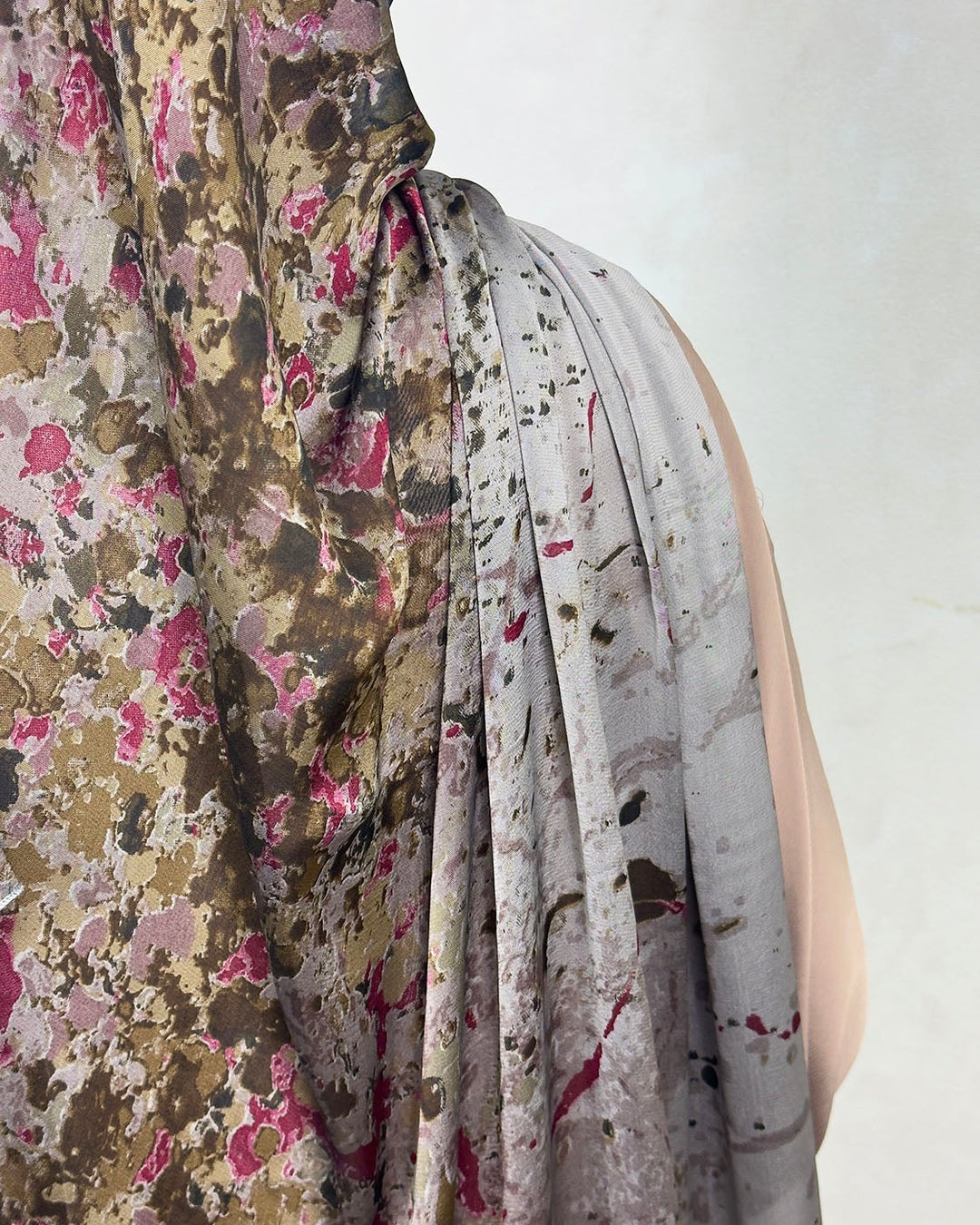
Can a Cotton Maxi Hijab Stay Breathable and Easy to Wear if the Fabric Is Very Thin or the Scarf Is Oversized?
A larger scarf can sound like the easier choice until it is actually around the face, neck and shoulders. More fabric can feel reassuring when a woman wants a broader front panel or more freedom to shape her coverage. The same extra fabric can also gather at the neck, pull against a coat collar, or make a simple wrap feel heavier than expected. That is the real decision behind a cotton maxi hijab: not whether bigger sounds better, but whether the fabric, size and shape give useful room without creating unnecessary bulk.
The word maxi is helpful only when it points to the practical difference a wearer will notice. In this article, it means a more generous scarf format used for hijab styling. It does not mean a dress, it does not prove one exact measurement, and it does not guarantee one particular level of coverage. A listing still needs to tell you the actual dimensions, fabric composition, photographs, edge finish and care instructions before you can judge the scarf properly.
Cotton needs the same care. It is a fibre, not a complete promise. One cotton scarf may feel crisp and hold a sharp face frame. Another may feel washed, textured and relaxed. Another may include other fibres that change the drape, drying time or crease behaviour. It is safer to talk about how a particular cotton construction behaves than to repeat the usual claims that cotton is always soft, cool, breathable or easy for everyone.
For wider hijab, fabric and undercap guidance, the complete hijab guide is the broader starting point. This page stays with the cotton maxi question itself: what extra fabric changes, how cotton can help or complicate the wrap, what to verify before buying online, and how to decide whether a larger scarf format suits the way you actually dress.
Maxi should describe usable scarf room, not a vague promise
The safest way to understand maxi is to think in terms of usable scarf room. A useful larger scarf gives enough length and width to create a route around the head while still leaving fabric available for the chest, shoulders or back. The word itself is not enough. A long narrow rectangle may create dramatic tails but give little front coverage. A wider scarf may create generous coverage but feel heavy if the fabric is dense. A square may feel broad but behave differently once folded diagonally.
That is why the actual size matters more than the adjective. If a product page gives numbers, compare them with a scarf you already own. Lay your current scarf flat, notice where it reaches on your body, then imagine what more length or width would change. More width may allow a broader front panel. More length may allow a route around the head without stealing fabric from the front. More of both may help, but only if the fabric is fine enough to remain comfortable when folded.
Where no verified dimensions are given, the honest advice is to ask before buying. Do not assume that every seller uses maxi in the same way. Do not assume that a large-looking photograph proves a large scarf. Product images can hide folds, crop the ends or show the item styled over another layer. The label should begin the decision, not finish it.
A cotton maxi hijab therefore deserves a practical question: where will the extra fabric go? If the answer is over the chest, across the shoulders or into a calmer wrap route, the larger format may be useful. If all of it gathers around the neck, the size may add weight without solving the real problem.
A cotton maxi hijab is not a cotton maxi dress
The word maxi often appears in clothing, so it can cause confusion. Here the subject is a hijab scarf, not a dress. The reader is deciding how a cotton or cotton-rich scarf behaves when it is larger than a standard everyday scarf. The decisions are about fabric, folds, face framing, coverage, heat, movement, care and online buying evidence.
That boundary matters because a dress and a scarf solve different problems. A long dress is a garment worn on the body. A maxi hijab is a scarf format used around the head, neck and upper body. The fact that both may use the word maxi does not make them interchangeable. Styling advice about hemlines, skirt movement or dress shapes would pull the article away from the woman who came here to understand a larger cotton scarf.
The same boundary protects neighbouring hijab topics. A cotton maxi scarf is not a pashmina guide, a chiffon guide, an instant hijab guide or an undercap guide. Those comparisons can help in small doses, but they should not take over. The central question stays simple: does this larger cotton scarf give the wearer useful control, comfort and coverage in the way she wants to wear hijab?
When the topic is kept this clear, the article becomes more useful. It stops trying to answer every modest-fashion question at once and focuses on the exact decision in front of the reader.
Cotton is a starting point, not a full fabric description
Cotton tells you something, but not enough. It tells you the fibre family involved, or at least part of the fibre family when the scarf is a blend. It does not tell you whether the scarf is woven or knitted, smooth or textured, dense or fine, pre-washed or likely to change after washing. Those details decide how the scarf feels in the hand and how it behaves on the body.
A crisp woven cotton may create a clean fold at the forehead. A gauzy cotton may feel softer and more relaxed. A cotton-rich jersey may grip and stretch. A cotton blend may crease less or dry differently from pure cotton. None of these outcomes is automatic from the word cotton alone. The construction carries the behaviour.
This is why blanket fabric claims are risky. It is too broad to say that every cotton hijab is cooling, non-slip, opaque, lightweight or suitable for sensitive skin. Some cotton scarves may feel airy because the weave is open and the scarf is not layered heavily. Others may feel warm because the fabric is dense or because the wearer needs more overlap. Some may grip well, while others may shift because of finish, blend or hair texture.
A good cotton maxi hijab description should therefore give evidence. Fibre content, weave or knit clues, close photographs, open-scarf images, edge finish and care instructions all help. Without those, cotton remains a clue, not a conclusion.
The trade-off: more fabric can help and hinder
A larger scarf can solve a real frustration. Some women find that standard rectangles disappear into the wrap before they have created the chest coverage they want. Others want a softer shoulder drape, a longer tail, or enough fabric to adjust after wudu without rebuilding the whole style. In those situations, a maxi format can make the scarf feel less strained.
The opposite can also happen. Extra fabric can collect under the chin, crowd the nape, catch under a coat, or make the style feel untidy by midday. The problem is not the size itself. It is usually a mismatch between size, fabric density and wrap route. A fine fabric may handle generous dimensions beautifully. A thicker cotton may need a simpler route so the same dimensions do not become a bulky bundle.
The trade-off is especially important for shorter frames, narrow shoulders, sensory sensitivity and long working days. A scarf that feels secure in a mirror can feel tiring after several hours if the weight sits on the crown or if several layers press behind the ears. A taller wearer or someone wanting broader front coverage may appreciate the same size more. The right answer is personal and practical, not moral.
Before choosing, decide whether you need more length, more width, a softer fabric, a grippier surface or a better wrap method. A cotton maxi hijab is valuable when the larger format solves the specific problem, not merely because it looks more generous in a folded product photo.
Width often changes coverage more than length
Length is easy to notice because it creates visible tails. Width is often the quieter measurement, but it can matter more for coverage. A long narrow scarf can travel around the head but still leave the front panel slim. A wide rectangle can open over the chest and shoulders with fewer layers. If the main reason for choosing a larger scarf is coverage, width deserves careful attention.
Think of the scarf as having two jobs. One part frames and secures the head. Another part provides visible drape. If the head route consumes too much of the fabric, the front or shoulder coverage may be lost. A generous width gives more freedom because the front panel can remain broad instead of being twisted into a narrow tail. A generous length helps the route complete without tugging that panel away.
There is still no universal ideal. A very wide scarf in a dense cotton can feel heavy and difficult to control. A moderate width in a lighter cotton may feel more wearable. The best format is the one that lets fabric sit where it is useful. If the scarf keeps needing repeated folds just to become manageable, the size or construction may be working against you.
When shopping online, look for both measurements where available and avoid titles that give only a mood. If the details are missing, ask. A seller who uses the word maxi should be able to explain what that means in the product itself.
The face frame reveals whether cotton is working with you
A scarf may look beautiful open on a table and still be difficult around the face. Cotton can behave with more structure than fluid fabrics, especially when woven or finished crisply. That structure may help a woman who likes a defined forehead fold and a stable line beside the cheeks. It may frustrate someone who wants a soft, barely-there curve.
The first fold is often enough. If the front edge is folded two or three times, cotton can become thick exactly where the wearer wants comfort. A narrow fold can add neatness without creating a ridge. A washed or crinkled cotton may not need a hard fold at all; it may look better when allowed to sit with its own texture.
Glasses, hearing aids and sensitive temples should be considered before the scarf is secured. Place the frame, put on any devices, then turn the head and speak. If the edge presses, drags or rubs, the scarf is not yet comfortable. A style that looks perfect in a still photograph may not serve a real face through a full day.
Cotton’s grip should support the style, not force the wearer into tension. If the scarf only stays in place when pulled tightly, the problem is usually the route, underlayer or fabric finish.
An underscarf can solve one problem and create another
An underscarf can help when hair is smooth, the scarf surface is slippery, or the wearer wants a precise face frame. It can keep the cotton from shifting and protect the shape after movement. For some women it makes the larger scarf easier because the base stays steady while the outer fabric is arranged.
It can also add heat, pressure and bulk. A thick cap beneath a dense cotton maxi scarf can make the style feel heavy before the day has started. A tight cap may pull at the hairline or create headaches. A textured cap may grip so strongly that adjusting the outer scarf becomes difficult.
The best underlayer is the lightest one that solves the actual problem. Sometimes that is a thin cap. Sometimes it is a softer tie-back style. Sometimes the cotton scarf has enough texture to sit without one. The question is not whether every cotton maxi hijab needs an underscarf. The question is whether this scarf, on this hair, with this route, feels secure without discomfort.
Try both ways at home. If the scarf feels calmer with the cap, keep it. If the cap creates heat or pressure, remove it and look for a different route or a grippier fabric.
A larger scarf needs a calmer wrapping route
Extra fabric should be allocated before wrapping begins. If one end is meant to cover the chest, keep it broad from the start. If the long side is meant to travel, let it do so once rather than circling repeatedly. A maxi scarf becomes harder when every movement adds another layer at the neck.
A simple route often works best. Place the scarf with unequal ends. Build a comfortable face frame. Spread the shorter side across the front. Take the longer side around once and either open it over the shoulder, tuck it beneath a stable layer, or let it fall in a controlled panel. That is enough for many cotton scarves.
The nape matters. Bulky folds behind the head can push against chairs, coats and hoods. Keep the back route flat and avoid twisting the fabric into a rope. If the scarf is dense, reduce the route. If it is very fine, you may have more freedom to layer, but the aim is still comfort and coverage rather than a complicated shape.
A cotton maxi hijab should not need constant correction. If the wearer keeps adjusting the same fold, the fabric may be too thick for that route, the underlayer may be pulling, or the scarf may be too wide for the chosen style.
Chest coverage depends on proportions, not the name alone
A maxi label may suggest more coverage, but coverage depends on how fabric is distributed. Width creates the broad front panel. Length completes the route. Fabric weight decides whether that panel lies open or collapses into folds. Body proportions decide where the scarf actually falls. A title cannot guarantee the result.
For a front panel, keep one side wide and avoid twisting it. Let it fall from the shoulder or across the chest before the travelling end is pulled into place. Check the mirror from the side as well as the front. A scarf can look broad from one angle but open at the side when the wearer walks or lifts a bag.
Coverage also changes after movement. Sit down, raise the arms, put on outerwear and turn the head. If the panel lifts or separates, it may need a different anchor point. That might be one shoulder magnet, a safer tuck, a different underlayer or a scarf with more width.
This practical approach respects different modesty preferences without turning scarf size into a religious ranking. More fabric does not make a woman better. It simply gives a tool that may or may not serve the coverage she personally wants.
Cotton can feel different through a full day
A scarf is not only worn for the first ten minutes. Cotton can feel pleasant at the start because it has a familiar, grounded texture. After several hours, the same scarf may reveal whether the weight is right, whether the face edge rubs, and whether repeated layers are too warm. A good decision needs more than a mirror test.
Wear the scarf at home before relying on it for an event, work shift or journey. Sit against a chair, answer a call, drink water, pray, put on a coat, carry a bag and turn your head normally. These small tests show pressure points that a product photograph cannot show. They also show whether the larger format is useful or simply dramatic.
Moisture is another factor. Cotton can absorb perspiration. That may feel comfortable in ordinary conditions, but if the scarf becomes damp it may feel heavier and take longer to dry than some other fabrics. Weather, indoor heating, activity and undercaps all change the experience.
The right scarf becomes easier as the wearer learns it. She knows where the first fold should sit, how much fabric to leave in front, and whether the route needs one secure point. If the scarf becomes harder every hour, the size or construction may be wrong for that day.
Cotton, chiffon and pashmina do different jobs
Comparisons are useful only when they clarify the cotton maxi decision. Chiffon is often chosen for a lighter, more fluid look. It may fall softly and suit dressier outfits, but it can need more securing because the surface is smoother. Pashmina-style scarves are often chosen for softness, warmth or a shawl-like feel. They can feel substantial and cosy, but may be too warm or bulky for low-layer styling.
Cotton sits in a different place depending on its construction. A crisp cotton can feel defined and matte. A gauzy cotton can feel casual and textured. A cotton-rich stretch scarf can feel secure with fewer pins. These are not rankings. They are differences in behaviour.
This matters because a cotton maxi hijab should not be forced to imitate another fabric. If the wearer wants a glassy, floating finish, cotton may not be the natural choice. If she wants a matte scarf with visible texture and a stable face edge, cotton may make more sense. If she wants warmth, another fabric may answer a different need. If she wants a very light event drape, a smoother fabric may answer another.
A clear boundary protects the wardrobe. Each scarf type can do its own work instead of being judged by the wrong standard.
Buying online should be evidence-led
A cotton maxi hijab should not be bought from a title alone. The product page should help you understand what will arrive. Look for fibre composition, length and width, open-scarf photographs, close photographs of the surface, edge finish, opacity clues, colour notes and care instructions. If any of those are missing and matter to your decision, ask before ordering.
Photographs need careful reading. A scarf shown folded may look thicker and more opaque than it is in one layer. A scarf shown on a model may be layered over an undercap or another garment. A close-up may reveal texture but not size. A full open photograph is especially helpful because it shows proportions, borders, tassels and whether the scarf is rectangular or square.
Reviews are useful when they mention behaviour rather than only appearance. Look for comments about slipping, weight, warmth, creasing, shrinkage, colour transfer, texture after washing and whether the width created the coverage expected. A compliment tells you someone liked the look. A behaviour note tells you how the scarf may live.
Return rules matter too, especially for scarves and headwear. Check whether trying on, removing packaging or washing affects returns. Do your dry inspection first: measure, examine the edge, test over clean clothing and compare with the listing before deciding whether to keep it.
Measurements matter only when the listing proves them
Specific measurements can be useful, but only when they come from the actual product or a reliable listing. It is not safe to say that a cotton maxi hijab has one standard size. Different sellers can use the word maxi for different formats, and even one shop may carry scarves with different proportions. A scarf can be long, wide, square, rectangular, stretch, woven or textured, and still be described generously.
When measurements are available, compare both length and width. Width helps predict front and shoulder coverage. Length helps predict the route. The diagonal matters for a square scarf once it is folded. Fringe, tassels or decorative borders may be included in total length, so check whether the usable fabric is slightly different from the headline number.
When measurements are absent, the article should not fill the gap with invented values. A reader deserves honesty. You can explain that maxi usually suggests a larger or more generous scarf format in this context while also telling her to confirm exact dimensions before purchase. That answer is less dramatic, but it is safer and more useful.
This evidence-first habit prevents disappointment. It also stops the article from turning a flexible retail word into a false technical specification.
Care starts with the actual product instructions
Cotton can change with washing, but the correct care depends on the specific fabric and finish. A smooth woven scarf, a stretch cotton scarf, a crinkle texture, a pleated finish and a hand-finished border may all need different handling. General care advice must remain general unless the label gives specific instructions.
Before water touches the scarf, read the care label and inspect the item dry. Remove pins or magnets. Check whether the colour is deep enough to need separate washing. Look at tassels, embroidery, pleats or raw edges. If the scarf has a special texture, the aim may be to preserve it rather than smooth it flat.
Cooler water, gentle movement and careful drying are common cautious habits for cotton-rich scarves, but they should never override a product label. Avoid inventing wash temperatures, drying permissions or shrinkage guarantees. If a seller does not provide care instructions, ask. A scarf that depends on special care should make that clear before purchase.
After washing, compare the scarf with its dry pre-wash condition. Has the size changed? Has the edge tightened? Has the surface relaxed? The post-wash scarf is the real scarf you will keep wearing. A good cotton maxi hijab should still support the purpose you bought it for after appropriate care.
Colour and texture affect how a larger scarf looks
Colour behaves differently when there is more fabric in the style. A deep shade across a large front panel can become the strongest part of the outfit. A pale shade may feel soft and easy but can show underlayers more clearly in daylight. A mid-tone may blend into an everyday wardrobe with less contrast. None of these is universally better. The useful question is how the colour works with the size, texture and clothing around it.
Texture changes colour too. A matte woven cotton can make colour look calm and grounded. A crinkle surface creates shadows and variation. Ribbing can make colour appear deeper in the grooves. A very smooth blend may reflect light differently. Screens also vary, so product photographs should ideally show the scarf in more than one view rather than relying on a single edited image.
Darker cottons may sometimes release excess dye in early washing, depending on how they were dyed and finished. The article should not claim this will always happen, but it should encourage the reader to check care notes and avoid leaving a damp dark scarf against pale garments unless the item has been properly tested.
In a larger scarf, small visual choices become more noticeable. A border may fall at the wrong edge after wrapping. Tassels may sit near the face instead of the shoulder. A print may disappear into folds. Open photographs help the buyer see whether the design works with her preferred route.
Comfort is part of modest dressing, not a luxury extra
A scarf can look correct and still feel wrong on the body. Cotton’s grip can be a gift when it keeps the scarf steady, but that same grip can tug against a coat collar or hold glasses arms too firmly. A textured edge may be beautiful in the hand and distracting after hours near the jaw. A wide scarf may feel reassuring at first and tiring later if too much fabric sits behind the ears.
Sensitive skin, headaches, hearing aids, glasses, mobility aids and pregnancy or postpartum comfort all change the decision. A woman with limited shoulder movement may need a route that can be arranged at the front. A wheelchair user may need controlled ends that do not catch. Someone prone to headaches may need less tension, fewer pins and a lighter undercap. These are not special exceptions; they are real bodies wearing real clothing.
Test comfort before relying on the scarf for a long day. Wear it at home, sit against a chair, turn your head, speak, drink water and put on outerwear. Notice pressure at the temples, nape and jaw. If the style needs constant tightening to stay in place, it is the wrong method or fabric for that moment.
A good cotton maxi hijab should make modest dressing calmer. It should not ask the wearer to ignore pain simply because the mirror shape looks neat.
A small cotton scarf wardrobe works better than duplicates
Buying several colours before testing one scarf can create waste. Cotton changes through wearing and washing, so the first week teaches more than the first photograph. Start with one scarf that has clear information and a colour you can wear with several outfits. Measure it, style it, wash it according to its instructions and see whether it remains useful.
If cotton suits your routine, build by job rather than by impulse. One finer scarf may serve warmer days. One wider cotton maxi hijab may serve coverage-focused everyday wear. One textured scarf may be easier for travel because it disguises creases. One compact square may be helpful for hoods, quick errands or a simpler triangle shape. A stretch option belongs only if you enjoy stretch and can wear it without tightness.
This approach avoids a drawer full of nearly identical scarves that all fail in the same way. It also helps colour choices become practical. A neutral that works with most abayas may be worn more than a dramatic shade that never leaves the drawer. A deep colour may be worth buying after the construction has proved itself.
A scarf earns a second colour when it survives real movement, real weather and appropriate washing. Until then, the most elegant wardrobe decision may be patience.
Common problems usually have practical causes
If the scarf feels stiff, check whether it is new, starched, heavily finished or densely woven. A permitted gentle wash may soften the finish, but care instructions should come first. Meanwhile, avoid stacking folds at the forehead and neck. One neat face fold and an open shoulder route often help crisp cotton feel less severe.
If the scarf slips, do not automatically make everything tighter. Slipping may come from smooth hair, a satin-like blend, a large face opening or outerwear pulling the route. Adjust the anchor point, use a light underscarf if it helps, or move the bag strap. Tightness may solve the mirror for ten minutes and create a headache later.
If there is too much bulk, allocate the fabric differently. Keep one panel broad, route the long side only once, and flatten the nape. Dense cotton needs fewer layers than fine cotton. A larger scarf should use its width for coverage, not turn all of its length into a thick neck band.
If the edge ripples or the scarf feels smaller after washing, compare it with the pre-wash measurement if you took one. Some change may be expected and disclosed; major unexpected change may point to unsuitable care or poor fabric preparation. The lesson for the next purchase is to treat first-wash behaviour as part of quality.
The seven-wear test gives better answers than scrolling
Before buying more colours, let one scarf prove itself. The first wear should be a calm indoor test: style it at home, sit, speak, drink water and notice pressure. The second should include coat and bag movement. The third should include a warmer or more active moment so you learn how the cotton feels when the body is not still.
Use another wear for prayer movement where appropriate. Notice whether the front panel separates, the back rises or the face edge shifts after wudu. Use another for long sitting at a desk, in a car or on a train. Pressure behind the ears often appears when the head has rested against something for a while.
After the first wash, wear the scarf again. This is the real product. Has the face edge changed? Has the width remained useful? Has the texture softened, tightened or flattened? A scarf that becomes better after washing may deserve a place in the wardrobe. One that loses its purpose should not be multiplied.
The final test is the no-planning morning. If the scarf still works when you are tired, busy or dressing quickly, it has become useful. If it needs emotional negotiation every time, it may be beautiful but not dependable.
Product photographs should prove shape, not only colour
A folded product photograph can make nearly any scarf look generous. Several layers create thickness, depth and opacity. A model photograph shows styling but may not show the open dimensions. A close-up shows texture but not proportion. To understand a cotton maxi hijab, the buyer needs all of these views working together.
The most helpful image is often the plainest: the scarf opened flat or held wide enough to show length and width. This reveals whether it is rectangular or square, whether borders sit on long or short edges, how wide the panel is, and whether tassels or fringe use part of the measurement. Without that view, the word maxi remains incomplete.
Colour also needs more than one image where possible. Screen brightness, editing and lighting can shift a shade. Texture changes how colour appears because shadows collect in crinkles, ribs and folds. A matte cotton may look calmer than a shiny blend in the same colour family. A large scarf makes those visual differences more obvious because more surface is visible.
Use photographs as evidence, not as decoration. Ask what each image proves. If it proves only that the scarf can be styled beautifully once, you still need the product facts that show whether it will work for ordinary wear.
Edges, tassels and texture decide how the scarf behaves
The edge sits closest to the face, so it matters. A narrow machine hem may create a clean line with little weight. A rolled hem can be neat but may feel bulky if the scarf body is fine. A selvedge edge can sit flat, though it may resist soft curving. A raw or frayed finish may look relaxed, but it should be stable enough not to unravel into the scarf body.
Tassels and fringe add movement but also add weight at the ends. That weight can help a panel fall, or it can drag the wrap if placed badly. Long tassels can catch in zips, jewellery or bag hardware. If a border, print or fringe matters to the design, check where it will land after wrapping rather than admiring it only on the open scarf.
Texture is not only appearance. Crinkle can add grip and hide small creases. Ribbing can create directional stretch or structure. Gauze can feel soft but may need careful opacity checking. A smooth cotton blend may look polished but need more securing. The surface decides how the scarf behaves against itself, against hair and against clothing.
These details are often small on the product page and large in real life. The larger the scarf, the more the edge and texture influence the whole style.
Sometimes a smaller scarf is the wiser choice
The point of this guide is not to make the largest scarf sound superior. Sometimes a smaller or moderate scarf is easier, cleaner and more comfortable. A woman who prefers a close neck route, wears fitted outerwear, has a petite frame, or needs controlled ends for work may find that a very generous scarf creates more management than benefit.
A smaller scarf can also be more practical in rain, travel, crowded transport or active settings. Less fabric may dry faster, tuck more neatly and interfere less with coats or bags. If the outfit already provides the coverage required, the scarf does not need to carry every responsibility.
The wiser choice is the one that meets the real need. If the need is a broad chest panel, more width may help. If the need is quick styling under a hood, a compact square may help. If the need is pinless security, texture or stretch may matter more than size. If the need is low heat, a fine construction and simple route may matter most.
A cotton maxi hijab is one tool, not the only modest tool. It earns its place when the extra fabric is useful.
Modest coverage should not depend on painful tightness
Some scarf problems are disguised as discipline. A woman may think she has to pull harder, pin more tightly or tolerate pressure because the style keeps moving. In reality, a scarf that requires pain to stay in place is asking for a different solution. Fabric, route, underlayer and securing method should work together.
A cotton maxi scarf can tempt the wearer to control the extra fabric through tension. That can create pressure at the chin, ears, crown and nape. It can also pull the front panel away from the place it was meant to cover. A calmer approach is to distribute fabric before securing it and then secure only the weak point.
Magnets or pins should be tools, not punishment. Use them where the route genuinely needs help, and avoid placing them where they drag delicate fabric or press into skin. Check safety around children and relevant medical devices when using magnets. If a pin snags the cotton, choose a better placement or different fastening.
Comfort is not vanity. A scarf that can be worn without pain is more likely to be worn with patience, focus and ease.
A before-you-buy evidence checklist
A careful buyer does not need a perfect product page, but she does need enough evidence. Start with fibre content. Is it pure cotton, cotton-rich, or only partly cotton? If there is a blend, are the other fibres named? Then check the actual size. Both length and width matter. If the scarf is square, the folded diagonal matters too.
Look for open-scarf photographs, not only styled images. Check whether the face edge, hem, fringe, texture and opacity can be seen. Read care instructions before deciding whether the scarf suits your life. A scarf that needs careful handling is not wrong, but it should not be bought by someone who needs very low-maintenance clothing unless she accepts that trade-off.
Think about return rules before washing or wearing outside. Some headwear may have hygiene conditions. Inspect dry first. Measure, compare with the listing, test over clean clothing and decide whether the item matches the evidence promised.
| Evidence to check | What it helps you decide | What not to assume |
|---|---|---|
| Length and width | Whether the scarf gives useful route and coverage | That maxi means one universal size |
| Fibre content | Whether cotton is pure, blended or cotton-rich | That every cotton scarf behaves the same |
| Open photographs | Shape, border placement and true proportions | That folded images prove coverage |
| Close texture images | Grip, structure and face-frame behaviour | That smooth, crinkle and ribbed finishes drape alike |
| Care instructions | How realistic the scarf is for your routine | That one washing method fits every cotton scarf |
| Return conditions | How safely you can inspect before committing | That all scarves can be returned after full wear |
When those checks are answered, the decision becomes calmer. When the evidence is absent, the buyer can pause instead of hoping the product title is doing more work than it can carry.
The most trustworthy article and the most trustworthy product page do the same thing. They help a woman understand what she is choosing before money changes hands. That is the standard a cotton maxi hijab deserves.
A final small check is to name the real reason you want the larger scarf before you order. If the answer is broader front coverage, choose by width and opacity. If the answer is easier styling, choose by fabric behaviour and route. If the answer is confidence through a long day, choose by comfort after movement, not by the product title alone.
Frequently asked questions about cotton maxi hijabs
What is a cotton maxi hijab?
A cotton maxi hijab is a larger or more generous cotton or cotton-rich scarf used for hijab styling. In this context, maxi refers to extra scarf room, not a dress and not one fixed measurement. Its usefulness depends on the actual length, width, fabric construction, opacity, edge finish and care instructions.
Does maxi mean one exact scarf size?
No. Maxi does not prove one universal dimension. Different sellers may use the word for different generous scarf formats. Always check the listed length and width where available, compare them with a scarf you already own, and ask the seller if the measurements are missing.
Is a cotton maxi hijab always easier to wrap?
Not always. More fabric can create better coverage options, but it can also create bulk if the cotton is dense or the route uses too many neck layers. A larger scarf is easiest when the fabric is fine enough for its size and the wrap lets the width stay open.
Can a cotton maxi hijab give more chest coverage?
It can, especially when the scarf has useful width and the wearer keeps one panel broad across the front. Length alone is not enough. Chest coverage depends on width, route, fabric weight, body proportions and whether the fabric stays in place during movement.
Is every cotton hijab breathable or cool?
No. Some cotton weaves can feel airier than dense fabrics, but comfort also depends on weight, layers, colour, undercap, weather and activity. A thick cotton scarf wrapped several times may feel warm. Treat breathability as a construction question, not a fibre guarantee.
Does a cotton maxi hijab need an underscarf?
Only when it solves a real problem. Some cotton scarves grip well without one. A light underscarf may help with a smooth fabric, precise face frame or windy day, but it can also add heat and pressure. Use the least bulky base that works.
How do I avoid bulk with a larger cotton scarf?
Allocate the fabric before wrapping. Keep one broad panel for the chest or shoulder, route the longer side once, keep the nape flat and avoid stacking several face folds. Dense cotton usually needs a simpler route than fine fabric.
Can I wear a cotton maxi hijab without pins?
Sometimes. Textured, crinkle or cotton-rich stretch scarves may hold with a cross-and-tuck route. Smooth blends, wind or active work may still need one safe magnet or pin. Pinless styling should never depend on painful tightness.
How should I care for a cotton maxi hijab?
Follow the product's own care label first. General caution means checking the scarf dry, separating deep colours if needed, avoiding unnecessary heat and reshaping carefully, but exact washing, drying and pressing instructions should come from the actual product.
What should I check before buying one online?
Check fibre content, actual length and width, open-scarf photographs, close texture images, opacity clues, edge finish, care instructions and return rules. If the page only says cotton maxi hijab without these details, ask before buying rather than assuming what the scarf will do.
Choose the scarf that gives useful fabric, not unused bulk
A cotton maxi hijab is worth considering when the extra fabric has a purpose. It may let the front panel stay wider, make the shoulder drape calmer, give the wrap route more room or help a wearer adjust through the day. It is less useful when the extra material only gathers at the neck or creates a style that has to be monitored constantly.
The best decision is evidence-led. Understand what maxi means in the listing, confirm the dimensions if they matter, read the fibre content, examine the construction and respect the care label. Let cotton be judged by how it has been made, not by easy claims attached to the fibre name. Let the scarf be judged by how it behaves after movement and washing, not only by how it looks folded.
When you are ready to compare available scarf options, you can shop related styles with a clearer sense of what to verify. Begin with the useful questions: where will the extra fabric sit, how will the cotton fold, and will this scarf still feel calm after a real day?
The right cotton maxi hijab should not make dressing feel like a negotiation every morning. It should become understandable, dependable and easy to return to because the fabric, size and route are working with the woman wearing it.